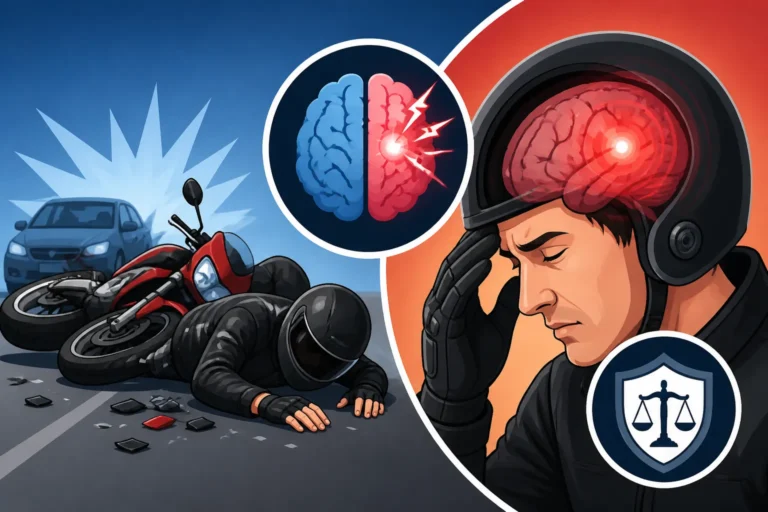
How Much Compensation for Motorcycle Internal Injuries
One of the most terrifying realities for motorcycle riders involved in a crash is the risk of internal injuries. Unlike a broken bone or road rash that you can see, these injuries are often hidden, insidious, and can quickly become life-threatening. Dealing with the physical aftermath is hard enough, but then you're faced with the daunting question: how much compensation can you realistically expect for these complex and often long-lasting internal injuries? This guide will walk you through understanding these injuries, how their compensation is calculated, and what you can do to protect your claim.
Understanding Internal Injuries from Motorcycle Accidents
When you go down on a motorcycle, the forces involved are immense. Your body is subjected to direct impact, crushing forces, rapid deceleration, and shearing trauma that can wreak havoc on your internal organs. It's not always obvious what's happened right away, which is part of what makes these injuries so dangerous. You might feel sore, bruised, or just generally "off," while significant internal damage is quietly unfolding beneath the surface.
Common Types of Internal Injuries Riders Face
The range of internal injuries a rider can suffer is vast, often depending on the type of impact, speed, and how their body interacted with the road or other vehicles. These are some of the most frequently encountered, each carrying its own set of challenges for recovery and compensation:
- Organ Damage: This is probably what most people think of when they hear "internal injury." Your liver, spleen, kidneys, and lungs are particularly vulnerable. A ruptured spleen, for instance, can lead to severe internal bleeding and shock. Liver lacerations or kidney damage can be incredibly painful and require extensive medical intervention, sometimes even surgery or organ removal. These types of injuries often necessitate multiple surgeries, prolonged hospital stays, and can result in long-term organ dysfunction.
- Internal Bleeding: Even without a visible puncture, blunt force trauma can cause blood vessels to rupture, leading to internal hemorrhaging. This can happen anywhere in the body – in the abdominal cavity, around organs, or in the brain. Internal bleeding is a medical emergency because the blood loss isn't immediately apparent, and it can quickly become fatal if not addressed. The amount of blood lost and the time it takes to diagnose and treat directly impact the severity and recovery.
- Pneumothorax (Collapsed Lung) or Hemothorax: The force of an impact can cause a rib to fracture and puncture a lung, or simply lead to enough pressure trauma to cause the lung to collapse. A hemothorax is when blood fills the space between the lung and chest wall. Both are extremely painful, make breathing difficult, and require immediate medical attention, often involving a chest tube to drain air or blood and reinflate the lung. Long-term, there can be issues with lung capacity or recurring problems.
- Traumatic Brain Injuries (TBIs): While often associated with external head trauma, TBIs are fundamentally internal injuries. Even with a helmet, the brain can violently impact the inside of the skull during a crash. This can cause concussions, contusions, diffuse axonal injury (DAI), or subdural and epidural hematomas (bleeding on the brain). The effects of a TBI can range from mild (headaches, dizziness, cognitive issues) to severe (permanent cognitive impairment, personality changes, motor deficits). Dealing with these types of injuries can be a long and arduous process, sometimes requiring years of rehabilitation.
- Spinal Cord Injuries: A severe impact can cause fractures or dislocations in the vertebrae, leading to damage to the delicate spinal cord. Even a slight compression can result in partial or complete paralysis. These injuries are often catastrophic, leading to permanent disability, loss of sensation, and loss of bodily functions. The lifelong care, assistive devices, and home modifications needed for a spinal cord injury can represent astronomical costs.
- Diaphragmatic Rupture: The diaphragm, the muscle separating your chest and abdomen, can tear from intense pressure, allowing abdominal organs to migrate into the chest cavity. This is a rare but extremely serious injury requiring complex surgical repair and can lead to breathing difficulties and other complications.
Why Internal Injuries Are So Dangerous for Riders
The insidious nature of internal injuries is what makes them particularly terrifying. Unlike a visibly broken leg or a nasty case of road rash, you can't always see the damage being done internally. A rider might walk away from a crash feeling shaken but otherwise "okay," only for symptoms to manifest hours or even days later, sometimes when it’s too late. This delay in symptoms can lead to critical delays in diagnosis and treatment. For example, a slow internal bleed might not cause noticeable pain until a significant amount of blood has been lost, putting the rider's life in immediate jeopardy.
Furthermore, the general bias against motorcyclists, often fueled by the unfair "daredevil" stereotype, can lead emergency responders or even medical staff to initially downplay a rider's injuries if external trauma isn't immediately apparent. This is a frustrating reality that many riders face, adding another layer of challenge to an already difficult situation. It’s imperative to communicate all symptoms, no matter how minor they seem, and advocate for thorough diagnostic testing, such as CT scans or MRIs, especially if you suspect something is wrong. When dealing with a serious incident, it's always wise to understand "What to Do Immediately After a Motorcycle Accident" to protect your health and your potential claim.
Calculating Compensation for Internal Injuries
When it comes to getting compensation for internal injuries sustained in a motorcycle accident, it's not a simple calculation. You're looking at a multitude of factors, both tangible and intangible, that contribute to the overall value of your claim. The goal is to recover damages that put you back in the financial position you would have been in had the accident never occurred, as much as money can possibly do that for such devastating injuries.
Economic Damages Explained
Economic damages are the quantifiable, objective financial losses you incur directly because of your internal injuries. These are typically easier to calculate because they come with bills, invoices, and pay stubs.
- Medical Expenses: This is often the largest component of economic damages, especially with severe internal injuries. It includes everything from emergency room visits, ambulance rides, and hospital stays to surgeries, medications, and follow-up doctor appointments. But it doesn't stop there. For serious internal injuries, you might need extensive rehabilitation, physical therapy, occupational therapy, and specialized medical equipment. If your injury is permanent, you'll also be claiming for future medical costs, which can include lifelong medications, regular specialist visits, and potentially in-home care or modifications to your home. It's essential to keep meticulous records of all medical bills and treatments. Understanding "How Medical Bills Affect Your Settlement" is crucial.
- Lost Wages and Loss of Earning Capacity: If your internal injuries prevent you from working, you can claim for the income you've already lost. This includes your regular salary, bonuses, commissions, and even benefits like retirement contributions. For serious, long-term internal injuries, you might also have a claim for loss of earning capacity. This refers to the difference between what you would have earned over your lifetime if the accident hadn't happened, and what you are now able to earn because of your injuries. This requires expert testimony from vocational specialists and economists. Similarly, understanding "How Lost Wages Are Calculated" is key to a robust claim.
- Property Damage: While not directly related to your physical internal injuries, the damage to your motorcycle and any gear you were wearing (helmet, jacket, etc.) is a direct financial loss from the accident. This includes repair costs, replacement value if the bike is totaled, and the cost of replacing your damaged protective gear.
- Other Out-of-Pocket Expenses: Don't forget other incidental costs that pile up. This could include transportation to medical appointments, childcare expenses if you're unable to care for your children, modifications to your home or vehicle to accommodate a disability, or even the cost of hiring help for household chores you can no longer perform. These seemingly small costs can add up significantly over time.
Non-Economic Damages and How They're Valued
Non-economic damages are the intangible losses that don't come with a bill but profoundly affect your quality of life. These are often harder to quantify and are frequently the subject of intense negotiation with insurance companies.
- Pain and Suffering: This category encompasses the physical pain and discomfort you endure because of your internal injuries, both immediately after the accident and throughout your recovery and potentially for the rest of your life. It also covers the emotional distress, anxiety, depression, and fear that often accompany severe trauma. This is a very subjective area, but elements like medical records, pain journals, and testimony from you and your loved ones can help illustrate the extent of your suffering. For a detailed dive, consider reading about "Pain and Suffering Damages Explained".
- Emotional Distress and Mental Anguish: Beyond just pain, severe internal injuries can lead to significant psychological trauma. Many riders develop PTSD, severe anxiety, or depression after a horrific crash. The fear of riding again, the emotional toll of permanent limitations, or coping with disfigurement can all fall under this category. Mental health therapy bills can be considered economic damages, but the emotional impact itself is non-economic.
- Loss of Enjoyment of Life: This refers to the inability to participate in hobbies, activities, or aspects of life that you once enjoyed due to your injuries. If you loved riding your motorcycle, hiking, playing with your kids, or working on cars, and your internal injuries prevent you from doing so, that loss of enjoyment is a compensable damage. This is a critical component for many riders whose lifestyle is inextricably linked to physical activity.
- Loss of Consortium: If your internal injuries are severe enough to impact your relationship with your spouse or partner, they might be able to claim for loss of consortium. This includes the loss of companionship, affection, intimacy, and the ability to contribute to the household in the same way.
To put some numbers on non-economic damages, insurance companies and courts often use a "multiplier method." They'll take the total economic damages (medical bills, lost wages) and multiply it by a factor, typically between 1.5 and 5, depending on the severity and permanence of your injuries. A catastrophic internal injury with lifelong implications would warrant a much higher multiplier than a minor one.
Table: Impact of Internal Injury Severity on Potential Compensation Factors
| Injury Type/Severity | Typical Medical Treatment Required | Potential Long-Term Impact | Economic Damages Multiplier (for Non-Economic) |
|---|---|---|---|
| Minor Organ Contusion | ER visit, monitoring, rest, pain medication | Full recovery likely, some residual soreness | 1.5 – 2 |
| Moderate Organ Laceration/Rupture | Surgery, ICU stay, extensive hospitalization, rehabilitation | Potential long-term organ weakness, dietary changes | 3 – 4 |
| Severe Traumatic Brain Injury | Emergency surgery, prolonged coma, lifelong rehabilitation, in-home care | Permanent cognitive/motor deficits, personality changes, loss of independence | 4 – 5+ |
| Spinal Cord Injury (Paralysis) | Emergency surgery, extensive physical/occupational therapy, assistive devices, home modification | Permanent paralysis, loss of bodily function, lifelong care, loss of earning capacity | 5+ (often substantial independent claims) |
| Extensive Internal Bleeding | Emergency surgery, blood transfusions, ICU stay, diagnostic imaging | Risk of shock, organ damage, long recovery | 2.5 – 3.5 |
| Collapsed Lung (Pneumothorax) | Chest tube insertion, hospitalization, pain management | Potential for recurring issues, reduced lung capacity | 2 – 3 |
This table illustrates that the more severe and long-lasting the internal injury, the higher the multiplier tends to be for non-economic damages, reflecting the immense pain, suffering, and disruption to life.
Factors Influencing Your Internal Injury Settlement
The final amount of compensation you receive for internal injuries is rarely straightforward. It's a complex negotiation influenced by several key factors. Think of it like a delicate balance where each element can tip the scales significantly one way or another.
Impact of Injury Severity and Long-Term Prognosis
This is perhaps the most crucial factor. A minor internal bruise that heals completely will receive vastly different compensation than a ruptured organ requiring multiple surgeries and resulting in permanent dysfunction. The more severe your internal injuries, the more medical treatment you'll need, the longer you'll be out of work, and the greater your pain and suffering will be.
For example, a rider suffering a traumatic brain injury (TBI) might face years of cognitive therapy, vocational retraining, and daily challenges. This is a very different scenario from someone with a moderate liver laceration that heals well after surgery. Your long-term prognosis – whether you'll make a full recovery, face permanent disability, or require ongoing care – plays a huge role in determining the value of your claim. Insurers will heavily scrutinize your medical records and expert opinions from your treating physicians to gauge the full extent of your future needs. This is why "How Injury Severity Affects Compensation" is such a vital topic. Waiting until you reach Maximum Medical Improvement (MMI) before settling is often advised, as it provides a clearer picture of your long-term prognosis. You don't want to find out later that you need another surgery or lifelong medication after you've already settled your claim.
Comparative Negligence and Shared Fault
Even if another driver was primarily at fault, states like California, Texas, and Florida operate under a "comparative negligence" system. This means that if you are found partially at fault for the accident, your total compensation can be reduced by your percentage of fault. For instance, if a jury determines your internal injury damages are $500,000, but you were 20% at fault for the crash (maybe you were slightly speeding, or visibility was an issue), your compensation would be reduced by 20%, leaving you with $400,000.
Insurance companies are notorious for trying to shift blame onto motorcycle riders, often playing on stereotypes or pointing to minor infractions. They might argue you were riding too fast, not wearing proper gear (even if it didn't cause the internal injury), or not attentive enough. It's critical to understand "How Comparative Negligence in Motorcycle Accidents" works in your state, as some states have different thresholds (e.g., the 51% rule where you can't recover anything if you're more than 50% at fault). This is where having strong evidence to prove the other driver's fault, such as witness statements, police reports, and accident reconstruction, becomes paramount.
Insurance Policy Limits and Available Coverage
Unfortunately, even if your internal injuries are catastrophic and your damages are in the millions, your actual payout might be capped by the at-fault driver's insurance policy limits. Many drivers carry only the minimum liability insurance required by their state, which can be shockingly low (e.g., $25,000 in bodily injury coverage per person). If your medical bills alone exceed that, you're in a tough spot.
This is why your own insurance coverage, specifically Underinsured Motorist (UIM) or Uninsured Motorist (UM) coverage, is incredibly important. If the at-fault driver's insurance isn't enough, your UIM coverage can kick in to cover the remaining damages, up to your policy limits. Some states even allow "stacking" of UM/UIM policies, meaning you might be able to combine coverage from multiple policies. It's a harsh reality that the financial recovery for truly devastating internal injuries can often exceed available insurance, highlighting the importance of carrying robust UIM/UM coverage on your own policy. This ties directly into "How Insurance Policy Limits Affect Your Payout".
Steps to Maximize Your Compensation for Internal Injuries
Navigating the aftermath of a motorcycle accident with internal injuries can feel overwhelming. You're trying to heal, deal with pain, and somehow figure out how to pay for everything while fighting an uphill battle with insurance companies. But there are crucial steps you can take to protect your rights and ensure you receive the maximum compensation you deserve.
Immediate Medical Attention and Thorough Documentation
This cannot be stressed enough: seek medical attention immediately, even if you feel fine. Internal injuries are often silent killers. What might seem like mild soreness could be a slowly progressing internal bleed or a serious organ contusion. Go to the emergency room, undergo all recommended diagnostic tests (CT scans, MRIs, X-rays), and follow every single piece of medical advice. Any delay in treatment or gaps in your medical records will be seized upon by insurance adjusters as evidence that your injuries weren't serious or weren't directly caused by the accident. They will try to argue that your injuries were pre-existing or that your delay in seeking care somehow made them worse.
Beyond initial treatment, maintain thorough documentation of everything. Keep a detailed pain journal, noting your symptoms, how they impact your daily life, and any emotional distress you're experiencing. Photograph your visible injuries, even minor bruises, as they can sometimes be indicators of underlying internal trauma. Keep all receipts for medical bills, prescription medications, transportation to appointments, and any other out-of-pocket expenses. This meticulous record-keeping provides undeniable evidence of your damages and helps to quantify your suffering. Understanding "How to Document Injuries for a Claim" is crucial for building a strong case.
Gathering Comprehensive Evidence
Your claim's strength hinges on the evidence you present. The more comprehensive and persuasive your evidence, the harder it will be for insurance companies to dispute your version of events or the severity of your internal injuries.
- Accident Scene Documentation: If possible (and only if safe to do so), take photos and videos of the accident scene immediately after the crash. Capture vehicle positions, damage, road conditions, traffic signs, and any skid marks. Exchange information with the other driver and gather contact details for any witnesses. A police report is vital, though remember that it's not the final word on fault.
- Medical Records and Expert Testimony: These are your most powerful tools for internal injuries. Your complete medical history, including diagnostic images, doctor's notes, treatment plans, and prognoses, will be central to your claim. For severe or complex internal injuries, your attorney may work with medical experts, such as accident reconstructionists or forensic doctors, to provide testimony about the mechanisms of your injury, its severity, and its long-term impact on your life. This expert insight is particularly important for substantiating non-economic damages like future medical costs and loss of earning capacity.
- Witness Statements: Eyewitness accounts can corroborate your story and refute claims of shared fault. Even if they didn't see the exact moment of impact, their observations about the other driver's behavior before the crash can be invaluable.
- Income Records: Gather pay stubs, tax returns, and employment verification letters to clearly document your lost wages. If you are self-employed, this might involve more detailed financial records. For "Loss of Earning Capacity Explained", comprehensive past income statements are essential.
Working with a Specialized Attorney
After a motorcycle accident involving internal injuries, one of the most impactful decisions you can make is to consult with an experienced motorcycle accident attorney. It's not just about hiring any lawyer; it's about finding one who specializes in motorcycle accidents and understands the unique challenges riders face, particularly when it comes to proving internal injuries and combating unfair biases.
An attorney can:
- Investigate Thoroughly: They'll conduct their own investigation, collecting evidence, interviewing witnesses, and potentially bringing in accident reconstructionists or medical experts to strengthen your case.
- Handle Insurance Companies: Dealing with insurance adjusters is stressful and often unproductive for injured parties. Adjusters are trained to minimize payouts. Your attorney will handle all communication, negotiations, and paperwork, protecting you from common tactics like lowball offers or attempts to get you to admit fault. For a deeper look, consider "How Lawyers Deal with Insurance Companies".
- Accurately Value Your Claim: Assessing the true value of an internal injury claim, especially one with long-term implications, is incredibly complex. An experienced attorney knows how to account for all economic and non-economic damages, including future medical costs, lost earning capacity, and pain and suffering, ensuring no stone is left unturned.
- Navigate Legal Complexities: From understanding comparative negligence laws in your state to filing deadlines (Statute of Limitations) and court procedures, an attorney will guide you through every legal hurdle. They also know how to fight the "helmet defense" or other strategies insurers use to diminish your claim. If you're wondering "Do You Need a Motorcycle Accident Lawyer", especially with complex internal injuries, the answer is almost always yes.
Ultimately, internal injuries from a motorcycle accident demand meticulous attention to detail, robust medical documentation, and assertive legal representation. Don't underestimate the severity of these hidden wounds, and don't hesitate to seek the help you need to recover both physically and financially.
Disclaimer
The information provided in this guide is for general informational purposes only and does not constitute legal advice. Motorcycle accident laws vary significantly by state, and the specifics of your case will dictate your legal options and potential compensation. It is highly recommended to consult with a qualified motorcycle accident attorney to discuss your individual situation and rights.