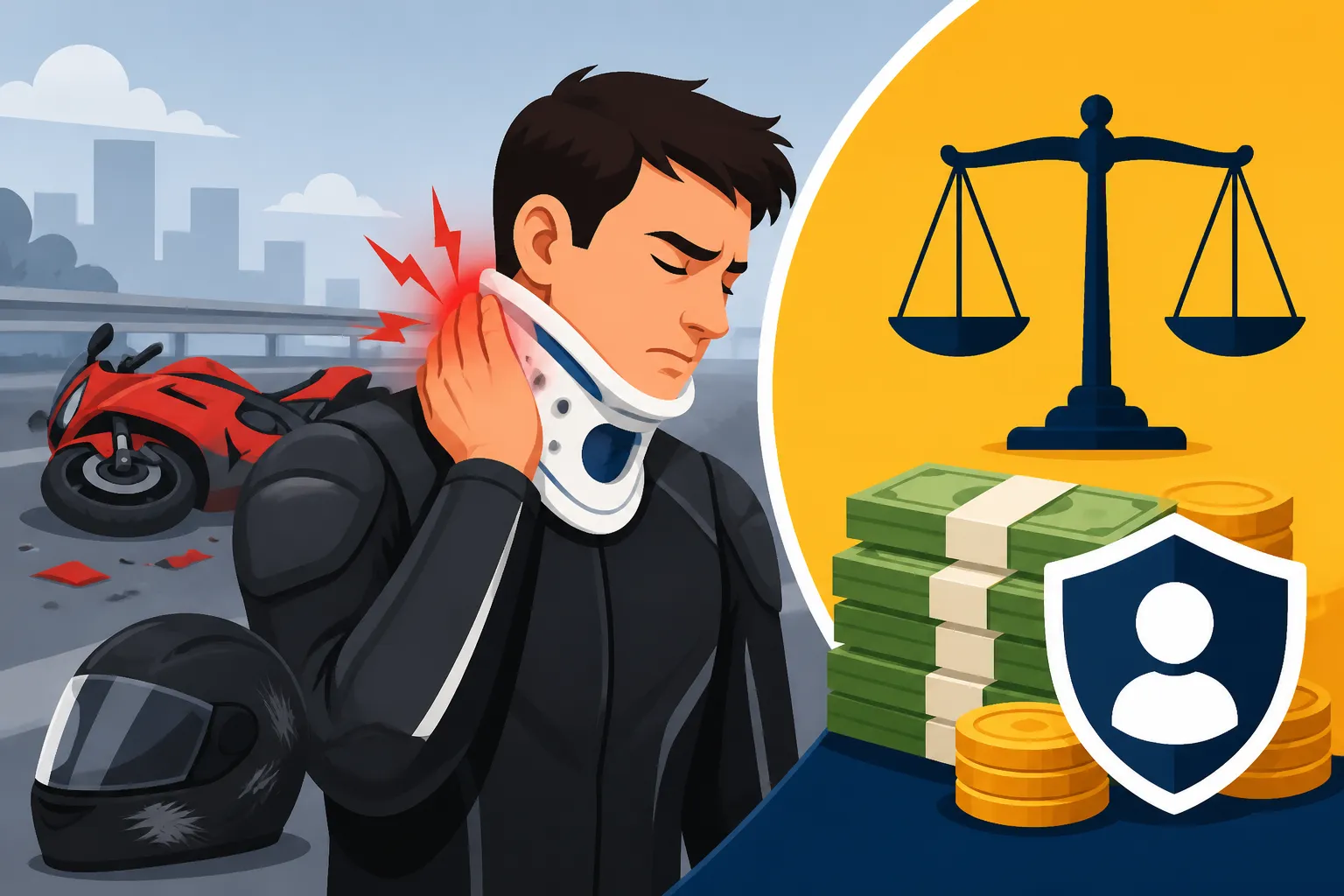
How Much Compensation for Motorcycle Neck Injury
A motorcycle accident, even a seemingly minor one, can leave you with debilitating injuries, and neck injuries are among the most terrifying and life-altering. The pain, the medical bills, the inability to work—it all piles up, leaving many riders wondering how they'll ever recover financially, let alone physically. This comprehensive guide is here to walk you through the complexities of seeking compensation for a motorcycle neck injury, helping you understand what your claim might be worth and how to fight for it.
Understanding the Nature of Motorcycle Neck Injuries
When you're involved in a motorcycle accident, your body is incredibly vulnerable. Unlike being in a car, there's no steel cage around you, no airbags to cushion the blow. The forces exerted on your body, especially your neck and spine, can be immense, even at relatively low speeds. It's not just about the immediate pain; neck injuries often have a ripple effect that impacts every aspect of your life for months, years, or even permanently.
Common Types of Neck Injuries in Motorcycle Accidents
The human neck is a complex structure of bones (vertebrae), ligaments, muscles, and nerves. It’s designed for flexibility but not for absorbing the violent impacts often seen in motorcycle crashes. When these forces become too great, several types of injuries can occur, each with its own severity and recovery path.
One of the most frequently discussed neck injuries, and often initially underestimated, is whiplash. This occurs when your head is suddenly thrown forward and then backward, or side-to-side, causing a rapid hyperextension and hyperflexion of the neck. Think of it like a whip cracking—the force snaps your neck beyond its normal range of motion. While often considered "minor," severe whiplash can lead to chronic pain, stiffness, headaches, dizziness, and even cognitive issues like difficulty concentrating. It's a soft tissue injury, meaning it affects muscles, ligaments, and tendons, which can be notoriously slow to heal and cause persistent discomfort.
Beyond soft tissue damage, motorcycle accidents can lead to more structural problems, such as fractures in the cervical vertebrae. These are breaks in the bones of your neck and can range from small, stable fractures that heal with bracing to severe, unstable fractures that risk spinal cord damage and require emergency surgery. A fractured C1 or C2 vertebra, for instance, which are at the very top of your spine, can be particularly dangerous due to their proximity to the brainstem and their role in head movement. Even a seemingly small fracture can lead to instability and require long-term monitoring and specialized care.
Another significant concern is herniated or bulging discs. Between each vertebra in your spine are rubbery cushions called discs, which act as shock absorbers. A violent impact can cause these discs to rupture (herniate) or bulge out of their normal position, pressing on nearby nerves. This compression can cause excruciating pain not only in the neck but also radiating down into the shoulders, arms, and hands (a condition known as radiculopathy), often accompanied by numbness, tingling, or weakness. Depending on the severity, a herniated disc might require physical therapy, injections, or even surgical intervention like a discectomy or spinal fusion to relieve pressure on the nerves.
It's also important to consider injuries to the spinal cord itself. While less common than fractures or whiplash, direct trauma to the spinal cord can lead to partial or complete paralysis below the site of the injury. This is a catastrophic injury with lifelong implications, requiring extensive medical care, rehabilitation, and adaptive equipment. Even less severe spinal cord contusions can cause permanent neurological deficits. You can learn more about how severe spinal cord injuries affect compensation by looking into "Average Settlement for a Motorcycle Spinal Cord Injury."
Severity and Long-Term Impact on Life
The severity of a neck injury isn't just about the diagnosis; it’s profoundly about how it changes your life. A "minor" whiplash might mean you can't comfortably turn your head for a few weeks, making driving and daily tasks difficult. A more severe whiplash, however, could result in chronic pain that lasts for years, requiring ongoing physical therapy, pain management injections, or even nerve ablation procedures. Imagine constantly battling headaches, neck stiffness, and the inability to sleep soundly. This constant discomfort drains your energy, affects your mood, and can lead to depression and anxiety.
When we talk about fractures or herniated discs, the impact escalates significantly. A cervical fracture can mean weeks or months in a halo vest or rigid brace, followed by extensive rehabilitation. This isn't just physical; it's mentally and emotionally exhausting. You might be unable to lift your children, perform your job, or even manage basic self-care activities. The loss of independence can be crushing. For some, surgery becomes necessary, involving its own risks, recovery time, and potential for complications.
The long-term effects can be profound. Many neck injury survivors report persistent pain, limited range of motion, chronic headaches, and neurological symptoms such as numbness or weakness. These symptoms can prevent a rider from returning to their pre-accident job, especially if their work involves physical labor, prolonged sitting, or operating machinery. Even office jobs can become impossible if staring at a computer screen exacerbates neck pain or headaches. The inability to participate in hobbies—riding your motorcycle, playing sports, gardening—leads to a significant loss of enjoyment of life. This aspect, often overlooked, is a crucial component of damages in a motorcycle accident claim. You can delve deeper into "Long-Term Effects of Motorcycle Injuries" to understand the full scope of what you might face.
Key Factors Influencing Neck Injury Compensation
When it comes to figuring out "How Much Compensation for Motorcycle Neck Injury," there isn't a simple calculator. Every case is unique, a complex puzzle made up of your specific injuries, the financial burdens they create, and the emotional toll they take. However, we can break down the major factors that insurance companies and courts consider when assigning a value to your claim. Understanding these elements is crucial for anyone navigating the aftermath of a crash. For a broader view, you might want to read "What Affects Your Motorcycle Accident Payout".
Medical Expenses and Treatment Costs
This is often the most straightforward, yet still complicated, component of your claim. Medical expenses are tangible, verifiable costs associated with treating your neck injury. They form the bedrock of your economic damages.
Immediately after the accident, you'll likely incur emergency room charges, ambulance fees, and initial diagnostic tests like X-rays, CT scans, or MRIs. These are often substantial right out of the gate. But the costs don't stop there. Your recovery journey could involve weeks or months of physical therapy, chiropractic care, specialist consultations (orthopedists, neurologists, pain management specialists), prescription medications, and potentially injections. Each visit, each prescription, each test adds to the bill.
If your injury is severe enough to warrant surgery—say, for a cervical fusion or discectomy—the costs skyrocket. A single spinal surgery can easily run into tens of thousands of dollars, sometimes over $100,000, not including anesthesia, hospital stays, and post-operative care.
Beyond current medical bills, a significant portion of your compensation for a neck injury will often come from projected future medical costs. For chronic neck pain, a herniated disc that may require surgery years down the line, or permanent neurological damage, you'll need ongoing care. This could include long-term physical therapy, regular pain management, assistive devices, home modifications, or even future surgeries. Expert medical testimony from your treating physicians and life care planners becomes essential here to accurately estimate these lifelong expenses. For example, if your neck injury leads to chronic migraines, ongoing specialist visits and medication costs could be factored in for decades.
Lost Wages and Earning Capacity
A neck injury can severely impact your ability to work, leading to substantial financial losses. Compensation for lost wages covers the income you’ve already missed from work due to your injury and recovery. This includes your regular salary or hourly wages, bonuses, commissions, and even missed overtime. It's vital to meticulously document all time off work, including sick days, vacation days, and unpaid leave.
For self-employed riders, calculating lost wages can be a bit more complex. It often involves providing past tax returns, invoices, and business records to demonstrate your average income and the direct impact the injury has had on your ability to perform your work. Imagine a freelance graphic designer who can no longer sit at a desk for extended periods due to neck pain and radiating arm numbness—their ability to earn a living is severely compromised.
Even more significant than current lost wages for severe neck injuries is the loss of earning capacity. This refers to the reduction in your ability to earn money in the future because of your injury. If your neck injury prevents you from returning to your pre-accident job, or forces you into a lower-paying position, or even limits the hours you can work, that long-term financial impact is a critical component of your claim.
For example, a construction worker who sustains a cervical disc herniation might be permanently unable to perform heavy lifting or strenuous tasks, forcing them into a completely different, lower-paying career path. Or, an office worker might experience chronic pain and reduced concentration, leading to diminished productivity and a slower career progression. To calculate this, economic experts may be brought in to project your lost future income based on your age, profession, education, and the extent of your permanent disability. This is about compensating you for the lost potential and opportunities that your neck injury has stolen from you.
Pain, Suffering, and Quality of Life
While medical bills and lost wages are "economic" damages with clear dollar figures, "non-economic" damages like pain and suffering are just as real, often more impactful, but much harder to quantify. Yet, they form a substantial part of any motorcycle accident settlement, especially for severe neck injuries. You might be interested in delving deeper into "Pain and Suffering in Motorcycle Settlements."
Physical pain is the most obvious element. This includes the acute, intense pain immediately following the accident, the chronic pain during recovery, and any persistent or recurring pain that lingers for years. It's the constant ache, the sharp jolts, the stiffness that makes every movement a challenge. This isn't just discomfort; it's an ongoing burden that affects your energy levels, sleep patterns, and overall well-being.
Emotional distress is another huge factor. Dealing with a severe neck injury can lead to significant psychological trauma. Many accident victims experience anxiety, depression, fear of riding again, or even Post-Traumatic Stress Disorder (PTSD) stemming from the crash itself. The inability to function as you once did, the constant pain, and the uncertainty about your future can be incredibly isolating and lead to feelings of hopelessness. Witnessing your physical abilities diminish can cause immense frustration and sadness.
Perhaps one of the most significant non-economic damages is the loss of enjoyment of life. This refers to the inability to participate in hobbies, recreational activities, or social events that you once loved. If your neck injury prevents you from riding your motorcycle, playing with your kids, engaging in sports, traveling, or even simple tasks like gardening, this profound impact on your quality of life is compensable. Imagine a motorcyclist whose passion was long-distance touring, now unable to ride due to persistent neck pain and limited mobility. That loss is deeply felt and significantly devalues their daily existence.
These non-economic damages are often calculated using a "multiplier" method, where your total economic damages (medical bills, lost wages) are multiplied by a factor (usually between 1.5 and 5, or higher for severe cases). The multiplier increases with the severity and permanence of your injury, the intensity of your pain, and the extent of your emotional and lifestyle impact. It’s a way to put a monetary value on the intangible suffering you endure.
The Role of Evidence and Legal Process in Your Claim
After a motorcycle accident, the legal landscape can feel daunting, especially when you're also grappling with a painful neck injury. But understanding how evidence is collected and how legal principles, like comparative fault, come into play is vital for securing the compensation you deserve. It’s not enough to just have an injury; you need to prove its impact, and that often means navigating complex processes.
Documenting Your Injuries and Recovery
One of the absolute cornerstones of a successful neck injury claim is thorough and consistent documentation. From the moment the accident happens, every step you take to treat your injury, every discomfort you experience, and every way your life changes needs to be recorded.
Firstly, medical records are paramount. This includes everything from the ambulance report and emergency room notes to diagnostic imaging results (X-rays, MRIs, CT scans), specialist consultation reports, physical therapy notes, prescription records, and surgical reports. These documents objectively confirm your injury, its severity, and the course of treatment. Gaps in treatment can be used by insurance companies to argue that your injuries weren't serious or weren't caused by the accident, so it's critical to follow your doctor's recommendations diligently. You should always seek immediate medical attention, even if you feel fine initially. Many neck injury symptoms, like those from a herniated disc, can have a delayed onset.
Beyond official medical records, keeping an injury journal or diary can be incredibly powerful. In this journal, record your daily pain levels (on a scale of 1-10), the specific types of pain you're experiencing, how your injury impacts your sleep, your mood, and your ability to perform daily tasks. Did you miss a child's soccer game? Could you not pick up a gallon of milk? Did you have a terrible headache that kept you from working? These details, though seemingly small, paint a vivid picture of your suffering and loss of enjoyment of life that official medical records often miss. Consistent entries over time demonstrate the ongoing and pervasive nature of your injury. To learn more about this crucial step, read "How to Document Injuries for a Claim".
Finally, photos and videos can significantly strengthen your claim. This might include photos of your injuries as they heal (e.g., bruising, surgical scars, external braces), videos demonstrating your limited range of motion, or even photos of adaptive equipment you now need to use around the house. Visual evidence helps insurance adjusters and juries grasp the physical reality of your suffering.
Impact of Fault and Insurance Policies
Even with impeccable documentation, the question of fault is central to any motorcycle accident claim. In most states, if you are found to be partially at fault for the accident, your compensation can be reduced. This is known as "comparative negligence." For example, if you're found 20% at fault for an accident that caused your neck injury, your total compensation award might be reduced by 20%. Some states, like California, follow "pure comparative negligence," meaning you can recover damages even if you're mostly at fault, just reduced by your percentage. Other states, like Texas, have a "modified comparative negligence" rule, where you cannot recover anything if you are found to be 51% or more at fault. This is a critical legal aspect, and insurance companies will often try to assign some percentage of blame to the motorcyclist, leveraging common biases against riders. You can dive into "How Fault Is Determined in Motorcycle Accidents" for more detail or specifically explore "How Comparative Negligence Reduces Your Payout".
The insurance policies involved also play a monumental role in how much compensation you can receive. First, there's the at-fault driver's liability insurance. Most states require drivers to carry minimum liability coverage, but these minimums can be quite low. For instance, in Florida, the minimum bodily injury coverage is only $10,000 per person, which can be quickly exhausted by a severe neck injury. If your damages exceed the other driver's policy limits, you might face an uphill battle.
This is where your Underinsured Motorist (UIM) or Uninsured Motorist (UM) coverage becomes incredibly important. If the at-fault driver has insufficient insurance (UIM) or no insurance at all (UM), your own policy can kick in to cover your damages up to your policy limits. Many riders unfortunately skip or minimize this crucial coverage, which can be a grave mistake in the event of a severe injury like a debilitating neck injury. Understanding "How Insurance Policy Limits Affect Your Payout" is crucial before you even get on the road.
Beyond these, some states have "no-fault" insurance systems for certain types of accidents, which can affect how you recover initial medical expenses. However, motorcycle accidents are often treated differently, and for serious injuries like neck damage, you'll almost always be pursuing a fault-based claim against the negligent driver. It’s a complex dance between who caused the crash, the severity of your injuries, and the available insurance money that ultimately determines the ceiling of your compensation.
Estimating and Securing Your Neck Injury Settlement
The journey from a motorcycle neck injury to a fair settlement can feel like navigating a labyrinth, especially when you're battling pain and uncertainty. You're probably wondering, "What's my case truly worth?" While no one can give you an exact figure without a full case review, understanding the general range and the strategies for securing a robust settlement can empower you greatly.
General Range and Case Specifics
It’s tempting to look for an "average" settlement figure for a motorcycle neck injury. However, that number can be incredibly misleading because motorcycle accident settlements are inherently case-specific. A neck injury can range from a mild whiplash that resolves with a few weeks of physical therapy to a severe cervical fracture with spinal cord involvement leading to permanent paralysis.
For relatively minor whiplash injuries, where full recovery is expected within a few months, and medical bills are modest, settlements might range from a few thousand dollars to tens of thousands. This accounts for basic medical costs, a few weeks of lost wages, and a reasonable amount for pain and suffering.
However, when we move into moderate to severe neck injuries—such as diagnosed herniated discs requiring injections or potential surgery, or fractures that demand extensive rehabilitation—the potential compensation increases significantly. These cases often involve substantial medical bills, prolonged time off work, and a more pronounced impact on the victim's long-term quality of life. Settlements in these scenarios can easily climb into the mid-five figures, from $50,000 to several hundred thousand dollars.
For catastrophic neck injuries, such as unstable cervical fractures that cause partial or complete paralysis, permanent neurological deficits, or extensive nerve damage requiring lifelong care, compensation can reach into the high six figures or even seven figures. These cases involve astronomical future medical expenses, permanent loss of earning capacity, and profound, irreversible changes to the victim's life, necessitating substantial awards for pain and suffering and loss of enjoyment of life. Factors like your age, pre-accident health, and professional background also play a role, as a younger person with a high-earning career facing permanent disability will generally have a higher claim value than someone nearing retirement with a less physically demanding job. Each specific injury, its treatment, and its impact on your unique life will dictate the final amount.
Negotiation and Settlement Strategies
Once you understand the potential value of your claim, the next hurdle is securing it. This involves a strategic negotiation process with the insurance companies, who are notoriously focused on minimizing their payouts. Their initial offer will almost always be a "lowball" — a figure significantly lower than your claim's true value, often designed to test your resolve and inexperience.
When dealing with insurance adjusters, remember they are not on your side. Their job is to protect the company's bottom line. They might try to downplay your injuries, suggest your pain is exaggerated, or imply that your pre-existing conditions are the real cause of your neck problems. They may also use tactics like delaying communication or pressuring you into a quick settlement before you fully understand the extent of your injuries. This is why it's critical to never admit fault at the scene of an accident and be cautious about what you say to insurance representatives.
To counter these tactics and secure a fair settlement, several strategies are key:
- Comprehensive Documentation: As discussed, meticulous records of medical treatment, bills, lost wages, and an injury journal are your strongest ammunition. The more thoroughly you can demonstrate your damages, the harder it is for the insurance company to deny their impact.
- Professional Medical Opinion: Having your injuries diagnosed and treated by reputable specialists is crucial. Their expert opinions on your prognosis, future medical needs, and any permanent impairments carry significant weight.
- Understanding Your Full Damages: Don't just tally your current medical bills. A strong settlement strategy involves a complete calculation of all your damages: past and future medical expenses, past and future lost wages/earning capacity, and a fair valuation of your pain, suffering, and loss of enjoyment of life. This often requires working with medical and economic experts.
- Demand Letter: Your attorney will typically prepare a comprehensive demand letter, outlining all your damages, supported by evidence, and stating a clear settlement figure. This letter serves as the formal opening of negotiations.
- Patience and Persistence: Settlement negotiations can be a lengthy process, often involving multiple rounds of offers and counter-offers. Rushing into a settlement often means leaving money on the table.
This leads to perhaps the most critical strategy: retaining experienced legal representation. An attorney specializing in motorcycle accidents understands the unique biases against riders and the specific nuances of neck injury claims. They know how to accurately value your case, gather compelling evidence, negotiate aggressively with insurance companies, and, if necessary, take your case to trial. They can connect you with medical experts, reconstruct the accident, and handle all communications, allowing you to focus on your recovery. Without legal expertise, you're at a significant disadvantage against powerful insurance companies. If you're wondering, "Do You Need a Motorcycle Accident Lawyer," the answer is almost always yes, especially with complex injuries like neck damage. They will work diligently to "How to Maximize Your Motorcycle Accident Settlement".
Below is a table summarizing key factors influencing neck injury compensation:
| Factor | Description | Impact on Compensation |
|---|---|---|
| Injury Severity | From mild whiplash to severe fractures, herniated discs, or spinal cord damage. Includes permanent impairment. | Higher severity and permanence lead to significantly higher compensation, reflecting greater medical needs, long-term disability, and suffering. |
| Medical Expenses | Costs for emergency care, diagnostics (X-rays, MRI), specialist visits, physical therapy, medications, injections, surgeries, and projected future medical care (rehab, ongoing pain management, assistive devices). | Direct economic damage. Higher, well-documented current and future medical bills significantly increase the settlement amount. |
| Lost Wages | Income lost due to time off work for recovery, appointments, or inability to perform job duties. Also includes loss of earning capacity (reduced ability to earn in the future). | Direct economic damage. Substantial lost income and demonstrable reduction in future earning potential will greatly increase compensation. |
| Pain and Suffering | Physical pain, emotional distress (anxiety, depression, PTSD), inconvenience, and loss of enjoyment of life. | Non-economic damage. This often forms a large portion of the settlement, calculated using multipliers based on injury severity and impact on daily life. More severe and chronic pain means higher awards. |
| Fault/Liability | The degree to which another party is responsible for the accident. Shared fault (comparative negligence) can reduce your compensation. | If you are partially at fault, your compensation may be reduced proportionally. In some states, being over a certain percentage at fault can bar recovery entirely. |
| Insurance Coverage | Policy limits of the at-fault driver's liability insurance and your own Underinsured/Uninsured Motorist (UM/UIM) coverage. | The maximum amount available for compensation can be limited by policy caps. Strong UM/UIM coverage can significantly increase your potential payout if the at-fault driver is underinsured or uninsured. |
| Evidence Quality | Thorough documentation: medical records, injury journal, accident report, witness statements, photos/videos, expert testimony. | Strong, consistent, and detailed evidence substantiates your claims, making it harder for insurance companies to dispute your injuries or their impact, leading to a higher settlement. |
This overview should give you a clearer picture of the myriad factors at play. Remember, your neck injury is not just a medical diagnosis; it's an event that impacts your entire life, and your compensation should reflect that reality.
Disclaimer
This article is for general informational purposes only and does not constitute professional advice. Laws and regulations vary by location and change over time. Consult a qualified professional for guidance on your specific situation.