Statute of Limitations for Motorcycle Claims in Pennsylvania
Getting into a motorcycle accident is one of the most jarring, life-altering experiences a rider can face. Beyond the immediate physical pain and the headache of dealing with a wrecked bike, many riders feel completely overwhelmed by the legal questions that quickly pile up. One of the biggest fears is missing a critical deadline, effectively shutting the door on getting the compensation you deserve. This guide is here to walk you through the specifics of the statute of limitations for motorcycle accident claims in Pennsylvania, so you can understand your rights and avoid common pitfalls.
Understanding the Statute of Limitations in Pennsylvania
When you're reeling from a motorcycle accident, the last thing you're probably thinking about is legal deadlines. But in the world of personal injury claims, these deadlines are absolute, and missing them can mean losing your right to ever pursue compensation. It's a tough reality, but one that every rider in Pennsylvania needs to be aware of.
What is the Statute of Limitations?
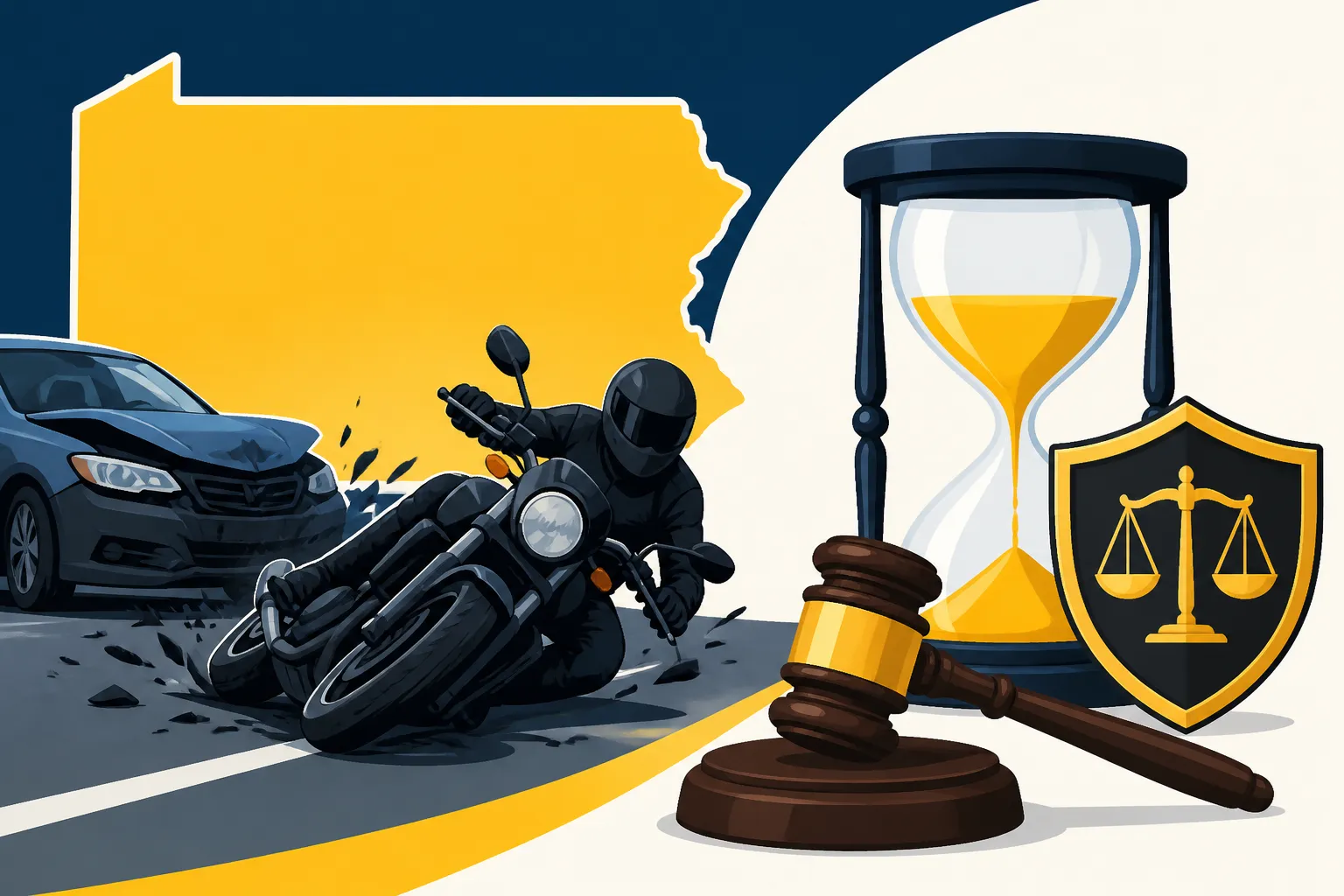
Think of the statute of limitations as a legal timer. It's a law that sets a strict time limit for how long you have to initiate legal proceedings after an incident has occurred. Once this clock runs out, the courthouse doors are effectively closed to your claim, no matter how strong your case or how severe your injuries. The purpose of these laws isn't to be cruel, but rather to ensure that lawsuits are filed while evidence is still fresh, witnesses can still recall events accurately, and defendants aren't left indefinitely vulnerable to potential legal action from years past. It promotes fairness and efficiency within the legal system. For someone who's just been through a traumatic motorcycle crash, this can feel incredibly unfair, adding yet another layer of stress to an already difficult situation. It’s why understanding these timelines is so critical.
The General Rule for Motorcycle Accident Claims in PA
In the Commonwealth of Pennsylvania, the vast majority of personal injury claims, including those stemming from motorcycle accidents, are governed by a two-year statute of limitations. This means you generally have two years from the date of your motorcycle accident to file a formal lawsuit in civil court. This applies to claims seeking compensation for your physical injuries, medical bills, lost wages, and pain and suffering.
For example, if you were involved in a collision on July 15, 2023, your deadline to file a lawsuit would typically be July 15, 2025. It's a hard and fast deadline, and unlike a typical appointment, you can't just call and ask for an extension. This can feel like a heavy burden when you're focusing on recovery, but it's crucial to keep this timeline in mind from day one. You might be able to negotiate a settlement with the at-fault driver's insurance company outside of court, but if those negotiations fail, and you haven't filed a lawsuit within that two-year window, you'll lose your legal standing to do so.
Property Damage Claims vs. Personal Injury Claims
It’s a common misconception that property damage claims might operate under a different timeline than personal injury claims. However, in Pennsylvania, both personal injury and property damage arising from a motorcycle accident generally fall under the same two-year statute of limitations. This means that if your beloved bike was totaled or severely damaged in the crash, you also have two years from the accident date to file a lawsuit specifically for the costs of repair or replacement.
This can be a relief in some ways, as it simplifies the legal landscape slightly. You don't have to juggle multiple, different deadlines for different aspects of your claim. However, it also means that you need to be just as diligent in documenting your property damage as you are your personal injuries. Photos of the scene, repair estimates, and evidence of your bike's market value are all crucial. While many property damage claims are resolved much faster through insurance, having the lawsuit option available is your leverage, and that leverage disappears if the two-year clock runs out.
When the Clock Starts Ticking: Key Considerations
While the general rule is two years from the date of the accident, life (and legal matters) can be a bit more complicated. There are specific circumstances that can influence when that two-year clock actually begins to tick, and understanding these nuances can make all the difference in protecting your claim.
Date of the Accident Rule
For most motorcycle accidents in Pennsylvania, the start date for the statute of limitations is straightforward: it's the actual date the accident occurred. This is the most common scenario and the one you should always assume applies unless explicitly advised otherwise by a legal professional. If you were hit by a car on May 1st, 2024, your two years typically begin on May 1st, 2024.
This simple rule is designed for clarity, but it places a significant responsibility on the injured party to act swiftly. Even if you're in the hospital, undergoing multiple surgeries, or dealing with immense pain, the clock doesn't stop. It’s a harsh reality, but insurance companies are certainly aware of this deadline and often use it as leverage in negotiations, hoping you'll settle for less as the deadline approaches. That's why reaching out for legal guidance sooner rather than later is almost always a good idea after a serious crash.
The Discovery Rule
Sometimes, the effects of a motorcycle accident aren't immediately apparent. You might feel fine in the immediate aftermath, only for a severe back injury or a traumatic brain injury to manifest weeks or even months down the line. This is where Pennsylvania's "discovery rule" can come into play. The discovery rule essentially states that the statute of limitations doesn't begin to run until the injured person knows, or reasonably should have known, that they have been injured and that their injury was caused by the wrongful conduct of another party.
For example, imagine you were in a low-speed motorcycle accident, felt a bit shaken but mostly okay, and assumed your aches would resolve. Several months later, you start experiencing debilitating headaches and vision problems, leading to a diagnosis of a slow-developing traumatic brain injury directly linked to the accident. Under the discovery rule, your two-year clock might not start until the date you received that diagnosis, rather than the original accident date. However, proving the application of the discovery rule can be complex and often requires compelling medical evidence and expert testimony. It's not an automatic extension, and insurance companies will fight hard against its application. This is a nuanced area, and understanding how it relates to potential Motorcycle Accident Traumatic Brain Injuries or other delayed symptoms is vital.
Claims Involving Minors or Incapacitated Individuals
Pennsylvania law recognizes that not everyone has the capacity to understand their legal rights or pursue a claim immediately after an injury. This is particularly true for minors and individuals who are deemed legally incompetent due to a severe injury or mental incapacity. In these special cases, the statute of limitations can be "tolled," meaning the clock is temporarily paused.
For a minor involved in a motorcycle accident, the two-year statute of limitations typically does not begin to run until they reach the age of majority, which is 18 in Pennsylvania. So, if a 16-year-old is injured, they would have until their 20th birthday (18 + 2 years) to file a personal injury lawsuit. Similarly, if an individual suffers such a severe brain injury in a crash that they are legally incapacitated, the statute of limitations might be paused until they regain competence, or a legal guardian is appointed to act on their behalf. These protections are in place to ensure that vulnerable individuals do not lose their right to justice due to circumstances beyond their control. However, even with these exceptions, it's always advisable for parents or guardians to consult with an attorney as soon as possible to protect the minor's or incapacitated person's interests.
Special Circumstances and Extended Deadlines
Beyond the general two-year rule, there are a few very specific scenarios in Pennsylvania that come with their own unique deadlines. These are crucial to understand, as they can significantly shorten or, in rare cases, subtly alter the traditional statute of limitations timeline.
Claims Against Government Entities
This is perhaps one of the most critical exceptions to the general two-year rule for motorcycle accident claims in Pennsylvania. If your accident involved a government entity – whether it's the state (like PennDOT due to a road hazard), a county, or a local municipality (like a city or township police vehicle), the deadlines are drastically different and much shorter. Under Pennsylvania's Sovereign Immunity Act and Political Subdivision Tort Claims Act, you typically have only six months from the date of the accident to provide a formal, written notice of your claim to the responsible government agency.
Failing to provide this notice within the six-month window almost certainly bars you from filing a lawsuit later, even if you’re still within the general two-year personal injury statute of limitations. This strict requirement is incredibly unforgiving. Imagine you crashed your motorcycle due to a massive pothole that PennDOT should have repaired. You'd need to send official notice to the correct government body within six months of your crash, outlining your intent to sue, before you could even consider filing a lawsuit later on. This is a prime example of why getting legal advice quickly is paramount, especially when Government Liability for Road Hazards might be a factor.
Defective Motorcycle Parts Claims
What if your motorcycle accident wasn't solely due to another driver's negligence, but partly because of a faulty component on your bike, like a brake malfunction or a tire blowout? In such cases, you might have a product liability claim against the manufacturer of the defective part or even the motorcycle itself. These claims, while still falling under the umbrella of personal injury, can sometimes have slightly different considerations regarding the statute of limitations.
Generally, product liability claims in Pennsylvania also follow the two-year statute of limitations from the date of injury or discovery of the defect. However, there's also a concept called a "statute of repose" in some states, which sets an absolute deadline regardless of when the injury was discovered, often many years after the product was manufactured or sold. While Pennsylvania doesn't have a general statute of repose for all product liability claims, specific industries or components might have unique rules. For example, if your accident was caused by Manufacturer Fault for Brake Failure, proving this defect and linking it to the accident can be a complex undertaking that requires extensive investigation and often expert testimony. It’s another scenario where an experienced attorney can help unravel the timeline and determine the appropriate course of action.
Wrongful Death Claims
Tragically, some motorcycle accidents result in fatalities. When this happens, family members may be able to file a wrongful death claim to seek compensation for their losses. In Pennsylvania, the statute of limitations for a wrongful death claim is generally two years from the date of the victim's death, not necessarily the date of the accident. This distinction is important because, in some cases, an accident victim might linger for a period before succumbing to their injuries.
Wrongful death claims seek damages for things like funeral and burial expenses, medical bills incurred before death, the loss of the deceased's future earnings and financial support, and the loss of companionship, comfort, and guidance. The process of navigating these claims can be incredibly emotionally taxing, making the strict legal deadlines even harder to manage. Understanding Damages Available in a Fatal Motorcycle Accident and the specific deadlines is crucial for families seeking justice and financial stability after such a profound loss.
Why Missing the Deadline is Catastrophic
It cannot be overstated: the statute of limitations is not merely a suggestion. It is an absolute, non-negotiable legal barrier. Missing this deadline will have devastating and irreversible consequences for your motorcycle accident claim.
Loss of Legal Standing
The most immediate and severe consequence of missing the statute of limitations is the complete loss of your legal standing. Once the clock runs out, you lose the right to file a lawsuit in a Pennsylvania civil court. It doesn't matter how severe your injuries are, how clear the other driver's fault was, or how much evidence you have. The court will simply dismiss your case. This means you will have no legal recourse to force the at-fault party or their insurance company to compensate you for your medical bills, lost wages, pain, suffering, or property damage.
Imagine you've been working with an insurance adjuster, going back and forth on a settlement for months. You believe things are progressing, but the two-year mark silently passes. When negotiations inevitably stall, and you realize you need to file a lawsuit, you discover it's too late. All the effort, all the documentation, all the pain and suffering, essentially count for nothing in the eyes of the law. This is why many experienced attorneys will file a "protective" lawsuit even if they believe a settlement is imminent, just to ensure the statute of limitations is met.
Impact on Settlement Negotiations
Even if you haven't yet filed a lawsuit, simply being outside the statute of limitations will completely cripple any settlement negotiations you might be having with the insurance company. Insurance adjusters are keenly aware of these legal deadlines. Once the statute of limitations has expired, they know you can no longer sue their insured. This removes all leverage from your side.
Why would an insurance company offer you a fair settlement, or any settlement at all, if they know you have no legal way to compel them to pay? They simply won't. They can deny your claim outright, ignore your calls, or offer a ridiculously low amount knowing you have no legal power to fight back. This is How Insurers Lowball Motorcycle Riders effectively. Your ability to file a lawsuit is the primary reason insurance companies engage in serious settlement discussions. Without that threat, your claim is essentially worthless, regardless of its merits. This is a critical factor in How Comparative Negligence Affects Settlements in Pennsylvania, as insurers will use any perceived weakness against you.
Protecting Your Claim: Essential Steps
Navigating the aftermath of a motorcycle accident in Pennsylvania can feel like a full-time job when you're also trying to recover. But taking certain proactive steps can make a monumental difference in protecting your legal rights, especially concerning the statute of limitations.
Document Everything Immediately
The moments, days, and weeks immediately following a motorcycle accident are critical for gathering evidence that will support your claim. Even if you don't think you'll need it, document everything. This means:
- Accident Scene Photos: Take pictures of your motorcycle, the other vehicles involved, road conditions, traffic signs, skid marks, and anything else relevant from multiple angles. Make sure to get photos of your injuries as well, no matter how minor they seem initially. These photos are invaluable in proving How Dashcam Footage Proves Fault or other aspects of the crash.
- Police Report: Obtain a copy of the official police accident report. This document often contains initial findings about fault, witness statements, and crucial details that can anchor your claim. While a police report isn't the final word on fault, it's a foundational piece of evidence.
- Medical Records: Seek immediate medical attention, even if you feel fine. Some serious injuries, like concussions or internal bleeding, may not present symptoms right away. Ensure all your injuries are thoroughly documented by medical professionals. Keep track of all doctor visits, diagnostic tests (X-rays, MRIs), prescriptions, and physical therapy sessions. Consistent medical documentation is the bedrock of proving How Injury Severity Drives Settlement Value.
- Lost Wages Documentation: If your injuries prevent you from working, keep meticulous records of your lost income, including pay stubs, employment contracts, and statements from your employer.
The more detailed and comprehensive your documentation, the stronger your position will be when dealing with insurance companies and, if necessary, when building a legal case. Don't rely on your memory; write everything down.
Consult a Pennsylvania Motorcycle Accident Lawyer Early On
Given the complexities of Pennsylvania's statute of limitations, especially with exceptions like government claims or the discovery rule, one of the most important steps you can take is to consult with an experienced Pennsylvania motorcycle accident lawyer as early as possible. Seriously, don't wait. Even if you're not sure you want to pursue a lawsuit, a lawyer can assess your case, identify potential deadlines, and explain your options.
A lawyer will know the specific deadlines that apply to your unique situation, helping you avoid the catastrophic mistake of missing the statute of limitations. They can also immediately begin gathering critical evidence, dealing with insurance adjusters, and protecting you from common insurance company tactics designed to minimize payouts. Services like LegalMatch can connect you with attorneys in your area who specialize in motorcycle accident cases, making it easier to find someone knowledgeable. An attorney can ensure that you understand How Long You Have to Settle a Claim and the various factors that might affect that timeline. They can also help you understand When to Hire a Motorcycle Accident Lawyer and how their expertise can significantly impact your recovery. Finding a lawyer who understands the nuances of motorcycle accidents is critical; look for a firm with a strong track record, such as the team at Edgar Snyder & Associates or Ostroff Injury Law, both prominent in Pennsylvania for personal injury. They can provide invaluable guidance from the outset, allowing you to focus on your recovery while they handle the legal heavy lifting.
If you're asking yourself, "Do You Need a Motorcycle Accident Lawyer?" the answer is almost always yes, especially when navigating strict legal deadlines.
| Claim Type | Standard Deadline (Pennsylvania) | Notes |
|---|---|---|
| Personal Injury | 2 years from accident date | Includes medical bills, lost wages, pain & suffering |
| Property Damage | 2 years from accident date | For damage to your motorcycle or other property |
| Wrongful Death | 2 years from date of death | Not necessarily from accident date |
| Claims Against Government | 6 months (notice) | Crucial: Written notice required within 6 months of accident |
| Claims Against Minors/Incapacity | Tolled until age 18 + 2 years | Clock starts when minor turns 18, or incapacitated person regains capacity |
| Product Liability (Defective Part) | 2 years from injury/discovery | Complex, may involve additional rules |
Disclaimer
The information provided in this guide is for general informational purposes only and does not constitute legal advice. Laws are complex and constantly evolving, and individual circumstances vary. It is essential to consult with a qualified Pennsylvania attorney to discuss your specific situation and obtain advice tailored to your needs. Relying solely on this information without professional legal guidance is not recommended.