How Comparative Negligence Affects Settlements in Pennsylvania
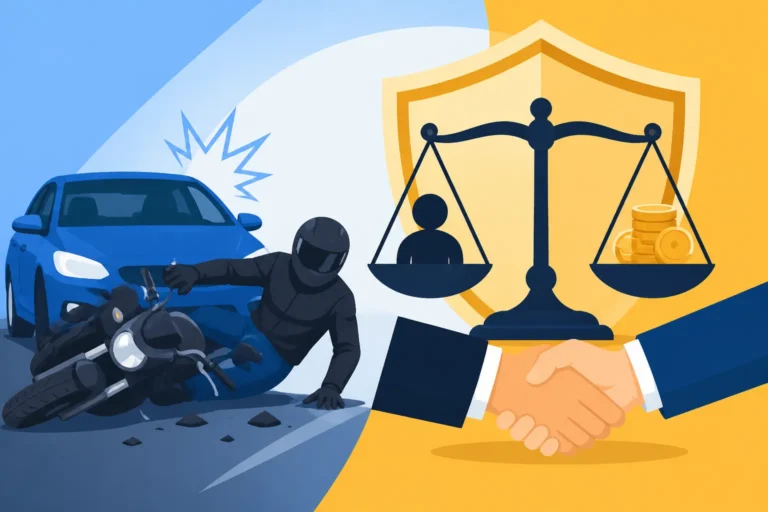
It’s a scenario no rider wants to face: you’ve been in a motorcycle accident, you're hurting, your bike is trashed, and then the insurance company starts hinting that you were partly to blame. This isn't just frustrating; it can severely impact your ability to recover the compensation you desperately need. In Pennsylvania, understanding how shared fault, specifically "comparative negligence," works is absolutely critical to protecting your claim. This comprehensive guide will break down Pennsylvania's rules, explain how they affect your settlement, and offer strategies to safeguard your rights.
Understanding Comparative Negligence in Motorcycle Accidents
When you're involved in a motorcycle accident, it often feels like one party is clearly at fault. However, the reality of accident claims, especially in states like Pennsylvania, is rarely that black and white. The legal concept of comparative negligence exists because, in many collisions, more than one person's actions might have contributed to the crash. It's a way for the legal system to fairly distribute responsibility when fault isn't entirely one-sided.
The Core Principle of Shared Fault
At its heart, shared fault acknowledges that accidents are complex. Maybe the other driver blew through a stop sign, but you were going slightly over the speed limit. Or perhaps they made an illegal U-turn, but you could have swerved to avoid them if you hadn't been momentarily distracted. These are the kinds of scenarios where shared fault comes into play. Instead of completely barring someone from recovery if they had any fault, comparative negligence aims to reduce their compensation proportionally.
Imagine you're cruising down a main road in Philadelphia, doing the speed limit, when suddenly a car pulls out from a side street directly into your path. You slam on your brakes, but it's too late, and you collide. The car driver was clearly negligent for failing to yield. But what if, for a brief second, you had looked down at your speedometer, or your tire tread was a little worn? An insurance company might try to argue that even a tiny lapse on your part contributed to the severity of the crash, or even its occurrence. That's where the idea of How Fault Is Determined in Motorcycle Accidents gets tricky and why comparative negligence is such a vital concept to grasp.
How Different States Handle Shared Fault
It’s worth noting that not all states handle shared fault in the same way. There are primarily three types of rules:
- Pure Contributory Negligence: A handful of states still follow this harsh rule. If you are found even 1% at fault for an accident, you are completely barred from recovering any damages. This is a very old-fashioned and often unfair system.
- Pure Comparative Negligence: In these states, you can recover damages even if you are mostly at fault. Your compensation is simply reduced by your percentage of fault. For example, if you are 90% at fault, you can still recover 10% of your damages. California is a well-known example of a pure comparative negligence state.
- Modified Comparative Negligence: This is the most common system, and it's what Pennsylvania uses. Under this rule, you can recover damages as long as your percentage of fault does not exceed a certain threshold, usually 50% or 51%. If your fault crosses that line, you get nothing.
Understanding these distinctions is paramount because it dictates whether you walk away with compensation or empty-handed. Pennsylvania falls into the modified comparative negligence category, specifically with the 51% bar rule, which we'll dive into next.
Pennsylvania's Modified Comparative Negligence Rule
Pennsylvania operates under a "modified comparative negligence" system, often referred to as the "51% bar rule." This is a crucial distinction that every rider in the Commonwealth needs to be aware of, as it directly impacts your eligibility for compensation after a motorcycle accident. It means your claim isn't simply reduced by your fault; it can be completely wiped out if your fault percentage is too high.
The Critical 51% Bar Rule
In Pennsylvania, you are allowed to recover damages for your injuries and losses as long as your proportion of fault for the accident is 50% or less. If a jury or insurance adjuster determines that your actions contributed to the crash by 51% or more, you are completely barred from receiving any compensation from the other party. This is a hard line, and falling on the wrong side of it can be devastating.
Consider a scenario in Pittsburgh where you're riding your motorcycle and another driver makes an Unsafe Lane Changes Motorcycle Accident, cutting you off. You swerve, lose control, and crash. However, during the investigation, it's found that you were riding with a bald rear tire, which might have contributed to your loss of control. If a jury decided the other driver was 70% at fault for the unsafe lane change, and your bald tire made you 30% at fault for the severity of the incident, you would still be able to recover 70% of your damages. But if they somehow swayed the jury to believe your tire made you 51% or more responsible for the overall incident, your entire claim would be dismissed. This nuance highlights why Motorcycle Accident Liability: A Complete Guide is so important for riders to understand.
What Happens if You Exceed 51% Fault
If your assigned fault percentage is found to be 51% or higher, the consequences are stark: you recover nothing. Absolutely zero. This rule is designed to ensure that those who are primarily responsible for an accident cannot turn around and sue the less responsible party for damages. For motorcycle riders, this can be a huge hurdle. Unfortunately, due to unfair biases and stereotypes, insurance companies and even juries sometimes unfairly attribute a higher degree of fault to motorcyclists. This is where the battle for Proving Fault in a Motorcycle Accident really heats up.
For example, imagine a collision on I-81 near Harrisburg where a car suddenly merges into your lane without looking. You react, but perhaps you were lane splitting at the time, which, while legal in California, is not permitted in Pennsylvania. Even if the car driver was egregiously negligent, an aggressive defense team might argue that your illegal lane splitting was the primary cause of the collision, pushing your fault to 51% or more. This could leave you with severe injuries, a totaled bike, and no financial recourse for your medical bills, lost wages, and pain and suffering.
Specific Examples of Fault Assignment in PA
Fault assignment is rarely a simple "yes" or "no" question. It's often a percentage, and that percentage is determined by looking at all the contributing factors. Here are a few examples common in Pennsylvania:
- Left-Turn Accidents: A driver making a left turn often bears significant fault if they collide with a motorcyclist traveling straight through an intersection. However, if the motorcyclist was speeding or ran a yellow light, some portion of fault could be assigned to them. Pennsylvania law often assigns higher fault to the turning vehicle, but a rider's speed could influence the final percentage. Left-Turn Motorcycle Accidents Explained delves deeper into these common collisions.
- Rear-End Collisions: Typically, the rear driver is at fault in a
Rear-End Collisions Motorcycle Accidentfor following too closely or failing to pay attention. But if a motorcyclist suddenly braked unnecessarily or had a malfunctioning brake light that they knew about, they might bear a small percentage of fault. - Distracted Driving: If a car driver was texting and hit a motorcyclist, their fault would be high. Yet, if the motorcyclist was also distracted (e.g., adjusting a GPS or interacting with a helmet communication system) and that distraction contributed to their inability to react, they might see a minor fault assignment that could impact their settlement if the other driver's fault isn't overwhelming.
These scenarios illustrate that even when another driver seems clearly at fault, insurers and defense attorneys will meticulously search for any action or inaction on your part to shift some blame and reduce their payout, or even use the 51% rule to deny your claim entirely.
How Comparative Negligence is Applied to Your Settlement
The principle of modified comparative negligence in Pennsylvania isn't just a legal theory; it has a very real, tangible impact on the amount of money you can recover after an accident. This impact is felt across various types of damages, from your medical bills to your emotional distress.
Calculating Your Reduced Payout
If you are found to be 50% or less at fault, your total damages will be reduced by your assigned percentage of fault. This is why accurately determining fault is such a contentious part of any accident claim.
Let's say your total damages from a motorcycle accident in Scranton, including medical bills, lost wages, property damage, and pain and suffering, are calculated to be $100,000.
- If you are found 10% at fault, your settlement would be reduced by 10%. You would receive $90,000.
- If you are found 25% at fault, your settlement would be reduced by 25%. You would receive $75,000.
- If you are found 50% at fault, your settlement would be reduced by 50%. You would receive $50,000.
- If you are found 51% at fault, your settlement would be $0.
This reduction applies to all Types of Damages in a Motorcycle Accident Claim. It’s not just about the tangible costs; it includes everything.
Here’s a table illustrating how different fault percentages affect a hypothetical $100,000 settlement in Pennsylvania:
| Rider's Percentage of Fault | Other Driver's Percentage of Fault | Total Calculated Damages | Reduction Based on Rider's Fault | Actual Settlement Payout |
|---|---|---|---|---|
| 0% | 100% | $100,000 | $0 | $100,000 |
| 10% | 90% | $100,000 | $10,000 | $90,000 |
| 25% | 75% | $100,000 | $25,000 | $75,000 |
| 40% | 60% | $100,000 | $40,000 | $60,000 |
| 50% | 50% | $100,000 | $50,000 | $50,000 |
| 51% | 49% | $100,000 | $100,000 (Claim Barred) | $0 |
The Impact on Pain and Suffering
Beyond the calculable economic damages like medical bills and lost wages, motorcycle accident victims often endure significant non-economic damages, most notably Pain and Suffering in Motorcycle Settlements. This includes physical pain, emotional distress, mental anguish, loss of enjoyment of life, and more. These are often the largest components of a motorcycle accident settlement because motorcycle injuries are frequently severe and life-altering.
Just like economic damages, your compensation for pain and suffering is subject to the comparative negligence rule. If your fault is determined to be 20%, your pain and suffering award will also be reduced by 20%. And if your fault crosses that 51% threshold, you won't receive any compensation for your immense physical and emotional trauma, no matter how severe your injuries were. This makes accurately fighting any attempts to assign you blame incredibly important, as the impact on your total recovery, especially for Catastrophic Motorcycle Injuries Explained, can be monumental.
How Insurers Use Comparative Negligence Against You
Insurance companies are businesses, and their goal is to minimize payouts. They know Pennsylvania's 51% rule very well, and they are adept at using it to their advantage. It's not uncommon for an insurer to immediately try to assign some degree of fault to the motorcyclist, even when evidence strongly points to the other driver. They might do this for several reasons:
- Reduce Payout: Even a small percentage of fault on your part means a smaller payout for them.
- Leverage for Negotiation: By raising the specter of shared fault, they can pressure you into accepting a lower settlement offer. They might suggest that if you push for more, they'll argue for a higher percentage of your fault in court, potentially leading to zero recovery.
- The 51% Threat: If they can argue your fault is near or above 50%, they have a powerful tool to deny your claim entirely. This is particularly insidious because of the well-documented Rider Bias in Fault Determination, where motorcyclists are often unfairly perceived as reckless.
You might hear arguments like, "You should have seen the car," or "You could have stopped faster," even if these claims are baseless. They will meticulously examine police reports, witness statements, and even your riding habits to find any shred of evidence to support their argument that you were partially responsible. This is why preparing for these tactics and knowing How Insurance Companies Assign Blame to Riders is essential from day one.
Strategies to Protect Your Claim Under PA's Rule
Navigating Pennsylvania's modified comparative negligence rule after a motorcycle accident can feel like an uphill battle, especially when you're recovering from injuries. However, there are concrete steps you can take to protect your claim and ensure that any fault assigned to you is fair and just.
Gathering Evidence to Prove the Other Driver's Fault
The strongest defense against a claim of shared fault is robust evidence demonstrating that the other driver was primarily, if not entirely, responsible for the accident. The more meticulously you document the scene and subsequent events, the stronger your position will be.
- Document the Scene Immediately: If you are physically able, take photos and videos of everything: the position of the vehicles, damage to both vehicles, skid marks, road conditions, traffic signs/signals, and any visible injuries. The more comprehensive your visual evidence, the harder it is for the other side to dispute the facts.
- Collect Witness Information: Independent witnesses can be invaluable. Get their names, phone numbers, and email addresses. Their unbiased account can often counteract attempts by the other side to misrepresent the events.
- Obtain the Police Report: While not always definitive, a police report can provide a crucial initial assessment of the accident. Ensure you get a copy and review it for accuracy. If you believe it's inaccurate, there might be ways to How to Correct a Wrong Police Report.
- Preserve Your Gear and Motorcycle: Do not discard your damaged helmet or riding gear. These items can provide important Motorcycle Accident Evidence for Proving Fault regarding the impact points and forces involved, supporting your injury claims and disproving some fault arguments.
- Dashcam/Helmet Cam Footage: If you have a dashcam or helmet camera, that footage can be gold. It offers an objective, real-time recording of the accident, which can be irrefutable proof of what happened. How Dashcam Footage Proves Fault is a game-changer in many disputed cases.
Every piece of evidence you gather helps to build a clear picture of what happened and strengthens your argument against shared fault, potentially preventing the other party from successfully invoking the 51% bar rule.
The Importance of Legal Counsel
While it might seem daunting to consider legal action while recovering, hiring a personal injury attorney specializing in motorcycle accidents is one of the most impactful decisions you can make. An experienced attorney knows the nuances of Pennsylvania's comparative negligence laws and how insurance companies operate.
- Expert Navigation of PA Law: A skilled attorney understands the 51% rule inside and out. They can anticipate the arguments the insurance company will make about your alleged fault and develop strategies to counter them effectively. They know how juries in Pennsylvania tend to view these cases.
- Evidence Collection and Preservation: Your lawyer can guide you on what evidence is most crucial and help you gather it, including working with accident reconstruction experts if needed. They can also issue spoliation letters to ensure the other side preserves evidence, such as black box data from vehicles.
- Negotiation with Insurers: Attorneys are seasoned negotiators. They can present your case to the insurance company in a way that minimizes your perceived fault and maximizes your compensation, fighting back against unfair How Insurers Use Rider Stereotypes Against You. They understand How to Fight an Unfair Fault Assignment and can prevent you from being pressured into a lowball offer.
- Courtroom Representation: If a fair settlement can't be reached, your attorney will be prepared to take your case to trial, advocating fiercely on your behalf to ensure a jury understands the true circumstances of the accident and assigns fault appropriately. This specialized representation can significantly How to Maximize Your Motorcycle Accident Settlement.
Trying to fight these battles alone, especially while recovering from serious injuries, is incredibly difficult. A lawyer levels the playing field against large insurance corporations and their legal teams.
Documenting Your Injuries and Damages Meticulously
Beyond proving the other driver's fault, you also need to meticulously document every single injury and financial loss you've incurred. This is crucial for demonstrating the full extent of your damages, which then becomes the base figure for any comparative negligence calculation.
- Seek Immediate Medical Attention: Even if you feel okay, get checked out by a doctor. Some serious injuries, like
Motorcycle Traumatic Brain Injuryor internal bleeding, might not show immediate symptoms. Delays in seeking treatment can be used by insurers to argue your injuries aren't severe or weren't caused by the accident. - Follow All Medical Advice: Attend all appointments, follow your doctor's treatment plan, and keep a record of all therapies, medications, and procedures. Gaps in treatment can suggest to insurers that your injuries aren't as serious as you claim.
- Keep Detailed Records: Maintain a file with all medical bills, receipts for out-of-pocket expenses (like transportation to appointments or over-the-counter medications), pay stubs showing lost wages, and repair estimates for your motorcycle.
- Maintain an Injury Journal: Document your daily pain levels, limitations, emotional impact, and how your injuries affect your daily life and hobbies. This personal record can be powerful evidence for Pain and Suffering Damages Explained.
By thoroughly documenting your injuries and damages, you create an undeniable record of your losses. This record not only justifies the compensation you're seeking but also helps ensure that any reduction due to comparative negligence is applied to the highest possible base amount, leaving you with a more just final settlement.
Disclaimer
Please remember that this information is for educational purposes only and not legal advice. Every motorcycle accident claim is unique, and the specifics of Pennsylvania law can be complex. You should always consult with a qualified personal injury attorney in Pennsylvania to discuss your individual situation and receive advice tailored to your case.