How Speeding Affects Motorcycle Accident Fault
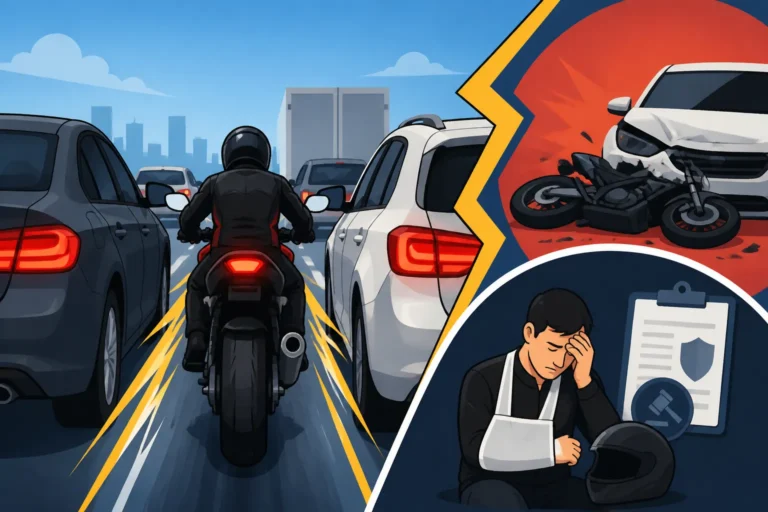
It's a frustrating reality for many motorcycle riders: you've been in an accident, and even if another driver clearly made a mistake, the first thing people often try to do is pin some of the blame on you. One of the easiest targets for this finger-pointing is speed. Many riders worry that even if they were going just a little over the limit, it could completely derail their claim. This guide will dive deep into how speeding actually affects fault in a motorcycle accident and what you can do about it.
Understanding Fault in Motorcycle Accidents
When a motorcycle accident happens, determining who is at fault isn't always as simple as it seems on the surface. It's a critical step because fault directly impacts who pays for damages, medical bills, and all the other headaches that come with a crash. Insurance companies and legal teams spend a lot of time trying to figure out the exact chain of events and actions that led to the collision. This process is complex, and unfortunately, motorcyclists often face an uphill battle due to common biases.
The Basics of Negligence
At its core, determining fault revolves around the legal concept of negligence. In simple terms, negligence means that someone failed to act with the reasonable care that a prudent person would have exercised under similar circumstances, and that failure caused harm to another. For example, a driver who blows through a red light in downtown Chicago is likely negligent because any reasonable driver would stop. The same goes for a rider who swerves carelessly between lanes.
For a successful personal injury claim after a motorcycle accident, you generally need to show four things:
- Duty: The other party owed you a duty of care (e.g., all drivers have a duty to follow traffic laws and drive safely).
- Breach: The other party breached that duty (e.g., they ran a stop sign).
- Causation: The breach of duty directly caused your injuries and damages.
- Damages: You suffered actual damages (medical bills, lost wages, pain and suffering, etc.).
When police arrive at an accident scene, they often start gathering evidence to assess if any traffic laws were violated. This initial assessment, often captured in a police report, can be instrumental in establishing initial fault, though it's not the final word. Understanding who is at fault in a motorcycle accident is the foundational step for any claim, and sadly, riders often feel an extra layer of scrutiny.
The Role of Evidence
Evidence is everything when it comes to proving fault in a motorcycle accident. Without solid evidence, it often becomes a "he said, she said" situation, which rarely works out in the rider's favor. From the moment a crash occurs, every piece of information collected can make or break your case. This includes everything from tire marks on the road to eyewitness accounts.
Consider a scenario where a car suddenly pulled out in front of you on a rural road in Georgia. If you have dashcam footage showing the car failing to yield, that's incredibly strong evidence. But if it's just your word against theirs, it becomes much harder. This is why things like photographs of the scene, witness contact information, and even your damaged gear are so important. The more evidence you can gather that clearly points to the other driver's actions as the cause of the crash, the stronger your position. Without this, insurance companies, such as GEICO or Progressive, might try to shift the blame or minimize their payout. The police report is an important document, but it's crucial to understand how police reports establish fault and how that might impact your claim. It's also worth noting that what to do immediately after a motorcycle accident can significantly impact the evidence you have available later.
How Speeding Directly Impacts Fault Determination
Now, let's talk about the elephant in the room: speeding. It’s a common accusation leveled against motorcyclists, sometimes unfairly, and it can definitely complicate things. The core question isn't just if you were speeding, but how that speed contributed to the accident.
Exceeding Posted Speed Limits
Most states have clear laws about posted speed limits, and exceeding them is a traffic violation. If you were clocked going 70 MPH in a 55 MPH zone on a Texas highway and an accident occurred, the fact that you were speeding will almost certainly be brought up. It doesn't automatically make you 100% at fault for the accident, especially if the other driver made a far more egregious error, like performing an illegal U-turn directly into your path. However, it will likely mean you bear some degree of fault.
The legal system often uses a concept called proximate cause. This means that for your speeding to be considered a factor in fault, it must have been a substantial factor in bringing about the injury. For example, if you were going 60 MPH in a 55 MPH zone, and a drunk driver veered across three lanes to hit you head-on, your marginal speeding probably isn't the proximate cause of the accident. However, if you were going 90 MPH on that same highway, and you couldn't react in time to avoid a car changing lanes because of your excessive speed, then your speed clearly played a more direct causal role.
Driving Too Fast for Conditions
Even if you weren't technically exceeding the posted speed limit, you can still be deemed to be driving too fast for conditions. This is often more insidious because it’s subjective. Imagine riding your Harley-Davidson in a torrential downpour on the Pacific Coast Highway in California. The speed limit might be 65 MPH, but if you're doing 60 MPH and hydroplane, causing an accident, you could be found partially at fault for not adjusting your speed to the hazardous conditions.
The law expects all drivers, including motorcyclists, to operate their vehicles safely based on the current environment. This includes factoring in:
- Weather conditions (rain, snow, fog, ice)
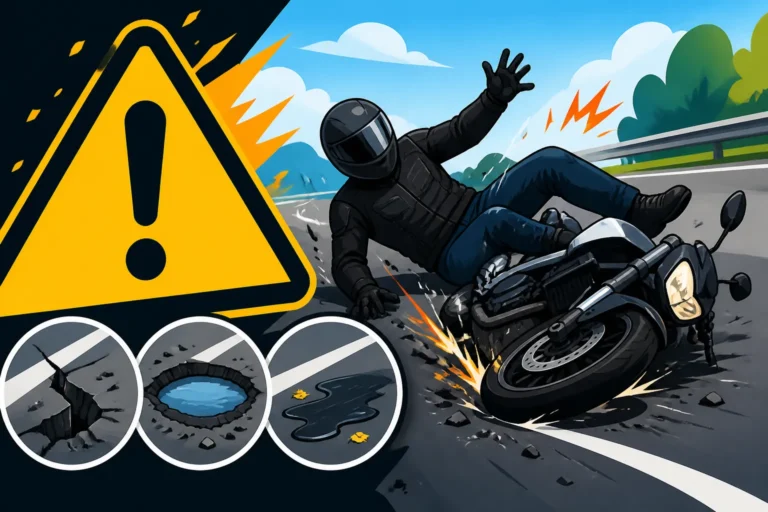
- Road conditions (gravel, potholes, construction, poor road conditions)
- Visibility (nighttime, blinding sun)
- Traffic volume
- The condition of your motorcycle (worn tires, faulty brakes)
A good example might be riding through a dense residential area in Florida at dusk. Even if the speed limit is 35 MPH, if kids are playing near the street and visibility is poor, traveling at 35 MPH might be considered too fast for the conditions if you hit someone who darted out.
Shared Fault and Comparative Negligence
This is where things get really intricate and, frankly, frustrating for riders. Most states operate under some form of "comparative negligence." This legal doctrine allows multiple parties to be assigned a percentage of fault for an accident. In states like California, which uses "pure comparative negligence," you can recover damages even if you're found 99% at fault, though your payout will be significantly reduced. Other states, like Texas, use "modified comparative negligence" with a 51% rule, meaning if you're found 51% or more at fault, you can't recover anything.
Here's how it plays out: if you were speeding, and the other driver turned left in front of you, the court or insurance adjusters might decide the other driver was 70% at fault for the left-turn collision, but your speeding contributed 30% to the severity of the impact or your inability to avoid it. If your total damages were $100,000, your 30% fault would reduce your payout to $70,000. It's a bitter pill to swallow when you know the other driver initiated the dangerous situation, but your speed gave them an opening to assign some blame to you. Understanding how comparative negligence in motorcycle accidents works is paramount. This can be especially true when insurance companies assign blame to riders, often using stereotypes against them.
| Scenario | Other Driver Fault | Rider Speeding Fault | Total Damages | Rider's Payout (Pure Comparative Negligence) | Rider's Payout (51% Modified Comparative Negligence) |
|---|---|---|---|---|---|
| Car ran stop sign, rider 5 MPH over limit | 85% | 15% | $50,000 | $42,500 | $42,500 |
| Driver failed to yield, rider 20 MPH over limit | 60% | 40% | $100,000 | $60,000 | $60,000 |
| Driver changed lanes into rider, rider 30 MPH over limit | 45% | 55% | $150,000 | $67,500 | $0 (Cannot recover, fault > 50%) |
| Driver pulled out from driveway, rider too fast for conditions | 75% | 25% | $75,000 | $56,250 | $56,250 |
This table illustrates that even if another party is clearly at fault, your own actions, like speeding, can significantly reduce your compensation, or even bar it entirely depending on the state's specific laws. This reduction in payout due to shared fault is a crucial aspect of how comparative negligence reduces your payout.
The Legal Implications of Speeding in an Accident
Beyond just reducing your settlement, being accused of speeding in an accident carries several other significant legal implications. It can impact everything from how insurance companies treat your claim to the possibility of criminal charges, making the already stressful post-accident period even more challenging.
Insurance Company Tactics
Insurance companies are not in the business of paying out large settlements; they are businesses focused on their bottom line. When a motorcyclist is involved in an accident and there's any indication of speeding, adjusters will often seize on that information. They might use it to argue that you were partially, or even primarily, at fault, thereby reducing the amount they have to pay. They might even try to deny your claim altogether if they can successfully argue your speeding was the sole cause, though this is rare unless their driver was entirely blameless.
They might send out investigators to analyze skid marks, debris fields, and vehicle damage to estimate your speed at the time of impact. They'll review police reports and witness statements for any mention of you "going fast" or "flying down the road." This information is then used as leverage during settlement negotiations. It's a common tactic to exploit the 'rider bias' in fault determination, suggesting that motorcyclists are inherently reckless. This is why having strong evidence to prove fault in a motorcycle accident is crucial.
Potential Criminal Charges
While a traffic infraction for speeding is common, if your speeding was particularly egregious or contributed to a severe accident with injuries or fatalities, you could face more serious criminal charges. For instance, if you were going 100 MPH in a 35 MPH zone in a school zone in Pennsylvania, and caused a serious collision, you might be charged with reckless driving, vehicular assault, or even vehicular manslaughter depending on the outcome. These are criminal offenses, separate from the civil personal injury claim, and carry potential jail time, hefty fines, and a criminal record.
Even if the other driver was also at fault, your excessive speed could elevate the charges against you. This adds an immense layer of stress and complexity to an already difficult situation. It’s a stark reminder that while riding offers incredible freedom, it also comes with significant responsibilities, and the legal system can come down hard on perceived irresponsibility, especially when injury or death is involved.
Impact on Settlement Value
Even if you avoid criminal charges and the insurance company doesn't deny your claim outright, your speeding will almost certainly affect your final settlement value. As discussed with comparative negligence, any percentage of fault assigned to you means a direct reduction in your compensation. This reduction applies to all types of damages you might be seeking: medical expenses, lost wages, pain and suffering, and property damage.
For example, if you incur $75,000 in medical bills and lost income, and the court determines you were 25% at fault due to speeding, your recoverable damages for these economic losses would be $56,250. The same reduction would apply to non-economic damages like pain and suffering. The amount of pain and suffering in motorcycle settlements can be substantial, so a percentage reduction here can mean tens of thousands of dollars lost. This means you effectively bear the financial burden of your assigned percentage of fault. This is why it’s so important to fight an unfair fault assignment if you believe the blame is misplaced.
Strategies to Counter Allegations of Speeding Fault
It’s easy to feel overwhelmed and defeated when the other side tries to blame your speed for an accident. However, there are absolutely steps you can take and arguments that can be made to push back against these allegations and protect your claim.
Gathering Exculpatory Evidence
Just as the other side will look for evidence to prove you were speeding, you need to gather evidence that either refutes their claims or demonstrates that your speed, even if slightly elevated, was not the primary cause of the accident. This often involves a deep dive into the specifics of the crash.
Consider the following types of evidence:
- Witness statements: Did any witnesses describe the other driver's reckless actions? Did they not mention you were speeding, or state that you were going a reasonable speed given the flow of traffic?
- Dashcam or helmet camera footage: This is a game-changer. If you have footage from your helmet cam that shows your speed was appropriate, or definitively proves the other driver’s actions (like a sudden turn without signaling), it can often override initial police assumptions or insurance company claims.
- Accident reconstruction reports: Experts can analyze skid marks, vehicle damage, and other physical evidence to determine the actual speeds of both vehicles and the mechanics of the collision. Sometimes, these reports show that even if you were slightly over the limit, it wouldn't have prevented the crash caused by the other driver's severe error.
- Traffic signal data: If the other driver ran a red light, traffic camera footage or signal timing data can prove their fault, making your speed less relevant to the causation.
- Road condition reports: If poor road conditions were a factor, evidence of hazardous conditions (e.g., unexpected gravel, significant potholes, or oil slicks) can shift focus away from your speed alone.
The goal is to show that even if there was some minor speeding, the other driver's negligence was the true proximate cause of the accident. What evidence disproves rider fault often comes down to a thorough investigation and careful documentation.
Expert Witness Testimony
In complex cases where speeding allegations are heavily contested, an expert witness can be invaluable. These professionals, often accident reconstructionists or forensic engineers, possess specialized knowledge and tools to analyze the dynamics of the crash. They can often determine:
- Actual speeds: By examining skid marks, crush damage to vehicles, and other physical evidence, they can calculate the likely speed of both vehicles involved in the collision. This can sometimes prove that the perceived speed was much lower than what an untrained eye or biased witness might claim.
- Causation: They can provide expert testimony on how the accident occurred and, crucially, what actions or inactions were the primary cause. They might be able to show that even if you were going slightly faster, the accident was unavoidable due to the other driver's sudden, unexpected, or illegal maneuver.
- Avoidability: An expert can determine whether the accident would have still occurred even if you had been traveling at the posted speed limit. If the other driver pulled out directly in front of you with no time to react, an expert might conclude the crash was inevitable, regardless of your speed within a reasonable range.
Bringing in an expert witness can be expensive, but their testimony can significantly strengthen your case, especially when pitted against an insurance company's efforts to assign blame to you.
Understanding State-Specific Laws
As mentioned, states have different rules regarding comparative negligence. It's not a one-size-fits-all situation.
- Pure Comparative Negligence: States like California allow you to recover damages even if you are mostly at fault. So, if you were 90% at fault due to speeding, but the other driver was 10% at fault, you could still recover 10% of your damages.
- Modified Comparative Negligence (50% Rule): Some states, like Colorado, prevent you from recovering any damages if you are found 50% or more at fault. If you were deemed 50% responsible for the accident, your claim could be entirely barred.
- Modified Comparative Negligence (51% Rule): Other states, like Texas and Georgia, use a 51% rule. You can recover damages as long as your fault is 50% or less. If you are 51% or more at fault, you get nothing.
Knowing your state's specific laws is critical because it dictates how much leverage the speeding allegation has. A minor percentage of fault from speeding in a 51% rule state could wipe out your entire claim if it pushes you over the edge. This is why when a rider is partially at fault, it can have serious repercussions for their settlement. Understanding these nuances is a key reason why you might need a motorcycle accident lawyer, particularly one experienced in handling cases in your specific state. They can help you navigate these complex legal waters and devise the best strategy to protect your rights.
Disclaimer
Please note that this article provides general information and does not constitute legal advice. Every motorcycle accident claim is unique, and the information provided here may not apply to your specific situation. It is always recommended to consult with a qualified legal professional for advice tailored to your individual circumstances.