When to Hire an Accident Reconstruction Expert
It's an unfortunate truth that when you're involved in a motorcycle accident, especially one with serious injuries, proving exactly what happened can feel like an uphill battle. You might be facing conflicting stories, a police report that seems to miss crucial details, or an insurance company quick to assign blame to the rider. This guide is here to walk you through those frustrating situations and explain when bringing in an accident reconstruction expert could be the game-changer you need to protect your rights and your claim.
Understanding Complex Motorcycle Accident Scenarios
Motorcycle accidents are often far more complicated than your average fender bender. The dynamics are different, the injuries tend to be more severe, and unfortunately, there's often an inherent bias against riders. When you're trying to piece together what happened, especially when adrenaline is high and memories are fractured, a clear picture can be incredibly elusive.
Disputed Fault and Conflicting Accounts
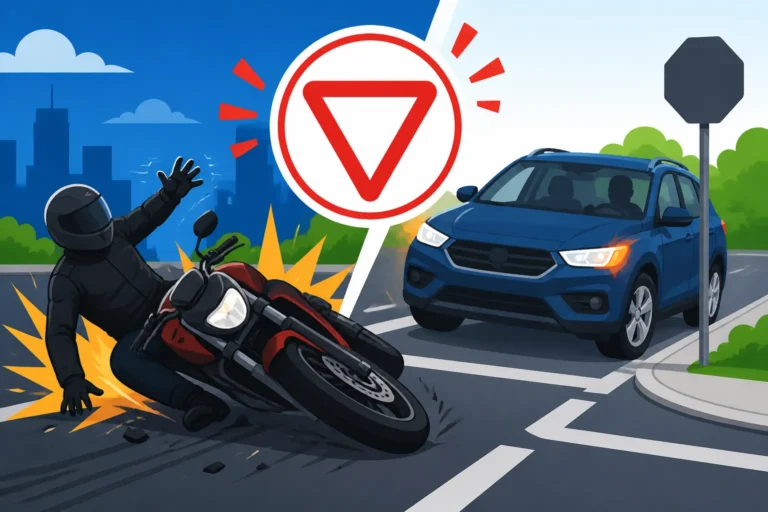
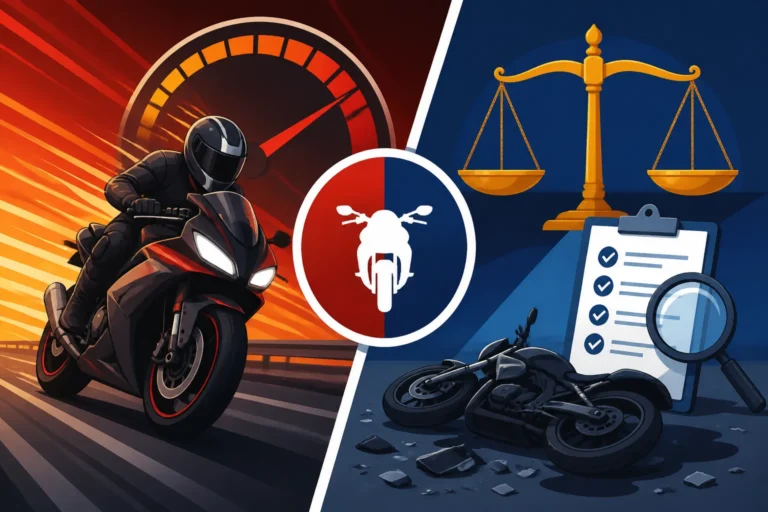
One of the most common and maddening scenarios after a motorcycle crash is when fault is disputed. You know what happened, you were riding safely, and then boom—the other driver either pulls out in front of you, changes lanes without looking, or simply claims they "didn't see you." Now, the other driver, perhaps influenced by their own fear or simply trying to avoid responsibility, is telling a completely different story. Maybe they're claiming you were speeding, or that you swerved erratically. Suddenly, it's your word against theirs, and without objective evidence, that's a tough position to be in.
This kind of disagreement can quickly derail your ability to recover compensation for your injuries and damages. Insurance companies are notorious for seizing upon any ambiguity to deny or minimize claims. They'll often leverage the other driver's statement against yours, even if it's clearly self-serving. This is where the emotional toll starts to mount, on top of your physical recovery. You're not just fighting for a settlement; you're fighting for the truth of what happened on the road.
Lack of Clear Evidence at the Scene
Sometimes, the problem isn't conflicting accounts, but a plain lack of comprehensive evidence. Maybe the accident happened on a less-traveled road, or emergency responders were focused primarily on your medical needs, not meticulous evidence collection. Perhaps critical skid marks weren't properly measured, debris fields weren't photographed extensively, or traffic camera footage isn't readily available or clear.
Think about a scenario on a busy interstate like I-5 in California, where an accident might be cleared quickly to restore traffic flow, potentially before all crucial physical evidence is documented. Or a rural road in Texas where police might not have specialized accident investigation training beyond the basics. The absence of solid physical evidence can be devastating for a claim, making it harder to establish key facts like vehicle speeds, points of impact, and exact positions after the crash. Without this kind of objective data, it's incredibly difficult to prove the other driver's negligence, which is essential for any personal injury claim. This is a common frustration, especially when you're still in the hospital trying to recall every detail.
Unique Dynamics of Motorcycle Crashes
It's no secret that motorcycles behave differently than cars or trucks in a collision. The physics involved are distinct, and how a motorcycle impacts another vehicle, skids, or comes to rest can reveal a lot about the force and angle of impact. Unfortunately, many law enforcement officers, while skilled in their jobs, might not have specialized training in motorcycle accident reconstruction. They might document the scene thoroughly from a general perspective, but miss subtle cues unique to motorcycle dynamics that an expert would immediately recognize.
For instance, the way a rider and bike separate, the type of damage sustained by the motorcycle (whether it's crushed, scraped, or twisted), and even the presence of road rash patterns on the rider's gear can all speak volumes about the crash sequence. These details are often overlooked by untrained eyes but are goldmines for an accident reconstruction expert. This specialized understanding is crucial because it helps counter the common "rider bias" where people assume the motorcyclist must have been at fault simply because they're on a bike.
The Role of an Accident Reconstruction Expert
When you're dealing with the aftermath of a severe motorcycle accident, you need every advantage you can get. That's where an accident reconstruction expert comes into play. These professionals are like forensic detectives for crashes, meticulously piecing together the events leading up to, during, and after a collision using scientific principles and specialized tools.
What an Expert Does
An accident reconstruction expert's primary goal is to provide an objective, scientifically-backed explanation of how an accident occurred. They don't just guess; they use mathematics, physics, and engineering principles to analyze the available evidence and reconstruct the sequence of events. This often involves calculating speeds, trajectories, impact angles, and the actions of all involved parties.
They can determine if a driver was speeding, if a motorcycle had enough time to react, or if a vehicle encroached into another's lane. Their work goes far beyond what a typical police officer might do. They are often called upon to review police reports, witness statements, and physical evidence, then apply their expertise to create a clear, unbiased picture of the crash. This can be especially powerful when you need to prove fault in a motorcycle accident where initial accounts are murky.
Types of Evidence They Analyze
These experts don't just look at a few photos and call it a day. Their analysis can encompass a wide array of data, some of which you might not even realize is relevant:
- Vehicle Damage: They'll examine the specific types and patterns of damage on both vehicles to determine points of impact, force, and direction. This includes scrapes, dents, and deformations.
- Roadway Evidence: Skid marks, scuff marks, tire prints, debris fields (like shattered glass or plastic), gouges in the asphalt, and even fluid spills all tell a story. An expert can measure and analyze these to deduce speeds, braking events, and vehicle paths.
- Site Inspections: They'll visit the accident scene to assess sightlines, road conditions, traffic controls, and any potential environmental factors that might have contributed to the crash. This could include things like poor road conditions motorcycle accident fault or confusing signage.
- Event Data Recorders (EDRs) and Telematics: Many modern vehicles have "black boxes" (EDRs) that record data like speed, braking, steering input, and seatbelt use seconds before impact. Telematics data from commercial trucks or even personal vehicle apps can also provide valuable information.
- Photographs and Videos: This includes photos taken by police, witnesses, or even dashcam footage. An expert can analyze angles, lighting, and object placement within these visuals to extract crucial details.
- Witness Statements: While not purely scientific, an expert can evaluate witness accounts against physical evidence to determine their consistency and reliability.
- Medical Records and Injury Patterns: The nature and location of a rider's injuries can sometimes correlate with specific impact points or forces, further supporting the reconstruction.
By integrating all this data, an expert can create a comprehensive model of the accident, which helps in proving fault and detailing the severity of impact.
How Their Findings Impact Your Claim
The findings of an accident reconstruction expert can dramatically impact the strength and potential value of your motorcycle accident claim. Their detailed, scientific analysis provides objective evidence that can:
- Establish or Confirm Fault: In cases of disputed fault, their report can definitively show that the other driver was negligent (e.g., failed to yield, made an unsafe lane change, or was speeding). This directly counters the common 'I Didn't See the Motorcycle' Defense Explained.
- Counter Defense Arguments: Insurance companies and defense attorneys often try to shift blame to the motorcyclist. An expert's report can debunk claims that you were speeding, lane splitting improperly, or riding recklessly, preventing unfair fault assignment.
- Strengthen Negotiation Position: With a clear, expert opinion backing your claims, the insurance company will find it much harder to deny or lowball your settlement offer. They know that a jury will likely be swayed by scientific evidence. This is a key factor in how a lawyer increases your settlement.
- Support Injury Claims: By determining the forces involved in the collision, an expert can help correlate the impact with the severity of your injuries, linking the accident directly to your medical damages. This is crucial for claiming economic and non-economic damages.
- Provide Expert Testimony: If your case goes to trial, the expert can testify in court, explaining their findings to a jury in an understandable way, lending significant credibility to your version of events.
Specific Situations Where Experts Are Crucial
Not every motorcycle accident requires an accident reconstruction expert, but certain circumstances virtually demand their involvement to ensure a fair outcome. These are the scenarios where their specialized knowledge truly shines.
High-Impact or Catastrophic Injury Crashes
If your motorcycle accident resulted in severe injuries like a traumatic brain injury, spinal cord injury, or multiple broken bones, the stakes are incredibly high. These types of catastrophic injuries often lead to extensive medical bills, long-term care needs, lost wages, and profound pain and suffering. In such cases, maximizing your motorcycle accident settlement is paramount, and you cannot afford to have any ambiguity regarding fault.
Consider a scenario where a rider suffers a severe leg injury after being T-boned by a car running a red light. The other driver claims the light was yellow. An expert can analyze traffic light cycles, vehicle speeds, and impact dynamics to prove definitively that the light was red when the car entered the intersection. This objective proof becomes indispensable when pursuing the full compensation needed for ongoing medical treatment and rehabilitation. When the long-term impact on your life is significant, an expert's detailed analysis helps ensure that the compensation reflects the true cost of your injuries.
Multi-Vehicle or Commercial Vehicle Accidents
Motorcycle accidents involving multiple vehicles or large commercial trucks can quickly become incredibly complex. In multi-vehicle pile-ups, it can be difficult to determine who caused the initial impact and how subsequent collisions unfolded. Each driver involved might point fingers at others, leading to a tangled web of blame. An accident reconstruction expert can meticulously analyze impact points, vehicle resting positions, and damage to each vehicle to pinpoint the sequence of events and the responsible parties.
When a commercial vehicle like a semi-truck is involved, the situation is even more challenging. Trucking companies often have robust legal teams and aggressive insurance adjusters who are quick to defend their drivers. The sheer size and weight disparity between a motorcycle and a commercial truck mean the injuries sustained by the rider are almost always severe. An expert can provide crucial insights into factors like truck braking distances, blind spots, and driver fatigue, which might have contributed to the crash. Their findings can be essential in holding powerful trucking companies accountable.
Cases Involving Technical or Scientific Challenges
Some accidents present unique technical challenges that go beyond simple observation. For example, if there's a question about vehicle malfunction, road design flaws, or environmental factors, an expert can provide critical analysis. This could involve examining a motorcycle's brake system if brake failure is suspected, or assessing the engineering of an intersection if a design flaw contributed to a failure to yield.
Let's say a rider crashes after hitting an unmarked pothole on a municipal road in Phoenix, Arizona. The city might deny responsibility, claiming the pothole wasn't a known hazard. An expert can analyze the road's maintenance records, survey the area, and even perform simulations to demonstrate how the pothole posed an unreasonable danger and directly caused the accident. This kind of scientific analysis is vital for establishing government liability for road hazards. Without it, your claim against a large entity with deep pockets might quickly be dismissed.
Challenging the Official Police Report
It's a tough pill to swallow, but sometimes, the initial police report might contain inaccuracies or an incomplete picture of the accident. Police officers, despite their best intentions, might arrive after the fact, miss subtle evidence, or be influenced by incomplete witness statements. If the police report unfairly attributes partial fault to you, or fails to assign fault correctly, it can be incredibly damaging to your claim.
An accident reconstruction expert can meticulously review the police report, cross-referencing it with their own independent investigation, physical evidence, and witness statements. They can identify discrepancies, correct errors, and provide a more accurate narrative based on scientific principles. This is particularly important when the police report assigns blame based on assumptions rather than concrete evidence, a common occurrence in cases where rider bias in fault determination comes into play. Correcting a wrong police report is a critical step, and an expert provides the objective evidence needed to do so.
The Process of Working with an Expert
Engaging an accident reconstruction expert isn't as daunting as it might sound. While it's a serious undertaking, the process is structured and designed to build a strong, evidence-based case for you. Typically, your motorcycle accident lawyer will facilitate this process, as they have established relationships with reputable experts and know how to best integrate their findings into your legal strategy.
Initial Consultation and Data Gathering
The first step usually involves an initial consultation between your attorney and the expert. During this phase, the expert will review all existing documentation related to your crash. This includes the police report, any photos or videos you or witnesses took at the scene, witness statements, and your initial medical records. Your attorney will also provide the expert with a comprehensive overview of the case, highlighting specific areas of dispute or questions about fault.
This is where the expert starts to form a hypothesis and determine what further investigation is needed. They might ask for specific details about the vehicles involved, weather conditions, or any perceived malfunctions. The more information your legal team can provide at this early stage, the more efficiently and accurately the expert can begin their work. Think of it as laying the groundwork for a detailed forensic investigation.
Investigation and Analysis
Once retained, the expert will embark on their full investigation. This often involves several key actions:
- Scene Visit: If possible, the expert will visit the actual accident site. They will take their own measurements, look for overlooked physical evidence, assess sightlines, and analyze traffic patterns and controls. This on-site inspection is invaluable, as it allows them to see the environment in which the crash occurred firsthand.
- Vehicle Inspection: They will likely inspect the damaged vehicles, if they are still available and preserved. They look for specific deformation patterns, paint transfers, and mechanical issues. This includes checking for any event data recorder (EDR) data that might be downloadable.
- Data Analysis: Using specialized software and scientific formulas, they will analyze all collected data. This involves calculating speeds, trajectories, and the forces involved. They can simulate crash scenarios to test hypotheses about how the accident occurred. For instance, they might calculate if a driver had sufficient time to stop or yield given their speed and reaction time.
- Interview Review: While they don't typically conduct primary interviews, they will carefully review all recorded witness statements, depositions, and police interviews for consistency and potential insights that align with the physical evidence.
This phase is where the scientific magic happens, transforming raw data into a coherent and defensible explanation of the crash.
Presentation of Findings and Testimony
Upon completing their investigation, the accident reconstruction expert will typically prepare a detailed report. This report will outline their methodology, findings, and conclusions regarding how the accident occurred and who was at fault. The report will usually be accompanied by diagrams, illustrations, and potentially 3D simulations that visually represent their findings. This comprehensive package provides powerful evidence to support your claim.
This report is then used by your attorney in negotiations with the insurance company. It serves as compelling, objective evidence that can significantly strengthen your bargaining position. If a settlement cannot be reached and the case proceeds to trial, the expert will be prepared to provide expert testimony in court. They will explain their findings to the judge and jury in clear, understandable language, effectively becoming a crucial witness for your side. Their unbiased, scientific perspective can often make the difference between winning and losing a complex case.
| Accident Scenario | When to Consider an Expert | Key Benefits of Expert Involvement |
|---|---|---|
| Disputed Fault | Other driver blames you, conflicting witness statements | Establishes objective facts, counters unfair blame, clarifies sequence of events. |
| Catastrophic Injuries | Severe TBI, spinal cord, or life-altering injuries | Correlates crash forces with injury severity, justifies higher compensation, leaves no room for doubt on liability. |
| Lack of Evidence | Police report is incomplete, no clear witnesses, minimal photos | Uncovers overlooked physical evidence, reconstructs scene based on subtle cues, fills in missing details. |
| Multi-Vehicle Crashes | 3+ vehicles involved, complex chain reaction | Pinpoints exact points of impact, sequence of collisions, and individual liabilities. |
| Commercial Vehicle Involved | Collision with large truck, bus, or delivery van | Analyzes unique dynamics (braking, weight, blind spots), holds trucking companies accountable. |
| Challenging Police Report | Report contains errors or misjudgments of fault | Provides scientific basis to correct inaccuracies, strengthens credibility, prevents dismissal of claims based on flawed reports. |
| Technical Issues | Suspected vehicle malfunction, road design flaw, weather impact | Investigates mechanical failures, assesses environmental factors, determines if external conditions contributed to the accident. |
In sum, an accident reconstruction expert can be an invaluable asset when you're facing a complex motorcycle accident claim. They transform uncertainty into clarity, assumptions into facts, and ultimately, strengthen your ability to seek justice and fair compensation for what you've endured.
Disclaimer
Please remember that this article provides general information and insights into motorcycle accident claims and the role of accident reconstruction experts. It is not intended as legal advice. Every accident and legal case is unique, and the information presented here may not apply to your specific situation. For personalized legal guidance, it is always recommended to consult with a qualified motorcycle accident attorney in your jurisdiction.