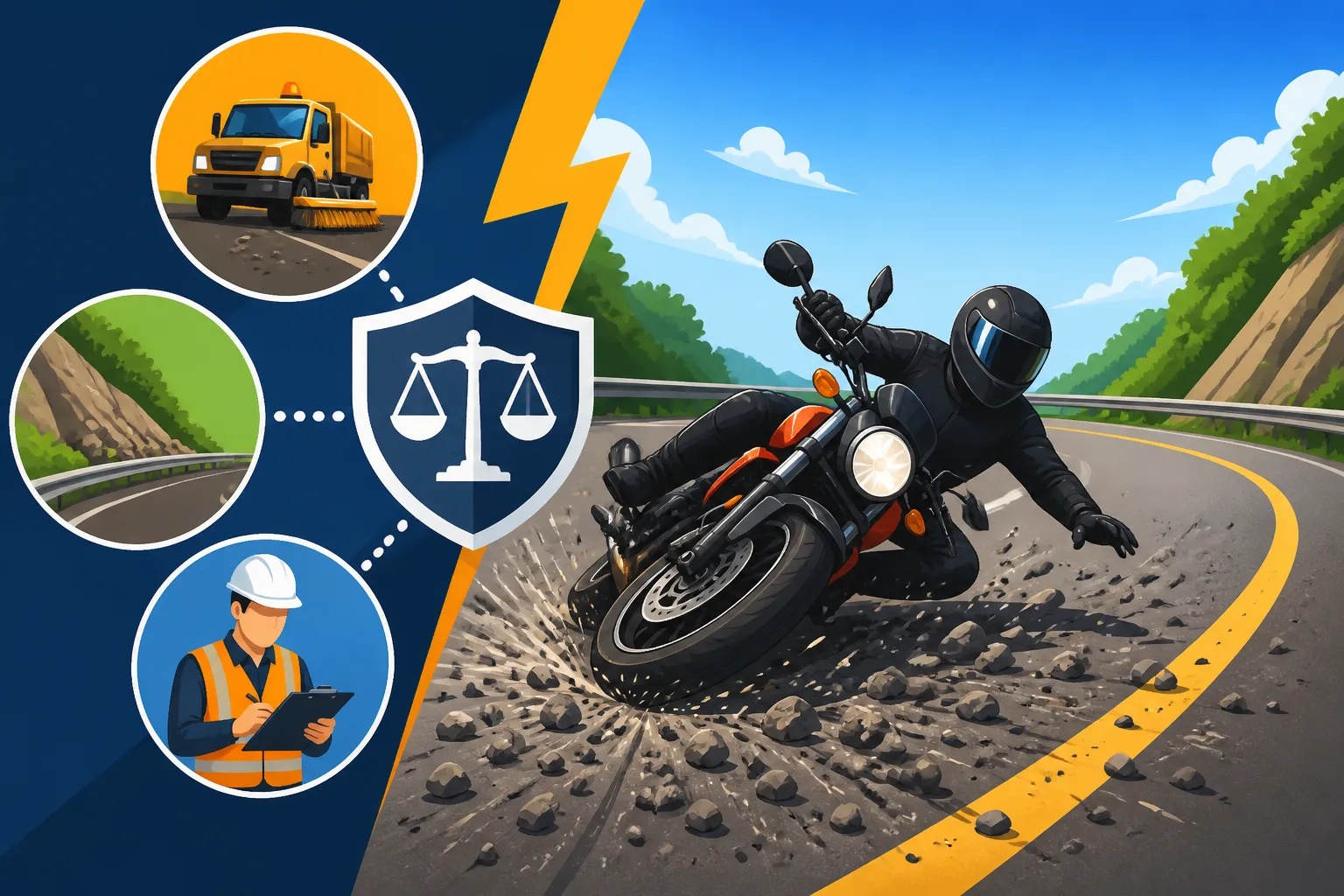
Who Is Liable for a Gravel or Debris Crash
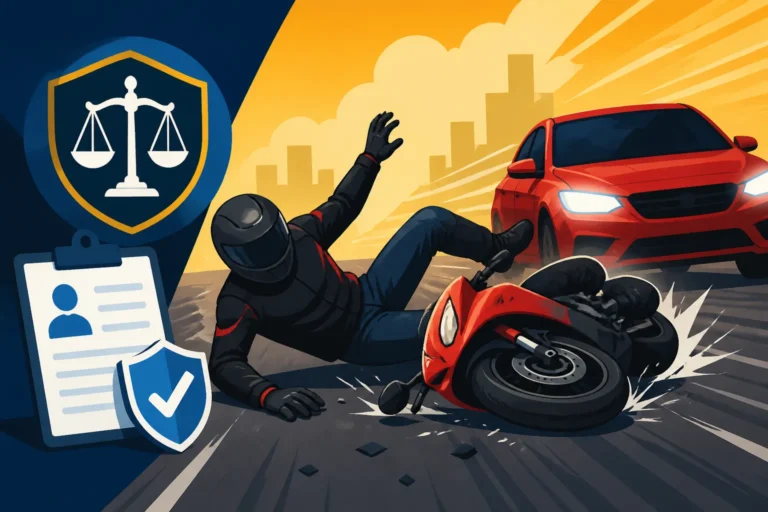
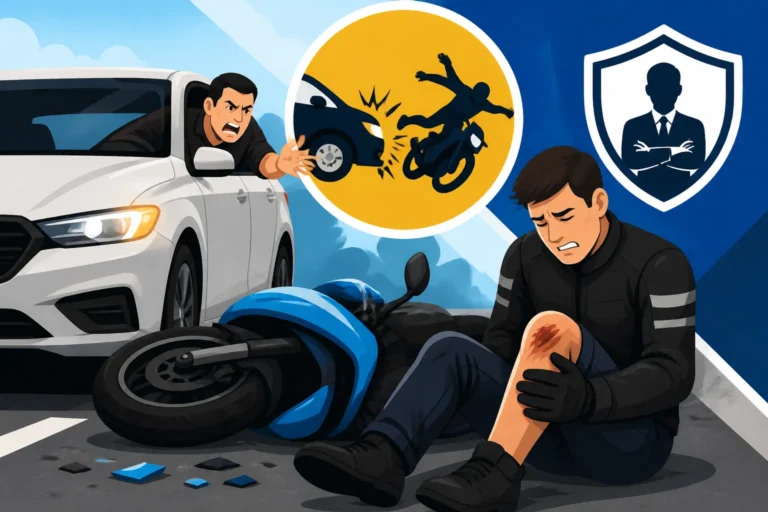
There are few things more terrifying for a motorcyclist than hitting an unexpected patch of gravel or a random piece of debris on the road. One moment you're cruising, enjoying the ride, and the next, your front wheel washes out, or you're fighting for control, often resulting in a severe crash. It's an all-too-common scenario, and when it happens, the immediate thought, after the pain and shock, is often, "Whose fault was this?" This guide is here to shed light on who might be held liable for a gravel or debris-related motorcycle accident and how you can navigate the complex path to justice.
Understanding the Dangers of Gravel and Debris for Motorcyclists
Motorcyclists navigate a world where road conditions, which might be a minor inconvenience for a car, can quickly become life-threatening hazards. Gravel, spilled cargo, construction materials, or even seemingly harmless items can turn a pleasant ride into a devastating accident. It's a fundamental truth of riding that demands constant vigilance, but even the most experienced rider can be caught off guard.
The Unique Vulnerability of Motorcycles
Unlike a car with four points of contact and a significant contact patch, a motorcycle relies on two small patches of rubber, each no larger than a credit card, to maintain traction and control. This inherent design makes motorcycles incredibly agile and exhilarating to ride, but it also renders them uniquely vulnerable to surface inconsistencies. When a car hits a patch of gravel or a pothole, it might jolt the passengers, but the vehicle typically maintains stability. For a motorcycle, that same patch of gravel can cause the front or rear tire to lose grip entirely, leading to a slide, a low-side, or a high-side crash with little to no warning.
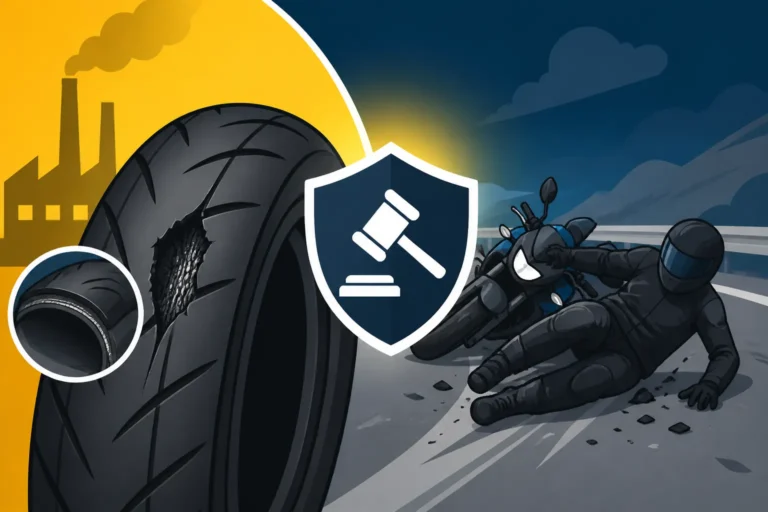
The balance required to operate a motorcycle is extremely delicate. Any sudden loss of traction, especially mid-corner or during braking, can instantly upset this balance. Even small rocks or sand can cause a tire to slip, and larger debris like lumber, metal scraps, or even plastic car parts can snag a wheel, impact critical components, or throw a rider completely off course. The consequences for a rider are almost always more severe than for an occupant in a car, often leading to serious injuries like road rash, broken bones, or even traumatic brain injuries. We, as riders, often face the unfair perception that we are inherently reckless, but often, it's hazards entirely out of our control that lead to these devastating outcomes.
Common Types of Road Debris and Their Origins
Road debris isn't just one thing; it comes in many forms, each with its own set of potential culprits and causes. Understanding these categories can be crucial when trying to determine liability after a crash. We're talking about everything from loose gravel to construction remnants and discarded items.
- Loose Gravel, Sand, and Dirt: This is arguably the most common culprit. It can accumulate on roads after storms, be left behind by construction vehicles exiting work sites, or simply migrate from unpaved shoulders onto the main thoroughfare. Sometimes, it’s even intentionally spread by road crews for traction in icy conditions but not properly cleared afterward, or it's the byproduct of road erosion.
- Construction Debris: Think nails, screws, metal scraps, insulation, wood planks, or even larger pieces of asphalt. These materials often fall from construction vehicles that haven't properly secured their loads, or they might be negligently left behind on or near construction zones. A construction crew working on a bridge or overpass might accidentally drop materials onto the road below.
- Vehicle Parts and Spilled Cargo: This category is wide-ranging. It includes blown-out tire shreds from big rigs, bumpers or mirrors from previous accidents that weren't cleared, or cargo that has fallen from trucks. Imagine hitting a piece of unstrapped furniture, a discarded appliance, or even a bag of trash that fell out of a pickup truck. These incidents highlight the importance of proper vehicle maintenance and secure loading practices.
- Natural Debris: While less common for direct liability, branches, leaves, or flood-borne sediment can sometimes be attributed to negligent property owners or municipalities that fail to clear public areas after severe weather. For example, if a city neglects to clear a major tree limb that falls across a roadway after a mild storm, leading to a crash, there could be grounds for a claim.
Identifying Potential Liable Parties in a Gravel or Debris Crash
When you've been in an accident caused by gravel or debris, the immediate question after safety is, "Who is responsible?" It's not always straightforward, as liability can fall on a variety of individuals or entities depending on the circumstances. Pinpointing the responsible party is crucial for pursuing a motorcycle accident claim and getting the compensation you deserve.
Government Entities and Road Maintenance
Often, the first place people look for blame in road hazard incidents is the government agency responsible for maintaining the roads. This includes state Departments of Transportation (like Caltrans in California or TxDOT in Texas), county road commissions, or city public works departments. These entities have a legal "duty of care" to ensure public roads are reasonably safe for travel. This doesn't mean every pothole instantly makes them liable, but it does mean they must address known hazards or hazards they should have known about within a reasonable timeframe.
For example, if a state highway department performed road work and left a significant amount of loose gravel on the road shoulder without proper signage or sweeping, and you crash as a result, they could be held responsible. Similarly, if a city street has a chronic issue with gravel washing onto it from an adjacent dirt lot, and the city fails to implement preventative measures or routinely clean the area, liability could fall on them. However, suing a government entity comes with unique challenges, including strict deadlines and specific notification requirements that differ from typical personal injury claims. Many states have sovereign immunity laws that protect government agencies, making these cases particularly complex. This is where specialized legal insight becomes absolutely invaluable; understanding Government Liability for Road Hazards is a critical component in these situations.
Construction Companies and Project Sites
Construction sites are notorious for contributing to road debris. Whether it's a new development, road repair, or bridge construction, the process itself can generate a lot of material that might end up on public roads. If a construction company operating near a public road fails to take reasonable steps to prevent debris from escaping its site or to clean up debris that does escape, they could be held liable. This includes:
- Failure to secure loads: Trucks leaving a construction site must have their loads properly covered and secured to prevent gravel, dirt, and other materials from falling onto the road.
- Lack of routine cleanup: Construction companies are often responsible for regularly sweeping nearby public roads if their operations generate significant dust or debris.
- Insufficient signage: If a construction zone creates temporary hazards like loose gravel or uneven surfaces, the company has a duty to place clear and adequate warning signs for motorists, especially motorcyclists who are more susceptible to these issues.
Imagine a scenario where a large truck from a contractor like Granite Construction or Kiewit Corporation leaves a job site on I-5 in Washington, spilling gravel all over the lane. If a rider then hits that gravel and crashes, the construction company, or even the trucking company they hired, could be found negligent for failing to secure their load or properly clean the roadway.
Commercial Vehicles and Spilled Loads
Beyond construction companies, any commercial vehicle that spills its load or whose components detach and become road hazards can be held responsible. This could range from a delivery truck losing part of its cargo to a semi-truck experiencing a tire blowout, leaving hazardous tire fragments strewn across multiple lanes. Commercial drivers and the companies they work for have a stringent duty to ensure their vehicles are well-maintained and their cargo is properly secured.
If a truck driver fails to conduct a thorough pre-trip inspection and their overloaded trailer bursts open, spilling oranges, lumber, or even hazardous chemicals onto the highway, and this causes a motorcycle accident, the trucking company and driver would almost certainly be liable. Similarly, if a poorly maintained vehicle belonging to a company like FedEx or UPS sheds a wheel or a bumper, creating a hazard, they could be found at fault. Proving this often requires swift action to document the scene and identify the responsible vehicle, which can be challenging if the truck drives away unknowingly. Knowing What to Do Immediately After a Motorcycle Accident is crucial to gather this time-sensitive information.
Private Property Owners
Sometimes, debris or gravel migrates from private property onto public roads. This could happen if a commercial business's unpaved parking lot continually spills gravel onto an adjacent street, or if a homeowner's driveway construction project leaves materials flowing into the public right-of-way. In such cases, the private property owner might be considered liable if they knew or should have known about the hazard and failed to mitigate it.
Consider a large landscaping company in Phoenix that routinely uses an unpaved staging area next to a busy street. If their operations consistently track a significant amount of dirt and small rocks onto the street, creating a slippery surface for motorcyclists, and they ignore repeated complaints or fail to implement cleanup measures, they could be held accountable for a resulting accident. Their responsibility stems from allowing a dangerous condition originating on their property to impact public safety.
| Liable Party Category | Common Examples of Negligence | Evidence to Look For |
|---|---|---|
| Government Entities | Failing to repair known road defects; inadequate signage for hazards; neglecting to clear post-construction debris. | Maintenance logs; public works complaints; road work permits; photos of hazard and signage. |
| Construction Companies | Unsecured loads; failure to clean up material tracking; insufficient warning signs around construction zones. | Construction site logs; truck manifests; worker testimony; photos of the site/debris. |
| Commercial Vehicles | Overloaded trucks; unsecured cargo; poor vehicle maintenance leading to parts failure. | Dashcam footage; witness statements; vehicle inspection reports; debris identification. |
| Private Property Owners | Allowing gravel/dirt to spill onto roads; failing to secure loose materials near public access. | Property records; photos of property runoff; previous complaints to owner/city. |
Proving Liability and Negligence in a Gravel or Debris Crash
Establishing liability in a gravel or debris-related motorcycle accident is rarely straightforward. It requires diligent investigation and a deep understanding of legal principles to link the hazard directly to the responsible party's negligence. You can't just point fingers; you need concrete proof. This is where the work really begins to protect your rights as a rider.
Gathering Critical Evidence at the Scene
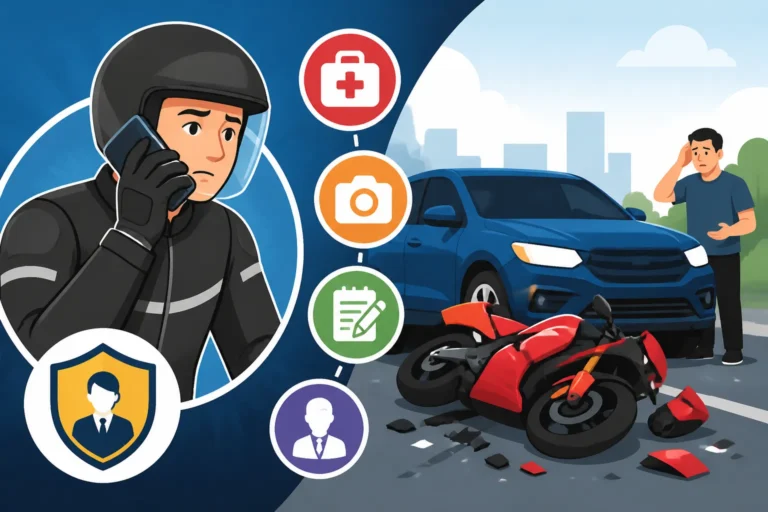
The moments immediately following an accident are critical for gathering evidence. While your health and safety are paramount, if you are able, documenting the scene can make all the difference in proving your case. Remember, the road hazard itself might be cleared quickly by authorities or dissipate with traffic, so capturing it is time-sensitive.
- Photographs and Videos: Take extensive photos and videos of everything. This means the specific gravel or debris that caused the accident, its exact location on the road, the surrounding area (including road shoulders, construction zones, private property, etc.), any skid marks, damage to your motorcycle, and your injuries. Capture different angles and distances, showing the overall scene and close-ups of the hazard. If you can, take photos of any warning signs (or lack thereof) nearby. If a commercial vehicle was involved, try to capture its license plate, company name, and DOT number. This visual proof is invaluable for Motorcycle Accident Evidence for Proving Fault.
- Witness Information: Did anyone see the accident or the debris before your crash? Get their names, contact information, and a brief statement of what they observed. Their testimony can corroborate your account and often be crucial, especially if the responsible party is difficult to identify.
- Police Report: File an official police report. The investigating officer will document the scene, interview parties, and potentially identify the source of the debris or assign initial fault. While not always conclusive, a police report provides an official record of the incident. However, be aware that How a Police Report Can Hurt Your Claim if it contains inaccuracies or biases against motorcyclists.
- Time and Date: Accurately note the exact time and date of the accident. This can be important for cross-referencing with road maintenance schedules, construction logs, or weather events.
- Condition of the Road: Beyond just the debris, note the overall condition of the road surface, lighting, and any other environmental factors that may have contributed.
The Role of Expert Testimony and Accident Reconstruction
Sometimes, the evidence gathered at the scene isn't enough on its own, especially in complex cases where liability is disputed or the exact cause is unclear. This is where experts come into play, providing specialized analysis and testimony to strengthen your claim.
- Accident Reconstructionists: These professionals can analyze physical evidence from the scene (skid marks, damage patterns, debris distribution) along with vehicle data, rider statements, and environmental factors to recreate the accident sequence. They can determine vehicle speeds, angles of impact, and crucially, how the gravel or debris led to the loss of control. Their scientific findings can be powerful in court, helping to counteract arguments that the rider was solely at fault. Hiring an accident reconstruction expert can be a significant step, and knowing When to Hire an Accident Reconstruction Expert is often best discussed with your legal counsel.
- Road Safety Engineers: If the case involves a negligent government entity or a construction company, a road safety engineer can assess whether the road design, maintenance, signage, or construction practices met established safety standards. They can testify about whether the hazard was foreseeable, if appropriate warnings were given, and if reasonable steps were taken to prevent the accumulation of debris.
- Meteorologists: In some cases, weather conditions might be a factor. A meteorologist can provide expert testimony on past weather patterns, precipitation levels, and wind speeds that might explain the presence or accumulation of certain types of debris.
Understanding Legal Concepts: Duty of Care and Breach
At the heart of any negligence claim is proving two key legal concepts: a "duty of care" and a "breach of that duty." Understanding these is fundamental to establishing liability.
- Duty of Care: This refers to the legal obligation of individuals or entities to act with a certain standard of care towards others to prevent foreseeable harm. For example, a commercial truck driver has a duty to secure their load properly. A city road crew has a duty to maintain public roads in a reasonably safe condition. A construction company has a duty to prevent debris from leaving their site. This duty is inherent in their role or activity.
- Breach of Duty: This occurs when a party fails to uphold their duty of care. If a trucking company allows a driver to operate a vehicle with an unsecured load, and that load spills onto the highway, they have breached their duty. If a government entity is aware of a dangerous accumulation of gravel and fails to clean it up or warn motorists, they have breached their duty. The breach doesn't have to be intentional; it simply means they didn't act as a reasonably prudent person or entity would have under similar circumstances.
Once a breach of duty is established, you must also demonstrate that this breach caused your accident and that you suffered damages (injuries, property damage, lost wages) as a direct result. This is where all your gathered evidence and expert testimony come together to build a compelling case that shows the other party's negligence led to your unfortunate crash.
Navigating the Claims Process After a Debris-Related Accident
Even with clear evidence, navigating the aftermath of a motorcycle accident, especially one involving road debris, can feel like an uphill battle. You’re likely dealing with injuries, property damage, and the mental toll of the crash. The claims process itself is complex, filled with paperwork, deadlines, and often, resistance from insurance companies.
Immediate Steps to Protect Your Claim
The actions you take immediately after a debris-related accident are crucial for the strength of any future claim. Think of it as laying the groundwork.
- Seek Medical Attention Immediately: Your health is paramount. Even if you feel okay, get checked out by a medical professional. Adrenaline can mask pain, and some serious injuries, like concussions or internal bleeding, may not manifest symptoms for hours or days. Medical records are also irrefutable evidence of your injuries and their direct link to the accident. Any gap in treatment can be used by insurance companies to argue your injuries weren't serious or were caused by something else. This step is vital for documenting Common Motorcycle Accident Injuries.
- Report the Incident: File a police report as soon as possible. Even if the other "party" is a government entity or an unknown commercial truck, the police can document the hazard, take statements, and create an official record. For government liability, some states require you to file a specific notice of claim within a very short timeframe, sometimes as little as 30 to 90 days. Missing this deadline can completely bar your ability to recover damages.
- Preserve Evidence: As discussed, photos, videos, witness contacts, and detailed notes are vital. If possible, secure your damaged motorcycle and gear. Don't throw away a damaged helmet or jacket; they can serve as physical evidence of the impact and your efforts to protect yourself, which is especially important given The Helmet Defense Explained if you weren't wearing one or if the other side tries to minimize your injuries.
- Do Not Admit Fault: It's human nature to apologize or speculate after an accident, but never admit fault, even partially. You don't know all the facts at the scene, and anything you say can be used against you by insurance adjusters who are looking for reasons to deny or minimize your claim.
- Notify Your Insurance Company: Inform your own insurance company about the accident. However, be cautious about what you say. Stick to the facts and avoid speculation.
Dealing with Insurance Companies
Interacting with insurance companies after an accident, whether it's your own or the at-fault party's, can be incredibly frustrating. Their primary goal is to minimize payouts, not to ensure you receive fair compensation.
- Be Wary of Early Settlement Offers: It's common for insurance adjusters to offer a quick, lowball settlement, especially if they perceive you as vulnerable or unrepresented. These offers rarely cover the true extent of your damages, including future medical costs, lost wages, and pain and suffering. Understand How Insurers Lowball Motorcycle Riders and resist the urge to accept a fast check. You should never sign a release without fully understanding its implications and certainly not before reaching Maximum Medical Improvement (MMI) or consulting with a legal professional.
- Limit Communication: Keep your conversations with insurance adjusters brief and factual. Do not provide recorded statements without legal counsel, and avoid discussing the extent of your injuries or how the accident has impacted your life in detail. Let your medical records speak for themselves. The less information you give them that isn't absolutely necessary, the better. They will often try to use your statements out of context to reduce your payout.
- Understand Policy Limits: Insurance policies have limits on how much they will pay out for various damages. It's important to understand the at-fault driver's policy limits, as this can affect your potential settlement. In cases where the at-fault party has minimal coverage, your Uninsured/Underinsured Motorist (UM/UIM) coverage on your own policy could become critical for maximizing your compensation. This is one aspect of How Insurance Policy Limits Affect Your Payout.
The Value of Legal Representation
Facing off against large insurance corporations or government legal teams after a serious accident is not something you should do alone. This is particularly true when dealing with the complexities of establishing liability for a road hazard, which requires proving negligence on the part of a specific entity.
- Expert Navigation of the Legal System: An experienced motorcycle accident lawyer understands the specific laws related to road hazards, government liability, and commercial vehicle regulations in your state. They know the deadlines, the forms, and the arguments needed to build a strong case. They can help you investigate the accident more thoroughly, subpoena records, depose witnesses, and bring in the necessary experts. You might be asking yourself, Do You Need a Motorcycle Accident Lawyer? The answer is almost always yes, especially for serious injuries or complex liability cases.
- Leveling the Playing Field: A skilled attorney acts as your advocate, protecting your rights and ensuring you aren't taken advantage of by powerful insurance companies. They can handle all communications, negotiations, and legal filings, allowing you to focus on your recovery. They know how to counter common insurance tactics, such as attempts to assign partial fault to you (even if untrue) or minimize the severity of your injuries.
- Maximizing Your Settlement: Attorneys have a deep understanding of how to calculate the full extent of your damages, including current and future medical expenses, lost wages, pain and suffering, and property damage. They are experienced negotiators and can fight to ensure you receive a fair settlement that truly compensates you for your losses. Studies often show that represented individuals receive significantly higher settlements than those who try to negotiate on their own. Learning How to Maximize Your Motorcycle Accident Settlement often starts with hiring the right legal team.
Dealing with a motorcycle accident caused by gravel or debris is a challenging experience, both physically and emotionally. By understanding the potential sources of liability, meticulously gathering evidence, and seeking professional legal guidance, you significantly increase your chances of holding the responsible parties accountable and securing the compensation you need to rebuild your life.
Disclaimer
Please remember that this article provides general information and insights into motorcycle accident claims involving gravel or debris. It is not legal advice and should not be taken as such. Laws regarding liability, negligence, and personal injury claims vary significantly by state and jurisdiction. It is crucial to consult with a qualified motorcycle accident attorney in your specific location to discuss the details of your case and receive personalized legal guidance.