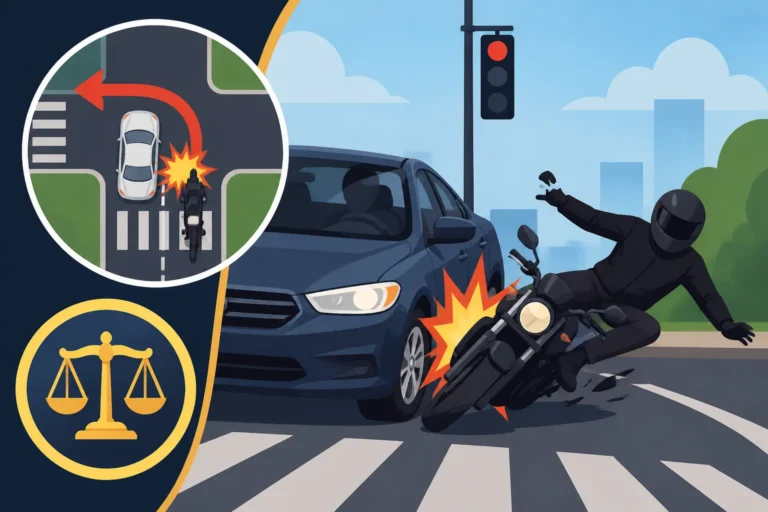
How to Document the Scene to Prove Fault
When you're involved in a motorcycle accident, the moments immediately following the crash can feel like a blur of pain, confusion, and adrenaline. It's an incredibly disorienting experience, and the last thing on your mind might be collecting evidence. However, what you do or don't do at the scene can profoundly impact your ability to prove fault and recover compensation later. This guide will walk you through the essential steps to meticulously document the accident scene, helping you protect your rights and strengthen your future claim.
The Immediate Aftermath: Prioritizing Safety and Initial Steps
The chaos of a crash can be overwhelming, but your first priority must always be safety. Both your own safety and that of others around you. This isn’t just common sense; it’s a critical first step in protecting yourself and any potential legal claim.
Ensuring Your Safety and Others
Once the impact has happened, take a moment, if you can, to assess your immediate surroundings. Are you in the middle of a busy intersection? Is there oncoming traffic that could lead to a secondary collision? If you’re able to move safely, get yourself and your motorcycle to the side of the road, out of the flow of traffic. This might mean pushing your bike a few feet or carefully walking to the shoulder. Don’t exert yourself if you feel any pain or dizziness; your health is paramount.
After moving to a safer spot, quickly check yourself for injuries. Even if you feel fine, adrenaline can mask pain, so be diligent. Then, check on anyone else involved – the driver of the other vehicle, any passengers, or even witnesses who might have been affected. If anyone appears seriously injured or unconscious, do not move them unless they are in immediate danger, like from a burning vehicle.
Contacting Authorities and Medical Help
No matter how minor the accident might seem, always call 911. Reporting the incident to the police is crucial because it generates an official record: a police report. This document can be incredibly valuable for establishing the facts of the accident, identifying parties involved, and sometimes even offering an initial assessment of fault. Officers on the scene will document damage, road conditions, and witness statements, which all contribute to a comprehensive record.
Equally important is requesting medical attention, even if you don't feel immediate pain. Paramedics can assess you for hidden injuries, such as internal bleeding or concussions, which might not be apparent right away. Refusing medical care at the scene can be used by insurance companies later to argue that your injuries weren't serious or weren't directly caused by the accident. It's always better to be checked out, even if it's just for peace of mind. Remember, your health is not something to gamble with. For more on what to do immediately after a crash, you might want to read our guide on What to Do Immediately After a Motorcycle Accident.
Capturing Visual Evidence: Photography and Video
In today’s digital world, your smartphone is one of the most powerful tools you have for documenting an accident scene. Pictures and videos provide an unbiased, visual record of what happened and can be incredibly persuasive when trying to prove fault in a motorcycle accident.
What to Photograph: A Comprehensive Checklist
When taking photos, think like an investigator. Start with wide shots that capture the entire scene, showing the positions of all vehicles involved, traffic signs, intersections, and any landmarks. These broader images help provide context. Then, move closer, taking detailed shots of the damage to your motorcycle and the other vehicle(s). Don’t just take one picture of the damage; get multiple angles, close-ups, and shots that show the severity of the impact.
Beyond the vehicles, focus on the road itself. Look for skid marks, debris, broken glass, fluid spills, or anything else scattered on the pavement. These elements can help accident reconstruction experts determine the point of impact, vehicle speeds, and trajectories. Photograph any traffic signals, stop signs, or yield signs that might be relevant to the accident. If the weather is a factor, capture photos that show rain, snow, ice, or glaring sun. Finally, if you have visible injuries, take clear photos of them as well. For a more detailed look, check out our article on Photos to Take to Prove Motorcycle Fault.
The Power of Video Documentation
While static photos are excellent, video footage can add another layer of undeniable evidence. A video allows you to narrate what you’re seeing, capturing the overall scene, the path from which vehicles approached, and the immediate aftermath in a continuous flow. You can pan across the damage, highlight road conditions, and show the positions of the vehicles more dynamically than with still images alone.
If you have a dashcam or helmet camera, that footage can be gold. It provides an objective, real-time recording of the events leading up to, during, and immediately after the collision. Many riders these days utilize cameras like those from GoPro or Sena for safety and to capture their rides; this foresight can be invaluable if an accident occurs. This type of evidence can often directly counter false claims or conflicting statements from other drivers, providing undeniable proof of how the accident unfolded.
Gathering Crucial Information: Witnesses and Drivers
The human element of an accident can be just as critical as the physical evidence. Collecting information from other parties involved and independent witnesses is essential for building a robust case.
Exchanging Information with Other Drivers
It’s natural to feel angry or shaken after a crash, but it’s vital to remain calm and composed when interacting with the other driver. Exchange information thoroughly: get their full name, contact number, insurance company and policy number, driver’s license number, and license plate number. If possible, take a photo of their driver’s license and insurance card to ensure accuracy.
While exchanging information, be polite but guarded. Do not apologize, admit fault, or speculate on what might have happened. Even a seemingly innocuous "I'm so sorry this happened" can be twisted by insurance companies as an admission of guilt. Stick to the facts and only provide the information that is absolutely necessary. Remember, the scene of the accident is not the place for legal discussions or emotional outbursts. Our article on Why You Should Never Admit Fault at the Scene further elaborates on this crucial point.
Identifying and Interviewing Witnesses
Independent witnesses can be incredibly powerful allies in your claim. Unlike the drivers involved, they typically have no personal stake in the outcome, making their accounts more credible to insurance adjusters and juries. Look for anyone who stopped to help, or who was in a nearby business, or simply observed the accident.
Approach potential witnesses politely and ask if they saw what happened. If they did, ask for their full name, phone number, and email address. Jot down any immediate observations they share, as their memory will be freshest right after the event. You might ask them about the direction of travel, speed of vehicles, or any specific actions they observed that led to the crash. Their testimony can often directly support your version of events and contradict claims made by the other driver. You can learn more about how crucial these accounts are in our discussion on How Witnesses Affect Motorcycle Fault.
Documenting the Environment and Road Conditions
Sometimes, the road itself plays a significant role in an accident, even if another driver is primarily at fault. Overlooking these environmental factors can weaken your ability to fully prove negligence.
Assessing Road Hazards and Conditions
Motorcycle riders are particularly vulnerable to road hazards that might not even faze a car. Potholes, cracks, uneven pavement, gravel, sand, oil slicks, and debris can all cause a rider to lose control. If the accident involved hitting such a hazard, it’s paramount to document it thoroughly. Take photos and videos of the specific hazard, showing its size, depth, and location relative to the crash site.
Consider who might be responsible for these conditions. If it's a poorly maintained road, the local or state government could potentially be held liable. If it's construction debris, the construction company might be at fault. Documenting these elements meticulously can open up avenues for liability beyond just the other driver. For a deeper dive, read about How Road Defects Cause Motorcycle Crashes.
Traffic Controls and Environmental Factors
Beyond physical hazards, traffic control devices and general environmental factors are also vital to document. Were traffic lights functioning correctly? Was a stop sign obscured by overgrown vegetation? Were lane markings faded to the point of being invisible? These details can significantly impact how fault is determined.
Weather conditions, such as heavy rain, fog, ice, or blinding sun, should also be noted and photographed. While weather isn't usually a "fault" factor, it can contribute to a driver's negligence if they weren't driving appropriately for the conditions. For instance, a driver speeding in heavy rain is more negligent than if they were doing so on a clear day. Take photos showing the weather at the time of the crash, if applicable.
Personal Documentation: Your Account and Injuries
Your personal recollection and the medical evidence of your injuries are cornerstones of any successful motorcycle accident claim. Don’t underestimate the power of your own diligent record-keeping.
Recording Your Account of the Accident
As soon as you can, and while the details are still fresh in your mind, write down everything you remember about the accident. This isn’t just a brief summary; it’s a comprehensive narrative. Include the date, time, location, weather conditions, direction of travel, what you saw, what you heard, and the sequence of events leading up to and after the crash. Include details about the other vehicle(s) and driver(s), any conversations you had, and observations about their demeanor.
Memory can fade quickly, and traumatic events can distort recollections. Having a written account, especially if it's dated and time-stamped, creates a reliable record that you can refer back to. This personal journal can also capture the emotional toll, pain levels, and daily struggles you experience, which are crucial for claiming non-economic damages like pain and suffering.
Documenting Your Injuries
Perhaps the most critical aspect of your claim is proving your injuries and their direct link to the accident. Seek immediate medical attention, even if you feel okay. Some serious injuries, like concussions or internal bleeding, might not present symptoms for hours or even days. Following through with all recommended medical treatment is not only vital for your recovery but also for your claim. Gaps in medical treatment can be used by insurance companies to argue that your injuries aren’t as severe as you claim or that they weren’t caused by the accident.
Beyond medical records, take your own photos of your injuries as they progress. Start with initial bruising, cuts, or road rash, and continue to photograph their healing process. These visual records, combined with detailed medical records and bills, provide irrefutable evidence of the physical trauma you endured. Keeping a detailed injury journal that logs your pain levels, limitations, and how your daily life is affected will further strengthen your case. Our article on How to Document Your Recovery offers more comprehensive advice on this.
Key Evidence to Document at the Scene
| Category | Specific Items to Document | Importance |
|---|---|---|
| Scene Overview | Wide shots of the accident location, intersections, landmarks | Establishes context and overall layout |
| Vehicle Damage | Close-ups and various angles of damage to all vehicles involved | Shows impact points, severity, and helps determine collision dynamics |
| Road Conditions | Skid marks, debris, fluid spills, potholes, gravel, faded markings | Provides clues about speeds, braking, and potential contributing factors |
| Traffic Controls | Traffic lights, stop signs, yield signs, road signs, construction zones | Indicates adherence to or violation of traffic laws |
| Environmental | Weather conditions (rain, fog, sun glare), time of day, lighting | Explains visibility challenges or inappropriate driving for conditions |
| Other Driver Info | Name, contact, insurance, license plate, driver's license | Essential for filing claims and identifying responsible parties |
| Witness Info | Names, contacts, brief statements of independent observers | Provides unbiased accounts and corroborates your story |
| Personal Injuries | Photos of visible injuries, medical attention received at scene | Crucial for proving the extent of physical harm |
| Police Report Info | Officer's name, badge number, report number | Official record of the incident and initial findings |
Remember, collecting as much of this information as possible at the scene, even if it feels daunting, will significantly strengthen your position and aid in Proving Fault in a Motorcycle Accident. It might seem like a lot to handle when you're hurt and shaken, but these proactive steps can make a world of difference when dealing with insurance adjusters and potential legal proceedings.
Disclaimer
Please remember that the information provided in this article is for general informational purposes only and does not constitute legal advice. Every motorcycle accident case is unique, and the specific facts and applicable laws will vary. It is highly recommended to consult with a qualified legal professional for advice tailored to your individual situation.