Average Settlement for a Motorcycle Internal Injuries
When you've been in a motorcycle accident, the immediate aftermath often brings visible wounds – the scrapes of road rash, perhaps a clearly broken bone. But what happens when the damage isn't immediately obvious, when the true danger lies beneath the surface? Internal injuries are a terrifying reality for many riders, often overlooked initially but capable of causing life-altering or even fatal consequences. Understanding the complexities of these hidden traumas and what an average settlement for a motorcycle internal injuries claim might look like is crucial, yet incredibly challenging due to their varied nature. This comprehensive guide aims to shed light on these serious injuries and the factors that shape their compensation.
Understanding Internal Injuries in Motorcycle Accidents
The open nature of motorcycling, while exhilarating, leaves riders incredibly vulnerable to severe, often life-threatening internal injuries in a collision. Unlike the protective shell of a car, a motorcycle offers no buffer, meaning your body absorbs the direct force of impact.
The Silent Dangers of Internal Trauma
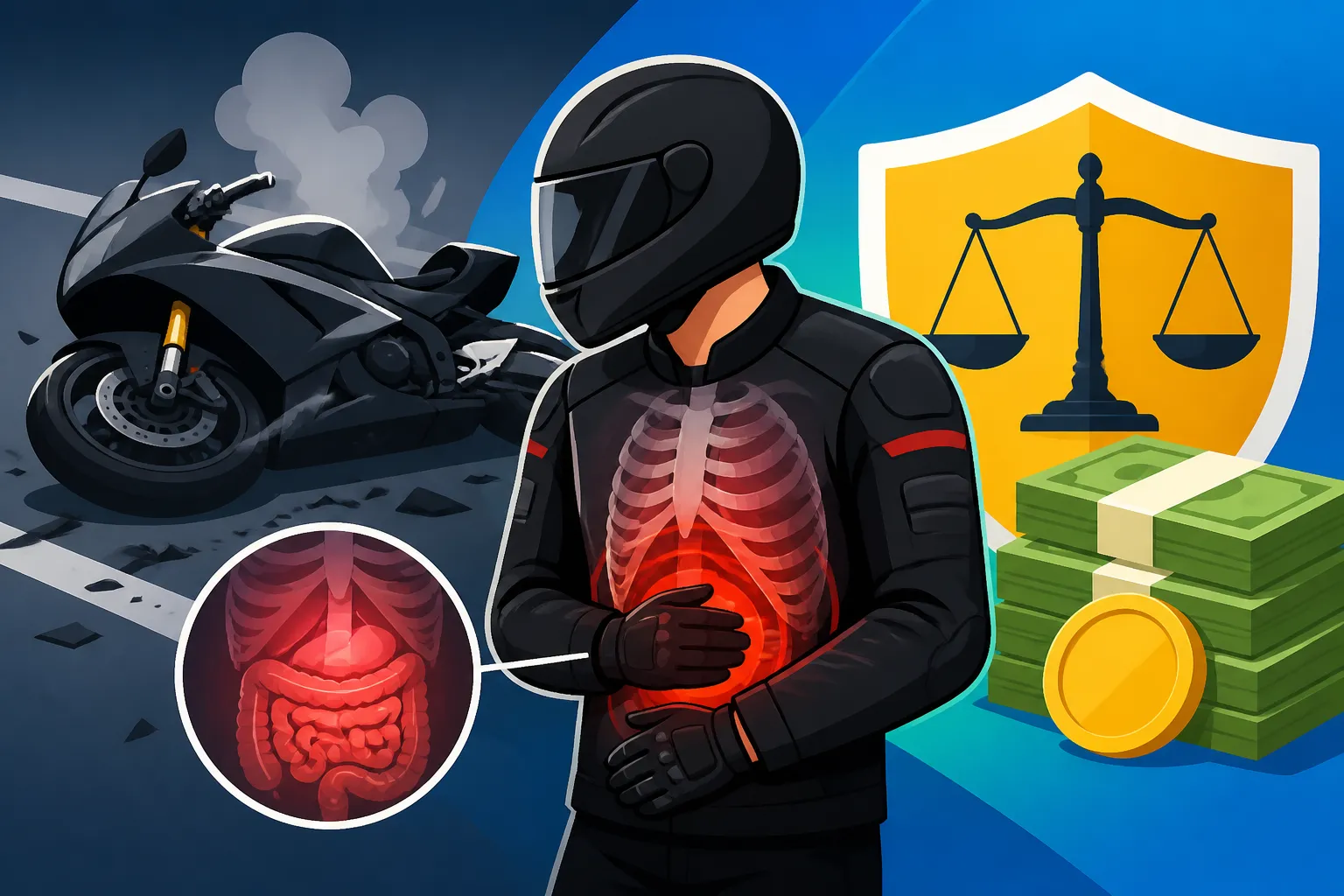
One of the most insidious aspects of internal injuries is their deceptive nature. Immediately after a crash, adrenaline can mask pain and symptoms, leading you to believe you're "fine" when severe trauma is brewing internally. You might walk away from a collision with what feels like just a few bumps and bruises, only for a ruptured organ or internal bleeding to manifest hours later, demanding immediate and invasive medical intervention. These types of injuries aren't always visible, but they can include damage to organs like the spleen, liver, kidneys, or lungs, significant internal hemorrhaging, or even severe brain and spinal cord trauma. The initial diagnosis often requires advanced imaging like CT scans or MRIs, and treatment can quickly escalate to emergency surgery, prolonged hospital stays, and intensive care.
Why Motorcycle Riders Are Especially Vulnerable
Motorcycle riders face a unique set of risks that make them particularly susceptible to internal injuries. When a car or truck collides with a motorcycle, the rider often suffers a direct impact or is ejected from the bike, hitting the ground, other vehicles, or stationary objects like guardrails or telephone poles. The sheer force of these impacts can cause bones to break and organs to be crushed, torn, or severely bruised. For instance, a common scenario involves a rider being hit from the side or rear, causing them to be thrown over the handlebars. The impact of their chest or abdomen hitting the ground or another object can lead to a collapsed lung (pneumothorax), a lacerated liver, or splenic rupture. These violent, uncontrolled impacts dramatically increase the likelihood and severity of internal trauma, contrasting sharply with injuries typically sustained by occupants protected by seatbelts and airbags.
Factors Influencing Internal Injury Settlement Amounts
Pinpointing an exact "average settlement for a motorcycle internal injuries" is incredibly difficult and, frankly, misleading. These cases vary wildly based on injury severity, specific organs affected, the long-term prognosis, and the state where the accident occurred. However, it's crucial to understand the range and the components that contribute to these settlements. Minor internal injuries, like significant bruising or a small, non-operative internal hemorrhage that resolves quickly, might settle for tens of thousands. In contrast, catastrophic internal organ damage or a severe brain injury could easily push a settlement into the hundreds of thousands or even millions of dollars, especially when lifelong care and profound changes to quality of life are involved.
Severity and Long-Term Impact of Injuries
The most significant factor in any personal injury settlement, especially for internal injuries, is the severity and long-term impact on the victim's life. Consider the difference between a minor kidney contusion that heals with rest and observation, versus a ruptured spleen requiring emergency removal, leading to lifelong immune system compromises and increased risk of infection. Each internal injury carries its own unique prognosis, treatment path, and potential for permanent impairment.
One critical benchmark in these cases is reaching what medical professionals call "Maximum Medical Improvement" (MMI). This means your condition has stabilized, and further medical treatment is unlikely to improve it significantly. Until MMI is reached, it’s often impossible to accurately assess the full scope of future medical needs, lost earning capacity, or long-term pain and suffering. Waiting to settle until MMI ensures that all potential future costs are accounted for. For instance, a traumatic brain injury (TBI) can have a wide spectrum of outcomes, from mild concussions with full recovery to severe brain damage causing permanent cognitive, physical, or emotional disabilities. Similarly, a spinal cord injury can result in partial or complete paralysis, necessitating extensive home modifications, adaptive equipment, and round-the-clock care. The presence of such permanent disabilities and the need for ongoing medical care significantly escalate the value of a claim. You can learn more about how specific injuries like Motorcycle Accident Traumatic Brain Injuries and Spinal Cord Injuries from Motorcycle Accidents impact claims.
Medical Expenses and Economic Damages
Motorcycle internal injuries almost invariably lead to exorbitant medical bills. From the moment the ambulance arrives on the scene, through emergency room visits, diagnostic tests like CT scans and MRIs, potential surgeries, and lengthy stays in the intensive care unit (ICU) and general hospital wards, the costs accrue rapidly. For example, a single emergency surgery for a ruptured organ can easily run into six figures, not including the subsequent recovery and rehabilitation.
Beyond immediate treatment, future medical expenses become a major component of compensation. These can include ongoing specialist consultations, physical therapy, occupational therapy, prescription medications for pain or managing chronic conditions, psychological counseling for trauma, and potentially future surgeries or even organ transplants. If a rider needs adaptive equipment, such as a wheelchair or prosthetics, or requires modifications to their home to accommodate a new disability, these costs are also factored into the settlement. Additionally, lost wages play a crucial role. If your internal injuries prevent you from returning to work, or if they diminish your capacity to earn at your previous level, you are entitled to compensation for both past lost income and future loss of earning capacity. Documenting these costs meticulously is essential. For more detailed information on this, explore topics like How Medical Bills Affect Your Settlement and How Lost Wages Are Calculated and How Future Medical Costs Are Estimated.
Non-Economic Damages: Pain, Suffering, and Quality of Life
While economic damages (medical bills, lost wages) are quantifiable, non-economic damages are just as real and often represent a significant portion of a motorcycle internal injury settlement. These damages compensate for the subjective, intangible losses you endure, such as physical pain and suffering, emotional distress, mental anguish, loss of enjoyment of life, and disfigurement. Imagine the chronic pain from nerve damage after internal bleeding, or the psychological trauma of surviving a near-fatal crash that leaves you with PTSD. These are profound losses that drastically diminish a person's quality of life.
Insurance companies often use a "multiplier method" to estimate non-economic damages, multiplying the total economic damages by a factor (usually between 1.5 and 5, or even higher for catastrophic injuries) based on the severity of your pain and suffering. However, this is just a starting point. Your personal injury journal, testimony from family and friends about how your life has changed, and expert psychological evaluations can all help illustrate the depth of your suffering. For instance, a rider who can no longer enjoy their passion for motorcycling due to physical limitations or severe anxiety after the accident has suffered a clear loss of enjoyment of life. Understanding the difference between Economic vs Non-Economic Damages Explained is critical for a comprehensive claim.
Navigating the Claims Process for Internal Injuries
The road to recovery from internal injuries is long and arduous, and the legal process of claiming compensation can feel equally daunting. It requires meticulous documentation, a clear understanding of fault, and often, the guidance of experienced legal professionals.
The Importance of Immediate Medical Documentation
Perhaps the single most critical step after any motorcycle accident, especially when internal injuries are suspected, is to seek immediate medical attention. Even if you feel okay, symptoms of internal trauma can be delayed. A comprehensive medical evaluation right after the crash establishes a direct link between the accident and your injuries, which is vital for your claim. Insurance companies are notorious for attempting to minimize payouts by arguing that your injuries were not caused by the crash or that their severity was exaggerated if there's a gap in medical treatment.
Ensure every medical visit, diagnostic test (X-rays, CT scans, MRIs, ultrasounds), surgery, prescription, and rehabilitation session is documented. Keep a detailed record of all hospital bills, doctor's notes, and physician reports. Consistent follow-up care and adherence to your doctor's recommendations are not just good for your health; they also provide a clear, undeniable record of the ongoing impact of your injuries. This continuous paper trail demonstrates the severity and permanence of your trauma, which is invaluable when substantiating your claim for compensation. Learning How to Document Injuries for a Claim can make a substantial difference. For more detailed insights into initial steps, consider reviewing What to Do After a Motorcycle Accident.
Proving Fault and Overcoming Challenges
Even with severe internal injuries, securing compensation hinges on proving that another party's negligence caused the accident. This is where the complexities of motorcycle accident law truly come into play. Common causes of motorcycle accidents that lead to severe injuries include Left-Turn Motorcycle Accidents Explained, distracted driving, or unsafe lane changes by other motorists. Unfortunately, motorcycle riders often face an inherent bias, with insurance adjusters or even juries sometimes assuming the rider was reckless.
Insurance companies will scrutinize every detail to find reasons to deny or minimize your claim, often attempting to assign partial blame to you, the rider. They might argue you were speeding, lane splitting, or otherwise contributing to the crash. If shared fault is established, your compensation could be reduced under "comparative negligence" laws, which vary by state. For example, in states like California, you can still recover damages even if you are partially at fault, though your settlement will be reduced proportionally. However, some states follow modified comparative negligence rules, where you may be barred from recovery if your fault exceeds a certain percentage (e.g., 50% or 51%). Gathering evidence is paramount: the police report, witness statements, accident reconstruction reports, traffic camera footage, and even your damaged riding gear can all help establish who is at fault in a motorcycle accident. Understanding How Comparative Negligence Reduces Your Payout is crucial in these scenarios.
The Role of Legal Representation
Given the severe nature, high medical costs, and complex legal challenges associated with motorcycle internal injuries, trying to navigate the claims process alone can be overwhelming and detrimental to your financial recovery. An experienced motorcycle accident lawyer understands the unique biases riders face and the specific medical and legal precedents for internal injury cases. They are adept at countering insurance company tactics, such as lowball settlement offers or attempts to blame the rider.
A skilled attorney will meticulously investigate the accident, gather all necessary evidence, interview witnesses, consult with accident reconstruction experts, and work with medical professionals to accurately project your future medical needs and loss of earning capacity. They will help you understand all the potential types of damages you can claim, including both economic and non-economic losses. Your lawyer will handle all communications and negotiations with the insurance companies, ensuring your rights are protected and fighting to maximize your settlement. In cases involving severe internal injuries, a lawyer's expertise in valuing the case, preparing a strong demand letter, and, if necessary, taking the case to trial, can make a monumental difference in the outcome. When assessing whether Do You Need a Motorcycle Accident Lawyer, consider the complexities involved in internal injury claims.
| Injury Type | Immediate Impact | Long-Term Impact on Claim | Average Medical Costs | Potential Non-Economic Damages |
|---|---|---|---|---|
| Bruised Organ (e.g., kidney) | Pain, observation, hospital stay | Often full recovery, minor long-term monitoring | Moderate (diagnostics, short hospital stay) | Moderate (pain, inconvenience, anxiety) |
| Ruptured Organ (e.g., spleen) | Emergency surgery, critical care, blood loss | Organ removal, lifelong dietary restrictions, infection risk | High (surgery, ICU, long hospital stay, specialist care) | High (significant pain, fear, loss of normal function, dietary changes) |
| Internal Bleeding (severe) | Shock, transfusions, emergency surgery | Organ damage, chronic pain, scarring, tissue loss | High (diagnosis, multiple surgeries, extensive recovery) | High (profound trauma, potential disfigurement, chronic issues) |
| Traumatic Brain Injury (TBI) | Concussion to coma, neurological deficits | Cognitive impairment, personality changes, seizures, disability | Very High (neurological care, extensive rehabilitation, medication) | Very High (profound life changes, severe mental anguish, loss of identity) |
| Spinal Cord Injury | Paralysis, loss of sensation/function | Permanent disability, lifelong care, home modifications | Extremely High (multiple surgeries, extensive therapy, assistive devices) | Extremely High (total loss of independence, severe emotional distress, severe pain) |
| Punctured Lung | Shortness of breath, chest pain, potential collapse | Chronic lung issues, reduced stamina, pain with exertion | High (chest tube insertion, monitoring, potential surgery) | High (anxiety, chronic discomfort, reduced physical activity) |
Disclaimer
The information provided in this guide is intended for general informational purposes only and does not constitute legal advice. Motorcycle accident claims are complex, and the value of any settlement depends heavily on the unique facts and circumstances of each individual case. It is strongly recommended that you consult with a qualified and experienced motorcycle accident attorney to discuss your specific situation and understand your legal rights and options.