Average Motorcycle Accident Settlement in Georgia
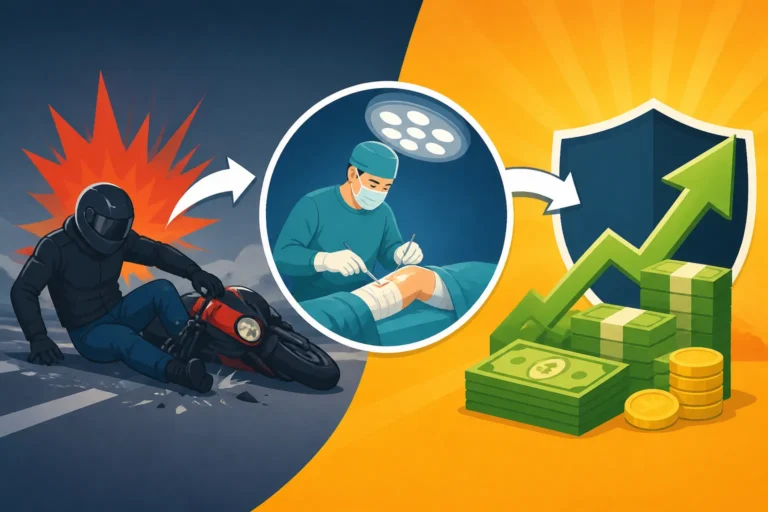
When you've been in a motorcycle accident in Georgia, it's natural to wonder what kind of financial recovery you might expect. The truth is, there's no simple "average" figure that applies to every case, and anyone telling you otherwise is likely oversimplifying a deeply complex process. This guide will walk you through the many variables that genuinely shape settlement amounts in the Peach State, helping you understand the real factors at play for your specific situation.
Understanding Motorcycle Accident Settlements in Georgia
Navigating the aftermath of a motorcycle accident in Georgia can feel overwhelming. Beyond the physical recovery, dealing with medical bills, lost income, and the emotional toll can leave you searching for answers, especially when it comes to financial compensation. The concept of an "average" settlement is a tricky one because no two accidents are ever truly alike. What one rider receives for a broken arm in Savannah might be vastly different from another rider's payout for a similar injury in Atlanta, even with similar circumstances.
The Myth of the "Average" Payout
The idea of a straightforward "average motorcycle accident settlement in Georgia" is largely a misconception. Unlike a product with a fixed price, a personal injury settlement is a negotiated outcome, influenced by a dynamic interplay of legal, medical, and insurance factors unique to each case. Think of it like trying to find the "average" cost of a house – it depends heavily on location, size, condition, and market trends. Similarly, your settlement amount hinges on specifics like the severity of your injuries, the clarity of fault, the total economic losses you've incurred, and the availability of insurance coverage. Focusing too much on a generalized average can set unrealistic expectations, leading to frustration or, worse, accepting an offer that doesn't adequately cover your actual damages.
The Impact of Georgia's Fault Laws on Your Payout
Georgia operates under a modified comparative negligence rule, specifically the 50% bar rule. This is a crucial detail that significantly impacts how much compensation you can actually recover. Here's how it works: if you are found to be 50% or more at fault for the accident, Georgia law bars you from recovering any damages. If you are found less than 50% at fault, your total damages will be reduced by your percentage of fault. For example, if your total damages are $100,000, but a jury or insurance adjuster determines you were 20% at fault for the collision (perhaps you were speeding slightly, even if the other driver ran a stop sign), your compensation would be reduced by 20% to $80,000. This is a critical point that insurance companies will often try to exploit to reduce their liability, sometimes unfairly assigning a greater percentage of blame to motorcycle riders due to common biases. Understanding how this rule works is vital for protecting your claim. For more detailed insights, consider reading our guide on how comparative negligence reduces your payout.
Key Damages You Can Claim in Georgia
When pursuing a motorcycle accident claim in Georgia, the goal is to recover compensation for all damages you've suffered. These damages generally fall into two main categories: economic and non-economic.
Economic Damages: The Tangible Costs
Economic damages are the calculable, out-of-pocket expenses you've incurred or will incur as a direct result of the accident. These are often easier to quantify with bills and records. They include:
- Medical Expenses: This is often the largest component. It covers everything from emergency room visits, ambulance rides, doctor consultations, surgeries, physical therapy, prescription medications, medical devices, and future medical care. It's not just what you've paid so far, but also what you reasonably expect to pay in the future for your recovery.
- Lost Wages: If your injuries prevent you from working, you can claim compensation for the income you've lost. This includes salary, hourly wages, commissions, bonuses, and even lost vacation time or sick leave you had to use. For self-employed riders, proving lost wages can be more complex, often requiring tax returns and business records.
- Loss of Earning Capacity: This accounts for future income you would have earned but can no longer because your injuries have permanently affected your ability to work or earn at the same level. This is often calculated with the help of vocational experts and economists.
- Property Damage: This covers the cost of repairing or replacing your motorcycle, helmet, riding gear, and any other personal items damaged in the crash.
Non-Economic Damages: The Intangible Toll
Non-economic damages are harder to put a specific dollar value on, as they compensate for the subjective impact the accident has had on your life. These are often where significant portions of a settlement can come from, especially for severe injuries. They include:
- Pain and Suffering: This compensates for the physical pain and discomfort you've endured, both immediately after the accident and throughout your recovery. This isn't just about the physical agony but also the chronic pain, discomfort, and limitations you might experience daily.
- Emotional Distress: Accidents can be traumatizing, leading to anxiety, depression, PTSD, fear of riding, and other psychological impacts. These emotional tolls are very real and compensable.
- Loss of Enjoyment of Life: If your injuries prevent you from participating in hobbies, recreational activities, or daily routines that you once enjoyed (like riding your motorcycle, playing with your kids, or working in your garden), you can seek compensation for this loss.
- Disfigurement and Scarring: Severe road rash, burns, or surgical scars can lead to permanent disfigurement, affecting self-esteem and quality of life.
- Loss of Consortium: In some cases, a spouse can claim damages for the loss of companionship, affection, and support from their injured partner.
For a deeper dive into these different types of compensation, our article on economic vs non-economic damages explained can provide more clarity.
Factors That Significantly Affect Your Georgia Settlement Value
The true value of your motorcycle accident claim isn't determined by a mystical formula but by a careful evaluation of several critical factors. Each element plays a substantial role, and understanding them is key to advocating for a fair recovery.
Injury Severity and Medical Treatment
Without a doubt, the severity of your injuries is the most impactful factor in determining your settlement value. A minor scrape and bruise case will yield a vastly different outcome than a claim involving a traumatic brain injury or spinal cord damage. In Georgia, as elsewhere, the more severe and long-lasting your injuries, the higher the potential settlement.
For instance, consider two hypothetical riders involved in similar crashes in Athens. Rider A suffers significant road rash, a couple of broken ribs, and a minor concussion. They require emergency treatment, a few weeks off work, and several months of physical therapy, incurring $25,000 in medical bills and $10,000 in lost wages. Rider B, however, suffers a severe traumatic brain injury, multiple complex fractures requiring surgery, and partial paralysis. Their medical expenses could easily exceed $500,000, with lost earning capacity in the millions, and their life is permanently altered. Naturally, Rider B's settlement will be substantially higher due to the catastrophic nature of their injuries.
Beyond the initial injuries, the consistency and thoroughness of your medical treatment are also critical. Insurers will scrutinize your medical records. Gaps in treatment or a failure to follow doctor's orders can be used against you, suggesting your injuries weren't as severe as claimed or that you contributed to your delayed recovery. Seeking immediate medical attention and adhering strictly to your treatment plan is paramount, not just for your health but for the strength of your claim. We delve deeper into this topic in our article on how injury severity drives settlement value.
Lost Wages and Future Earning Capacity
When a motorcycle accident prevents you from working, the financial strain can be immediate and severe. Calculating lost wages for the past is relatively straightforward, requiring pay stubs, employment records, and a doctor's note indicating your inability to work. However, predicting future lost income or a diminished earning capacity is far more complex and often necessitates expert testimony.
Imagine a construction worker in Augusta, Georgia, who suffers a debilitating hand injury that prevents them from performing manual labor. Not only do they lose current wages, but their ability to work in their chosen profession for the rest of their career is compromised. An expert might be brought in to project their lost income over their lifetime. Even professionals whose work isn't physically demanding can suffer lost earning capacity if their cognitive abilities are impaired by a brain injury. Documentation is key here: collect all pay stubs, income tax returns, and employer statements to demonstrate your pre-accident earnings. If you're self-employed, profit and loss statements, invoices, and bank records become even more critical to prove your income. Our guide on how lost wages are calculated offers more detailed insights on this aspect.
Insurance Policy Limits
While your injuries and economic losses might be substantial, the at-fault driver's insurance policy limits often act as a ceiling for your settlement. In Georgia, the minimum liability insurance requirements are currently 25/50/25: $25,000 for bodily injury liability per person, $50,000 for bodily injury liability per accident, and $25,000 for property damage liability per accident. If the at-fault driver only carries these minimums, and your damages exceed them (which is common in serious motorcycle accidents), you may struggle to recover full compensation from their policy alone.
This is where your own uninsured/underinsured motorist (UM/UIM) coverage becomes incredibly valuable. If the at-fault driver has no insurance (uninsured) or insufficient insurance (underinsured) to cover your damages, your UM/UIM policy can step in to cover the difference, up to your policy limits. Without adequate UM/UIM coverage, even a rock-solid case with severe injuries might not yield the full compensation you deserve if the at-fault driver has limited assets. This highlights the critical importance of carrying robust insurance coverage yourself. We discuss this more thoroughly in our article on how insurance policy limits affect your payout.
Proving Fault and Shared Responsibility
As mentioned earlier, Georgia's modified comparative negligence rule means that your degree of fault directly impacts your settlement. If you are found even 1% at fault, your damages will be reduced by that percentage. If you are 50% or more at fault, you get nothing. This makes proving the other driver's fault unequivocally vital.
Insurance adjusters for the at-fault driver will vigorously search for any evidence that might shift some blame onto you. They might argue you were speeding, lane splitting inappropriately (though lane splitting is generally illegal in Georgia), or simply "not seen" due to your motorcycle's smaller profile. Building a strong case requires comprehensive evidence, including police reports, witness statements, traffic camera footage, accident reconstruction analysis, and photographs of the scene. The clearer the liability rests with the other party, the less room there is for the insurance company to devalue your claim by assigning you partial fault. This also directly influences how insurance companies assign blame to riders.
Navigating the Settlement Process in Georgia
The journey from a motorcycle accident to a final settlement in Georgia can be a winding road. Understanding the general process can help you prepare for what's ahead and make informed decisions.
Initial Steps After a Motorcycle Accident
What you do immediately following an accident can profoundly impact your claim's success. Your first priority, always, is your health and safety.
- Seek Medical Attention: Even if you feel fine, adrenaline can mask injuries. Get checked out by paramedics at the scene or visit an emergency room or your doctor as soon as possible. This creates an official medical record linking your injuries to the accident, which is crucial evidence. Delayed treatment can allow the insurance company to argue your injuries weren't caused by the crash.
- Contact Law Enforcement: File a police report. This document often contains initial findings about fault, witness information, and details about the accident scene.
- Document the Scene: If possible and safe, take photos and videos of everything: your motorcycle, the other vehicle, the road conditions, traffic signals, skid marks, debris, and your injuries. Gather contact information from witnesses.
- Exchange Information: Get the other driver's name, insurance details, license plate number, and phone number.
- Notify Your Insurance Company: Report the accident to your own insurer, but stick to the facts and avoid speculating about fault.
These critical first steps are covered in more detail in our article on what to do immediately after a motorcycle accident.
Dealing with Insurance Companies in Georgia
Insurance companies, even your own, are businesses focused on minimizing payouts. After an accident, you can expect their adjusters to be professional, but their primary goal is to protect their company's bottom line. Be extremely cautious about what you say.
- Avoid Admitting Fault: Never apologize or admit any fault at the scene or in subsequent conversations. Let the facts and investigation speak for themselves.
- Don't Give Recorded Statements: The other driver's insurance company will likely ask for a recorded statement. Politely decline. These statements are often used to find inconsistencies or elicit admissions that can harm your claim.
- Beware of Early Settlement Offers: It's common for insurers to offer a quick, lowball settlement, especially if you're unrepresented. They know you're stressed and possibly desperate for money. Accepting this offer will require you to sign a release, forfeiting your right to seek further compensation, even if your injuries turn out to be more severe or long-lasting than initially thought. They might try to take advantage of your vulnerable state. This tactic is often referred to as how insurers lowball motorcycle riders.
- Document Everything: Keep a meticulous record of all communications, medical appointments, expenses, and how your injuries are affecting your daily life. An injury journal can be incredibly useful for demonstrating your pain and suffering.
The Role of Legal Representation
Trying to handle a serious motorcycle accident claim on your own against experienced insurance adjusters is like trying to fix your bike's engine with only a screwdriver. While minor property damage claims might be manageable, if you've suffered injuries, hiring a motorcycle accident lawyer in Georgia is almost always in your best interest.
A skilled attorney who understands Georgia's specific laws can:
- Investigate Thoroughly: They'll gather all necessary evidence, including police reports, witness statements, medical records, and potentially hire accident reconstructionists.
- Establish Fault Clearly: They'll build a strong case to prove the other driver's negligence and protect you from unfair accusations of shared fault.
- Calculate Full Damages: They'll work with medical experts, vocational specialists, and economists to accurately assess both your current and future economic and non-economic damages.
- Negotiate with Insurers: They know the tactics insurance companies use and can counter lowball offers effectively, leveraging their legal knowledge and experience to demand fair compensation.
- Represent You in Court: If a fair settlement cannot be reached through negotiation, they are prepared to take your case to trial.
A local Georgia motorcycle accident lawyer understands the intricacies of state-specific laws and local court procedures, which can make a significant difference in your outcome. If you're wondering if you need a motorcycle accident lawyer, the answer is almost certainly yes for anything beyond minor bumps and scrapes.
Realistic Expectations for Your Payout
Managing expectations is crucial when pursuing a motorcycle accident settlement in Georgia. While it's tempting to compare your situation to online "averages," focusing on what's realistic for your specific case is far more productive.
Understanding Settlement Ranges for Common Injuries
Instead of a single "average," it's more helpful to think in terms of ranges that depend heavily on injury type and severity. Keep in mind that these are general observations and not guarantees, as every case is unique.
Injury Type Typical Impact on Settlement Value (General, not specific figures) The average settlement for motorcycle accidents in Georgia varies significantly based on numerous variables. There is no simple single number, as the unique circumstances of each incident, the extent of injuries, the evidence collected, and the specific insurance policies involved all play a crucial role. This guide aims to demystify these factors, helping you understand how potential compensation is evaluated in the Peach State.
The Diverse Range of Motorcycle Accident Settlements in Georgia
Motorcycle accidents often result in more severe injuries compared to car accidents, meaning higher medical costs and longer recovery times. Consequently, settlements tend to be substantial to reflect these profound impacts. However, it's a huge mistake to look for a single "average" figure. A case involving a fender bender with minor road rash is worlds apart from a collision that causes catastrophic injuries or wrongful death.
Why an "Average" is Misleading
It’s tempting to search for a definitive average settlement amount after a motorcycle accident in Georgia. However, this number can be highly misleading. The sheer spectrum of possible outcomes—from minor injuries like bruises and scrapes to devastating spinal cord injuries or traumatic brain injuries—makes any single average nearly meaningless for your specific situation.
Think of it this way: if one rider gets $15,000 for property damage and minor medical bills, and another receives $1,500,000 for permanent disability and lifelong care, a simple average would be about $757,500. While this number sounds impressive, it doesn't accurately represent either individual's true experience or potential. Your settlement will be uniquely tailored to the specific details of your accident, your injuries, the at-fault driver's insurance, and Georgia's legal framework. This is why focusing on how settlements are calculated, rather than a generalized number, is far more empowering.
Key Factors Influencing Your Payout
Several critical components directly influence the value of a motorcycle accident settlement in Georgia. These aren't just minor details; they are the bedrock upon which your entire claim's value is built.
Understanding the California Motorcycle Accident Settlement Process
If you've been involved in a motorcycle accident in California, you're likely facing a mountain of stress, physical pain, and a dizzying array of questions about how to recover. Dealing with medical bills, lost wages, and potentially a damaged bike is enough to handle, without adding the complexity of navigating the legal and insurance landscapes. You might be wondering, "What's the average settlement for a motorcycle accident in California?" While there's no single, simple answer to that question – because every case is as unique as the rider involved – this comprehensive guide aims to shed light on the various factors that influence settlement amounts and the process you can expect in the Golden State.
California's Unique Legal Landscape for Motorcycle Accidents
California's laws play a pivotal role in shaping motorcycle accident claims and ultimately, the settlement amounts. Understanding these specific regulations is crucial for any rider pursuing compensation.
Comparative Negligence in California
Unlike some states, California operates under a "pure comparative negligence" system. This means that even if you are found partially at fault for the accident, you can still recover damages from the other party, but your total compensation will be reduced by your percentage of fault. For example, if your total damages are assessed at $100,000, but it's determined you were 20% responsible for the collision (perhaps you were speeding slightly), your settlement would be reduced by 20%, meaning you would receive $80,000.
This rule is a double-edged sword for riders. On one hand, it ensures that a minor lapse on your part won't completely bar you from recovery, which is a relief. On the other hand, insurance companies often aggressively try to assign a higher percentage of fault to motorcyclists, leveraging common biases against riders. They might argue you were hard to see, driving recklessly, or otherwise contributed to the crash, even if the primary fault lies with their insured driver. It's imperative to have robust evidence and a clear understanding of how to combat these tactics. For a deeper dive into how shared fault affects your claim, check out our guide on how comparative negligence reduces your payout.
Statute of Limitations for Motorcycle Accident Claims in California
In California, there's a strict time limit for filing a personal injury lawsuit after a motorcycle accident, known as the statute of limitations. Generally, you have two years from the date of the accident to file a lawsuit for personal injuries. For claims involving property damage only, the limit is typically three years.
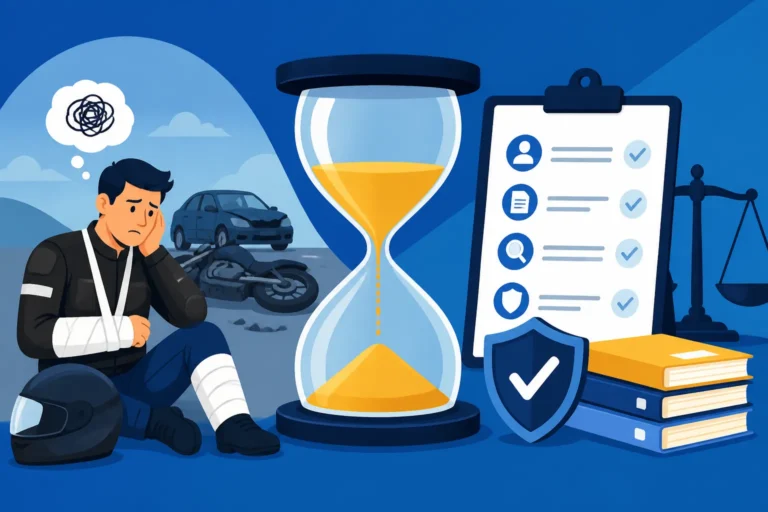
While two years might seem like a long time, it passes quickly, especially when you're focused on recovery. Missing this deadline almost certainly means forfeiting your right to compensation, regardless of how strong your case might be. There are limited exceptions to this rule, such as cases involving minors or government entities, but these are rare and complex. It's always best to consult with an attorney as soon as possible to ensure your claim is filed within the appropriate timeframe. Waiting too long can also lead to lost evidence and faded memories from witnesses, weakening your case significantly. Understanding these critical deadlines is paramount for protecting your right to recovery.
Determining Damages: What You Can Recover in California
When you're involved in a motorcycle accident, the financial impact extends far beyond just repairing your bike. California law allows you to seek compensation for a wide array of damages, both tangible and intangible, incurred as a result of someone else's negligence.
Economic Damages: The Measurable Costs
Economic damages are the calculable financial losses you've suffered due to the accident. These are generally straightforward to quantify with bills, receipts, and other financial records. They represent the objective costs that can be added up.
- Medical Expenses: This category includes all costs associated with your medical care, both past and future. This means emergency room visits, ambulance rides, doctor consultations, surgeries, hospitalization, physical therapy, prescription medications, rehabilitation, medical equipment (like crutches or wheelchairs), and even long-term care for severe injuries. Keeping meticulous records of all medical appointments, treatments, and bills is crucial.
- Lost Wages and Earning Capacity: If your injuries prevent you from working, you can claim compensation for the income you've already lost. This includes your regular salary, hourly wages, commissions, bonuses, and any other employment benefits. For long-term or permanent injuries, you can also seek damages for "loss of earning capacity," which accounts for future income you would have earned but now cannot due to your diminished ability to work. This often requires expert testimony from economists or vocational rehabilitation specialists. Our comprehensive guide on how lost wages are calculated provides more insight into documenting these losses.
- Property Damage: This covers the cost to repair or replace your damaged motorcycle, helmet, riding gear, and any other personal property that was destroyed or harmed in the crash. You're entitled to the fair market value of your bike if it's totaled, or the reasonable cost of repairs if it can be fixed.
- Out-of-Pocket Expenses: This includes various smaller, yet significant, expenses directly related to your accident and recovery, such as transportation costs to medical appointments, childcare expenses while you are recovering, or even the cost of household services you can no longer perform yourself.
Non-Economic Damages: The Intangible Impacts
Non-economic damages address the subjective, non-monetary losses that profoundly affect your quality of life after an accident. These are often harder to assign a precise dollar amount to but can represent a significant portion of your settlement, especially in cases of severe or lasting injuries.
- Pain and Suffering: This compensates you for the physical pain, discomfort, and agony you experience from your injuries. It covers everything from the immediate trauma of the crash to chronic pain, soreness, and limitations during recovery.
- Emotional Distress: Motorcycle accidents are often terrifying and can lead to significant psychological trauma. This can manifest as anxiety, depression, fear of riding, post-traumatic stress disorder (PTSD), and other mental health challenges. These emotional impacts are very real and deserving of compensation.
- Loss of Enjoyment of Life: If your injuries prevent you from engaging in hobbies, recreational activities, or daily routines you once enjoyed – such as riding your motorcycle, exercising, spending time with family, or pursuing passions – you can be compensated for this diminished quality of life. This is particularly relevant for riders who derive significant pleasure and identity from motorcycling.
- Disfigurement and Scarring: Severe road rash, burns, or surgical scars can lead to permanent disfigurement, impacting self-esteem and body image. This category of damages seeks to compensate for that lasting physical alteration and its emotional toll.
- Loss of Consortium: In some cases, a spouse can claim damages for the loss of companionship, affection, sexual relations, and household services from their injured partner.
Understanding the full scope of both economic and non-economic damages is critical to ensuring you seek a comprehensive settlement that truly reflects your losses. For further information on these categories, our article explaining economic vs non-economic damages is a great resource.
Factors That Determine Your California Motorcycle Accident Settlement Value
While the types of damages you can claim provide a framework, the actual dollar amount of your settlement in California is profoundly shaped by specific elements inherent to your case. These factors are what an attorney will meticulously analyze and what insurance adjusters will rigorously scrutinize.
Severity and Permanency of Injuries
This is arguably the most influential factor. A rider who suffers a minor sprain and requires a few weeks of physical therapy will have a significantly lower settlement than one who sustains a broken back, a traumatic brain injury, or requires an amputation. The more severe your injuries, the higher your past and future medical expenses will be, and the greater your pain and suffering.
For example, a motorcycle accident resulting in a broken leg might involve several weeks in a cast, rehabilitation, and some lost wages. The settlement would reflect these costs and a reasonable amount for pain and suffering. However, if that broken leg requires multiple surgeries, leads to chronic pain, and prevents you from returning to your high-paying trade, the compensation would be exponentially higher. Permanent disabilities, disfigurement, or injuries requiring lifelong medical care will lead to the largest settlements because they represent a lifetime of changed circumstances and expenses. This concept is explored in detail in our content on how injury severity drives settlement value.
Medical Treatment and Prognosis
The type, duration, and necessity of your medical treatment are critical. Consistent, well-documented medical care provides undeniable proof of your injuries and their impact. Gaps in treatment can be problematic, as insurance companies might argue that your injuries weren't serious or that you exacerbated them by not following doctor's orders.
Your prognosis—the doctor's prediction of your long-term recovery—is equally important. If doctors anticipate a full recovery within a few months, your claim for future medical expenses and lost earning capacity will be minimal. However, if your prognosis includes chronic pain, future surgeries, permanent limitations, or a need for adaptive equipment, these factors will dramatically increase your settlement value. It's often recommended to wait until you reach Maximum Medical Improvement (MMI)—the point where your condition has stabilized and further recovery isn't expected—before settling, to ensure all future medical needs are accounted for.
Clear Evidence of Fault
In California's pure comparative negligence system, proving the other driver was at fault (and you were not, or minimally so) is paramount. If liability is disputed, the settlement value can decrease significantly. Insurance companies will always look for ways to shift blame onto the motorcyclist.
Robust evidence is your best defense. This includes:
- Police Reports: While not always conclusive on fault, they offer valuable details about the accident, including diagrams, witness statements, and initial officer observations.
- Witness Statements: Eyewitness accounts can be powerful, especially if they corroborate your version of events.
- Photographs and Videos: Images of the accident scene, vehicle damage, road conditions, traffic signals, and your injuries are invaluable.
- Accident Reconstruction: For complex cases, experts can recreate the accident using physics and engineering principles to definitively determine how it occurred and who was at fault. This is especially useful when disputing liability.
- Traffic Camera/Dashcam Footage: Increasingly common, video evidence can be irrefutable proof of fault.
The stronger and clearer the evidence that the other party caused the crash, the less room there is for their insurance company to deny or devalue your claim.
Insurance Policy Limits and Coverage
Even with severe injuries and clear fault, your settlement can be capped by the available insurance coverage. In California, the minimum liability insurance is $15,000 for injury/death to one person, $30,000 for injury/death to more than one person, and $5,000 for property damage. Many drivers carry only these minimums, which can be woefully insufficient for a serious motorcycle accident.
This is where your own uninsured/underinsured motorist (UM/UIM) coverage becomes incredibly important. If the at-fault driver is uninsured or their policy limits are too low to cover your damages, your UM/UIM policy can provide additional compensation, up to your own policy limits. Without sufficient UM/UIM coverage, even a case worth hundreds of thousands of dollars might only settle for the at-fault driver's minimal policy limits, leaving you with unpaid medical bills and ongoing financial burdens. It's a sobering reality that emphasizes the importance of carrying comprehensive coverage yourself. This topic is expanded upon in our article about how insurance policy limits affect your payout.
The California Motorcycle Accident Settlement Process
Understanding the steps involved in a California motorcycle accident claim can help demystify the process and prepare you for what's ahead. It's rarely a quick or simple journey.
Initial Steps and Investigation
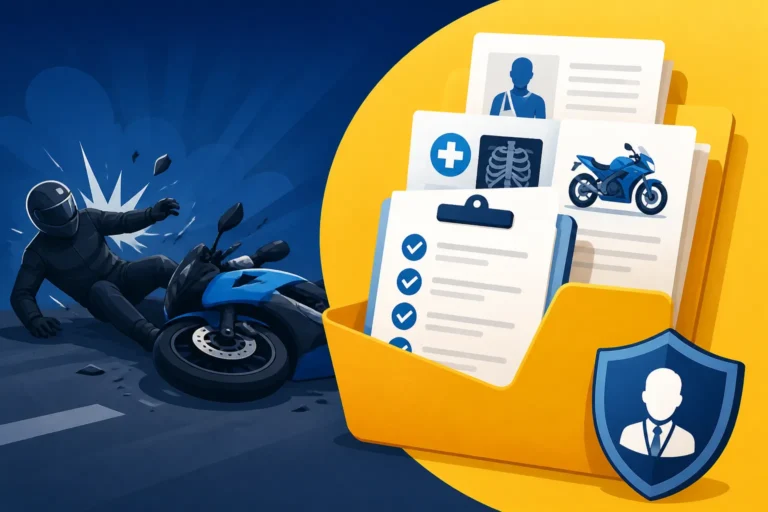
After seeking immediate medical attention and reporting the accident, the investigative phase begins. Your attorney will start gathering all relevant evidence. This includes obtaining the police report, collecting medical records and bills, interviewing witnesses, securing photographs and videos, and assessing your property damage. This thorough investigation is crucial for building a strong case that can withstand scrutiny from insurance adjusters. This phase can take several weeks or even months, depending on the complexity of the accident and the speed at which records are obtained.
During this time, it's also important to continue with your medical treatment as prescribed. Gaps in treatment can be used by the defense to argue your injuries weren't as severe as claimed.
Demand Letter and Negotiation
Once your medical treatment is largely complete or you've reached Maximum Medical Improvement (MMI), and all damages (economic and non-economic) have been thoroughly documented, your attorney will typically prepare a comprehensive demand letter. This letter outlines the facts of the accident, details your injuries and medical treatment, quantifies all damages (medical bills, lost wages, pain and suffering), and includes supporting evidence. It concludes with a demand for a specific settlement amount from the at-fault driver's insurance company.
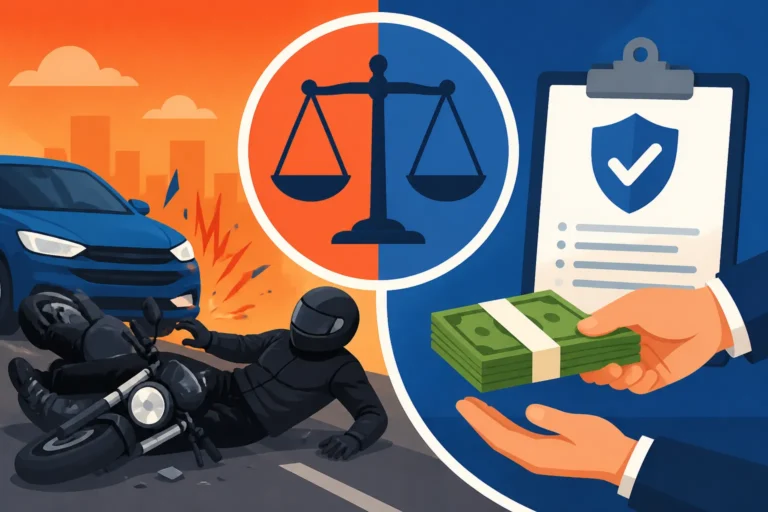
Following the demand letter, negotiations begin. The insurance company will likely respond with a lower counter-offer, sometimes a "lowball" offer that significantly undervalues your claim. This is where your attorney's experience is invaluable. They will present arguments, provide additional evidence, and negotiate fiercely on your behalf to counter the insurance company's tactics and move towards a fair settlement amount. This back-and-forth can take time, sometimes weeks or even months. For more on dealing with these tactics, see our piece on how insurers lowball motorcycle riders.
Lawsuit and Litigation
If negotiations with the insurance company fail to produce a fair settlement offer, the next step is typically to file a personal injury lawsuit in a California civil court. Filing a lawsuit doesn't necessarily mean your case will go to trial. Many cases settle during the litigation phase, sometimes even on the courthouse steps.
The litigation process involves several stages:
- Discovery: Both sides exchange information, including documents, interrogatories (written questions), and depositions (out-of-court sworn testimony) from witnesses, the parties involved, and medical experts. This can be a lengthy process, often taking many months.
- Mediation/Arbitration: Often, the court will require or encourage mediation, where a neutral third party helps both sides try to reach a settlement. Arbitration is similar but involves a neutral third party making a decision that may or may not be binding.
- Trial: If no settlement is reached, the case proceeds to trial. A jury or judge will hear evidence from both sides and make a decision regarding fault and the amount of damages. Trials are lengthy, expensive, and involve inherent risks for both parties, which is why most cases settle before reaching this stage.
The entire process, from accident to final settlement, can range from a few months for minor cases to several years for complex claims involving severe injuries, extensive medical treatment, or disputed liability. Our article on how long does a motorcycle settlement take provides more context on these timelines.
Maximizing Your California Motorcycle Accident Settlement
While there's no magic formula for a high settlement, there are concrete steps you can take to strengthen your claim and work towards the maximum possible compensation under California law.
The Importance of Prompt and Consistent Medical Care
After a motorcycle accident, your health is the top priority, but your medical care also forms the backbone of your legal claim. Delaying treatment or failing to follow through with prescribed therapies (like physical therapy or specialist visits) gives the insurance company an opening to argue that your injuries aren't serious, weren't caused by the accident, or that you didn't do enough to mitigate your damages.
Seeking immediate medical attention, even for seemingly minor aches, ensures that your injuries are documented right away. Continue all prescribed treatments, attend all appointments, and keep detailed records of your pain levels and limitations. A clear, consistent medical record is undeniable evidence that links your injuries directly to the accident and substantiates the extent of your suffering. Remember, if it's not in your medical chart, it essentially didn't happen in the eyes of an insurance adjuster or jury.
Documenting All Losses Thoroughly
A strong claim is built on strong documentation. Every expense, every lost hour of work, and every way the accident has impacted your life needs to be recorded.
- Medical Bills and Records: Keep every bill, statement, and report from doctors, hospitals, pharmacies, and therapists.
- Lost Wage Documentation: Gather pay stubs, W-2s, 1099s, tax returns, and letters from your employer detailing your missed workdays and lost income. If you're self-employed, compile profit and loss statements, bank statements, and client contracts to demonstrate your pre-accident earnings.
- Property Damage Estimates: Get repair estimates for your motorcycle and gear, or documentation of its fair market value if it was totaled.
- Pain and Suffering Journal: Keep a daily log documenting your pain levels, emotional distress, difficulties with daily tasks, and how your injuries prevent you from enjoying life. This personal account can be incredibly powerful in illustrating your non-economic damages.
- Photos and Videos: Beyond the accident scene, take photos of your injuries as they heal, your damaged gear, and any physical limitations you experience (e.g., struggling to lift something).
Comprehensive documentation provides concrete evidence for every dollar you claim, making it harder for insurance companies to dispute your losses.
The Critical Role of an Experienced Motorcycle Accident Attorney
Perhaps the single most impactful step you can take to maximize your settlement is to hire an experienced California motorcycle accident attorney. This isn't just a suggestion; it's often a necessity due to the complexities and biases inherent in these types of claims.
An attorney specializing in motorcycle accidents brings:
- Expertise in California Law: They understand the nuances of pure comparative negligence, specific traffic laws that affect riders, and local court procedures.
- Investigation Skills: They know how to gather and preserve crucial evidence, including hiring accident reconstructionists, securing expert witness testimony, and navigating complex legal discovery processes.
- Negotiation Prowess: They are seasoned negotiators who can effectively counter the lowball tactics of insurance companies, understand fair market values for various damages, and will fight tirelessly for your best interests.
- Protection from Biases: Unfortunately, there can be a bias against motorcyclists, with insurers often trying to blame the rider. A skilled attorney will challenge these stereotypes and ensure your side of the story is heard and proven.
- Access to Resources: They have a network of medical professionals, accident reconstructionists, and other experts who can provide crucial support for your case.
Studies often show that individuals represented by an attorney receive significantly higher settlements than those who try to negotiate on their own. For more reasons why legal representation is crucial, refer to our article on whether you need a motorcycle accident lawyer. Your focus should be on your recovery; let a legal professional handle the intricate legal battle.
Disclaimer
Please remember that this article provides general information and should not be considered legal advice. The specifics of your motorcycle accident claim are unique, and the information presented here is not a substitute for consulting with a qualified attorney in California. Laws can change, and individual circumstances vary greatly. Always seek professional legal counsel for advice tailored to your situation.