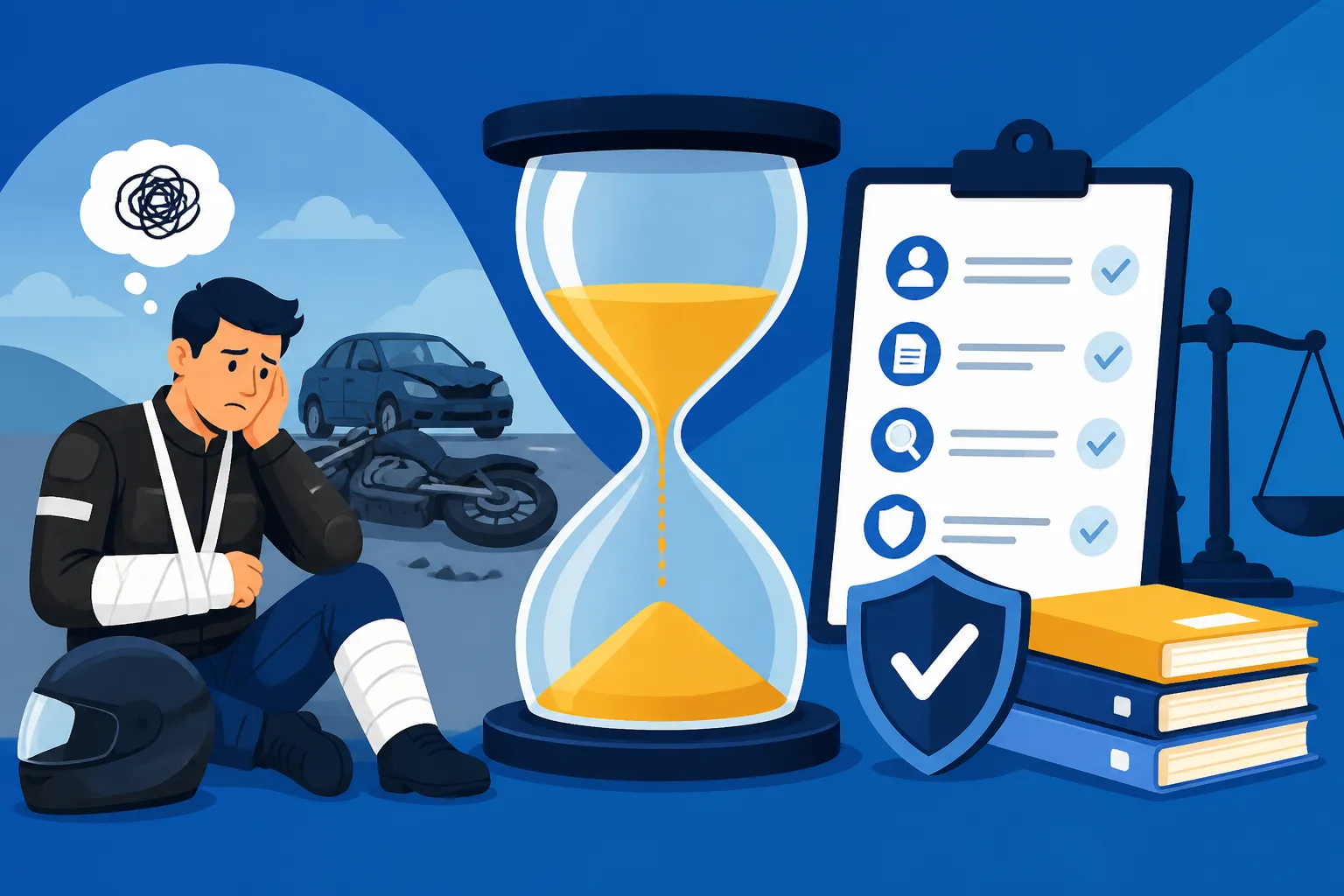
Why Some Settlements Take Years
It's incredibly frustrating when you're hurt in a motorcycle accident, trying to heal, and all you want is some resolution, only to find your settlement seems to be moving at a snail's pace. Many riders experience the agonizing wait, wondering why their motorcycle accident claim is taking years to settle. This guide will help demystify the lengthy process, shedding light on the common reasons behind these significant delays so you can better understand what to expect.
The Complex Nature of Motorcycle Accident Claims
Unlike fender benders in a car, motorcycle accidents often involve more severe injuries and a higher degree of skepticism from insurance companies and sometimes even the public. This inherent complexity is one of the primary drivers behind prolonged settlement timelines.
Severe Injuries and Long-Term Impact
One of the most significant reasons motorcycle accident settlements can drag on for years is the sheer severity of the injuries sustained. Riders, lacking the protective shell of a car, are often left with devastating consequences, ranging from road rash and broken bones to far more catastrophic injuries.
Imagine a scenario where a rider suffers a traumatic brain injury or a spinal cord injury. These aren't injuries that heal in a few weeks. They require extensive medical treatment, multiple surgeries, rehabilitation, and sometimes lifelong care. Insurance companies and legal teams need to fully understand the extent of these injuries, their long-term prognosis, and the total cost of future medical care before they can even begin to accurately value a claim. This involves waiting for doctors to determine when the injured party has reached "Maximum Medical Improvement" (MMI), which essentially means their condition has stabilized and isn't expected to improve further. This waiting period alone can span months, if not years, as the full impact of an injury unfolds. For example, if you're dealing with a complex fracture that requires multiple surgeries and ongoing physical therapy, it's impossible to know the total medical costs or the extent of permanent disability until much later in the recovery process. This is a critical factor in understanding How Future Medical Costs Are Estimated in your settlement.
Disputed Fault and Liability
Another major roadblock to a quick settlement is when there's a disagreement over who is actually at fault for the accident. While you might think it's crystal clear that the other driver was negligent, insurance companies rarely see things that way initially. They are always looking for ways to minimize their payout, and that often means shifting some or all of the blame onto the motorcycle rider.
Consider a situation where a driver claims they "didn't see the motorcycle" before making a left turn, leading to a collision. Even if the evidence, like a police report or witness statements, points to the driver's negligence, their insurance company might still argue that the rider was speeding, not wearing proper gear, or somehow contributed to the crash. This is where concepts like Comparative Negligence in Motorcycle Accidents come into play, potentially reducing your compensation if you're found to be partially at fault. Such disputes necessitate thorough investigations, often involving accident reconstruction experts, review of traffic camera footage, and detailed analysis of physical evidence. Each step of this investigative process adds time, especially if liability is a heavily contested issue. The more complicated the question of Who Is at Fault in a Motorcycle Accident, the longer it typically takes to reach a resolution.
The Insurance Company's Role in Delays
Let's be real: insurance companies are businesses, and their goal is to protect their bottom line. While they are legally obligated to act in good faith, they often employ tactics that inadvertently or intentionally prolong the settlement process.
Investigative Tactics and Information Gathering
Once an accident is reported, the at-fault driver's insurance company will launch its own investigation. This isn't just a quick phone call; it's often a meticulous and drawn-out process designed to gather every piece of information that could potentially reduce their liability. They will request police reports, witness statements, your medical records (often going back years to look for pre-existing conditions), employment records to verify lost wages, and even your social media activity.
This comprehensive information gathering takes time. Insurers might depose witnesses, hire private investigators, or even send their own adjusters to the accident scene. Each piece of information needs to be collected, reviewed, and analyzed. Furthermore, they might intentionally delay communication, hoping that the injured party, desperate for a resolution, will accept a lower settlement offer. It’s not uncommon for an adjuster to take weeks to return calls or respond to requests for information, further stretching out the timeline.
Lowball Offers and Negotiation Strategies
It's almost a given that the initial settlement offer from an insurance company will be a lowball. They start low, hoping you'll be unaware of the true value of your claim or simply exhausted by the process and willing to accept anything to move on. This is where the real negotiation begins, and it's rarely a quick back-and-forth.
Your legal team (if you have one) will present a demand package, detailing all your damages, including medical bills, lost wages, pain and suffering, and property damage. The insurance company will then respond, often with a counter-offer that is still significantly below what you deserve. This can lead to multiple rounds of negotiations, each taking weeks as offers and counter-offers are exchanged, justified, and considered. They might dispute the necessity of certain medical treatments, the extent of your pain and suffering, or even the calculations for your Lost Wages in a Motorcycle Claim. This strategic back-and-forth is a major contributor to why settlements take years. It’s a chess match, and the insurance company is banking on your financial stress or lack of knowledge to give in early. Learning How to Negotiate a Motorcycle Accident Settlement effectively is crucial, but it also takes time.
Legal and Administrative Hurdles
Beyond the immediate complexities of injuries and insurance company tactics, the legal and administrative aspects of the justice system itself can cause significant delays.
The Discovery Process
If negotiations with the insurance company fail to produce a fair settlement and a lawsuit is filed, the case enters a phase known as "discovery." This is a formal process where both sides exchange information and evidence relevant to the case. It's designed to prevent surprises at trial and ensure all parties have access to necessary facts, but it is notoriously time-consuming.
Discovery typically involves several key components:
- Interrogatories: Written questions sent by one party to the other, which must be answered under oath. Drafting, responding to, and reviewing these can take months.
- Requests for Production of Documents: Formal requests for specific documents, such as medical records, bills, employment records, accident reports, and communications. Gathering and reviewing thousands of pages of documents is a monumental task.
- Depositions: Out-of-court sworn testimonies from witnesses, parties involved, and expert witnesses (like doctors or accident reconstructionists). Scheduling, conducting, and transcribing depositions for multiple individuals can take an enormous amount of time. Each deposition might last several hours or even days, and preparing for them requires extensive effort.
The entire discovery process can easily last anywhere from six months to over a year, depending on the complexity of the case, the number of parties involved, and the state's procedural rules.
Court Calendars and Litigation Delays
Once discovery is complete and attempts at mediation or arbitration have failed, the case might be set for trial. However, the American court system is often overburdened, leading to substantial delays in getting a trial date. Courthouses in major cities like Los Angeles or Miami often have crowded dockets, meaning a trial date could be scheduled a year or more out from when it's requested.
Moreover, even once a trial date is set, it's not uncommon for it to be postponed due to other, higher-priority cases, judicial availability, or last-minute settlement negotiations. These delays are entirely out of your control, but they significantly impact the overall timeline of your case. For instance, in a busy jurisdiction, waiting for a jury trial might mean your case is pushed back several times, adding years to the process. This is why many injured riders and their attorneys actively work toward a settlement, even if it's protracted, to avoid the even longer and more uncertain path of litigation. Knowing How Long Does a Motorcycle Settlement Take can often depend heavily on whether your case ends up in court.
External Factors Beyond Your Control
Sometimes, delays stem from circumstances that no one party can truly control, further complicating an already difficult situation.
Multiple Parties and Complex Investigations
Not all motorcycle accidents are simple two-vehicle collisions. Sometimes, multiple vehicles are involved, or there might be questions about third-party liability—for example, a defective motorcycle part or a road hazard.
Consider a scenario where a rider crashes due to a pothole or faulty road design. In this case, you might be pursuing a claim against the city or state government, which introduces an entirely different set of rules, procedures, and bureaucratic delays. Likewise, if a part on your motorcycle failed, leading to the crash, you might have a product liability claim against the manufacturer. Each additional party, whether it's another driver, a government entity, or a manufacturing company, brings its own insurance policies, legal teams, and investigative processes into the mix. This exponentially increases the complexity and the time required to investigate and negotiate, as each party tries to shift blame and minimize their own liability. Figuring out Third-Party Liability in Motorcycle Accidents adds a whole new layer of investigation.
Medical Treatment and Maximum Medical Improvement
As touched upon earlier, a crucial factor in settlement timelines is the injured rider's medical treatment journey. For an accurate and fair settlement, your doctors need to have a clear understanding of your long-term prognosis and the full extent of your injuries. This means waiting until you have either fully recovered or reached Maximum Medical Improvement (MMI).
If you settle too early, before the full scope of your injuries is known, you risk leaving significant compensation on the table. For example, if you settle a claim for a severe leg injury and later discover you need another surgery or will have permanent nerve damage, you cannot go back and ask for more money. This waiting period ensures that all past and future medical expenses, lost wages, and pain and suffering can be accurately calculated. This often means delays in the settlement process, especially for serious injuries like a spinal cord injury or a traumatic brain injury that may require years of treatment and rehabilitation. It is crucial to understand What Reaching MMI Means for Your Settlement and how it impacts the valuation of your claim.
How You Can Influence the Timeline
While many factors are out of your hands, there are proactive steps you can take to help keep your claim moving forward, even if it still takes time.
Proactive Documentation and Communication
One of the most powerful tools you have is diligent and proactive documentation. From the moment of the accident, every detail you collect can be invaluable. This includes taking photos of the accident scene, vehicle damage, and your injuries. Keep a detailed journal of your symptoms, medical appointments, pain levels, and how your injuries affect your daily life.
Additionally, organize all your medical bills, prescriptions, receipts for accident-related expenses, and records of lost wages. Promptly provide your legal team with any requested documents and maintain open communication with them. The more organized and thorough your records, the easier it is for your attorney to build a strong case and respond quickly to insurance company requests, which can prevent some delays. Remember, Motorcycle Accident Evidence for Proving Fault is critical, and the more you have, the better.
Patience and Informed Decision-Making
Perhaps the hardest, yet most important, piece of advice for anyone dealing with a lengthy motorcycle accident settlement is to cultivate patience. Rushing to accept a quick, lowball offer might provide immediate relief, but it could severely compromise your long-term financial and medical needs. Understanding that these cases often take time allows you to make informed decisions rather than reactive ones.
Work closely with your attorney to understand the process, evaluate offers, and determine when an offer is genuinely fair. There's a delicate balance between pushing for a timely resolution and holding out for the compensation you truly deserve. Being prepared for a longer journey can help alleviate some of the stress and allow you to focus on your recovery. While it's tempting to settle quickly, especially if medical bills are piling up, a premature settlement could leave you in a much worse position down the line. It’s important to know When to Reject a Settlement Offer and stand firm for what you're owed.
TABLE: Common Reasons for Settlement Delays
| Factor | Description | Impact on Timeline |
|---|---|---|
| Injury Severity | Catastrophic injuries require extensive, long-term medical care, delaying MMI determination. | Months to years, depending on recovery time. |
| Disputed Fault | Disagreements over who caused the accident, often involving comparative negligence arguments. | Added months for investigations, expert analysis, and negotiations. |
| Insurance Tactics | Insurers conduct lengthy investigations, request extensive documentation, and make lowball offers. | Prolonged negotiation phases, often spanning many months. |
| Discovery Process | Formal exchange of information (interrogatories, document requests, depositions) in litigation. | Can add 6 months to over a year to the process. |
| Court Congestion | Crowded court dockets and judicial schedules delay trial dates and can lead to postponements. | Significant delays, often adding a year or more to trial readiness. |
| Multiple Parties | Cases involving several at-fault parties, defective products, or government entities. | Each additional party complicates investigation and negotiation, adding months. |
| Lack of Documentation | Insufficient or disorganized medical records, police reports, or evidence from the claimant. | Causes delays as your legal team has to chase down missing information. |
Disclaimer
Please remember that this information is intended for general guidance and informational purposes only, and does not constitute legal advice. Every motorcycle accident claim is unique, and the information presented here may not apply to your specific situation. For personalized advice, you should consult with a qualified legal professional specializing in motorcycle accident claims.