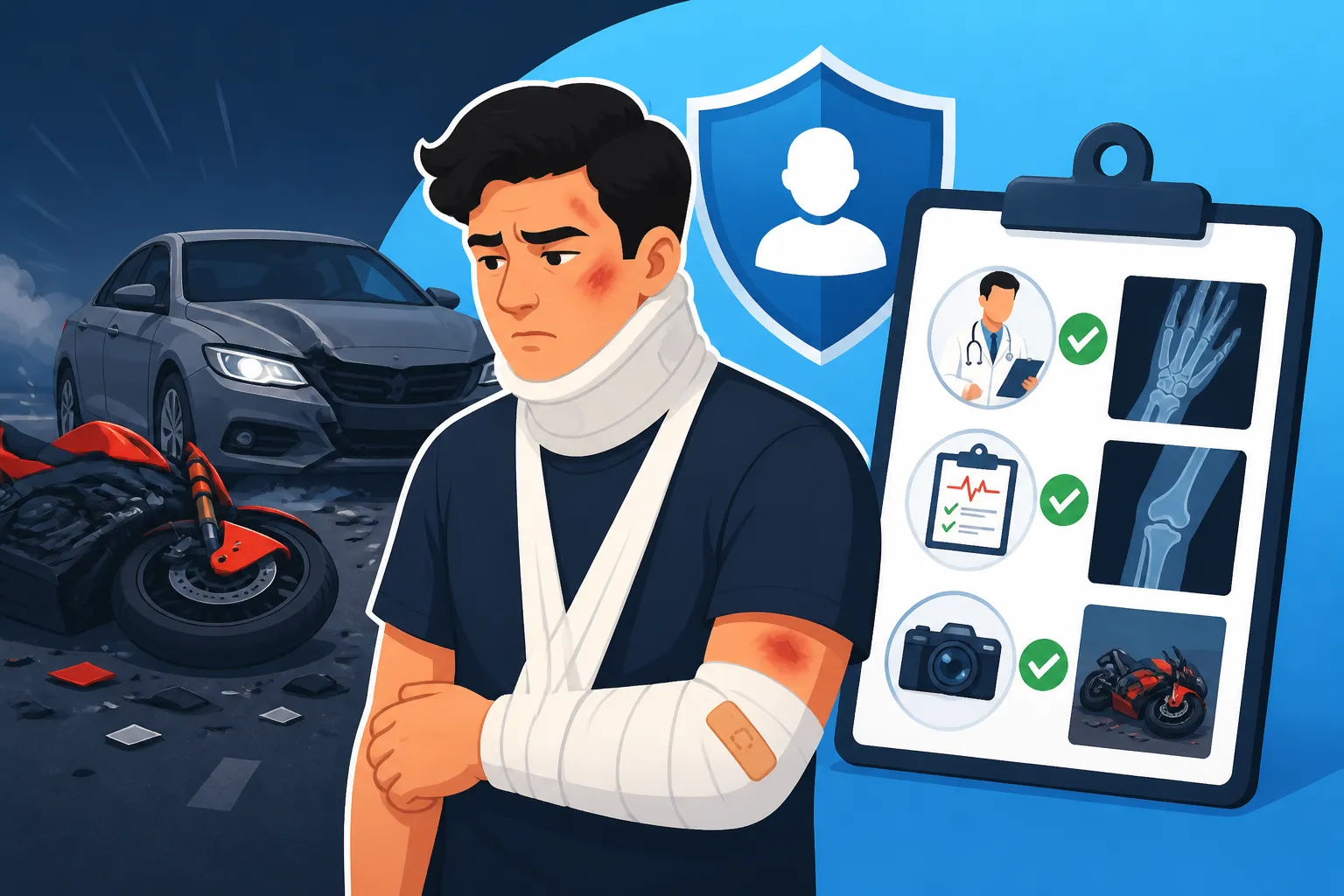
How to Prove Your Injuries
When you've been in a motorcycle accident, the last thing on your mind might be meticulously documenting every scrape, bruise, and ache. Yet, proving the full extent of your injuries is often the most challenging, and most critical, part of seeking fair compensation. It's a frustrating reality that the legal system demands concrete proof for injuries that can feel intensely personal and invisible. This guide will walk you through exactly how to build an undeniable case for your injuries, from the immediate aftermath to the long-term impact on your life.
The Foundation: Why Proving Your Injuries Is Crucial
It's a sad truth that motorcycle riders often face an uphill battle after a crash. There's an unfair bias that sometimes paints riders as reckless, leading insurance companies and even some juries to question the legitimacy or severity of their injuries. This makes solid, irrefutable proof of your injuries not just important, but absolutely vital. Without it, your claim can be significantly undervalued or even dismissed, leaving you to shoulder massive medical bills and lost income alone.
The Harsh Reality of Motorcycle Accidents
Motorcycle accidents are inherently more dangerous for riders than car accidents are for drivers or passengers. With little protection beyond your gear, the human body takes the brunt of the impact. This often leads to severe and complex injuries, from devastating road rash to traumatic brain injuries and spinal cord injuries. The sheer force involved can cause multiple fractures, internal bleeding, and other life-altering conditions that might not be immediately apparent.
Imagine you're riding down a familiar stretch of Highway 101 in California, enjoying the coastal breeze, when a distracted driver suddenly merges into your lane without looking. You're thrown from your bike, skidding across the asphalt. Your initial focus is on surviving, on the immediate pain. But what about the deep tissue damage, the subtle concussion, or the psychological trauma that develops days or weeks later? These are the real, often hidden, injuries that insurers love to dispute, claiming they couldn't possibly be related to the crash or that you're exaggerating. Understanding the common motorcycle accident injuries and the significant toll they take is the first step in preparing to prove them.
Insurers' Default Stance
Insurance companies, at their core, are businesses. Their primary goal is to minimize payouts, not to ensure you receive maximum compensation for your suffering. When you report a motorcycle accident, their adjusters are trained to look for any inconsistencies, delays in treatment, or lack of documentation that they can use to downplay your injuries. They might argue that your injuries were pre-existing, caused by something else entirely, or simply not as severe as you claim.
For instance, if you wait a few days to see a doctor because you initially thought your pain was just "soreness" from the impact, an adjuster might later argue that the delay proves your injuries weren't serious enough to warrant immediate attention. They might even suggest that you sustained the injuries in another incident during that time. This skeptical approach is why your proactive efforts to document and prove your injuries, from day one, are paramount. You're essentially building a fortress of evidence against their attempts to undermine your claim.
Immediate Steps to Document Your Injuries
The moments and days immediately following a motorcycle accident are incredibly chaotic and stressful. However, these early steps are foundational to proving your injuries later on. What you do and say – and don't do and don't say – can significantly impact the strength of your personal injury claim.
The Criticality of Medical Attention
No matter how minor you think your injuries might be, or how much adrenaline is masking the pain, seeking immediate medical attention is non-negotiable. This isn't just for your health; it's a critical piece of evidence for your claim. Even if you feel "fine" after a low-speed impact on a street in Portland, Oregon, internal injuries or a delayed-onset traumatic brain injury could be silently developing.
Imagine a scenario where you're involved in a fender-bender. You stand up, dust yourself off, and tell the other driver you're okay. A few days later, a severe headache and neck pain kick in, signs of a potential concussion or whiplash. Because you didn't see a doctor right away, the insurance company will aggressively argue that your injuries aren't related to the accident. Your medical records are the bedrock of your claim, establishing a direct link between the accident and your physical harm. Go to the emergency room, an urgent care clinic, or your primary care physician as soon as possible. Clearly explain how the accident happened and all symptoms you're experiencing, no matter how small they seem. Don't minimize your pain or discomfort.
Documenting the Scene and Your Immediate Symptoms
While medical professionals will document your physical state, you have a role to play in gathering evidence at the accident scene if your condition allows. This immediate documentation can provide crucial context for your injuries. Photos and videos can show the severity of the impact, damage to your gear, and visible injuries.
Think about it: if your helmet is visibly cracked or scratched, or your riding jacket is torn and scraped, these aren't just signs of property damage; they're powerful visual indicators of the force you experienced and how your gear protected, or failed to protect, you. Take photos of any visible cuts, bruises, road rash, swelling, or disfigurement on your body. If you can, take pictures of the vehicles, the surrounding area, and any contributing road hazards that might have played a role. Make sure to capture your own damaged gear, as this can be a strong visual aid for proving the impact of the crash and potentially even counter arguments like "The Helmet Defense Explained." Even a quick video narration describing your pain levels and any immediate symptoms can be invaluable. This type of raw, immediate evidence provides an unfiltered snapshot before memories fade or insurance adjusters try to twist the narrative.
Long-Term Documentation and Medical Records
Proving injuries isn't just about the immediate aftermath; it's about demonstrating the ongoing impact the accident has on your life. This involves continuous, meticulous documentation of your medical journey and personal experience.
Comprehensive Medical Records Are Your Backbone
After your initial visit, adhere strictly to your doctor's recommendations. This means attending all follow-up appointments, physical therapy sessions, specialist consultations, and diagnostic tests (X-rays, MRIs, CT scans) as prescribed. Every single medical record, from the initial emergency room report to the last rehabilitation session, becomes a piece of your evidentiary puzzle. Each visit generates notes, diagnoses, treatment plans, and bills that substantiate your claims.
For example, if you sustained a fractured tibia in a crash on the I-5 near Seattle, Washington, your medical records should detail the initial fracture, the surgery to implant a rod, subsequent physical therapy, pain medication prescriptions, and any complications. These records not only confirm the injury but also track its progression, the pain you endure, and the costs associated with your recovery. Gaps in treatment or non-compliance with medical advice can be seized upon by insurance companies as evidence that your injuries aren't as serious as you claim, or that you're not doing your part to recover. They might argue that your delay in seeking specific treatments contributed to a worsened outcome, effectively reducing the value of your medical expenses in a motorcycle claim.
The Power of an Injury Journal
Beyond official medical documents, maintaining a personal injury journal can be incredibly powerful. This isn't just a diary; it's a daily log of your pain, limitations, emotional state, and how your injuries affect your daily life. It helps you articulate the invisible damages, like "Pain and Suffering Damages Explained," that are harder to quantify with receipts and medical codes.
Every day, or as often as you can, jot down:
- Pain Levels: Rate your pain on a scale of 1-10. Note where the pain is located and what makes it better or worse.
- Symptoms: Describe any numbness, tingling, weakness, headaches, dizziness, difficulty sleeping, or changes in mood.
- Medication: List what medications you're taking, dosage, and their effects or side effects.
- Daily Activities: How do your injuries limit you? Can you still walk your dog, lift groceries, drive, work, or enjoy hobbies? Be specific. Instead of "I couldn't do things," write "I couldn't ride my Harley-Davidson Street Glide to the local motorcycle meet-up, which used to be my weekly stress relief, and I couldn't even lift my young son without excruciating back pain."
- Emotional Impact: Document feelings of frustration, anxiety, depression, anger, or fear. Are you having flashbacks of the crash? Are you now afraid to ride, or even drive?
This journal provides a detailed, contemporaneous account of your suffering. It helps illustrate the profound impact your injuries have on your quality of life, which is a significant component of "Types of Damages in a Motorcycle Accident Claim." When you later discuss your case with an attorney or have to testify, this journal will be an invaluable resource to recall details that might otherwise be forgotten.
Beyond Medical Bills: Proving Non-Economic Damages
While medical bills and lost wages are tangible "economic damages," a significant portion of a motorcycle accident settlement comes from "non-economic damages," often referred to as pain and suffering. These are the intangible losses that profoundly affect your well-being but don't come with a direct bill. Proving these can be tricky, as they are subjective, but they are absolutely real and deserve compensation.
Quantifying Pain and Suffering
How do you put a dollar amount on the excruciating pain of a broken limb, the relentless ache of a spinal injury, or the burning agony of road rash that requires skin grafts? Insurers use various methods, like the "multiplier method," but your job is to provide them with the raw material to justify a higher number. This goes beyond what your doctor writes in a chart.
Think about the persistent pain that keeps you from sleeping through the night, the daily struggle to perform simple tasks like getting dressed or showering, or the agonizing physical therapy sessions. These are all part of your pain and suffering. Beyond your injury journal, consider obtaining statements from friends, family, or even coworkers who have witnessed your struggle. Their observations about your altered demeanor, physical limitations, or withdrawal from activities you once loved can lend credibility to your claims. If you were an avid hiker and now struggle to walk short distances, that's a clear loss of enjoyment. The more vividly you can paint a picture of how the pain permeates every aspect of your existence, the stronger your argument for higher non-economic damages will be.
Documenting Emotional Distress and Loss of Enjoyment
Motorcycle accidents don't just injure the body; they traumatize the mind. Many riders experience significant emotional distress, including anxiety, depression, PTSD, and a profound loss of enjoyment of life. This can be particularly debilitating and can severely impact your overall recovery and future.
For example, a rider who once loved cruising through the scenic mountains of Colorado might now experience panic attacks at the thought of getting back on a bike, or even driving in a car. This fear, this inability to partake in a core passion, is a significant loss. Documenting emotional distress involves:
- Therapy Records: Seeking psychological counseling or therapy for anxiety, depression, or PTSD creates official records that demonstrate the reality of your mental health struggles. A therapist's diagnosis and treatment notes are powerful evidence.
- Medication Prescriptions: If you're prescribed antidepressants or anti-anxiety medications, these prescriptions further validate your emotional distress.
- Personal Accounts: Continue to use your injury journal to detail your emotional ups and downs. How has your mood changed? Are you irritable, withdrawn, easily startled?
- Witness Statements: Again, testimony from loved ones can confirm your emotional changes, your loss of interest in hobbies, or how the accident has affected your relationships.
The impact of emotional distress and loss of enjoyment on your overall well-being is often immense, and proving these damages is crucial for a fair settlement. This is where a detailed account of how your life has fundamentally changed, beyond just physical discomfort, truly comes into play.
Overcoming Challenges and Common Defenses
Insurance companies are experts at finding reasons not to pay you what you deserve. They'll scrutinize every detail, looking for loopholes. Understanding their tactics and proactively preparing to counter them is essential for proving your injuries.
Addressing Pre-Existing Conditions
One of the most common defense strategies is to claim your injuries are not new, but rather stem from a pre-existing condition. "Oh, that back pain? You had that before the crash, didn't you?" This is a frustrating accusation, especially when the accident clearly exacerbated a dormant issue or caused a completely new one.
Let's say you had some mild lower back pain years ago, but it was well-managed and rarely bothered you. After the motorcycle accident, you suffer a herniated disc that requires surgery. The insurance company will immediately try to pin the herniated disc on your "pre-existing condition." This is where the legal principle of the "eggshell skull rule" comes into play: a defendant must take their victim as they find them. Even if you had a pre-existing vulnerability, the at-fault driver is still liable for aggravating that condition or causing new injuries.
To combat this defense:
- Gather All Prior Medical Records: Obtain records of your pre-existing condition before the accident. This can show that your condition was stable, well-managed, or not causing the severe symptoms you now experience.
- Doctor's Testimony: Have your treating physician explicitly state in your medical records, or ideally, through a formal letter, that the accident either caused new injuries or significantly worsened your pre-existing condition. They can explain the "before and after" impact.
- Comparative Analysis: Your legal team might work with medical experts to provide a comparative analysis, differentiating between the symptoms and limitations you had prior to the accident versus those you developed afterward. This helps demonstrate that the accident, not just your prior condition, is responsible for your current suffering.
Battling Gaps in Treatment
Another tactic insurers love to use is pointing to "gaps in treatment." This refers to periods where you don't seek continuous medical care after an accident. Life happens: you might feel a bit better, finances might be tight, or you might struggle with transportation. However, any break in your medical treatment can be used against you.
Imagine you're recovering from a broken wrist and physical therapy, but after a few weeks, you decide to take a break because you're feeling overwhelmed and the pain has lessened slightly. Then, a month later, the pain returns with a vengeance, and you restart therapy. The insurance adjuster will highlight that month-long gap, suggesting that your injury must not have been that bad, or that something else happened during that time that caused the resurgence of pain.
To minimize the impact of treatment gaps:
- Follow Doctor's Orders Relentlessly: This is the best defense. Stick to your treatment plan, even if it's inconvenient.
- Communicate with Your Doctor: If you must take a break or delay an appointment, discuss it with your doctor. Their notes might explain the reason for the gap, such as financial hardship, a temporary improvement, or a medical recommendation.
- Document Reasons for Gaps: In your injury journal, note any legitimate reasons for delays or breaks in treatment. For instance, "Couldn't make physical therapy this week due to severe fatigue from new medication."
- Resume Care Promptly: If you do have a gap, resume treatment as soon as possible and have your doctor note the reason for resuming care.
Proving your injuries requires showing a clear, consistent, and continuous path of medical care directly resulting from the accident. This helps shut down the insurance company's arguments that your injuries are not legitimate or were caused by other factors. This proactive approach ensures your claim for damages, including potential compensation for "Future Medical Costs Explained," is not undermined.
Leveraging Expert Testimony and Other Evidence
Sometimes, proving injuries goes beyond just medical records and personal journals. For complex cases, particularly those involving severe injuries or disputed facts, expert testimony and other specialized forms of evidence become indispensable.
When Medical Experts Become Your Voice
When your injuries are severe, long-lasting, or involve complex medical diagnoses, the insights of medical experts can be crucial. These aren't just your treating physicians, but independent specialists who can provide an objective, authoritative opinion on the nature, extent, and prognosis of your injuries.
For instance, if you suffered a traumatic brain injury (TBI) in a crash, a neurologist or neuropsychologist can provide expert testimony explaining the specific deficits you're experiencing, how the TBI impacts your cognitive function, and the long-term implications for your life. They can correlate diagnostic imaging (MRIs, CT scans) with your symptoms, rebutting claims that your TBI is minor or non-existent. Similarly, an orthopedic surgeon might testify about the extent of bone damage, the necessity of multiple surgeries, and the likelihood of permanent impairment. These experts can also speak to "Loss of Earning Capacity Explained" if your injuries prevent you from returning to your previous profession or significantly limit your future job prospects. Their professional opinions carry significant weight with juries and insurance companies alike.
Utilizing Accident Reconstruction and Other Specialists
Sometimes, the mechanism of injury itself needs to be proven to link the accident to your specific harm. This is where an accident reconstruction expert can be incredibly valuable. They analyze physical evidence from the crash scene, vehicle damage, police reports, and witness statements to determine exactly how the accident occurred and the forces involved.
Consider a scenario where the other driver claims you were only going 5 mph, while you know the impact was much harder, leading to your severe spinal cord injury. An accident reconstructionist can use physics and engineering principles to demonstrate the true speeds, angles, and forces at play, proving that the impact was sufficient to cause your significant injuries. This directly refutes attempts by the defense to downplay the severity of the collision.
Beyond accident reconstruction, other specialists can contribute:
- Vocational Experts: If your injuries prevent you from returning to work, a vocational expert can assess your lost earning capacity, detailing how your accident impacts your ability to earn a living now and in the future.
- Economists: An economist can calculate the total financial losses from your injuries, including future medical costs, lost wages, and lost earning capacity, providing concrete figures for your claim.
- Mental Health Professionals: As discussed, therapists and psychiatrists can provide expert opinions on the psychological trauma and emotional distress you've endured.
By bringing in a team of experts, you create a powerful, multi-faceted case that meticulously proves not just what your injuries are, but how they occurred, why they are so severe, and what their full financial and personal impact will be on your life. This comprehensive approach is key to achieving a maximum settlement.
Essential Evidence for Proving Your Injuries
Collecting and organizing your evidence is a monumental task, but it's absolutely necessary. The more organized and complete your documentation, the harder it is for insurance companies to dispute your claims. Think of every piece of paper, every photo, every journal entry as a brick in the wall of your claim.
A Comprehensive List of Documentation
Here’s a detailed breakdown of the types of documentation you should be collecting and organizing:
- Medical Records: This is your primary evidence. Gather all records from every doctor, hospital, urgent care, physical therapist, chiropractor, and specialist you've seen since the accident. This includes initial reports, diagnostic test results (X-rays, MRIs, CT scans, nerve studies), consultation notes, treatment plans, referrals, and discharge summaries. Make sure they are chronological and easy to understand.
- Medical Bills: Keep every single bill related to your treatment. This includes hospital bills, doctor's fees, prescription costs, co-pays, deductibles, and transportation costs to appointments. Even if your health insurance paid part, you need records of the full amount billed. These are direct proof of "Medical Expenses in a Motorcycle Claim."
- Prescription Records: Maintain a detailed list or copies of all prescriptions, including the medication name, dosage, prescribing doctor, and pharmacy. This further supports your injury claims and pain management.
- Photographs and Videos:
- Accident Scene: Photos of the damaged vehicles, road conditions, debris, skid marks, and any relevant signs or traffic signals.
- Injuries: Detailed photos of your injuries as they progress from the immediate aftermath (bruises, cuts, road rash, swelling) through the healing process. Capture scars, stitches, and any visible limitations.
- Damaged Gear: Photos of your helmet, jacket, gloves, boots, and any other gear that was damaged in the crash. This shows the force of impact.
- Personal Injury Journal: Your detailed, daily entries documenting pain levels, symptoms, emotional state, medications, and how injuries impact daily life.
- Lost Wage Documentation:
- Pay Stubs: Pre and post-accident pay stubs to show a reduction in income.
- Employment Records: Letters from your employer confirming missed workdays, reduced hours, or job modifications due to your injuries.
- Tax Returns: Especially important for self-employed riders to prove "How to Calculate Lost Wages for Self-Employed Riders" and lost earning capacity.
- Doctor's Notes: Statements from your doctor excusing you from work or recommending light duty.
- Witness Statements: Contact information and written statements from anyone who witnessed the accident or can attest to your condition before and after the crash. This includes friends, family, and coworkers. Their observations can support claims for pain and suffering and loss of enjoyment.
- Police Report: While not always definitive on fault, it documents the date, time, location, and initial observations of the accident, often listing initial injuries reported at the scene.
- Accident Reconstruction Reports: If an expert was hired, their detailed findings on the crash dynamics.
- Expert Witness Reports: Reports from medical specialists, vocational experts, or economists.
Example Table of Evidence and What It Proves
To help you visualize, here's a table summarizing types of evidence and what they aim to prove:
| Type of Evidence | What It Primarily Proves | Example Scenario |
|---|---|---|
| Medical Records | Existence, severity, diagnosis, and treatment of injuries; causation. | Emergency room diagnosis of a fractured femur after being hit by a car. |
| Medical Bills | Economic damages related to healthcare costs. | $50,000 in surgical fees, hospital stay, and physical therapy for the fractured femur. |
| Injury Journal | Daily pain levels, emotional distress, impact on daily life (non-economic damages). | Daily entry: "Couldn't sleep due to throbbing pain in my leg; missed son's baseball game." |
| Photographs of Injuries | Visual proof of physical harm, progression of healing, disfigurement. | Close-up photos of road rash healing, showing scarring; images of a brace on a broken limb. |
| Damaged Gear Photos | Force of impact, need for safety gear, sometimes helps prove fault. | A severely cracked helmet after a head injury; torn jacket indicating extensive road rash. |
| Lost Wage Documentation | Economic damages for missed work, reduced income. | Pay stubs showing a decrease from 40 hours to 20 hours per week for three months. |
| Witness Statements | Corroboration of events, changes in rider's demeanor, limitations. | Coworker states: "John used to be so active, now he struggles to walk to his desk." |
| Police Report | Basic accident facts, sometimes initial injury observations. | Report notes "rider complaining of leg pain" at the scene. |
| Expert Witness Reports | Causal link between accident and specific injuries; future impact; financial projections. | Neuropsychologist report detailing cognitive deficits caused by TBI, affecting memory. |
This comprehensive approach to gathering evidence is your strongest asset. The more thorough you are in documenting every aspect of your injuries, the more undeniable your claim becomes, and the better your chances of achieving a fair and just settlement for everything you've lost. Remember, while it can feel overwhelming, focusing on how to document your injuries for a claim is perhaps the single most important action you can take after a motorcycle accident.
When to Consider Professional Help
Navigating the complexities of proving your injuries and dealing with insurance companies can be incredibly daunting, especially when you're also trying to heal. This is where professional help becomes invaluable.
The Role of a Motorcycle Accident Attorney
A skilled motorcycle accident attorney can be your biggest advocate, handling all the intricate details of your claim while you focus on recovery. They understand the nuances of personal injury law, the tactics insurance companies employ, and how to effectively present your evidence to maximize your settlement.
An attorney can:
- Gather Evidence: They will often have investigators who can help collect police reports, witness statements, accident reconstruction data, and even surveillance footage.
- Obtain Medical Records: They'll work directly with your healthcare providers to ensure all relevant medical records and bills are collected and organized.
- Consult Experts: Your attorney can identify and retain necessary medical, vocational, or accident reconstruction experts to provide powerful testimony.
- Negotiate with Insurers: They are adept at countering lowball offers and aggressive tactics from insurance adjusters, knowing the true value of your claim based on similar cases. They understand "How Insurers Value Pain and Suffering" and how to fight for what you deserve.
- Represent You in Court: If a fair settlement cannot be reached, they are prepared to take your case to trial.
You might be asking yourself, "Do You Need a Motorcycle Accident Lawyer?" The answer is almost always yes, especially if your injuries are serious, if fault is disputed, or if the insurance company is acting difficult. A lawyer levels the playing field against powerful insurance corporations.
Why Early Engagement Matters
The sooner you engage a motorcycle accident attorney after your crash, the better. Memories fade, evidence can be lost, and statutes of limitations exist that dictate how long you have to file a claim. An attorney can hit the ground running, preserving evidence and establishing a strong foundation for your case from day one. They can advise you on "What to Do Immediately After a Motorcycle Accident" and ensure you avoid common pitfalls that could jeopardize your claim.
For example, if you're in a crash in Florida, where there's a relatively short statute of limitations for personal injury, an attorney can ensure all deadlines are met. Trying to handle everything on your own, especially while recovering from serious injuries, can lead to costly mistakes. Having an expert on your side, particularly one who understands the unique challenges motorcycle riders face, is an investment in your future and your ability to receive the compensation you truly deserve.
Disclaimer
The information provided in this guide is intended for general informational purposes only and does not constitute legal advice. Every motorcycle accident claim is unique, and the specific facts and applicable laws can vary significantly. It is highly recommended to consult with a qualified personal injury attorney to discuss your individual situation and receive advice tailored to your specific needs.