Motorcycle Accidents Caused by Head-On Collisions
There's a specific type of motorcycle accident that sends shivers down every rider's spine: the head-on collision. The thought of it isn't just a fear; it's a stark reality for far too many. These crashes are often the most devastating, leaving riders with life-altering injuries and families grappling with unimaginable loss. This guide delves deep into what causes these horrific incidents, how fault is determined, and what steps you can take to protect yourself and your rights after such a traumatic event.
Understanding the Devastating Reality of Head-On Collisions
For motorcyclists, a head-on collision isn't just another accident; it's often a direct impact with an unforgiving force that few vehicles can withstand. The dynamics of such a crash are uniquely brutal for those on two wheels, leading to some of the most severe injuries imaginable. It’s crucial to understand why these collisions are so catastrophic and what specific dangers they pose to riders.
The Sheer Force and Impact on Riders
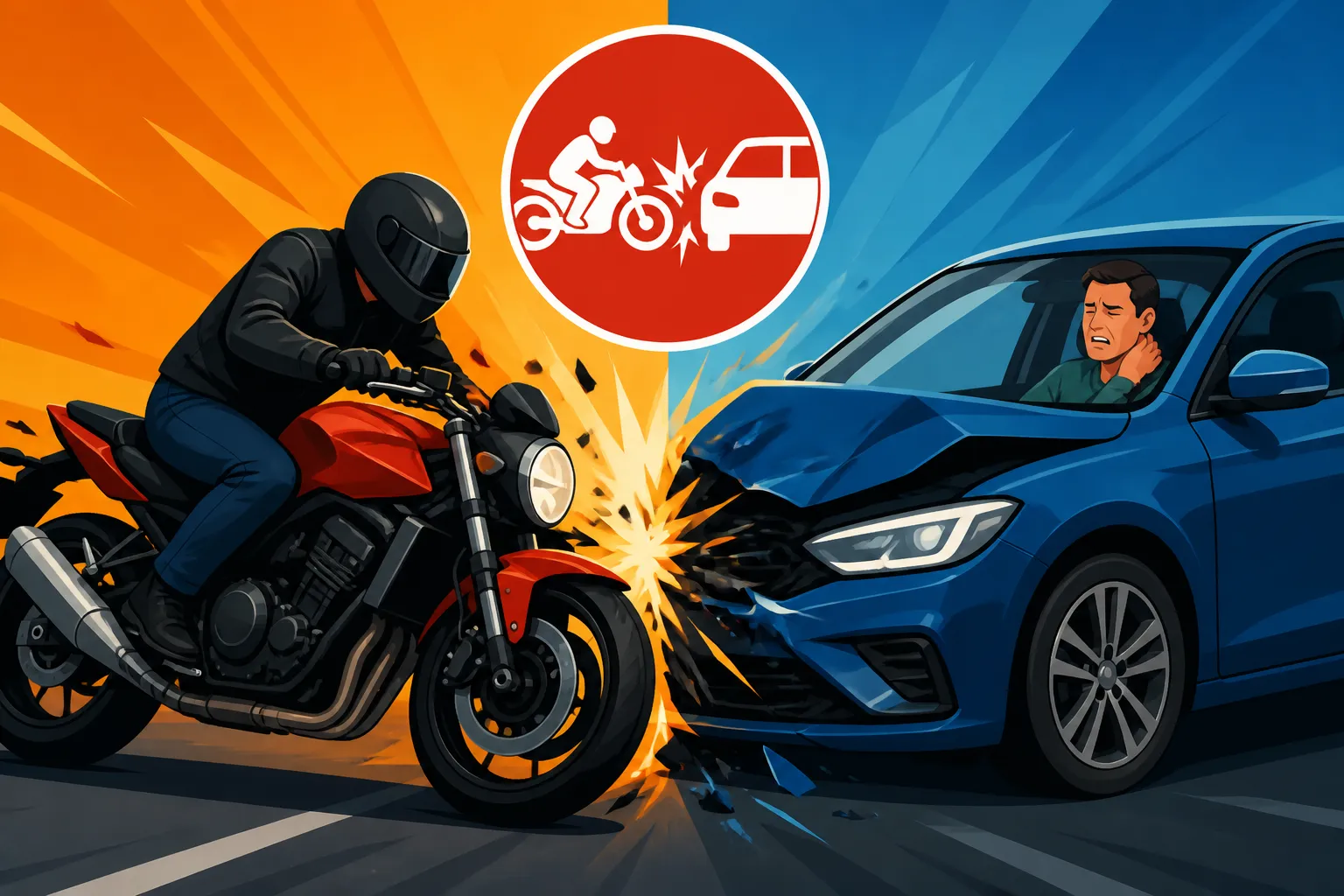
Imagine the immense energy involved when two vehicles traveling in opposite directions suddenly collide. For a car, there are often crumple zones designed to absorb some of this kinetic energy, ideally protecting the occupants. For a motorcycle, that luxury simply doesn't exist. When a car or truck strikes a motorcycle head-on, the rider often becomes the primary absorber of that violent impact. There's no steel cage, no seatbelt, and often no airbag to cushion the blow. The rider is typically ejected from the bike, propelled into the oncoming vehicle, or thrown onto the pavement with incredible force.
This direct, unrestrained impact means that the rider's body takes the full brunt of the collision. It's not just the initial impact; it's the secondary impacts – hitting the ground, sliding, or being struck by other vehicles or debris – that compound the trauma. Unlike a rear-end collision, where a rider might be thrown forward, or a side-impact, where the force might be more localized, a head-on crash involves a sudden, violent deceleration and directional change that can tear through a human body with shocking efficiency. The difference in mass between a motorcycle and a passenger vehicle or, worse, a large truck, only magnifies this devastating force, often leaving the motorcycle utterly destroyed and the rider fighting for their life.
Common Injuries Sustained in Head-On Crashes
Given the unparalleled forces involved, the injuries from head-on motorcycle collisions are almost universally severe, often leading to catastrophic, life-altering consequences. While any motorcycle accident can result in serious harm, head-on impacts almost guarantee extensive trauma to multiple body systems.
One of the most common and devastating outcomes is a traumatic brain injury (TBI), even when wearing a DOT-compliant helmet. The sheer deceleration can cause the brain to violently strike the inside of the skull, leading to concussions, contusions, diffuse axonal injury, and even skull fractures. Spinal cord injuries are also alarmingly frequent, often resulting in paralysis, either partial or complete, which permanently alters a person's mobility and independence. Internal injuries are another silent killer, as organs like the liver, spleen, lungs, and heart can be crushed, ruptured, or lacerated by the impact, leading to internal bleeding and organ failure. Riders often sustain multiple fractures, sometimes compound or comminuted, affecting limbs, ribs, pelvis, and facial bones, requiring extensive surgeries and prolonged rehabilitation. In the most tragic cases, amputations of limbs become necessary due to irreversible damage. These types of injuries not only incur astronomical medical costs but also lead to long-term disability, loss of earning capacity, and profound psychological distress. The road to recovery, if full recovery is even possible, is often grueling, expensive, and emotionally taxing. For more information on the wide range of harm riders face, you can explore common motorcycle accident injuries.
Primary Causes of Head-On Motorcycle Collisions
While head-on collisions are relatively rare compared to other types of crashes, their severity makes them particularly critical to understand. When they do occur, they are almost invariably caused by another driver's error, specifically when a vehicle crosses into the opposing lane of traffic. Pinpointing the exact reason for this intrusion is key to understanding liability and preventing future tragedies.
Driver Inattention and Distracted Driving
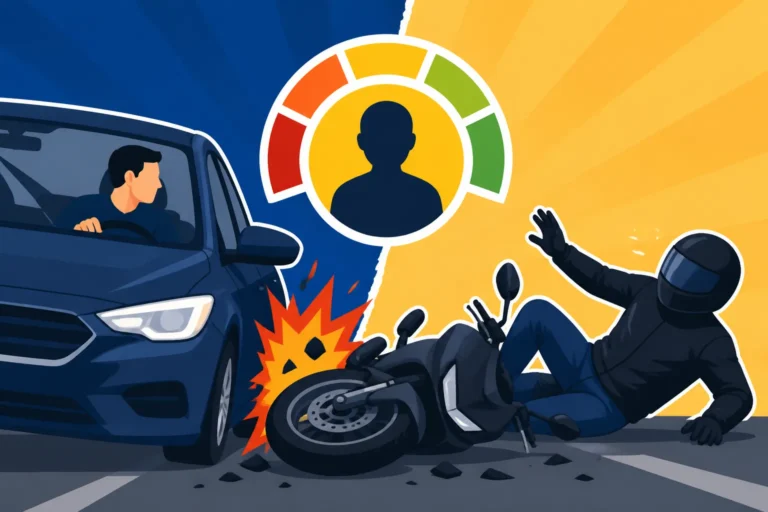
In our fast-paced world, driver inattention and distracted driving have become epidemic problems, and for motorcyclists, they are nothing short of deadly. A momentary lapse in focus from a driver can spell disaster, especially on roads with two-way traffic. Texting, fiddling with the radio, adjusting navigation systems, or even talking to passengers can divert a driver's eyes and attention from the road for crucial seconds. During those few seconds, a vehicle can drift significantly, crossing over the centerline directly into the path of an oncoming motorcycle.
Imagine a driver looking down at their phone for just three seconds while traveling at 55 mph. That vehicle has traveled roughly the length of a football field completely unsupervised. If that distracted driver is on a winding road or misjudges a curve, they can easily veer into the oncoming lane without even realizing it until it's too late. These situations often leave the motorcyclist with no time or space to react, as the car appears suddenly in their lane. The phrase, "'I didn't see the motorcycle' defense explained," often used by negligent drivers, highlights this pervasive issue, underscoring how often drivers simply aren't paying enough attention to spot motorcycles, even when they are directly in front of them. It's a frustrating reality that the vulnerability of motorcycles is compounded by the inattention of others.
Impaired Driving and Reckless Behavior
Another major contributor to head-on collisions, and perhaps one of the most reprehensible, is impaired driving. When a driver is under the influence of alcohol, drugs, or even certain prescription medications, their judgment, reaction time, perception, and motor control are severely compromised. This impairment can lead to erratic driving behaviors, including drifting across the centerline, swerving uncontrollably, or completely misjudging turns and road geometry.
Beyond chemical impairment, pure reckless behavior, like aggressive driving or road rage, can also precipitate head-on crashes. Drivers who are speeding excessively, weaving through traffic, or engaging in dangerous stunts might lose control and cross into the opposing lane. While less common, intentional swerving out of malice can also lead to horrific head-on impacts. These actions demonstrate a blatant disregard for the safety of others on the road and significantly increase the risk of a catastrophic collision with an oncoming motorcyclist. Exploring common causes of motorcycle accidents reveals that impaired driving is a significant factor across all accident types, but its impact in head-on scenarios is particularly devastating due to the directness of the impact.
Unsafe Passing and Lane Changes
The desire to pass slower traffic or make an ill-advised lane change is a frequent precursor to head-on motorcycle collisions. Drivers, often impatient or in a hurry, will attempt to overtake another vehicle without properly assessing the road ahead, traffic conditions, or their own vehicle's acceleration capabilities. This becomes especially perilous on two-lane roads where passing requires entering the oncoming lane.
A driver might misjudge the distance of an oncoming vehicle, fail to see a motorcycle due to its smaller profile, or simply believe they have more time than they actually do. They pull out to pass, only to realize too late that an oncoming motorcycle is rapidly approaching. In a desperate attempt to avoid a collision, they might swerve back into their lane too sharply, lose control, or, tragically, collide head-on with the motorcycle that was already in the opposing lane. This scenario is particularly common in rural areas or on highways without median barriers. Moreover, a quick, unsafe lane change, perhaps to avoid an obstacle or simply without checking mirrors, can also cause a driver to briefly enter the oncoming lane, creating a sudden and unavoidable hazard for a motorcyclist.
Driver Fatigue and Drowsy Driving
The insidious danger of driver fatigue is often underestimated, yet it can be as dangerous as impaired driving. When a driver is drowsy, their cognitive functions—attention, judgment, and reaction time—are significantly impaired. They might experience "micro-sleeps," brief moments of unconsciousness where they essentially fall asleep at the wheel, even if only for a few seconds.
These micro-sleeps or prolonged periods of severe drowsiness can cause a driver to drift across the centerline, particularly on long, monotonous stretches of road or late at night. The driver might not even remember crossing into the oncoming lane until the moment of impact, if they remember it at all. For a motorcyclist, there's no warning. A car suddenly appears in their lane, often without any evasive action from the drowsy driver, leading to an unavoidable head-on collision. Recognizing the signs of fatigue and taking regular breaks are vital responsibilities for all drivers, but unfortunately, many fail to do so, putting vulnerable motorcyclists at extreme risk.
How Fault is Determined in Head-On Motorcycle Accidents
Determining fault in any motorcycle accident is a critical, often complex process, but in head-on collisions, it's usually quite clear-cut due to the nature of the impact. The primary focus is almost always on which vehicle crossed the centerline or violated traffic laws. However, gathering irrefutable evidence is paramount to building a strong case and ensuring justice for the injured rider. Understanding who is at fault in a motorcycle accident is the first step toward securing compensation.
Evidence Collection at the Scene
The moments immediately following a head-on collision are chaotic, but the evidence gathered at the scene is often the most crucial in establishing fault. Law enforcement officers, often arriving quickly due to the severity of these crashes, play a vital role in documenting the scene. Their police report will detail the position of the vehicles, any physical evidence, and initial witness statements. It’s important to remember that this report, while influential, isn't the final word on fault, and sometimes errors can occur.
Photos and videos taken by bystanders or the rider (if able) before emergency services arrive can capture critical details, such as the final resting places of vehicles, visible tire marks, debris fields, and road conditions. Tire marks, specifically skid marks or yaw marks, can indicate braking, speed, and the direction of travel just before impact. The location and type of vehicle damage are also crucial; often, the damage profile on both vehicles will confirm the head-on nature of the collision and help pinpoint the exact point of impact. Accident reconstruction specialists can meticulously analyze all this evidence to create a detailed narrative of how the crash occurred, often proving definitively which vehicle crossed into the wrong lane. Additionally, data from vehicle black boxes (Event Data Recorders) in newer cars can provide information on speed, braking, and steering inputs leading up to the crash. For more on what to look for, check out motorcycle accident evidence for proving fault.
Legal Principles of Negligence and Liability
In the eyes of the law, fault in a head-on collision almost always hinges on the legal principle of negligence. To successfully prove negligence, four elements must be demonstrated: duty, breach, causation, and damages. Every driver on the road has a duty to operate their vehicle safely and adhere to traffic laws, which includes staying in their designated lane. When a driver crosses the centerline and causes a head-on collision, they have clearly breached this duty.
The challenge then becomes proving that this breach directly caused the motorcyclist's injuries and damages. Given the nature of head-on collisions, establishing causation is usually straightforward: the car crossing the centerline caused the crash and subsequent injuries. In almost all head-on motorcycle accident cases, the driver of the car is found to be primarily, if not entirely, at fault. This is because violating the fundamental rule of staying in one's lane is a clear act of negligence. The liability for the damages, including medical expenses, lost wages, and pain and suffering, then falls on the negligent driver and their insurance company. A comprehensive understanding of this is detailed in motorcycle accident liability: a complete guide.
Shared Fault and Comparative Negligence
While head-on collisions are typically clear-cut in terms of fault, there are rare scenarios where the concept of shared fault, or comparative negligence, might come into play. This is more common in states like California, which follows a "pure comparative negligence" rule, meaning a party can recover damages even if they are 99% at fault, but their recovery is reduced by their percentage of fault. Other states, like Texas or Florida, have "modified comparative negligence" rules, where recovery is barred if a party is 50% or 51% or more at fault, respectively.
For example, if the motorcyclist was speeding excessively or engaging in lane splitting that contributed to their inability to avoid the oncoming vehicle, an insurance company or defense attorney might try to assign a small percentage of fault to the rider. However, this is significantly harder to argue in a true head-on crash where the other driver explicitly crossed into the wrong lane. Even if a rider was speeding, if the other driver was entirely in the wrong lane, the argument for shared fault becomes tenuous. The legal system generally recognizes that violating fundamental traffic laws, like staying in your lane, trumps other minor infractions unless those infractions were a direct contributing cause to the other driver's negligence. Nevertheless, it's why having a skilled legal advocate is so important, as they can fiercely defend against any attempts to unfairly assign blame to the rider. Understanding comparative negligence in motorcycle accidents is vital for protecting your claim.
The Role of Road Conditions and Environmental Factors
While driver behavior is often the direct cause of head-on collisions, it's also important to acknowledge that the environment can play a significant, albeit often secondary, role. Poor road conditions or adverse weather can exacerbate dangerous situations, making it easier for a driver to lose control or cross into the opposing lane, even if their primary actions were still negligent.
Poor Road Design and Maintenance
Sometimes, the very infrastructure we rely on can contribute to accidents. Poor road design, such as excessively narrow roads, sharp, unmarked curves, or sections of highway without adequate shoulders or median barriers, can significantly increase the risk of a head-on collision. On such roads, even a slight error in judgment or a momentary lapse in attention from a driver can cause them to veer across the centerline. Imagine a winding two-lane road in the countryside, poorly lit at night, with faded lane markings. It's easy for a driver, especially an unfamiliar one, to misjudge a curve and drift into the path of an oncoming motorcycle.
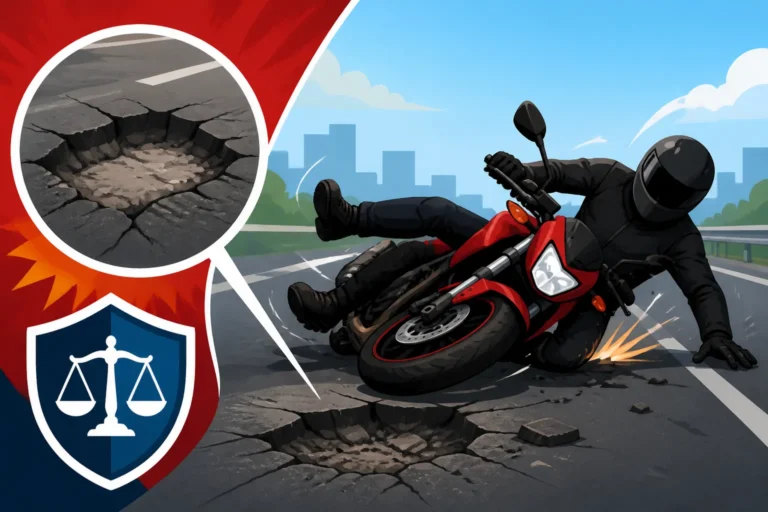
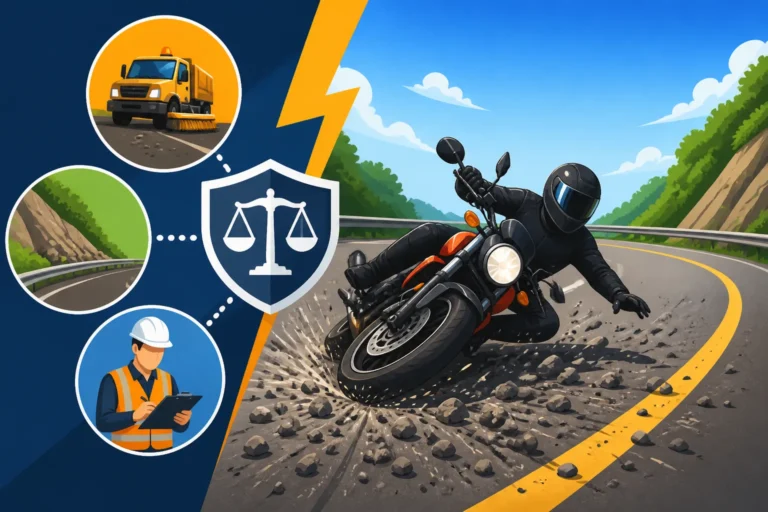
Furthermore, inadequate road maintenance can create hazards that force drivers to swerve unexpectedly. Large potholes, crumbling pavement, excessive gravel or sand on the road, or objects like fallen tree branches can cause a driver to react suddenly, potentially sending them into the opposing lane. While the driver's reaction might be involuntary, the underlying cause of their swerving could be traced back to a negligent road authority. In these complex cases, establishing government liability for road hazards might be possible. Who is liable for a pothole motorcycle accident is a question that sometimes arises in these scenarios, adding another layer of complexity to fault determination.
Weather Conditions and Visibility
Nature itself can become a formidable adversary on the road, drastically reducing visibility and making driving conditions treacherous. Adverse weather conditions such as heavy rain, dense fog, snow, or ice can significantly impair a driver's ability to see the road, judge distances, and maintain control of their vehicle. When visibility is low, it becomes much easier for a driver to unintentionally drift across the centerline, particularly on roads without clear lane dividers or at night.
Consider the blinding glare of a rising or setting sun directly in a driver's eyes. This temporary blindness can cause them to lose their bearings, leading them to swerve into the path of an oncoming motorcycle. Similarly, black ice or standing water can cause a driver to lose traction, sending their vehicle skidding into the opposite lane. While weather conditions don't typically negate driver negligence (drivers are expected to adjust their driving to conditions), they can certainly contribute to the circumstances that lead to head-on collisions. In such instances, documenting the weather at the time of the crash is just as important as documenting other physical evidence.
Steps to Take After a Head-On Motorcycle Accident
A head-on motorcycle accident is a traumatic, life-altering event. The moments immediately following such a crash are often filled with confusion, pain, and adrenaline. However, taking the right steps, even small ones, can be crucial for your health and any potential legal claim. Remember, your safety and well-being are paramount, but protecting your rights comes in a close second. For general advice, remember to review what to do after a motorcycle accident.
Immediate Actions for Safety and Documentation
First and foremost, if you are conscious and able, ensure your immediate safety and that of others. Move to a safe location away from traffic if possible, but only if you can do so without exacerbating your injuries. The very next step, without exception, is to call 911. Head-on collisions almost always result in severe injuries, making immediate medical attention absolutely critical. Do not attempt to move your motorcycle or the other vehicle unless it poses an immediate safety hazard.
While waiting for emergency services, if your condition permits, try to gather as much information and evidence as possible. Take photos of everything: the scene from multiple angles, the damage to both vehicles, any visible injuries you or your passenger sustained, tire marks, road conditions, traffic signs, and any debris. If there are witnesses, get their names and contact information. Do not admit fault or apologize to anyone, as this can be used against you later. When the police arrive, cooperate fully and provide factual information, but again, avoid speculating or admitting fault. These crucial steps are elaborated upon in how to document the scene to prove fault. Every detail, no matter how small, can become a critical piece of evidence down the line.
Navigating Insurance Claims and Legal Recourse
The aftermath of a head-on collision, particularly given the severity of potential injuries, is not a journey you should undertake alone. Dealing with insurance companies, who are primarily motivated to minimize payouts, can be incredibly overwhelming and often predatory when you're recovering from severe trauma. They might offer a quick, lowball settlement before you even fully understand the extent of your injuries or future medical needs. This is precisely why obtaining legal counsel is not just advisable, but often absolutely essential.
An experienced motorcycle accident lawyer will take over the complex task of dealing with insurance adjusters, gathering all necessary evidence, calculating the full extent of your damages (including future medical costs, lost earning capacity, and pain and suffering), and negotiating on your behalf. They understand the nuances of proving fault in such devastating crashes and can counter tactics used by insurance companies to deny or reduce your claim. Given the catastrophic nature of head-on collision injuries, settlements are typically much larger, and you need an advocate who can fight for every dollar you deserve. You should also be aware of when a lawyer increases your settlement. If you're wondering whether you need a motorcycle accident lawyer, the answer is almost certainly yes, especially after a head-on collision. They can ensure your rights are protected and that you receive fair compensation for the immense physical, emotional, and financial burdens you're facing.
Understanding Head-On Collision Scenarios and Fault
| Scenario | Common Cause(s) | Primary Indicators of Fault | Potential for Shared Fault (Rider) |
|---|---|---|---|
| Driver Drifts Over Centerline | Distracted driving, Drowsy driving, Impairment | Vehicle clearly in wrong lane, Skid marks, Witness statements | Very low, unless rider was egregious (e.g., extreme speed) |
| Unsafe Passing Maneuver | Impatience, Misjudgment of distance/speed | Driver initiated pass in no-passing zone, Dashcam footage | Low, but rider's speed could be a factor |
| Loss of Control on Curve | Excessive speed, Impairment, Road hazards, Fatigue | Yaw marks, Vehicle position relative to curve, Road conditions | Possible if rider was also speeding or reckless |
| Swerving to Avoid Obstacle | Road debris, Pothole, Animal, Other vehicle | Obstacle clearly present, Driver's evasive action led to swerve | Low, unless rider created initial hazard |
| Distracted Driver Drifts | Cell phone use, In-car activities | Lack of driver reaction, Witness testimony, Cell records | Minimal, as driver was unaware of surroundings |
Disclaimer
The information provided in this article is for general informational purposes only and does not constitute legal advice. Motorcycle accident claims are complex and highly dependent on the specific facts and circumstances of each case, as well as the laws of the applicable jurisdiction. It is crucial to consult with an experienced motorcycle accident attorney to discuss your individual situation and understand your legal options.