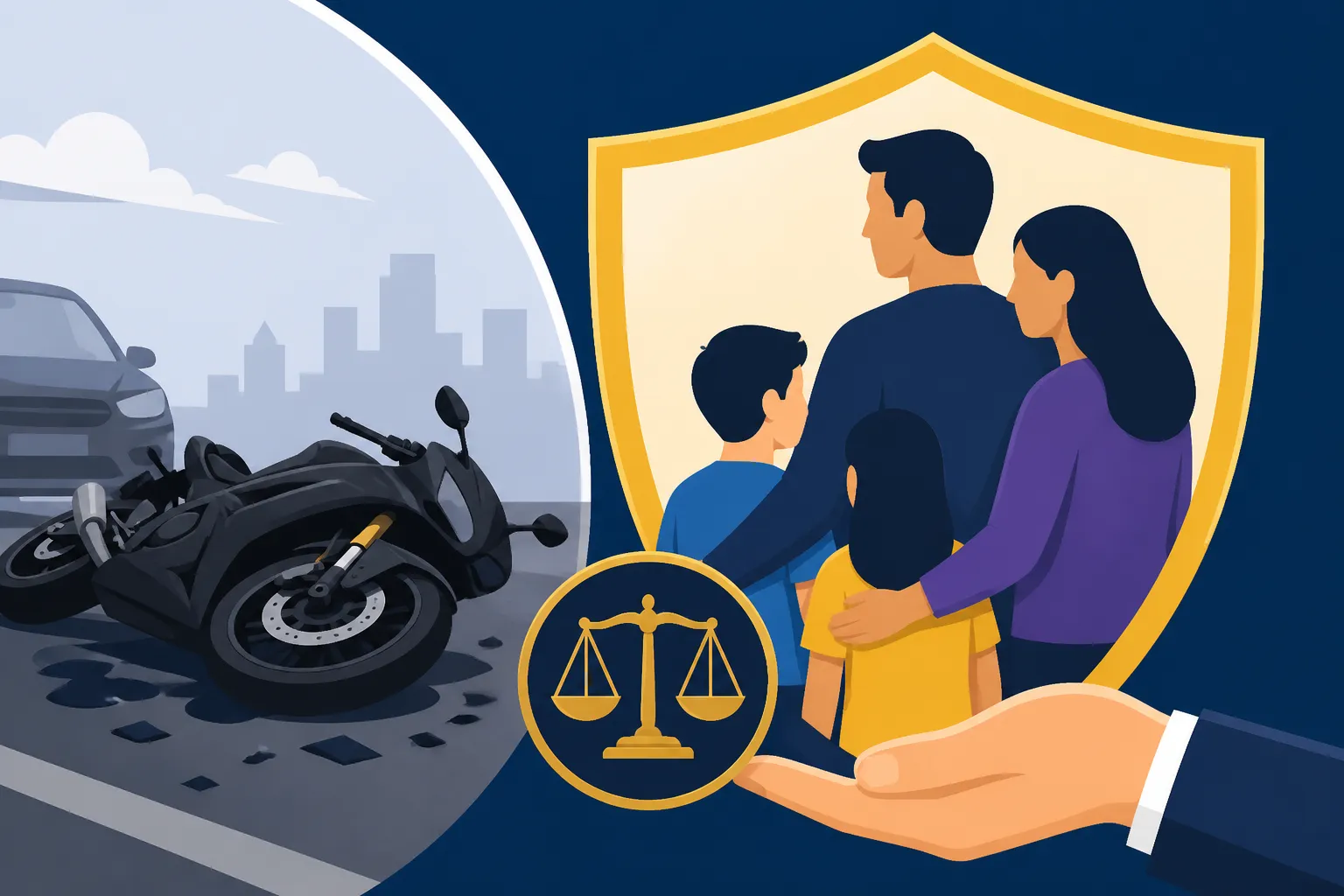
Who Can File a Wrongful Death Claim
Losing a loved one in a motorcycle accident is an unimaginable tragedy, and in the midst of profound grief, families often find themselves grappling not only with emotional devastation but also with the sudden weight of financial uncertainty. It's a cruel reality that while you're mourning, you also have to consider how to manage the costs associated with their passing, from medical bills to funeral expenses, and what their absence means for your future. This guide aims to shed light on who can legally file a wrongful death claim after a fatal motorcycle crash, helping you understand the complex legal landscape during an incredibly difficult time.
Understanding Wrongful Death Claims in Motorcycle Accidents
A wrongful death claim is a civil lawsuit brought against a party whose negligence or intentional act caused someone's death. When we talk about these claims in the context of motorcycle accidents, we're usually looking at situations where another driver's actions – like distracted driving, failing to yield, or speeding – directly led to a rider's fatal crash. It's not about criminal charges, though those might be pursued separately; it's about seeking financial compensation for the losses suffered by the deceased's surviving family members due to their untimely passing.
The unique vulnerabilities of motorcyclists mean that even a seemingly minor error by another driver can have catastrophic consequences. Unlike car accidents where occupants are surrounded by a steel cage, airbags, and seatbelts, motorcyclists have little to no protection, making them far more susceptible to severe and often fatal injuries. This stark reality means that when a crash happens, the outcome for a rider can be devastating, leading to heartbreaking wrongful death scenarios that leave families reeling.
What Defines a Wrongful Death?
Legally speaking, a "wrongful death" occurs when a person dies due to the legal fault of another person or entity. This fault can stem from negligence, recklessness, or an intentional act. In the vast majority of motorcycle accident cases that become wrongful death claims, the cause is negligence. For instance, if a car driver makes an illegal left turn directly into the path of an oncoming motorcycle, causing a fatal collision, their negligence in failing to yield the right-of-way could be the basis for a wrongful death claim. The core element is that the deceased would have been able to file a personal injury lawsuit had they survived the accident.
Proving that negligence is absolutely critical. It's not enough to simply say an accident happened; you must establish that the other party owed a duty of care, breached that duty, and that this breach directly caused the death and resulting damages. This process can be incredibly challenging, as insurance companies are often quick to assign blame to the rider, citing stereotypes or even the mere fact of riding a motorcycle. This is where understanding How Fault Is Determined in Motorcycle Accidents becomes paramount.
The Scope of Damages in Wrongful Death Cases
When a family files a wrongful death claim, they aren't just seeking compensation for immediate expenses. The goal is to cover both economic and non-economic losses that have occurred and will continue to occur because of the death. Economic damages can include things like medical expenses incurred before death, funeral and burial costs, and the loss of the deceased's future income and benefits. Imagine a family where the rider was the primary breadwinner; their sudden loss plunges the family into financial peril.
Non-economic damages are harder to quantify but no less significant. These include the loss of companionship, guidance, parental care, love, and support that the deceased would have provided to their survivors. It's about recognizing the profound personal and emotional void left by their passing. While no amount of money can ever replace a loved one, these damages are intended to provide some measure of justice and financial stability for the grieving family. For a deeper dive into these types of compensation, you might find our article on Wrongful Death Damages Explained helpful.
Who Legally Qualifies to File a Claim?
This is where things can get a bit nuanced, as the specific laws regarding who can file a wrongful death claim vary significantly from state to state. Generally, however, the ability to initiate such a lawsuit is not granted to anyone who feels a loss. Instead, states typically define a clear hierarchy of individuals or entities who have the legal standing to bring forth this type of action. It's often not the beneficiaries themselves who directly file, but rather a representative of the deceased's estate on their behalf.
The Role of the Personal Representative or Executor
In most states, including populous ones like California, New York, and Florida, a wrongful death lawsuit must be filed by the "personal representative" or "executor" of the deceased's estate. This person is formally appointed by a probate court to manage the deceased's affairs. While this sounds official and perhaps a bit distant, remember that this representative often is a close family member – a spouse, an adult child, or a parent – who then acts on behalf of all the surviving beneficiaries. They are responsible for overseeing the legal process and ensuring that any settlement or award is distributed according to state law and the court's order.
Think of it this way: the personal representative is the captain of the ship, navigating the legal waters, but the passengers on that ship are the direct family members who have suffered losses. The claim is filed for the benefit of these eligible heirs, even if they aren't the ones signing the court documents. This legal structure ensures that the claim is handled uniformly and that all rightful beneficiaries are considered.
Direct Family Members as Primary Beneficiaries
While the personal representative files the claim, the actual beneficiaries—those who receive compensation—are typically the closest blood relatives and/or dependents. The most commonly recognized beneficiaries, across almost all states, include:
- Surviving Spouse: This is almost universally the first in line. If the deceased was married, the surviving husband or wife typically has the strongest claim.
- Children: This includes biological children, adopted children, and sometimes even stepchildren who were financially dependent on the deceased. In some states, adult children can also file, even if not financially dependent, recognizing the loss of parental guidance and companionship.
- Parents: If there is no surviving spouse or children, the deceased's parents are usually next in line to file or benefit, particularly if the deceased was a minor or an adult without a spouse or children.
Less commonly, but still possible in some state statutes, other relatives might be eligible if no closer family exists. This could include siblings, grandparents, or even non-dependent adult children. Some states might also allow individuals who were financially dependent on the deceased, even if not directly related by blood or marriage, to be considered beneficiaries.
Table: Common Beneficiaries in Wrongful Death Claims
| Relationship to Deceased | Typical Eligibility Status | Who Files the Claim | Potential Damages Sought |
|---|---|---|---|
| Surviving Spouse | Highest Priority | Personal Representative | Loss of Consortium, Financial Support, Companionship |
| Children (Minor/Adult) | High Priority | Personal Representative | Loss of Parental Guidance, Financial Support |
| Parents | Medium Priority (if no spouse/children) | Personal Representative | Loss of Companionship, Financial Support |
| Siblings | Lower Priority (state-dependent) | Personal Representative | State-specific, often requiring dependency |
| Other Dependents | State-dependent (e.g., unmarried partners, foster children) | Personal Representative | Proof of financial dependency |
It's important to reiterate that state laws can dictate specific eligibility. For example, some states might only allow minor children to recover for loss of parental support, while others extend it to adult children. The nuances matter greatly.
Navigating the Complexities: Factors Affecting Eligibility and Success
Beyond just who can file, there are several critical factors that will heavily influence the eligibility and ultimate success of a wrongful death claim after a motorcycle accident. These complexities often require detailed investigation and a strong understanding of legal precedent.
Proving Fault: The Cornerstone of Any Claim
The absolute bedrock of any personal injury or wrongful death claim is proving fault. If you cannot establish that another party's negligence directly led to the motorcycle accident and subsequently the death, then there is no claim. This can be particularly challenging in motorcycle cases because of the unfair bias that often exists against riders. Insurers and even some juries might initially assume the motorcyclist was reckless or somehow at fault.
Evidence is paramount here. This includes police reports, witness statements, accident reconstruction analysis, photographs and videos of the scene, and even the damage sustained by the motorcycle and other vehicles involved. Understanding Motorcycle Accident Evidence for Proving Fault is crucial. For instance, if the driver of a larger vehicle claims they "didn't see the motorcycle," a skilled investigation might uncover evidence of distracted driving on their part, such as cell phone records or dashboard camera footage. If the accident involved a defect in the motorcycle itself, then manufacturer liability might come into play, which is a different, often more complex, avenue for proving fault.
The All-Important Statute of Limitations
Every state has a strict deadline for filing a wrongful death lawsuit, known as the statute of limitations. This deadline can vary, but it's typically between one and three years from the date of death. Missing this deadline, even by a single day, will almost certainly result in the permanent forfeiture of your right to file a claim, regardless of how strong your case might be. This is why acting quickly after a fatal motorcycle accident is so critically important.
The legal clock starts ticking from the moment of death, not necessarily the accident itself if there was a delay. There are very few exceptions to this rule. For example, minors typically have their statute of limitations paused until they reach adulthood, but this doesn't usually apply to wrongful death claims which are filed on their behalf by an adult representative. Our guide on the Statute of Limitations for Wrongful Death Claims provides more detailed information on these crucial deadlines.
State-Specific Laws and Unique Circumstances
The state where the accident occurred will govern the wrongful death claim. Some states, like California, allow for certain non-economic damages that might be limited in other states. Community property states, such as Arizona, California, Idaho, Louisiana, Nevada, New Mexico, Texas, Washington, and Wisconsin, may have specific rules regarding how a surviving spouse's loss of community property is calculated.
Furthermore, unique family structures can complicate matters. What if the deceased had a long-term partner but they were never married? What about adult stepchildren who were financially dependent? The eligibility criteria for "dependents" or "heirs" can sometimes extend beyond traditional definitions, especially if there's clear evidence of financial or emotional reliance. These are precisely the types of questions that require the insight of a legal professional specializing in motorcycle accident claims.
Essential Steps After a Fatal Motorcycle Accident
The moments, days, and weeks following a fatal motorcycle accident are undoubtedly chaotic and filled with grief. However, taking certain critical steps can protect your family's rights and lay the groundwork for a successful wrongful death claim.
Documenting Everything and Gathering Evidence
Immediately after the accident, if possible, ensure that all available evidence is secured. This includes getting a copy of the police report, which can be invaluable in establishing initial fault. If you or someone you trust was at the scene, photographs and videos of the vehicles, road conditions, debris, and any visible injuries can be vital. Witness contact information should be collected. Medical records from emergency services and any hospitals are also crucial to document the deceased's injuries prior to death.
Beyond the immediate scene, begin to gather documentation related to the deceased's life that will help quantify damages. This includes pay stubs, tax returns, employment history, and benefit statements to prove lost earning capacity. Keep track of all funeral and burial expenses. Any journals, photos, or testimonies demonstrating the lost companionship and guidance can also be valuable in establishing non-economic damages. For a comprehensive list of actions, refer to our guide on What to Do After a Motorcycle Accident.
Seeking Experienced Legal Counsel
Perhaps the most crucial step is to consult with an experienced motorcycle accident attorney as soon as possible. Wrongful death claims are incredibly complex, both legally and emotionally. An attorney can step in, handle all communications with insurance companies, investigate the accident thoroughly, gather necessary evidence, and ensure all legal deadlines are met. They understand the intricacies of Motorcycle Accident Liability: A Complete Guide and can effectively counter any unfair bias against motorcyclists.
A good lawyer will know how to calculate the full scope of damages, including future lost earnings and the true value of pain and suffering, and they will be instrumental in helping you How to Maximize Your Motorcycle Accident Settlement. More specifically, when dealing with the profound loss of a loved one, finding a lawyer who specializes in these sensitive cases is key. Our guide on How to Find a Lawyer After a Fatal Crash can offer direction during this overwhelming time.
Understanding the Settlement Process
Once an attorney is involved, they will manage the entire claim process, from filing the initial lawsuit to negotiating with the at-fault party's insurance company. The goal is often to reach a fair settlement outside of court, which can provide compensation much faster than a lengthy trial. Your attorney will work to build a robust case, presenting all evidence of fault and damages, to demand a just Average Wrongful Death Motorcycle Settlement.
Should a settlement offer be made, your attorney will review it with you, explaining its components and whether it adequately covers your losses. They will advise you on whether to accept or if further negotiation or even a trial might be necessary to secure fair compensation. Understanding How Wrongful Death Settlements Are Calculated involves many factors, and having an expert guide you through this process is invaluable.
Disclaimer
Please remember that this article provides general information and insights into wrongful death claims following motorcycle accidents. It is not intended as legal advice. Laws regarding wrongful death claims, including who can file and the available damages, vary significantly by state. For advice tailored to your specific situation, it is essential to consult with a qualified attorney in your jurisdiction.