Motorcycle Headlight-On Laws
It's a familiar sight on the road: a sleek motorcycle, sometimes almost blending into the background, and then suddenly, its headlight piercing the glare of the day. Many riders might wonder if keeping their headlight on, even in broad daylight, is just a good practice or if it's actually the law. The truth is, headlight-on laws for motorcycles vary significantly, and understanding these regulations is crucial not just for avoiding a ticket, but for your safety and any potential motorcycle accident claim. This guide will shine a light on everything you need to know about motorcycle headlight-on laws, their impact, and how to stay safe and compliant.
Understanding Motorcycle Headlight-On Laws Across the States
Riding a motorcycle comes with a unique set of challenges, and visibility is at the top of that list. Car drivers often fail to see motorcycles, a phenomenon sometimes called "I didn't see the motorcycle." This common refrain is a serious concern for riders, and it's precisely why many states have enacted laws requiring motorcycles to operate with their headlights on at all times, even during daylight hours. These laws are an effort to combat the inherent vulnerability of motorcycles in traffic by making them more conspicuous.
The Rationale Behind Daytime Headlight Use
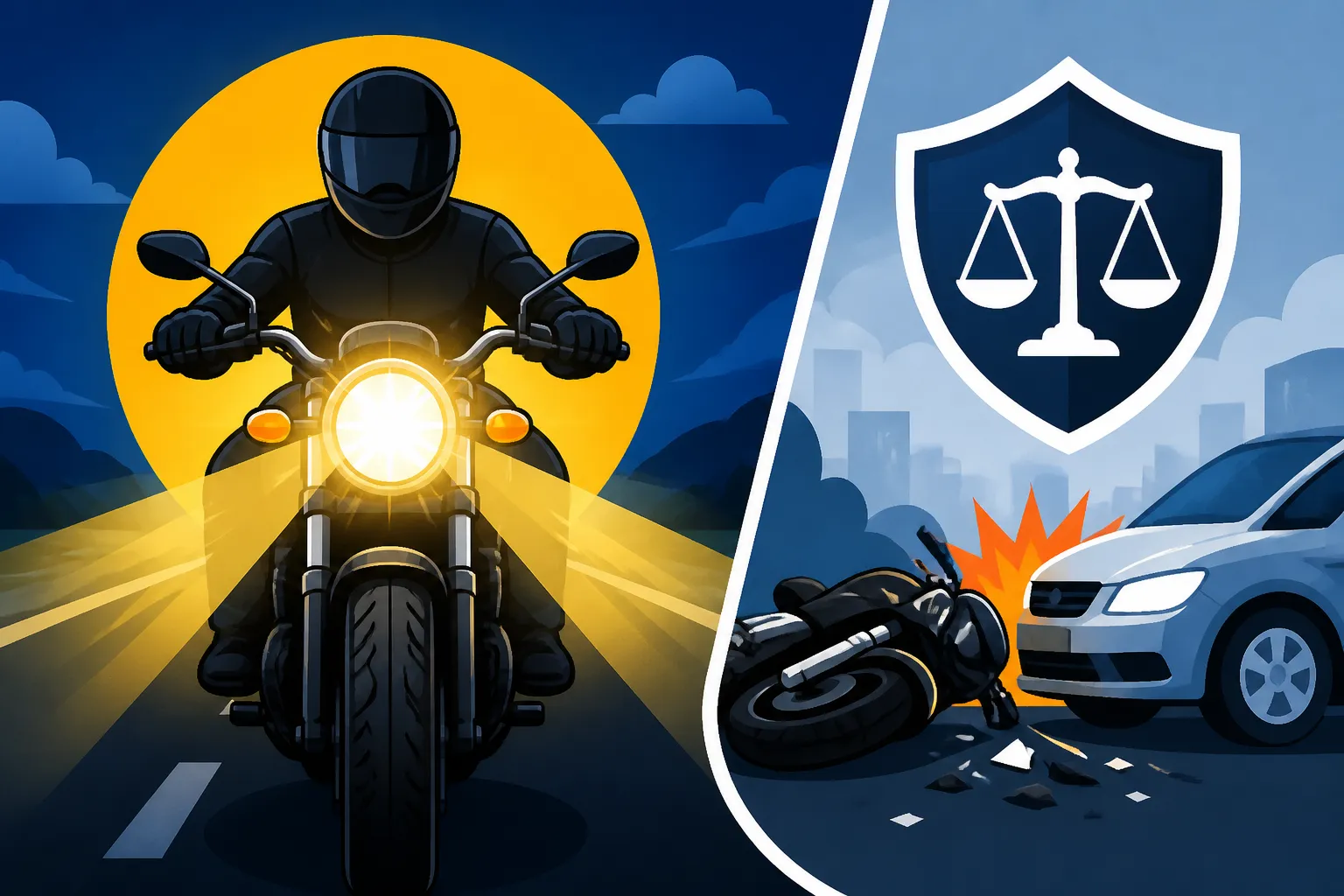
The core idea behind headlight-on laws, particularly for daytime riding, is enhanced conspicuity. Motorcycles are smaller than cars, and their silhouette can easily be masked by background clutter, other vehicles, or even blind spots. A constantly illuminated headlight, especially a bright, well-aiming one, creates a distinct visual signature that can significantly increase a motorcycle's detectability. Studies by organizations like the National Highway Traffic Safety Administration (NHTSA) have consistently shown that motorcycles with their headlights on during the day are less likely to be involved in certain types of collisions.
Think about it: when you're driving a car, what's one of the first things you notice about an approaching vehicle? Its lights. Even if you don't consciously register the vehicle itself immediately, that gleam of light can catch your eye, signaling presence. For motorcycles, which present a much smaller frontal area, this visual cue becomes even more critical. It’s not about being able to see the road better; it’s about being seen by others. This is especially true at intersections or during turns, where a driver might misjudge the speed or distance of an oncoming motorcycle.
States with Mandatory Daytime Headlight Laws
While many riders adopt the "always on" habit out of personal safety, it's not a universal mandate. The legal landscape for motorcycle headlight use is a patchwork across the United States. Many states have what are known as "Motorcycle Headlight-On Laws" or "Daytime Running Light (DRL) laws" specifically for motorcycles, requiring them to have their headlights activated at all times while in operation. However, some states only require headlights during specific low-light conditions, like dawn, dusk, rain, or fog, similar to passenger vehicles.
For instance, states like California and Florida have universal helmet laws, but when it comes to headlights, the specifics can differ. In California, it's generally understood that motorcycles must operate with headlights on, even during daylight. Texas also mandates daytime headlight use for motorcycles. Conversely, some states might not have a specific daytime headlight law for motorcycles, relying instead on general vehicle lighting statutes that require lights from a half-hour after sunset to a half-hour before sunrise, or during inclement weather.
It's vital for riders to check the specific Vehicle Code or Motor Vehicle Laws for each state they plan to ride in. A simple online search for "Motorcycle Headlight-On Law [State Name]" can usually provide this crucial information. Being caught unaware can lead to fines, and more importantly, could potentially impact your legal standing if you’re involved in an accident. You definitely don't want to find yourself in a situation where you're asking, "What happens if you were speeding on a motorcycle?" and also dealing with a headlight violation.
Here's a generalized table illustrating how some states approach motorcycle headlight laws:
| State | Daytime Headlight Required for Motorcycles? | Specific Provisions |
|---|---|---|
| California | Yes | Requires headlights to be on at all times, day or night. |
| Florida | Yes | Requires headlights to be on at all times, day or night. |
| Texas | Yes | Requires headlights to be on at all times, day or night. |
| Arizona | Yes | Requires motorcycles to be equipped with and use an illuminated headlamp at all times when in motion. |
| New York | Yes | Requires motorcycles to be operated with headlamps and tail lamps lighted at all times while being operated on a public highway. |
| Ohio | Yes | Requires motorcycles to have their headlights illuminated at all times while being operated on a highway or street. |
| Pennsylvania | Yes | Requires motorcycles to display lighted headlamps at all times when upon a highway. |
| Illinois | No (generally) | Relies on general vehicle lighting statutes (half-hour before sunrise to half-hour after sunset, and during adverse weather). However, many riders still use them for safety. |
| Michigan | Yes | Requires motorcycles to display a lighted headlamp and taillamp at all times when on a highway. |
| Washington | Yes | Requires motorcycles to have at least one lighted headlamp displayed at all times while being operated on a public highway. |
| Colorado | Yes | Requires motorcycles to display an illuminated headlamp at all times when on a highway. |
| Georgia | No (generally) | Similar to Illinois, generally follows standard vehicle lighting requirements for low-light conditions, but specific local ordinances might vary. |
| North Carolina | Yes | Requires motorcycles to display at least one lighted headlamp at all times while being operated on a highway or street. |
Note: This table is for general informational purposes. Laws can change, and specific interpretations may vary by municipality. Always consult the most current state Department of Motor Vehicles or transportation regulations.
How Headlight Laws Impact Your Motorcycle Accident Claim
It’s easy to think of a headlight violation as just a ticket, a minor inconvenience. But in the aftermath of a motorcycle accident, something as seemingly small as whether your headlight was on can take on huge significance. Insurance companies and opposing counsel will scrutinize every detail to assign fault, and a violation of a headlight-on law could be used to argue that you, the rider, contributed to the collision. This is where understanding legal concepts like comparative negligence becomes critically important.
The "Helmet Defense" and its Relation to Headlight Laws
You might have heard of the "helmet defense," where insurance companies try to reduce a rider's settlement by arguing that their injuries would have been less severe if they had been wearing a helmet, or a DOT-compliant helmet, even if helmet use wasn't legally required or wasn't directly related to the cause of the crash. This is a tactic often employed to shift some of the blame onto the rider. Similarly, not having your headlight on in a state where it's legally mandated for daytime use could be leveraged against you in a similar fashion.
Imagine you're involved in a collision with a car that turned left in front of you. While the car driver's failure to yield is likely the primary cause, if your headlight was off in a state with a "headlight-on" law, the other side might argue that you contributed to the accident by being less visible. They might claim, "If only the motorcycle's headlight had been on, my client would have seen them." This argument seeks to reduce your compensation by assigning a percentage of fault to you, the rider. This is a common tactic, and it's why having proof of compliance is so important. When fault is disputed in a motorcycle crash, these details matter immensely.
The legal standard often revolves around whether your non-compliance contributed to the accident or the severity of your injuries. For instance, if your headlight was off in broad daylight and a driver pulled out in front of you, the defense might argue that your lack of a lighted headlight made you harder to see, thus contributing to the collision. This is akin to how states with comparative negligence laws might reduce your payout if you are found partially at fault.
Proving Compliance or Non-Compliance After a Crash
After an accident, proving whether your headlight was on or off can be challenging. The chaos and trauma of the moment often mean neither you nor witnesses were paying attention to this specific detail. However, there are several ways this might be established:
- Police Reports: While police officers are not always definitive on fault, a well-documented police report might note the condition of your motorcycle's lighting. If an officer arrived on the scene and observed your headlight off, or if there's damage suggesting it was off, it could be noted. However, how police reports establish fault isn't always clear-cut.
- Witness Statements: Eyewitnesses might recall if your headlight was on. This is where gathering information from how witnesses affect motorcycle fault can be invaluable immediately after a crash.
- Vehicle Damage & Inspection: Sometimes, the damage to the motorcycle itself can indicate if the headlight was on. For example, if the bulb is intact but not illuminated, or if it shows signs of being on at the moment of impact (filament stretched or distorted from electrical current at impact). Accident reconstruction experts might be able to determine this during their analysis.
- Dashcam or Surveillance Footage: Increasingly, vehicles are equipped with dashcams, and many intersections, businesses, and even private homes have surveillance cameras. Footage from these sources could conclusively show whether your headlight was on before and during the collision. This is a powerful piece of Motorcycle Accident Evidence for Proving Fault.
If you were compliant with headlight laws, having evidence to prove it is crucial. Take photos of your bike at the scene, if safe to do so, especially showing your headlight if it's still functional. Ensure it's noted in the police report. This proactive documentation can help you fight an unfair fault assignment later on and protect your potential settlement for pain and suffering and other damages.
Practical Tips for Ensuring Compliance and Maximizing Safety
Beyond just obeying the law, proactive measures concerning your motorcycle's lighting can significantly boost your safety on the road. It’s about making yourself as visible as possible, even when the law isn't explicitly demanding it. Riders know that the inherent dangers mean you have to take every precaution, and that includes your lighting system.
Choosing the Right Headlight System
Not all headlights are created equal, and the market offers a wide range of options that can enhance your visibility. While standard halogen bulbs are common, many riders opt for upgrades.
- LED Headlights: Light Emitting Diode (LED) headlights are incredibly popular for a good reason. They are brighter, more energy-efficient, and have a longer lifespan than traditional halogen bulbs. Their crisp, white light is often more noticeable in daylight, making you stand out. Many modern motorcycles, like certain models from Harley-Davidson or Kawasaki, now come standard with LED lighting. When considering an upgrade, ensure any aftermarket LED system is DOT-compliant to avoid legal issues and ensure proper beam pattern. You don't want a light that blinds oncoming traffic.
- High-Visibility Bulbs: Even if you stick with halogen, you can opt for "high-visibility" or "plus-power" halogen bulbs. These are designed to produce a brighter, whiter light within the confines of standard wattage and housing, offering a step up from basic OEM bulbs without converting to LED.
- Auxiliary Lighting: For ultimate visibility, many riders add auxiliary lights, sometimes called "driving lights" or "fog lights," mounted lower on the forks or engine guards. These lights create a triangular pattern of light, which helps other drivers better perceive your distance and size. Brands like Denali Electronics and Clearwater Lights are well-regarded for their robust auxiliary lighting systems designed specifically for motorcycles. Just ensure any auxiliary lights comply with local regulations regarding number, placement, and color.
- Modulators: A headlight modulator automatically varies the intensity of your headlight, making it flash rapidly (but not completely off) in daylight. This flashing pattern is designed to grab the attention of other drivers without being distracting or illegal. These devices are generally legal for daytime use on motorcycles in most states, often due to specific federal exemptions for motorcycle safety equipment. Check your local state laws, however, to be certain.
When you're browsing for these kinds of safety upgrades, a store like Cycle Gear is a great place to start. They often have knowledgeable staff who can guide you through the options and help you find products that meet both your needs and legal requirements.
Pre-Ride Checks and Maintenance
Ensuring your headlight is functioning properly isn't just a "set it and forget it" task. Regular checks are vital.
- Daily Check: Before every ride, a quick visual check should confirm your headlight is on and properly illuminated. A burned-out bulb can happen unexpectedly, and riding unaware not only compromises your safety but could also put you in violation of the law. This quick check should be part of your overall What to Do Immediately After a Motorcycle Accident protocol, but done before you even hit the road, as prevention is always better than reaction.
- Wiring and Connections: Over time, vibrations from riding can loosen electrical connections or cause wear to wiring. Periodically inspect the wiring leading to your headlight for fraying, corrosion, or loose connections. A loose connection can lead to intermittent light failure, which is just as dangerous as a completely burned-out bulb.
- Lens Clarity: A dirty or scratched headlight lens can significantly reduce light output. Keep your lens clean with a soft cloth and mild soap. If the lens is heavily hazed or scratched, consider a restoration kit or replacement.
- Aiming: An improperly aimed headlight won't effectively illuminate the road or make you visible to others. If your headlight beam is pointing too high, it can blind oncoming drivers; too low, and it won't project far enough. Consult your motorcycle's owner's manual for proper aiming procedures, or have a qualified mechanic adjust it.
Taking these steps helps ensure that your motorcycle's headlight is doing its job effectively. It’s a simple yet critical aspect of motorcycle safety that can prevent you from becoming another statistic or dealing with a complex claim due to something preventable, like a motorcycle accident caused by failure to yield where your visibility was a factor.
Common Misconceptions and Legal Nuances
The world of vehicle laws can be confusing, and motorcycle lighting is no exception. There are several common misunderstandings that riders often have, which can lead to legal issues or, more critically, compromise their safety on the road. It’s not just about knowing the basic law, but understanding the nuances that can make a big difference.
Aftermarket Lights and Legal Standards
The temptation to customize is strong for many motorcycle owners. Upgrading to brighter, more stylish, or unique aftermarket lights is common. However, not all aftermarket lights are created equal, and not all are legal for road use.
- DOT Compliance: In the United States, vehicle lighting must generally meet standards set by the Department of Transportation (DOT). A DOT-compliant headlight will have a specific marking (usually "DOT" followed by a series of numbers and letters) on the lens. This signifies that the light has been tested and meets federal safety standards for brightness, beam pattern, and durability. Using non-DOT compliant lights can lead to fines and, if you're involved in an accident, could be used as evidence of non-compliance, even if your headlight was technically "on." This is especially relevant if you're trying to prove the other driver was distracted, as they might try to deflect blame onto your non-compliant equipment.
- Color of Lights: Headlights must emit white or amber light. Any other color, like blue or red, is almost universally illegal for headlights and can be confused with emergency vehicle lights. Even auxiliary lights usually have strict color requirements. While some auxiliary lights may appear slightly yellow, they must stay within the legal amber or white spectrum.
- Number and Placement: Most states require at least one, and sometimes two, headlights. While auxiliary lights are often permitted, there might be regulations on how many you can have, where they can be mounted, and how high off the ground they can be. For example, some states have specific laws regarding Motorcycle Handlebar Height Laws, and similar restrictions can apply to lighting placement. Always check your state's vehicle code for specific guidelines on auxiliary lighting. Getting your equipment wrong is one way that insurance companies assign blame to riders.
Before you invest in any aftermarket lighting, do your homework. Look for reputable brands and confirm that the products are DOT-compliant and meet your state's specific regulations. Don't just rely on what the salesperson tells you; verify it yourself.
Enforcement and Penalties for Violations
Ignoring headlight-on laws can have immediate consequences. Police officers routinely pull over motorcyclists for lighting violations.
- Traffic Citations: The most common penalty for a headlight-on violation is a traffic ticket and an associated fine. The cost of these fines can vary significantly by state and even by municipality. For example, a ticket for a burned-out headlight in Phoenix, Arizona, might carry a different fine than a similar infraction in rural Pennsylvania.
- Impact on Insurance Rates: Like any moving violation, a ticket for a lighting infraction could potentially lead to an increase in your motorcycle insurance premiums. Insurance companies view traffic violations as indicators of increased risk, even if they seem minor.
- Legal Implications in an Accident: As discussed earlier, if you are involved in a collision and were in violation of a headlight-on law, the other party's insurance company or attorney could use this against you. It could be argued that your non-compliance contributed to the accident, potentially reducing your ability to recover full damages. This can become especially contentious in scenarios like Left-Turn Motorcycle Accidents Explained, where driver visibility is a central issue. Even if the driver was clearly at fault, your violation could create an opening for them to argue shared fault in motorcycle accidents.
It's important to remember that laws are enacted for a reason, and when it comes to motorcycle headlights, that reason is usually safety. Staying compliant isn't just about avoiding a fine; it's about protecting yourself on the road and ensuring that if the worst happens, you haven't given anyone an easy way to shift blame onto you. Being informed and diligent about your motorcycle's lighting is a simple, yet powerful, step in being a responsible and safe rider.
Disclaimer
This article is for general informational purposes only and does not constitute professional advice. Laws and regulations vary by location and change over time. Consult a qualified professional for guidance on your specific situation.