Motorcycle Endorsement vs License Explained
Getting into motorcycling is exciting, but figuring out the legal hoops, especially the difference between a motorcycle endorsement and a separate license, can feel like navigating a confusing maze. Many new riders, and even some seasoned ones, get tripped up on the terminology and requirements, worrying about fines or worse, having their accident claim jeopardized. This guide will demystify the process, breaking down exactly what you need to legally hit the open road and why understanding these distinctions matters for every rider.
The Fundamental Distinction Between Motorcycle Endorsement and License
For many, the terms "motorcycle license" and "motorcycle endorsement" are used interchangeably, which is part of the problem. While they both allow you to legally ride a motorcycle on public roads, their underlying structure and how you obtain them can be quite different depending on where you live and your existing driving history. Understanding this core difference is key to being a fully compliant and confident rider.
What Is a Motorcycle Endorsement
In the vast majority of states across the U.S., a "motorcycle endorsement" is the most common path to legal motorcycle operation. Think of it as an add-on to your standard driver's license. If you already hold a valid Class D (or equivalent) license for driving cars, you'll typically apply for an endorsement that gets printed directly onto that existing card. It's essentially a special notation that says, "Yes, this person is also authorized to operate a motorcycle."
For example, in California, once you pass the necessary tests, you'll receive an M1 endorsement on your regular Class C driver's license. This M1 designation allows you to ride any two-wheeled motorcycle. Some states might also have an M2, which could limit you to mopeds or scooters. The primary benefit of an endorsement is its simplicity: you only carry one physical card, and it leverages your established driving record. It acknowledges that you already understand general traffic laws and rules of the road, and the motorcycle-specific training simply adds to that foundation.
What Is a Standalone Motorcycle License
While less common, some states do offer or require a standalone "motorcycle-only" license. This is a separate physical driver's license that only authorizes you to operate a motorcycle and does not permit you to drive a car. This scenario typically applies to individuals who don't possess a standard driver's license for automobiles. Perhaps they've never driven a car, or they've chosen to only pursue motorcycle riding.
For instance, in Florida, while most riders get an endorsement on their regular license, it is possible to obtain a "Motorcycle Only" license if you don't hold a valid non-commercial driver's license. This would mean you'd have a license that specifically states "Motorcycle Only" and carries no car driving privileges. While it might seem like a niche case, it's important for those who genuinely only wish to operate motorcycles to know this option exists and what it entails.
Why the Terminology Creates Confusion
The overlapping use of "license" and "endorsement" in casual conversation is a huge source of confusion for new riders. Many people refer to getting their "motorcycle license" when, legally, what they're acquiring is an endorsement to their existing car license. This semantic blend often leads people to believe they need to get an entirely new, separate document, which isn't usually the case if they already drive a car.
The key takeaway is this: if you have a car license, you're almost certainly getting an endorsement. If you don't have a car license and don't plan on getting one, you might pursue a standalone motorcycle license. Both serve the same purpose on the road – legal operation – but the administrative pathway and the document itself can differ. Always check with your state's Department of Motor Vehicles (DMV) or equivalent agency for the most accurate, up-to-date requirements, as these can shift over time.
How to Obtain Your Motorcycle Endorsement or License
Regardless of whether you're seeking an endorsement or a standalone license, the process generally involves demonstrating both your knowledge of motorcycle-specific laws and your ability to safely operate a motorcycle. This isn't just about passing tests; it's about proving you're a responsible rider ready for the road.
The Motorcycle Permit Stage
Before you can get your full endorsement or license, most states require you to obtain a temporary motorcycle permit. This permit allows you to practice riding under certain restrictions, giving you real-world experience before you're fully licensed. These restrictions are vital for safety and typically include:
- No Passengers: You generally can't carry a passenger while riding on a permit. This is to ensure your full focus is on learning to control the bike.
- No Night Riding: Many permits prohibit riding after sunset or during hours of low visibility. Night riding presents additional challenges, especially for new riders.
- Daylight Hours Only: Conversely, you're usually limited to riding during daylight hours.
- No Freeway Riding: Certain states may restrict permit holders from riding on interstates or controlled-access highways.
- Supervision: Some states might require you to be supervised by a fully licensed motorcyclist (of a certain age/experience) while riding with a permit.
The permit is your training wheels, so to speak. It's designed to give you a taste of riding while minimizing risks associated with inexperience. Make sure you understand and strictly adhere to your state's specific permit restrictions.
Testing Requirements and Waivers
Once you've got some miles under your belt with your permit, it's time for the formal tests. This usually involves two main components:
- Written Knowledge Test: This test assesses your understanding of motorcycle-specific laws, safe riding practices, and road signs. It covers topics like lane positioning, hazard perception, helmet laws, and passenger rules. The questions go beyond what's on a standard car driver's test, specifically focusing on the unique dynamics of riding a two-wheeled vehicle.
- Practical Riding Test (Skills Test): This is where you demonstrate your ability to physically control the motorcycle. You'll perform various maneuvers, often in a closed course, designed to evaluate your balance, turning, stopping, and obstacle avoidance skills. This might include weave cones, sharp turns, emergency braking, and slow-speed control. Passing this test proves you can handle the bike safely in typical riding scenarios.
An increasingly popular and often recommended alternative to the DMV's practical riding test is completing an approved motorcycle rider education course, such as those offered by the Motorcycle Safety Foundation (MSF). Many states offer a waiver for the riding portion of the test if you successfully complete one of these courses. Not only do these courses teach invaluable skills and promote safer riding habits, but they can also often waive the need for the permit stage entirely and expedite the licensing process. They also tend to be more forgiving environments for learning than the high-pressure setting of a DMV testing lot.
Age and Residency Requirements
Beyond the tests, there are fundamental requirements regarding age and residency. To apply for any type of driver's license or endorsement, you must be of a certain age, which varies by state (often 16 or 18 for a full license, with permit options starting younger). You'll also need to provide proof of residency in the state where you're applying. This typically involves documentation like utility bills, rental agreements, or mail from government agencies. Additionally, you'll need to show proof of identity, usually through a birth certificate, passport, or other accepted identification. Always consult your state's DMV website for the precise documentation required, as it can save you multiple trips and a lot of frustration.
Why This Distinction Matters for Riders and in Accidents
Understanding the difference between an endorsement and a standalone license isn't just a matter of bureaucratic semantics; it has real, tangible implications for every rider, especially if you ever find yourself involved in a motorcycle accident claim. Being properly licensed is a fundamental aspect of legal riding and can significantly impact the outcome of an incident.
Legal Riding and Consequences
Riding without the proper motorcycle endorsement or a standalone license is equivalent to driving a car without a valid driver's license. It's illegal, and the consequences can be severe. If pulled over, you could face hefty fines, your motorcycle could be impounded, and you might even have points added to your driving record or face a license suspension. This isn't just a minor infraction; it's a serious violation of traffic law.
Beyond the immediate penalties, an offense like this can lead to long-term problems. Your insurance rates could skyrocket, or your policy could even be canceled. Imagine the frustration of having your bike towed or facing massive fines simply because you didn't understand the specific requirements for your state. It's a preventable headache that no rider wants to deal with.
Insurance Implications and Accident Claims
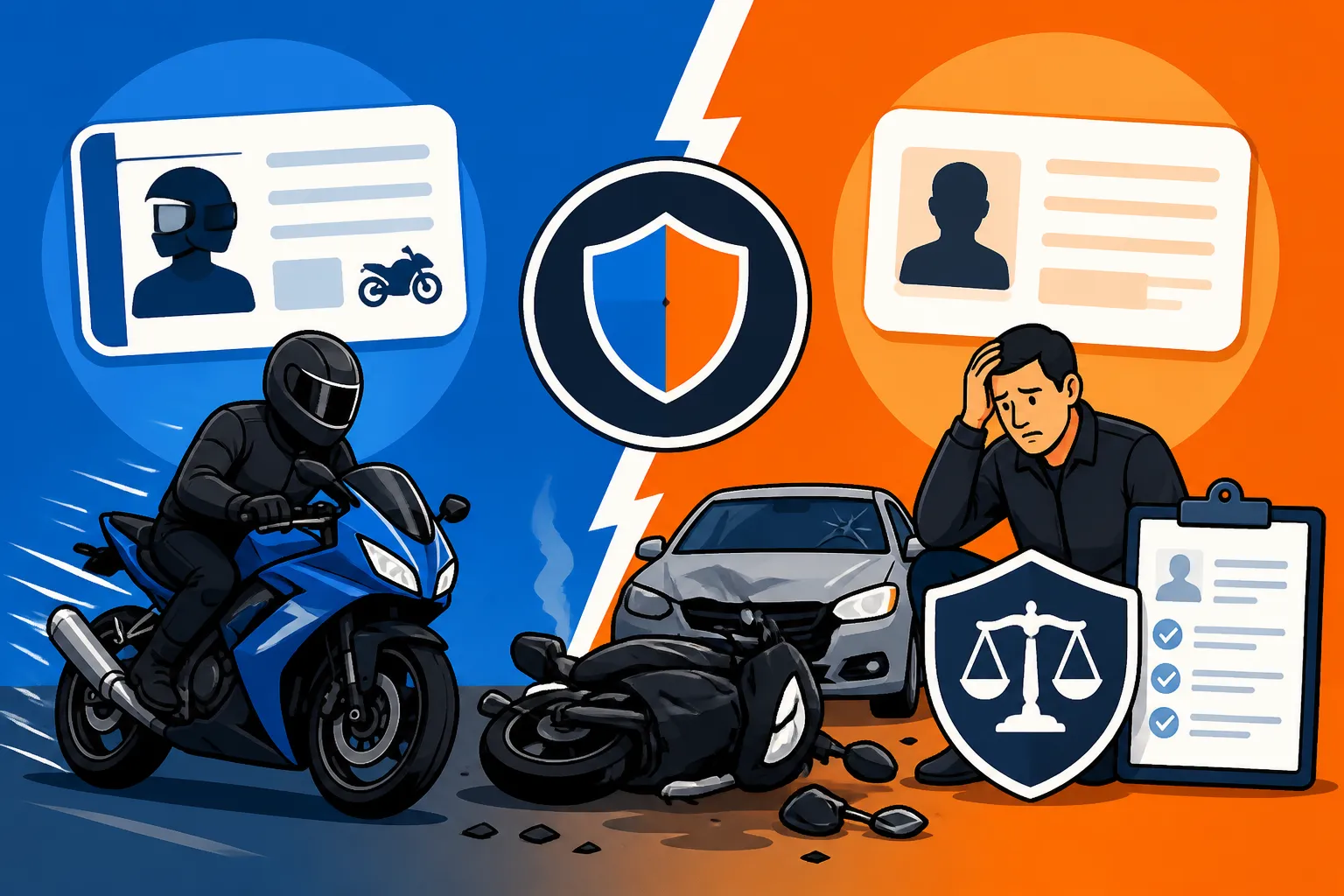
This is where the distinction truly hits home for anyone involved in a crash. If you're in a motorcycle accident and you don't have the proper endorsement or license, even if the other driver was clearly at fault, your situation becomes incredibly complicated. While not having the correct credential might not directly make you at fault for the accident itself (meaning it didn't cause the collision), it can absolutely be used by insurance companies to try and devalue your claim.
Insurers are always looking for reasons to reduce their payout, and an unlicensed rider is a prime target. They might argue that your lack of proper licensing indicates negligence or an inability to operate the vehicle safely, even if it had no bearing on the actual physics of the crash. This could lead to a significantly reduced settlement for your injuries, medical bills, or property damage. For example, if you're in a state with modified comparative negligence laws, the insurance company might argue you bear a percentage of fault simply due to your unlicensed status, thereby reducing your payout. It’s critical to understand that even if the other driver ran a red light, your lack of an endorsement could become a tangential issue used against you. This is why having your Riding Without a License and Your Claim] properly handled is so important.
The 'Rider Bias' Factor
Let's be brutally honest: motorcyclists sometimes face an uphill battle in the court of public opinion, and even with insurance adjusters. There's a persistent, unfair "rider bias" where some people automatically assume the motorcyclist was speeding, riding recklessly, or generally at fault in a crash. When you add the complication of not having the correct endorsement or license, it can amplify this bias.
Insurance companies, leveraging this societal stereotype, might use your lack of proper credentials as a tool to paint you as an irresponsible or unqualified rider, even if the facts of the accident demonstrate the other driver's clear negligence. They might try to argue that an improperly licensed rider is inherently more dangerous, regardless of the crash specifics. This tactic can make it incredibly difficult to prove the other party's fault and secure fair compensation. This unfair Rider Bias in Fault Determination] can be a huge hurdle to overcome without proper legal guidance.
Navigating State-Specific Requirements and Essential Gear
The world of motorcycle licensing and gear isn't a "one size fits all" situation. Laws vary significantly from state to state, and choosing the right protective equipment is paramount not only for your safety but also for your legal standing after an accident.
Variances Across the United States
As we've discussed, the terminology and exact process for getting your motorcycle riding privilege can differ widely. For example, while California uses "M1" and "M2" endorsements, states like Texas might simply issue a "Class M" endorsement. Florida, as mentioned, allows for a "Motorcycle Only" license.
It's not just the licensing terms that vary; other crucial aspects like helmet laws are also state-dependent. Some states, like California and New York, have "universal helmet laws," requiring all riders, regardless of age, to wear a DOT-compliant helmet. Other states, such as Florida and Texas, have "partial helmet laws," often requiring helmets only for riders under a certain age (e.g., 21) or those without sufficient insurance coverage. Then there are a handful of states with no helmet laws at all for adult riders. Navigating these nuances is essential for staying legal on your rides, especially if you plan on traveling across state lines. Understanding these various Motorcycle Helmet Laws by State] is critical for your safety and legal compliance.
Here's a quick look at common state approaches to motorcycle licensing:
| Feature | Motorcycle Endorsement (Common) | Standalone Motorcycle License (Less Common) |
|---|---|---|
| Document Type | Added to existing car driver's license | Separate physical license document |
| Eligibility | Must hold a valid car driver's license | No car driver's license required or held |
| Who Gets It | Most riders who also drive cars | Individuals who only operate motorcycles |
| Common State Examples | California (M1), Texas (Class M), New York (M) | Florida ("Motorcycle Only" option), sometimes for non-drivers |
| Process | Written test, riding test (or MSF waiver) | Written test, riding test (or MSF waiver) |
Essential Safety Gear and Its Legal Role
Beyond simply holding the correct license, wearing appropriate safety gear is non-negotiable for motorcyclists. While not all gear is legally mandated in every state (outside of helmets, where applicable), it plays a crucial role in preventing serious injuries and can even strengthen your position in a motorcycle accident claim. Investing in quality gear is one of the smartest decisions you can make as a rider.
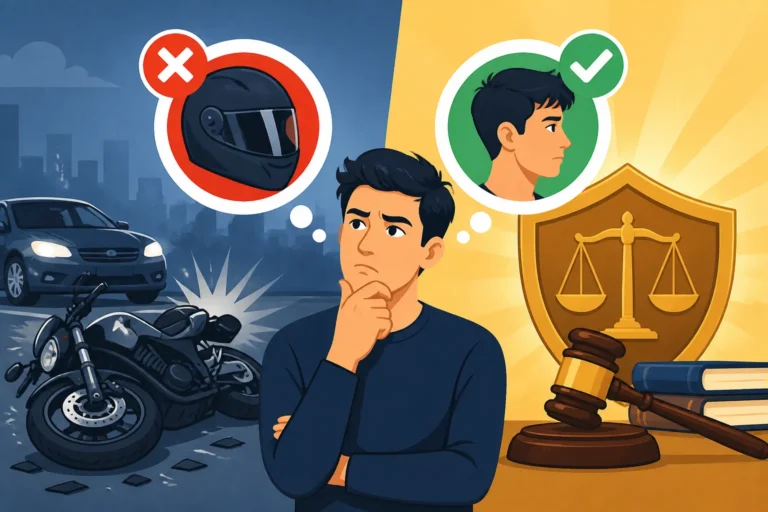
- DOT-Compliant Helmets: Even in states with partial helmet laws, wearing a DOT-approved helmet significantly reduces the risk of head injury. Insurers may use your non-compliance with helmet laws as a defense tactic, arguing that your injuries would have been less severe had you worn one, even if the crash wasn't your fault. This is part of what is known as the "helmet defense."
- Protective Jackets and Pants: Made from abrasion-resistant materials like leather or textile with armor inserts, these protect against road rash, fractures, and internal injuries. While not usually legally required, they are incredibly important. You can often find great gear, from DOT-approved helmets to protective jackets, at retailers like Cycle Gear, ensuring you're both safe and stylish.
- Gloves and Boots: Gloves protect your hands in a slide and improve grip, while sturdy over-the-ankle boots protect your feet and ankles. These may not be mandated but are highly recommended for comprehensive protection. Investing in quality riding apparel, readily available at places like Cycle Gear, is truly investing in your own well-being.
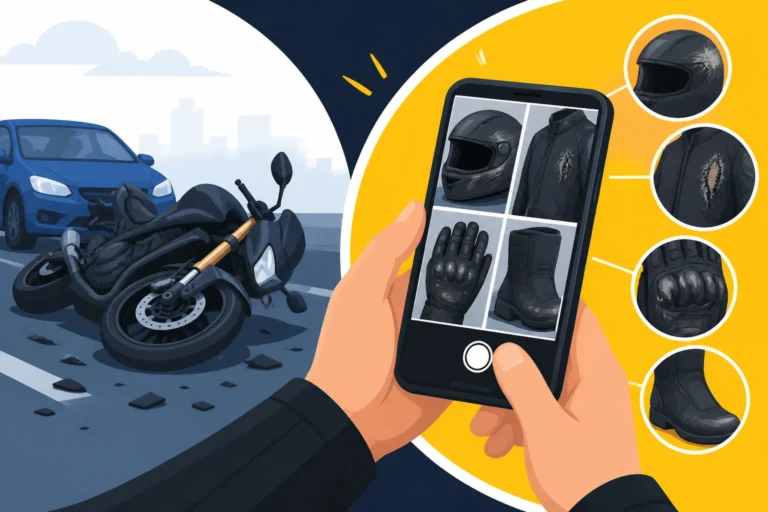
Documenting that you were wearing proper Motorcycle Safety Gear and Legal Protection] can be incredibly valuable if you're ever in an accident. Photos of your damaged helmet, jacket, or boots can serve as powerful evidence of the impact forces and demonstrate that you took reasonable precautions to protect yourself. This can counter claims that your injuries were exacerbated by your own negligence. Conversely, a lack of appropriate gear might weaken your case or lead to an insurer arguing that your injuries are more severe than they "should" have been, directly impacting How Gear Affects Injury Severity] and potentially reducing your settlement. Always prioritize safety, not just for your well-being, but for the integrity of any potential legal claim.
Preparing for the Road Ahead
Navigating the complexities of motorcycle licensing, endorsements, and safety gear can feel like a lot to take in, but it’s all part of becoming a responsible and prepared rider. The goal isn't just to legally ride, but to do so safely and confidently, protecting yourself from both road hazards and potential legal headaches down the line.
Beyond the License: Continuous Learning and Awareness
Getting your endorsement or license is just the first step. Motorcycling is a skill that requires continuous learning and practice. Consider taking advanced rider courses even after you're licensed; they can refine your skills, improve your hazard perception, and boost your confidence. Staying current on your state's laws, including any changes to motorcycle equipment requirements or helmet regulations, is also crucial.
Remember that motorcycle riding inherently comes with risks. Being acutely aware of your surroundings, anticipating potential dangers, and always assuming you are invisible to other drivers are key defensive riding strategies. Many Common Causes of Motorcycle Accidents] stem from car drivers failing to see motorcycles, so always be prepared for the unexpected.
What to Do After an Accident
Even the most cautious and legally compliant riders can find themselves in an accident. Knowing what to do in the immediate aftermath can significantly impact your legal and financial recovery. Your first priority should always be your safety and getting medical attention. After that, focus on documenting everything: photos of the scene, contact information for witnesses, and a police report. Never admit fault, even if you think you might be partially responsible.
If you are involved in a crash, especially if you're injured, getting legal advice promptly is essential. An experienced attorney can help you understand How Fault Is Determined in Motorcycle Accidents] and navigate the complex claims process. They can protect your rights, deal with insurance companies (who, let's face it, are not always on your side), and ensure you receive fair compensation for your injuries and losses. Without proper representation, insurance companies might try to assign blame or minimize your claim, even when the other driver is clearly responsible. This is especially true when considering How Insurance Companies Assign Blame to Riders] and how they might try to leverage any perceived weakness in your case. Understanding the different Types of Damages in a Motorcycle Accident Claim] is also crucial for ensuring you recover all that you are entitled to.
Riding a motorcycle is an incredible experience, offering a sense of freedom and connection to the road that's hard to beat. By taking the time to understand the nuances of your license or endorsement, investing in top-tier safety gear, and always riding defensively, you're setting yourself up for many years of safe and enjoyable miles.
Disclaimer
The information provided in this guide is for general informational purposes only and does not constitute legal advice. Motorcycle laws and regulations vary significantly by state and can change. For specific legal advice regarding your situation, always consult with a qualified attorney licensed in your jurisdiction.