Motorcycle Insurance Minimums by State
Figuring out the labyrinth of motorcycle insurance requirements can feel like navigating a maze blindfolded, leaving many riders scratching their heads about what's actually needed to legally hit the road. It's not just about avoiding a ticket; understanding the minimum coverage in your state is crucial for protecting yourself, your bike, and your financial future if an accident ever happens. This guide will cut through the confusion, breaking down the essential motorcycle insurance minimums by state and helping you understand what these numbers really mean for you as a rider.
Why Motorcycle Insurance Minimums Matter Beyond Just Legal Compliance
For many riders, insurance is just another box to check, a hoop to jump through to get their registration renewed. You find the cheapest policy that meets the state's minimum requirements, pay the premium, and off you go. But this mindset can leave you incredibly vulnerable when things go sideways on the road. State minimums are often just that – the bare minimum – and they rarely offer enough protection for the realities of a motorcycle accident, which can often be far more severe than car crashes.
The Legal Ramifications of Underinsurance
Imagine this scenario: you're cruising down a scenic highway in California, feeling the wind, when suddenly a distracted driver swerves into your lane. You manage to avoid a direct hit, but you're thrown from your bike, sustaining a broken leg and extensive road rash. Your beautiful Harley-Davidson is totaled. The other driver is clearly at fault, but their insurance only carries the state minimum liability, let's say $15,000 for bodily injury per person, $30,000 per accident, and $5,000 for property damage.
Your medical bills alone could easily exceed $50,000, not to mention your lost wages, pain and suffering, and the cost to replace your motorcycle. Suddenly, that state minimum coverage from the at-fault driver looks woefully inadequate. Even if the other driver is entirely responsible, their limited policy means you might be left paying the difference out of your own pocket. This is where the legal ramifications truly hit home. If your damages exceed the at-fault driver's policy limits, you may have to pursue legal action directly against them to recover the rest, a long and arduous process. Knowing about How Insurance Policy Limits Affect Your Payout can help you prepare for such situations.
Financial Consequences of Not Enough Coverage
Beyond the other driver's coverage, your own policy choices are paramount. If you only carry the bare minimum liability coverage – which only protects other people and their property in an accident you cause – you're exposed. Let's say you're riding in Texas, where the minimums are 30/60/25 (meaning $30,000 bodily injury per person, $60,000 bodily injury per accident, and $25,000 property damage). If you cause an accident that totals a luxury SUV and sends the driver to the hospital with significant injuries, your $25,000 property damage limit won't even cover a fraction of the SUV's cost, and your $30,000 per person bodily injury might not cover their hospital stay.
The remaining balance? That could come directly from your assets. Your savings account, your home equity, even future wages could be at risk. This isn't scaremongering; it's the realistic consequence of choosing minimum coverage without understanding the potential financial impact. It's not just about avoiding legal trouble from the state, but about safeguarding your entire financial life should you be deemed Who Is at Fault in a Motorcycle Accident.
Understanding Common Types of Motorcycle Coverage
Before we dive into state-specific minimums, it’s crucial to understand the different types of coverage you’ll encounter. While some are legally required, others are elective but offer vital protection.
Liability Coverage The Foundation
This is the cornerstone of any auto insurance policy, including motorcycles. Liability coverage is what pays for damages and injuries you cause to other people or their property in an accident. It's usually expressed as three numbers, like "25/50/25":
- Bodily Injury Liability Per Person: The first number (e.g., $25,000) is the maximum amount your insurance will pay for medical expenses, lost wages, and pain and suffering for one person injured in an accident you cause.
- Bodily Injury Liability Per Accident: The second number (e.g., $50,000) is the maximum your insurance will pay for all injuries in a single accident you cause, regardless of how many people were hurt. This limit is still subject to the per-person limit.
- Property Damage Liability: The third number (e.g., $25,000) is the maximum your insurance will pay for damage to another person's property, such as their vehicle, fences, or buildings, in an accident you cause.
Most states legally require some form of liability coverage. It's important to remember that this coverage does not pay for your own injuries or damage to your motorcycle.
Uninsured Underinsured Motorist UM UIM Coverage
This is an absolute must-have for any rider, even if your state doesn't mandate it. Uninsured/Underinsured Motorist (UM/UIM) coverage protects you if you're hit by a driver who either has no insurance (uninsured) or doesn't have enough insurance to cover your damages (underinsured). Considering the number of drivers on the road who are either completely uninsured or carry only minimum coverage, this protection is invaluable for a motorcycle rider.
Imagine you're hit by a driver with minimal coverage, and your medical bills for a broken arm and extensive road rash climb to $75,000, not to mention your bike repairs. If the at-fault driver only has $30,000 in bodily injury liability, your UM/UIM coverage would step in to cover the remaining $45,000 in medical costs, up to your policy limits. Without it, you'd be looking at significant out-of-pocket expenses. This can be a game-changer when you're looking to recover damages, as explained in UM/UIM Coverage Increases Payouts.
Collision and Comprehensive Coverage
While liability covers the other guy, collision and comprehensive cover your bike.
- Collision Coverage: This pays for damages to your motorcycle resulting from a collision with another vehicle or object, regardless of who was at fault. If you accidentally lay down your bike on a gravel patch, or if a car turns left in front of you causing you to hit them, collision coverage helps pay for the repairs or replacement of your motorcycle.
- Comprehensive Coverage: This protects your motorcycle from non-collision incidents. Think theft, vandalism, fire, natural disasters, or hitting an animal. If your bike is stolen from your garage or damaged by a hailstorm, comprehensive coverage would kick in.
These coverages are usually optional but highly recommended, especially if you have a newer or more expensive motorcycle. They often come with a deductible, which is the amount you pay out-of-pocket before your insurance starts paying.
Medical Payments MedPay or Personal Injury Protection PIP
Depending on your state, you might encounter Medical Payments (MedPay) or Personal Injury Protection (PIP). Both cover medical expenses for you and your passengers after an accident, regardless of who was at fault.
- MedPay: Generally covers a set amount for medical treatment, funeral expenses, and sometimes even dental care resulting from an accident.
- PIP: Also known as "no-fault" coverage in some states, PIP is more expansive than MedPay. It can cover medical expenses, lost wages, and even essential services like childcare if you're unable to perform them due to your injuries. States with "no-fault" laws often require PIP.
These can be incredibly useful to cover immediate medical costs, especially if fault is disputed or if you have high deductibles on your health insurance. Understanding these coverages is a crucial step in preparing for What to Do After a Motorcycle Accident.
A State-by-State Look at Motorcycle Insurance Minimums
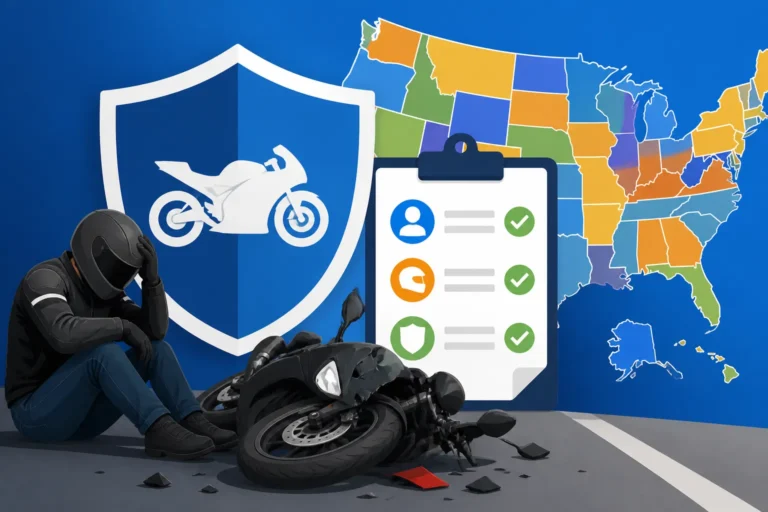
It's impossible to list every state's exact minimums here, as they can change, but we can look at common requirements and specific examples to illustrate the variations. The most common format you'll see is the three-number liability minimum, but some states also require UM/UIM or MedPay/PIP.
Let's take a look at some representative states and their typical minimum liability requirements as of recent information:
| State | Bodily Injury Per Person | Bodily Injury Per Accident | Property Damage Per Accident | Additional Common Requirements |
|---|---|---|---|---|
| California | $15,000 | $30,000 | $5,000 | UM/UIM offered, not strictly req. |
| Florida | N/A (Financial Resp. Law) | N/A | $10,000 | $10,000 PIP, Property Damage Req. |
| Texas | $30,000 | $60,000 | $25,000 | UM/UIM must be offered |
| New York | $25,000 | $50,000 | $10,000 | $50,000 PIP, UM/UIM |
| Ohio | $25,000 | $50,000 | $25,000 | UM/UIM must be offered |
| Illinois | $25,000 | $50,000 | $20,000 | UM/UIM must be offered |
| Pennsylvania | $15,000 | $30,000 | $5,000 | PIP and UM/UIM must be offered |
| Washington | $25,000 | $50,000 | $10,000 | UM/UIM must be offered |
Note: These minimums can change, and some states have nuances or additional requirements based on vehicle type or registration. Always verify the most current requirements with your state's DMV or a licensed insurance professional.
States with Lower Minimums The Danger Zone
States like California or Pennsylvania, with their relatively low minimum liability requirements, might seem appealing for cheap insurance, but they expose riders to significant risk. A $5,000 property damage limit, for instance, is barely enough to cover a fender bender on a modern vehicle, let alone total a car. If you live or frequently ride in such states, seriously consider exceeding these minimums, especially for property damage and bodily injury liability. The cost difference for higher limits is often surprisingly small compared to the protection it offers. It's always better to be over-insured than under-insured, particularly for something as vulnerable as riding a motorcycle.
States with Higher Minimums and Additional Requirements
Conversely, states like New York or Texas have higher minimums, and some, like Florida, have specific requirements for PIP (Personal Injury Protection) or stricter financial responsibility laws. New York, for example, is a no-fault state and requires PIP coverage for medical expenses and lost wages, which is a significant protective layer that many riders appreciate. These higher requirements reflect a more comprehensive approach to protecting all parties in an accident. Even in states with seemingly higher minimums, evaluating your personal assets and potential risks is key. Could a $50,000 per accident bodily injury limit truly cover multiple serious injuries in a multi-vehicle crash? Probably not. Always consider your personal exposure.
This variation highlights why "Motorcycle Insurance Minimums by State" is such a critical topic. You could ride from one state to another, and the legal landscape for insurance shifts dramatically. Always ensure your policy meets the requirements of the state your motorcycle is registered in, and ideally, where you do most of your riding.
Navigating Underinsurance and Protecting Yourself
Meeting state minimums is a start, but it’s rarely enough. As riders, we face unique risks, and having robust coverage is one of the best ways to protect ourselves from unforeseen financial devastation.
The Importance of Personal Coverage Beyond Liability
Many riders make the mistake of assuming that if another driver is at fault, their insurance will cover everything. While that's the ideal scenario, it often falls short in practice. Not only can their policy limits be too low (the "underinsured" problem), but what if the at-fault driver flees the scene, or is completely uninsured? That's where your own UM/UIM coverage becomes your best friend.
Consider adding comprehensive and collision coverage, especially if your bike is a significant investment. Your bike isn't just transportation; it's a passion, an extension of yourself. Losing it in an accident or to theft without adequate coverage can be a devastating financial blow. While the law might only mandate liability, protecting your own property and well-being should be a top priority. When you're browsing quality gear at Cycle Gear, think about how that gear protects you, and how your insurance protects your bike and your finances.
How Your Riding Habits and Gear Can Influence Your Needs
Your riding habits play a huge role in determining your insurance needs. Do you commute daily in heavy traffic? Do you frequently take long cross-country trips? Or are you a weekend cruiser on rural roads? Each scenario presents different risks. A rider who lane splits in heavy urban traffic in California, even if legally, might consider higher UM/UIM limits due to increased exposure to distracted drivers. On the other hand, someone who primarily rides on quiet, country roads might still need robust coverage for hitting wildlife or encountering unexpected road hazards.
Beyond insurance, investing in proper protective gear can also indirectly save you money and headaches in the event of an accident. While gear doesn't directly reduce your premiums, it can drastically reduce the severity of your injuries. A quality helmet, sturdy jacket, gloves, and riding pants, all available at reputable retailers like Cycle Gear, can prevent or minimize injuries like Motorcycle Road Rash: Claims and Compensation or even severe head trauma. Less severe injuries mean lower medical bills, less lost income, and potentially a quicker resolution to your claim, even reducing the need to fight for every last dollar of Pain and Suffering in Motorcycle Settlements. Your proactive approach to safety can make a real difference in the aftermath.
When to Consult with an Insurance Professional and a Lawyer
Choosing the right motorcycle insurance isn't a "set it and forget it" task. It's a dynamic decision that should evolve with your bike, your riding habits, and your financial situation. Don't just accept the cheapest quote that meets minimums. Take the time to sit down with an insurance agent who specializes in motorcycles. They can help you understand the nuances of various coverages, assess your risk factors, and recommend policies that offer genuine protection. They might highlight options like roadside assistance, custom parts coverage, or even rental reimbursement that could be incredibly valuable.
And if you ever find yourself in the unfortunate position of being involved in a motorcycle accident, especially one where fault is disputed or injuries are significant, don't hesitate to reach out to a personal injury lawyer. Even if the other driver seems clearly at fault, insurance companies are in the business of minimizing payouts. A lawyer can help you navigate the complexities of a claim, understand How Fault Affects Your Settlement, deal with adjusters, and ensure you receive the full compensation you deserve for your injuries, medical bills, lost wages, and pain and suffering. They can prove invaluable in helping you Maximize Your Motorcycle Accident Settlement and effectively counter How to Handle a Lowball Settlement Offer. Knowing Do You Need a Motorcycle Accident Lawyer is a question best answered by seeking expert advice tailored to your specific situation.
Staying informed about your state's motorcycle helmet laws is also crucial, as non-compliance can impact your claim. You can learn more about Motorcycle Helmet Laws by State to ensure you're always riding safely and legally.
Disclaimer
This information is intended for general guidance only and does not constitute legal or insurance advice. Motorcycle insurance laws and minimum requirements vary significantly by state and can change. Always consult with a qualified insurance professional and legal expert to understand the specific laws and coverages applicable to your situation.