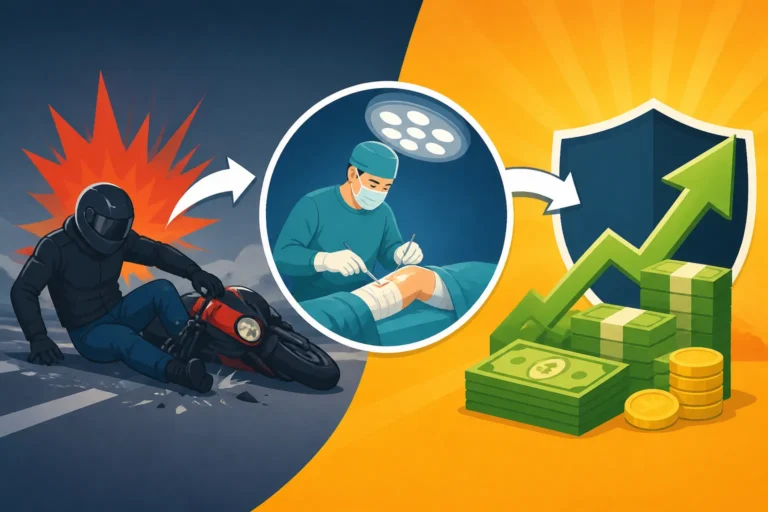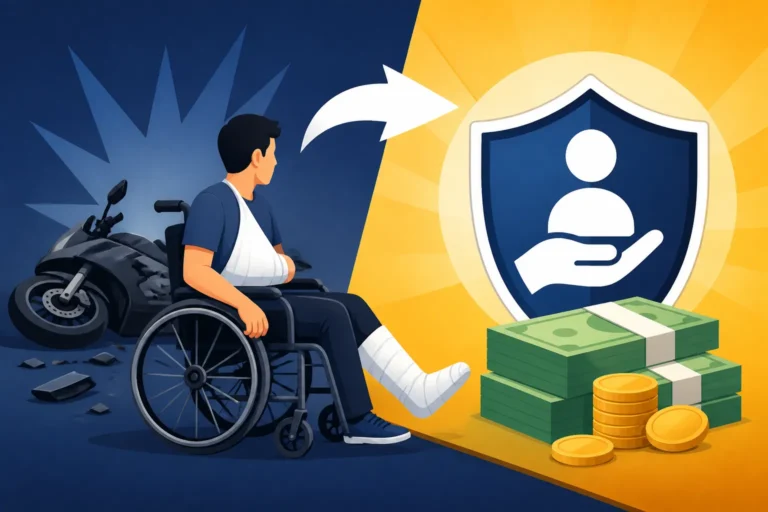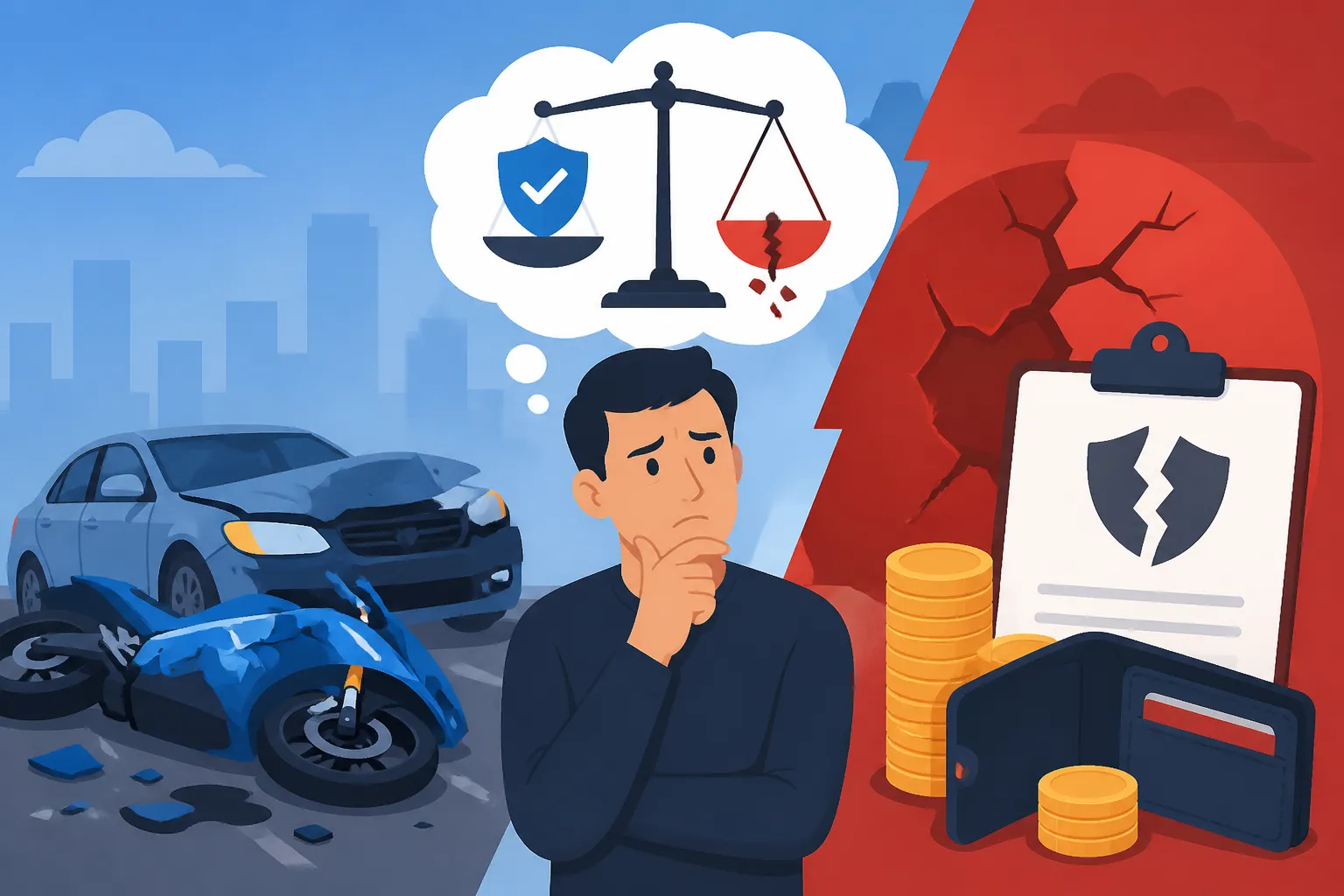
What Happens When Damages Exceed Coverage
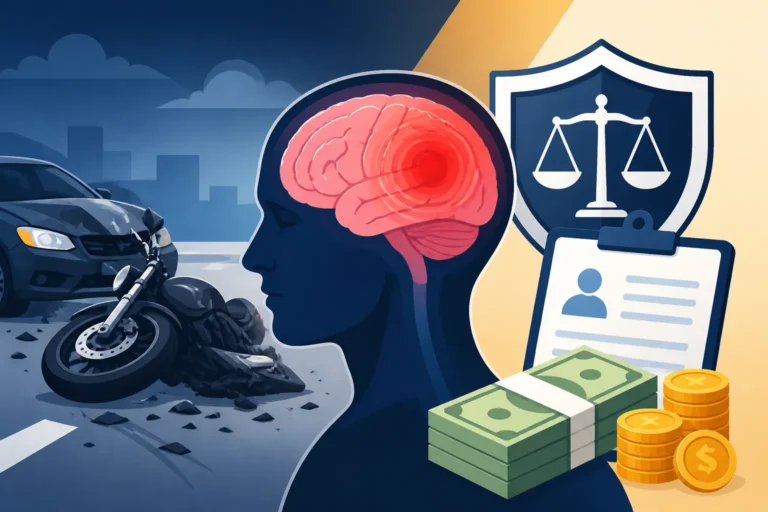
There's nothing quite like the crushing realization after a devastating motorcycle accident that the other driver's insurance—or even your own—might not be enough to cover everything you've lost. The medical bills pile up, you can't work, and your bike is a mangled mess, yet the numbers on those policy documents look woefully small. This guide is here to walk you through the complex, often frustrating, landscape of what happens when your motorcycle accident damages exceed available coverage, and what steps you can take to fight for the compensation you truly deserve.
Understanding Insurance Coverage Limits
Before we dive into the nitty-gritty of what happens when the well runs dry, it's crucial to grasp what we're actually talking about when we refer to "insurance coverage limits." Many riders assume that if someone else is at fault, their insurance will just pay for everything, no questions asked. The reality, unfortunately, is far more structured and often far less generous.
What "Coverage Limits" Really Mean
Every single auto insurance policy, whether it's for a car, truck, or motorcycle, comes with specific limits on how much the insurer will pay out for various types of damages. These aren't just suggestions; they are the absolute maximums. Think of it like a financial ceiling. Once the costs associated with the accident hit that ceiling, the insurance company's obligation typically ends there.
For instance, a common liability policy might have limits expressed as 25/50/25. This means:
- $25,000 per person for bodily injury: This is the maximum amount the insurance company will pay for medical bills, lost wages, and pain and suffering for one injured person in an accident.
- $50,000 per accident for bodily injury: This is the maximum total the insurance company will pay for all injured persons in a single accident, regardless of how many people were hurt. If two people are injured and each has $30,000 in damages, the policy will only pay out $50,000 total, meaning someone is left short.
- $25,000 for property damage: This is the maximum amount the insurance company will pay to repair or replace the other person's vehicle or property.
These numbers might seem adequate for a minor fender-bender, but after a serious motorcycle crash, where injuries can be catastrophic and long-lasting, $25,000 can disappear faster than you can say "ambulance ride." It's a hard truth, but knowing these limits is the first step in understanding the financial battle ahead.
Common Policy Structures for Auto and Motorcycle Insurance
Different states have different minimum requirements for insurance, but most policies follow a similar structure. Understanding these components is key to knowing what might be available.
Liability Coverage (Bodily Injury and Property Damage): This is the coverage that pays for damages you cause to others. If the other driver is at fault for your motorcycle accident, it's their liability coverage that you'll be making a claim against. If their limits are low, and your injuries are severe, this is where the problem of damages exceeding coverage usually begins. It's frustrating because you're the victim, yet you're limited by the choices the at-fault driver made regarding their insurance policy.
Uninsured/Underinsured Motorist (UM/UIM) Coverage: This is your saving grace, hopefully. This optional (but highly recommended) coverage on your own policy steps in when the at-fault driver either has no insurance (uninsured) or not enough insurance (underinsured) to cover your damages. We'll delve deeper into how UM/UIM coverage can be a lifesaver when you're facing overwhelming bills and the other party's policy simply isn't enough. It's often the best protection a rider can have against the financial irresponsibility of others.
Medical Payments (MedPay) or Personal Injury Protection (PIP): These coverages, which vary by state, pay for your medical expenses and sometimes lost wages, regardless of who was at fault. While they have their own limits, they can provide immediate financial relief, ensuring you get necessary treatment without waiting for a liability claim to settle. However, these limits are often quite low, usually ranging from a few thousand dollars up to $10,000 or $25,000, and thus won't typically cover severe, long-term injuries.
Understanding these different types of coverage and their limitations is critical because it directly impacts your potential for recovery. The often-frustrating reality is that the compensation you can receive is often capped, not by the true cost of your suffering, but by the numbers written on an insurance policy. For a deeper dive into these caps, check out our article on "How Policy Limits Cap Your Settlement".
The Harsh Reality When Damages Outstrip Coverage
It's a bitter pill to swallow when you realize that even if the other driver was 100% at fault for your motorcycle accident, their insurance might only cover a fraction of your actual losses. This isn't just a theoretical problem; it's a very real crisis that many riders face, leaving them in a dire financial and emotional situation.
Who Bears the Burden of Uncovered Costs?
When your medical bills, lost wages, property damage, and pain and suffering collectively exceed the limits of the at-fault driver's liability insurance, the question becomes: who pays the rest? The short, painful answer is, usually, you.
Unless you have additional sources of recovery, like robust uninsured/underinsured motorist (UM/UIM) coverage on your own policy or the ability to pursue the at-fault driver's personal assets (which is often complicated and rarely fruitful for significant amounts), those leftover costs fall squarely on your shoulders. This can mean:
- Out-of-pocket medical bills: Despite health insurance, you might still face deductibles, co-pays, and charges for treatments your health plan doesn't fully cover, especially for specialized long-term care or rehabilitation often needed after severe motorcycle accident injuries.
- Unreimbursed lost wages: If your time off work exceeds what little a low-limit policy can pay out, you're looking at a significant loss of income that can quickly destabilize your household finances.
- Future medical expenses: What about the surgeries you'll need next year, or the physical therapy for the next five years? If the current settlement offer maxes out the policy, these critical future costs might go completely unaddressed. You can learn more about how these are estimated in our guide on "How Future Medical Costs Are Estimated".
- Pain and suffering: This is often the hardest to quantify but is a huge component of damages. While an insurance company might acknowledge your suffering, if they've already hit their policy limits on your economic damages (medical bills, lost wages), there might be little to nothing left to compensate you for the immense physical and emotional toll the accident has taken.
It’s a cruel twist of fate: you did nothing wrong, yet you are the one left to pick up the pieces financially.
The Immediate Financial Fallout for Riders
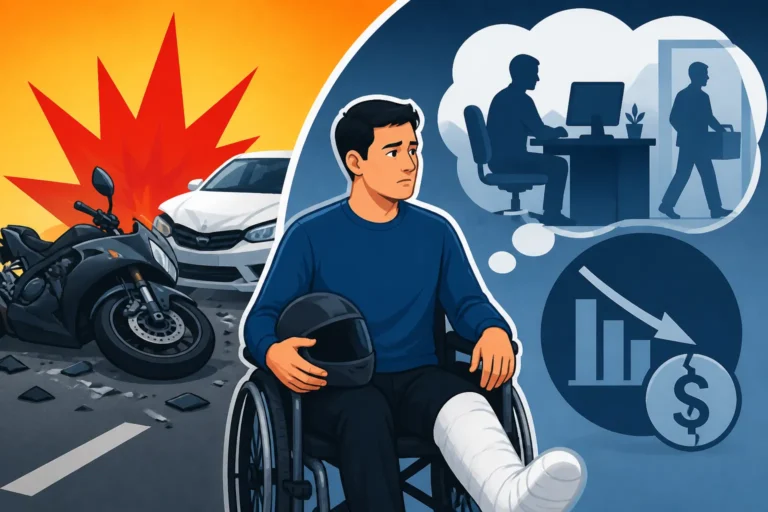
The financial repercussions of having your damages exceed coverage can be immediate and devastating. Imagine a scenario: a distracted driver swerves into your lane, causing a terrible crash. You sustain a broken leg, significant road rash, and a concussion. Your medical bills quickly climb to $75,000. Your motorcycle, a cherished Harley-Davidson Road Glide, is totaled at a value of $20,000. On top of that, you're out of work for three months, losing $15,000 in wages. Your total damages are a staggering $110,000.
However, the at-fault driver only carries the state minimum insurance: $25,000 for bodily injury per person and $25,000 for property damage.
- The property damage maximum of $25,000 covers your bike's value. Good.
- But for your bodily injuries, the $25,000 limit is instantly exhausted. This leaves a massive $50,000 gap in your medical bills alone, not to mention your lost wages and any compensation for your immense pain and suffering.
This immediate deficit forces riders into impossible choices: do you liquidate savings, take out loans, or even forgo necessary medical treatments because the money simply isn't there? It adds immense stress to an already traumatic situation, turning recovery into a financial battleground. This is why understanding "How Medical Bills Affect Your Settlement" is so crucial.
Emotional and Mental Toll of Uncovered Expenses
Beyond the tangible financial burdens, the emotional and mental toll of battling for compensation when your damages exceed coverage is profound. When you're healing from physical injuries, the last thing you need is the constant anxiety of unpaid bills and a shrinking bank account.
Many accident victims experience:
- Overwhelming stress and anxiety: The constant worry about how to pay for treatment, support your family, and keep your head above water can lead to severe stress, anxiety, and even depression. It’s a relentless mental burden that compounds the physical pain.
- Feelings of injustice: There's a deep sense of unfairness when you're the victim of someone else's negligence, yet you're forced to bear the brunt of their inadequate insurance. This feeling of injustice can hinder emotional recovery and lead to prolonged psychological distress.
- Impact on relationships: Financial strain is a leading cause of relationship stress. The pressure of uncovered expenses can put immense strain on your family and personal relationships, especially when your inability to work affects household income.
- Delayed recovery: The stress itself can impede physical recovery. When your body is trying to heal, and your mind is constantly racing with financial worries, it creates a cycle that can delay your return to health and normalcy.
The pain and suffering from a motorcycle accident aren't just physical; they include the mental anguish and emotional distress caused by the aftermath, especially when financial stability is threatened. This is a crucial element that our piece on "Economic vs Non-Economic Damages Explained" covers in detail. Dealing with these feelings while simultaneously trying to manage complex legal and insurance processes can feel impossible without expert guidance.
Exploring Avenues for Additional Recovery
While it might seem like a dead end when the at-fault driver's insurance maxes out, it's not always the end of the road. There are often other potential avenues for recovery that can help bridge the gap between your total damages and the initial insurance payout. It takes diligent investigation and a deep understanding of insurance law, but these options can be critical.
Uninsured/Underinsured Motorist UM/UIM Coverage
This is, hands down, one of the most vital coverages a motorcycle rider can carry. If you've been hit by someone with little to no insurance, your own UM/UIM coverage is designed to act as if their insurance existed and covered your losses, up to the limits of your policy.
Let's revisit our earlier example: your damages total $110,000, but the at-fault driver only has $25,000 in bodily injury liability. If you have a UM/UIM policy with limits of $100,000 per person, your own insurance company would then step in to cover the remaining $85,000 of your bodily injury damages (the $110,000 total minus the $25,000 already paid by the at-fault driver’s policy, assuming the property damage was covered separately). This can make an enormous difference in your financial recovery.
However, dealing with your own insurance company for a UM/UIM claim isn't always smooth sailing. They are still an insurance company, and their goal is to pay out as little as possible. You'll need to present a strong case, just as you would against the at-fault driver's insurer, proving the extent of your injuries and damages. This is where dedicated advocacy becomes invaluable. We highly recommend reviewing our detailed article on "How UM/UIM Coverage Increases Payouts" to fully understand this critical safety net.
Personal Assets of the At-Fault Driver
In cases where damages are exceptionally high and all insurance coverage (including your UM/UIM) has been exhausted, you might consider pursuing the at-fault driver's personal assets. This means filing a lawsuit against them directly to recover the remaining balance of your damages. If successful, you could obtain a judgment that allows you to collect from their personal funds, property, or even future wages.
However, this is often a challenging and complex path for several reasons:
- What assets do they actually have? Many drivers who carry minimum insurance limits do so because they don't have significant personal assets to protect. Pursuing someone who is "judgment proof" – meaning they have no significant assets or income that can be seized – can be a lengthy and expensive endeavor with little to no actual recovery.
- Difficulty in collection: Even with a judgment in hand, collecting the money can be difficult. It often requires further legal action to garnish wages, levy bank accounts, or force the sale of non-exempt assets, a process that varies significantly by state.
- Bankruptcy risk: The at-fault driver might declare bankruptcy, which could potentially discharge their personal liability for your damages, leaving you with nothing.
While it's a possibility, relying on the at-fault driver's personal assets for substantial recovery is generally a last resort and should be explored with a clear understanding of the challenges involved.
Third-Party Liability Beyond the Driver
Sometimes, the at-fault driver isn't the only one responsible for your accident. In certain situations, other parties may bear some liability, opening up additional avenues for compensation. This is where a thorough investigation by experienced legal professionals can uncover opportunities you might not have considered.
Potential third parties could include:
- Employer of the at-fault driver: If the driver was operating a company vehicle or was on the clock and performing work duties at the time of the accident, their employer might be held vicariously liable. Employers often carry much higher insurance policies than individual drivers.
- Government entities: If the accident was caused or exacerbated by a poorly maintained road, a malfunctioning traffic signal, or insufficient signage, the local, state, or even federal government agency responsible for that infrastructure could be partially liable. This is particularly relevant in cases involving road hazards.
- Vehicle manufacturers: If a defect in the at-fault driver's vehicle (e.g., faulty brakes, steering malfunction) contributed to the accident, the manufacturer could be held liable for product defect.
- Establishments that served alcohol: In states with "dram shop laws," a bar or restaurant that overserved an intoxicated driver who then caused your accident could be held liable for your damages. This scenario highlights a specific type of "Third-Party Liability in Motorcycle Accidents" that can be incredibly complex but very impactful for your claim.
Each of these scenarios involves highly specialized legal arguments and evidence, and proving third-party liability is rarely straightforward. However, successfully identifying and pursuing these additional responsible parties can dramatically increase the total available compensation, moving you closer to fully covering your extensive damages.
Strategic Steps to Take When Damages Exceed Coverage
Discovering that your hard-earned recovery and future are at risk because of insufficient insurance coverage is disheartening. However, this is precisely when taking strategic, informed steps becomes most crucial. Don't throw in the towel. There are definite actions you can take to fight for every dollar you deserve.
Thoroughly Documenting All Damages
In situations where insurance limits are tight, every single expense, every moment of pain, and every disruption to your life needs to be meticulously documented. Insurance companies are notorious for scrutinizing claims, especially when they involve large payouts or exceed standard limits. Without clear, comprehensive evidence, they'll have an easier time minimizing your claim.
Here's what you need to focus on:
- Medical records and bills: Keep every single document from every doctor, specialist, physical therapist, and hospital. This includes initial diagnostic reports, treatment plans, prescription lists, and all billing statements. Even if your health insurance paid some, you need proof of the total cost. Our guide on "How to Document Injuries for a Claim" provides excellent advice here.
- Lost wages documentation: Gather pay stubs, employment verification letters, tax returns, and any communication with your employer about time off due to injury. If you're self-employed, this means detailed financial records showing your income before and after the accident.
- Property damage assessments: Get multiple repair estimates for your motorcycle or a comprehensive valuation if it was totaled. Include costs for any damaged gear, such as helmets, jackets, or boots.
- Out-of-pocket expenses: Track everything. Gas mileage for medical appointments, parking fees, crutches, over-the-counter medications, even modifications made to your home or vehicle to accommodate your injuries. Every receipt, every note, matters.
- Pain and suffering journal: While difficult to quantify, keeping a daily journal detailing your physical pain levels, emotional distress, limitations on daily activities, and how your injuries affect your quality of life can be powerful evidence. This personal narrative helps put a human face on your abstract "pain and suffering" damages.
The more detailed and organized your documentation, the stronger your position will be when negotiating for maximum compensation. This comprehensive approach is key to proving the full extent of your "Types of Damages in a Motorcycle Accident Claim".
Navigating Negotiations with Insurance Companies
Negotiating with insurance companies is an art form, especially when you're already aware that damages might exceed coverage. Their primary goal is to settle for the lowest possible amount, and they will use every tactic to achieve that, including downplaying your injuries, questioning your medical treatment, or even trying to assign partial fault to you.
When facing limited coverage, your negotiation strategy needs to be particularly robust:
- Present a comprehensive demand letter: This letter should clearly outline all your damages, supported by your meticulous documentation, and demand the full policy limits if appropriate. It should be firm, factual, and persuasive.
- Be prepared for lowball offers: Insurance companies almost always start with a low offer, hoping you'll accept out of desperation. Understand that this is a negotiation tactic.
- Highlight the severity and long-term impact: Emphasize how your injuries aren't just immediate expenses but will have long-term consequences on your health, career, and quality of life. Provide evidence of future medical needs and potential loss of earning capacity.
- Leverage UM/UIM coverage: If the at-fault driver's policy is insufficient, immediately activate your UM/UIM claim. You'll then be negotiating with your own insurance company, which can sometimes be just as challenging.
- Do not accept a settlement too early: Never rush into a settlement, especially if you're still undergoing medical treatment or your prognosis isn't clear. Settling too soon means waiving your right to seek additional compensation later, even if new complications arise. It's vital to know "When to Reject a Settlement Offer".
This complex dance requires experience. Trying to navigate these negotiations on your own, especially while recovering from serious injuries, is often overwhelming and detrimental to your potential recovery. For a full guide on the negotiation process, consult our article on "How to Negotiate a Motorcycle Accident Settlement".
Understanding the Role of Litigation
If negotiations with insurance companies fail to yield a fair settlement that adequately addresses your damages, filing a personal injury lawsuit against the at-fault driver (and potentially other responsible parties) becomes a necessary step. Litigation is a formal legal process that moves your case from an insurance claim to a court proceeding.
Here's why litigation might be necessary:
- Compel policy limits: A lawsuit can sometimes pressure an insurance company to pay out the full policy limits, especially if they recognize the strength of your case and want to avoid the risks and costs of a trial.
- Access personal assets: As mentioned earlier, if you need compensation beyond all available insurance, a lawsuit against the at-fault driver can result in a court judgment allowing you to pursue their personal assets.
- Discovery process: Litigation allows for formal discovery, where you can legally compel the other side to provide evidence, documents, and testimony that might strengthen your case and uncover additional facts about the accident or the defendant's assets.
- Trial potential: While most cases settle before trial, the threat of going to court and presenting your case to a jury can be a powerful motivator for insurance companies to offer a more reasonable settlement. Juries are often more sympathetic to accident victims than insurance adjusters are.
Pursuing litigation is a significant decision and not to be taken lightly. It's a time-consuming, emotionally draining process that requires meticulous preparation and expert legal representation. However, when your damages far exceed insurance coverage, it can be the only viable path to securing the full compensation you need to rebuild your life. For more on this, consider reading "Motorcycle Accident Settlement vs Trial".
Why Legal Guidance Becomes Crucial
When you're dealing with the aftermath of a motorcycle accident and facing the daunting prospect of damages exceeding available insurance coverage, trying to go it alone is akin to trying to fix your totaled bike with a spanner and a prayer. The system is designed to be complex, and without expert guidance, you risk leaving significant money on the table or, worse, being stuck with mountains of debt. This is where a specialized motorcycle accident attorney becomes not just helpful, but absolutely indispensable.
Expert Negotiation and Advocacy
Insurance companies, even your own, are not on your side when it comes to maximizing your payout. Their adjusters are trained negotiators whose job it is to minimize claims. When your damages exceed coverage, they have even more incentive to find ways to reduce their liability or shift blame, even subtly.
A skilled motorcycle accident lawyer brings a level of expertise and advocacy that you simply cannot replicate:
- Understanding legal nuances: They understand the intricacies of insurance policies, state laws regarding liability, comparative negligence, and how these factors impact your claim when limits are exceeded. For instance, they know how to fight back against "How Insurance Companies Assign Blame to Riders".
- Experienced negotiation tactics: Lawyers know the typical tactics insurers use and how to counter them effectively. They can present your case with authority, backing up every demand with solid evidence and legal precedent.
- Credibility: An insurance company takes a claim from a lawyer far more seriously than one from an individual. The presence of legal representation signals that you are prepared to fight for your rights, potentially all the way to court.
- Maximizing available funds: An attorney will meticulously calculate all your damages, including future medical costs and lost earning capacity, ensuring no stone is left unturned in assessing your true financial needs. This is critical for "How to Maximize Your Motorcycle Accident Settlement".
This expert negotiation and advocacy are vital for securing the absolute maximum compensation available, whether through settlement or, if necessary, litigation.
Identifying All Potential Sources of Recovery
One of the biggest pitfalls for unrepresented accident victims is failing to identify all potential sources of recovery. As we discussed, the at-fault driver's policy is just one piece of the puzzle. An experienced attorney knows exactly where to look for other avenues.
They will thoroughly investigate:
- Your own insurance policies: Beyond standard liability, they'll scrutinize your UM/UIM coverage, MedPay, and any other endorsements that could provide additional funds. Many riders are unaware of the full scope of their own coverage.
- Third-party liability: As explored earlier, an attorney will assess if other parties, such as employers, government entities, or manufacturers, share any fault. This involves a deep investigation into the accident circumstances, potentially including accident reconstruction experts.
- Umbrella policies: Some individuals and businesses carry umbrella insurance policies that provide additional layers of liability coverage beyond their standard auto or homeowner's policies. These can be crucial for high-value claims.
- Personal assets: If necessary, they can advise you on the feasibility and process of pursuing the at-fault driver's personal assets, outlining the pros and cons clearly.
Uncovering these additional sources of recovery can mean the difference between being left with overwhelming debt and receiving the compensation you need to fully recover. If you're wondering, "Do You Need a Motorcycle Accident Lawyer", this scenario certainly points to "yes."
Protecting Your Rights and Future
Ultimately, when your damages exceed coverage, your future financial and physical well-being are on the line. An attorney acts as your shield and sword, protecting you from the complex legal system and aggressive insurance tactics.
Their role includes:
- Handling all communications: They will manage all correspondence and negotiations with insurance adjusters, opposing counsel, and other parties, taking that immense burden off your shoulders so you can focus on healing.
- Meeting deadlines: Personal injury claims, and especially lawsuits, are subject to strict deadlines, known as statutes of limitations. Missing these deadlines can permanently bar your claim, but an attorney ensures all filings are timely and correct.
- Evidence preservation: They ensure crucial evidence, from police reports and witness statements to black box data and surveillance footage, is properly collected and preserved to strengthen your case.
- Preventing common mistakes: They will advise you against making common mistakes, such as giving recorded statements to insurance adjusters or signing documents that could waive your rights or limit your future claims.
- Peace of mind: Perhaps most importantly, having a dedicated legal professional fighting for you provides immense peace of mind. You know someone is in your corner, working tirelessly to secure the best possible outcome for your recovery and your future.
Trying to navigate this complex legal and insurance landscape alone after a severe motorcycle accident is a recipe for disaster. When your damages exceed the available coverage, the stakes are incredibly high, making expert legal representation not just a choice, but a necessity to protect your rights and secure your future.
Summary of Recovery Options When Damages Exceed Coverage
| Recovery Option | Description | Pros | Cons |
|---|---|---|---|
| At-Fault Driver's Liability Ins. | Pays for damages you suffered, up to their policy limits. | Primary source of recovery; direct compensation. | Limited by policy caps; often insufficient for severe injuries. |
| Your UM/UIM Coverage | Pays when at-fault driver has no or insufficient insurance, up to your policy limits. | Excellent safety net; covers gaps from underinsured drivers. | Still limited by your policy caps; requires proactive purchase; you must negotiate with your own insurer. |
| Your MedPay/PIP Coverage | Covers immediate medical expenses regardless of fault, up to your policy limits. | Quick access to funds for medical care; no fault determination needed. | Low limits; may not cover all expenses or lost wages. |
| At-Fault Driver's Personal Assets | Pursuing a lawsuit against the driver directly for damages beyond insurance. | Can recover full damages if driver has assets. | Often challenging to collect; driver may have few assets or declare bankruptcy; lengthy process. |
| Third-Party Liability | Identifying and suing other entities (employers, government, manufacturers) partially at fault. | Opens up additional, potentially larger, insurance policies. | Complex to prove; requires extensive investigation and specialized legal knowledge. |
Disclaimer
The information provided in this article is for general informational purposes only and does not constitute legal advice. Motorcycle accident claims are highly fact-specific, and the laws governing insurance coverage and personal injury vary significantly by state. It is crucial to consult with a qualified and experienced motorcycle accident attorney to discuss the specifics of your situation and understand your legal rights and options. Relying solely on the information presented here without professional legal counsel is not recommended.