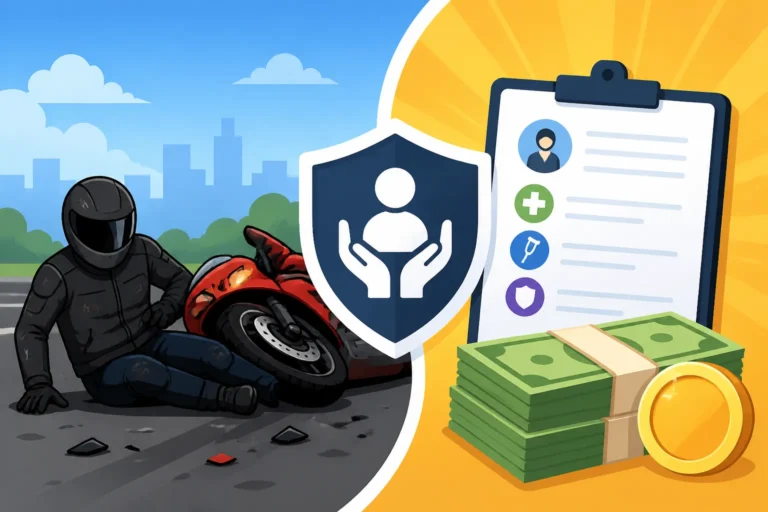
Average Motorcycle Accident Settlement in New York
Riding a motorcycle in New York, whether you're cruising through the Adirondacks or navigating the bustling streets of Manhattan, offers an unparalleled sense of freedom. But when an accident happens, that freedom can quickly turn into overwhelming worry. You're likely facing serious injuries, astronomical medical bills, and a mountain of questions, the most pressing often being: "What's the average motorcycle accident settlement in New York?" It's a question we hear all the time, born from genuine concern about financial recovery, but the truth is, a simple average doesn't exist. This comprehensive guide is here to demystify the complexities of motorcycle accident settlements in the Empire State, helping you understand the many factors that truly shape your potential compensation.
Understanding the "Average" Motorcycle Accident Settlement in New York
When you're reeling from a motorcycle accident, hearing about "average" settlement figures can be both tempting and incredibly misleading. It’s natural to want a clear number, a benchmark to give you some peace of mind about your future. However, trying to pin down an exact "average motorcycle accident settlement in New York" is like trying to catch smoke. Every accident, every injury, and every individual’s circumstances are so incredibly unique that a single average figure can never truly reflect the vast range of outcomes.
Why a Simple Number is Misleading
Imagine two riders, both involved in seemingly similar accidents on Long Island. Rider A suffers a broken arm and some road rash, misses a few weeks of work, and makes a relatively quick recovery. Rider B, however, sustains a traumatic brain injury (TBI) and multiple fractures, requiring extensive surgeries, years of rehabilitation, and can no longer return to their pre-accident career. Both are "motorcycle accidents," but their settlement values will be vastly different, easily ranging from tens of thousands for Rider A to potentially millions for Rider B.
This disparity isn't just about the severity of injuries, though that's certainly a huge part of it. It’s about the unique blend of specific facts: who was at fault, the exact nature of the medical treatment, the impact on the rider's career and daily life, and the insurance policies involved. Reporting a broad "average" figure would either drastically understate the potential for severe cases or wildly overstate the potential for minor ones, creating false expectations for everyone. Instead, it’s far more helpful to understand the components that come together to form a settlement.
Factors Contributing to Case Uniqueness
No two motorcycle accidents are ever truly identical, and therefore, no two settlements will be either. The distinctiveness of each case stems from a combination of factors that interact in complex ways. For instance, consider an accident in upstate New York where a driver failed to see a motorcycle while making a left turn. The settlement amount would hinge not just on the rider's injuries, but also on the strength of the evidence proving the driver's negligence, the available insurance coverage, and even the specific jurisdiction within New York where the claim is filed.
The human element is also critical. Your personal story – how the accident has impacted your ability to care for your family, pursue your hobbies, or simply live without constant pain – carries immense weight. These non-economic damages are highly subjective and are calculated individually for each case, making a generalized average impossible. This intricate web of individual facts is precisely why a blanket "average" number simply doesn't tell the whole story.
Key Factors Influencing Your Motorcycle Accident Settlement in New York
While there isn't a magical average, we can break down the critical elements that consistently influence how much you might receive in a motorcycle accident settlement in New York. Understanding these factors will give you a much clearer picture than any single "average" ever could.
Severity of Injuries and Medical Expenses
This is often the most significant driver of a settlement's value. Motorcycle accidents, by their nature, often lead to more severe injuries than car accidents because riders lack the protective shell of an enclosed vehicle. This translates directly to higher medical costs and, consequently, higher settlement values.
Let's consider an incident on the Brooklyn-Queens Expressway. If a rider suffers debilitating spinal cord injuries from a rear-end collision, they will require extensive, lifelong medical care, including surgeries, physical therapy, medication, and possibly adaptive equipment or home modifications. These costs can easily run into the hundreds of thousands or even millions of dollars. In contrast, a rider who sustains only minor road rash and bruises from a low-speed fender-bender will have a much lower medical bill total, which will reflect in a smaller overall settlement.
The key is not just the immediate medical bills, but also the projected future medical expenses. Are you going to need ongoing therapy? Will you require another surgery years down the line? These long-term costs must be thoroughly calculated and included in your claim. Insurers will often try to minimize these projections, so having a clear medical prognosis from your treating physicians is absolutely crucial. Understanding How Medical Bills Affect Your Settlement is a critical part of maximizing your claim.
Impact on Your Life: Lost Wages, Pain, and Suffering
Beyond the concrete costs of medical treatment, motorcycle accidents profoundly impact a rider's ability to work and enjoy life. These damages form a substantial portion of any settlement.
- Lost Wages and Earning Capacity: If your injuries prevent you from returning to work, even temporarily, you are entitled to compensation for those lost wages. This isn't just about the paychecks you missed right after the accident. If your injuries are so severe that you can't return to your previous job, or if your earning potential is permanently diminished, you can also claim "loss of future earning capacity." For instance, a skilled electrician in Buffalo who can no longer perform physically demanding work due to a severe arm injury may claim lost future earnings for the remainder of their career. Properly calculating How Lost Wages Are Calculated requires meticulous documentation of your income, employment history, and medical limitations.
- Pain and Suffering: This category, known as non-economic damages, compensates you for the physical pain, emotional distress, mental anguish, and loss of enjoyment of life that you endure because of the accident. While subjective, these are very real losses. Imagine a rider who loved taking their Harley through the scenic Catskills but now suffers from chronic pain and severe anxiety, making riding impossible. Or a parent who can no longer pick up their child due to a back injury. New York allows recovery for these significant impacts. The value of Pain and Suffering in Motorcycle Settlements can be substantial, especially for catastrophic injuries like a Average Settlement for a TBI.
Liability and Comparative Negligence Laws in New York
Proving who was at fault in a motorcycle accident is paramount to your claim's success. New York operates under a system of "pure comparative negligence." This means that even if you were partially at fault for the accident, you can still recover damages, but your award will be reduced by your percentage of fault.
For example, if you were in an accident in Rochester and it was determined that the other driver was 80% at fault for running a red light, but you were 20% at fault for speeding, your total damages award would be reduced by 20%. So, if your total damages were assessed at $100,000, you would receive $80,000. This is a critical distinction from other states that might bar your recovery if you are found to be more than 50% at fault. Understanding Comparative Negligence in Motorcycle Accidents is crucial, as insurance companies will aggressively try to shift blame onto the rider to minimize their payout. Learning How Fault Is Determined in Motorcycle Accidents is essential for your case.
Insurance Policy Limits and Coverage
Even if your damages are extensive and the other driver is clearly at fault, your settlement amount can be capped by the available insurance coverage. New York has minimum liability insurance requirements for all motor vehicles, including motorcycles. For personal injury, these are typically $25,000 per person and $50,000 per accident. If the at-fault driver only has the minimum coverage and your medical bills alone exceed those amounts, collecting beyond the policy limits can become challenging.
This is where your own Uninsured/Underinsured Motorist (UM/UIM) coverage becomes a lifesaeline. If the at-fault driver has no insurance (uninsured) or insufficient insurance (underinsured) to cover your damages, your UM/UIM policy can step in to cover the difference, up to your policy limits. Many riders unfortunately skimp on this coverage, only to find themselves in a dire situation after a severe crash. Knowing How Insurance Policy Limits Affect Your Payout is vital for managing expectations and preparing for potential shortfalls.
Types of Damages You Can Recover in a New York Motorcycle Accident Claim
When you file a motorcycle accident claim in New York, you're seeking to recover various types of damages. These generally fall into two main categories: economic and non-economic, with punitive damages being a rarer third.
Economic Damages
These are the calculable, objective financial losses you incur due to the accident. They are typically easier to quantify with receipts, bills, and wage statements.
- Medical Expenses: This includes everything from the ambulance ride and emergency room visit to surgeries, hospital stays, doctor appointments, prescription medications, physical therapy, rehabilitation, and even future medical care like long-term nursing or specialized equipment. It's crucial to keep meticulous records of all medical bills and related expenses.
- Lost Wages and Loss of Earning Capacity: As discussed, this covers current income lost due to being unable to work, as well as the projected income you won't be able to earn in the future if your injuries result in a permanent disability or diminished capacity. This can include lost bonuses, commissions, and benefits.
- Property Damage: The cost to repair or replace your damaged motorcycle, helmet, leathers, and any other personal property damaged in the crash. If your motorcycle is totaled, you are entitled to its fair market value.
- Other Out-of-Pocket Expenses: This can include transportation costs to and from medical appointments, childcare services if you're unable to care for your children due to injuries, household services you now need help with (like cleaning or yard work), and any other expenses directly related to your injuries or recovery.
Non-Economic Damages
These damages are more subjective and harder to put a precise dollar amount on, as they compensate you for intangible losses that significantly impact your quality of life.
- Pain and Suffering: This covers the physical discomfort and agony you experience from your injuries, both immediately after the accident and potentially long-term. This can include chronic pain, headaches, nerve damage, and other persistent issues.
- Emotional Distress and Mental Anguish: Motorcycle accidents can be traumatic, leading to psychological impacts such as anxiety, depression, post-traumatic stress disorder (PTSD), fear of riding again, and sleep disturbances. These mental health impacts are legitimate damages.
- Loss of Enjoyment of Life: If your injuries prevent you from participating in hobbies, recreational activities, or social events you once enjoyed, this is a compensable loss. If you can no longer ride your motorcycle, play with your kids, or pursue a beloved sport, that loss can be significant.
- Loss of Consortium: This applies to spouses and compensates them for the loss of companionship, affection, intimacy, and household services due to the injured spouse's condition.
Punitive Damages
While rare, punitive damages may be awarded in cases where the at-fault driver's conduct was particularly egregious, reckless, or malicious. This isn't about compensating the victim for a loss, but rather punishing the wrongdoer and deterring similar behavior in the future. For example, if a drunk driver in Queens caused your accident, a New York court might award punitive damages in addition to economic and non-economic damages.
Here's a simplified table illustrating the types of damages you might pursue:
| Damage Type | Description | Examples | How it's Proven/Valued |
|---|---|---|---|
| Economic | Tangible, calculable financial losses. | Medical bills, lost wages, motorcycle repair/replacement, therapy costs. | Bills, receipts, wage statements, expert economic testimony, repair estimates. |
| Non-Economic | Intangible losses affecting quality of life. | Physical pain, emotional distress, PTSD, loss of hobbies, loss of companionship. | Medical records, psychological evaluations, personal journals, witness testimony, expert medical opinions. |
| Punitive | Awarded to punish egregious conduct; not for compensation. | Drunk driving, intentional harm, extreme recklessness. | Evidence of gross negligence or malicious intent. |
The Settlement Process and How Long It Takes in New York
Navigating the aftermath of a motorcycle accident in New York is a multi-step process that requires patience and diligence. It's rarely a quick resolution, especially when injuries are severe. Knowing what to expect can help manage the stress.
Initial Steps and Investigation
The moment a motorcycle accident occurs, a complex chain of events is set into motion. Your first priority should always be seeking medical attention, even if you feel okay, as some serious injuries like a TBI or internal bleeding can have delayed symptoms. After ensuring your safety and getting necessary medical care, documenting the scene is crucial. This includes taking photos of the vehicles, the road conditions, any visible injuries, and exchanging information with the other driver. Filing a police report is also a critical early step.
Once you begin treatment and feel well enough, gathering evidence becomes paramount. This means collecting all medical records, bills, employment records to prove lost wages, and any witness statements. The better your documentation, the stronger your case for proving Motorcycle Accident Evidence for Proving Fault. This initial phase of medical treatment and evidence collection can take several weeks or even months, especially if your injuries require ongoing care. You should also be aware of the Motorcycle Accident Fault Laws in New York as they pertain to your specific incident.
Negotiation and Litigation
Once you have reached "maximum medical improvement" (MMI)—meaning your doctors believe your condition is stable and no further significant improvement is expected—or have a clear prognosis for future care, your attorney can send a formal demand letter to the at-fault driver's insurance company. This letter outlines your injuries, damages, and a proposed settlement amount.
What follows is a period of negotiation. The insurance company will almost certainly make a lowball offer initially, hoping you'll accept it out of desperation or lack of understanding. This is where the importance of having an experienced legal advocate becomes clear, as they can counter effectively and present the full value of your claim. This negotiation phase can last anywhere from a few weeks to several months.
If negotiations fail to yield a fair settlement, your attorney might advise filing a lawsuit. This moves the case into the litigation phase, involving formal discovery (where both sides exchange information), depositions (sworn testimonies), and potentially mediation or arbitration. While many cases still settle before trial, preparing for trial strengthens your negotiating position. The entire process, from accident to final settlement, can take anywhere from a few months for minor claims to several years for complex cases involving catastrophic injuries or disputed liability. It's critical to be aware of the Statute of Limitations for Motorcycle Claims in New York, which dictates the deadline for filing a lawsuit. Missing this deadline can permanently bar you from recovering any compensation.
Ultimately, while there's no single "average" motorcycle accident settlement in New York, understanding the multifaceted elements that comprise your unique claim—from the severity of your injuries and the impact on your life to the nuances of comparative negligence and insurance coverage—will empower you to navigate the path toward fair compensation.
Disclaimer
The information provided in this guide is for general informational purposes only and does not constitute legal advice. Every motorcycle accident claim is unique, and the outcome depends on the specific facts and applicable laws. It is highly recommended to consult with a qualified motorcycle accident attorney in New York to discuss your specific situation and understand your legal rights and options.