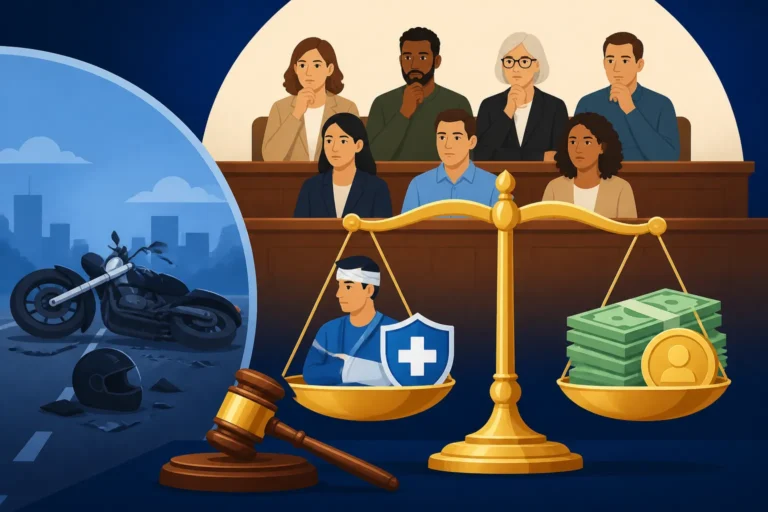
Average Settlement for a Motorcycle Traumatic Brain Injury
Riding a motorcycle offers unparalleled freedom, but it also comes with unique risks, especially when another driver's negligence leads to a crash. One of the most devastating outcomes can be a traumatic brain injury (TBI), which not only inflicts immediate, severe physical pain but can also leave riders and their families grappling with long-term cognitive, emotional, and financial burdens. This guide will meticulously break down what goes into the average settlement for a motorcycle traumatic brain injury, helping you understand the complex factors that determine compensation so you can better navigate your claim.
Understanding Traumatic Brain Injuries from Motorcycle Crashes
A traumatic brain injury (TBI) occurs when a sudden trauma to the head disrupts the brain's normal function. For motorcycle riders, the impact of a crash, even at seemingly low speeds, can be incredibly forceful. Helmets, while absolutely crucial and legally required in many states, can reduce the severity but cannot always prevent a TBI, especially with rotational forces or severe concussive impacts. The reality is, a rider's head is often much more exposed than someone inside a car, making TBIs a tragically common injury in these types of accidents.
The Spectrum of TBI Severity
It's vital to understand that "traumatic brain injury" isn't a single injury; it's a broad category with varying degrees of severity, each carrying different implications for recovery and potential settlement values.
- Mild TBI (Concussion): Many people mistakenly think a concussion is "just a bump on the head" or something you can "shake off." The truth is, a mild TBI, often resulting from rapid acceleration and deceleration, can cause symptoms like headaches, dizziness, memory issues, difficulty concentrating, and mood changes that can last for weeks, months, or even longer. While recovery is often expected, persistent post-concussive syndrome can be profoundly debilitating, impacting work, relationships, and overall quality of life. Even a "minor" concussion can have significant and lasting effects that demand substantial medical attention and support.
- Moderate TBI: This level of injury typically involves a loss of consciousness lasting anywhere from a few minutes to several hours, along with post-traumatic amnesia. Riders suffering a moderate TBI often experience more pronounced and lasting cognitive deficits, such as impaired judgment, speech problems, significant memory loss, and emotional regulation difficulties. Rehabilitation, including physical therapy, occupational therapy, and speech therapy, is almost always required, and many individuals may not fully return to their pre-injury state. The road to recovery is long and arduous, demanding extensive resources.
- Severe TBI: This is the most critical form of brain injury, characterized by a prolonged period of unconsciousness, coma, or even a vegetative state. Survivors often face permanent neurological damage, leading to lifelong physical, cognitive, and emotional impairments. They may require round-the-clock care, adaptive equipment, extensive home modifications, and continuous medical treatment. The impact on the individual and their family is catastrophic, transforming their lives entirely. These cases involve astronomical medical bills and a complete loss of independence for many.
Understanding the specific classification of your TBI is the first crucial step in assessing potential compensation. Each level demands a different scope of medical care, rehabilitation, and long-term support, directly affecting the value of your claim. For more detailed information on brain injuries, you might want to read about Motorcycle Accident Traumatic Brain Injuries.
Why Motorcycle Riders Face Higher TBI Risks
Let's be blunt: when a motorcycle collides with a car, the rider is almost always at a distinct disadvantage. Cars offer crumple zones, airbags, and a steel cage for protection. A motorcycle offers none of these. This inherent vulnerability means that while a car driver might walk away from an accident with whiplash, a motorcyclist can suffer catastrophic injuries, including TBIs, at similar impact forces.
Beyond the lack of physical barriers, riders are often thrown from their bikes, leading to secondary impacts with the ground, other vehicles, or roadside objects. Even with a DOT-compliant helmet, the sheer force involved in these secondary impacts can cause the brain to violently collide with the inside of the skull, leading to diffuse axonal injury or contusions. The "I didn't see the motorcycle" defense often used by drivers is a frustrating reality for riders, highlighting how frequently drivers overlook motorcycles, contributing to these devastating accidents. This heightened vulnerability is a key reason why settlements for motorcycle accidents, especially those involving head injuries, tend to be significantly higher than those for car accidents with similar visible damage.
Key Factors Shaping TBI Settlement Amounts
Determining the "average" settlement for a TBI from a motorcycle accident is tricky because no two cases are exactly alike. It's not like buying a product with a fixed price tag. Instead, it's a complex calculation influenced by a multitude of individual circumstances. However, several critical factors consistently weigh heavily on the final settlement amount.
Medical Expenses and Future Care Needs
This is often the most straightforward, yet extensive, component of economic damages in a TBI claim. The immediate medical costs are usually staggering. We're talking about ambulance rides, emergency room visits, diagnostic tests like CT scans and MRIs, neurosurgical procedures, hospital stays, and initial medications. But for TBI victims, especially those with moderate to severe injuries, the bills don't stop there.
The long-term care needs can truly eclipse the initial costs. Imagine years, or even a lifetime, of physical therapy to regain motor skills, occupational therapy to relearn daily tasks, speech therapy for communication issues, psychological counseling to cope with personality changes and emotional distress, and ongoing doctor's appointments. Some individuals might need specialized rehabilitation facilities, home health aides, or costly adaptive equipment like wheelchairs or modified vehicles. Even home modifications, such as ramps or widened doorways, can run into tens of thousands of dollars. Calculating these future medical costs requires expert testimony from life care planners and medical specialists, projecting expenses for decades to come. The goal is to ensure the settlement provides for every necessary aspect of care, preventing the family from bearing an impossible financial burden.
Lost Income and Diminished Earning Capacity
A TBI can severely impact a rider's ability to work, directly translating into significant financial losses.
- Lost Wages: This covers the income you've already missed from the time of the accident until the settlement is reached. It includes your salary, hourly wages, bonuses, commissions, and any benefits like health insurance or retirement contributions that were lost. For a rider who was a self-employed contractor or had a commission-based job, calculating these losses can be more complex but is no less critical. You will need thorough documentation like pay stubs, tax returns, and employer statements to prove these losses.
- Loss of Earning Capacity: This is often the most substantial economic damage for TBI survivors. It addresses the potential income you would have earned over your lifetime if the injury hadn't occurred. If a severe TBI prevents a skilled electrician from ever returning to their trade, or leaves a software engineer unable to concentrate on complex coding, the loss of future earnings can be astronomical. This calculation considers your age, education, career trajectory, and the permanency of your disability. Economic experts are typically brought in to provide projections, accounting for inflation and potential career advancements. The reality is that many TBI survivors cannot return to their previous occupations, or may not be able to work at all, making this a critical component of their financial recovery. This is often where a settlement truly recognizes the long-term impact of the injury.
The Intangible Costs: Pain, Suffering, and Life Impact
Beyond the direct financial costs, a TBI inflicts immense non-economic damages that are harder to quantify but no less real. These are often referred to as "pain and suffering" damages.
- Physical Pain and Discomfort: This includes not just the immediate agony of the accident and surgeries, but also chronic headaches, dizziness, fatigue, and other physical symptoms that can persist for years or a lifetime.
- Emotional Distress: TBIs often lead to profound psychological and emotional changes. Victims might experience severe anxiety, depression, PTSD, sudden mood swings, irritability, or anger issues. The frustration of cognitive deficits, the loss of independence, and the strain on personal relationships can be emotionally devastating.
- Loss of Enjoyment of Life: This accounts for the inability to participate in activities you once loved. Maybe you can no longer ride your motorcycle, play with your kids, hike, read, or pursue hobbies that gave your life meaning. When a TBI robs you of your passions and the simple joys of everyday living, it's a significant loss that deserves compensation.
- Disfigurement and Scarring: Facial injuries or surgical scars, especially visible ones, can cause significant psychological distress and impact self-esteem, affecting social interactions and quality of life.
Insurance companies often use formulas, like the "multiplier method," to estimate these damages, typically multiplying economic damages by a factor (usually 1.5 to 5, or even higher for severe injuries). However, these calculations are highly subjective and depend heavily on the specifics of the injury, the impact on the victim's life, and the ability to articulate these losses effectively. Documenting your injuries for a claim, through journals and witness statements, is crucial here.
The Role of Comparative Fault and Insurance Coverage
Even when another driver is clearly at fault, two factors can significantly alter your final payout: comparative negligence and insurance policy limits.
- Comparative Negligence: Many states follow a "comparative negligence" rule, meaning if you are found partially at fault for the accident, your settlement can be reduced by your percentage of blame. For example, if you sustained a $500,000 TBI injury, but a jury decides you were 20% at fault (perhaps for speeding or not signaling), your recoverable damages would be reduced to $400,000. Some states, like California, follow "pure comparative negligence" where you can recover even if you're mostly at fault, while others, like Texas, have a "51% bar rule," meaning you can't recover if you're found more than 50% at fault. This concept, explained further in Comparative Negligence in Motorcycle Accidents, can be a major battleground in TBI cases, as insurance companies will actively try to assign blame to the rider.
- Insurance Policy Limits: This is a harsh reality. No matter how devastating your TBI or how high your calculated damages, your settlement will ultimately be capped by the at-fault driver's insurance policy limits. If their policy only covers $100,000 for bodily injury and your TBI damages are $1 million, you might only get $100,000 from their insurer unless you have other options. This is where your own Uninsured/Underinsured Motorist (UM/UIM) coverage becomes a lifesaver. If the at-fault driver's insurance isn't enough, your UM/UIM policy can kick in to cover the remaining damages, up to your own policy limits. It’s a critical safeguard for any rider, highlighting why you should carry robust coverage. This topic, How Insurance Policy Limits Affect Your Payout, is often a painful lesson for accident victims.
Breaking Down the Typical TBI Settlement: What's Included
When we talk about a motorcycle accident settlement, particularly for a TBI, we're really talking about a collection of different types of compensation designed to make the injured rider "whole" again, as much as money can. These are generally categorized into economic and non-economic damages, with punitive damages being a rare third category.
Economic Damages: The Tangible Losses
These are the calculable, out-of-pocket expenses and financial losses that have a clear monetary value. Think of them as the bills and lost income you can literally add up.
- Medical Treatment Expenses: This is perhaps the largest component for TBI cases. It encompasses every penny spent on your recovery, from the moment the ambulance picked you up to every doctor's visit, surgery, prescription drug, and rehabilitation session. This includes specialists like neurologists, neuropsychologists, physical therapists, occupational therapists, and speech therapists. For long-term injuries, it also covers anticipated future medical care, which a medical expert will project for your entire remaining lifespan. Things like home modifications for accessibility, assistive devices (wheelchairs, walkers), and even specialized transportation can fall under this category. Keeping every single receipt and medical bill is paramount.
- Lost Wages and Future Earning Capacity: As discussed, this includes past income you couldn't earn because of your injury and the projected income you will lose in the future. For someone with a severe TBI, this can be a truly astronomical figure, especially if they were in a high-paying career or had significant career potential. An economist or vocational expert might be called upon to provide expert testimony on these figures, ensuring a fair and comprehensive assessment of your financial losses. This isn't just about your current job; it's about your entire working life ahead of you.
- Property Damage: While often overshadowed by the severity of a TBI, this covers the cost to repair or replace your motorcycle, helmet, and any other gear damaged in the accident. Don't forget the value of your damaged helmet, leathers, or riding jacket – these are protective items that often bear the brunt of an impact and need to be replaced. Even if the bike is totaled, the fair market value of your specific motorcycle needs to be factored in.
These tangible losses are foundational to building a TBI claim and are generally easier to prove with concrete evidence. For a deep dive into these components, refer to Economic Damages Explained.
Non-Economic Damages: The Intangible Toll
These are the harder-to-quantify damages that compensate you for the subjective, personal impact of your injury. They aim to address the suffering that doesn't come with a bill.
- Pain and Suffering: This is exactly what it sounds like – compensation for the physical agony, discomfort, and emotional distress you've endured and will continue to endure because of the TBI. This includes chronic headaches, dizziness, fatigue, and the constant struggle with cognitive and emotional changes. The subjective nature of pain and suffering means it's often fiercely debated by insurance companies, making strong documentation of your experience vital. An injury journal, for example, can be invaluable here to demonstrate the daily impact on your life.
- Emotional Distress: A TBI doesn't just affect the brain physically; it profoundly impacts mental and emotional well-being. This can manifest as severe anxiety, depression, post-traumatic stress disorder (PTSD), mood swings, irritability, or a complete change in personality. These are real, debilitating consequences that require therapeutic intervention and can affect every aspect of your life.
- Loss of Enjoyment of Life: This category covers the inability to partake in activities and hobbies that once brought you joy and contributed to your overall quality of life. If you can no longer ride your bike, participate in sports, enjoy social gatherings, or even read a book due to cognitive difficulties, that loss is compensable.
- Loss of Consortium: If your TBI has severely impacted your relationship with your spouse – perhaps affecting intimacy, companionship, or the ability to perform household duties – your spouse may also have a claim for loss of consortium. This recognizes the damage to the marital relationship caused by the injury.
Proving non-economic damages often relies on medical records, psychiatric evaluations, testimony from friends and family, and personal accounts that vividly illustrate the profound changes to your life. The article on Pain and Suffering Damages Explained delves deeper into this often-misunderstood aspect of claims.
Rarely, Punitive Damages
Punitive damages are not awarded in every case, or even most cases. They are reserved for situations where the at-fault driver's conduct was exceptionally reckless, malicious, or grossly negligent, going beyond mere carelessness. The purpose of punitive damages is not to compensate the victim, but to punish the wrongdoer and deter similar egregious behavior in the future.
Examples might include an intoxicated driver causing a drunk driving motorcycle accident or a driver engaged in extreme road rage. While not directly part of your compensation for losses, they can sometimes be included in a settlement to avoid a lengthy and potentially embarrassing trial for the defendant. If you believe the at-fault party's actions were particularly egregious, this is certainly a point to discuss with legal counsel.
Navigating the "Average" TBI Settlement Figure
When you're trying to figure out what your TBI claim might be worth, it's natural to search for "average settlement amounts." However, I need to be upfront: relying solely on an "average" figure can be incredibly misleading and doesn't tell the full story of what your unique case might demand.
The Challenge of Averages
The problem with an "average" settlement figure for a traumatic brain injury is that it lumps together a vast range of scenarios. It combines a rider who suffered a mild concussion with someone who now requires lifelong 24-hour care due to a severe TBI. This creates a statistical number that simply isn't reflective of individual circumstances.
For instance, a minor road rash claim might settle for a few thousand dollars, whereas a catastrophic spinal cord injury could lead to multi-million dollar verdicts. Averages don't account for:
- Individual Injury Severity: As we've discussed, a mild TBI is vastly different from a severe TBI.
- Medical Costs Incurred: Hospital bills can range from a few thousand to hundreds of thousands, or even millions.
- Lost Wages & Future Earning Potential: A high-earning professional losing their career will have a much higher claim than someone with a lower-paying job.
- State Laws: Different states have different laws regarding comparative negligence and damage caps.
- Insurance Policy Limits: The actual money available plays a huge role.
- Strength of Evidence: Clear evidence of fault and detailed injury documentation drives up value.
- Jury Verdicts vs. Settlements: Juries might award significantly more for certain types of pain and suffering than an insurance company is willing to settle for out of court.
These variables create such a wide spectrum that an "average" number becomes almost meaningless for a specific case.
Realistic Settlement Ranges by TBI Severity
While an overall average is unhelpful, we can look at more realistic ranges based on injury severity, keeping in mind that these are still rough estimates and individual results will vary greatly.
- Mild TBI (Concussion) Settlements: For cases involving mild TBIs, especially those with prompt recovery and no lasting symptoms, settlements might range from tens of thousands to low six figures ($25,000 – $150,000+). However, if there's persistent post-concussion syndrome, long-term cognitive issues, or significant impact on daily life and work, the settlement can easily climb well into the mid-to-high six figures ($200,000 – $700,000+). The key differentiator is the duration and severity of symptoms and their impact on daily function and work.
- Moderate TBI Settlements: These cases almost always involve substantial medical intervention, extensive rehabilitation, and often some degree of permanent impairment. Settlements for moderate TBIs typically fall into the mid-six figures to low seven figures ($500,000 – $2,000,000+). The exact amount will depend heavily on the extent of cognitive deficits, the need for ongoing care, and the impact on the individual's ability to work and enjoy life.
- Severe TBI Settlements: When a motorcycle accident results in a severe TBI, involving long-term coma, significant permanent brain damage, or a vegetative state, the financial implications are immense. These cases often involve lifelong medical care, loss of all earning capacity, and profound changes to the victim's life and the lives of their family members. Settlements or jury verdicts for severe TBIs almost always reach multi-million dollar figures ($2,000,000 to $10,000,000+). These high values reflect the catastrophic nature of the injury and the immense cost of providing care and compensation for a lifetime of lost potential and suffering.
These ranges are provided to give you a more realistic perspective than a single "average," but again, every single case is unique.
Specific Examples of TBI Settlements
To illustrate the point, consider these hypothetical, yet common, scenarios:
- Scenario 1 (Mild TBI): A rider, Sarah, suffers a concussion after another driver fails to yield during a left-turn maneuver. Sarah experiences headaches, dizziness, and some difficulty concentrating for three months, missing a few weeks of her office job. Her medical bills total $15,000, and lost wages are $5,000. Her settlement might be in the range of $50,000 to $100,000, covering medicals, lost wages, and compensation for the temporary pain and disruption to her life.
- Scenario 2 (Moderate TBI): David, an architect, sustains a moderate TBI when a distracted driver rear-ends his motorcycle at a stoplight. David is unconscious for an hour and spends weeks in the hospital. He faces intense rehabilitation for a year, struggles with memory and problem-solving, and cannot return to his highly demanding architectural role. His medical bills exceed $250,000, and his lost earning capacity is projected to be over $1 million. His settlement could realistically fall into the $1.5 million to $3 million range, accounting for extensive medical costs, future loss of income, and the profound impact on his professional and personal life.
- Scenario 3 (Severe TBI): Maria, a young mother, is involved in a head-on collision caused by a drunk driver. She suffers a severe TBI, resulting in permanent cognitive and physical disabilities, requiring round-the-clock care for the rest of her life. Her medical bills, future care, and complete loss of earning capacity are projected to be well over $5 million. Her settlement, potentially including punitive damages against the drunk driver, could reach $8 million or more, reflecting the life-altering devastation caused by the accident.
These examples underscore that the "average" doesn't exist in a meaningful way. What truly matters is the specific, documented impact of your TBI on your life.
Actionable Steps to Protect Your TBI Claim
After the trauma of a motorcycle accident, especially one resulting in a TBI, taking the right steps can feel overwhelming. However, protecting your claim and ensuring you receive fair compensation requires diligence and proactive measures from the very beginning.
Prioritizing Immediate Medical Care
This cannot be stressed enough: seek medical attention immediately after a motorcycle accident, even if you feel "fine" or just a little shaken up. Symptoms of a TBI, particularly mild concussions, might not appear for hours or even days. A delay in seeking medical care can be used by insurance companies to argue that your injuries weren't serious or weren't caused by the accident.
- Get to the ER or a Doctor: Let paramedics assess you at the scene, and if recommended, go to the emergency room. Even if you don't go by ambulance, get to an urgent care or your primary care physician as soon as possible.
- Be Thorough and Honest: Clearly describe all your symptoms, no matter how minor they seem. Mention headaches, dizziness, confusion, memory issues, nausea, sensitivity to light or sound, and any emotional changes. Do not downplay your pain or symptoms.
- Follow All Medical Advice: Adhere strictly to your doctor's orders. Attend all follow-up appointments, physical therapy sessions, and specialist referrals (neurologist, neuropsychologist). Gaps in treatment can significantly hurt your claim, suggesting you weren't truly injured or weren't committed to your recovery.
- Understand Your Diagnosis: Ask questions. Understand the severity of your TBI and the potential long-term prognosis. This knowledge will be crucial for valuing your claim, especially regarding future medical needs. Your prompt medical attention and consistent follow-through will be irrefutable evidence in your claim for Motorcycle Accident Traumatic Brain Injuries.
Meticulous Documentation is Key
The success of your TBI claim hinges on thorough and consistent documentation. It's the evidence that tells your story and proves your losses.
- Medical Records: Keep copies of everything: doctor's notes, hospital reports, diagnostic scan results (CT, MRI), therapy records, and prescription lists. These records are the backbone of proving your injuries and treatment.
- Injury Journal: Start a daily journal documenting your symptoms, pain levels, emotional state, difficulties with daily tasks, and how the injury impacts your life. Note every headache, every memory lapse, every frustration. This personal account can be incredibly powerful in illustrating your pain and suffering.
- Financial Records: Collect all bills related to the accident – medical bills, prescription costs, transportation costs to appointments, receipts for any assistive devices. Also, gather pay stubs, tax returns, and employer statements to document lost wages and earning capacity.
- Accident Details: Document everything about the accident itself. Take photos of the scene, your motorcycle damage, your injuries, and the other vehicle. Get contact information for witnesses. If available, secure dashcam footage, which can be invaluable for How Dashcam Footage Proves Fault.
- Damage to Gear: Take photos of your helmet and other protective gear. Damage to these items can serve as powerful evidence of the force of impact and why your injuries occurred despite wearing protection.
This detailed evidence collection not only supports your claim but also helps paint a clear picture of the full extent of your damages, which is essential for How to Document Injuries for a Claim.
Seeking Experienced Legal Guidance
Navigating a TBI claim is incredibly complex, especially when you're also trying to recover from a serious injury. Trying to handle it alone against experienced insurance adjusters is a recipe for being significantly undervalued.
- Expert Knowledge: A lawyer specializing in motorcycle accidents and TBIs understands the nuances of these cases. They know how to calculate future medical costs, lost earning capacity, and pain and suffering, often working with medical and economic experts. They are also familiar with How Insurers Use Rider Stereotypes Against You and how to fight these biases.
- Negotiation Skills: Insurance companies are in the business of paying out as little as possible. An attorney knows their tactics and can negotiate aggressively on your behalf, often achieving a much higher settlement than you could on your own. They can help you craft a strong demand letter and counter lowball offers.
- Litigation Preparedness: If a fair settlement can't be reached, an attorney will be prepared to take your case to trial. This willingness to litigate often motivates insurance companies to offer a more reasonable settlement.
- Focus on Recovery: By entrusting your legal battle to an attorney, you can focus on what truly matters: your physical and mental recovery. They handle the paperwork, phone calls, and legal complexities, lifting a huge burden from your shoulders.
Don't wait to contact a lawyer. The sooner you get experienced legal guidance, the better positioned you'll be to protect your rights and secure the compensation you deserve. This is critical for How to Maximize Your Motorcycle Accident Settlement.
Patience and Long-Term Assessment
TBI recovery is not a linear process, and its full impact may not be immediately apparent. Rushing to settle your claim can be a costly mistake.
- Wait for Maximum Medical Improvement (MMI): It's often advisable to wait until you have reached Maximum Medical Improvement (MMI) before settling your claim. MMI is the point where your medical condition has stabilized, and further improvement is unlikely. At this stage, your doctors can provide a clearer prognosis, allowing for a more accurate assessment of future medical needs and long-term disability. Settling too early means you might not account for chronic issues, future surgeries, or therapies that only become apparent months or even years down the line.
- Understand the Long-Term Effects: TBIs can have profound and lasting effects, including chronic pain, cognitive impairments, and psychological issues. Ensuring these long-term consequences are fully evaluated and accounted for in your settlement is vital for your future well-being.
Your future depends on a comprehensive and patient approach to your TBI claim.
Disclaimer
Please remember that this article provides general information and insights into motorcycle accident claims and traumatic brain injury settlements. It is not legal advice. Every accident and injury claim is unique, and the information presented here may not apply to your specific situation. Laws regarding personal injury claims vary by state. It is crucial to consult with an experienced motorcycle accident attorney in your jurisdiction to discuss the specifics of your case and receive personalized legal advice. An attorney can evaluate your claim, explain your rights, and help you navigate the complex legal process to pursue the compensation you deserve.