Motorcycle Accident Fault Laws in Massachusetts
Massachusetts motorcycle accident fault laws use a modified comparative negligence rule that restricts damage recovery if riders share blame.

Massachusetts motorcycle accident fault laws use a modified comparative negligence rule that restricts damage recovery if riders share blame.

Washington motorcycle accident fault laws use pure comparative negligence, reducing your compensation by your exact percentage of blame.

Tennessee motorcycle accident fault laws use a modified comparative negligence system preventing recovery at fifty percent or more fault.

Arizona fault laws and pure comparative negligence rules determine compensation amounts after a motorcycle crash occurs.
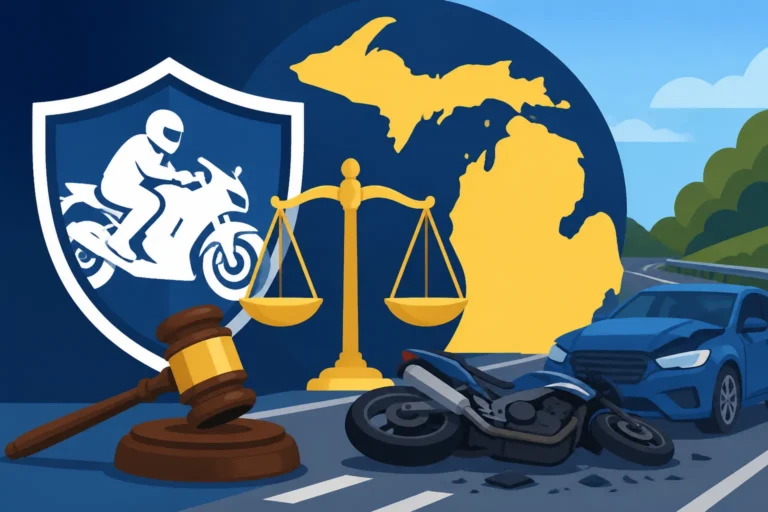
Michigan motorcycle accident fault laws dictate how injured riders recover medical bills, lost wages, and pain and suffering damages.

Illinois motorcycle accident fault laws and the modified comparative negligence rule determine how shared blame impacts compensation.

North Carolina motorcycle accident fault laws and the pure contributory negligence rule determine how injured riders recover damages.

Georgia motorcycle accident fault laws and the modified comparative negligence rule determine your potential claim compensation.

Ohio motorcycle accident fault laws use a 51 percent comparative negligence rule to determine injury compensation limits.

Pennsylvania motorcycle accident fault laws, pure comparative negligence rules, and bodily injury insurance claims for injured riders.