Motorcycle Accident Fault Laws in Michigan
Riding a motorcycle in Michigan brings an incredible sense of freedom, but it also means navigating a unique and often confusing set of laws, especially after an accident. Many riders find themselves grappling with the state's "no-fault" insurance system, wondering how it impacts their rights and ability to recover damages if they're injured. This guide will cut through the legal jargon and explain precisely how motorcycle accident fault laws work in Michigan, helping you understand your path forward.
Understanding Michigan's No-Fault System for Motorcyclists
Michigan is widely known for its no-fault automobile insurance system, which means that typically, after a car accident, your own insurance company pays for your medical expenses and lost wages, regardless of who was at fault. This system was designed to streamline claims and reduce litigation. However, when it comes to motorcycles, the rules take a significant detour, often catching riders off guard.
The Basics of No-Fault for Cars vs. Motorcycles
For standard car accidents in Michigan, the no-fault system means you seek compensation from your own insurer for certain economic losses like medical bills and lost income, up to your policy limits. You generally cannot sue the at-fault driver for these types of damages unless your injuries meet a very high "threshold." The idea is that everyone's insurance pays their own way for basic damages, regardless of fault, which sounds simple enough.
However, motorcycles are treated differently under Michigan's no-fault law. While a car driver involved in a collision with a motorcycle might still claim benefits from their own no-fault policy, the motorcyclist is generally not considered a "covered person" under the standard no-fault rules for their own injuries. This means that if you're on your bike and get hit, your personal no-fault auto insurance policy won't be the primary payer for your medical care and lost wages from the motorcycle accident itself. This distinction is absolutely crucial and one that often leads to significant frustration and confusion for injured riders.
When a Motorcyclist Can Sue for Fault
Because motorcycles are largely excluded from the standard no-fault personal injury protection (PIP) benefits, Michigan law allows injured motorcyclists to pursue a claim against the at-fault driver for all their economic damages, including medical bills, lost wages, and other out-of-pocket expenses, even if those expenses don't meet the high threshold required for car accident victims. This is a massive difference that shifts the focus squarely back to proving who was responsible for the crash.
This also means that if you're a motorcyclist injured in an accident, you can also sue for non-economic damages, often referred to as pain and suffering, if you meet the threshold injury requirement. This threshold is legally defined as a serious impairment of body function, permanent serious disfigurement, or death. While it's still a significant hurdle to overcome, the ability to pursue a bodily injury claim based on fault is a critical avenue for recovery that car drivers typically don't have unless their injuries are severe. Understanding this "tort liability" exception for motorcycles is key to protecting your rights after a crash.
Personal Injury Protection PIP Benefits for Riders
Even though motorcyclists generally aren't covered by their own no-fault PIP for a motorcycle accident, Michigan law has a specific order of priority for determining which insurer pays for a motorcyclist's medical expenses and lost wages if they are involved in a collision with a motor vehicle. This is often where things get incredibly complicated. The hierarchy typically goes like this:
- The no-fault insurer of the owner or registrant of the motor vehicle involved in the accident.
- The no-fault insurer of the driver of the motor vehicle involved in the accident.
- The no-fault insurer of the owner or registrant of the motorcycle. (Yes, even though you don't get your PIP, your insurer might be on the hook if no car insurer is primary).
- The Michigan Assigned Claims Facility.
So, if a car hits you, the car's no-fault insurance company is usually on the hook for your PIP benefits. This is a huge relief for many riders who might otherwise face astronomical medical bills. However, if the accident didn't involve another motor vehicle – say, you hit a pothole or another road hazard – then your recourse for medical and wage loss benefits becomes even more complex, often relying on traditional health insurance or seeking damages directly from a liable third party, like a government entity responsible for road maintenance. This intricate system is why understanding Motorcycle Accident Liability: A Complete Guide is crucial for any rider in Michigan.
How Fault is Determined in Michigan Motorcycle Accidents
Since fault plays such a central role in a Michigan motorcyclist's ability to recover damages beyond basic PIP, meticulously proving who caused the accident is paramount. This isn't just about pointing fingers; it's about building a solid case with undeniable evidence. The stakes are high, as an unfavorable fault determination can severely impact your compensation.
Gathering Evidence at the Scene
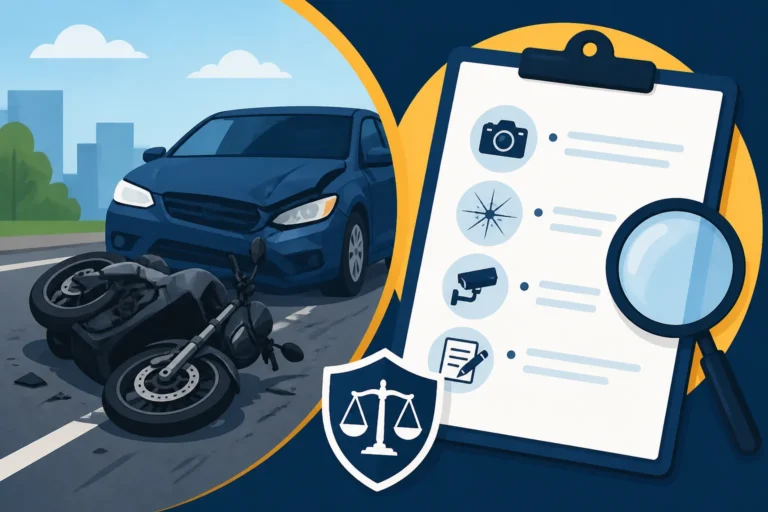
What you do immediately after a motorcycle accident can make or break your claim. Even if you're dazed or injured, try to gather as much information as possible. First and foremost, ensure your safety and seek medical attention for yourself and any passengers. Then, if you are able, document everything. This means taking abundant photos and videos of the accident scene, including vehicle positions, damage to both the motorcycle and any other vehicles, road conditions, traffic signs, skid marks, and anything else that seems relevant. Don't forget to get pictures of your injuries as well, no matter how minor they seem initially.
It's also critical to collect contact information from all parties involved, including drivers, passengers, and any witnesses. A witness's unbiased account can be incredibly powerful in proving fault. Avoid admitting fault or making speculative statements about the accident to anyone, including the other driver, passengers, or even law enforcement, beyond providing factual information. Remember, your memory might be hazy, and anything you say can be used against you later by insurance companies eager to minimize payouts. For a deeper dive into preserving your case, refer to What to Do After a Motorcycle Accident.
The Role of Police Reports and Investigations
A police report is often the first official record of an accident and can carry significant weight in a fault determination. When officers arrive, they will document the scene, interview those involved and witnesses, and often make a preliminary determination of fault. While a police report isn't the final word, it's a powerful piece of evidence that insurance adjusters and courts will consider. Make sure to get the officer's name, badge number, and the report number.
However, it's also important to remember that police reports are not infallible. Officers might not have seen the accident happen, or they might make assumptions based on limited information or even inherent biases against motorcyclists. If you believe the police report contains inaccuracies or an incorrect fault assessment, it can be challenged, though this often requires additional evidence and the assistance of an attorney. An in-depth understanding of How Police Reports Establish Fault can help you navigate this complex aspect of your claim.
Michigan's Comparative Negligence Rule
Michigan follows a modified comparative negligence rule, which is vital for motorcyclists to understand. This rule states that if you are found to be partially at fault for an accident, your recoverable damages will be reduced by your percentage of fault. For example, if your total damages are $100,000, but you are found to be 20% at fault, you would only be able to recover $80,000.
The "modified" aspect comes into play because if you are found to be more than 50% at fault, you are barred from recovering non-economic damages (like pain and suffering) entirely. You could still recover economic damages, but losing out on pain and suffering can significantly reduce your overall compensation. This makes proving the other driver's fault, or at least minimizing your own, incredibly important for any serious injury claim. Insurance companies will almost always try to assign some percentage of fault to the motorcyclist, leveraging common stereotypes or perceived aggressive riding, so be prepared to counter these arguments with solid evidence as explained in Comparative Negligence in Motorcycle Accidents.
Here's a quick look at how fault affects recovery:
| Rider's Fault Percentage | Economic Damages Recovery | Non-Economic Damages Recovery |
|---|---|---|
| 0% | 100% | 100% |
| 1-50% | Reduced by % of fault | Reduced by % of fault |
| 51% or more | Reduced by % of fault | 0% (Barred) |
This table clearly illustrates the critical impact of fault assignment. Even a small percentage of fault can eat into your settlement, but crossing that 51% line can be financially devastating for your non-economic losses.
What Damages Can Motorcyclists Recover in Michigan
When you've been in a motorcycle accident in Michigan, understanding the full scope of damages you can claim is essential. Unlike car drivers who are often limited by the no-fault system, motorcyclists generally have more avenues to pursue comprehensive compensation from the at-fault driver. This distinction is critical for your financial recovery and long-term well-being.
Economic Damages You Can Claim
Economic damages are the tangible, quantifiable financial losses you've incurred because of the accident. For an injured motorcyclist in Michigan, these can be substantial and include a wide range of expenses and losses. Firstly, there are your medical expenses. This covers everything from emergency room visits, ambulance rides, doctor consultations, surgeries, medications, physical therapy, and even future medical care if your injuries require ongoing treatment. Keep every single medical bill and receipt, no matter how small; these form the backbone of your claim.
Secondly, lost wages are a significant component. If your injuries prevent you from working, you can claim the income you've lost, both in the past and in the future. This includes your regular salary, commissions, bonuses, and even lost opportunities for promotion. For self-employed riders, proving lost income can be more challenging but is absolutely possible with proper documentation. Other economic damages can include the cost of repairing or replacing your motorcycle and damaged gear, transportation costs to medical appointments, and even expenses for household services you can no longer perform due to your injuries. Every dollar you spend or lose due to the accident can potentially be recouped. Understanding Types of Damages in a Motorcycle Accident Claim can provide even more detail.
Non-Economic Damages and the "Threshold Injury"
Beyond the clear financial losses, motorcycle accidents often inflict immense physical and emotional suffering. These are categorized as non-economic damages and include compensation for pain and suffering, emotional distress, loss of enjoyment of life, and disfigurement. While these are harder to quantify, they are a vital part of fully compensating an injured rider.
In Michigan, for a motorcyclist to recover non-economic damages, they must generally meet the "threshold injury" requirement. This means demonstrating that they have suffered a "serious impairment of body function," a "permanent serious disfigurement," or death. A serious impairment of body function doesn't necessarily mean a permanent injury, but it must be an objectively manifested impairment that affects an important body function and impacts your general ability to lead your normal life. For example, chronic pain that prevents you from riding your bike, working, or engaging in hobbies you once enjoyed could qualify. Documenting the impact of your injuries on your daily life, through medical records, personal journals, and witness statements, is key to proving you meet this threshold. We discuss this further in Economic vs Non-Economic Damages Explained.
Property Damage Claims
Even if your injuries are minor, the damage to your motorcycle and gear can be devastatingly expensive. Unlike personal injury claims which are subject to Michigan's complex no-fault rules and fault determinations, property damage claims for your motorcycle are handled under traditional tort law, meaning the at-fault driver's insurance is responsible for paying for the damage. This applies regardless of whether you meet the "threshold injury" for personal injury claims.
You can claim the cost of repairs, or if your bike is a total loss, its fair market value. Don't forget about your helmet, leathers, gloves, and boots – any riding gear damaged in the crash should also be included in your property damage claim. It's crucial to get detailed repair estimates or, if totaled, a fair valuation. Keep all receipts related to repairs and replacements. If you believe your bike holds sentimental value or unique customizations, ensure those are factored into the valuation as well. Documenting all damage with photographs and obtaining professional assessments is crucial for a successful property damage claim. For information on how to thoroughly document your losses, consider reading How to Document Injuries for a Claim.
Protecting Your Rights After a Michigan Motorcycle Accident
Navigating the aftermath of a motorcycle accident in Michigan can feel overwhelming, especially with the unique blend of no-fault and tort laws. However, taking proactive steps can significantly protect your right to fair compensation. Remember, the insurance companies, even your own, are businesses first, and their goal is to minimize payouts.
The Importance of Prompt Medical Attention
One of the most critical steps after any motorcycle accident is to seek immediate medical attention, even if you feel fine. Adrenaline can mask pain, and some serious injuries, like concussions or internal bleeding, may not manifest symptoms for hours or even days. A prompt medical evaluation ensures that all injuries are documented by a healthcare professional, creating an official record that links your injuries directly to the accident. This medical documentation is invaluable evidence when pursuing a claim for damages. Gaps in medical treatment can be used by insurance companies to argue that your injuries weren't severe or weren't caused by the accident.
Establishing a clear medical timeline from the day of the crash is vital. Follow all recommended treatments and therapies from your doctors. Missing appointments or deviating from medical advice can also be used against you. Your health is paramount, and these records also serve as indisputable proof of your injuries and the necessary course of treatment, strengthening your claim for both economic and non-economic damages.
Dealing with Insurance Companies
After an accident, you'll likely be contacted by multiple insurance adjusters – from the other driver's company, your own auto no-fault insurer (if they are the primary payer for your PIP), and potentially your health insurance. It's important to be cautious in all your communications. While you must report the accident to your own insurance company, avoid giving recorded statements or signing any releases until you've spoken with a legal professional. Insurance adjusters are trained negotiators whose primary goal is to settle your claim for the lowest possible amount. They may try to get you to admit fault, downplay your injuries, or accept a quick, lowball settlement offer before you fully understand the extent of your damages.
Politely decline to provide detailed statements or discuss fault with any insurance company other than your own for initial reporting purposes. Stick to the facts you know for certain, and don't guess or speculate. Remember that anything you say can be used against you. It's always a good idea to consult with a lawyer who specializes in Michigan motorcycle accident law before engaging in detailed discussions or negotiations with insurance adjusters. This ensures your rights are protected and that you don't inadvertently jeopardize your claim.
The Role of Legal Counsel
Given the complexities of Michigan's no-fault system, particularly as it applies to motorcyclists, having experienced legal counsel is often indispensable. A skilled motorcycle accident attorney can help you navigate the intricate web of laws, identify the proper insurance companies responsible for paying your benefits, and build a strong case to prove fault and maximize your recoverable damages. They can gather crucial evidence, interview witnesses, work with accident reconstruction specialists, and negotiate with aggressive insurance adjusters on your behalf.
An attorney will also ensure that all your damages, both economic and non-economic, are properly calculated and presented. They understand the "threshold injury" requirements for non-economic damages and how to present your case to meet them. If negotiations fail, they are prepared to take your case to court. Trying to manage a complex motorcycle accident claim on your own in Michigan's unique legal landscape is incredibly challenging and often results in significantly lower settlements. A lawyer can be your strongest advocate, allowing you to focus on your recovery while they handle the legal complexities.
Disclaimer
Please remember, this information is for educational purposes only and should not be considered legal advice. Motorcycle accident laws are complex and vary by jurisdiction. Every accident is unique, and the outcome of your claim will depend on its specific facts and circumstances. It is always recommended to consult with a qualified Michigan attorney specializing in motorcycle accident cases for personalized advice regarding your situation.