How Insurers Calculate Their First Offer
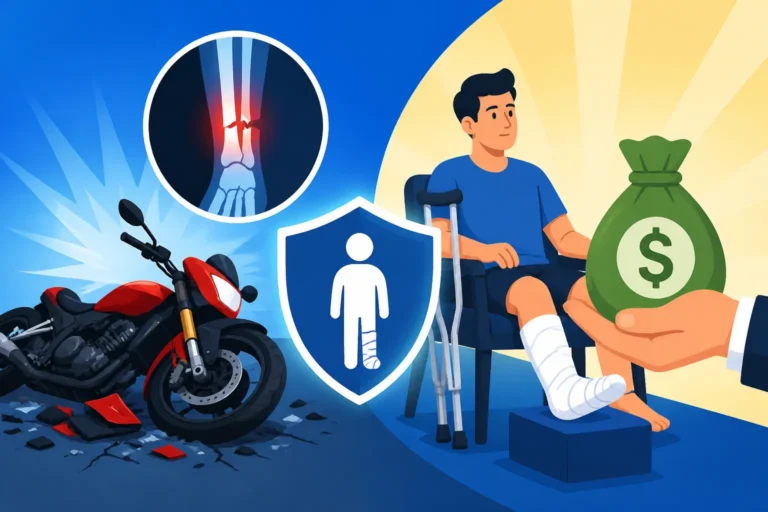
You've just been through one of the most jarring experiences imaginable—a motorcycle accident. You're likely dealing with pain, medical appointments, a wrecked bike, and the sheer frustration of it all. Then, the insurance company calls with their first settlement offer, and often, it feels like a slap in the face. It's confusing, it's disheartening, and it leaves you wondering how they arrived at such a low number. This guide is here to pull back the curtain, demystifying exactly how insurers calculate that initial offer, so you're empowered to understand what you're up against and how to respond.
Understanding the Insurance Company's Initial Goals
It’s crucial to remember that an insurance company, despite its commercials and friendly mascots, is ultimately a business. Their primary objective isn't to be your best friend or to ensure you're made whole after an accident. Their goal is to make a profit, and that profit often comes at the expense of your potential settlement. This fundamental truth drives every action they take, especially when it comes to presenting their first offer.
The Profit Motive and Minimizing Payouts
Think about it: insurance companies collect premiums, and from those premiums, they pay out claims. The less they pay in claims, the more profit they retain. It’s a simple business model, but one that has profound implications for accident victims. Adjusters are trained, often rigorously, to identify ways to minimize the company's liability and the amount paid out. They're not inherently bad people, but they are employees tasked with protecting their employer's financial interests. This means they will scrutinize every detail of your claim, looking for any weaknesses, inconsistencies, or pre-existing conditions they can leverage to reduce your payout. They understand that a quick, low settlement is often the most cost-effective solution for them. This pursuit of profit is the engine behind why their first offer is almost universally on the lower end of your claim's potential value.
The 'Rider Bias' and Assumption of Fault
As motorcyclists, we unfortunately navigate a world where a certain degree of bias often exists against us. There's a persistent stereotype that riders are reckless, speed demons, or simply "asking for it" by being on two wheels. While we know this couldn't be further from the truth for the vast majority of responsible riders, this societal perception can subtly, and sometimes overtly, influence how an insurance company approaches your claim. They might assume, even subconsciously, that you contributed to the accident, regardless of the evidence.
This bias can manifest in their initial assessment of fault, even when the other driver clearly violated traffic laws. For instance, in a common scenario like a Left-Turn Motorcycle Accidents Explained, where a car turns directly into a motorcyclist's path, the driver might claim they "didn't see" the motorcycle, and the insurer might try to use this to imply shared fault, suggesting you weren't visible enough. This inherent "rider bias" can significantly impact their internal valuation of your claim and, consequently, their opening offer, even before all the facts are fully established. It's a frustrating reality, but being aware of it can help you understand why their initial offer might feel unfairly low.
The Data Points Insurers Use to Formulate an Offer
Before an insurance company extends an offer, they undertake a meticulous data-gathering process. They're not just pulling numbers out of thin air; they're constructing their offer based on specific pieces of information they believe dictate the value of your claim. Understanding what they look at can help you predict their tactics and prepare your counter-arguments.
Medical Bills and Treatment Gaps
Your medical records are paramount to an insurance company's assessment. They want to see every doctor's visit, every prescription, every therapy session, and every penny spent on your recovery. They meticulously itemize your current medical bills, tallying up hospital stays, emergency room visits, specialist consultations, and physical therapy costs.
However, they're not just adding numbers. They are looking for patterns and, more importantly, gaps. If you didn't seek medical attention immediately after the accident, or if there were significant delays between your appointments, an adjuster might argue that your injuries aren't as severe as you claim, or worse, that they're not directly related to the accident itself. They might suggest your injuries could have come from another incident or activity during that "gap." They’ll also scrutinize the necessity of certain treatments or question the duration of your recovery. For example, if you had a concussion but waited a week to see a doctor, they might try to downplay the severity of the Motorcycle Accident Traumatic Brain Injuries you sustained. Documenting your injuries thoroughly and consistently, including follow-up care, is absolutely vital.
Property Damage and Motorcycle Value
This is often the most straightforward part of their calculation, but it’s still an area where they try to minimize costs. The insurer will assess the damage to your motorcycle, typically by sending an adjuster to inspect it or reviewing estimates from repair shops. If your bike is repairable, they'll gather repair quotes, often seeking the lowest bid. If it's deemed a total loss, they'll determine its Actual Cash Value (ACV).
ACV is not the replacement cost; it's what they believe your bike was worth just before the accident, factoring in depreciation, mileage, and condition. They often consult resources like Kelley Blue Book or NADA Guides, but they will invariably lean towards the lower end of the valuation range. This can be incredibly frustrating if you've invested heavily in aftermarket parts or custom modifications, as these aren't always fully accounted for in standard valuations. They'll also include any damaged personal property, such as your helmet, leathers, or riding gear, but again, typically at depreciated values.
Lost Wages and Earning Capacity
If your injuries prevent you from working, you're entitled to compensation for lost wages. Insurers will demand verifiable proof, usually in the form of employment verification letters, pay stubs, and tax documents. They'll calculate your past lost income based on your average earnings prior to the accident.
Proving lost wages can be more complex for self-employed individuals or those with fluctuating income, and insurers will often push back aggressively on these claims. Furthermore, if your injuries are severe enough to impact your ability to earn a living in the future—known as "loss of earning capacity"—this becomes a much more complex calculation. Insurers will try to minimize this figure, often requiring expert testimony from vocational specialists or economists to fully quantify. They will always try to limit this to current, easily verifiable losses, overlooking the potential long-term financial impact on your career or business.
Police Reports and Witness Statements
The official police report is one of the first documents an insurance adjuster will review. It provides an objective, third-party account of the accident, including details like the date, time, location, vehicles involved, and initial observations from the responding officer. Crucially, it often contains an officer's preliminary assessment of fault, citations issued, and contact information for witnesses.
Insurers will pay close attention to the narrative and any diagrams. If the police report assigns fault primarily to the other driver, it strengthens your claim. However, if the report contains any language that suggests you contributed to the accident—even if it's vague or later proven incorrect—the insurer will seize upon it to argue for comparative negligence. They also value witness statements, as these can corroborate your version of events or, conversely, introduce conflicting information. Understanding How Police Reports Establish Fault is essential, as even minor inaccuracies in the report can be exploited by the opposing insurance company to diminish your claim.
The Calculation Methods Insurers Employ
You might think there's some magical, universally accepted formula for accident settlements, but in reality, insurance companies employ various methods, often designed to arrive at the lowest possible figure for their initial offer. They're not transparent about these methods, which is why it's so important to understand the typical approaches.
The Multiplier Method and How Insurers Manipulate It
One of the most widely known, yet often misunderstood, methods for valuing personal injury claims, particularly non-economic damages like pain and suffering, is the multiplier method. In its simplest form, this involves adding up all your "economic damages" – things like medical bills, lost wages, and property damage – and then multiplying that total by a number, or "multiplier," typically ranging from 1.5 to 5. The severity and permanence of your injuries, the clarity of fault, and the impact on your daily life are all supposed to influence the chosen multiplier. For instance, a minor fender bender with soft tissue injuries might get a 1.5x multiplier, while a catastrophic injury like a Spinal Cord Injuries from Motorcycle Accidents would warrant a much higher one, perhaps 4x or 5x.
Here's the catch: insurers almost always start by using the lowest possible multiplier in their initial offer. They might take your medical bills and lost wages, apply a 1x or 1.5x multiplier for pain and suffering, and present that as their "fair" offer. They're hoping you don't know the full potential range of multipliers or how to argue for a higher one. Let's say your medical bills totaled $15,000 and lost wages were $5,000, bringing your economic damages to $20,000. An insurer's first offer might use a 1x multiplier for non-economic damages, adding another $20,000, for a total offer of $40,000. This might sound significant, but it completely undervalues the pain, suffering, and disruption to your life. The real art of negotiation often lies in pushing for a higher, more appropriate multiplier that truly reflects your ordeal.
Computer Programs and Algorithm-Based Offers
In today's digital age, many large insurance carriers don't rely solely on human adjusters to crunch numbers for initial offers. Instead, they use sophisticated computer software programs, often proprietary ones, to generate a "value" for your claim. Names like Colossus, ClaimsIQ, and other similar systems are widely known in the industry.
These programs ingest vast amounts of data related to your accident and injuries: your specific medical diagnosis codes, the type and duration of your treatment, the cost of medical care, your lost wages, and even details from the police report. They then run this information through complex algorithms, cross-referencing it with millions of other similar claims from their databases. The output is typically a suggested settlement range or a specific offer amount. The significant issue here is that these algorithms are designed by insurance companies, for insurance companies. They are inherently biased towards minimizing payouts and often struggle to account for the unique, human elements of a motorcycle accident—such as severe trauma, long-term emotional distress, or the sheer invasiveness of certain injuries. For example, a severe case of Motorcycle Road Rash: Claims and Compensation might require extensive treatment and leave permanent scarring, but a computer program might not adequately factor in the profound emotional and psychological impact of such disfigurement, leading to a drastically undervalued first offer.
Accounting for Comparative Negligence
This factor is a game-changer in many motorcycle accident claims and is almost always a key part of an insurer's initial offer calculation. Most states operate under some form of comparative negligence rules, meaning that if you are found to be partially at fault for the accident, your total potential compensation can be reduced by your percentage of fault.
For instance, in states like California, which uses "pure comparative negligence," if your total damages are $100,000 but you're found to be 20% at fault, you can still recover $80,000. However, many states, including Texas and Florida, follow "modified comparative negligence" rules. In these states, if you are found to be 51% or more at fault (or 50% or more, depending on the specific state law), you might be completely barred from recovering any damages.
Insurance adjusters will actively seek out any evidence that can assign even a small percentage of fault to the rider. This could be based on statements, the police report, or even assumptions about rider behavior. Their first offer will often already have this reduction baked in, and they will present it as a fair assessment, trying to convince you that your own actions contributed to the crash. Understanding Comparative Negligence in Motorcycle Accidents is absolutely vital because an insurer's assessment of your fault directly impacts their offer. They might start by claiming you were 30% at fault, reducing their offer significantly, hoping you won't contest it.
Here's a quick look at how various factors play into an insurer's initial calculation:
| Factor | Insurer's Goal | Impact on Initial Offer |
|---|---|---|
| Medical Bills | Minimize perceived severity, find treatment gaps | Lower non-economic damages, argue unrelated injuries |
| Lost Wages | Demand strict proof, dispute long-term impact | Offer only provable past wages, resist future loss |
| Property Damage | Offer Actual Cash Value, not replacement cost | Lowball bike value, question aftermarket parts |
| Police Report | Find any mention of rider contribution to fault | Assign partial fault to rider, reduce overall offer |
| Injury Severity | Downplay long-term effects, argue faster recovery | Use lower multipliers, disregard future care needs |
| Comparative Negligence | Attribute highest possible percentage of fault to rider | Drastically reduce settlement, or deny if above state threshold |
| Pain and Suffering | Undervalue emotional distress, daily impact | Apply lowest multiplier to economic damages |
| Credibility of Rider | Identify inconsistencies, perceived recklessness | Reduce trust in claims, argue inflated damages |
Why the First Offer is Often a Lowball
It's a universal truth in personal injury claims: the first offer from an insurance company is almost never their best offer, and it's certainly rarely a fair offer. This isn't out of malice, but rather a calculated strategy rooted in human psychology and business practices. Understanding why they do this can equip you with the knowledge not to fall into their trap.
Testing Your Resolve and Knowledge
Insurance companies are masters of psychological negotiation. They know that after a traumatic event like a motorcycle accident, people are often vulnerable, stressed, and perhaps even desperate for a quick resolution to their financial burdens. By presenting a low initial offer, they are essentially testing your resolve. They want to see if you're knowledgeable about your rights, about the true value of your claim, and if you're willing to fight for fair compensation.
If you accept their first offer without question, it signals to them that they've won the negotiation before it even truly began. They assume you either don't know any better or are too eager to settle. This strategy allows them to close claims quickly and cheaply. They are betting that you don't know How Motorcycle Accident Settlements Are Calculated or How Insurers Lowball Motorcycle Riders, making you more susceptible to accepting a figure far below what you deserve. They're essentially fishing to see if they can get away with paying the bare minimum.
The Power of Early Acceptance
There's immense power for an insurance company in getting you to accept an offer early in the process. The longer a claim remains open, the more resources the insurer expends, and the more potential for new information to emerge that could increase their liability. Your injuries might worsen, new medical complications could arise, or further evidence of the other driver's negligence could surface. By offering a settlement quickly, they aim to cut off these possibilities.
An early settlement typically requires you to sign a release, which legally prevents you from seeking any further compensation for that accident, even if your injuries turn out to be more severe or long-lasting than initially thought. They want to close the file, plain and simple. This is why it's almost universally advised to never accept the first offer, especially not without fully understanding the extent of your injuries and consulting with someone who understands the true value of your claim. Rushing into an agreement could leave you with insufficient funds to cover future medical expenses or lost income, essentially trading a quick payout for potentially crippling long-term costs. It's often better to take your time, gather all necessary information, and understand How to Maximize Your Motorcycle Accident Settlement before making any decisions. This is also why many riders choose to understand What to Do After a Motorcycle Accident carefully and follow through with every step.
Ultimately, understanding how insurers calculate their first offer isn't about distrusting every person you speak with at the insurance company. It's about being informed and realistic about the inherent conflict of interest. Your financial recovery is their financial expenditure. Knowing their tactics is the first step in ensuring you don't leave money on the table. The negotiation process can be complex, and often, having someone experienced in How to Negotiate a Motorcycle Accident Settlement by your side can make all the difference.
Disclaimer
Please remember that this article provides general information and should not be considered legal advice. Motorcycle accident claims are complex and highly dependent on the specific facts of your case and the laws of your state. It is always recommended to consult with a qualified legal professional to discuss your individual situation and rights.