Road Rash Degrees Explained
Riding a motorcycle offers unparalleled freedom, but it also comes with unique risks, and one of the most common, painful, and often misunderstood injuries is road rash. Many people dismiss it as just a "scrape," but for those of us who have experienced it, or seen its devastating effects, we know it's far more severe. This guide is here to meticulously break down the different degrees of road rash, helping you understand the gravity of these injuries and what to expect during recovery and in your motorcycle accident claim.
Understanding Road Rash Beyond a Scrape
When you picture a minor accident, you might think of a few bumps and bruises. But on a motorcycle, even a low-speed slide can result in what's clinically known as "traumatic abrasion," or more commonly, road rash. It's not just skin deep, and it’s certainly not something you can just put a band-aid on and forget about. The sheer force of friction between your body and the asphalt, gravel, or even concrete can strip away layers of skin, muscle, and even bone.
What is Road Rash?
At its core, road rash is a severe abrasion caused by your skin sliding across a rough surface, typically after being ejected from your motorcycle. Think of it like a massive, aggressive exfoliation, but instead of leaving your skin smooth, it leaves it raw, exposed, and highly susceptible to infection. The severity of road rash depends on several factors: the speed of impact, the type of surface you slid on, how long you were sliding, and critically, what protective gear you were wearing. If you've ever had a really bad scrape on your knee from falling as a kid, amplify that by a hundred, add in possible debris embedded in the wound, and you're getting closer to the reality of road rash.
It's a common injury, sadly, in many motorcycle incidents, from Lane Splitting and Motorcycle Accident Liability scenarios to simple low-side slides. What truly differentiates it from other abrasions is the scale and potential depth of the injury across a wide surface area of the body. You're not just dealing with a small cut; you're often looking at large patches of skin that are severely damaged or completely gone.
Why it's More Serious for Motorcyclists
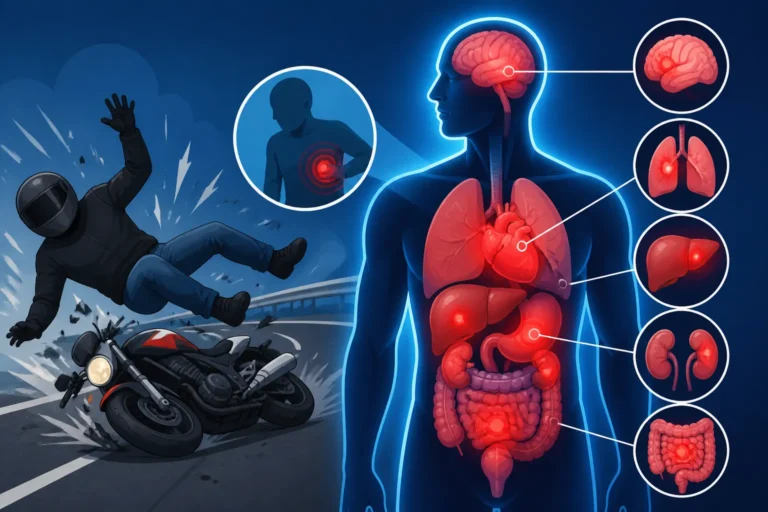
Motorcyclists are inherently more vulnerable in a crash compared to occupants of a car or truck. There's no steel cage, no airbags, and nothing to absorb the initial impact or subsequent slide. This means that when a rider comes off their bike, their body becomes the primary point of contact with the road. The friction, heat, and tearing involved can be immense. While car accidents might result in whiplash or broken bones, motorcycle accidents frequently lead to catastrophic injuries like traumatic brain injuries, spinal cord injuries, and, you guessed it, severe road rash.
The fact that riders are directly exposed to the road surface makes them uniquely susceptible to this type of injury. Imagine sliding at 40 miles per hour on concrete – the force of that friction can instantly burn through clothing and skin, often embedding tiny particles of asphalt, dirt, or even parts of your gear into the wound. This embedded debris, known as "traumatic tattooing," can cause permanent discoloration and increase the risk of serious infection. Proper motorcycle gear, like heavy leather jackets, Kevlar jeans, and reinforced boots, is designed specifically to mitigate this, sacrificing itself to protect the rider's skin. Without it, the risk of debilitating road rash drastically increases.
The Different Degrees of Road Rash Severity
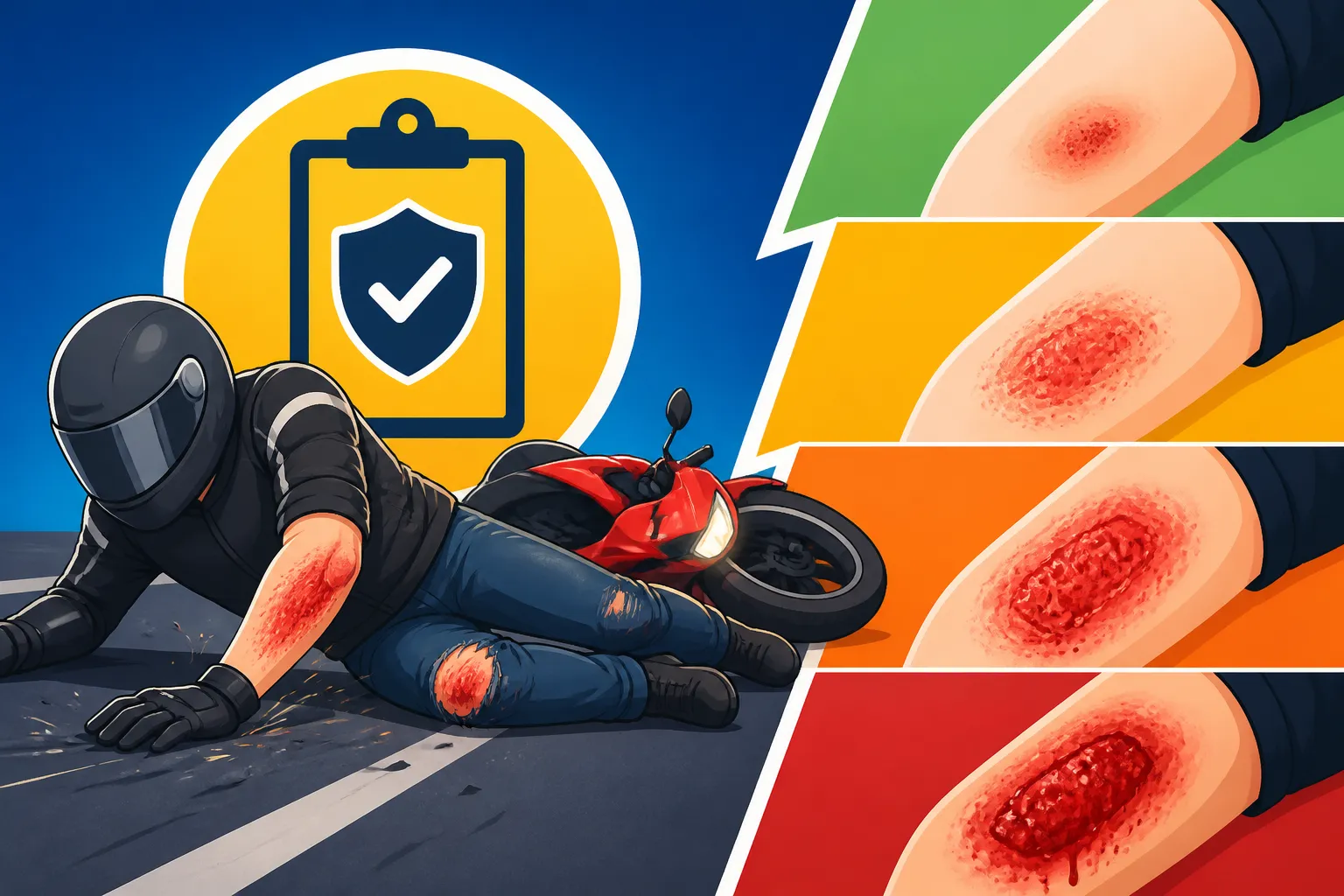
Just like burns, road rash is classified into degrees based on how deep the skin layers are affected. Understanding these degrees is crucial for immediate medical treatment, long-term recovery prognosis, and, importantly, for accurately assessing the value of your Motorcycle Road Rash: Claims and Compensation. Each degree carries its own set of challenges, pain levels, and potential for lasting damage.
First-Degree Road Rash
First-degree road rash is the least severe, affecting only the outermost layer of skin, the epidermis. Think of it like a bad rug burn or a very shallow scrape.
- Appearance and Symptoms: The skin will typically be red, tender, and may have some minor swelling. There might be light bleeding (weeping) from the exposed capillaries, but usually, it's just superficial redness. It can feel like a stinging sunburn.
- Healing Process: This degree of road rash usually heals relatively quickly, often within a week or two, much like a normal scrape. The skin might peel as new layers regenerate underneath.
- Long-Term Impact: Generally, first-degree road rash leaves no permanent scarring or discoloration, though the skin might be sensitive for a while. The main concern is keeping the wound clean to prevent infection.
While it might seem minor, don't underestimate the pain. Even superficial abrasions can be incredibly uncomfortable, especially over large areas. It's always wise to get it checked out by a medical professional, even if it appears mild, to ensure there's no embedded debris or underlying issues.
Second-Degree Road Rash
Second-degree road rash extends deeper than the epidermis, reaching into the dermis, the second layer of skin. This is where things start to get significantly more serious and painful.
- Appearance and Symptoms: The wound will be visibly raw, red, and swollen. You'll likely see blistering, similar to a second-degree burn, as the deeper layers are damaged. There will be considerable weeping of fluid (plasma) from the wound. The pain is often intense, as nerve endings in the dermis are exposed and irritated. Embedded gravel, dirt, or debris is a much higher risk here.
- Healing Process: Healing takes much longer for second-degree road rash, typically several weeks to a month or more, depending on the size and depth. It requires meticulous wound care, including regular cleaning, debridement (removal of dead tissue), and dressing changes to prevent infection and promote healing.
- Long-Term Impact: This degree often results in scarring. The new skin may be discolored, uneven, or have a different texture than the surrounding skin. If debris is left in the wound, it can lead to permanent "traumatic tattooing" – dark spots that look like dirt under the skin. Surgical cleaning or even skin grafting might be necessary if the wound is deep or large enough.
Many riders, despite wearing some gear, still suffer second-degree road rash on exposed areas like forearms or hips. The pain is excruciating, making even simple movements difficult, and it can seriously impact your daily life and ability to work.
Third-Degree Road Rash
Third-degree road rash is a severe injury that goes through all layers of the skin – epidermis, dermis, and into the subcutaneous tissue (fat) and potentially muscle. This is a medical emergency and requires immediate, specialized treatment.
- Appearance and Symptoms: The wound will look deep, raw, and often appears discolored, perhaps yellowish or whitish, due to exposed fat tissue. Paradoxically, the pain might be less intense in some areas compared to second-degree road rash because nerve endings have been completely destroyed. However, the surrounding areas will be incredibly painful. There will be significant fluid loss and a very high risk of infection. The wound may have a leathery or waxy appearance.
- Healing Process: Third-degree road rash cannot heal on its own effectively. It almost always requires surgical intervention, specifically skin grafting. Healthy skin from another part of your body (a donor site) is harvested and transplanted onto the wound to promote healing and provide a protective barrier. The recovery process is extensive, involving multiple surgeries, lengthy hospital stays, and potentially months of physical therapy.
- Long-Term Impact: Extensive and often disfiguring scarring is inevitable with third-degree road rash. The grafted skin may have a different color and texture, and there can be a loss of sensation, limited range of motion, and chronic pain. The psychological impact can also be profound, dealing with altered appearance and persistent discomfort.
These types of injuries often occur in high-speed crashes or when a rider is not wearing adequate protective gear. It's a stark reminder of why Motorcycle Safety Gear and Legal Protection is so vital.
Fourth-Degree Road Rash and Its Implications
While not always officially classified as a separate "degree" in some medical contexts, many acknowledge "fourth-degree road rash" to describe injuries so severe they extend beyond the skin and subcutaneous tissue, exposing muscle, tendons, ligaments, and even bone. This is the most catastrophic form of road rash.
- Appearance and Symptoms: At this level, the damage is truly profound. You'll see exposed muscle tissue, tendons, ligaments, or even bone. The area might be blackened or charred due to the extreme friction and heat generated during the slide. Pain sensation may be completely absent in the directly affected area due to total nerve destruction, but the surrounding tissue will be agonizing. There's an immediate threat of massive infection, sepsis, and significant blood loss.
- Healing Process: Healing is incredibly complex and prolonged. It will involve extensive reconstructive surgery, often multiple skin grafts, muscle flaps, and potentially bone grafting. Amputation may be necessary in extreme cases where the limb is too severely damaged to salvage. The recovery could span years, with intensive physical therapy to regain any lost function.
- Long-Term Impact: The long-term consequences are life-altering. Permanent disfigurement, chronic pain, severe functional impairment, and potential loss of limbs are common. The psychological trauma can be immense, requiring extensive counseling and support. This level of injury can lead to permanent disability and a drastically reduced quality of life.
Such severe injuries highlight the importance of Why You Should Seek Immediate Treatment after any motorcycle accident, no matter how you initially feel.
To help visualize the distinctions, here's a breakdown of the road rash degrees:
| Feature | First-Degree Road Rash | Second-Degree Road Rash | Third-Degree Road Rash | Fourth-Degree Road Rash |
|---|---|---|---|---|
| Skin Layers | Epidermis | Epidermis, Dermis | Epidermis, Dermis, Subcutaneous Fat | All layers, Muscle, Tendons, Bone |
| Appearance | Redness, minor swelling | Raw, red, blistering, weeping fluid | Deep, raw, yellow/white fat visible | Exposed muscle, bone, charred tissue |
| Pain Level | Mild to moderate | Intense | Less in center (nerve damage), severe in surrounding | Absent in center (total nerve destruction), severe in surrounding |
| Healing Time | 1-2 weeks | Several weeks to 1 month | Months to years (with surgery) | Years (extensive surgeries) |
| Scarring | Usually none | Likely, discoloration, texture change | Significant, disfiguring, contractures | Severe, permanent disfigurement, functional loss |
| Treatment | Cleaning, bandages | Cleaning, debridement, dressings, possible grafting | Skin grafts, reconstructive surgery | Extensive reconstructive surgery, amputation possible |
| Complications | Infection | Infection, traumatic tattooing | Infection, scarring, nerve damage, limited mobility | Sepsis, massive infection, amputation, permanent disability |
Treatment and Long-Term Consequences of Road Rash
Dealing with road rash is far more than just cleaning a wound; it's a journey that often involves intensive medical care, significant pain management, and a profound impact on a person's life. The choices made immediately after an accident and during the treatment phase are crucial for both recovery and any potential legal claim.
Immediate Medical Attention and Ongoing Care
After a motorcycle accident, the absolute first step is to seek medical attention, even if your road rash seems minor. Road rash is an open wound, and any open wound is an invitation for infection. Emergency room doctors or urgent care providers will thoroughly clean the wound, which can be an incredibly painful process known as debridement, to remove any embedded dirt, gravel, glass, or clothing fibers. This initial cleaning is critical because leaving foreign material in the wound can lead to severe infection and permanent tattooing. You don't want asphalt permanently etched into your skin.
Depending on the degree of the road rash, the medical team might apply specialized dressings, perform skin grafts, or administer antibiotics and pain medication. For deeper injuries, particularly third and fourth-degree road rash, multiple surgeries may be required. These could include serial debridement (repeated removal of dead tissue) and various types of skin grafting, where healthy skin from another part of your body is used to cover the damaged area. The recovery is a long haul, often involving specialized burn centers, physical therapy, and psychological counseling to cope with the trauma and changes in body image. This extensive care underscores why documenting your injuries for a claim is so vital.
Potential Complications and Scarring
The complications from road rash can be extensive and long-lasting, extending far beyond the initial pain. Infection is a primary concern, potentially leading to sepsis if not managed promptly. Tetanus shots are often administered due to the nature of road debris. Beyond immediate infection, chronic pain is a common issue, as nerve damage can result in persistent discomfort, numbness, or hypersensitivity.
Scarring is almost a given with second, third, and fourth-degree road rash. These scars can range from discolored patches to thick, raised keloid scars or contractures, which can restrict movement, especially if they occur over joints like the elbow or knee. For instance, severe road rash on the hands can significantly limit fine motor skills. Traumatic tattooing, where debris remains embedded under the skin, can cause permanent discoloration that may require laser treatment or dermabrasion to improve, though often never fully disappears. The psychological impact of disfigurement, especially on visible areas, should not be underestimated. Many victims suffer from body image issues, anxiety, and depression following such injuries, requiring long-term mental health support. All these factors contribute to the "pain and suffering" component of a Motorcycle Accident Settlement.
Documenting Road Rash for Your Motorcycle Accident Claim
After the immediate medical needs are addressed, shifting your focus to documenting your injuries is paramount for any potential Motorcycle Accident Claim. Without clear, comprehensive evidence, proving the extent of your suffering and associated costs becomes incredibly challenging, potentially impacting the compensation you receive.
Why Documentation is Crucial
In the aftermath of an accident, especially one involving significant road rash, your priority will be recovery. However, the insurance company's priority will be minimizing their payout. They will scrutinize every detail, and without solid proof, they might try to downplay the severity of your injuries or suggest they weren't directly caused by the accident. Detailed documentation provides an undeniable record of your injuries, treatment, and recovery journey. It helps establish a direct link between the accident and your suffering, which is essential when determining How Motorcycle Accident Settlements Are Calculated.
This documentation isn't just about showing the initial raw wound; it's about tracking the entire process. This includes the pain, the limitations it imposes on your daily life, the emotional toll, and the financial burden. Without thorough records, you leave room for the insurance company to argue that your injuries were not as severe as claimed or that you failed to mitigate your damages. This is especially true if you face arguments about shared fault, where Comparative Negligence in Motorcycle Accidents might come into play, reducing your overall payout based on your perceived contribution to the accident or injury.
The Role of Medical Records and Photos
When building a strong case for your road rash injuries, two types of evidence stand out: comprehensive medical records and high-quality photographs.
- Medical Records: Every single visit to a doctor, emergency room, specialist, physical therapist, or burn center needs to be meticulously recorded. This includes initial diagnostic reports, doctors' notes, prescription details, referrals for specialists, and billing statements. These records serve as an objective timeline of your injuries, diagnosis, treatment, and prognosis. They detail the degree of your road rash, any surgeries performed (like debridement or skin grafts), the pain levels reported, and the ongoing challenges you face. Gaps in medical treatment can be used by insurance companies to suggest your injuries weren't serious, so consistent care and documentation are crucial. Make sure your doctors are aware you were in a motorcycle accident and clearly link your symptoms and treatment to the incident.
- Photographs: "A picture is worth a thousand words" couldn't be truer for road rash. High-resolution photographs taken immediately after the accident, during the initial medical treatment, and throughout the healing process are invaluable.
- Initial Photos: These should capture the raw, open wounds before any extensive cleaning or dressing. Show the full extent and depth of the road rash.
- During Treatment: Photos illustrating the debridement process, the wounds being dressed, any infections, and the progression of healing.
- Long-Term Photos: Document the scarring, discoloration, and any remaining disfigurement months or even years after the accident. Show how the scars affect your appearance and potentially your movement.
- Contextual Photos: If possible, photos of torn gear (like a jacket or pants) can visually demonstrate the force of the slide and how your gear failed to prevent all injury, reinforcing the severity.
These visual and textual pieces of evidence combine to form a compelling narrative of your suffering and losses. They help insurance adjusters and, if necessary, a jury, truly grasp the impact of what might otherwise be superficially described as "scrapes." Your dedicated attention to documenting these injuries can significantly strengthen your motorcycle accident claim and ensure you receive fair compensation for your pain, medical bills, lost wages, and long-term consequences.
Disclaimer
Please remember that this article provides general information and should not be considered legal or medical advice. Every motorcycle accident claim is unique, and the information presented here may not apply to your specific situation. If you or a loved one has been involved in a motorcycle accident, it is highly recommended to consult with a qualified medical professional for your injuries and a legal professional for advice regarding your specific claim.