Paraplegia vs Quadriplegia Compensation
When you or a loved one experiences a devastating motorcycle accident, the physical and emotional trauma is immense. But when that crash results in a life-altering spinal cord injury like paraplegia or quadriplegia, the financial future can feel just as broken as the body. Understanding the vast differences in compensation for these catastrophic injuries is crucial for securing the resources needed for a lifetime of care and adjustment. This guide will walk you through the nuances of seeking compensation for both paraplegia and quadriplegia after a motorcycle accident, offering a realistic look at what to expect and how to prepare.
Understanding Spinal Cord Injuries in Motorcycle Accidents
Motorcycle accidents are notoriously dangerous, often leading to severe injuries due to the lack of protection for riders. Among the most catastrophic outcomes are spinal cord injuries (SCIs), which can permanently alter a person's life, stripping away mobility, independence, and the ability to perform basic daily functions. These aren't just minor bumps or bruises; they are profound neurological traumas that disrupt the communication between the brain and the rest of the body. The sheer force of impact, often involving ejection from the bike or direct trauma to the spine, makes riders particularly vulnerable to these devastating injuries.
The Anatomy of Spinal Cord Trauma
The spinal cord is a delicate bundle of nerves that runs from the brainstem down the center of the back, protected by the vertebrae. It's the central pathway for all sensory and motor information, controlling everything from walking and breathing to feeling touch and temperature. When this cord is damaged, that communication is interrupted. The level and completeness of the injury determine the extent of disability. A higher injury on the spinal cord typically results in more widespread paralysis. For instance, an injury to the cervical (neck) region will impact more of the body than an injury to the thoracic (chest) or lumbar (lower back) region. The immediate aftermath of an accident, including swelling and internal bleeding, can further complicate the initial diagnosis and the long-term prognosis.
The Immediate and Long-Term Impact on Life
The moment a spinal cord injury occurs, life changes irrevocably. For someone with a severe injury, the initial medical care is intense, involving emergency stabilization, surgery, and a prolonged stay in intensive care. This is followed by months, or even years, of inpatient and outpatient rehabilitation. Beyond the physical loss, there's the emotional and psychological toll – grappling with a new reality, loss of identity, and profound grief. For family members, the impact is equally dramatic, as they often become primary caregivers, navigating a complex medical system and facing immense financial strain. We're talking about not just the cost of initial surgeries, but ongoing physical therapy, occupational therapy, specialized equipment like wheelchairs and accessible vehicles, home modifications, personal care attendants, and a host of other expenses that will accrue over decades. These Long-Term Effects of Motorcycle Injuries demand careful consideration when calculating compensation.
Defining Paraplegia and Quadriplegia in the Context of a Claim
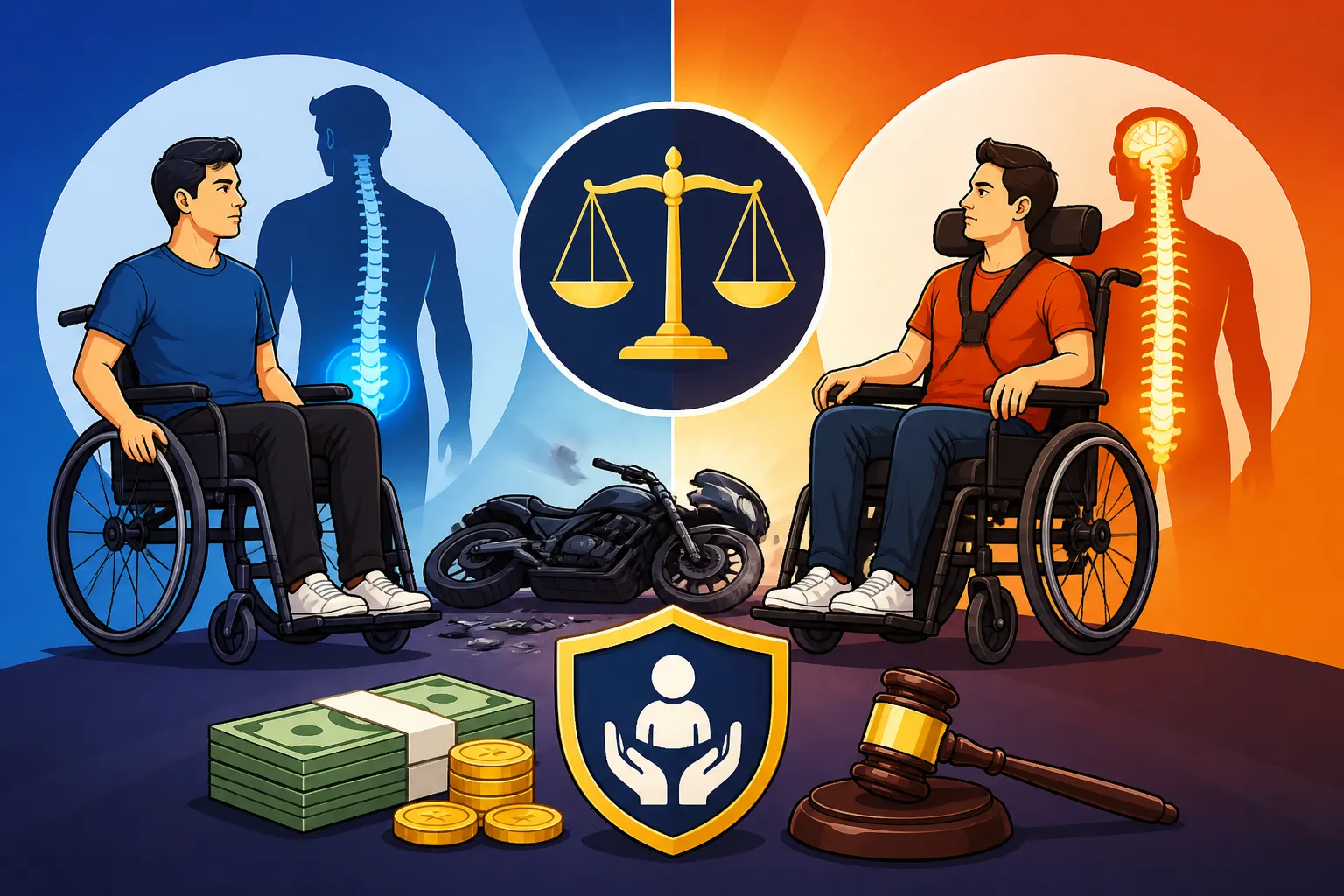
When it comes to motorcycle accident claims involving spinal cord injuries, the terms "paraplegia" and "quadriplegia" are critical. While both describe paralysis, the distinction lies in the extent of the body affected, which, in turn, has a massive impact on the scope of necessary care and, consequently, the value of a compensation claim.
Paraplegia: Loss of Function in the Lower Body
Paraplegia refers to paralysis that primarily affects the lower half of the body, including both legs and, often, parts of the trunk and pelvic organs. This condition typically results from injuries to the thoracic, lumbar, or sacral regions of the spinal cord. A person with paraplegia may retain full or partial use of their arms and hands, depending on the exact level of injury. For example, a rider who suffers a T-12 spinal cord injury in a rear-end collision might be able to use their arms effectively for propulsion in a wheelchair but would have no movement or sensation below the waist.
From a compensation standpoint, claims for paraplegia will cover extensive medical treatment, rehabilitation, adaptive equipment, and home modifications to ensure accessibility. While mobility is severely restricted, the individual may still have the ability to perform some upper-body tasks and potentially return to certain types of employment, albeit with significant accommodations. The damages sought in a claim would reflect the costs associated with adapting to this new reality, including mobility aids, personal care assistance for certain tasks, and potential loss of earning capacity.
Quadriplegia (Tetraplegia): Extensive Loss of Function
Quadriplegia, often referred to as tetraplegia, is far more extensive. This condition involves paralysis and loss of sensation in all four limbs (arms and legs) and typically the torso. It results from a more severe injury to the cervical (neck) region of the spinal cord, usually from the C1 to C8 vertebrae. A person with quadriplegia might have very limited or no use of their arms, hands, and legs, and often requires assistance with virtually all activities of daily living, such as eating, dressing, bathing, and even breathing, depending on the exact level of injury. For example, a high cervical injury, like a C3 or C4 fracture, could necessitate a ventilator for breathing and around-the-clock personal care.
The compensation for quadriplegia claims is generally substantially higher than for paraplegia due to the overwhelming scope of care required. These claims must account for lifelong intensive medical care, round-the-clock nursing or personal care assistance, highly specialized adaptive equipment (like sip-and-puff wheelchairs or voice-activated environmental controls), extensive home and vehicle modifications, and a complete loss of earning capacity in most cases. The Average Settlement for a TBI or spinal injury will always be higher due to the sheer cost of future care. The profound dependency on others and the drastic reduction in quality of life necessitate a much larger financial award to ensure dignity and proper care.
Factors Influencing Compensation for Paraplegia and Quadriplegia
The compensation amount for a spinal cord injury like paraplegia or quadriplegia after a motorcycle accident isn't a fixed number; it's a complex calculation influenced by numerous variables. Each element of damages must be meticulously documented and projected, often for the victim's entire lifespan. This is why understanding How Motorcycle Accident Settlements Are Calculated is so important.
Medical Expenses: Present and Future Care
This category forms the backbone of any severe injury claim. For spinal cord injuries, medical expenses are astronomical and ongoing.
- Emergency & Acute Care: This includes ambulance services, emergency room visits, surgeries to stabilize the spine, intensive care unit stays, and initial hospitalizations. A traumatic injury could involve multiple complex operations, specialized medications, and diagnostic imaging.
- Rehabilitation: Post-acute care often involves months of inpatient rehabilitation at facilities like Shepherd Center in Atlanta or Craig Hospital in Englewood, Colorado, followed by years of outpatient physical, occupational, and speech therapy. The goal is to maximize remaining function and teach adaptive techniques.
- Ongoing Medical Needs: Beyond rehab, spinal cord injury victims face lifelong medical challenges, including managing bladder and bowel dysfunction, preventing pressure sores, treating respiratory complications, and regular check-ups with neurologists, urologists, and other specialists. These costs never truly end.
- Adaptive Equipment: Wheelchairs (manual and powered), specialized beds, lifts, shower chairs, commodes, and home automation systems are essential. These items often need replacement every few years and can cost tens of thousands of dollars each.
Consider a rider who suffers a C5 complete spinal cord injury, resulting in quadriplegia. Their medical journey might begin with a medevac helicopter ride, several spinal fusion surgeries, a month in the ICU, followed by six months at a specialized rehab hospital, all before they even return home. This initial phase alone can easily exceed a million dollars. Their projected future medical needs, including bladder management supplies, physical therapy, and durable medical equipment, could easily add millions more over their lifetime.
Lost Wages and Loss of Earning Capacity
A catastrophic injury almost invariably means a significant, if not complete, loss of income.
- Past Lost Wages: This accounts for all earnings lost from the date of the accident until the settlement or trial date. This includes salary, bonuses, commissions, and benefits.
- Future Lost Earning Capacity: This is often the largest component for quadriplegia. It calculates the income the injured rider would have reasonably expected to earn over their lifetime had the accident not occurred. This projection considers their age, education, career path, and potential for advancement. For a young professional, this figure can easily run into millions of dollars. For someone with quadriplegia, the ability to return to any form of gainful employment is severely limited, if not impossible, making this a critical area of compensation. Even for paraplegia, while some might return to work, it often requires extensive retraining, job modifications, and may involve a lower income due to disability. This is part of Economic vs Non-Economic Damages Explained.
Pain and Suffering and Loss of Enjoyment of Life
These are non-economic damages, more subjective but equally critical.
- Pain and Suffering: This compensates for the physical pain endured from the injury, surgeries, and ongoing treatments, as well as the emotional anguish, depression, anxiety, and psychological trauma that accompany such a life-altering event.
- Loss of Enjoyment of Life: This accounts for the inability to participate in hobbies, recreational activities, social events, and daily pleasures that were once part of the victim's life. A motorcycle enthusiast might no longer be able to ride, hike, or even play with their children in the same way. The profound loss of independence, privacy, and personal dignity due to reliance on others for basic needs is also factored in.
For instance, a quadriplegic individual might not only experience constant neuropathic pain but also profound emotional distress from being unable to hug their children or walk their dog. This non-economic suffering is immense and difficult to quantify but essential for a just settlement.
Other Damages
A truly comprehensive claim will also include:
- Home Modifications: Making a home wheelchair-accessible, adding ramps, widening doorways, installing roll-in showers, and adjusting kitchen counters can cost hundreds of thousands of dollars.
- Vehicle Modifications: Purchasing or modifying a vehicle to accommodate a wheelchair and adaptive controls is another substantial expense.
- Personal Care Assistance: For quadriplegia, 24/7 personal care is often required, a cost that can easily exceed $150,000 per year for decades. Even for paraplegia, significant assistance might be needed for certain tasks.
- Assistive Technology: Voice-activated controls, communication devices, and other tech to enhance independence.
- Vocational Rehabilitation: For paraplegia, sometimes vocational rehab can help find alternative employment.
- Property Damage: The cost to repair or replace the motorcycle and any damaged gear.
All these factors contribute to the overall What Affects Your Motorcycle Accident Payout and the final settlement figure.
| Damage Category | Description | Impact on Paraplegia Compensation | Impact on Quadriplegia Compensation |
|---|---|---|---|
| Medical Expenses | Emergency care, surgeries, intensive care, inpatient/outpatient rehabilitation, ongoing specialist visits, medications, prevention of secondary complications (e.g., pressure sores, UTIs). | Substantial; includes long-term PT/OT, equipment, but lower reliance on continuous high-level medical support compared to quadriplegia. | Extremely high; often requires lifelong respiratory care, extensive neuro-rehab, continuous management of complex secondary conditions, and significant nursing care. |
| Adaptive Equipment | Wheelchairs (manual/powered), lifts, specialized beds, shower chairs, commodes, home automation systems. | Significant; specialized wheelchairs, vehicle modifications, basic home accessibility modifications. | Extremely significant; often requires high-tech power wheelchairs, sophisticated environmental controls, extensive and complex home/vehicle modifications, and communication aids. |
| Lost Wages | Income lost from the date of the accident until settlement or trial. Includes salary, bonuses, benefits. | High; depending on the job, some individuals may retrain and return to work, but significant short-term and potential long-term losses are common. | Usually total; full loss of past and future earning capacity in most cases, leading to substantial claims for projected lifetime earnings. |
| Loss of Earning Capacity | Future income the injured individual would have earned over their lifetime. | High; often involves a reduction in earning potential or complete career change, but not always a total loss. | Very high; typically a complete and permanent loss of earning capacity. |
| Pain and Suffering | Physical pain, emotional distress, psychological trauma, grief, anxiety, depression. | Very high; significant physical pain from injury, surgeries, and ongoing discomfort, along with severe emotional distress. | Extremely high; constant physical discomfort, neuropathic pain, profound emotional and psychological suffering due to complete dependency and loss of bodily control. |
| Loss of Enjoyment of Life | Inability to engage in hobbies, recreational activities, social interactions, and daily activities. | Very high; severe limitations on physical activities, hobbies, and independent living. | Extremely high; complete inability to participate in most previous activities, severe restrictions on independence, social life, and personal pursuits. |
| Personal Care Assistance | Help with daily living activities (dressing, bathing, eating, toileting). | Moderate to High; often requires assistance for certain tasks, particularly with transfers and mobility, but not necessarily 24/7 care for all needs. | Extremely high; almost always requires 24/7 skilled nursing or personal care assistance for all activities of daily living, leading to multi-million dollar lifetime costs. |
| Home Modifications | Ramps, wider doorways, accessible bathrooms, specialized kitchens. | High; essential for independent living, but less extensive than for quadriplegia. | Very high; often requires highly customized and extensive modifications for total accessibility and comfort, sometimes including smart home technology. |
Navigating the Complexities of a Spinal Cord Injury Claim
Dealing with the aftermath of a motorcycle accident that causes paraplegia or quadriplegia is incredibly daunting. The legal process can feel overwhelming when your primary focus is survival and recovery. However, understanding the steps and challenges involved is key to securing a fair settlement that covers lifelong needs. This is a journey where you'll need significant support, and knowing What to Do After a Motorcycle Accident is just the first step.
Proving Fault and Negligence
Even with such severe injuries, proving that another party was at fault is paramount. In a motorcycle accident, drivers often claim they "didn't see" the motorcycle, or insurance companies try to assign partial blame to the rider. Evidence collection is crucial: police reports, witness statements, accident reconstruction expert analysis, traffic camera footage, and even cell phone records of the other driver can all play a role. For example, if a distracted driver made an illegal left turn in front of you, causing a collision that led to your spinal injury, gathering evidence of their negligence is non-negotiable. Cases involving Motorcycle Accidents Caused by Left-Turn Collisions are notoriously complex.
Insurance companies, like State Farm or Geico, will aggressively defend their policyholders and try to minimize payouts. They might argue that your injuries weren't as severe as claimed or that your pre-existing conditions contributed to the outcome. This is where an experienced legal team becomes indispensable. They know how to gather comprehensive evidence, challenge biased assessments, and establish clear liability, often relying on expert testimony to present a compelling case.
Maximizing Your Settlement Through Expert Testimony
For catastrophic injuries like paraplegia and quadriplegia, expert testimony isn't just helpful; it's essential.
- Medical Experts: Neurologists, orthopedic surgeons, rehabilitation specialists, and life care planners are crucial. A life care planner will meticulously detail all future medical needs, therapies, equipment, and personal care for the victim's entire projected lifespan, providing a concrete financial figure for what that care will cost. This document alone can be hundreds of pages long and is pivotal in calculating the true value of future medical costs.
- Vocational Experts: These professionals assess the victim's lost earning capacity. They analyze their pre-accident career trajectory, education, skills, and the impact of their injury on their ability to work, projecting lost income and benefits for decades to come.
- Economists: An economist takes the figures from the life care plan and vocational assessment, adjusting them for inflation, future earnings, and present-day value, to arrive at a comprehensive monetary demand.
- Accident Reconstructionists: These experts can recreate the accident scene, analyze vehicle damage, and use physics to determine how the collision occurred and who was at fault, strengthening your liability argument.
Without these experts, it's virtually impossible to fully quantify the long-term financial impact of such a profound injury. An attorney who specializes in motorcycle accidents will have a network of trusted experts to call upon.
The Role of a Specialized Motorcycle Accident Attorney
Given the severity and complexity of paraplegia and quadriplegia claims, trying to navigate the legal landscape alone is almost unthinkable. Do You Need a Motorcycle Accident Lawyer? The answer is a resounding yes. These cases involve enormous sums of money and sophisticated legal and medical arguments.
A specialized motorcycle accident attorney understands the unique biases against riders and knows how to effectively counter them. They have experience with complex medical evidence, can retain the necessary experts, and are adept at negotiating with aggressive insurance companies. They can also explain How Insurance Companies Assign Blame to Riders and how to fight against unfair allegations. Furthermore, they understand the various Types of Damages in a Motorcycle Accident Claim and how to pursue maximum compensation for each. They're not just lawyers; they are advocates who fight to ensure you receive the financial resources necessary to live as full a life as possible after such a devastating event. Their expertise can truly make the difference between a paltry settlement and one that truly provides for your future.
Disclaimer
Please remember that this article provides general information and insights into motorcycle accident claims and compensation. It is not intended as legal advice. Every accident and injury case is unique, and the information presented here may not apply to your specific situation. For personalized advice and to understand your legal rights and options, it is always recommended to consult with a qualified motorcycle accident attorney in your jurisdiction.