How Pain And Suffering Are Calculated in a Motorcycle Claim
Riding a motorcycle offers a unique sense of freedom, but it also comes with inherent risks, and when an accident happens, the physical and emotional toll can be devastating. Beyond the obvious medical bills and lost wages, victims often face immense pain, suffering, and a diminished quality of life. Understanding how these non-economic damages, often called "pain and suffering," are calculated in a motorcycle accident claim is crucial for ensuring you receive fair compensation and can begin to rebuild your life. This guide will walk you through the complexities of these calculations.
Understanding Non-Economic Damages in Motorcycle Claims
When you're involved in a motorcycle accident, the damages you seek compensation for fall into two main categories: economic and non-economic. Economic damages are quantifiable losses, like your medical bills, lost wages, and property damage to your beloved bike. But then there are the less tangible, yet equally impactful, losses that fall under non-economic damages – and these are often the most challenging to calculate.
What Exactly Is "Pain and Suffering"?
"Pain and suffering" is a broad legal term that encompasses the physical discomfort, emotional distress, and reduced quality of life experienced as a result of an injury. It's not just about the literal pain from a broken bone or road rash; it's about the entire cascade of negative effects that ripple through your life after a traumatic event. This can include:
- Physical Pain: Chronic pain, acute pain, nerve damage, discomfort from injuries, surgeries, and rehabilitation.
- Emotional Distress: Anxiety, depression, fear, anger, post-traumatic stress disorder (PTSD), shock, embarrassment, and grief.
- Mental Anguish: The psychological impact of disfigurement, scarring, or permanent disability.
- Loss of Enjoyment of Life: Inability to participate in hobbies, sports, or everyday activities you once loved, like riding your motorcycle.
- Inconvenience: The daily struggles and limitations imposed by your injuries.
- Loss of Consortium: The negative impact on your relationships with a spouse or family members due to your injuries.
Unlike a hospital bill, there's no set price tag for these experiences. They are deeply personal and subjective, making their valuation a critical part of your claim. For a deeper dive, you might find our article on Pain and Suffering Damages Explained particularly insightful.
The Unique Impact on Motorcycle Riders
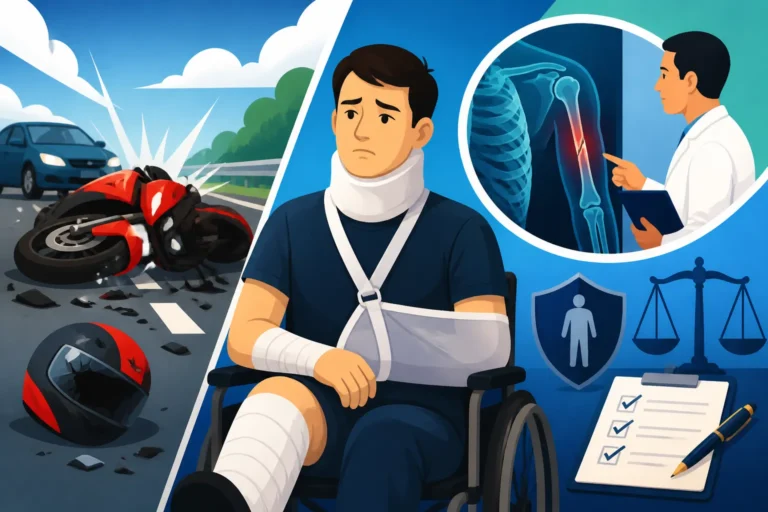
Motorcycle accidents often result in more severe injuries compared to car accidents due to the lack of protective enclosure around the rider. This inherent vulnerability means that the pain and suffering experienced by motorcyclists can be exceptionally profound. Think about the common injuries: devastating road rash, broken bones, traumatic brain injuries, and spinal cord damage. These aren't minor scrapes; they are life-altering events.
The stereotype surrounding motorcyclists can also compound the emotional distress. Insurance companies and even juries might carry a subconscious bias, sometimes trying to imply that the rider somehow "asked for it" by choosing to ride. This can add a layer of frustration and anger on top of the physical agony. For many, riding isn't just a mode of transport; it's a passion, a lifestyle. Losing the ability to ride, or even just the joy of it, adds a significant component to emotional distress and loss of enjoyment of life that is unique to our community. Understanding Rider Bias in Fault Determination is incredibly important here.
The Methods Used to Calculate Pain and Suffering
Since there's no universal formula for pricing someone's suffering, insurance companies and legal professionals typically rely on a few methods to estimate a reasonable value for pain and suffering. These methods are not rigid rules but rather frameworks used in negotiations. It's important to remember that these are starting points, not definitive outcomes.
The Multiplier Method in Practice
The multiplier method is perhaps the most common approach. It starts with the total amount of your economic damages (medical bills, lost wages, property damage) and multiplies that figure by a number, typically between 1.5 and 5, or sometimes even higher in cases of catastrophic injury.
Here's how it generally works:
- Calculate Economic Damages: First, all your quantifiable losses are tallied. Let's say your medical bills, prescription costs, lost income, and motorcycle repair or replacement total $20,000.
- Determine the Multiplier: This is where the subjective judgment comes in. The multiplier chosen depends on the severity and permanence of your injuries, the impact on your daily life, the length of your recovery, and even the clarity of fault. A minor injury with a quick recovery might warrant a 1.5 or 2 multiplier, while a serious injury leading to long-term disability or chronic pain could be a 4 or 5. In cases involving Motorcycle Accident Traumatic Brain Injuries or Spinal Cord Injuries from Motorcycle Accidents, the multiplier could be much higher.
- Multiply: Your total economic damages are then multiplied by the chosen factor. So, if your economic damages are $20,000 and the multiplier is 3, your pain and suffering could be estimated at $60,000. Adding this to your economic damages gives you a total claim value of $80,000.
Example Scenario:
Imagine you suffered a broken leg and significant road rash in a motorcycle accident. Your medical bills totaled $15,000, and you missed two months of work, losing $5,000 in wages. Your motorcycle was totaled, costing $10,000.
- Economic Damages: $15,000 (medical) + $5,000 (lost wages) + $10,000 (property) = $30,000
- Given the severity of a broken leg and the scarring from Road Rash Injuries and Claims, a multiplier of 3.5 might be deemed appropriate.
- Pain and Suffering Calculation: $30,000 x 3.5 = $105,000
- Total Estimated Claim Value: $30,000 (economic) + $105,000 (pain & suffering) = $135,000
The multiplier isn't set in stone, and insurance adjusters will always push for a lower number, while your legal representative will argue for a higher one, based on the specific facts of your case.
The Per Diem Method and Its Limitations
Another, less frequently used, method is the "per diem" (per day) method. This approach assigns a specific dollar amount for each day you experienced pain and suffering, from the date of the accident until you reach maximum medical improvement (MMI) or your injuries have largely healed.
Here's a look at how it might be applied:
- Daily Rate: A daily rate is chosen, often based on your daily lost wages or a similar figure, reflecting the idea that a day of suffering is as valuable as a day of work.
- Duration of Suffering: The number of days you endured pain and suffering is calculated.
- Multiply: The daily rate is then multiplied by the number of days.
Example Scenario:
If your daily lost wages were $200, and you experienced pain and suffering for 180 days (approximately 6 months) until you reached MMI, your pain and suffering could be calculated as:
- Pain and Suffering Calculation: $200 (daily rate) x 180 days = $36,000
Limitations of the Per Diem Method:
While seemingly straightforward, the per diem method has significant limitations, especially in severe injury cases. It often struggles to adequately account for:
- Permanent Injuries: It doesn't easily factor in long-term or permanent pain, disability, or disfigurement that continues far beyond the MMI date.
- Varying Severity: It assumes a consistent level of suffering day-to-day, which isn't realistic. Some days are much worse than others.
- Emotional Trauma: Quantifying the ongoing psychological impact of a severe accident into a daily rate can be incredibly difficult and often undervalues the true extent of suffering.
Due to these limitations, the per diem method is typically reserved for cases with less severe, shorter-term injuries, where the pain and suffering have a clear beginning and end. For major motorcycle accidents, the multiplier method is generally preferred as it allows for a more comprehensive assessment of long-term impact.
Here's a quick comparison of the two main calculation methods:
| Feature | Multiplier Method | Per Diem Method |
|---|---|---|
| Basis | Total economic damages (medical bills, lost wages) | Daily rate for each day of suffering |
| Key Variable | Multiplier (1.5x – 5x+, depending on severity) | Fixed daily rate and duration of suffering |
| Best For | Moderate to severe injuries, long-term impact, chronic pain, disfigurement | Minor injuries, short-term recovery with clear end |
| Accounts for Permanence | Yes, higher multipliers for permanent injuries | Limited, struggles with long-term/permanent issues |
| Complexity | More subjective, relies on strong argumentation | Seemingly simpler, but often undervalues severe cases |
Factors That Influence Your Pain and Suffering Value
The "calculation" of pain and suffering is far from an exact science. It's heavily influenced by a multitude of factors, all of which paint a picture of how profoundly the accident has impacted your life. A skilled legal professional will meticulously gather and present evidence related to these factors to maximize your compensation.
Severity and Permanence of Injuries
This is arguably the most significant factor. The more severe your injuries, and the longer-lasting their effects, the higher your potential pain and suffering award. A simple sprain, while painful, doesn't compare to a catastrophic injury.
Consider the difference:
- Minor Injuries: A broken finger, a few weeks of physical therapy, full recovery. While certainly painful, the impact on your life is temporary.
- Moderate Injuries: A significant fracture, requiring surgery and months of rehabilitation, potentially leading to some permanent limited mobility. This affects your ability to work, enjoy hobbies, and perform daily tasks for an extended period.
- Severe/Catastrophic Injuries: A traumatic brain injury (TBI), spinal cord damage leading to paralysis, an amputation, or extensive burns. These injuries often result in permanent disability, chronic pain, the need for lifelong care, and a complete change in life trajectory. For details on how these types of injuries are valued, you might want to read about Average Settlement for a TBI or Average Settlement for a Broken Leg Motorcycle Accident. These kinds of injuries demand a much higher multiplier due to the profound and irreversible changes they bring.
The permanence of an injury is crucial. If you're told you'll never regain full use of a limb, or that you'll have chronic pain for the rest of your life, that carries a much higher value in terms of pain and suffering than an injury from which you fully recover.
The Role of Medical Treatment and Documentation
One of the foundational truths of any injury claim is this: if it's not documented, it didn't happen. Your medical records are the backbone of your pain and suffering claim. They provide objective evidence of your injuries, the treatment you've undergone, and the pain you've reported.
This includes:
- Immediate Medical Attention: Seeking prompt medical care after an accident is vital. Delays can give insurance companies ammunition to argue that your injuries weren't serious or weren't caused by the accident.
- Consistent Treatment: Following your doctor's orders, attending all appointments, physical therapy sessions, and specialist visits. Gaps in treatment can suggest you're not as injured as you claim.
- Diagnostic Tests: X-rays, MRIs, CT scans, and other diagnostic tests provide objective proof of internal injuries.
- Medication Records: Prescriptions for pain medication, anti-inflammatories, or anxiety medication help document your ongoing suffering.
- Doctor's Notes: Your physician's observations about your pain levels, limitations, and prognosis are incredibly powerful. A doctor explicitly stating that you are suffering from chronic pain or will have permanent restrictions adds immense weight to your claim.
Thorough documentation helps illustrate not just the existence of your injuries, but also their severity and the impact they have on your life. Without solid medical records, it's incredibly difficult to prove the extent of your pain and suffering to an insurance company or a jury. Learn more about How to Document Injuries for a Claim to best protect your case.
Emotional and Psychological Toll
Physical injuries are often just the tip of the iceberg. The emotional and psychological consequences of a motorcycle accident can be just as debilitating, if not more so, than the physical pain. These too are considered components of pain and suffering.
- Anxiety and Depression: It's common for accident victims to develop anxiety about riding again, driving in cars, or even leaving their homes. Depression can set in due to loss of independence, chronic pain, or inability to engage in once-loved activities.
- Post-Traumatic Stress Disorder (PTSD): The sudden, violent nature of a motorcycle crash can leave lasting psychological scars. Flashbacks, nightmares, heightened startle response, and avoidance behaviors are all symptoms of PTSD. This can severely impact daily life, relationships, and even employment. For more on this, check out our guide on PTSD After a Motorcycle Accident.
- Fear and Phobias: Developing a fear of traffic, certain types of vehicles, or specific intersections where the accident occurred is a very real consequence.
- Loss of Enjoyment of Life: Imagine being an avid motorcyclist, finding solace and joy on the open road, only to have that taken away. Or being unable to play with your children, pursue a hobby, or even perform simple household tasks without pain. This profound sense of loss is a significant component of non-economic damages.
To prove these psychological impacts, documentation from therapists, psychologists, or psychiatrists is essential. Their evaluations and treatment plans provide expert testimony to the emotional distress you're enduring.
The Insurance Company's Perspective and Tactics
Let's be real: insurance companies are businesses, and their primary goal is to minimize payouts. They don't have your best interests at heart when it comes to your pain and suffering claim. They will employ various tactics to reduce the value they assign to your non-economic damages.
How Insurers Try to Minimize Payouts
Insurance adjusters are skilled negotiators, and they've heard every story. They will meticulously scrutinize every aspect of your claim, looking for weaknesses.
Common tactics include:
- Downplaying Injury Severity: They might argue your injuries aren't as severe as you claim, especially if there were delays in seeking treatment or gaps in your medical records. They may even suggest your pain is exaggerated or pre-existing.
- Questioning Causation: Insurers frequently try to argue that your injuries were not directly caused by the accident but rather by a prior injury or other unrelated incident.
- Offering Lowball Settlements: Their initial offer for pain and suffering will almost always be significantly lower than what your case is truly worth. They hope you're desperate or uninformed enough to accept. You can learn more about How Insurers Lowball Motorcycle Riders in our dedicated post.
- Using Rider Bias: Unfortunately, some insurance companies exploit negative stereotypes about motorcyclists, subtly suggesting that riders are inherently reckless, thus reducing perceived "innocent suffering."
- Requesting Extensive Information: They might ask for broad medical authorizations or detailed personal histories, hoping to uncover something they can use against you, like a prior injury or a pre-existing condition. While it's crucial to document How Pre-Existing Conditions Affect Claims, insurers often try to attribute all current pain to old issues.
- Delay Tactics: Dragging out the process can put financial pressure on you, making you more likely to accept a lower offer out of desperation.
This is why it's so important to be prepared and understand their strategies. Never assume the insurance company is on your side or that their initial offer is fair.
Why a Lawyer Can Make a Difference
Navigating the complexities of pain and suffering calculations and dealing with aggressive insurance adjusters is incredibly challenging, especially when you're recovering from severe injuries. This is where a knowledgeable motorcycle accident lawyer becomes invaluable.
Here’s how a legal professional can significantly impact your pain and suffering claim:
- Expert Valuation: An experienced attorney understands how to accurately assess the full extent of your pain and suffering. They know what multipliers are appropriate for different types of injuries and what a fair settlement looks like in your jurisdiction, whether you're dealing with Motorcycle Accident Fault Laws in California or Motorcycle Accident Fault Laws in Texas. They can also demonstrate how various Types of Damages in a Motorcycle Accident Claim apply to your specific situation.
- Evidence Gathering: Lawyers know precisely what documentation is needed to support your claim, from medical records and bills to witness statements about your changed demeanor or limitations. They can gather expert opinions from doctors, vocational therapists, or psychologists to clearly articulate the long-term impact of your injuries.
- Negotiation Skills: Attorneys are seasoned negotiators who can counter insurance company lowball offers and tactics. They will present a strong, evidence-backed argument for a higher settlement, focusing on the true value of your suffering.
- Litigation Readiness: If negotiations fail, a lawyer is prepared to take your case to court. The threat of litigation often motivates insurance companies to offer a more reasonable settlement, as trials are costly and unpredictable for them. Your lawyer can explain Motorcycle Accident Settlement vs Trial options.
- Protection from Pitfalls: They will protect you from saying or doing anything that could inadvertently harm your claim, such as signing a release too early or admitting fault. For example, understanding Why You Should Never Admit Fault at the Scene is crucial.
- Peace of Mind: With a lawyer handling the legal complexities, you can focus on your recovery and getting your life back on track.
If you're wondering Do You Need a Motorcycle Accident Lawyer, especially when dealing with significant injuries and trying to accurately value your pain and suffering, the answer is almost always yes. They are your advocate, fighting to ensure you receive the compensation you truly deserve.
Disclaimer
Please remember that this article provides general information and is not legal advice. Every motorcycle accident claim is unique, and the information presented here should not be taken as a substitute for consulting with a qualified legal professional regarding your specific situation. Laws vary by state, and a personal injury attorney specializing in motorcycle accidents can offer tailored advice.