When Punitive Damages Apply to Drunk Drivers
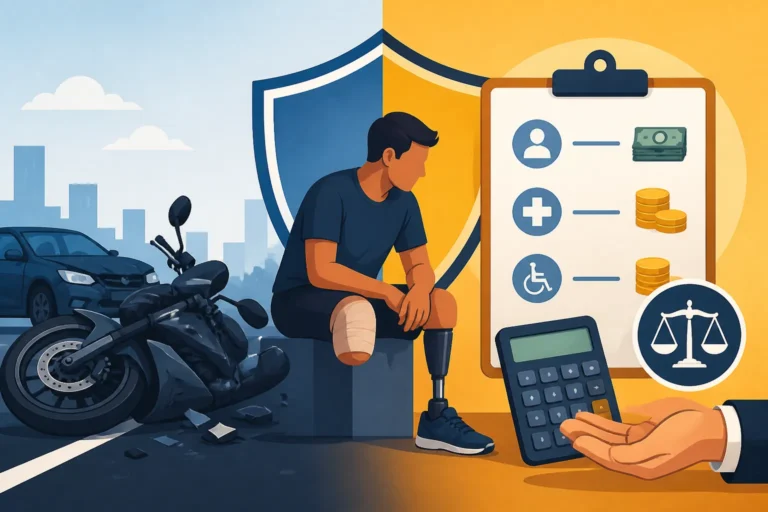
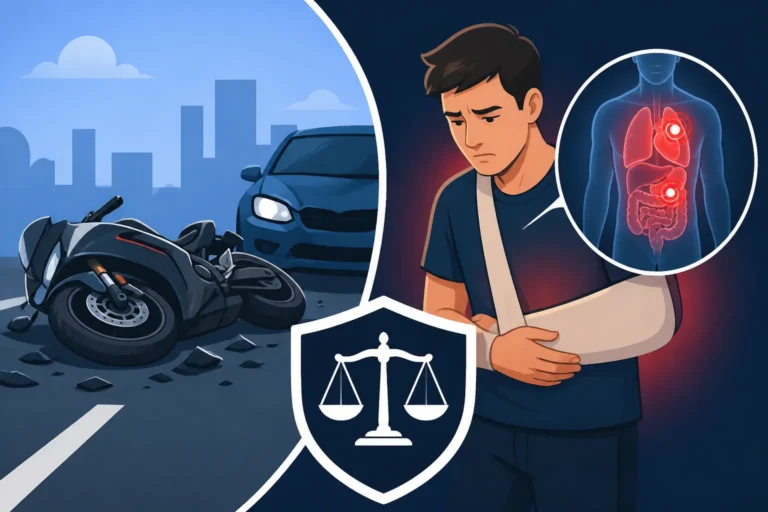
Experiencing a motorcycle accident is already a nightmare, but when the other driver was drunk, it adds a whole new layer of anger, frustration, and a deep sense of injustice. You're not just dealing with physical injuries, emotional trauma, and property damage; you're grappling with the sheer irresponsibility of someone who chose to get behind the wheel while impaired. This guide will walk you through the specifics of punitive damages, explaining when and how they can apply when a drunk driver causes a motorcycle crash, giving you an avenue to seek not just compensation, but also a measure of accountability.
Understanding Punitive Damages in Motorcycle Accidents
When we talk about a motorcycle accident claim, most people think about getting compensation for their medical bills, lost wages, and maybe some pain and suffering. And that's absolutely right – those are called compensatory damages. But sometimes, the other driver's actions are so reckless, so negligent, so utterly disregardful of human life, that the law allows for something more: punitive damages.
What Are Punitive Damages?
Punitive damages are fundamentally different from other types of damages. They aren't designed to compensate you for your losses; rather, they serve two primary purposes: to punish the at-fault party for their egregious conduct and to deter others from similar behavior in the future. Think of it as the legal system's way of sending a strong message.
While compensatory damages cover things like your emergency room visit, ongoing therapy, lost income, and the emotional toll of the crash (which fall under Economic vs Non-Economic Damages Explained), punitive damages go beyond that. They’re reserved for cases where the defendant’s actions were particularly reprehensible. For instance, if a driver was not just distracted, but was actively street racing while intoxicated, causing a collision, that level of reckless disregard could warrant punitive damages. They are meant to make an example of the wrongdoer, making sure their punishment serves as a warning sign to anyone else considering similar irresponsible behavior on the road.
The High Bar for Punitive Damages
It’s important to understand that winning punitive damages is significantly harder than proving standard negligence. You can’t just show that the other driver was careless; you have to demonstrate a much higher level of culpability. The legal standard typically requires proving "gross negligence," "willful misconduct," "malice," or "reckless disregard" for the safety of others.
This means showing that the defendant knew, or should have known, that their actions posed a substantial risk of harm to others, and they proceeded anyway, with an utter indifference to those consequences. It's a high bar, one that requires a deep dive into the defendant's mental state and actions leading up to and during the incident. For example, if a driver had multiple prior DUI convictions and still chose to drink and drive, causing a severe accident, it demonstrates a pattern of conscious and reckless disregard, making a stronger case for punitive damages. This is different from merely trying to determine Who Is at Fault in a Motorcycle Accident based on traffic laws. The burden of proof for punitive damages is usually "clear and convincing evidence," which is a higher standard than the "preponderance of the evidence" typically used for compensatory damages in civil cases.
Drunk Driving and the Basis for Punitive Damages
When a drunk driver is involved in a motorcycle accident, it often inherently meets the high standard required for punitive damages. The act of choosing to drive while intoxicated demonstrates a profound disregard for public safety.
Impaired Driving as Gross Negligence or Malice
Driving under the influence (DUI) is, by its very nature, a reckless act. A person who gets behind the wheel after consuming alcohol or drugs is making a conscious decision that puts everyone else on the road at extreme risk. This behavior often transcends mere negligence and can easily be categorized as gross negligence or even malice in a civil court, especially when serious injuries or fatalities occur.
Consider a scenario in Phoenix, Arizona: a driver leaves a bar after several drinks, despite friends offering them a ride. They then swerve across lanes, nearly hitting other cars before colliding head-on with a motorcyclist. This isn't just an accident; it's a direct consequence of a deliberate choice to operate a vehicle in an impaired state. Such actions demonstrate a "conscious disregard" for the safety of others on the road. Factors like extremely high blood alcohol content (BAC), prior DUI convictions, or additional reckless driving behaviors (like excessive speeding or street racing) while intoxicated can further strengthen the argument that the driver's conduct was malicious and warrants punitive damages. Understanding How Drunk Driving Affects a Motorcycle Claim is crucial here, as it lays the groundwork for seeking these higher forms of accountability.
State-Specific Laws and Caps on Punitive Damages
It’s really important to know that the rules around punitive damages, including whether they're even allowed and if there are caps on the amounts, vary wildly from state to state. What might be possible in California could be entirely different in Texas or Florida.
Many states, like California, allow punitive damages without a specific cap, leaving it largely up to the jury’s discretion based on the severity of the defendant's misconduct and their financial ability to pay. However, other states have strict limits. For instance, in Texas, punitive damages are generally capped at twice the amount of economic damages plus an amount equal to any non-economic damages, not to exceed $750,000, or $200,000, whichever is greater. Florida has a cap of three times the amount of compensatory damages or $500,000, whichever is greater, but exceptions can apply if the defendant was under the influence of alcohol or drugs. Some states, like Michigan, generally do not allow punitive damages at all, or only in very specific, rare circumstances, focusing solely on compensatory damages. This means that a motorcyclist injured by a drunk driver in Detroit might face a different legal landscape than one in Los Angeles or Houston.
Here’s a quick overview of how some states approach punitive damages:
| State | Punitive Damages Allowed? | Typical Caps/Rules |
|---|---|---|
| California | Yes | No statutory cap. Jury determines amount based on severity of misconduct and defendant's financial status. |
| Texas | Yes | Capped at the greater of $200,000 or two times economic damages plus non-economic damages up to $750,000. Specific exceptions for intentional harm or felony crimes. |
| Florida | Yes | Capped at three times compensatory damages or $500,000, whichever is greater. Exceptions for intentional harm, specific intent to harm, or cases involving impairment by alcohol/drugs where the defendant's conduct was sufficiently egregious. |
| New York | Yes | No statutory cap. Awarded only in cases of "gross, wanton, or willful fraud or malice." Courts scrutinize awards to ensure they are not excessive. |
| Michigan | Generally No | Michigan generally does not allow punitive damages. Instead, it allows for "exemplary damages" to compensate for mental anguish, humiliation, or injury to feelings, which are still compensatory in nature rather than purely punitive. |
| Arizona | Yes | No statutory cap. Reserved for cases of "evil mind," meaning the defendant acted with evil motive or intent, or with a knowing and conscious disregard that creates a substantial risk of harm to others. The standard is "clear and convincing evidence." |
| Ohio | Yes | Capped at twice the amount of compensatory damages or 10% of the defendant's net worth (up to $350,000), whichever is less. Small business exception. |
Understanding these state-specific nuances is critical when considering a claim. This is just one of the many reasons why it's so important to seek localized legal advice.
Proving Punitive Damages Against a Drunk Driver
Even though drunk driving can be a clear path to punitive damages, you still have to prove it in court. This isn't just about saying "they were drunk"; it's about presenting compelling evidence that leaves no doubt about the driver's reckless indifference.
Essential Evidence for Drunk Driving Cases
Building a strong case for punitive damages in a drunk driving accident requires meticulous evidence collection. The foundation often lies in the immediate aftermath of the crash. The police report is paramount, as it will document the DUI arrest, details of field sobriety tests, and, crucially, the results of any breathalyzer or blood tests that confirm the driver's intoxication level. A high blood alcohol content (BAC) significantly strengthens your case, particularly if it's well over the legal limit.
Beyond the police report, criminal conviction records for DUI will serve as undeniable proof of their impaired driving. Witness testimony from anyone who observed the other driver's erratic behavior before, during, or after the accident can be incredibly valuable. This could include other drivers, pedestrians, or even employees from the establishment where the driver was drinking. Furthermore, medical records, especially those from an emergency room visit where the driver was treated and tested, can provide independent verification of their intoxication. In some cases, evidence of the driver's conduct before the crash, such as receipts from bars or restaurants, or social media posts, can paint a clearer picture of their deliberate choice to consume alcohol and then drive. For example, if a driver was documented drinking at a local establishment like The Rusty Mug in downtown Seattle before getting on their motorcycle, those records could become critical evidence. All these pieces of evidence help establish not just causation but also the level of culpability needed for punitive damages, which goes beyond simply determining How Fault Is Determined in Motorcycle Accidents.
The Role of Expert Testimony and Legal Counsel
Navigating the complexities of proving punitive damages often requires the expertise of professionals. An accident reconstructionist, for example, can analyze the scene, vehicle damage, and other data to demonstrate how the drunk driver's impaired reactions or reckless maneuvers directly led to the crash. They can often provide testimony that illustrates the driver’s egregious behavior, such as excessive speed coupled with intoxication, which speaks directly to the "reckless disregard" standard.
Moreover, the interplay between the criminal charges the drunk driver faces and your civil personal injury claim can be intricate. A criminal conviction for DUI, while not automatically guaranteeing punitive damages in your civil case, provides powerful evidence. This is where an experienced motorcycle accident lawyer becomes indispensable. They understand What a Motorcycle Accident Lawyer Does, how to gather all necessary evidence, from police reports and toxicology screens to witness statements and expert analyses. They know how to present this evidence persuasively in court, arguing that the drunk driver's actions meet the high legal threshold for punitive damages. A lawyer can also identify instances where there might be Third-Party Liability in Motorcycle Accidents, such as a bar that overserved the driver, potentially expanding the pool of compensation. Without specialized legal counsel, it's incredibly challenging to effectively pursue such a sophisticated claim.
What to Expect When Pursuing Punitive Damages
While pursuing punitive damages can offer a sense of justice, it's important to understand the practical realities and potential challenges that come with this type of claim.
The Difference in Payouts and Challenges
If successful, punitive damages are awarded in addition to your compensatory damages for things like medical bills, lost wages, and pain and suffering. This means the overall settlement or verdict amount could be substantially higher. However, collecting punitive damages can sometimes be challenging. A significant hurdle is that many insurance policies, specifically those for liability coverage, often do not cover punitive damage awards. Insurance companies typically view punitive damages as a punishment, and covering them would defeat the purpose of that punishment.
This means that if a large punitive damage award is granted, the drunk driver themselves might be personally responsible for paying it out of their own assets. If the defendant has limited financial resources, even a substantial punitive damages award could be difficult to collect in full. This is a critical factor that your attorney will discuss with you, as it affects the practical recovery of funds. Furthermore, pursuing punitive damages often leads to a more protracted and contentious legal battle, as insurance companies and defendants will fight vigorously to avoid these awards, which they view as penalizing. It’s a very different negotiation than simply settling for Average Motorcycle Accident Settlement Amounts.
Impact on Your Overall Motorcycle Accident Claim
Even if collecting the full punitive damages award proves difficult, pursuing them can still have a significant positive impact on your overall motorcycle accident claim. The very act of seeking punitive damages shines a harsh light on the defendant's egregious conduct, emphasizing the severity of their recklessness. This can put immense pressure on the insurance company during settlement negotiations. When the insurer knows there's a strong case for punitive damages, it can increase the leverage for your compensatory damages, potentially leading to a higher settlement offer to avoid the risk of a trial and a potentially much larger punitive award.
It helps to shift the narrative from just an "accident" to a deliberate act of gross negligence. This not only strengthens your financial claim but can also provide a crucial sense of vindication and justice for you, the injured rider. After all the trauma, seeing the legal system acknowledge the severity of the drunk driver's actions beyond just financial compensation can be incredibly meaningful. It’s part of a broader strategy to Maximize Your Motorcycle Accident Settlement by holding the at-fault party fully accountable for their choices.
Disclaimer
Please remember that this information is intended for educational purposes only and does not constitute legal advice. Motorcycle accident laws, including those concerning punitive damages, vary significantly by state and can be complex. You should always consult with a qualified legal professional to discuss the specifics of your case and understand your rights and options.