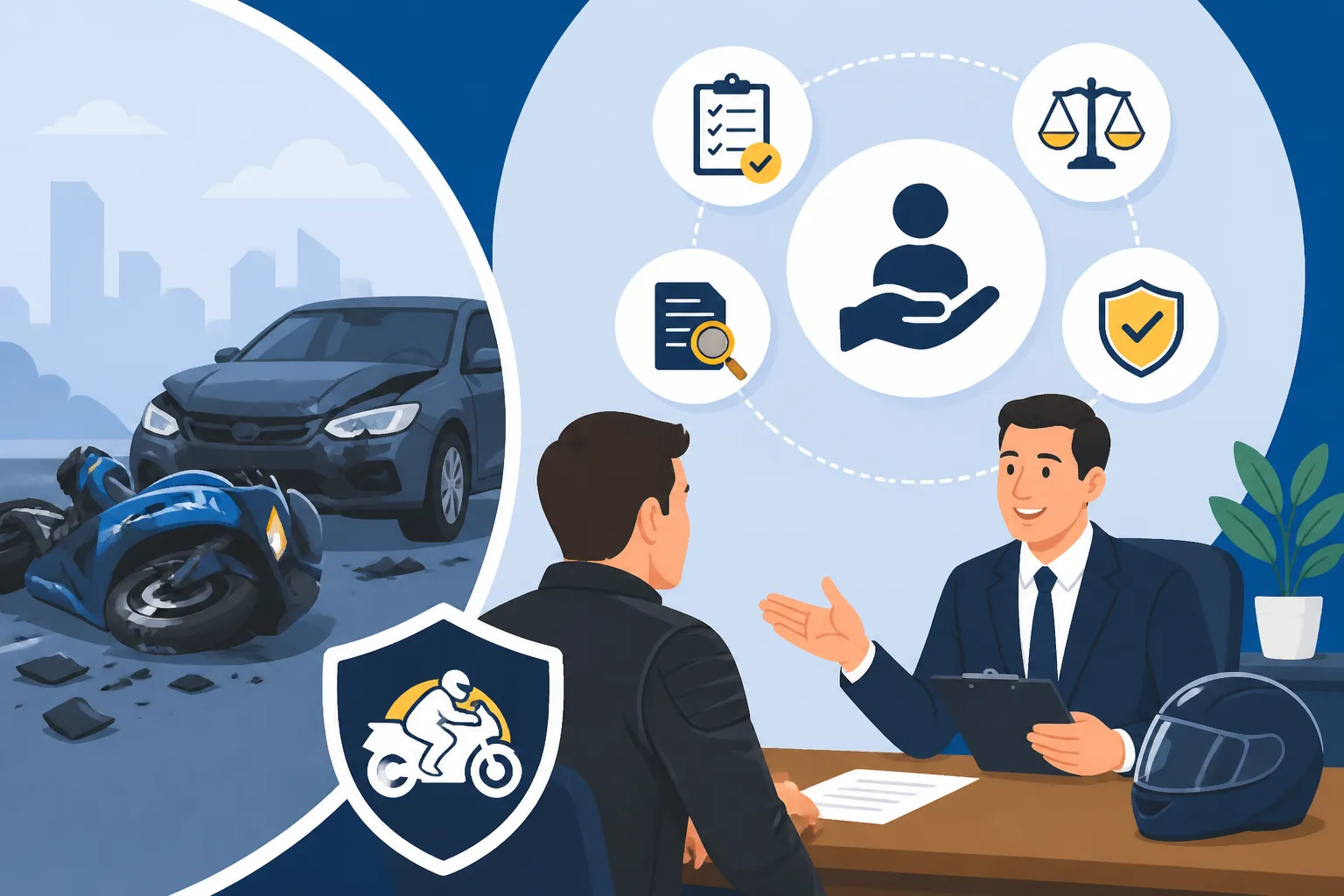
What to Expect at a Free Motorcycle Accident Consultation
When you've been in a motorcycle accident, the aftermath can feel like a whirlwind of pain, confusion, and endless questions. You're likely dealing with injuries, mounting medical bills, and the stress of a damaged bike, all while trying to figure out your legal options. It's an incredibly overwhelming time, and understanding where to even begin can feel impossible. That's precisely why a free motorcycle accident consultation is such a critical first step, and this guide is here to walk you through exactly what to expect, helping you approach it with confidence and clarity.
The True Value of a Free Consultation After a Motorcycle Accident
After a motorcycle crash, many riders find themselves in a precarious situation, unsure of their rights or how to pursue compensation for their injuries and losses. The idea of adding legal fees to an already growing pile of expenses can be daunting, which is why a free motorcycle accident consultation is such a game-changer. It's essentially a no-cost, no-obligation meeting with a legal professional to discuss the specifics of your incident. Think of it as a low-stakes opportunity to get a professional opinion on your case without having to commit financially.
Getting an Initial Case Evaluation
During this initial meeting, the attorney will listen intently to your account of the accident. They'll ask questions, gather preliminary details, and offer an initial assessment of your situation. This isn't just about whether you have a "case" but rather about understanding the potential strengths and weaknesses, identifying who might be at fault in your motorcycle accident, and outlining the types of damages you might be able to claim. For instance, if you're dealing with a particularly tricky situation, like a left-turn collision where the other driver claims they didn't see you, an attorney can explain the common legal arguments and evidence needed to prove fault. This early assessment is invaluable, as it helps you understand the legal landscape ahead without any financial pressure.
Understanding the No-Obligation Aspect
One of the biggest anxieties people have about speaking with a lawyer is the fear of being pressured into hiring them. A free consultation, by its very nature, is designed to alleviate this. It's a chance for you to evaluate the attorney and for them to evaluate your case. There's no expectation or requirement for you to sign an agreement at the end of it. This allows you to speak openly, ask all your burning questions, and truly gauge if this particular lawyer is the right fit for you. You should feel comfortable and empowered, not rushed or cornered. Many reputable firms, and platforms like LegalMatch, emphasize this no-pressure approach, understanding that trust and comfort are paramount when choosing legal representation.
How to Prepare for Your Free Consultation
While the consultation itself is free, your time is valuable, and so is the attorney's. The more prepared you are, the more productive your meeting will be. This isn't just about making a good impression; it's about getting the most comprehensive and accurate advice possible from the start.
Gathering Essential Documents
Walking into a consultation with a folder full of relevant documents can significantly streamline the process and allow the attorney to give you a much more informed opinion. You don't need to have every single piece of paper, but the more you can provide, the better.
Here’s a breakdown of what to prioritize:
- Police Report: This is often the cornerstone of any accident claim. It contains crucial details like the date, time, location, involved parties, witness information, and often the responding officer's initial assessment of what happened. Even if the police report isn't perfect, it's a vital starting point. Knowing How Police Reports Establish Fault can give you an edge.
- Medical Records and Bills: Bring anything you have related to your injuries. This includes emergency room reports, diagnostic test results (X-rays, MRIs), doctor's notes, physical therapy records, and any bills you’ve received. These documents are critical for demonstrating the extent and severity of your injuries, which directly impacts the value of your claim. Even seemingly minor injuries like road rash can lead to significant medical costs.
- Insurance Information: Have your motorcycle insurance policy details, as well as the other driver's insurance information if you have it. This will help the attorney understand the coverage available.
- Photos and Videos: If you took photos or videos at the scene of the accident, bring them! These visual aids can be incredibly powerful in showing vehicle damage, road conditions, and the scene itself. Pictures of your injuries, especially road rash or fractures, are also incredibly helpful.
- Contact Information for Witnesses: If anyone saw the accident, their statements could be vital. Bring their names and contact details if you managed to collect them. How Witnesses Affect Motorcycle Fault is a key consideration.
- Lost Wage Documentation: If your injuries prevented you from working, bring pay stubs, employment records, or a letter from your employer detailing your missed time and lost income.
- Motorcycle Damage Estimates: Any repair estimates or total loss assessments for your bike are important for property damage claims.
Listing Your Questions and Concerns
It’s easy to get flustered during a meeting, especially when discussing something as stressful as an accident. Writing down your questions beforehand ensures you don’t forget anything important.
Some questions you might consider asking include:
- What is your experience with motorcycle accident cases specifically?
- What are the next steps if I decide to hire you?
- What is the statute of limitations for filing a claim in my state? (Knowing How Long You Have to Hire a Lawyer is vital).
- How do you typically communicate with clients? How often?
- What are the potential challenges in my case?
- What is your fee structure? (Understanding How Contingency Fees Work is crucial).
- What is the estimated timeline for a case like mine?
Don't be shy about asking anything that's on your mind. This is your chance to get clarity and feel informed.
Here's a handy checklist to help you organize before your meeting:
| Document/Item | Purpose | Status (Done/To Do) |
|---|---|---|
| Police Report | Official record, details of the incident | |
| Medical Records (ER, Doctor) | Proof of injuries and treatment | |
| Medical Bills | Documentation of financial losses due to injury | |
| Insurance Information | Your policy, other driver's policy | |
| Photos/Videos | Visual evidence of the scene, vehicles, injuries | |
| Witness Contact Info | Independent accounts of the accident | |
| Lost Wage Documentation | Proof of income loss | |
| Motorcycle Repair Estimates | Documentation of property damage costs | |
| List of Questions | Ensures all your concerns are addressed |
What Happens During the Consultation Itself
Stepping into a lawyer's office can feel a bit intimidating, but remember, this consultation is for your benefit. The attorney wants to understand your story and see if they can help.
Sharing Your Story and the Accident Details
The lawyer will typically start by asking you to recount the accident in your own words. Be as detailed and honest as possible. Don't embellish or omit details, even if you think they might not look good. Attorneys are there to help, and they need the full picture. They will likely ask follow-up questions about:
- The sequence of events leading up to the crash: What were you doing? What was the other driver doing?
- The impact itself: How did it happen? Where did your bike land? Where did you land?
- Your injuries: What hurts? Have you seen a doctor? What diagnoses have you received? This directly relates to the types of damages in a motorcycle accident claim you might be able to pursue.
- The immediate aftermath: What happened at the scene? Did police respond? Were you transported to the hospital?
- Any interactions with insurance companies: Have you spoken to your insurer or the other driver's?
This is where all the documents you brought become incredibly useful. You can refer to them, show photos, and provide concrete details to back up your narrative.
The Lawyer's Initial Assessment and Advice
Once they have a clear understanding of your case, the attorney will provide their initial assessment. This includes:
- Discussion of Liability: Based on the information you've provided, they'll give you an idea of how fault might be determined. They can explain how factors like traffic violations, distracted driving, or even lane splitting and motorcycle accident liability might impact your case.
- Potential Damages: They'll discuss the different categories of compensation you might be eligible for, such as medical expenses, lost wages, pain and suffering, and property damage. They might even give you a very rough idea of the Average Motorcycle Accident Settlement Amounts for similar cases, though they will caution that every case is unique.
- Legal Process Overview: They'll explain the general steps involved in pursuing a motorcycle accident claim, from investigation and evidence gathering to negotiation and potentially litigation. This might include discussing demand letters, discovery, and mediation.
- Challenges and Defenses: A good attorney will also highlight potential challenges the opposing side might raise, such as arguing your own comparative negligence or using common tactics like the "I didn't see the motorcycle" defense. They'll also explain how they would strategize to counter these.
Understanding Fee Structures and Next Steps
This is often one of the most important parts of the consultation for clients. Most motorcycle accident attorneys work on a contingency fee basis. This means:
- No Upfront Fees: You don't pay anything out-of-pocket for their services.
- Payment from Settlement: The attorney only gets paid if they successfully recover compensation for you, either through a settlement or a court award.
- Percentage of Recovery: Their fee is a pre-agreed percentage of the final settlement or award (typically between 25% and 40%, but this varies by state and firm).
- Case Expenses: They'll also explain how case expenses (like filing fees, expert witness fees, and investigation costs) are handled. These are usually paid back from the settlement as well, often before the contingency fee is calculated, so it's vital to understand the specifics.
At the end of the discussion, the attorney will outline the immediate next steps if you choose to hire them. This might include signing a retainer agreement, authorizing them to gather medical records, and beginning an independent investigation into the accident. They will make sure you understand the initial paperwork and what their firm would do on your behalf to protect your rights and pursue your claim.
After the Consultation: Making Your Decision
The consultation is over, you've got a lot of information, and now it's time to process it all. Remember, you're not obligated to hire the first lawyer you meet, or any lawyer you meet. This is your chance to make an informed decision for your future.
Evaluating the Lawyer and Firm
Take some time to reflect on your experience. Consider these points:
- Communication Style: Did the attorney explain things clearly and patiently? Did they listen to your concerns without interrupting? Do you feel comfortable asking them questions? Effective communication is absolutely critical for a successful attorney-client relationship.
- Experience and Specialization: While many personal injury lawyers handle car accidents, you want someone with specific expertise in motorcycle accident claims. These cases often involve unique legal nuances and biases that a general practitioner might overlook. Check if they have a track record with cases similar to yours.
- Resources: Does the firm seem to have the resources to handle a complex case if yours turns out to be one? This includes investigators, expert witnesses, and sufficient support staff.
- Comfort Level: This is a deeply personal process. Do you feel a sense of trust and confidence in this lawyer? Are they someone you can envision working with for months, possibly even years? Don't underestimate your gut feeling.
Comparing Your Options
If you've consulted with more than one attorney (which is often a good idea), compare their advice, their proposed strategies, and their fee structures. While the contingency fee percentage might seem like the main difference, also consider how they handle case expenses and what value they bring to the table. Some attorneys might offer slightly different approaches to a case, such as focusing on a swift settlement versus preparing for a potential trial. Services like LegalMatch can be beneficial here, as they allow you to connect with several qualified attorneys, making it easier to compare and contrast before making a choice.
Trusting Your Gut
Ultimately, the decision of who to hire is yours. You’re entrusting this person with your future, your financial well-being, and a significant part of your recovery journey. Choose an attorney who not only demonstrates legal competence but also empathy and a genuine understanding of what you're going through. The right attorney will be a strong advocate and a trusted advisor, guiding you through every step of the often-complicated motorcycle accident settlement process.
Disclaimer
Please remember that this article provides general information and is not legal advice. Every motorcycle accident claim is unique, and the information presented here may not apply to your specific situation. Laws vary significantly by jurisdiction, and it is crucial to consult with a qualified motorcycle accident attorney in your state to discuss the specifics of your case.