Who Is at Fault in a Left-Turn Collisions Motorcycle Accident
Riding a motorcycle offers unparalleled freedom, but it also comes with unique risks, especially when navigating traffic. One of the most terrifying and unfortunately common scenarios riders face is when a driver initiates a left turn directly into their path. It feels like they simply didn't see you, and the consequences can be catastrophic. If you've been involved in a left-turn collision, you're likely grappling with injuries, bike damage, and a burning question: who is at fault in a left-turn collisions motorcycle accident, and what are your options? This guide will break down the complexities of fault in these devastating crashes.
The Perilous Left Turn: A Rider's Worst Nightmare
Few situations are as universally dreaded by motorcyclists as a vehicle making a sudden left turn. You're riding along, adhering to traffic laws, perhaps enjoying the open road, and then, without warning, a car cuts across your lane of travel. It's not just an inconvenience; it's an immediate, life-threatening danger. The sheer vulnerability of a rider compared to an enclosed vehicle means that even a low-speed impact can result in severe injuries.
Why Left Turns are So Dangerous for Motorcyclists
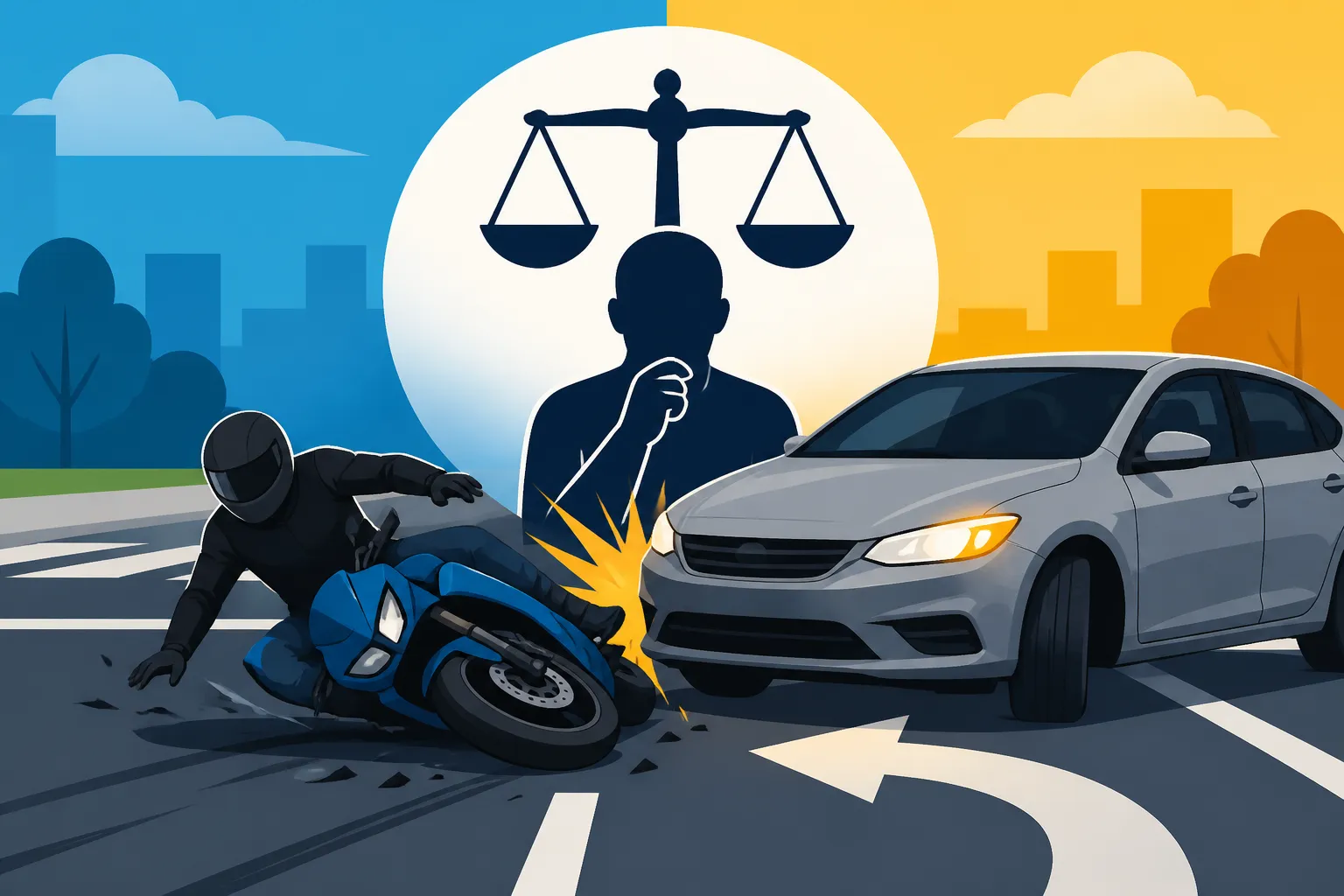
The dynamics of a left-turn collision are uniquely hazardous for those on two wheels. When a car makes a left turn in front of an oncoming motorcycle, the bike often hits the side of the car, leading to the rider being ejected or crushed between the vehicles. This isn't just a fender-bender for us; it's a high-impact event that can lead to broken bones, traumatic brain injuries, spinal cord damage, and severe road rash. It's a stark reminder of why every rider emphasizes vigilance.
Part of the problem stems from what's known as "looked but failed to see" or "inattentional blindness." Car drivers, especially those who aren't riders themselves, are often conditioned to look for other cars, sometimes literally overlooking motorcycles. Our smaller profile, combined with sometimes unexpected speed, can make us less conspicuous, even when we're right there, brightly lit. This phenomenon is a major factor in these types of incidents. You might have been wearing all your high-visibility gear, had your headlight on, and were riding defensively, yet the driver still pulled out in front of you. This isn't your fault; it's often a failure of attention and perception on their part.
The "I Didn't See the Motorcycle" Defense
This phrase is probably the most frustrating and frequently heard excuse after a left-turn collision. Drivers often genuinely believe they checked their surroundings thoroughly before turning, claiming the motorcycle "came out of nowhere" or "was speeding." This defense is a common tactic used by insurance companies to try and shift some or all of the blame onto the motorcyclist. However, simply not seeing a motorcycle does not absolve a driver of their responsibility.
Traffic laws, especially those concerning the right-of-way, are clear. Drivers making a left turn have a legal obligation to yield to oncoming traffic, which absolutely includes motorcycles. Their failure to perceive you, regardless of their purported diligence, constitutes a breach of that duty. This is why it's so important to understand that your experience of being visible is often undermined by this common defense tactic. It's not enough for a driver to say they looked; they must look effectively and see what is there to be seen.
Establishing Fault: The Driver's Duty to Yield
In the vast majority of left-turn motorcycle accidents, the driver of the turning vehicle is considered at fault. This isn't just an assumption; it's deeply rooted in traffic laws and the concept of right-of-way. Every driver on the road has a duty to operate their vehicle safely and avoid collisions, and that duty includes yielding when required.
Understanding Right-of-Way Laws
When it comes to left turns, the rules are pretty straightforward in most states, from California to Florida. A driver intending to turn left must yield the right-of-way to any vehicle approaching from the opposite direction that is already in the intersection or so close as to constitute an immediate hazard. This means if you, as a motorcyclist, are proceeding straight through an intersection or are already in it, the turning driver must wait for you to pass.
Think about it this way: if a driver is sitting at an intersection, signaling a left turn, they have a responsibility to assess the safety of that turn. They need to judge the speed and distance of oncoming vehicles, and if there's any doubt, they are legally obligated to wait. Their failure to accurately judge your speed or their complete failure to see you means they did not fulfill their duty to yield. This is often the primary factor in determining who is at fault in a motorcycle accident.
Common Driver Violations Leading to Left-Turn Collisions
Several specific violations by the turning driver typically lead to these devastating crashes:
- Failure to Yield the Right-of-Way: This is the big one. As mentioned, the driver simply turns when they shouldn't have, directly into the path of the motorcycle. This could be due to distraction, misjudgment of speed, or simply not looking properly.
- Distracted Driving: In today's world, distracted driving is a rampant problem. A driver might be looking at their phone, adjusting the radio, or talking to passengers, taking their eyes off the road just long enough to miss an oncoming motorcycle. Even a few seconds of inattention can have life-altering consequences for a rider.
- Impaired Driving: Alcohol or drug impairment can severely impact a driver's perception, reaction time, and judgment, making them far more likely to misjudge the distance and speed of an oncoming motorcycle or fail to see it altogether.
- Aggressive Driving/Impatience: Some drivers become impatient waiting for a clear path and attempt to "beat" oncoming traffic, leading to dangerous turns that leave no time for a motorcyclist to react.
In these situations, the driver's actions are a clear violation of traffic laws and constitute negligence. This forms the backbone of a strong claim for compensation. Proving fault in a motorcycle accident often hinges on demonstrating these violations and connecting them directly to your injuries and damages.
When a Rider Might Share the Blame
While the car driver is usually at fault in left-turn collisions, there are scenarios where the motorcyclist might share some degree of responsibility. This concept is known as Comparative Negligence in Motorcycle Accidents, and it means that fault can be divided between parties involved in an accident. The specific rules for how this affects your claim can vary significantly by state.
Contributory Factors from the Motorcyclist
Even with the car driver's primary responsibility, a rider's actions can sometimes contribute to the collision. It's a tough pill to swallow when you're the one injured, but insurance companies will meticulously investigate every detail to find any evidence that could shift blame.
- Excessive Speed: If a motorcyclist was traveling significantly above the posted speed limit, especially through an intersection, their ability to react to a turning vehicle would be diminished. Even if the car driver failed to yield, the rider's excessive speed could be argued as a contributing factor, making it difficult for the driver to accurately judge the motorcycle's approach.
- Reckless Driving: Actions like weaving through traffic, performing stunts, or generally operating the motorcycle in an unsafe manner could lead to shared fault. For example, if a rider was performing an illegal maneuver, such as an unsafe lane change just before the collision, they might be assigned a percentage of fault.
- Lack of Headlight Use: While many modern motorcycles have always-on headlights, if a rider was operating their motorcycle without an illuminated headlight during conditions that required it (e.g., at night, in fog, or even in some states, during the day), it could be argued that they made themselves less visible. However, this is a difficult defense for an insurer to win, as most drivers are expected to see even unlit vehicles during daylight.
- Lane Splitting (where applicable and unsafe): In states where lane splitting is legal, like California, it's typically done at a speed no more than 10 mph faster than the surrounding traffic and not exceeding 30 mph overall. If a rider was lane splitting at excessive speed or in an unsafe manner just before a left-turn collision, an argument could be made for shared fault. However, the onus is still largely on the turning driver to ensure the way is clear. Lane Splitting and Motorcycle Accident Liability is a complex area.
How Shared Fault Impacts Your Claim
If you are found to be partially at fault, it doesn't necessarily mean you lose your entire claim. Most states follow some form of comparative negligence. For instance, in a "pure comparative negligence" state like California, if you are found 20% at fault, your total compensation would be reduced by 20%. So, if your damages were valued at $100,000, you would receive $80,000. Other states use "modified comparative negligence," where you can only recover if your fault is less than a certain percentage (e.g., 50% or 51%). Understanding these nuances is critical when your motorcycle accident liability is being assessed. It's often where the expertise of an experienced motorcycle accident attorney becomes invaluable.
Proving Fault in a Left-Turn Collision
Proving fault after a left-turn collision is paramount to securing the compensation you deserve. It's not enough to simply say the other driver turned in front of you; you need concrete evidence to back up your claim. Insurance adjusters will scrutinize every detail, and without solid proof, they will often try to minimize their payout or even deny your claim entirely.
Crucial Evidence to Collect
After any motorcycle accident, especially a left-turn collision, gathering specific evidence is vital. This is why knowing What to Do After a Motorcycle Accident is so important, even if you're shaken up.
- Police Report: This is often the first official document outlining the accident. The responding officer will usually interview drivers and witnesses, note traffic violations, and often offer an initial assessment of fault. While not always definitive, a police report can be a powerful piece of evidence supporting your claim. However, it's worth noting that How a Police Report Can Hurt Your Claim if it contains inaccuracies or unfavorable observations.
- Witness Statements: Independent witnesses who saw the accident unfold can provide unbiased accounts of what happened. Their testimony can be crucial in corroborating your version of events and countering the "I didn't see the motorcycle" defense. Get their contact information at the scene.
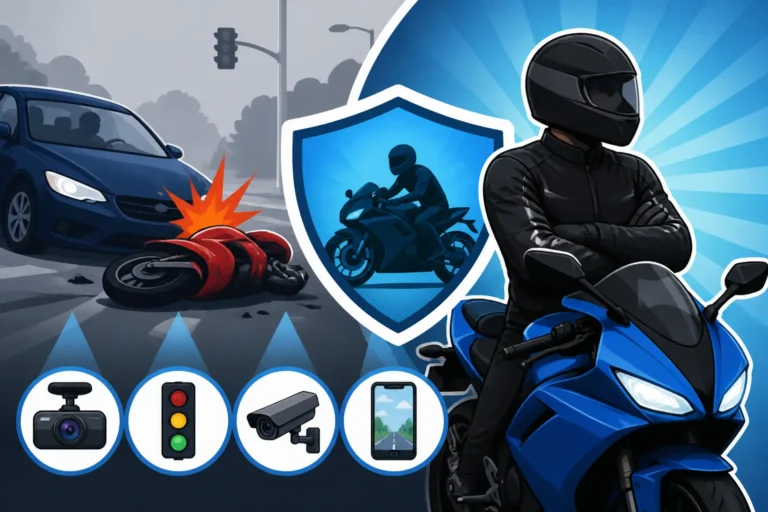
- Photos and Videos from the Scene: Your smartphone is a powerful tool here. Take pictures from multiple angles: the position of both vehicles, road conditions, traffic signs, skid marks, debris, your injuries, and damage to your motorcycle and the other vehicle. If you have a dashcam or helmet camera, that footage is invaluable. How Dashcam Footage Proves Fault is a game-changer in these situations, as it provides objective evidence of exactly what happened.
- Medical Records: Documenting your injuries immediately after the crash is crucial. Medical records establish a direct link between the accident and your physical harm, detailing diagnoses, treatment, and prognoses. Gaps in treatment can be used by insurance companies to argue that your injuries weren't severe or weren't caused by the accident.
- Traffic Camera Footage: Many intersections, especially in urban areas, are equipped with traffic cameras. While often difficult to obtain without legal assistance, this footage can provide irrefutable proof of who failed to yield.
- Accident Reconstruction: In complex cases or when fault is heavily disputed, an accident reconstruction expert might be brought in. These professionals use scientific principles and physical evidence to create a detailed analysis of how the accident occurred, offering expert testimony on speed, impact angles, and causation.
How to Prove a Driver Failed to Yield
The core of proving fault in a left-turn collision usually comes down to demonstrating that the other driver violated their duty to yield the right-of-way. This is where the evidence you collect becomes critical.
- Demonstrating Your Right-of-Way: Evidence like witness statements, traffic camera footage, and even the positioning of the vehicles after impact can confirm that you were proceeding lawfully through the intersection or along the road when the driver turned.
- Countering "Looked But Failed to See": This requires showing that you were visible. Photos of your bright gear, evidence of your headlight being on, and witness testimony that they clearly saw you can challenge this common defense.
- Establishing Negligence: By combining the police report (which might cite a failure to yield), witness accounts, and visual evidence, you build a compelling case that the driver's inattention, misjudgment, or aggressive driving directly led to the collision. This is the essence of Proving Fault in a Motorcycle Accident.
In every left-turn collision, the details matter. A thorough investigation and a clear presentation of evidence are essential.
| Scenario | Driver's Action | Rider's Action | Likely Initial Fault | Key Evidence |
|---|---|---|---|---|
| Driver Turns Directly into Oncoming Path | Fails to yield to clearly visible oncoming motorcycle, turns left. | Proceeding straight and lawfully through intersection. | Driver | Police report citing failure to yield, witness statements, dashcam footage, traffic camera footage, point of impact. |
| Driver Turns, Rider Speeding | Fails to yield, but misjudges oncoming motorcycle's speed due to excessive speed. | Traveling significantly above posted speed limit. | Shared (primarily Driver, but some Rider) | Police report citing both failure to yield and speeding, accident reconstruction to determine impact of speed on avoidability, witness statements. |
| Driver Distracted, Turns into Path | Distracted by phone/passengers, fails to see motorcycle, turns left. | Proceeding straight and lawfully. | Driver | Witness statements regarding driver's distraction, cell phone records (if subpoenaed), dashcam footage showing driver's behavior before turn. |
| Driver Turns, Rider Lane Splitting Unsafely | Fails to yield to oncoming motorcycle. | Lane splitting at excessive speed or unsafely for conditions (where legal). | Shared (complex) | Dashcam footage, witness statements, police report, knowledge of specific state lane splitting laws and guidelines. |
| Driver Turns, Rider's Headlight Off at Night | Fails to yield, citing poor visibility of motorcycle. | Operating without required headlight in low-light conditions. | Shared (primarily Driver, but some Rider) | Police report noting headlight status, witness statements, photos of motorcycle's condition, expert testimony on visibility. |
The Importance of Legal Counsel
Navigating the aftermath of a motorcycle accident, particularly one involving a left-turn collision, can feel overwhelming. You're likely dealing with painful injuries, medical bills piling up, lost wages, and the frustration of dealing with insurance companies who are often more interested in protecting their bottom line than ensuring you receive fair compensation. This is where the right legal support can make all the difference.
An experienced motorcycle accident lawyer understands the unique challenges riders face, including the inherent bias that can sometimes arise against motorcyclists. They know how to counter the "I didn't see you" defense and can effectively argue How Insurance Companies Assign Blame to Riders unfairly. They will conduct a thorough investigation, gather crucial evidence, interview witnesses, and if necessary, work with accident reconstruction specialists to build the strongest possible case on your behalf.
Your focus should be on your recovery. Let legal professionals handle the complexities of proving fault, negotiating with insurance adjusters, and pursuing the full range of damages you're entitled to. This can include economic damages like medical expenses and lost wages, as well as non-economic damages for pain and suffering. Don't let the stress of a legal battle hinder your healing process.
Disclaimer
The information provided in this article is for general informational purposes only and does not constitute legal advice. Motorcycle accident laws vary significantly by state. If you have been involved in a motorcycle accident, it is crucial to consult with a qualified attorney in your jurisdiction to discuss your specific situation and rights.