Who Is at Fault in a Speeding Motorcycle Accident
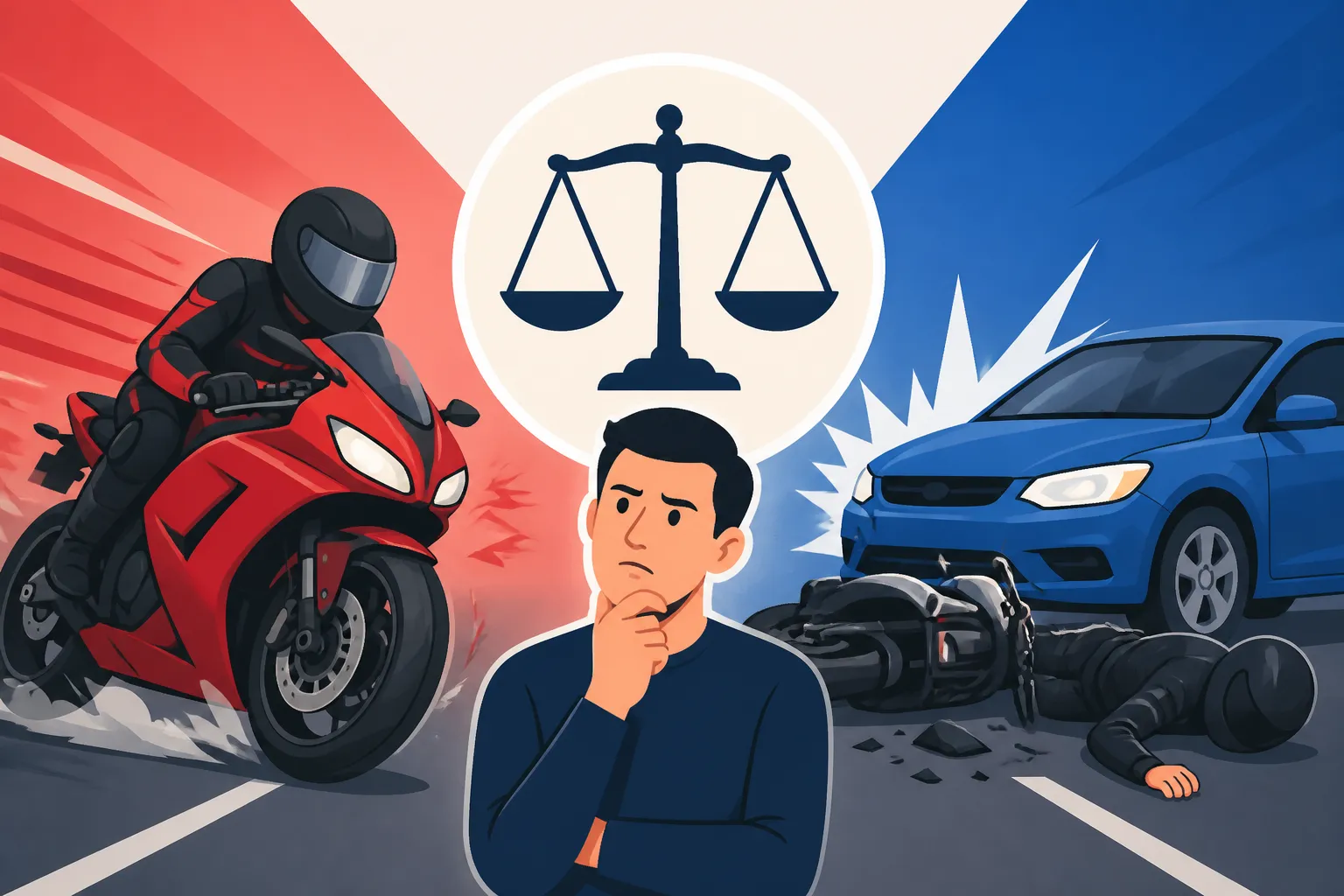
When you’ve been in a motorcycle accident where speed was a factor, whether yours or another driver’s, it often feels like you’re immediately fighting an uphill battle. The narrative often jumps straight to "the motorcyclist was speeding," and suddenly, it feels like the weight of blame is solely on your shoulders. It’s a frustrating and often unfair assumption, especially when other elements might have played a crucial role. This comprehensive guide is here to unravel the complexities of fault determination in a speeding motorcycle accident, exploring how speed impacts liability, when others might still be at fault, and what you can do to protect your claim.
Understanding How Speed Impacts Fault in a Motorcycle Accident
It’s a common misconception that if a motorcycle rider was speeding, they are automatically 100% at fault for any accident that occurs. While speed can undeniably be a significant contributing factor, the reality is far more nuanced. Determining fault involves looking at all actions leading up to the crash, not just one.
Speeding as a Primary or Contributing Factor
First off, let’s talk about the direct impact of speed. When a motorcycle is traveling above the posted limit, or at an unsafe speed for conditions (even if below the limit), it creates a chain reaction of increased risk. Higher speeds reduce the time a rider has to react to unexpected hazards, like a car suddenly turning in front of them or debris in the road. It also drastically increases the distance needed to come to a complete stop, making collisions more likely and often more severe.
For instance, imagine you're riding your Harley-Davidson on a highway posted at 65 mph, but you're going 80 mph. Suddenly, a car merges into your lane without looking, cutting you off. While the other driver was negligent, your speed could be argued as a factor that prevented you from avoiding the collision or minimizing its impact. The insurance adjuster will scrutinize everything, from your reaction time to the physics of the crash, to ascertain How Speeding Affects Motorcycle Accident Fault. If your speed was so excessive that no reasonable driver, even a careful one, could have avoided the crash, it might weigh heavily against you. However, it rarely means you're solely responsible, especially if another party clearly violated traffic laws.
The Role of Unsafe Speed for Conditions
It’s important to distinguish between speeding (exceeding the posted limit) and traveling at an unsafe speed for conditions. Sometimes, the posted speed limit might be 55 mph, but if you're navigating a winding mountain road in heavy rain or dense fog, even 45 mph could be considered an unsafe speed. If an accident occurs under these circumstances, and it's determined that your speed was inappropriate for the prevailing weather or road conditions, this can be factored into fault determination, even if you weren't technically breaking the speed limit.
Consider a scenario in Colorado where a rider is going 40 mph on a mountain pass with a 45 mph limit, but black ice is present. If they lose control and crash, their speed, while technically legal, could still be deemed unsafe for the hazardous conditions. This isn't about blaming the victim; it's about objectively assessing all factors that contributed to the incident. Understanding How Fault Is Determined in Motorcycle Accidents requires a deep dive into every detail.
Shared Fault and the Impact of Comparative Negligence
Even if you were speeding, it doesn’t automatically mean you forfeit your right to recover damages. Most states operate under a system of "comparative negligence," which allows multiple parties to share fault in an accident. This is a critical concept for motorcycle riders, who often face inherent biases from juries and insurance adjusters.
When Another Driver is Also Negligent
Let's be clear: another driver's negligence doesn't magically disappear just because you were going a little fast. Many motorcycle accidents are caused by drivers who fail to see motorcyclists, make illegal turns, or are simply distracted.
For example, imagine you're riding your Triumph Thruxton at 15 mph over the limit on a four-lane road. A car turning left from the opposite direction fails to yield the right-of-way and pulls directly into your path. You might not have been able to stop in time due to your speed, but the other driver undeniably committed a serious traffic violation by failing to yield. In this instance, both parties contribute to the accident, and fault will be assigned proportionally. This is where Comparative Negligence in Motorcycle Accidents comes into play. States like California, for example, have "pure comparative negligence," meaning you can recover damages even if you're 99% at fault, though your compensation will be reduced by your percentage of fault. Other states, like Texas or Ohio, follow a "modified comparative negligence" rule (50% or 51% bar rule), where you can only recover if your fault is below a certain threshold.
It's infuriating when you know the other driver was clearly in the wrong, yet your speed gets used as an easy scapegoat. Insurance companies are notorious for trying to minimize their payout by shifting as much blame as possible onto the motorcyclist. They might argue that if you hadn't been speeding, you would have avoided the collision entirely, even if the other driver ran a red light. This is why it’s so important to gather comprehensive evidence and have an experienced advocate on your side.
Road Hazards or Defective Parts as Contributing Factors
Sometimes, speeding isn't the only external factor beyond another driver's direct negligence. What if you were speeding, but swerved to avoid a massive pothole that the city neglected to fix, leading to a crash? Or what if your motorcycle's brakes failed due to a manufacturing defect, making it impossible to slow down even if you tried?
In such cases, the city or the motorcycle manufacturer could bear some responsibility. While your speed might still be a factor, the presence of a dangerous road hazard or a faulty component introduces additional parties who could be held liable. For instance, if you hit a massive pothole on a poorly maintained stretch of I-95 in Florida, and your speed made the impact worse, the state Department of Transportation might share some liability. Similarly, if a part, say from a reputable brand like Brembo (brakes) or Dunlop (tires), failed due to a defect, then Manufacturer Liability for Defective Parts could become a factor. These are complex scenarios that require meticulous investigation to determine the various contributions to the accident.
Proving Fault and Protecting Your Claim
After a motorcycle accident, especially one involving allegations of speeding, the burden often falls on you to prove your case. This is not a time to be passive; every action you take can impact the outcome.
Immediate Steps After the Accident
The moments immediately following a crash are chaotic, but what you do can significantly impact the determination of fault. Your first priority, of course, is safety and seeking medical attention for any injuries. However, as soon as it's safe and possible, start documenting everything.
Take clear photos and videos of the accident scene, including your motorcycle's position, the other vehicle's position, skid marks, road conditions, traffic signs, and any relevant landmarks. Don't forget to photograph your injuries and damaged gear. Get contact information from witnesses. If you didn't, or couldn't, do all of this, don't worry—it’s never too late to start gathering information. Reporting the accident to the police is crucial, as their report can offer an initial, albeit sometimes flawed, assessment of fault. Remember, never admit fault at the scene, even if you think you were speeding. Stick to the facts. For more detailed steps, check out our guide on What to Do After a Motorcycle Accident.
Gathering Crucial Evidence
Proving fault, particularly when your speed is questioned, requires concrete evidence. This isn't just about what you saw or felt; it's about objective data.
- Police Reports: While not always the final word, police reports provide an official record of the accident, including diagrams, witness statements, and any citations issued. If the report unjustly blames you for speeding, it can be challenged.
- Witness Statements: Independent witnesses can be incredibly valuable, especially if they can corroborate that the other driver was negligent (e.g., they weren't looking, ran a stop sign).
- Dashcam/Helmet Cam Footage: This is gold. If you or the other vehicle had a dashcam or a helmet camera, the footage can provide an irrefutable account of speeds, traffic violations, and the moments leading up to the crash.
- Accident Reconstruction: For complex cases, especially those with serious injuries or disputed fault, an accident reconstruction expert can recreate the crash dynamics using physics, vehicle damage, skid marks, and other data to pinpoint exactly what happened and who was at fault. This can be crucial in demonstrating that even with your speed, the accident was unavoidable due to the other driver's actions.
- Traffic Citations: A speeding ticket might be issued, but it doesn't automatically mean you're solely at fault for the accident itself. A skilled attorney can help demonstrate that while a traffic violation occurred, it wasn't the proximate cause of the entire accident. Our article on Motorcycle Accident Evidence for Proving Fault delves deeper into the types of evidence you’ll need.
How Insurance Companies Assign Blame
Insurance companies are profit-driven entities, and their primary goal is to pay out as little as possible. When a speeding motorcyclist is involved, they will often try to use that fact to their advantage, regardless of other circumstances. They are experts at How Insurance Companies Assign Blame to Riders and will leverage any perceived fault on your part to reduce or deny your claim. They might interview witnesses, pull traffic camera footage, or even try to bait you into admitting fault during recorded conversations. It's important to understand this inherent bias and approach all interactions with them cautiously.
They might try to argue that even if the other driver was negligent, your speed contributed to your severe injuries, attempting to reduce your settlement amount. This is why having an experienced motorcycle accident lawyer is essential; they understand these tactics and can effectively counter them, ensuring your rights are protected.
Navigating Legal Complexities and Your Right to Compensation
Even with shared fault, you still have rights and potential avenues for compensation. The legal system is designed to apportion responsibility, not just assign blanket blame.
Understanding Your State's Comparative Negligence Laws
As mentioned, most states use comparative negligence, but the specifics matter.
| State Type | Description | Impact on Recovery | Examples of States |
|---|---|---|---|
| Pure Comparative Fault | A claimant can recover damages even if they are largely at fault (e.g., 99% at fault), but their compensation is reduced by their percentage of fault. | If you are 75% at fault for speeding, but the other driver was 25% at fault, you could still recover 25% of your total damages. | California, Florida, New York, Louisiana |
| Modified Comparative Fault (50% Rule) | A claimant can recover damages if their fault is 50% or less. If they are found more than 50% at fault, they cannot recover any damages. | If you are found 50% at fault, you can recover 50% of your damages. If you are found 51% at fault, you recover nothing. | Arkansas, Colorado, Georgia, Idaho, Kansas, Maine, Nebraska, North Dakota, Oklahoma, Utah, West Virginia |
| Modified Comparative Fault (51% Rule) | A claimant can recover damages if their fault is 50% or less. If they are found 51% or more at fault, they cannot recover any damages. | If you are found 50% at fault, you can recover 50% of your damages. If you are found 51% at fault, you recover nothing. This is the more common rule. | Arizona, Connecticut, Delaware, Illinois, Indiana, Iowa, Massachusetts, Michigan, Minnesota, Montana, Nevada, New Hampshire, New Jersey, Ohio, Oregon, Pennsylvania, South Carolina, Texas, Wisconsin |
If you were When a Rider Is Partially at Fault, it doesn't mean your case is over. In many states, you can still recover a significant portion of your damages. It’s vital to understand the rules in your specific state, as they directly impact how much compensation you can realistically expect. Our article on How Comparative Negligence Reduces Your Payout offers further insights into this crucial aspect.
The Role of a Motorcycle Accident Attorney
Navigating the complexities of fault determination, especially with allegations of speeding, is incredibly challenging. Insurance companies have vast resources and experienced legal teams whose sole job is to protect their bottom line. As a motorcycle rider, you’re already fighting against a common stereotype that riders are reckless.
An experienced motorcycle accident attorney can level the playing field. They know how to investigate accidents thoroughly, gather crucial evidence, challenge biased police reports, and negotiate aggressively with insurance companies. They can bring in expert witnesses like accident reconstructionists to prove that even if you were speeding, the other driver's actions were the primary cause of the collision, or that your speed did not contribute to the severity of certain injuries. They understand How Traffic Violations Affect Fault and how to mitigate their impact on your claim. Ultimately, their goal is to maximize your compensation by proving the other party's negligence and minimizing any fault unfairly attributed to you. This includes demonstrating that even if you were speeding, you can still recover.
Conclusion
Being involved in a motorcycle accident where speeding is alleged is a terrifying and frustrating experience. It’s easy to feel overwhelmed and assume the blame is entirely yours. However, the legal reality is often far more complex. While speeding can certainly be a factor, it rarely means you are entirely at fault, especially when other drivers' negligence, road hazards, or defective equipment played a role. Understanding the nuances of fault, gathering robust evidence, and having a knowledgeable advocate on your side are crucial steps to ensure that your rights are protected and that you receive the compensation you deserve. Don't let assumptions or biases define the outcome of your claim.
Disclaimer
This article provides general information and is not intended as legal advice. Motorcycle accident claims are complex and highly dependent on the specific facts and applicable laws of your jurisdiction. It is crucial to consult with a qualified motorcycle accident attorney to discuss your individual situation and understand your legal options.