How to Prove the Other Driver Was Distracted
It’s incredibly frustrating when you’ve been involved in a motorcycle accident, you know for a fact the other driver wasn't paying attention, but proving it feels like an uphill battle. Distracted driving is a menace, and unfortunately, it's a common cause of motorcycle crashes. This guide will walk you through the essential steps and strategies to gather the evidence you need to prove the other driver was distracted, helping you build a stronger claim and get the justice you deserve.
Understanding Distracted Driving and Its Impact on Motorcycle Accidents
Motorcyclists are inherently more vulnerable on the road. When another driver takes their eyes, hands, or mind off the task of driving, even for a second, it can lead to catastrophic consequences for a rider. The "I didn't see you" excuse, so often heard after a motorcycle crash, can frequently be traced back to some form of driver distraction.
What Qualifies as Distracted Driving?
Distracted driving isn't just about someone glued to their cell phone, although that's certainly a major culprit. It encompasses anything that diverts a driver's attention from operating their vehicle safely. Think of it in three main categories:
- Manual Distractions: These are actions where a driver takes their hands off the wheel. This could be reaching for something in the backseat, adjusting the radio or navigation system, eating or drinking, or even grooming. We've all seen drivers doing these things, and when they involve larger vehicles near motorcycles, the danger escalates dramatically.
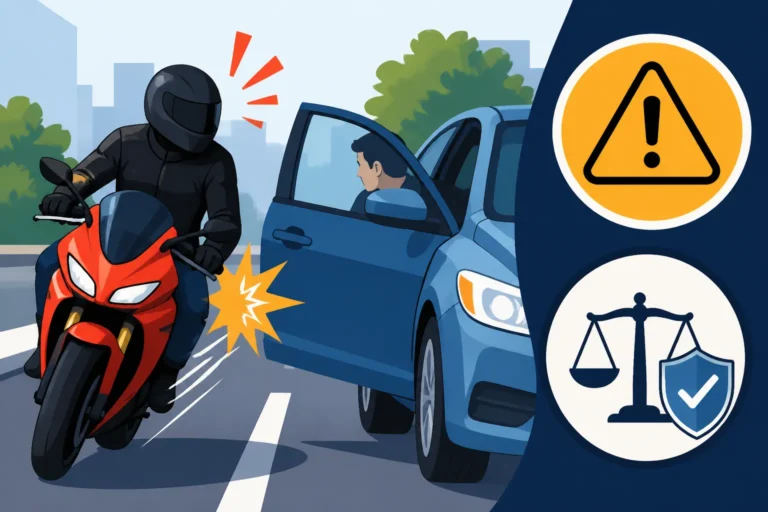
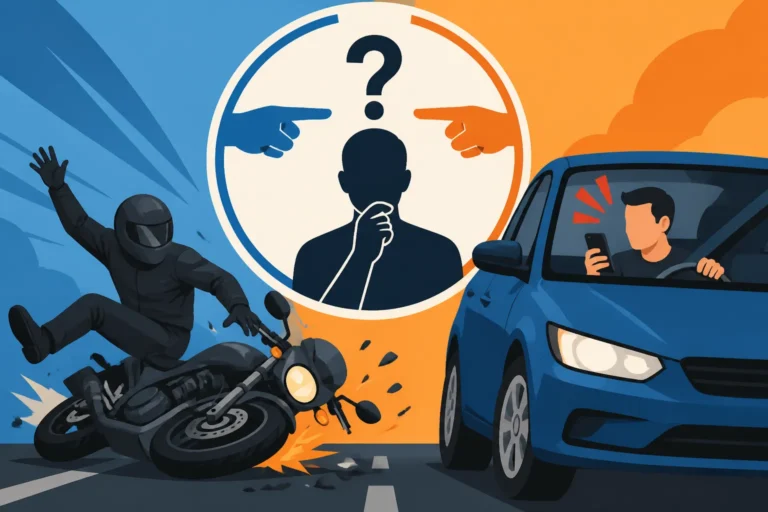
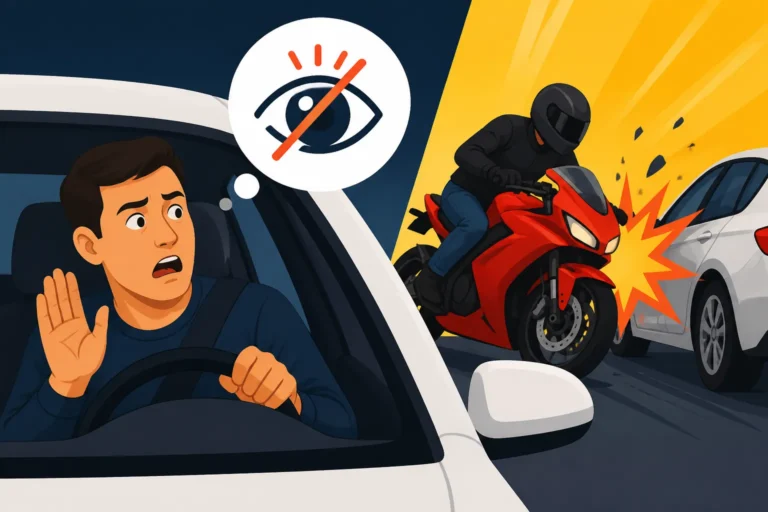
- Visual Distractions: These are actions where a driver takes their eyes off the road. This is the most common form we think of when we hear "distracted driving" – texting, reading a map, looking at billboards, or rubbernecking at another accident scene. For a motorcyclist, being invisible for even a split second can mean a driver fails to yield or turns directly into their path.
- Cognitive Distractions: These are actions where a driver takes their mind off the task of driving. This is often the hardest to prove, as it's an internal state. Examples include daydreaming, being deep in thought, engaging in an intense conversation with passengers, or being upset. While these might seem less direct than texting, they can equally impair a driver's reaction time and judgment, leading to serious accidents.
It's important to remember that many distractions involve a combination of these types. For instance, texting on a phone involves manual, visual, and cognitive distraction all at once, making it incredibly dangerous. Understanding these categories will help you identify potential signs of distraction when recounting the accident or collecting evidence.
Why Proving Distraction is Crucial for Your Claim
In any motorcycle accident claim, establishing fault is paramount. If you can prove that the other driver was distracted, you significantly strengthen your position that they were negligent and thus responsible for the accident. This isn't just about pointing fingers; it directly impacts your ability to recover compensation for your injuries, medical bills, lost wages, and pain and suffering.
When the other driver's insurance company is evaluating your claim, evidence of distracted driving clearly points to their insured's negligence. Without this proof, they might try to shift some or all of the blame onto you, a tactic often seen in cases involving motorcyclists. For instance, they might argue you were speeding or that your motorcycle wasn't visible. This is where a clear case of the other driver's distraction can counteract such unfair accusations. Proving fault in a motorcycle accident is often complex, and evidence of distraction can be a deciding factor. If your claim goes to court, a jury is much more likely to side with a rider who was hit by a driver clearly not paying attention.
Gathering Evidence at the Scene and Immediately After the Crash
The moments following a motorcycle accident are chaotic and often painful, but what you do in these crucial minutes and hours can make or break your ability to prove the other driver was distracted. It's tough, but focusing on gathering specific details can be incredibly beneficial. For more general advice on immediate steps, check out our guide on what to do after a motorcycle accident.
Immediate Actions to Take
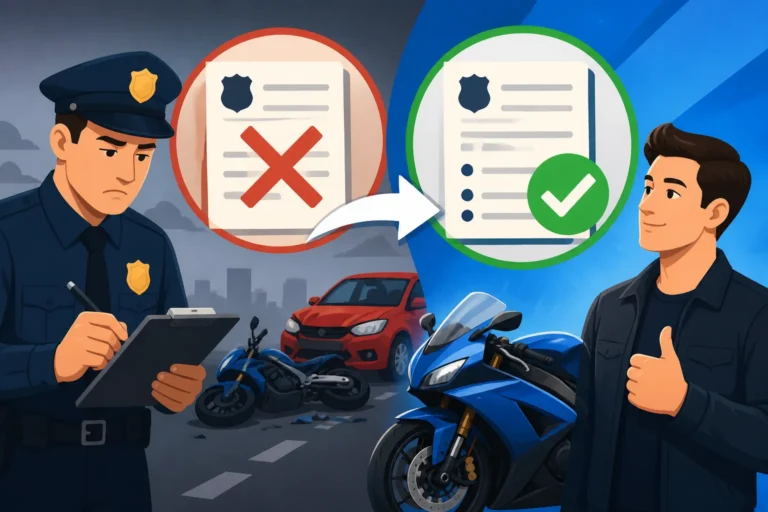
First and foremost, your safety and health are the priority. If you're able, move yourself and your motorcycle to a safe location if possible, but only if it doesn't worsen your injuries. Then, call 911 immediately. When the police arrive, they will create an official police report, which can be a key piece of evidence in determining who is at fault in a motorcycle accident.
While waiting for emergency services, try to observe the other driver. Are they still on their phone? Do they seem flustered or overly apologetic? Sometimes, a driver's immediate behavior or statements can give away their distraction. For example, if they say something like, "I was just checking my GPS for a second," or "My kid dropped their toy," these are admissions of distraction. However, never admit fault yourself, even if you think you might have been partially to blame. Even a simple "I'm sorry" can be twisted and used against you by insurance companies.
If you're physically able, exchange information with the other driver: name, contact information, insurance details, and vehicle license plate number. Note down the make, model, and color of their vehicle. This initial data collection forms the foundation of your claim.
Documenting the Scene with Photos and Video
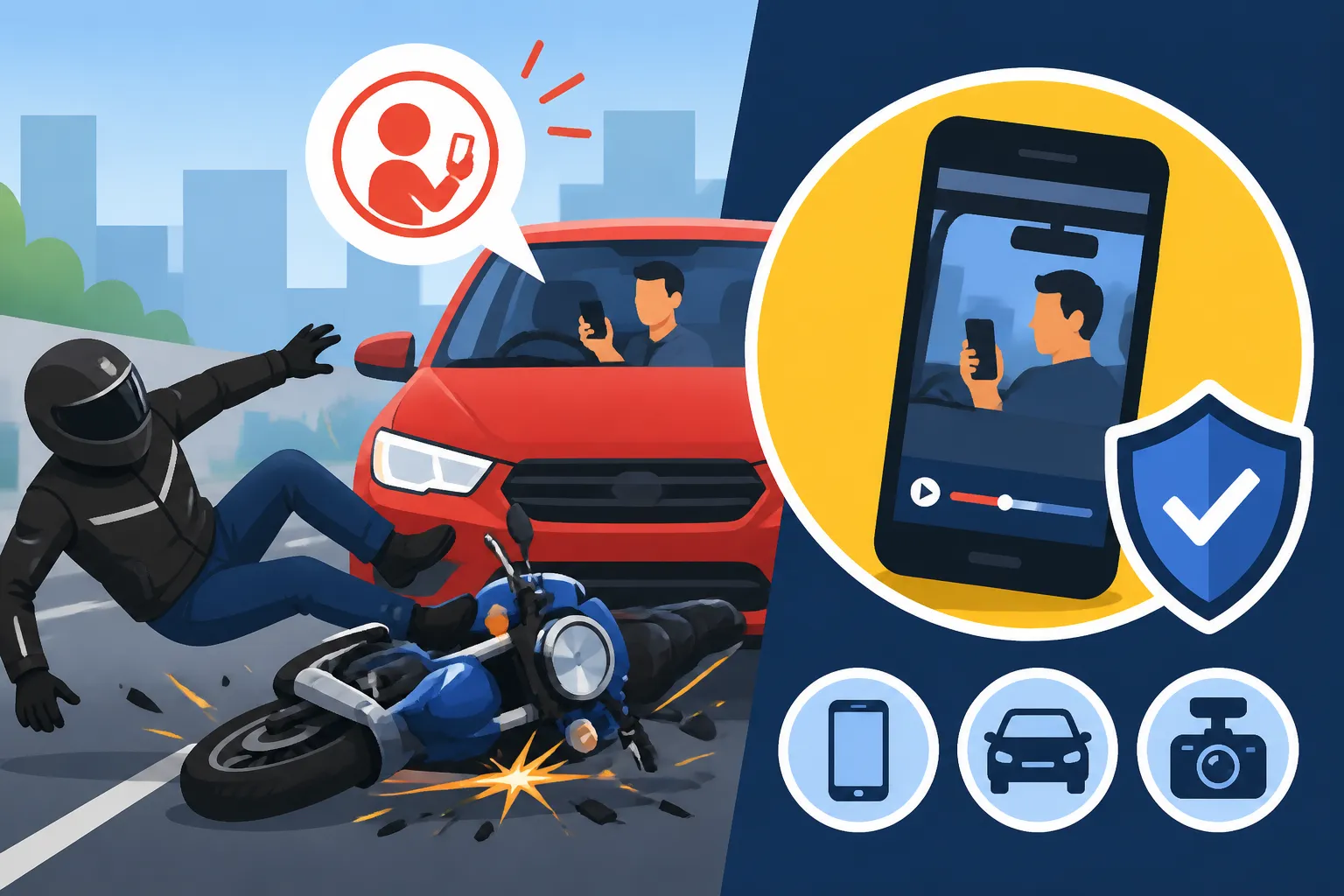
In today's world, almost everyone has a smartphone with a camera. This is your most powerful tool for documenting the scene. Take as many photos and videos as you possibly can from multiple angles. Don't just focus on the damage to your bike and their car; try to capture the broader scene.
Think about what might show distraction:
- The other driver's vehicle interior: Can you see a cell phone in their lap, on the dashboard, or even an open fast-food wrapper or spilled drink? These might be circumstantial, but they paint a picture.
- The driver themselves: Without being confrontational, can you capture their demeanor? If they're clearly still preoccupied with something in their hand, try to get a shot.
- Skid marks, debris, and final resting positions: These help an accident reconstruction expert understand the dynamics of the crash. The absence of skid marks from the other vehicle might suggest a delayed reaction due to inattention.
- Traffic signals and road signs: These establish the context of the collision.
- Road hazards: While your primary goal is to prove the other driver was distracted, documenting any road hazards can provide additional context, or even establish third-party liability in a motorcycle accident.
- Your injuries: Capture any visible injuries, like road rash or cuts, as well as damage to your helmet and gear. This helps to show the severity of impact and the physical toll the accident took.
High-quality, time-stamped photos and videos are invaluable motorcycle accident evidence for proving fault. They provide an objective record that's hard for the other side to dispute later on.
Securing Witness Testimony
Independent witnesses are gold in an accident claim, especially when proving distraction. Drivers involved in accidents, particularly those who were distracted, often deny their negligence. A third party who saw what happened can provide unbiased corroboration.
- Identify witnesses: Look for anyone who stopped at the scene, or even people in nearby businesses or homes who might have seen or heard the impact.
- Get contact information: Ask for their names, phone numbers, and email addresses.
- Ask what they saw: Politely inquire if they noticed the other driver's behavior just before the crash. Did they see them on a phone? Did they appear to swerve or drift? Did they simply not react? Even small details can be significant.
- Record statements if possible: With their permission, you can use your phone to record their verbal statement at the scene. This captures their observations while they are fresh in their mind.
If you or a witness explicitly heard the other driver admit to being distracted, make sure that is noted. Even if the police report doesn't explicitly state distracted driving, strong witness accounts can help overturn initial assumptions or interpretations. Learn more about how witnesses affect motorcycle fault.
Post-Accident Investigation and Legal Strategies
Once the immediate aftermath is handled, the real investigative work begins. This is where a seasoned motorcycle accident lawyer can make a significant difference, as they have the resources and legal knowledge to dig deeper and compel cooperation that you might not be able to achieve on your own.
Requesting Cell Phone Records
One of the most direct ways to prove cell phone distraction is by obtaining the other driver's cell phone records. However, this isn't as simple as just asking for them. Due to privacy laws, you can't just walk up to a phone company and request someone else's records.
- Subpoena Power: Typically, obtaining cell phone records requires a legal subpoena, which means you'll need legal representation. A lawyer can petition the court to order the cell phone provider to release relevant data, such as call logs, text message timestamps, and even data usage during the time of the accident.
- Analysis of Records: Even once you get the records, they need to be carefully analyzed. The goal is to see if there was active use (calling, texting, data streaming) at or immediately before the time of the crash. This can provide irrefutable evidence that the driver's attention was elsewhere.
- Limitations: Keep in mind that cell phone records don't always show what the driver was doing, only that the phone was in use. However, evidence of a text message sent or received right at the moment of impact is highly compelling. It also doesn't prove "hands-free" distraction, where a driver might be talking on Bluetooth but still cognitively distracted. However, any phone activity during the critical window can bolster your claim of negligence.
This process is usually initiated once a lawsuit has been filed, and it's a powerful tool in proving distracted driving caused your motorcycle accidents caused by distracted driving.
Obtaining Dashcam and Surveillance Footage
In our increasingly surveilled world, video evidence is becoming more prevalent and extremely valuable.
- Dashcams: Many vehicles, especially commercial ones, are equipped with dashcams. If the other driver had one, that footage could be damning. More often, however, it's about finding other vehicles that might have had dashcams that captured the incident. If you saw a truck or a car with a dashcam near the scene, try to get their information. Your attorney can then contact them to request the footage. Learn more about how dashcam footage proves fault.
- Traffic Cameras: Intersections, particularly in larger cities like Los Angeles or Dallas, often have traffic cameras. These are typically managed by municipal or state Department of Transportation agencies. Footage might not be stored indefinitely, so acting quickly is essential. Your lawyer can formally request this footage before it's deleted.
- Business Surveillance: Look for nearby businesses (convenience stores, gas stations, banks, restaurants) that might have exterior surveillance cameras. These cameras often capture activity on adjacent streets or intersections. Again, time is of the essence, as many businesses overwrite their footage regularly. Your legal team can contact these businesses to secure any relevant recordings.
- Residential Security Cameras: Don't forget doorbell cameras or home security systems. Many homeowners now have devices like Ring or Nest that record activity around their property. If the accident happened near a residential area, a quick canvass of the neighborhood might reveal a potential source of video.
This kind of objective visual evidence can be incredibly powerful in showing the sequence of events and, crucially, the other driver's lack of attention leading up to the crash.
The Role of Accident Reconstruction Experts
Sometimes, direct evidence of distraction is elusive, or the other driver simply denies everything. This is where an accident reconstruction expert can become indispensable. These professionals are trained to analyze the physical evidence at the scene and use scientific principles to piece together what happened.
- Analyzing Physical Evidence: They'll examine tire marks, vehicle damage, debris patterns, and the final resting positions of vehicles. They can calculate speeds, angles of impact, and even reaction times.
- Inferring Distraction: An expert might conclude that given the conditions, the absence of braking or evasive maneuvers from the other driver is inconsistent with an attentive driver. For example, if there were clear lines of sight, good weather, and no obstacles, an attentive driver should have seen your motorcycle. Their failure to react could strongly imply a cognitive or visual distraction.
- Courtroom Testimony: If your case proceeds to trial, an accident reconstruction expert can present their findings to a jury in a clear, compelling manner, helping them understand how the physics of the crash points to the other driver's negligence due to distraction. This specialized testimony can be crucial in cases where fault is disputed in a motorcycle crash.
Overcoming Common Defenses and Challenges
Even with solid evidence, insurance companies and opposing legal teams will often try to minimize the other driver's fault or shift blame. Being prepared for these common defenses is crucial.
The "I Didn't See You" Defense
This is perhaps the most infuriating and common defense deployed against motorcyclists. Drivers often claim they simply "didn't see" a motorcycle, implying the rider was somehow invisible or at fault for not being seen. However, in many cases, this defense is a thinly veiled admission of inattention, which is a form of distracted driving.
- Challenging the Claim: Your argument against this defense centers on the "duty to see." Every driver has a legal obligation to operate their vehicle safely and be aware of their surroundings. If conditions were clear (daylight, no obstructions), and the other driver still "didn't see" you, it suggests they weren't looking properly or were visually or cognitively distracted.
- Proving Visibility: Evidence like photos of your motorcycle's bright color, active headlights, or your reflective gear can help counter the "invisibility" argument. Witness testimony stating you were clearly visible can also be powerful.
- Link to Distraction: Your legal team will argue that "I didn't see you" is synonymous with "I wasn't paying attention," which is negligent. This defense directly ties into the concept of distracted driving. For more on this common defense, read up on the 'I Didn't See the Motorcycle' Defense Explained.
Driver Denials and Lack of Cooperation
It's common for drivers who caused an accident to deny responsibility, especially if they know they were distracted. They might refuse to provide certain information, or simply claim they were fully attentive.
- Staying Calm and Persistent: Never get into a shouting match or confrontational argument with the other driver. Let the police and your attorney handle the communication.
- Legal Leverage: This is where a lawyer's ability to issue subpoenas and conduct discovery becomes essential. They can compel the driver to answer questions under oath (depositions) and produce documents, like cell phone records. If a driver lies under oath, it can severely damage their credibility in court.
- Building a Circumstantial Case: Even without direct admission, a strong circumstantial case built from witness statements, accident reconstruction, and other physical evidence can often overcome a driver's denials. Their lack of cooperation can sometimes even be viewed negatively by a jury.
When the Other Driver Claims You Were Distracted
Sometimes, the tables are turned, and the other driver tries to blame you for being distracted or otherwise at fault. This is particularly common in states that follow comparative negligence laws, where your compensation can be reduced by your percentage of fault. For example, in a state like California, if you are found 20% at fault, your settlement will be reduced by 20%.
- Counter-Evidence: Just as you collect evidence against them, ensure you have evidence to show your attentiveness. This includes a clear police report, witness statements that corroborate your story, and possibly even your own cell phone records showing no activity at the time of the crash.
- Documentation of Your Gear: Showing that you were wearing appropriate motorcycle safety gear and your bike was in good working order can also help portray you as a responsible rider.
- Accident Reconstruction: An accident reconstruction expert can also testify that your actions were appropriate and not indicative of distraction, bolstering your claim that you were not at fault.
- Traffic Violations: Be aware that traffic violations, even minor ones, can be used to assign fault. If you were cited, your lawyer will help address how traffic violations affect fault.
Maximizing Your Claim by Proving Distraction
Proving the other driver was distracted is a cornerstone of maximizing your motorcycle accident settlement. This isn't just about a moral victory; it directly translates into your ability to recover full compensation for all the ways the accident has impacted your life.
The Financial Impact of Distracted Driving
The financial toll of a motorcycle accident can be staggering. You're likely facing immediate medical expenses, potentially long-term rehabilitation costs, lost income from time off work, and the expense of repairing or replacing your damaged motorcycle. When you can definitively prove the other driver's distraction, it makes it much harder for their insurance company to deny or minimize these economic damages.
For instance, if you suffered a serious injury like a spinal cord injury from a motorcycle accident, the medical bills alone could be astronomical, let alone the loss of future earning capacity. A clear case of distracted driving negligence helps ensure that the other driver's insurance is held responsible for these significant costs, rather than leaving you to shoulder the burden.
Addressing Non-Economic Damages
Beyond the calculable financial losses, there are also non-economic damages, such as pain and suffering, emotional distress, and loss of enjoyment of life. These are often substantial in motorcycle accidents due to the severe nature of injuries.
- Severity of Injuries: The more severe and long-lasting your injuries, the higher these damages tend to be. Proving distraction establishes clear negligence, making it more challenging for the insurance company to argue that your pain and suffering isn't directly related to their insured's carelessness.
- Psychological Impact: Being hit by a distracted driver can also lead to significant psychological trauma, including PTSD. Documenting this through medical professionals and personal journals can strengthen your claim for these non-economic damages. When the other driver's negligence is so blatant, it supports a higher award for these less tangible but equally real losses.
The Role of Legal Counsel in Proving Distraction
While you can start gathering evidence on your own, the complex nature of proving distraction, especially when faced with denials, makes professional legal help almost essential. A skilled motorcycle accident lawyer has the experience and resources to:
- Investigate Thoroughly: They know what evidence to look for, how to collect it legally, and how to preserve it.
- Navigate Legal Channels: From issuing subpoenas for cell phone records to requesting traffic camera footage, they have the legal standing to access crucial evidence.
- Negotiate Effectively: Armed with strong evidence of distraction, your lawyer can negotiate with insurance companies from a position of strength, countering lowball offers and pushing for a fair settlement.
- Represent You in Court: If a settlement can't be reached, they are prepared to present your case, including evidence of the other driver's distraction, persuasively in court.
Having an attorney ensures that all available avenues for proving distraction are explored, from detailed police reports to expert witness testimony. This professional guidance significantly increases your chances of a successful outcome and fair compensation.
Conclusion
Being involved in a motorcycle accident is a harrowing experience, and the added challenge of proving the other driver's distraction can feel overwhelming. However, by understanding what constitutes distracted driving and proactively gathering evidence from the scene and through diligent investigation, you can build a strong case. From meticulous photos and witness statements to subpoenaing cell phone records and engaging accident reconstruction experts, every piece of evidence contributes to establishing the other driver's negligence. Remember, documenting every detail and seeking professional legal guidance are your best bets to navigate this complex process and secure the compensation you rightfully deserve.
Disclaimer
This article provides general information and is not intended as legal advice. Motorcycle accident claims are highly specific to individual circumstances and state laws. It is crucial to consult with a qualified motorcycle accident attorney to discuss your particular situation and understand your legal options.