How to Exchange Information After a Crash
Riding a motorcycle offers a unique sense of freedom, but it also comes with inherent risks. When the unthinkable happens, and you find yourself involved in a crash, the immediate aftermath can be disorienting, painful, and confusing. Beyond the shock and concern for your well-being, knowing how to properly exchange information after a motorcycle accident is absolutely crucial for protecting your rights, your recovery, and any potential insurance claim. This guide will walk you through the essential steps to ensure you gather everything you need and avoid common pitfalls.
The Immediate Aftermath: Prioritizing Safety and Calling for Help
The moments right after a motorcycle crash are often chaotic and overwhelming. Your adrenaline is probably pumping, and you might be injured. It’s vital to try and stay as calm as possible and focus on the immediate priorities before diving into information exchange.
Prioritizing Your Safety and the Scene
Your first and foremost concern should always be your personal safety and the safety of anyone else involved. If you’re able to move, get yourself and your motorcycle out of the flow of traffic, if it’s safe to do so. This might mean rolling your bike to the shoulder or simply moving yourself to a safer spot on the roadside.
Even if you feel shaken but uninjured, don’t assume you’re completely fine. The shock can mask pain, and you might have injuries that aren't immediately obvious. Once you’re in a safe location, take a moment to assess yourself. Look for any immediate threats, like leaking fuel or ongoing traffic hazards. If you can, use flares, reflective triangles, or even your motorcycle’s hazard lights to alert oncoming traffic to the accident scene. This helps prevent secondary collisions, which can be even more devastating.
Contacting Emergency Services and Law Enforcement
No matter how minor the collision might seem, always call 911 or your local emergency number to report the accident. For a motorcyclist, even a low-speed impact can result in significant injuries, and property damage can be substantial. Emergency responders can assess injuries, secure the scene, and direct traffic safely.
Calling the police is particularly important. Their presence at the scene leads to the creation of an official police report. This report isn't just a formality; it's a critical piece of evidence for your insurance claim and potential legal proceedings. A police report can help establish initial facts, document vehicle positions, and sometimes even offer an opinion on fault. When the police arrive, make sure to give them a clear, concise, and factual account of what happened. Remember, you don't have to speculate or offer opinions; stick to the observable facts. It's often helpful to review our guide on What to Say to Police After a Motorcycle Accident to prepare yourself.
Essential Information to Exchange with Other Drivers
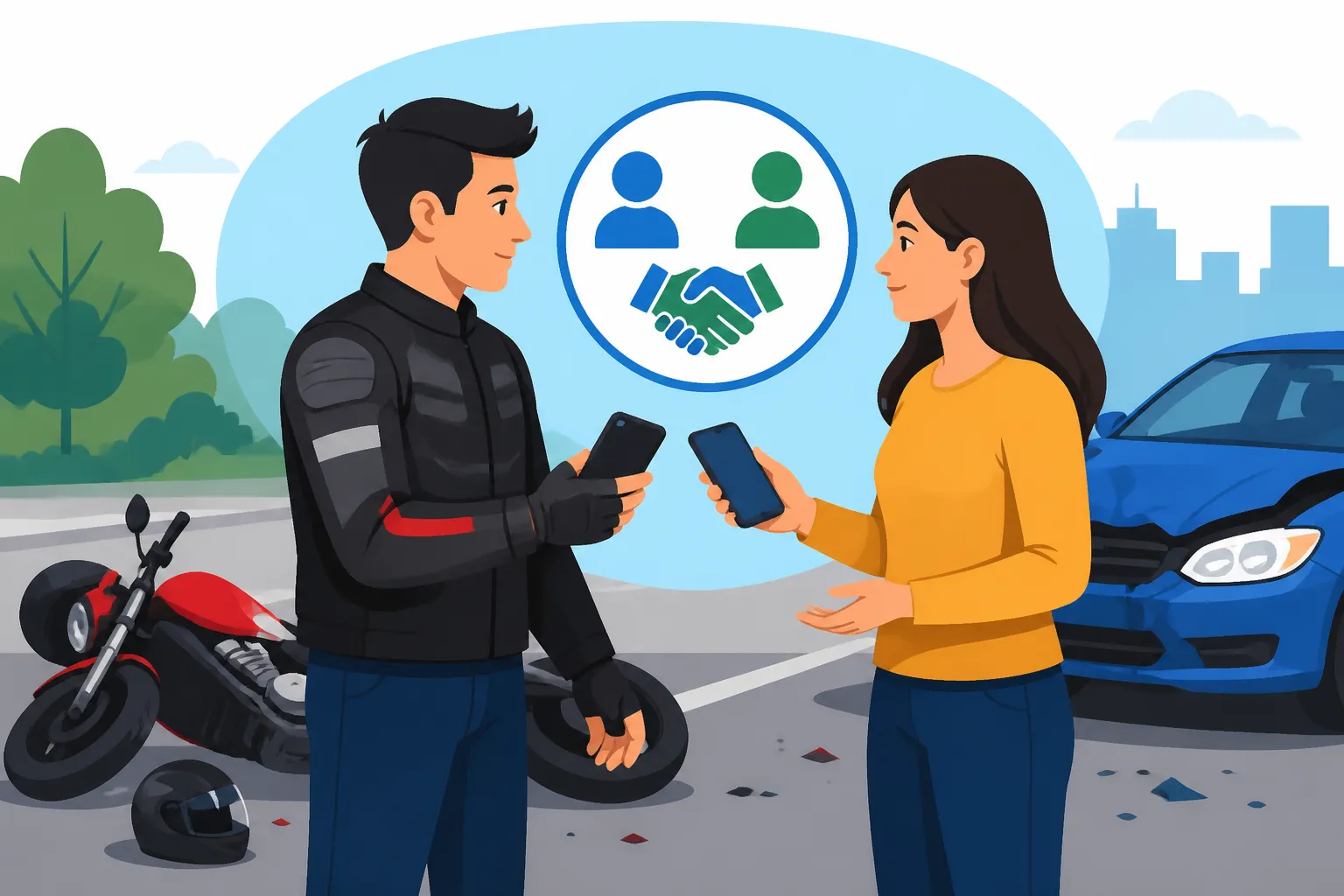
Once the scene is safe and emergency services have been contacted, it’s time to start gathering and exchanging information with the other driver(s) involved. This is a crucial step that directly impacts your ability to pursue a claim for damages or injuries.
Personal and Contact Details
This might seem obvious, but in the stress of the moment, it's easy to forget basic contact information. You need to get the full legal name of the other driver, their current phone number, and their residential address. If there are passengers in their vehicle, you should also try to get their names and contact information, as they could serve as witnesses.
A quick cross-check of their driver's license with the information they provide is always a good idea to confirm accuracy. Don't be shy about asking for this information, it's standard procedure after an accident. This ensures you can follow up with them or their insurance company later. Having this directly from the source is far better than relying solely on the police report, which might take days or weeks to become available.
Vehicle Information
Beyond just knowing the type of car, you'll want to gather specific details about the other vehicle involved. This includes the make, model, and year of the car. Most importantly, get the license plate number. Note down the state where the vehicle is registered, as this can affect insurance laws and how claims are processed.
If it's safe and accessible, try to get the Vehicle Identification Number (VIN). The VIN is usually located on the dashboard, visible through the windshield, or on the driver's side door jamb. This unique identifier provides definitive proof of the vehicle involved and can be very useful for your insurance company. Documenting all these details comprehensively helps prevent any confusion or disputes down the line regarding which vehicle was involved in the collision.
Insurance Information
This is arguably the most critical piece of information to exchange. You need the name of the other driver’s insurance company and their policy number. If the driver is not the policyholder (e.g., they're driving a borrowed car), you should also get the full name and contact information of the actual policyholder.
Having this information allows you or your insurance company to directly initiate a claim with their insurer. Without it, you might face delays while trying to track down this crucial data. Jot it down carefully, double-checking any numbers or letters to ensure accuracy. It’s also wise to provide your own insurance information to the other driver, as required by law in most jurisdictions. Remember, the sooner you have this, the sooner you can start the process of seeking compensation for your damages.
Driver's License Details
Obtaining the other driver's license number and the state of issuance serves multiple purposes. Firstly, it verifies their identity. Secondly, it confirms they are a licensed driver, which can be relevant to insurance coverage. Thirdly, it provides another layer of contact information should other details prove incorrect or insufficient.
Always try to visually confirm the driver's license details against the person presenting it, ensuring it's not an expired or suspended license if you can tell at a glance. While you shouldn't confront them, simply observing helps. This step adds a layer of due diligence to your information gathering and bolsters the credibility of the data you've collected.
Critical Information to Gather at the Scene
Exchanging information is a two-way street, but your responsibility extends beyond just getting the other driver's details. Proactively gathering additional evidence and information at the scene can significantly strengthen your motorcycle accident claim.
Witness Information is Gold
Bystanders often see what happened from an objective perspective, and their accounts can be invaluable. Don't let potential witnesses leave the scene without trying to get their contact information. Ask for their full name, phone number, and email address. If they're willing, ask them for a brief, immediate statement about what they saw. You can even record their statement on your phone, with their permission.
Witnesses can corroborate your version of events, refute false claims by the other driver, or provide details that you might have missed due to the shock of the accident. Their testimony can be especially powerful when there are conflicting accounts or when the other party tries to deny fault. A robust witness statement can often be the deciding factor in how fault is determined in motorcycle accidents. Learn more about How Witnesses Affect Motorcycle Fault and why their contributions are so important.
Documenting the Scene with Photos and Videos
In today's world, almost everyone has a smartphone with a camera, and it's your most powerful tool for documenting the crash scene. Take numerous photos and videos from multiple angles. Don't just focus on the damage to your motorcycle and the other vehicle; also capture the broader scene. This includes:
- The position of both vehicles after the collision.
- Any skid marks on the road.
- Debris scattered on the pavement.
- Road conditions (potholes, gravel, wet spots).
- Traffic signs, signals, or markings nearby.
- Wider shots showing the intersection or road stretch where the accident occurred.
- Photos of the other driver, their license plate, and their insurance card.
- Most importantly, take clear photos of your injuries, even minor scrapes and bruises, as well as any damage to your helmet and gear.
These visual records are undeniable evidence that can clearly illustrate how the accident happened and the extent of the damage. This evidence is crucial for proving fault and the severity of your injuries. For more detailed advice, check out our guide on Photos to Take to Prove Motorcycle Fault.
Police Report Details and Officer Information
Once the police have completed their initial investigation, make sure you get the investigating officer's name, badge number, and the name of their department (e.g., California Highway Patrol, Los Angeles Police Department). Crucially, ask for the accident report number. This number is essential for obtaining a copy of the official police report later, which can be a key document in your claim.
The police report will contain vital information like the date, time, and location of the accident, details about the vehicles and drivers involved, witness statements (if any were collected), and often, the officer's initial assessment of fault. While not always conclusive, it carries significant weight with insurance companies. Understanding How Police Reports Establish Fault can help you appreciate the importance of obtaining this information promptly.
Don't Walk Away Without These Actions
Beyond the immediate exchange of information, there are several critical steps you must take at the scene and immediately afterward to protect your legal and financial interests. These actions can make a monumental difference in the outcome of your motorcycle accident claim.
Never Admit Fault, Even If You Feel You Contributed
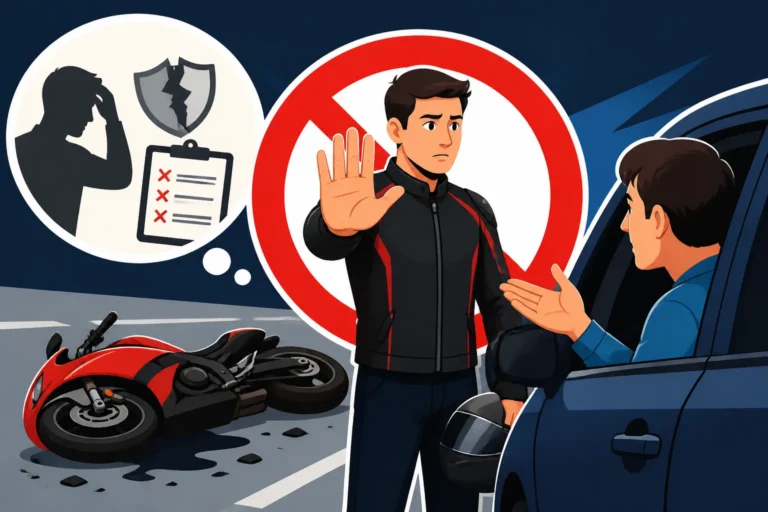
In the chaos and stress of an accident, it’s natural to feel apologetic or to second-guess yourself. You might even feel partially responsible for what happened. However, it is absolutely paramount that you never, under any circumstances, admit fault or apologize to the other driver, witnesses, or even the police at the scene.
Saying something like, "I'm so sorry, I didn't see you," or "My bad, I should have been more careful," can be used against you later by insurance companies or in court. Even an innocent "Are you okay? I'm so sorry!" can be misinterpreted as an admission of guilt. The full circumstances of an accident are rarely clear in the immediate aftermath, and your perception might be skewed by shock or injury. Let the investigation determine fault. If you are worried about who is at fault in a motorcycle accident, it is better to remain silent on the matter. This single piece of advice can profoundly impact your claim, particularly in states that apply Comparative Negligence in Motorcycle Accidents rules. For a deeper dive into this, read our comprehensive article on Why You Should Never Admit Fault at the Scene.
Seek Medical Attention Promptly
Even if you feel only minor aches or no pain at all immediately following the crash, always seek medical attention. Adrenaline can mask significant injuries, and some serious conditions, like internal bleeding, concussions, or whiplash, may not manifest symptoms until hours or even days later. A visit to the emergency room, an urgent care clinic, or your primary care physician ensures that any injuries are properly diagnosed and documented by medical professionals.
This isn't just about your health; it's also crucial for your legal claim. Insurance companies are often skeptical of claims where there's a significant gap between the accident and the first medical examination. They might argue that your injuries weren't caused by the accident or that you exacerbated them by delaying treatment. Early medical documentation provides irrefutable proof that your injuries are directly related to the motorcycle crash and demonstrates that you took your health seriously. It’s an essential part of documenting injuries for a claim and maximizing your potential settlement. For immediate advice, refer to What to Do Immediately After a Motorcycle Accident.
Keep an Accident Journal and Preserve Evidence
As soon as you are able, and preferably within a day or two of the accident, start an accident journal. Write down everything you remember about the crash: the time of day, weather conditions, road conditions, traffic volume, what you saw, heard, and felt. Document your injuries, your pain levels, the treatments you receive, medications, and how the injuries impact your daily life, work, and hobbies. Include details about any conversations you had with the other driver, witnesses, or police.
Beyond journaling, actively preserve all physical evidence. This includes your damaged motorcycle, your helmet, riding gear (jacket, pants, gloves, boots), and even your clothes if they were damaged. Do not wash, repair, or dispose of these items until advised by legal counsel. The damage to your gear can be powerful physical evidence of the impact forces involved and can help prove the severity of your injuries. For comprehensive guidance on what to save, check out How to Document the Scene to Prove Fault and First Steps to Protect Your Motorcycle Claim.
Information Exchange and Gathering Checklist
To help you keep track in a stressful situation, here's a handy checklist of information to exchange and gather after a motorcycle accident.
| Information Category | What to Exchange/Gather | Notes |
|---|---|---|
| Your Safety | Move to a safe location | Only if safe and able to do so. |
| Activate hazard lights/flares | Warn oncoming traffic. | |
| Emergency Contact | Call 911/Local Police | Essential for injuries, securing scene, and official report. |
| Other Driver | Full Name | As it appears on their license. |
| Phone Number | Cell phone is usually best. | |
| Residential Address | From their driver's license. | |
| Driver's License Number & State | Verify visually if possible. | |
| Insurance Company Name & Policy Number | Crucial for claims. Get policyholder's name if different from driver. | |
| Vehicle Make, Model, Year, License Plate, State | Note any distinguishing features. | |
| Vehicle Identification Number (VIN) | If safe and accessible (dashboard, door jamb). | |
| Witnesses | Full Name(s) | Important for corroborating your story. |
| Phone Number(s) | Primary contact method. | |
| Email Address(es) | Alternative contact method. | |
| Brief Statement (optional, with permission) | What did they see? Record on phone if they agree. | |
| Law Enforcement | Responding Officer's Name & Badge Number | For follow-up inquiries. |
| Police Department Name | Which agency responded. | |
| Accident Report Number | Essential for obtaining the official report. | |
| Scene Documentation | Photos & Videos | Damage to all vehicles, road conditions, debris, skid marks, traffic signals, wider scene, YOUR injuries, YOUR damaged gear. |
| Date, Time, Location of Accident | Precisely as possible. | |
| Personal Actions | DO NOT admit fault or apologize | Let investigators determine fault. |
| Seek Medical Attention Immediately | Even for minor symptoms; document everything. | |
| Start an Accident Journal | Record details of crash, injuries, recovery, conversations. | |
| Preserve ALL Damaged Gear & Motorcycle | Do not clean, repair, or dispose until advised by legal counsel. |
Disclaimer
Please remember that this article provides general information and should not be considered legal advice. Every motorcycle accident case is unique, and the laws governing personal injury claims vary by state and specific circumstances. It is always recommended to consult with a qualified motorcycle accident attorney to discuss your individual situation and understand your legal rights and options.