Can You Sue If You Weren’t Wearing a Helmet
It's an unfortunate truth that when you're involved in a motorcycle accident, the immediate aftermath is rarely just about your physical recovery. Many riders quickly find themselves in a confusing legal maze, especially if they weren't wearing a helmet at the time of the crash. The question that haunts many is: Can you still pursue a claim and seek compensation if you weren't wearing a helmet? This guide aims to clear up that often-frustrating confusion, providing a deep dive into how helmet laws and the "helmet defense" can impact your motorcycle accident claim.
Understanding Motorcycle Helmet Laws Across the US
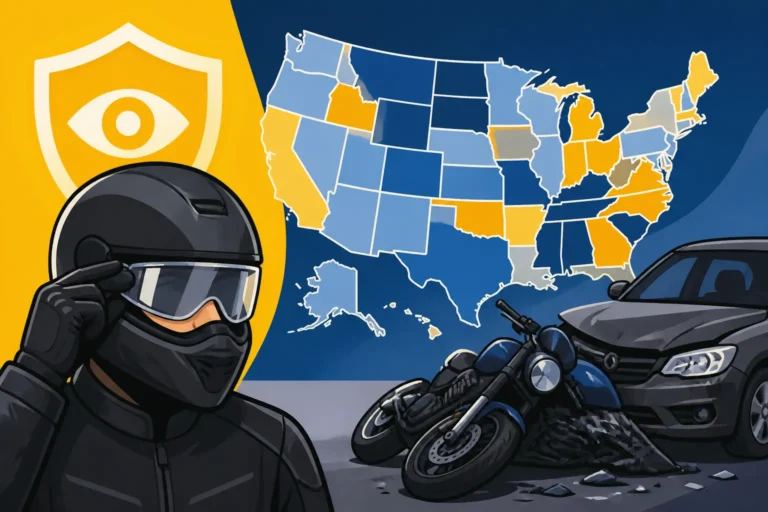
Navigating the legal landscape after a motorcycle accident is complex enough, but it becomes even more intricate when you consider the patchwork of helmet laws that exist across the United States. It's not a one-size-fits-all situation, and understanding your state's specific regulations is the first critical step in comprehending how your helmet use (or lack thereof) might affect your claim.
Universal Helmet Laws
In states with universal helmet laws, every single motorcycle rider, regardless of age or experience, is legally required to wear a DOT-compliant helmet whenever they are operating or riding on a motorcycle. These laws are typically the most stringent and are often implemented with the intention of maximizing rider safety and reducing head injuries. For instance, states like California and Oregon have universal helmet laws, meaning if you're on two wheels there, you better have a lid on.
If you're involved in an accident in a state with a universal helmet law and you weren't wearing one, you've immediately introduced a complication into your claim. While the lack of a helmet doesn't automatically mean you caused the accident, it can be used by the opposing party's insurance company or legal team to argue that you contributed to your own injuries, especially head injuries. They'll claim that had you been wearing a helmet, your injuries might have been less severe. This line of argument is often referred to as the "helmet defense," which we'll discuss in more detail later. This is often central to how Helmet Laws Affect Your Accident Claim.
Partial Helmet Laws
Many states operate under what are known as partial helmet laws. These laws typically require certain subsets of riders to wear helmets, most commonly those under a specific age, such as 18 or 21. For example, states like Florida and Texas allow adult riders (typically 21 and over) to ride without a helmet if they carry adequate insurance coverage, often around $10,000 in medical benefits. However, riders under 21, or those who don't meet the insurance requirements, must wear a helmet.
The implications for your claim under partial helmet laws depend entirely on whether you fell into the category of riders required to wear a helmet. If you were 25 in Florida, carried the requisite insurance, and chose not to wear a helmet, you likely weren't breaking the law. In such a scenario, the "helmet defense" might be weaker regarding the legality of your actions, but insurers could still argue that your choice was inherently unsafe and contributed to your injuries. Conversely, if you were 19 in Florida and not wearing a helmet, you were in direct violation of the law, which provides a much stronger foothold for the defense to reduce your compensation. This distinction is vital in understanding Universal vs Partial Helmet Laws Explained.
States with No Helmet Laws (for adults)
While increasingly rare, a few states have no universal helmet law for adult riders. For example, New Hampshire stands out as a state where adults are not mandated to wear a helmet. In these locales, the legal landscape surrounding helmet non-use in an accident claim shifts significantly. If you weren't legally required to wear a helmet, the other side cannot use your lack of a helmet as evidence that you violated a traffic law.
However, even in states with no helmet laws, insurers and defense attorneys might still attempt to employ the "helmet defense." Their argument would then pivot from a legal violation to a claim of contributory or comparative negligence, arguing that any "reasonable" rider would choose to wear a helmet for safety, regardless of the law. They'll assert that your decision to ride without protection, even if legal, demonstrates a disregard for your own safety and thus contributed to the severity of your injuries. This is a subtle but important distinction; you might not have broken a law, but they'll try to prove you acted negligently.
The "Helmet Defense" and How it Impacts Your Case
One of the most frustrating aspects of a motorcycle accident claim, especially if you sustained head injuries, is facing the "helmet defense." This isn't just an insurance company tactic; it's a legal strategy designed to reduce the amount of compensation they have to pay you, even if their insured driver was clearly at fault for the crash itself.
How Insurers Use Helmet Non-Use Against You
Imagine you're cruising down I-10 in Arizona, where universal helmet laws are in effect. A distracted driver, perhaps texting on their phone, swerves into your lane, causing you to crash. You suffer a traumatic brain injury. Even if the driver admits fault for the collision, their insurance company, perhaps a large carrier like GEICO or Progressive, will likely bring up the fact that you weren't wearing a helmet. They'll argue that while their driver caused the accident, your failure to wear a helmet caused or significantly worsened your head injury.
Their goal is to shift some of the blame for your injuries onto you, thereby reducing the total payout. They might say, "Yes, our driver was negligent, but your injuries, specifically your TBI, would have been minor or nonexistent if you had worn a helmet." This argument can be incredibly disheartening, as it feels like they're blaming you for being hurt, even when someone else caused the initial impact. This is a common strategy in How Insurers Use Rider Stereotypes Against You.
The Legal Basis for the Helmet Defense
The "helmet defense" isn't a blanket rule that automatically disqualifies you from compensation. Instead, it relies on legal principles like causation and comparative negligence. For the defense to successfully use your helmet non-use against you, they generally must prove two things:
- Causation: They must demonstrate that your failure to wear a helmet was a direct cause of your injuries, or at least significantly exacerbated them. This often involves expert testimony from medical professionals or accident reconstructionists who claim that a helmet would have prevented or minimized the head injuries you sustained. It's not enough for them to just say "you weren't wearing a helmet"; they need to show how that directly led to these specific injuries.
- Damages: They must prove that because of your helmet non-use, the damages (medical bills, lost wages, pain and suffering) are higher than they would have been otherwise.
In many states, the defense has the burden of proof to establish the "helmet defense." This means they must present compelling evidence to a jury that your head injuries would have been avoided or less severe if you had worn a helmet. This can be a challenging hurdle for them, as it's often difficult to definitively prove the hypothetical "what if." However, it's a hurdle they will absolutely try to clear. Understanding The Helmet Defense Explained is crucial for anyone facing this situation.
The Tangible Effects of Not Wearing a Helmet on Your Damages
When you've been in a motorcycle accident and weren't wearing a helmet, the consequences can extend far beyond the immediate medical emergencies. Your decision, or lack thereof, can significantly alter the value and recoverability of your damages, both economic and non-economic. This isn't about blaming the victim, but about understanding how legal systems assess liability and injury causation.
Impact on Economic Damages
Economic damages are the calculable, out-of-pocket expenses directly related to your accident and injuries. These include things like medical bills, lost wages, future medical care, and property damage to your bike or gear. When the "helmet defense" is successfully invoked, these damages can be directly impacted.
Let's say you're a rider in Pennsylvania, where all riders and passengers under 21 must wear a helmet. If you're 19, riding without a helmet, and suffer a severe Traumatic Brain Injury (TBI) requiring extensive surgery, rehabilitation, and long-term care, the economic costs could be astronomical. The defense will argue that these specific, high-cost medical treatments for your TBI would not have been necessary if you had followed the law and worn a helmet. They might contend that while they're responsible for your broken leg from the collision, they shouldn't be fully responsible for the TBI treatment costs. This means that a portion of your medical bills, lost income due to TBI-related disability, and future care related to your head injury could be reduced or even completely denied. This directly impacts how much you can get for Motorcycle Traumatic Brain Injury.
This isn't to say you get nothing. If the other driver was clearly at fault for causing the crash, you'd likely still be compensated for other injuries (like road rash, broken bones) and property damage that wouldn't have been prevented by a helmet. However, the specific damages related to head or brain injuries become contentious and are often subject to reduction. This is where knowing How Not Wearing a Helmet Affects Your Settlement becomes critical.
Impact on Non-Economic Damages (Pain and Suffering)
Non-economic damages are harder to quantify but are a significant component of many accident claims. These include pain and suffering, emotional distress, loss of enjoyment of life, and disfigurement. The impact of the "helmet defense" on these damages can be even more profound.
If your head injury is successfully linked to your helmet non-use, the pain, suffering, and emotional trauma that stem directly from that TBI might be reduced. For example, the severe headaches, cognitive impairment, or personality changes you experience due to a TBI are all part of your non-economic damages. If a jury or insurance adjuster believes you could have avoided or minimized these specific issues by wearing a helmet, they may award significantly less for that portion of your claim. They might feel less empathy for the suffering that, in their view, could have been mitigated by a simple piece of safety gear.
This can feel incredibly unfair, as these subjective damages are often the most debilitating and life-altering for accident victims. The emotional toll of a TBI, for example, can be immense, impacting relationships, career, and overall quality of life. To have a significant portion of that suffering dismissed or devalued due to a helmet choice, even if legal, can be devastating. Insurers are very good at leveraging public perception and safety arguments to reduce these subjective payouts.
Navigating Shared Fault and Comparative Negligence
Even if the other driver was primarily responsible for the accident, the question of shared fault, particularly concerning your helmet use, can significantly complicate your claim. This is where the legal principle of comparative negligence comes into play, a system used in most states to allocate fault and adjust compensation accordingly.
Understanding Comparative Negligence
Most states in the U.S. follow some form of comparative negligence. This means that if you, as the injured party, are found to be partly at fault for your own injuries, your total compensation can be reduced by your percentage of fault. There are two main types of comparative negligence:
- Pure Comparative Negligence: In states like California and Florida, you can recover damages even if you are 99% at fault, though your payout will be reduced by your percentage of fault. For example, if your total damages are $100,000 and you are found 20% at fault because you weren't wearing a helmet and sustained a TBI, you would only recover $80,000.
- Modified Comparative Negligence: Many states, including Texas and Ohio, use a modified comparative negligence rule, often referred to as the "51% Rule" or "50% Rule." Under the 51% rule, you can only recover damages if you are found 50% or less at fault. If you are 51% or more at fault, you get nothing. Under the 50% rule, you can recover if you are 49% or less at fault, but if you hit 50% or more, you get nothing.
The "helmet defense" directly feeds into these comparative negligence calculations. If the defense successfully argues that your helmet non-use contributed to the severity of your head injuries, a portion of the fault for those specific injuries might be assigned to you. This then directly affects How Comparative Negligence Reduces Your Payout. It's not about whether you caused the crash, but whether your actions contributed to the extent of your injuries.
How Helmet Use Affects Fault Allocation
Let's consider a scenario in a state with modified comparative negligence, like Texas, where adult riders can legally ride without a helmet if they have certain insurance. Suppose a car makes an illegal left turn in front of you, causing a violent collision. You were not wearing a helmet and suffered extensive facial injuries and a concussion, alongside a broken arm.
The car driver is clearly at fault for the "Motorcycle Accidents Caused by Left-Turn Collisions." However, the insurance company for the driver, perhaps Travelers or Allstate, might argue that while their client caused the crash, your decision not to wear a helmet contributed 30% to the severity of your facial injuries and concussion. If your total damages are $150,000, and $50,000 of that is attributed to the head and facial injuries, a 30% reduction on that portion would effectively reduce your overall settlement.
The key here is that the fault allocation isn't necessarily for the entire accident. It can be specifically for the avoidable injuries. This means that even if the other driver is 100% at fault for the collision itself, you could still be assigned a percentage of fault for your injuries due to your helmet choice. This is why cases involving a rider not wearing a helmet often turn into battles over medical causation and the role of protective gear. It becomes a deeply technical and often emotionally charged argument about what could have been.
Strategically Countering the Helmet Defense
Just because the defense raises the "helmet defense" doesn't mean it's a guaranteed victory for them. There are often strong arguments and strategies to employ to counter these claims and protect your right to fair compensation, even if you weren't wearing a helmet. It's an uphill battle, but one that can be won with the right approach.
Proving Helmet Non-Use Didn't Cause Injuries
One of the most effective ways to counter the helmet defense is to directly challenge the causation argument. The defense has to prove that your head injury would have been prevented or significantly mitigated if you had worn a helmet. This is often a difficult task for them to definitively prove.
For example, if you sustained a severe brain injury, but also suffered multiple severe bodily injuries, your legal team might argue that the force of the impact was so catastrophic that even the best helmet, like those offered by Shoei or Arai, wouldn't have prevented the TBI. Or, if the injury was caused by a rotational force or impact to a part of the head not typically protected by a helmet (e.g., severe whiplash causing internal brain damage without direct skull impact), it can be argued that a helmet would not have made a material difference. This often requires consulting with accident reconstruction experts and medical professionals who can provide counter-testimony to the defense's claims. They can analyze the physics of the crash and the biomechanics of your injuries to show that the lack of a helmet was not the but-for cause of your specific head trauma.
This is a critical point: the defense can't just assert a helmet might have helped. They have to prove, with a reasonable degree of medical or scientific certainty, that it would have changed the outcome of your head injury. If your legal team can introduce doubt into this causation argument, the helmet defense begins to crumble.
Challenging the Causation Argument
Beyond outright denial that the helmet would have helped, you can also challenge the defense's type of causation. Even if a helmet might have lessened the impact, if the initial impact was so severe that you would have suffered a TBI regardless, the argument changes. For example, if you were involved in a high-speed head-on collision, where the forces involved are immense, it's possible to argue that even a DOT-approved helmet would not have completely prevented a severe brain injury, though it might have prevented skull fractures.
Another angle is to look at the specific nature of your head injury. If your injury is more about internal brain damage due to rapid deceleration (coup-contrecoup injury) rather than a direct penetrating injury, it might be easier to argue that helmet presence would not have fully prevented the internal trauma. Furthermore, if you sustained other severe injuries that are entirely unrelated to helmet use, such as a broken pelvis or spinal cord injury, the defense's attempt to solely focus on the helmet can be seen as an unfair distraction from the main negligent act of their insured. Essentially, your legal team will work to separate the cause of the collision from the cause of the injury, and then further separate the cause of some injuries from the cause of all injuries. This is a key part of how to Fight an Unfair Fault Assignment.
Evidence to Support Your Claim Despite Helmet Non-Use
Even if you weren't wearing a helmet, there's still a wealth of evidence that can support your claim and highlight the other driver's fault. This includes:
- Police Reports and Witness Statements: These can establish the other driver's negligence in causing the accident itself, such as running a red light, failing to yield, or distracted driving.
- Medical Records: While the defense might use these against you, your medical records also document the full extent of all your injuries, not just head injuries. They can also show the severity of other injuries that are unequivocally unrelated to helmet use.
- Accident Reconstruction: Experts can analyze skid marks, vehicle damage, and impact points to demonstrate the dynamics of the crash and the primary fault of the other driver, independent of your helmet status.
- Photos and Videos: Crucially, any evidence of the crash scene, vehicle positions, traffic signals, and road conditions can all contribute to proving the other driver's liability. Dashcam Footage Proves Fault and can be especially compelling.
It's vital to focus on the other driver's negligence as the root cause of the entire incident. While the helmet defense addresses injury mitigation, it doesn't absolve the at-fault driver of their responsibility for causing the accident in the first place. You are still entitled to compensation for all injuries and damages that were not causally linked to your helmet choice. Documentation is key here for Proving Fault in a Motorcycle Accident.
The Role of Other Protective Gear
While helmets often take center stage in accident discussions, especially concerning injury claims, it's important to remember that motorcycle safety goes far beyond just head protection. Your choice of other riding gear, or lack thereof, can also subtly, or not so subtly, influence the perception of your claim, even if it doesn't carry the same legal weight as a helmet.
Beyond Helmets: Jackets, Gloves, Boots
Think about the rest of your kit. A good riding jacket (whether it's leather or armored textile), sturdy riding pants, gloves, and proper motorcycle boots are more than just fashion statements; they're essential protective equipment. Brands like Alpinestars, Dainese, and Rev'It! offer extensive lines of gear specifically designed to protect riders in a crash. For instance, a quality leather jacket with CE-rated armor in the shoulders and elbows can significantly reduce the severity of road rash, fractures, and abrasions compared to riding in a t-shirt. Similarly, riding boots protect ankles and feet, which are surprisingly vulnerable in a slide or impact.
If you weren't wearing a helmet but were wearing full protective gear (jacket, pants, gloves, boots), it presents a different narrative than if you were riding in shorts and a tank top. While the helmet defense might still apply to head injuries, the presence of other gear demonstrates a general commitment to safety and injury mitigation. This can subtly help your case, as it shows you weren't entirely reckless in your approach to riding. Conversely, if you rode with minimal gear and suffered extensive road rash or other injuries that could have been prevented by proper apparel, the defense might try to extend the "contributory negligence" argument beyond just your head, though this is generally a weaker argument than the helmet defense.
How Gear Damage Supports Your Claim
One often overlooked piece of evidence after a motorcycle accident is the condition of your damaged riding gear. This isn't just about replacing expensive items from a store like Cycle Gear; it's about what the damage tells us. A torn, scuffed, or ripped jacket, scuffed boots, or shredded gloves are all physical proof of the forces you endured during the crash.
Imagine your leather jacket has a long, deep gouge where you slid across the asphalt. This damage can:
- Corroborate Injury Severity: It demonstrates the intensity of the impact and slide, supporting your claims of extensive road rash, broken bones, or soft tissue injuries. Without that jacket, those injuries might look far worse and less plausible to an adjuster or jury.
- Prove Incident Dynamics: The pattern of damage on your gear can help accident reconstructionists understand the angle of impact, the distance you slid, and the parts of your body that took the brunt of the force.
- Counter Defense Arguments: If the defense tries to downplay the severity of the crash, your destroyed gear provides tangible evidence to the contrary. It shows you took significant impact, regardless of helmet use.
Documenting your damaged gear with clear photographs immediately after the accident is paramount. Keep the damaged items if possible, as they can serve as physical exhibits. This evidence helps paint a more complete picture of the crash and supports the true extent of your injuries and suffering, even if the helmet defense is still a factor regarding head injuries. It's all about providing concrete evidence for your claim, and your gear is a silent witness to the trauma you experienced.
When to Seek Legal Guidance
Navigating a motorcycle accident claim, especially one complicated by helmet non-use, is incredibly challenging. Insurance companies are not on your side, and they have vast resources to minimize payouts. This is precisely why seeking experienced legal guidance isn't just an option; it's often a necessity.
Why an Attorney is Crucial
You might think you can handle negotiations with the insurance company on your own, especially if the other driver was clearly at fault. However, when the "helmet defense" is on the table, the complexities multiply. An experienced motorcycle accident attorney understands the nuances of state helmet laws, the legal principles of causation and comparative negligence, and how insurance adjusters attempt to devalue claims.
Consider a scenario in New York, a modified comparative fault state, where you sustained a head injury without a helmet. An insurance adjuster might immediately offer you a settlement that is drastically reduced, implying your non-helmet use makes your claim almost worthless. Without legal representation, you might not know how to argue against this, how to present medical evidence to counter their causation claims, or even what your claim is truly worth. A lawyer will know the specific Motorcycle Accident Fault Laws in New York and how to fight the system.
A skilled attorney will:
- Investigate thoroughly: They'll gather all necessary evidence, from police reports to medical records and accident reconstruction analyses.
- Negotiate aggressively: They'll counter the insurance company's lowball offers and challenge the helmet defense with strong legal and medical arguments.
- Protect your rights: They ensure you don't inadvertently say or do anything that could further harm your case.
- Represent you in court: If a fair settlement cannot be reached, they are prepared to take your case to trial.
Navigating Complex Legal Arguments
The legal arguments surrounding the helmet defense are intricate and require a deep understanding of personal injury law. It's not just about proving who caused the crash; it's about proving which party is responsible for which injuries and to what extent.
For example, your attorney can work with medical experts to provide testimony that even with a helmet, a certain level of brain injury was unavoidable due to the sheer force of impact. They can differentiate between injuries that a helmet could have prevented (like skull fractures from direct impact) and those it could not have prevented (like diffuse axonal injury from severe rotational forces). This level of detailed, expert analysis is something most individuals cannot undertake on their own.
Furthermore, an attorney will understand the specific legal precedents in your state regarding the helmet defense and how juries typically respond to such arguments. They can also explore other avenues for compensation, such as uninsured/underinsured motorist coverage, if the at-fault driver's policy limits are insufficient. Ultimately, while it might feel like a personal choice, the legal ramifications of not wearing a helmet demand a professional, strategic response to ensure you receive the maximum possible compensation for your injuries and losses. This is why knowing When You Definitely Need an Attorney is so important.
| Factor | Impact of Not Wearing a Helmet (General) | Impact with Strong Legal Representation |
|---|---|---|
| Legality | Potential traffic citation; used by defense to imply negligence. | Attorney can argue legality based on state law (if not universally required). |
| Causation of Head Injury | Defense claims direct causation, seeking to reduce or deny head injury damages. | Attorney can challenge causation with expert testimony (e.g., impact severity, injury type). |
| Comparative Negligence | Increased risk of being assigned percentage of fault for injuries, reducing payout. | Attorney can minimize assigned fault by focusing on other driver's primary negligence. |
| Economic Damages | Reduction in compensation for head injury-related medical bills, lost wages. | Attorney fights for full compensation by proving helmet wouldn't have prevented all. |
| Non-Economic Damages | Significant reduction in pain and suffering for head injuries due to perceived self-negligence. | Attorney advocates for full pain and suffering, emphasizing severe impact on quality of life. |
| Settlement Negotiation | Insurers offer significantly lower settlements, leveraging helmet defense. | Attorney counters lowball offers, presents strong demand package, negotiates aggressively. |
| Trial Likelihood | Higher likelihood of needing to go to trial if negotiations fail. | Attorney prepares case for trial, skilled in presenting complex arguments to jury. |
Disclaimer
The information provided in this guide is intended for general informational purposes only and does not constitute legal advice. Motorcycle accident laws, including those concerning helmets and comparative negligence, vary significantly by state and can be complex. It is crucial to consult with a qualified legal professional for advice tailored to your specific situation and jurisdiction. Relying solely on this information without professional legal consultation is not recommended.