Motorcycle Helmet Law in Oregon
Riding a motorcycle in Oregon offers some of the most breathtaking scenery in the country, from the rugged coastlines to the majestic Cascades. But with that freedom comes a serious responsibility, not just for your own safety, but for understanding the laws that govern how we ride. One of the most frequently misunderstood and often debated topics among riders is the motorcycle helmet law. It can be frustrating to feel like the state is telling you how to ride, but ignoring these rules, especially after an accident, can have devastating consequences, both legally and financially. This guide aims to thoroughly explain Oregon's motorcycle helmet law, its implications, and why it's so important for every rider to understand.
Understanding Oregon's Universal Motorcycle Helmet Law
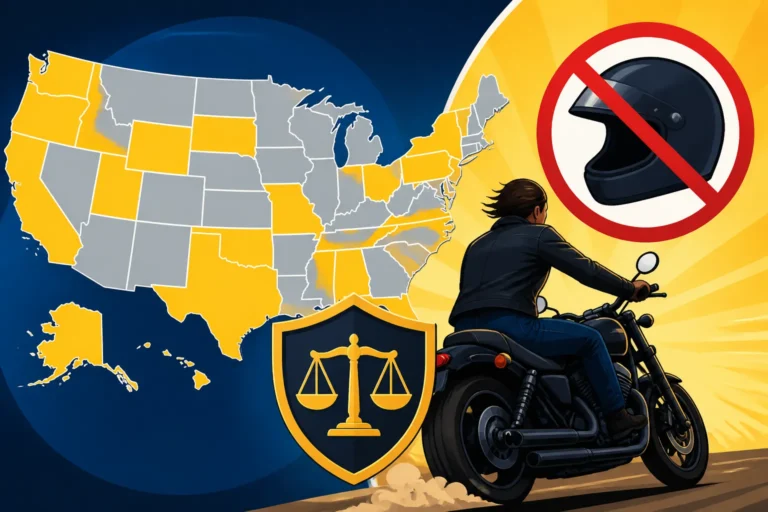
Let's cut right to the chase: Oregon has a universal helmet law. This means that if you're riding a motorcycle in the Beaver State, whether you're the operator or a passenger, you are legally required to wear a safety helmet at all times. There are no age exceptions, no experience level clauses, and no "if you have enough insurance" loopholes. This is a topic that can ignite passionate debate in any biker group, but regardless of personal feelings, the law is clear, and it’s enforced.
The Universal Requirement Explained
When Oregon revised its traffic laws, it adopted a "universal" approach to helmet use. This isn't just a suggestion; it's a non-negotiable legal mandate. Imagine you're cruising down Highway 101, enjoying the coastal breeze near Cannon Beach, or taking on the twists and turns of the Historic Columbia River Highway. The law states that every single person on that motorcycle, from the moment you start your engine until you shut it off, must have a properly secured, approved helmet on their head.
This universal requirement stems from compelling data about head injuries in motorcycle accidents. Unlike some states that might allow adult riders to forgo helmets if they carry sufficient medical insurance, Oregon places a blanket rule. The intention is clear: to reduce the severity of injuries and fatalities associated with motorcycle crashes. Lawmakers and safety advocates consistently point to studies showing that helmets are incredibly effective at preventing serious head trauma, which is often the most life-altering injury in a motorcycle accident. It's not just about protecting you, the rider, but also about mitigating the broader societal costs associated with emergency medical care, long-term rehabilitation, and lost productivity when catastrophic injuries occur. Even though it might feel like an impingement on personal freedom to some, the law is firmly rooted in public health and safety policy.
What Makes a Helmet Legal: DOT Compliance
Just strapping on any old helmet won't cut it. Oregon's law, like those in most states, specifies that the helmet must meet certain safety standards set by the U.S. Department of Transportation (DOT). This usually means looking for a helmet that complies with Federal Motor Vehicle Safety Standard (FMVSS) 218. You'll typically find a "DOT" sticker on the back of any compliant helmet.
So, what does DOT compliance really mean? It means the helmet has undergone rigorous testing to ensure it can withstand impact, resist penetration, and provide adequate peripheral vision. Think about it: a quality helmet is designed to absorb and distribute the force of an impact, protecting your most vital organ. Many riders are tempted by novelty helmets, which often look cool and can be much lighter, but they offer virtually no real protection. These helmets, which are not DOT-compliant, often consist of a thin shell and minimal padding. They might technically cover your head, but they won't stand up to the kind of forces involved in a real-world crash. If you're pulled over wearing a non-compliant helmet in Oregon, it's the same as not wearing a helmet at all in the eyes of the law, and you could face the same penalties. It's critical to invest in a helmet from a reputable manufacturer. Places like Cycle Gear often have staff who can help you understand the differences and ensure you get a helmet that meets DOT standards, providing both legal compliance and crucial protection.
The Ramifications of Not Wearing a Helmet in Oregon
Knowing the law is one thing; understanding the consequences of not following it is another. Forgoing a helmet in Oregon can lead to immediate legal trouble and, perhaps more significantly, create immense challenges if you're ever involved in a motorcycle accident. It's a risk that goes far beyond a simple traffic ticket.
Legal Penalties and Fines
If a law enforcement officer in Oregon spots you riding without a DOT-compliant helmet, you're looking at a traffic citation. The specific fine amount can vary by jurisdiction within Oregon, but generally, it's a non-waivable fine, meaning you won't be able to just show proof of purchase later to get it dismissed. Beyond the immediate financial sting, a helmet violation can also add points to your driving record, potentially impacting your insurance rates down the line.
Consider a scenario where you're just taking a quick ride to the store, thinking "What's the harm?" and get pulled over by an Oregon State Police trooper. The ticket you receive will specify the violation of Oregon Revised Statutes (ORS) 814.260. While it might seem minor compared to some other traffic infractions, these violations are taken seriously. Accumulating too many points can lead to license suspension, which would effectively put an end to your riding for a period. This isn't just about the state trying to squeeze money out of riders; it's a reflection of the state's firm stance on motorcycle safety and preventing severe injuries. It's a small price to pay for compliance compared to the potential costs of an accident without one.
Impact on Your Motorcycle Accident Claim
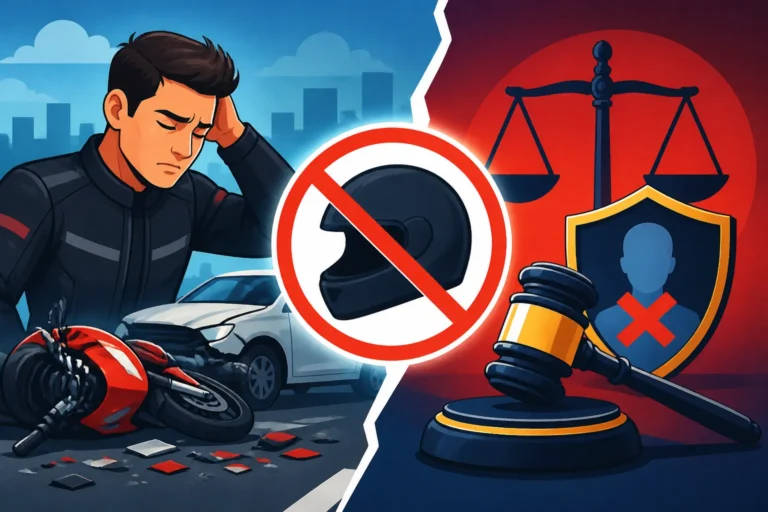
This is where not wearing a helmet can really come back to haunt you. If you're involved in a motorcycle accident in Oregon and you weren't wearing a DOT-compliant helmet, even if the other driver was clearly at fault, the insurance company or opposing counsel will almost certainly try to use that against you. This is known as the "helmet defense."
Oregon operates under a system of modified comparative negligence, sometimes referred to as the "51% rule." This rule dictates that you can recover damages in an accident as long as you are not 51% or more at fault for the accident itself. However, the helmet defense introduces a separate layer of fault – the fault for your injuries. If the defense can prove that your head injuries would have been less severe or avoided entirely had you been wearing an approved helmet, your overall settlement can be significantly reduced, even if the other driver was 100% responsible for causing the crash. For example, if you suffered a traumatic brain injury (TBI) but weren't wearing a helmet, the other side might argue that a significant portion of your medical bills, lost wages, and pain and suffering related to that TBI were due to your own negligence, not theirs. This can drastically reduce your potential payout and is a key reason why understanding How Not Wearing a Helmet Affects Your Settlement is so vital. Insurers are always looking for ways to reduce what they pay out, and your non-compliance with helmet laws hands them a powerful tool.
Beyond the Law: The True Value of a Helmet
While legal compliance is a compelling reason to wear a helmet in Oregon, the pragmatic reality of protecting your life and well-being should be the ultimate motivator. The law might feel like a burden, but it’s rooted in a fundamental truth: helmets save lives and prevent catastrophic injuries.
Protecting Yourself from Injury
Motorcycle accidents, unfortunately, carry a higher risk of serious injury and fatality compared to car accidents. The human body, exposed on a motorcycle, simply doesn't stand a chance against the impact of a vehicle or the hard pavement. Among all injuries, head injuries are often the most devastating, leading to permanent disability, cognitive impairment, or even wrongful death. A helmet acts as your last line of defense.
Think about the difference between a minor concussion and a severe traumatic brain injury. A good helmet can be the barrier that transforms a potentially fatal impact into a survivable one, or a severe injury into a moderate one. Helmets are specifically designed to absorb impact energy, spreading it out over a larger surface area and deforming to reduce the force transmitted to your skull and brain. Without this protection, your head is vulnerable to direct impact, abrasions (yes, road rash can happen on your face and head!), and severe concussions that can lead to long-term neurological problems. We've written extensively about Motorcycle Accident Traumatic Brain Injuries because they are so common and so debilitating. Even at low speeds, a fall can result in a head injury. Protecting your brain, the control center of your entire body, is unequivocally the most important safety measure you can take while riding.
Smart Gear Choices for Oregon Riders
Beyond just the helmet, making smart gear choices can significantly enhance your safety and, should the worst happen, bolster your position in an accident claim. While Oregon law primarily focuses on helmets, investing in full protective gear is a game-changer.
When choosing a helmet, consider a full-face helmet. While open-face helmets are legal if DOT-compliant, full-face models offer superior protection for your chin and face, areas highly susceptible to injury in a crash. Brands like Shoei, Arai, Bell, and HJC consistently produce highly-rated, DOT-compliant helmets. You can find a wide array of options at stores like Cycle Gear, where you can try different styles and sizes to ensure a proper, comfortable fit. Remember, a helmet that doesn't fit correctly won't protect you as effectively. But don't stop there. A good quality motorcycle jacket with armor in the shoulders, elbows, and back, protective gloves, sturdy riding boots that cover your ankles, and abrasion-resistant pants are equally important. This isn't just about looking the part; it's about creating a protective cocoon around your body. While the law might not mandate it, this gear can prevent severe road rash, broken bones, and other debilitating injuries that can plague you for a lifetime. When you're involved in an accident, being fully geared up can also implicitly show that you're a responsible rider, which can subtly counter negative stereotypes sometimes used by insurance companies to try and devalue your claim.
Navigating an Accident Claim When Helmet Use is Questioned
Being involved in a motorcycle accident is stressful enough, but if your helmet use (or lack thereof) becomes a central point of contention, it adds another layer of complexity. Understanding how this plays out legally is crucial for protecting your rights and potential compensation.
The "Helmet Defense" in Oregon Courts
As mentioned, insurance companies and defense attorneys in Oregon are quite adept at deploying the "helmet defense." Their goal is to prove that your head injuries, or even other injuries, were caused or exacerbated by your failure to wear a DOT-compliant helmet. This isn't about proving you caused the accident; it's about proving you were negligent in preventing your own injuries. For instance, if you suffered a broken arm and a concussion, the defense might concede fault for the broken arm (as a helmet wouldn't prevent it), but vehemently argue that your concussion and its associated costs are your own fault due to helmet non-use.
The burden of proof typically lies with the defense to demonstrate that the helmet would have made a difference. They might bring in accident reconstruction experts or medical professionals to testify on the expected injury outcomes with and without a helmet. This is a tactic that can significantly reduce the "non-economic damages" portion of your settlement, which includes pain and suffering, emotional distress, and loss of enjoyment of life. It’s important to understand The Helmet Defense Explained as it's a common strategy used to lower payouts in states like Oregon. If successful, it means you could be found partially "at fault" for your injuries, even if you weren't at fault for the collision itself, leading to a reduced overall settlement under Oregon's comparative negligence rules.
Evidence and Legal Strategy
If you've been in an accident and your helmet use is being questioned, your legal strategy needs to be sharp. First and foremost, if you were wearing a helmet, preserve it. Do not discard or dispose of a damaged helmet. Its condition can be critical evidence to prove it was worn and absorbed impact. Photos of you at the scene wearing the helmet, or photos of the damaged helmet, can be invaluable. This evidence can directly counter claims that you weren't wearing one or that it wasn't effective.
However, if you weren't wearing a helmet, all hope is not lost, but the challenge becomes significantly greater. An experienced motorcycle accident attorney can help counter the helmet defense by arguing that your specific injuries would have occurred even if you had worn a helmet, or that the helmet's absence had no bearing on the actual cause of the accident. For instance, if you suffered leg injuries and no head trauma, the helmet defense might be less impactful. Furthermore, your attorney can gather evidence to firmly establish the other driver's sole fault in causing the initial collision, ensuring that the focus remains on their negligence. This could involve witness statements, traffic camera footage, or the police report. The key is to demonstrate that your failure to wear a helmet, while a violation, was not the proximate cause of the head injury you sustained, or that the other driver's actions were the overwhelming cause of the accident and all subsequent injuries. Understanding Motorcycle Accident Evidence for Proving Fault is crucial in these scenarios, as every detail can count towards protecting your claim.
Here’s a quick overview of Oregon's helmet law and its potential impact:
| Aspect | Description |
|---|---|
| Legal Requirement | Universal helmet law in Oregon (ORS 814.260). All motorcycle operators and passengers, regardless of age or experience, must wear a safety helmet. |
| Helmet Standard | Must be DOT-compliant (Federal Motor Vehicle Safety Standard 218). Look for the "DOT" sticker. Novelty helmets are not acceptable and are treated as if no helmet was worn. |
| Penalties | Traffic citation, fine (amount varies by jurisdiction), and potential points on your driving record. |
| Impact on Claim (Helmet Defense) | If you weren't wearing a DOT-compliant helmet and suffered head injuries, insurance companies and defense attorneys will likely use this to argue you were partially at fault for the severity of your injuries. |
| Comparative Negligence | Oregon follows a modified comparative negligence (51% rule). If found more than 50% at fault for your injuries due to not wearing a helmet, your compensation for those specific injuries could be significantly reduced or potentially barred, even if the other driver was primarily at fault for causing the accident. |
| Mitigation Strategies | Always wear a DOT-compliant helmet. After an accident, preserve your helmet as evidence. Seek immediate medical attention. Consult with an attorney experienced in motorcycle accidents to understand how the helmet defense might apply to your specific situation and to craft a robust legal strategy. |
Disclaimer
This article provides general information and does not constitute legal advice. Motorcycle laws, including helmet laws and comparative negligence rules, can be complex and are subject to change. For advice specific to your situation, please consult with a qualified legal professional specializing in motorcycle accident claims in Oregon.