Can You Ride Without a Helmet in Illinois
It’s a common misconception that helmet laws for motorcyclists are the same everywhere, and this confusion can lead to serious consequences, especially here in Illinois. Many riders wonder if they really need a helmet, and what happens if they're in an accident without one. This guide will thoroughly explain Illinois' specific motorcycle helmet laws and, crucially, delve into how not wearing a helmet can impact your motorcycle accident claim and potential compensation.
Clarifying Illinois Motorcycle Helmet Laws
Let's get straight to the point about helmet laws in the Prairie State, because there's a lot of misinformation out there that could put you at risk, both on the road and in a potential accident claim. Unlike some neighboring states, Illinois has a very specific stance on helmet usage for motorcyclists, and it's essential to understand it fully.
Who Must Wear a Helmet in Illinois?
First off, if you're under the age of 18, the law is absolutely clear: you must wear a helmet when riding a motorcycle in Illinois. This isn't optional; it's a legal requirement designed to protect younger, often less experienced, riders. This rule applies whether you're operating the motorcycle yourself or riding as a passenger. The intent behind this law is undeniably to prioritize the safety of minors, recognizing their increased vulnerability and the potential for severe head injuries in an accident. Parents and guardians should be particularly mindful of this, as ensuring compliance isn't just about avoiding a ticket, but about safeguarding a young person's life and future.
What About Adults Over 18?
Here's where Illinois stands out. For motorcyclists and passengers who are 18 years of age or older, Illinois does not have a universal helmet law. This means that if you're an adult rider, you are legally permitted to ride without a helmet. This is a significant distinction compared to states like California or New York, which mandate helmets for all riders regardless of age. While this offers riders a choice, it's a choice that comes with considerable implications, especially in the unfortunate event of a crash. Many riders appreciate this freedom, but it's vital to remember that "legal" doesn't always equate to "safe" or "prudent," particularly when considering the catastrophic potential of head injuries. However, all riders in Illinois are required to have eye protection, such as a face shield, goggles, or a windshield, unless their motorcycle is equipped with a windshield.
The "Helmet Defense" in Accident Claims
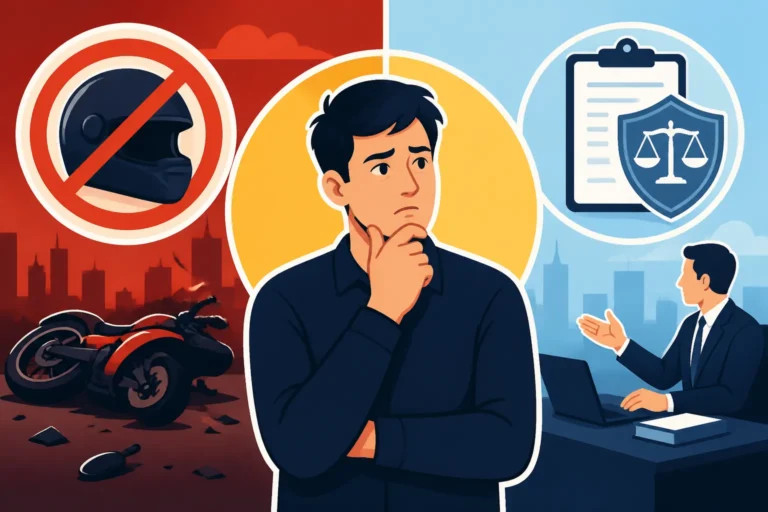
So, you know the law in Illinois: adults can ride without a helmet. But understanding the legal choice to go without a helmet is only half the battle. The other, often more painful, half involves what happens when an accident occurs. This is where the concept of the "helmet defense" comes into play, a tactical argument insurance companies frequently use to minimize payouts, even when another driver is clearly at fault for the accident. This defense can significantly impact how much compensation you might receive for your injuries.
How Insurers Use Rider Stereotypes Against You
Insurance companies are not in the business of paying out large settlements if they can avoid it. They often look for any reason to reduce their liability. One common tactic is to leverage existing negative stereotypes about motorcyclists. They might try to portray riders as inherently reckless or irresponsible, regardless of the actual circumstances of the accident. If you weren't wearing a helmet, they will immediately seize on this fact.
They might argue that your decision to ride without a helmet demonstrates a disregard for your own safety, which plays into the "rider bias" often present in fault determination. They’ll imply, or even outright state, that your actions contributed to your injuries, even if the car driver ran a red light or performed an unsafe lane change. This isn't about proving who caused the accident itself, but about proving who caused your injuries to be worse than they might have been. It's a subtle but powerful shift in narrative that can be incredibly frustrating for riders who were simply enjoying a legal ride.
Connecting Helmet Use to Injury Severity
The core of the "helmet defense" hinges on causation. Insurance companies will argue that while the other driver may have caused the accident, your decision not to wear a helmet directly caused or exacerbated your head and brain injuries. For instance, if you suffered a traumatic brain injury (TBI) after being struck by a distracted driver, the insurer might contend that a DOT-compliant helmet would have significantly reduced the severity of that injury. This argument aims to reduce the portion of your medical bills, lost wages, and pain and suffering related to the head injury.
This doesn't mean you automatically lose your claim, especially if the other driver was clearly at fault in a left-turn collision or another scenario. However, it introduces a complex layer of legal argument. They'll try to disentangle your injuries: "Yes, the crash broke your leg, and we'll compensate for that. But your head injury? That could have been prevented by a helmet, so we're not fully responsible for those damages."
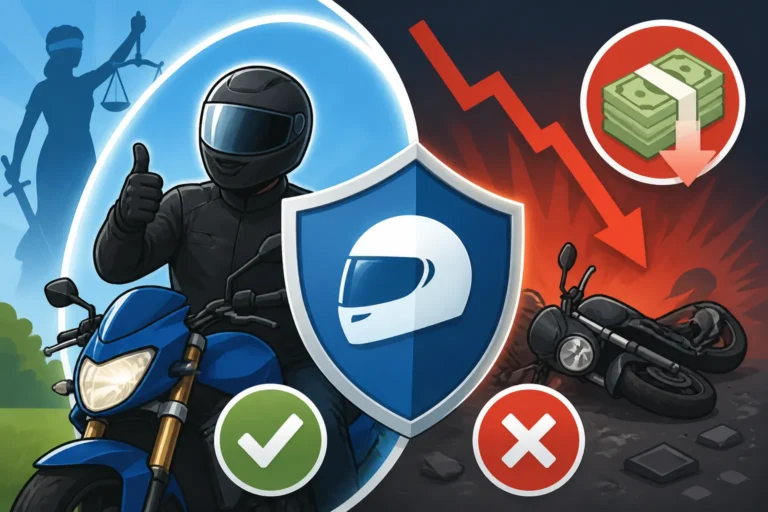
This is where understanding comparative negligence in states like Illinois becomes critical. Illinois operates under a modified comparative negligence rule, meaning if you are found to be 51% or more at fault for your injuries, you cannot recover any damages. Even if you're less than 51% at fault, your damages will be reduced by your percentage of fault. If the insurance company successfully argues that your lack of a helmet makes you, say, 20% responsible for your head injuries, your compensation for those specific injuries will be reduced by 20%. This is often referred to as the "helmet defense" reducing your settlement.
Consider a scenario: you're riding your motorcycle on a beautiful Saturday afternoon, following all traffic laws. A driver suddenly pulls out from a side street, failing to yield, and you collide. You suffer a broken arm, road rash, and a severe concussion. If you were wearing a helmet, the insurance company for the at-fault driver would likely be on the hook for all your injuries. But if you weren't wearing one, they'll likely concede liability for the broken arm and road rash, but strenuously argue that the concussion, and its associated long-term effects, would have been less severe, or even avoided, with a helmet. This directly impacts your pain and suffering damages as well as future medical costs related to the TBI.
Understanding DOT Compliance and its Importance
While Illinois doesn't mandate helmets for adults, if you do choose to wear one (which, as a fellow rider, I strongly recommend), ensuring it's a DOT-compliant helmet is paramount. Not all helmets are created equal, and the type of helmet you wear can have a significant impact both on your physical safety and on the strength of your accident claim.
What Makes a Helmet DOT Compliant?
"DOT compliant" means a helmet meets the safety standards set by the U.S. Department of Transportation's Federal Motor Vehicle Safety Standard (FMVSS) 218. These standards are rigorous, evaluating a helmet's ability to protect the wearer from impact, penetration, and retention (how well it stays on your head). A DOT-compliant helmet will have a sturdy outer shell designed to distribute impact forces, an inner liner of energy-absorbing material (like expanded polystyrene foam, or EPS) that crushes upon impact to absorb energy, and a robust chin strap system to ensure the helmet stays securely on your head during a crash.
When you're shopping for a helmet, always look for the "DOT" sticker on the back. Many reputable brands, available at places like Cycle Gear, proudly display this certification because they've invested in the research and testing to ensure their helmets meet these crucial safety benchmarks. Choosing a helmet that is DOT-compliant is not just about meeting a standard; it's about investing in proven protection for your most vital asset. It shows that the helmet has undergone testing to withstand impacts and provide a significant level of protection.
Why Novelty Helmets Are a Bad Idea
On the flip side, there are "novelty helmets" – those flashy, often minimalist helmets that look cool but offer virtually no real protection. These helmets are not DOT compliant, and they'll usually explicitly state that they are not intended for motor vehicle use. They might be thin, made of flimsy materials, lack an energy-absorbing liner, or have weak retention straps. While they might feel lighter or look more "rebel," they are, quite frankly, a dangerous choice.
If you're involved in an accident while wearing a novelty helmet, it's essentially the same as riding without a helmet in the eyes of an insurance company, and potentially a jury. Even if you wore something on your head, if it didn't meet DOT standards, it provides almost no legal defense against arguments that your head injuries would have been less severe with proper protection. In fact, wearing a novelty helmet could be seen as even more negligent by some, as it gives the appearance of protection without delivering any of the actual safety benefits. This is a crucial distinction that riders often overlook, believing any head covering is better than none, when in fact, inadequate protection can hurt your claim as much as no protection at all.
Mitigating the Impact on Your Claim
Even if you weren't wearing a helmet in Illinois, or if you were wearing a non-DOT-compliant helmet, it doesn't automatically mean your motorcycle accident claim is dead in the water. While the "helmet defense" can be a significant hurdle, there are strategies to mitigate its impact and fight for the compensation you deserve.
Proving the Helmet Wouldn't Have Prevented Injuries
One of the most effective ways to counter the helmet defense is to demonstrate that even if you had been wearing a DOT-compliant helmet, your specific head injuries would have occurred or would not have been significantly less severe. This often requires expert testimony. An accident reconstruction expert or a medical expert can analyze the forces involved in the crash, the point of impact on your head, and the nature of your injuries.
For example, if the impact was to your face or jaw, and a helmet might not have fully prevented those specific injuries (especially if it was an open-face helmet, or the impact was severe enough to cause injuries even through a full-face helmet), that can be a powerful counter-argument. This is particularly true in catastrophic accidents where the sheer force of the impact would likely cause severe brain trauma regardless of headgear. The defense needs to prove that a helmet would have made a difference, and sometimes, the science simply doesn't support their claim. This takes a detailed understanding of both biomechanics and medical prognoses.
Documenting All Other Damages
It's absolutely critical to remember that the helmet defense typically only applies to head injuries. All other injuries you sustained in the accident – broken bones, road rash, spinal cord injuries, internal injuries, etc. – are generally not subject to this defense. Therefore, even if an insurance company successfully argues that your head injury compensation should be reduced, you are still entitled to full compensation for all your other damages, assuming the other driver was at fault.
This means meticulously documenting every single injury. Take photos of injuries immediately after the crash, keep a detailed injury journal, and follow all medical advice. Maintain records of all medical expenses, including ambulance rides, emergency room visits, specialist consultations, physical therapy, and prescription medications. Keep track of lost wages, future medical costs, and any impact on your quality of life. The more thoroughly you document all aspects of your injuries and their financial and emotional toll, the stronger your overall claim will be.
For example, if you have a broken collarbone, severe road rash on your arms and legs (which proper gear from places like Cycle Gear could help prevent), and a concussion, even if the concussion compensation is challenged, the other injuries remain fully compensable. This is why a comprehensive approach to documenting injuries for a claim is so vital. Your focus should be on proving the other driver's fault and then demonstrating the full extent of all your damages, not just focusing on the contested head injury portion.
Summary of Illinois Helmet Laws and Claim Impact
To help visualize the difference, here’s a quick overview of how Illinois compares to some of its neighbors regarding motorcycle helmet laws and their potential impact on a personal injury claim:
| State | Helmet Law for Adults (18+) | Eye Protection Required | Impact on Personal Injury Claim if No Helmet (for adults) |
|---|---|---|---|
| Illinois | Optional | Yes | No direct legal fault for not wearing one, but can reduce compensation for head injuries via the "helmet defense" (comparative negligence). |
| Wisconsin | Optional (with exceptions for insurance/experience) | Yes | Similar to Illinois; helmet defense can reduce damages for head injuries. |
| Iowa | Optional | Yes | Similar to Illinois; helmet defense can reduce damages for head injuries. |
| Missouri | Optional (riders under 21 or those without insurance must wear one) | Yes | Helmet defense can be used to reduce damages for head injuries if legally allowed to ride without one. |
| Michigan | Optional (with exceptions for insurance/experience) | Yes | Similar to Illinois; helmet defense can reduce damages for head injuries. |
| California | Universal (all riders) | Yes | Riding without a helmet is a traffic violation and can significantly impact a claim by allowing the helmet defense. |
As you can see, even in states where helmets are optional for adults, the legal landscape shifts dramatically when an accident occurs. While legally permitted to ride without a helmet in Illinois, the financial and physical risks are substantially higher, and it creates a direct opening for insurance companies to challenge your claim.
Disclaimer
The information provided in this guide is for general informational purposes only and does not constitute legal advice. Motorcycle accident laws are complex and vary by jurisdiction, and the application of laws to specific facts and circumstances can differ. It is crucial to consult with a qualified legal professional for advice regarding your individual situation.