Does Not Wearing a Helmet Affect a Claim in South Carolina
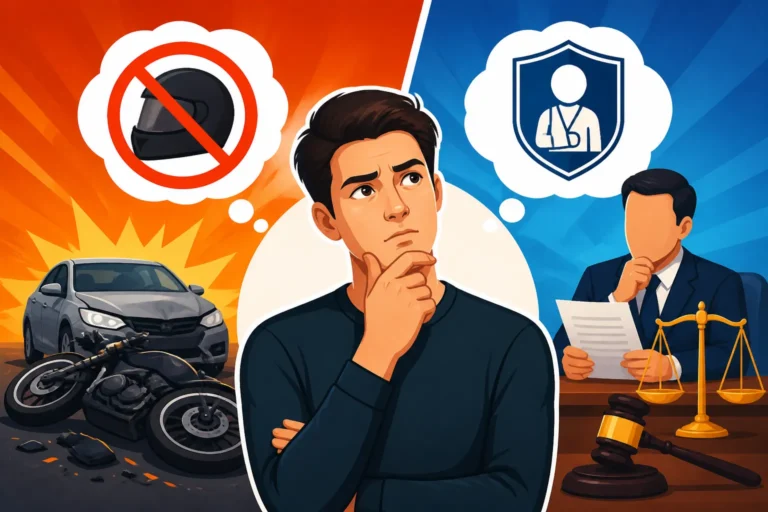
Navigating the aftermath of a motorcycle accident is stressful enough, but when you weren't wearing a helmet and wonder how that choice will impact your ability to recover, it adds a whole new layer of anxiety. For riders in South Carolina, the question isn't just about legality, but how a lack of head protection might influence your personal injury claim. This guide dives deep into South Carolina’s specific laws and legal doctrines to explain exactly how not wearing a helmet could affect your motorcycle accident claim.
South Carolina's Helmet Laws and the "Helmet Defense"
It's easy to assume that if you weren't wearing a helmet, any chance of a successful claim is out the window. But the reality in South Carolina is more nuanced than a simple yes or no. While safety is paramount, and we always advocate for wearing appropriate gear like a high-quality helmet from places like Cycle Gear, the legal implications of non-use are specific and depend heavily on how the other side tries to use it against you.
Understanding South Carolina's Specific Helmet Requirements
South Carolina has what's often referred to as a "partial" or "age-based" helmet law. Unlike states with universal helmet laws where every rider must wear a helmet regardless of age, South Carolina's rules are a bit different. Currently, if you're under the age of 21, you are legally required to wear a helmet while operating or riding as a passenger on a motorcycle. However, if you are 21 years of age or older, you are not legally mandated to wear a helmet, provided you meet certain insurance requirements. Specifically, riders 21 and over are exempt from helmet use if they are covered by an insurance policy providing at least $10,000 in medical benefits for injuries incurred in a motorcycle accident. This is a crucial distinction that many riders overlook, and it can become a significant factor in your claim.
This means that for riders 21 and over who carry the proper medical benefits coverage, not wearing a helmet isn't a traffic violation in itself. However, even if it's not illegal for you personally, it doesn't automatically mean it won't be brought up by the defense. This is where the concept of the "helmet defense" comes into play, a legal strategy designed to reduce the compensation you might receive. Understanding these nuances is vital because insurance companies will scrutinize every detail to minimize their payout, and your compliance with motorcycle helmet laws by state can become a battleground.
What is the "Helmet Defense" and How it Works
The "helmet defense" is an argument often employed by the at-fault driver's insurance company or their legal team. It essentially posits that even if their insured driver caused the accident, your decision not to wear a helmet contributed to the severity of your head injuries, or perhaps even caused them, and therefore, you shouldn't be fully compensated for those specific injuries. It's not an argument that you caused the accident, but rather that you failed to mitigate your damages, meaning you didn't take reasonable steps to prevent your injuries from being worse.
Think of it this way: if a car driver runs a red light and hits you, they are clearly at fault for the accident itself. However, if you sustained a serious traumatic brain injury and weren't wearing a helmet (even if you were legally allowed not to), the defense might argue that a helmet would have significantly lessened or prevented that particular injury. This argument aims to reduce the portion of your settlement related to head injuries, such as Motorcycle Traumatic Brain Injury: Claims and Compensation. They aren't trying to say you deserve no compensation, but rather that their client shouldn't be responsible for the aggravated portion of your injuries that could have been avoided by wearing protective gear. This defense can be particularly challenging to combat because it taps into a common perception of motorcycle safety.
How Comparative Negligence Intersects with Helmet Non-Use in South Carolina
South Carolina employs a specific legal doctrine called modified comparative negligence, which is critical to understand when discussing any shared responsibility or contributing factors, including the helmet defense. This doctrine dictates how damages are apportioned when more than one party shares fault in an accident.
South Carolina's Modified Comparative Negligence Rule
In South Carolina, the modified comparative negligence rule means that you can still recover damages even if you were partially at fault for an accident, as long as your fault is not greater than that of the other driver. In simpler terms, if a jury determines you were 50% or less at fault, you can still recover a portion of your damages. If your fault is found to be 51% or more, you generally cannot recover anything. This is often referred to as the "51% bar rule." So, if you were found to be 20% at fault, your total damages would be reduced by 20%.
When the helmet defense is successfully applied, it typically doesn't argue that you were at fault for causing the accident itself, but rather that you contributed to the severity of your injuries. This is a subtle but important distinction. For instance, if you get hit by a distracted driver who makes an unsafe lane change, they are undoubtedly at fault for the collision. However, if you weren't wearing a helmet and suffered a severe skull fracture, the defense might argue that your non-use of a helmet was, say, 30% responsible for the extent of your head injury. This 30% could then be used to reduce the portion of your medical bills, pain and suffering, and other damages directly related to that head injury. It's a complex interaction, because the question isn't always about shared fault for the crash, but shared responsibility for the outcome of specific injuries. This is why knowing How Comparative Negligence Reduces Your Payout is so important.
The Burden of Proof for the Helmet Defense
It’s not enough for the other side to simply claim you should have worn a helmet. In South Carolina, the burden of proof for the helmet defense typically falls on the defendant (the at-fault driver or their insurance company). This means they must prove several things:
- That you were not wearing a helmet: This is usually straightforward, often confirmed by police reports, witness statements, or medical records.
- That wearing a helmet would have prevented or reduced the severity of your head injury: This is where it gets more complicated. The defense usually needs expert testimony, often from an accident reconstructionist or medical expert, who can present evidence showing a direct causal link between the lack of a helmet and the extent of your specific injuries. They might present statistical data, biomechanical analysis, or even simulations to try and make their case.
- The extent to which your damages would have been reduced: The expert must also quantify, to a reasonable degree of medical certainty, how much less severe your injuries would have been if you had been wearing a DOT-compliant helmet.
Without robust evidence and expert testimony, a simple assertion that "helmets save lives" isn't usually enough to successfully invoke the helmet defense in court. This burden can be quite high, especially when dealing with complex injuries or scenarios where the impact forces were extreme regardless of helmet use. This intricate dance around proving fault and damage is precisely why Proving Fault in a Motorcycle Accident becomes such a detailed process.
Damages Affected by Not Wearing a Helmet
When the helmet defense is successfully argued, it doesn't usually negate your entire claim. Instead, it specifically targets the damages that could have been prevented or minimized by helmet use. Understanding which damages are most vulnerable is crucial for managing expectations and strategizing your claim.
Impact on Medical Expenses and Pain and Suffering
The most direct impact of a successful helmet defense is often seen in claims for medical expenses related to head and brain injuries. If the defense successfully argues that a significant portion of your TBI or skull fracture treatment could have been avoided with a helmet, a jury might reduce the awarded damages for those specific medical bills. This reduction could extend to future medical costs, like rehabilitation or long-term care for neurological damage, if it's proven that a helmet would have mitigated the need for such extensive treatment.
Beyond tangible medical bills, the helmet defense can also significantly affect non-economic damages, particularly for pain and suffering. Head injuries are often associated with profound and lasting pain, cognitive impairment, emotional distress, and a diminished quality of life. If a jury believes these severe consequences could have been lessened by helmet use, they might award less for your pain and suffering. The rationale is that while the at-fault driver is responsible for initiating the crash, you bore some responsibility for the preventable aggravation of those specific, severe head injuries. It’s a harsh reality, but insurance adjusters and defense lawyers are trained to leverage every possible factor to reduce their financial obligations, often using rider bias in fault determination. Therefore, demonstrating How to Prove Pain and Suffering becomes even more critical in these circumstances.
Challenges to the Helmet Defense
While the helmet defense can be formidable, it's not insurmountable, especially in South Carolina where many riders over 21 aren't legally required to wear one. There are several ways to challenge this defense:
- No Causal Link: Your legal team can argue that even with a helmet, the head injuries you sustained would have been just as severe due to the extreme nature of the impact. For example, in a high-speed collision or a head-on collision, even the best DOT-approved helmet might not prevent all severe trauma. Your attorney might bring in an accident reconstruction expert to testify that the forces involved exceeded the protective capabilities of any helmet, or a medical expert to confirm that the specific type of injury was not preventable by a helmet.
- Injuries Not Related to Helmet Use: You might have sustained severe injuries that have absolutely no connection to whether or not you wore a helmet. This could include extensive road rash, broken bones in your limbs, Motorcycle Spinal Cord Injury: Claims and Compensation, or internal organ damage. The helmet defense would only apply to head injuries, meaning all other damages should still be fully recoverable, subject to comparative negligence for the accident itself.
- Legal Compliance for Over 21 Riders: For riders 21 and older who carry the required medical benefits insurance, simply not wearing a helmet is not illegal. Your attorney can emphasize this fact, arguing that while safety is important, you adhered to the law, and the defense is trying to impose a higher standard than what is legally required in South Carolina. However, this doesn't completely negate the "failure to mitigate damages" argument; it just makes it harder for the defense to frame it as a clear legal violation on your part.
- "Eggshell Skull" Rule: This legal principle, sometimes called the "thin skull" rule, states that a defendant "takes the plaintiff as he finds him." This means if you had a pre-existing condition that made you more susceptible to injury, the at-fault driver is still liable for all of your injuries, even if a "normal" person wouldn't have been so severely hurt. While not a direct counter to the helmet defense, it can be relevant if the defense tries to argue your unique physiology contributed to the injury rather than just the lack of a helmet.
A skilled attorney will meticulously dissect the accident details, medical records, and expert opinions to challenge any attempts by the defense to unfairly reduce your compensation based on helmet non-use.
| Aspect | South Carolina Law (21+ w/ $10k Med Benefits) | Impact on Head Injury Claims | Impact on Non-Head Injury Claims |
|---|---|---|---|
| Helmet Requirement | Not legally required | Potential Reduction | No direct impact |
| "Helmet Defense" | Can be invoked (failure to mitigate) | High risk of reduction | Generally not affected |
| Burden of Proof | On defendant (must prove causation/reduction) | Expert testimony needed | N/A |
| Comparative Negligence | 51% bar rule applies | Reduces total claim by % fault | Reduces total claim by % fault |
| Medical Expenses (Head) | May be reduced | Likely targeted | Unaffected by helmet use |
| Pain & Suffering (Head) | May be reduced | Likely targeted | Unaffected by helmet use |
Protecting Your Claim Even Without a Helmet
Even if you weren’t wearing a helmet, there are critical steps you can take immediately after an accident and throughout the claims process to protect your rights and maximize your chances of a fair recovery. Every piece of evidence and every decision you make can significantly impact the outcome.
Documenting the Scene and Your Injuries
The moments immediately following an accident are chaotic, but what you do (or don't do) can have long-lasting repercussions on your claim. First and foremost, if you are injured, seek immediate medical attention. This is not just for your health but also for your legal claim. Delays in treatment can be used by insurance companies to argue that your injuries weren't severe or weren't caused by the accident. Make sure every injury, no matter how minor it seems, is documented by medical professionals.
While at the scene, if your condition allows, gather as much evidence as possible. Take photos of everything: the position of the vehicles, damage to both your motorcycle and the other vehicle, road conditions, traffic signs, skid marks, and any debris. If you were wearing any other protective gear from places like Cycle Gear, such as a jacket, gloves, or boots, take photos of that too, especially if it shows damage, as this can demonstrate the force of impact. Get contact information from any witnesses. Do not admit fault or make statements to the other driver's insurance company without consulting with a legal professional first. Remember, What to Do Immediately After a Motorcycle Accident involves a clear, calculated approach to evidence collection.
The Value of Legal Counsel
Given the complexities of comparative negligence and the "helmet defense" in South Carolina, trying to navigate a motorcycle accident claim on your own can be incredibly challenging, if not detrimental to your case. Insurance companies are skilled negotiators whose primary goal is to pay out as little as possible. They will often try to use your helmet non-use as leverage, even if it's not legally dispositive for your situation.
A knowledgeable motorcycle accident attorney understands South Carolina's specific laws, including the nuances of the 51% modified comparative negligence rule and how the helmet defense is applied. They can:
- Investigate thoroughly: Your attorney will gather all necessary evidence, including police reports, medical records, witness statements, and accident reconstruction data. They can also secure expert witnesses to counter the defense's claims regarding helmet efficacy or injury causation.
- Negotiate with insurance companies: They know the tactics insurance adjusters use and can push back against lowball offers or unfair fault assignments. They can argue against the helmet defense's application, ensuring your claim is valued fairly.
- Protect your rights: They will ensure deadlines are met, such as the statute of limitations for filing your claim, and that you don't inadvertently say or do anything that could jeopardize your case.
- Represent you in court: If a fair settlement cannot be reached, your attorney will be prepared to take your case to trial, presenting a compelling argument on your behalf.
Ultimately, while not wearing a helmet can affect certain aspects of your claim, particularly head injury compensation, it doesn't automatically mean you have no case. With the right legal guidance, you can still pursue and potentially win significant compensation for your injuries and damages. Knowing When to Hire a Motorcycle Accident Lawyer is a key factor in protecting your rights after a crash.
Disclaimer
This article provides general information about South Carolina motorcycle helmet laws and their potential impact on accident claims. It is not intended as legal advice. Every accident is unique, and the specifics of your case will determine its legal outcome. You should consult with a qualified South Carolina personal injury attorney to discuss your specific situation and understand your legal rights and options.