How UM/UIM Coverage Increases Payouts
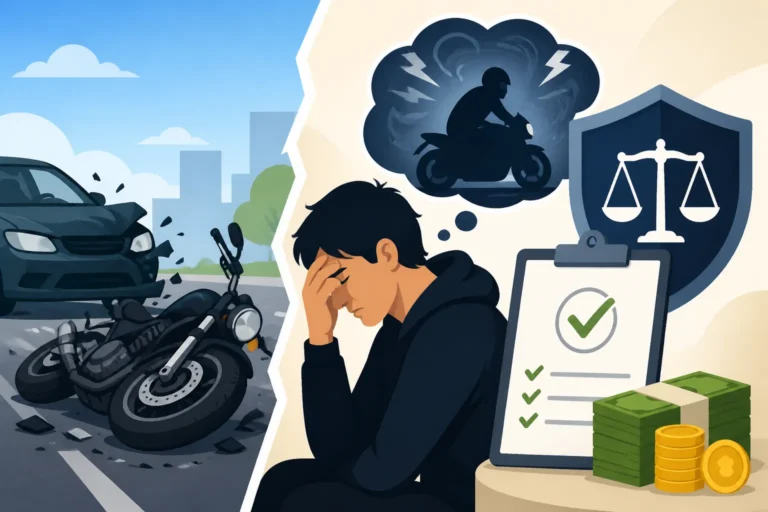
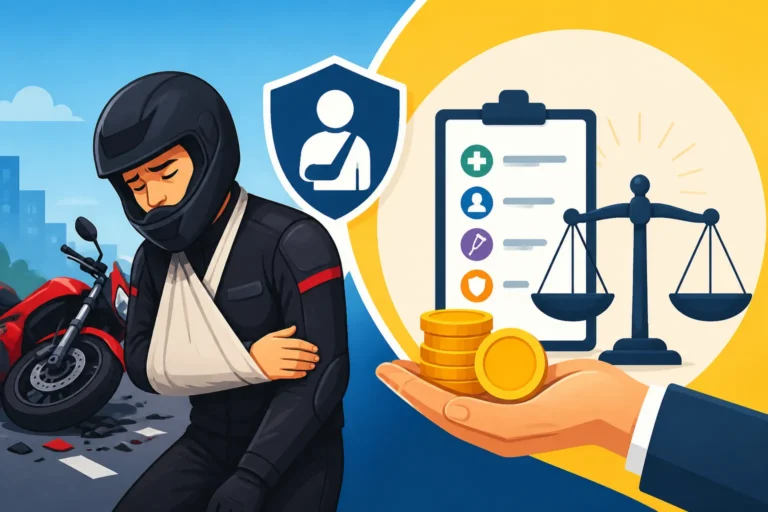
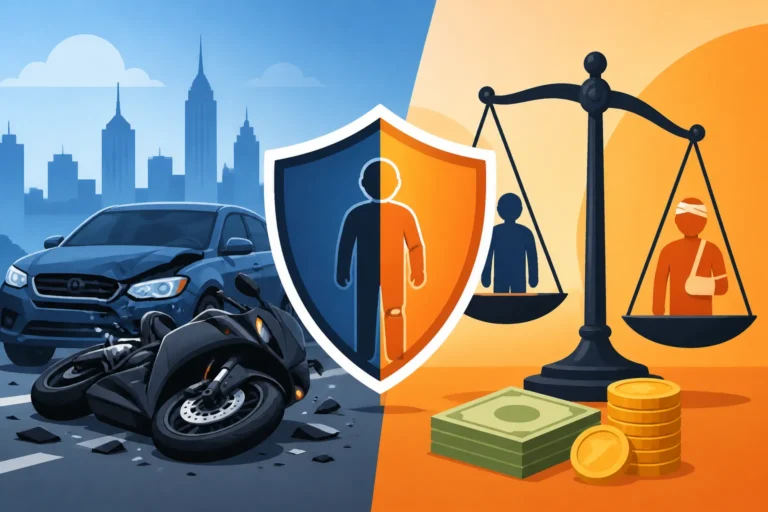
It's a scary thought, isn't it? You're out riding, enjoying the open road, and suddenly an accident happens – through no fault of your own. Then, you find out the driver who hit you either has no insurance at all or, even worse, just the bare minimum coverage that won't even begin to cover your medical bills, lost wages, or the extensive damage to your bike. This guide is all about how Uninsured/Underinsured Motorist (UM/UIM) coverage acts as your personal financial shield, dramatically increasing your potential payouts when you need it most.
The Harsh Reality of Underinsured Drivers on the Road
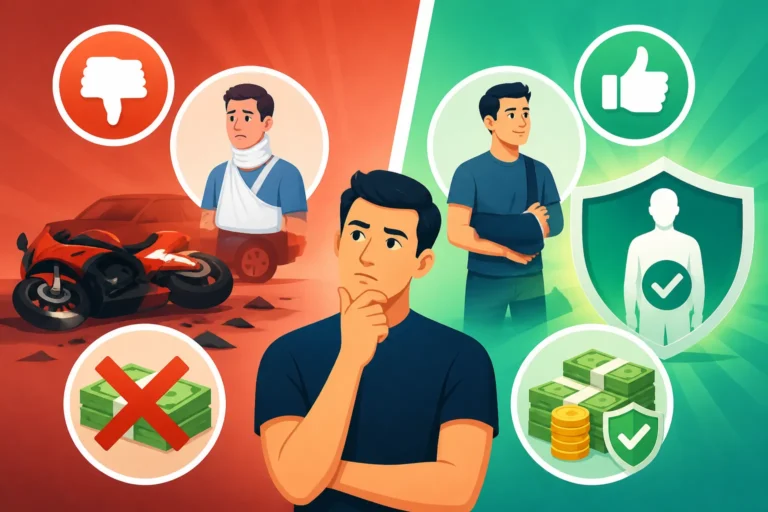
Let's face it, we live in a world where not everyone plays by the rules, or sometimes, they just can't afford to. Unfortunately, this often translates to a significant risk for motorcycle riders: encountering drivers who are either uninsured or, perhaps more commonly, woefully underinsured. It's a frustrating, heartbreaking situation that leaves innocent riders in a desperate financial bind, even when they're not to blame for a crash.
What Happens When the At-Fault Driver Has Minimum Coverage?
Imagine this scenario: you're cruising down a busy street in Phoenix, Arizona, and a distracted driver makes an unsafe lane change, T-boning your Harley-Davidson. You're thrown from your bike, sustaining a broken leg, several fractured ribs, and some nasty road rash. The immediate medical bills start piling up, your bike is totaled, and you're unable to work for months. You later find out the at-fault driver only carries Arizona's minimum liability insurance: $25,000 for bodily injury per person, $50,000 for bodily injury per accident, and $15,000 for property damage.
In a situation like this, your medical expenses alone could easily exceed $25,000, not to mention the cost to replace your motorcycle, the wages you've lost, and the sheer pain and suffering you've endured. The at-fault driver's insurance company will pay out their maximum limit, which in this case is $25,000 to you. But what about the remaining tens, or even hundreds, of thousands of dollars in damages? That significant gap, which is the difference between what you're owed and what their policy can actually pay, becomes your burden. This is precisely why understanding How Insurance Policy Limits Affect Your Payout is so crucial, as minimum limits rarely cover serious motorcycle injuries.
The Unseen Dangers of Uninsured Motorists
Even more terrifying is the prospect of being hit by an uninsured motorist. This could happen in a variety of ways: a driver who simply never purchased insurance, someone whose policy lapsed, or even a dreaded hit-and-run driver who flees the scene, leaving you injured and without any recourse from their insurance. In states like Florida, where there's a significant percentage of uninsured drivers, this is an all-too-common reality.
When an uninsured driver is at fault, there's no insurance company on their side to pursue for your damages. You might think you're completely out of luck, facing staggering medical bills and repair costs with no one to turn to. This scenario can quickly lead to financial ruin, leaving you wondering how you'll ever recover, both physically and financially. It’s a harsh truth that can amplify the already devastating physical and emotional toll of a motorcycle accident, highlighting why preparing for the worst-case scenario with your own insurance is paramount.
Understanding Uninsured Motorist (UM) Coverage
This is where your own personal insurance policy can become a true lifeline. Uninsured Motorist (UM) coverage is designed specifically to protect you from the financial fallout when the at-fault driver has absolutely no insurance whatsoever. It’s not just a nice-to-have; for many riders, it's a non-negotiable layer of protection.
What is UM Coverage and How Does It Work?
Uninsured Motorist (UM) coverage essentially allows your own insurance policy to step in and pay for your damages as if the at-fault driver did have insurance. Think of it as your insurer putting on the hat of the responsible, but absent, third-party insurance company. This coverage typically comes in two forms:
- Uninsured Motorist Bodily Injury (UMBI): This covers medical expenses, lost wages, pain and suffering, and other related costs for you and your passengers if an uninsured driver injures you. For example, if you incur $75,000 in damages after being hit by an uninsured driver, and you have $50,000 in UMBI coverage, your own insurer would pay up to that $50,000 limit. This coverage can make a significant difference in covering the often-high costs associated with Common Motorcycle Accident Injuries.
- Uninsured Motorist Property Damage (UMPD): This covers the cost to repair or replace your motorcycle and other property damaged by an uninsured driver. It’s similar to collision coverage but kicks in specifically for an uninsured driver scenario. Some states may bundle this with UMBI, while others offer it separately or apply a deductible.
The way it works is fairly straightforward: after an accident with an uninsured driver, you would file a claim with your own insurance company, just as you would if you were filing a claim with the other driver's insurer. Your insurer would then investigate the accident, determine fault, and, if the other driver is indeed uninsured and at fault, they would pay out your damages up to your policy limits.
The Importance of UM for Motorcycle Riders
For motorcycle riders, UM coverage isn't just important; it's often critical. Riders are inherently more vulnerable on the road. Without the steel cage of a car, even a minor fender-bender can result in severe injuries. This means that medical bills and lost income can quickly skyrocket beyond what many standard insurance policies can cover. The risk of sustaining Catastrophic Motorcycle Injuries Explained is unfortunately higher, making robust coverage non-negotiable.
Consider a scenario where you're involved in a hit-and-run accident on a rural road in North Carolina. The driver disappears, and you're left with a mangled bike and a broken collarbone. Without UM coverage, you would be left to pay for everything out of pocket or rely on your health insurance, which won't cover your lost wages or the non-economic damages like pain and suffering. Your UM policy, however, would step in to cover these costs, providing a crucial safety net. It protects you from the irresponsible actions of others, ensuring that your recovery isn't stalled by financial hardship. It's a proactive measure that speaks volumes about being a prepared and responsible rider.
Understanding Underinsured Motorist (UIM) Coverage
While UM coverage deals with drivers who have no insurance, Underinsured Motorist (UIM) coverage tackles the equally common and frustrating problem of drivers who have some insurance, but not nearly enough to adequately compensate you for your injuries and damages after a serious motorcycle accident.
What is UIM Coverage and How Does It Work?
UIM coverage kicks in when the at-fault driver's liability insurance isn't sufficient to cover the full extent of your damages. This is a subtle but critical distinction from UM. Imagine your medical bills, property damage, and lost wages total $100,000. The driver who caused the accident only has a $25,000 bodily injury liability policy. After their insurance company pays out their maximum $25,000, you are still left with $75,000 in uncovered damages. This is exactly where UIM steps in.
Your UIM policy would then cover the difference between what the at-fault driver's insurance paid and your actual damages, up to your UIM policy limits. So, if you have $75,000 in UIM coverage, your own insurer would pay the remaining $75,000, effectively making you whole. It's important to understand that UIM is not typically a "dollar-for-dollar" addition, but rather a layer that fills the void when the other party's coverage runs out. This structure ensures that your total recovery can get closer to the actual value of your claim, rather than being capped by the inadequate policy limits of the at-fault driver. This is particularly relevant when you consider How Much Compensation for Motorcycle Spinal Cord Injury or other severe injuries.
Stacking UIM Coverage: The Game Changer
"Stacking" UIM coverage is a powerful concept that can significantly increase your available payout. It means combining the UIM limits from multiple policies or vehicles to create a much higher total coverage amount. However, whether you can stack UIM coverage depends heavily on your state's laws and the specifics of your policy.
There are generally two types of stacking:
- Intra-policy Stacking: This allows you to combine UIM limits for multiple vehicles insured under the same policy. For example, if you have two motorcycles and a car on one policy, and each has $50,000 in UIM coverage, you might be able to stack them to get $150,000 in total UIM coverage for a single accident.
- Inter-policy Stacking: This allows you to combine UIM limits from different policies. For instance, if you have a motorcycle policy with $50,000 UIM and a separate auto policy with $50,000 UIM, you might be able to stack them for $100,000 in total. This can be especially beneficial for a rider who might have multiple vehicles and policies.
States like Florida allow stacking, giving residents the option to significantly boost their protection. However, other states might prohibit stacking or only allow certain types. It's crucial to check your specific insurance policy and your state's regulations, as stacking can turn a $50,000 UIM policy into a $150,000 or even $200,000 safety net, directly impacting What Affects Your Motorcycle Accident Payout and making a huge difference in recovering substantial damages after a severe crash. Always ask your insurance agent about stacking options.
How UM/UIM Coverage Directly Boosts Your Payouts
The beauty of UM/UIM coverage lies in its ability to transform a potentially devastating financial loss into a recoverable one. It’s not just about getting some money; it's about getting the compensation you truly deserve to cover the full scope of your damages, something that's often impossible with just the at-fault driver's minimum coverage.
Bridging the Gap: Covering Medical Bills and Lost Wages
When you’re involved in a serious motorcycle accident, the costs start piling up immediately. Emergency room visits, ambulance rides, surgeries, physical therapy, prescription medications – these can quickly amount to astronomical figures. If you're laid up in a hospital bed, unable to work, you're also facing significant lost wages, which can impact your ability to pay your regular bills, let alone new medical ones.
This is precisely where UM/UIM coverage shines. If the at-fault driver's insurance is exhausted, your UM/UIM policy steps in to cover these crucial economic damages. For example, if you have $150,000 in medical bills and $50,000 in lost wages, but the other driver only had a $50,000 policy, your UM/UIM policy can cover the remaining $150,000, bringing your total recovery up to $200,000 (assuming adequate UM/UIM limits). This financial buffer allows you to focus on your physical recovery without the added stress of crushing debt. It covers current medical expenses and can even account for Future Medical Costs Explained if your injuries require ongoing treatment, rehabilitation, or adaptive equipment.
Compensating for Pain and Suffering and Other Non-Economic Damages
Beyond the tangible costs of medical bills and lost income, motorcycle accidents often result in profound non-economic damages. These are the less quantifiable but equally impactful losses like physical pain, emotional distress, mental anguish, scarring, disfigurement, and loss of enjoyment of life. For riders, who often face significant and long-lasting physical and psychological trauma, these damages can be substantial.
While the at-fault driver's policy might cover a small portion of these, an underinsured policy will quickly run out. Your UM/UIM coverage then becomes the primary source for recovering these critical non-economic damages. This means your settlement can reflect the true impact the accident has had on your life, not just the dollar amount of your bills. For instance, if you developed PTSD After a Motorcycle Accident or suffered from Emotional Distress Damages, your UM/UIM coverage can provide the necessary compensation that allows you to seek therapy and address these long-term consequences. Without UM/UIM, securing adequate compensation for these difficult-to-quantify losses, which are often a significant portion of a motorcycle accident settlement, becomes incredibly challenging.
Navigating Your UM/UIM Claim: What You Need to Know
Filing a UM/UIM claim isn't always as simple as it might seem, even though you're dealing with your own insurance company. Remember, insurance companies, even yours, are businesses, and they have an interest in minimizing their payouts. This is why understanding the process and potential pitfalls is so important.
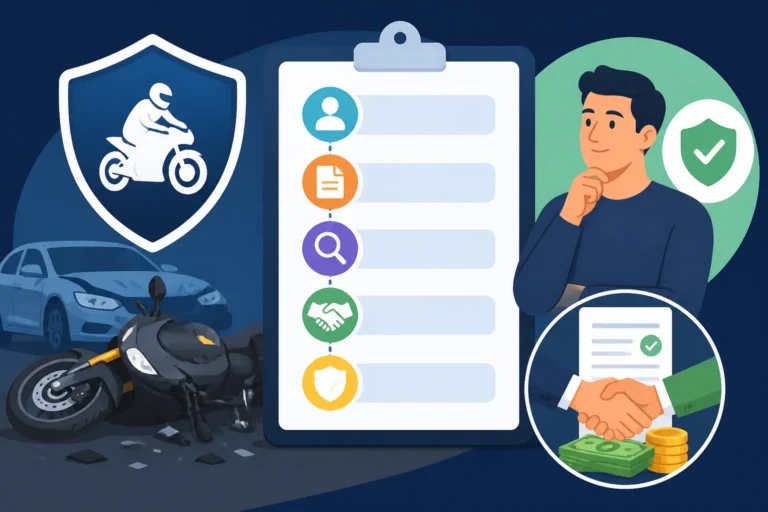
The Process of Filing a UM/UIM Claim with Your Own Insurer
The process usually starts after you've determined that the at-fault driver is either uninsured or underinsured and their policy limits have been exhausted.
- Notify Your Insurer: You need to promptly inform your own insurance company about the accident and your intent to file a UM/UIM claim. Don't delay, as policies often have strict notification deadlines.
- Investigation: Your insurer will conduct its own investigation, often looking into the same details that a third-party insurer would: who was at fault, the extent of your injuries, and the amount of your damages. They might request police reports, medical records, and witness statements. This is similar to the process of How Police Reports Establish Fault.
- Documentation: You'll need to provide comprehensive documentation of your injuries, medical treatments, lost wages, and any other expenses. This includes all medical bills, therapy records, proof of income, and perhaps even a daily journal detailing your pain and limitations. Detailed records are vital for proving the full extent of your injuries and damages and maximizing your potential recovery.
- Negotiation: Just like with a third-party claim, you or your legal representative will negotiate with your insurer to reach a fair settlement based on your UM/UIM policy limits and the proven damages.
- Arbitration/Litigation: If negotiations fail, your policy might require arbitration, or you might need to pursue litigation against your own insurance company to secure the compensation you deserve. This can be a surprising and frustrating aspect for many policyholders.
Potential Challenges and How to Overcome Them
Even though you’re dealing with your own insurance company, they won't simply cut you a check. They will likely scrutinize your claim, looking for ways to reduce their payout. Some common challenges include:
- Disputes Over Fault: Your insurer might try to argue that you were partially at fault for the accident, which could reduce their payout based on comparative negligence laws in your state. This is where evidence collection at the scene and detailed documentation become crucial for Proving Fault in a Motorcycle Accident.
- Minimizing Injury Severity: They might question the extent of your injuries, suggest that a pre-existing condition is to blame, or argue that certain treatments were unnecessary. This is why thorough medical documentation from trusted professionals is paramount.
- Valuing Non-Economic Damages: Assigning a dollar value to pain and suffering, emotional distress, or loss of enjoyment of life is subjective. Your insurer may offer a lower valuation than you believe is fair.
- Procedural Hurdles: Insurers may use tactics like delays, excessive paperwork, or requests for information that feel intrusive, hoping you'll give up or accept a lower offer out of frustration.
Overcoming these challenges often requires professional assistance. A knowledgeable motorcycle accident lawyer can help you gather the necessary evidence, build a strong case, and effectively negotiate with your own insurance company. They understand the tactics insurers use and can advocate fiercely on your behalf, ensuring you don't accept a lowball offer and that your rights are protected throughout the UM/UIM claim process.
Practical Advice for Riders: Securing Your Future
As a rider, your safety and financial security should always be a top priority. While you can't control every driver on the road, you can control the level of protection you carry through your insurance. Investing in robust UM/UIM coverage is one of the smartest decisions you can make to safeguard yourself and your loved ones.
Reviewing Your Policy Limits and Options
Don't wait until after an accident to find out you're underinsured. Now is the time to sit down with your insurance agent and thoroughly review your policy. Here’s what you should consider:
- Match Your Liability Limits: A general rule of thumb is to purchase UM/UIM coverage limits that are equal to your bodily injury liability limits. If you have $100,000/$300,000 liability coverage (meaning $100,000 per person, $300,000 per accident), aim for the same for your UM/UIM. This ensures that the protection you extend to others is also available to you if an underinsured or uninsured driver causes a crash.
- Assess Your Assets: Think about your financial situation. What would happen if you had a catastrophic injury and your medical bills topped a quarter-million dollars? Would your current UM/UIM coverage be enough to protect your savings, your home, and your future earning potential? Many riders opt for higher limits, such as $250,000/$500,000, especially if they have significant assets to protect or if they know they ride in areas with a high incidence of uninsured drivers, like parts of California.
- Ask About Stacking: As discussed, inquire about whether your state and your policy allow you to stack UM/UIM coverage. This can dramatically increase your available payout and is often a small additional premium for a huge boost in protection.
- Consider Umbrella Policies: For an extra layer of protection, especially for those with significant assets, an umbrella insurance policy can provide millions in additional liability coverage, which often extends to UM/UIM claims, serving as an ultimate safety net.
Taking the time to understand and adjust your insurance policy now can save you immense stress and financial hardship later. It's an investment in your peace of mind.
Why a Motorcycle Accident Lawyer is Crucial for UM/UIM Claims
While it might seem counterintuitive to hire a lawyer when dealing with your own insurance company, for a UM/UIM claim, it's often an absolutely vital step. Your insurer, despite being "your" company, has a vested interest in minimizing their payout, even if it's at your expense.
A skilled motorcycle accident lawyer acts as your advocate, protecting your interests against even your own insurance carrier. Here's why they are so important:
- Expert Negotiation: Lawyers are experienced in negotiating with insurance adjusters. They know the tactics used to undervalue claims and can effectively counter them, ensuring that your injuries, pain and suffering, and lost wages are accurately accounted for and valued according to your policy limits. They understand How to Negotiate a Motorcycle Accident Settlement effectively.
- Proving Damages: A lawyer will help you gather and present comprehensive evidence to prove the full extent of your damages. This includes working with medical experts, vocational specialists, and accident reconstructionists to build a robust case that withstands scrutiny. They excel at collecting Motorcycle Accident Evidence for Proving Fault.
- Navigating Complexities: UM/UIM laws can be complex and vary by state. A lawyer understands the nuances of these laws, including stacking rules, subrogation rights, and notice requirements. They can ensure all deadlines are met and that your claim is processed correctly, avoiding any technicalities that could jeopardize your payout.
- Protecting Your Rights: If your insurance company acts in bad faith – unreasonably denying or delaying your claim – your lawyer can hold them accountable. This includes taking them to arbitration or even court if necessary, to secure the compensation you are entitled to under your policy.
Don't underestimate the complexity of a UM/UIM claim. Engaging a qualified motorcycle accident lawyer from the outset can significantly increase your chances of a successful outcome and maximize your payout, providing the financial security you need to truly recover after a devastating crash. This is especially true if you're asking How Much Can You Get for a Motorcycle Accident with serious injuries.
UM vs. UIM Coverage: A Quick Comparison
To clarify the distinctions, here's a table comparing Uninsured Motorist (UM) and Underinsured Motorist (UIM) coverage:
| Feature | Uninsured Motorist (UM) Coverage | Underinsured Motorist (UIM) Coverage |
|---|---|---|
| Purpose | Protects you when the at-fault driver has NO insurance. | Protects you when the at-fault driver's insurance is NOT enough. |
| Trigger Event | Accident with a driver who has zero liability insurance. | Accident where at-fault driver's liability limits are exhausted and insufficient. |
| Coverage Types | UM Bodily Injury (UMBI) & UM Property Damage (UMPD) | UIM Bodily Injury (UIMBI) & UIM Property Damage (UIMPD) |
| Who Pays | Your own insurance company. | Your own insurance company (after at-fault driver's insurer pays maximum). |
| Benefit | Acts as if the uninsured driver had coverage, filling the gap entirely. | Fills the gap between the at-fault driver's minimal coverage and your actual damages. |
| Stacking | May be stackable depending on state laws and policy terms. | May be stackable depending on state laws and policy terms. |
| Key Role | Essential for hit-and-run scenarios and drivers with no coverage. | Critical for severe injuries where damages exceed standard liability limits. |
Disclaimer
This guide provides general information about Uninsured/Underinsured Motorist (UM/UIM) coverage for motorcycle accident claims and should not be considered legal advice. Insurance laws and policy specifics vary significantly by state and individual circumstances. It is crucial to consult with a qualified insurance professional to understand your specific policy and coverage options, and with an experienced motorcycle accident attorney to discuss the details of your claim.