Average Motorcycle Accident Settlement in Indiana
It's incredibly frustrating when you've been in a motorcycle accident and all you want to know is what kind of financial recovery you can expect, but all you hear are vague answers. You're probably facing a mountain of medical bills, lost wages, and the sheer pain of recovery, and understanding the potential value of your claim feels like navigating a dense fog. This guide is here to shed some light on what goes into determining the average motorcycle accident settlement in Indiana, helping you understand the complex factors that shape your potential payout.
Understanding "Average" Motorcycle Accident Settlements in Indiana
When we talk about an "average" motorcycle accident settlement, it's crucial to understand that this is a highly misleading term. Every single motorcycle accident case is a unique constellation of circumstances, injuries, and financial impacts. There isn't a simple calculator or a fixed number that applies across the board for settlements here in Indiana or anywhere else, for that matter. What one rider receives for a broken leg might be vastly different from another rider with a similar injury, due to a myriad of underlying factors.
Think of it like trying to find the "average" cost of a house in Indianapolis. While you can find median prices, the actual cost of your house depends on its size, location, condition, and a hundred other details. Personal injury settlements work much the same way. The figures you might hear casually mentioned online or by acquaintances are often based on a very limited set of facts and shouldn't be taken as a direct prediction for your specific situation. The goal isn't to hit an "average," but to secure a fair and comprehensive settlement that fully compensates you for all your losses.
The reason it's so difficult to pin down an average is because settlements are influenced by everything from the severity and permanence of your injuries to the clarity of fault, the specific insurance policies involved, and even the skills of the negotiators or legal representation. For instance, a minor road rash injury might settle for a few thousand dollars, primarily covering immediate medical costs, while a catastrophic injury like a spinal cord injury could lead to settlements well into the hundreds of thousands or even millions, accounting for lifelong care. So, while we can discuss the components that drive value, looking for a single average number is often an unhelpful pursuit.
Why Every Case Is Truly Unique
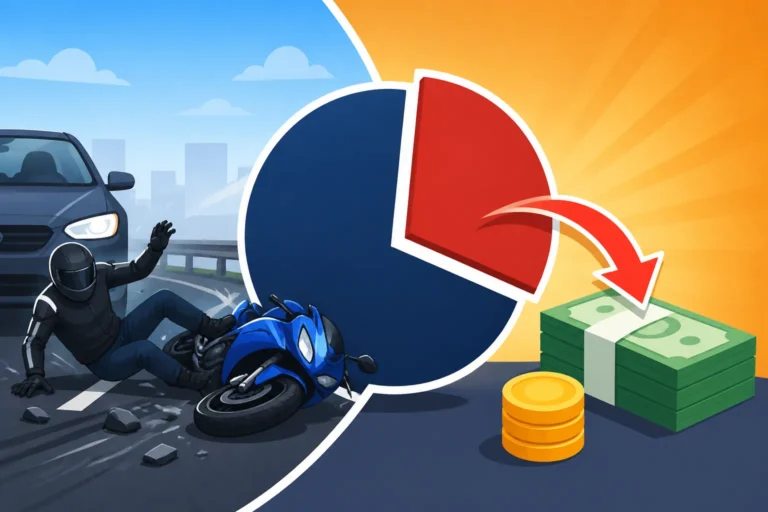
The uniqueness of each motorcycle accident claim stems from a combination of legal principles, individual circumstances, and the specific damages incurred. For example, Indiana operates under a modified comparative negligence system, meaning if you are found to be 51% or more at fault for the accident, you cannot recover any damages. This concept of shared fault is a huge differentiator. If you're found 10% at fault, your total damages will be reduced by 10%. This state-specific law alone can dramatically alter a settlement amount compared to a state with pure comparative negligence or no-fault rules.
Beyond fault, consider the types of injuries. A simple fracture that heals quickly is very different from a complex break requiring multiple surgeries and leaving a permanent impairment. The ripple effects of these injuries—lost time from work, the inability to enjoy hobbies, the emotional toll—are profoundly personal. Even factors like your age, occupation, and dependents play a role, as they influence how injuries impact your economic future and quality of life. An architect who can no longer use their dominant hand for drawing faces a different economic loss than a retiree with a similar injury. Because of these intricate details, focusing on securing full compensation for your losses, rather than chasing an elusive "average," is always the best approach.
Key Factors Influencing Your Indiana Motorcycle Accident Settlement
Several critical factors come into play when calculating a potential motorcycle accident settlement in Indiana. Understanding these elements can help you gauge the strength and potential value of your claim, though it's never a substitute for professional legal advice tailored to your specific situation. These factors directly inform how insurance companies and legal teams assess liability and damages.
Severity of Injuries and Medical Treatment
The nature and extent of your injuries are, without a doubt, the most significant drivers of settlement value. In Indiana, just like anywhere else, more severe and long-lasting injuries typically lead to higher settlements. Think about it: a fractured wrist requiring a cast for a few weeks is vastly different from a traumatic brain injury that necessitates years of rehabilitation and leaves permanent cognitive deficits. The medical treatment you receive, and how consistently you receive it, forms the backbone of your injury claim.
For instance, if you suffered a severe spinal cord injury in a crash on I-70 near Indianapolis, your claim would involve not just initial emergency care, but potentially multiple surgeries, extensive physical therapy, assistive devices like wheelchairs, home modifications, and ongoing medical management for the rest of your life. All of these costs add up exponentially. Documentation is key here. Every doctor's visit, every physical therapy session, every prescription, and every specialist consultation creates a paper trail that substantiates your claim for damages. Gaps in treatment or a failure to follow doctor's orders can sometimes be used by insurance adjusters to argue that your injuries aren't as severe as you claim or weren't directly caused by the accident. This is why immediate and consistent medical attention following an accident is paramount.
Impact of Comparative Fault in Indiana
Indiana follows a modified comparative negligence rule, often referred to as the 51% bar rule. This rule is a cornerstone of personal injury claims in the state, including motorcycle accidents. What it means in practice is that if you are found to be 51% or more at fault for the accident, you are completely barred from recovering any damages from the other party. If your fault is determined to be 50% or less, you can still recover damages, but your total award will be reduced by your percentage of fault. This is a crucial distinction and can dramatically impact your final settlement amount.
For example, imagine you were involved in a motorcycle accident on US-31 north of Carmel, and the other driver clearly failed to yield. However, an investigation reveals you were speeding by 10 mph over the limit. A jury or adjuster might assign you 20% of the fault for the accident because your speed contributed to the severity, or perhaps even the occurrence, of the crash. If your total calculated damages were $100,000, your settlement would be reduced by 20%, leaving you with $80,000. This is a critical point that insurance companies will often try to leverage against motorcycle riders, sometimes unfairly, due to existing biases. Understanding how fault is determined in motorcycle accidents is vital, and ensuring that any fault assigned to you is accurate and justified is part of building a strong case.
Insurance Policy Limits and Coverage
Another significant factor determining the maximum possible settlement in Indiana is the available insurance coverage. Even if your damages total $500,000, if the at-fault driver only has a basic liability policy with limits of $25,000 per person, that $25,000 might be the most you can recover from their insurance. This can be a harsh reality for accident victims, especially given the severity of common motorcycle accident injuries.
Indiana requires minimum liability coverage of $25,000 for bodily injury per person, $50,000 for bodily injury per accident, and $25,000 for property damage. Many drivers carry only these minimums. This is where your own uninsured/underinsured motorist (UM/UIM) coverage becomes a lifesaver. If the at-fault driver's insurance isn't enough to cover your damages, your UM/UIM policy can step in to cover the difference, up to your policy limits. Without adequate UM/UIM coverage, you might find yourself with significant uncompensated losses, even if fault is clear and your injuries are severe. Reviewing your own policy, perhaps with providers like Progressive or Geico, to ensure you have robust UM/UIM coverage is one of the most proactive steps you can take to protect yourself before an accident occurs.
Quality of Evidence and Documentation
The strength of your claim hinges on the evidence you can provide. A well-documented case with clear evidence of fault and damages is far more likely to result in a favorable settlement than one with fuzzy details. This means everything from the initial moments after the crash to the ongoing medical treatment.
Consider a scenario where you're hit by a distracted driver on State Road 37 outside Bloomington. If you have immediate photos of the accident scene, including vehicle positions, damage, road conditions, and any visible injuries, this provides invaluable data. A police report that clearly assigns fault to the other driver, witness statements corroborating your account, and even dashcam footage if available, all serve as powerful pieces of evidence. Beyond the accident itself, meticulous records of medical bills, prescription receipts, therapy invoices, and proof of lost wages (pay stubs, employer letters) are essential for quantifying your economic damages. Even a personal journal detailing your pain levels, emotional struggles, and how your injuries impact your daily life can help substantiate non-economic damages like pain and suffering. The more comprehensive and organized your documentation, the harder it is for insurance companies to dispute your claim.
Types of Damages You Can Claim in Indiana After a Motorcycle Accident
When you're involved in a motorcycle accident in Indiana, the financial recovery you pursue is categorized into different types of damages. These categories ensure that you're compensated for both the direct, measurable costs you incur and the less tangible, but equally impactful, losses you experience. Understanding these categories is crucial for grasping how your total settlement amount is calculated.
Economic Damages
Economic damages are the quantifiable financial losses you suffer as a direct result of the motorcycle accident. These are often easier to calculate because they come with specific bills, receipts, or wage statements. In a place like Indianapolis, medical care can be expensive, and missing work means real money out of your pocket.
- Medical Expenses: This category covers all costs related to your medical treatment, both past and future. It includes everything from emergency room visits at facilities like IU Health Methodist Hospital or Eskenazi Health, ambulance rides, doctor consultations, prescription medications, surgeries, physical therapy, rehabilitation, and even assistive devices like crutches or wheelchairs. If your injuries require long-term care or future surgeries, these anticipated costs are also factored into your claim. Keeping meticulous records of all medical bills and related expenses is absolutely essential.
- Lost Wages and Loss of Earning Capacity: If your injuries prevent you from working, you can claim the income you've lost. This includes not just your regular salary or hourly wages, but also bonuses, commissions, and other employment benefits. For self-employed riders, this can be more complex to prove but is still recoverable. Furthermore, if your injuries are permanent and affect your ability to earn at the same level as before the accident, you can claim "loss of earning capacity." This accounts for the difference in what you would have earned over your lifetime versus what you can earn now due to your disability. This often requires expert testimony from vocational and economic specialists to project future losses.
- Property Damage: This covers the cost to repair or replace your damaged motorcycle, gear, and any other personal property damaged in the accident. This includes your helmet, riding jacket, boots, and any other accessories. It also covers the cost of a rental vehicle if you needed one while your motorcycle was being repaired or replaced. Documenting the damage with clear photos and obtaining repair estimates from reputable shops is important for this portion of your claim.
Non-Economic Damages
Non-economic damages address the intangible losses that don't come with a bill but significantly impact your quality of life after a severe accident. These are often more challenging to quantify but are a substantial part of many motorcycle accident settlements in Indiana.
- Pain and Suffering: This is a broad category that covers the physical pain you endure from your injuries, as well as the emotional distress, discomfort, and inconvenience caused by the accident. This can include chronic pain, headaches, loss of sleep, and the general misery of recovery. The severity and duration of your pain, along with your medical records and even a personal injury journal, are used to calculate these damages. While there's no fixed formula, insurance companies and courts often use multipliers of economic damages to arrive at a figure for pain and suffering.
- Emotional Distress: Motorcycle accidents are traumatic events, and many riders experience significant psychological consequences beyond physical pain. This can include anxiety, depression, post-traumatic stress disorder (PTSD), fear of riding again, or even general emotional trauma. If you seek therapy or counseling for these issues, those medical expenses would fall under economic damages, but the underlying emotional suffering itself is a non-economic damage. Proving emotional distress often requires documentation from mental health professionals.
- Loss of Enjoyment of Life: This category accounts for the inability to participate in activities you once enjoyed due to your injuries. Perhaps you can no longer ride your motorcycle, play with your children, participate in a beloved sport, or engage in a hobby that brought you significant joy. This loss significantly diminishes your quality of life and is a recoverable damage. Your testimony, supported by medical evidence of your physical limitations, can help illustrate this loss. This is why having comprehensive information about your injuries and damages is critical.
Punitive Damages
While rare, punitive damages are sometimes awarded in Indiana personal injury cases, including motorcycle accidents. Unlike economic and non-economic damages, which are compensatory (designed to make the victim whole), punitive damages are intended to punish the at-fault party for egregious misconduct and to deter others from similar actions.
For punitive damages to be awarded in Indiana, there must be clear and convincing evidence that the at-fault driver acted with "malice, fraud, gross negligence, or oppressiveness, and not merely through a mistake of law or fact, honest error of judgment, overzealousness, or other human failing." A classic example where punitive damages might apply is a drunk driving accident or a hit-and-run where the driver exhibited extreme recklessness. Because punitive damages are difficult to obtain and are not usually covered by standard insurance policies, they are generally sought in cases that go to trial rather than through settlement negotiations.
| Type of Damage | Description | How It's Calculated |
|---|---|---|
| Medical Expenses | ER visits, surgeries, therapy, medications, future care | Bills, receipts, expert projections for future costs |
| Lost Wages | Income lost due to inability to work | Pay stubs, employer statements, tax returns |
| Loss of Earning Capacity | Diminished ability to earn income over lifetime due to permanent injury | Vocational and economic expert testimony |
| Property Damage | Repair or replacement cost of motorcycle and gear | Repair estimates, replacement cost quotes, receipts for damaged items |
| Pain and Suffering | Physical pain, discomfort, mental anguish, emotional distress | Often a multiplier of economic damages; based on injury severity, duration, and personal impact; medical records, journals |
| Loss of Enjoyment of Life | Inability to partake in hobbies and activities | Testimony, medical records detailing limitations |
| Punitive Damages | Punishment for extreme misconduct (rare) | Awarded by court in specific circumstances, not typical for settlements |
Navigating the Settlement Process in Indiana
The path to a motorcycle accident settlement in Indiana can feel like a maze, especially when you're dealing with injuries and the aftermath of a crash. Knowing the general steps involved, from the immediate post-accident actions to the final negotiations, can help demystify the process and prepare you for what's ahead. Remember, patience and thoroughness are your allies here.
Initial Steps After an Accident
The actions you take immediately following a motorcycle accident are incredibly important and can significantly impact your future settlement. First and foremost, seek medical attention, even if you feel okay. Some serious injuries, like concussions or internal bleeding, may not be immediately apparent. Getting a medical evaluation not only prioritizes your health but also creates an official record of your injuries, which is vital for your claim. It’s also crucial to know What to Do Immediately After a Motorcycle Accident.
After ensuring your safety and seeking medical care, report the accident to the police. An official police report can provide critical information, including details about the accident scene and sometimes even an initial assessment of fault. Exchange information with all parties involved, including names, contact details, insurance information, and vehicle license plate numbers. If possible, take photographs and videos of the accident scene, vehicle damage, road conditions, and any visible injuries. These initial steps are the foundation of proving fault in a motorcycle accident and building a strong claim.
Filing the Claim and Investigation
Once you've addressed your immediate needs, the next step is to officially file a claim with the at-fault driver's insurance company (and potentially your own, depending on your coverage and the specific circumstances). This is often where the real work begins. The insurance company will assign an adjuster to your case, who will then launch their own investigation. They'll likely try to contact you for a recorded statement. It's generally advised to avoid giving a recorded statement without first consulting with an attorney, as anything you say can potentially be used against you later.
During this investigation phase, the adjuster will gather evidence, review the police report, speak with witnesses, and assess the damage to vehicles. They'll also review your medical records to understand the extent of your injuries and treatment. This period can take time, especially for complex cases with serious injuries that require ongoing treatment. Your legal team, if you choose to hire one, will conduct their independent investigation, gathering evidence, consulting with experts, and building a comprehensive case to support your claim for damages. They'll work to prove who is at fault in a motorcycle accident and establish the full scope of your losses.
Negotiation and Settlement Offers
Once you've reached Maximum Medical Improvement (MMI)—meaning your doctors believe your condition has stabilized and further recovery isn't expected—your legal team can begin to accurately assess the full extent of your damages. This is when the negotiation phase typically begins. Your attorney will send a demand letter to the insurance company, outlining your injuries, medical expenses, lost wages, pain and suffering, and other damages, along with a demand for a specific settlement amount.
The insurance company will likely respond with a lower counteroffer, often a "lowball" offer designed to test your resolve. This back-and-forth negotiation can be lengthy and requires strategic thinking and a deep understanding of settlement valuation. Your attorney will fight to ensure that all your past and future damages are accounted for. If negotiations are unsuccessful, or if the insurance company remains unwilling to offer a fair settlement, your attorney might advise you to file a lawsuit and pursue your claim through the court system. However, even after a lawsuit is filed, most cases still resolve through further negotiations or mediation before ever reaching a trial. Understanding How to Negotiate a Motorcycle Accident Settlement is a crucial skill that an experienced attorney brings to the table.
Maximizing Your Indiana Motorcycle Accident Settlement
Securing a fair settlement after a motorcycle accident in Indiana requires more than just waiting for the insurance company to offer a check. It involves proactive steps, careful documentation, and often, expert guidance. You're up against adjusters whose primary goal is to minimize payouts, so you need to be prepared to build a robust case for your full compensation.
Seek Immediate and Consistent Medical Treatment
This cannot be stressed enough: your health is paramount, and your medical records are the bedrock of your injury claim. As soon as possible after an accident, get checked out by a doctor, even if you feel fine. Adrenaline can mask pain, and some injuries, like internal injuries or a traumatic brain injury, might not show symptoms immediately. A prompt medical evaluation creates an official link between the accident and your injuries.
Once you start treatment, follow your doctor's orders meticulously. Attend all appointments, take prescribed medications, and complete any recommended therapies. Gaps in treatment or a failure to comply with medical advice can be used by insurance companies to argue that your injuries weren't severe or weren't caused by the accident. Documenting your injuries for a claim involves not just medical bills but also detailed reports from your healthcare providers, outlining diagnoses, prognoses, and the long-term impact on your life. Consistent treatment reinforces the severity and validity of your claims, directly influencing the valuation of your pain and suffering and other non-economic damages.
Document Everything Meticulously
From the moment the accident happens until your case is resolved, documentation is your greatest asset. Think of yourself as a meticulous record-keeper. Every piece of information can serve as evidence to support your claim and counter the arguments of the at-fault party's insurance company.
- Accident Scene: Take photos and videos of everything – vehicle damage, skid marks, road conditions, traffic signs, debris, and any visible injuries. Get contact information for witnesses and police officers. Even something seemingly minor like the weather conditions can be important.
- Medical Records: Keep copies of all medical bills, prescription receipts, therapy invoices, and doctors' notes. Maintain a journal where you record your pain levels, limitations, emotional state, and how your injuries affect your daily life and ability to enjoy activities. This personal narrative can be incredibly powerful for substantiating claims for pain and suffering and loss of enjoyment of life.
- Financial Losses: Gather pay stubs, tax returns, and letters from your employer detailing lost wages or impacts on your earning capacity. Keep receipts for any out-of-pocket expenses related to the accident, such as transportation to medical appointments, adaptive equipment, or even over-the-counter pain relievers. The more concrete evidence you have of your financial losses, the harder it is for the insurance company to dispute them.
Understand Indiana's Comparative Negligence Rule
As discussed, Indiana's 51% modified comparative negligence rule is a critical factor. Insurance companies will almost always try to pin some percentage of fault on the motorcyclist, leveraging stereotypes or minor infractions to reduce their payout. For example, they might argue you were speeding, failed to see the other vehicle, or even that your aftermarket exhaust was too loud, making it harder for the other driver to hear you.
It's vital to have an understanding of When a Rider Is Partially at Fault and to be prepared to defend against such accusations. This is where a thorough investigation, strong evidence, and skilled legal representation become invaluable. Your attorney can challenge unfair fault assignments, present evidence to prove the other driver's sole negligence, and ensure that any comparative fault assigned to you is accurately and justly determined, thereby protecting your right to maximum compensation.
Consult with an Experienced Motorcycle Accident Attorney
While it might seem self-serving to recommend hiring a lawyer, the reality is that accident claims, especially motorcycle accident claims in Indiana, are incredibly complex. Insurance companies have vast resources and experienced adjusters and lawyers whose job it is to pay out as little as possible. Trying to navigate this system alone, especially while recovering from serious injuries, puts you at a significant disadvantage.
An experienced motorcycle accident attorney understands Indiana's specific laws, knows how insurance companies operate, and can accurately value your claim, including current and future damages. They can investigate the accident, gather crucial evidence, negotiate aggressively on your behalf, and, if necessary, take your case to court. Studies and anecdotal evidence consistently show that individuals who hire legal representation typically receive substantially higher settlements than those who attempt to handle their claims themselves. They can also explain How Insurance Companies Assign Blame to Riders and help you combat unfair prejudices. Ultimately, hiring a lawyer is often the most effective way to maximize your motorcycle accident settlement in Indiana and ensure you receive the full and fair compensation you deserve.
Disclaimer
Please note that this article is intended for informational purposes only and does not constitute legal advice. Every motorcycle accident claim is unique, and the information provided here may not apply to your specific situation. Laws regarding motorcycle accidents and personal injury claims vary by jurisdiction and are subject to change. It is highly recommended that you consult with a qualified personal injury attorney in Indiana to discuss the specifics of your case and receive accurate legal advice tailored to your circumstances.