Average Settlement for a Motorcycle Nerve Damage
Suffering a motorcycle accident is traumatic enough, but when you're left dealing with the agonizing, often invisible consequences of nerve damage, the future can feel incredibly uncertain. The tingling, numbness, searing pain, or even loss of function that comes with nerve injuries doesn't just impact your physical well-being; it can dismantle your ability to work, enjoy hobbies, and live life as you once knew it. This guide aims to pull back the curtain on what you might expect when seeking an average settlement for a motorcycle nerve damage claim, offering a realistic look at the complexities involved and the factors that genuinely shape your compensation.
Understanding Nerve Damage in Motorcycle Accidents
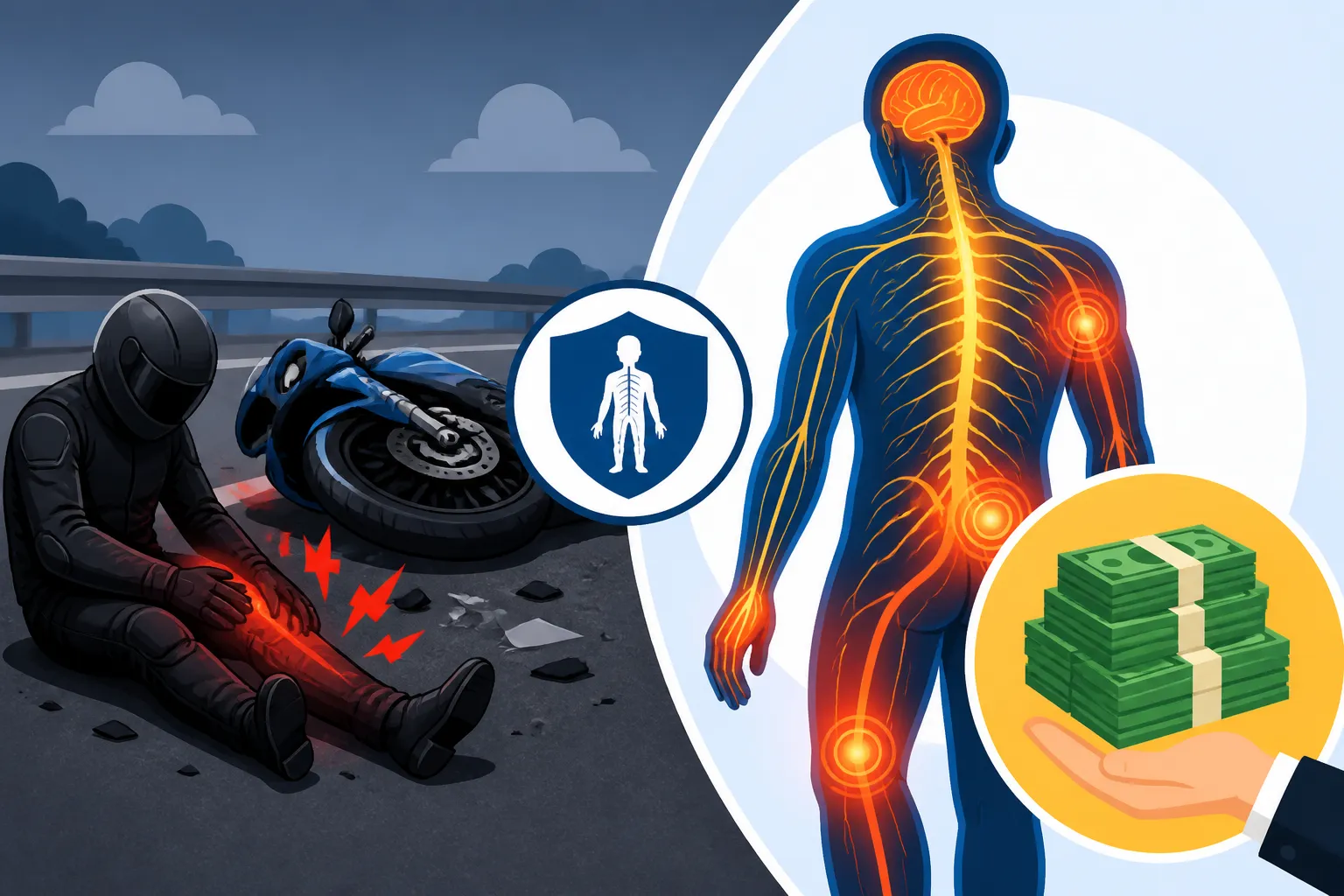
Motorcycle accidents, by their very nature, often lead to severe and complex injuries due to the lack of protection for the rider. Among the most debilitating of these can be nerve damage, which impacts the delicate network of nerves that carry messages between your brain and the rest of your body. Unlike a broken bone, nerve damage isn't always immediately obvious and its recovery path can be long, unpredictable, and frustrating.
Types of Nerve Injuries Common in Crashes
Nerve damage after a motorcycle accident can manifest in many forms, each with its own set of challenges and implications. It’s not just a single type of injury; it’s a spectrum.
One common and incredibly serious injury is a Brachial Plexus Injury, which affects the network of nerves that control movement and sensation in the arm, hand, and fingers. Imagine losing the ability to grip your handlebars, or even just hold a fork. This can range from a stretch injury, where the nerves are pulled, to avulsion, where the nerves are completely torn from the spinal cord. The outcomes can be anything from temporary weakness to permanent paralysis of the arm.
Beyond the brachial plexus, riders can suffer from compression injuries, where nerves are pinched or squeezed, often by swelling, herniated discs, or fractured bones. For instance, a clavicle fracture could put pressure on nerves passing through the shoulder area, leading to numbness or weakness in the arm. Similarly, impact trauma can cause direct nerve contusions (bruising) or lacerations (cuts), especially if there are open wounds or deep tissue damage. Even seemingly minor impacts can lead to conditions like carpal tunnel syndrome or cubital tunnel syndrome being aggravated or initiated, leading to chronic pain and functional loss in the hands or elbows.
Another concerning type of nerve damage is neuropathy, which can develop over time from trauma, inflammation, or even scarring. This can result in persistent tingling, burning sensations, or a heightened sensitivity to touch, making even the lightest clothing unbearable. Sometimes, the body’s own healing process can cause problems; scar tissue can entrap nerves, leading to ongoing pain long after other injuries have ostensibly healed. Understanding these distinctions is crucial because the type, location, and extent of the nerve damage directly influence the necessary treatment, prognosis, and ultimately, the value of your claim.
The Immediate and Long-Term Impact on Riders
The initial shock of a motorcycle accident often masks the subtle onset of nerve damage symptoms. Riders might first notice a strange tingling, a patch of numbness, or an inexplicable weakness in a limb days or even weeks after the crash. This delay can be problematic, as insurance companies often try to argue that injuries not immediately documented aren't related to the accident. However, many nerve injuries, especially those involving inflammation or slow-developing compression, simply don't present with full symptoms right away.
In the long term, nerve damage can be devastating. Chronic pain is a hallmark of many nerve injuries, a constant companion that can make sleep elusive and daily activities a battle. Imagine trying to concentrate at work or enjoy a ride when your arm feels like it’s constantly on fire. Beyond pain, motor nerve damage can lead to muscle weakness, atrophy, and even paralysis, severely limiting mobility and independence. Sensory nerve damage can result in persistent numbness, tingling, or an altered sense of touch, making it difficult to feel hot or cold, or even discern textures. This can have serious safety implications, such as not feeling an injury or a burning surface.
The emotional and psychological toll is also immense. Facing a future with permanent disability, chronic pain, or significant limitations can lead to depression, anxiety, and post-traumatic stress disorder (PTSD). Many riders identify strongly with their ability to ride and maintain an active lifestyle; losing this can be a profound blow to their identity and mental health. These invisible wounds, though not always quantifiable in dollars and cents initially, are incredibly real and significantly impact a rider's overall quality of life. This makes a deep understanding of Emotional Distress Damages critical for any motorcycle accident claim.
Key Factors Influencing Nerve Damage Settlements
When you're trying to figure out what an "average" settlement for nerve damage might look like, it's important to understand that there's no magic formula or single number. Every case is unique, and several factors play a crucial role in determining the final payout.
Severity and Permanence of the Injury
This is arguably the most significant factor. Not all nerve damage is created equal. A mild nerve contusion that resolves with physical therapy and medication in a few months will command a vastly different settlement than a complete brachial plexus avulsion that results in a permanently paralyzed arm.
Doctors categorize nerve injuries based on their severity, from neurapraxia (a temporary block of nerve conduction, usually with full recovery) to axonotmesis (damage to the nerve fibers with potential for slow, incomplete recovery) to neurotmesis (complete severance of the nerve, often requiring surgery and leading to permanent impairment). The more severe the injury, the more extensive the medical treatment required, the longer the recovery period, and the greater the likelihood of permanent disability. If your nerve damage is deemed permanent, meaning you won't fully recover your previous function or sensation, the settlement value will naturally be much higher to account for a lifetime of pain, limitations, and potential medical needs. This is why thorough diagnostic testing, like electromyography (EMG) and nerve conduction studies (NCS), are vital to scientifically document the extent of the damage.
Medical Treatment and Rehabilitation Costs
The sheer cost of treating nerve damage can be staggering, and these expenses form a foundational part of your settlement. It's not just the initial emergency room visit or surgery. Nerve injuries often require a long and arduous rehabilitation process. Think about it: diagnostic tests like MRIs, CT scans, and specialized nerve studies; consultations with neurologists, orthopedic surgeons, and pain management specialists; ongoing physical therapy and occupational therapy to regain strength and function; prescription medications for pain, inflammation, or nerve regeneration; and even psychological counseling to cope with the emotional toll.
Furthermore, if your injury leads to permanent disability, you might need adaptive equipment, home modifications, or even long-term care, especially for severe Spinal Cord Injuries from Motorcycle Accidents that often involve extensive nerve damage. All these past and future medical expenses need to be meticulously documented and projected by medical experts. Insurance adjusters will scrutinize every bill, so keeping organized records is paramount. Understanding How Medical Bills Affect Your Settlement is crucial.
Lost Wages and Earning Capacity
When nerve damage prevents you from working, or forces you into a lower-paying job, this loss of income becomes a major component of your claim. It's not just the wages you lost while recovering, but also the potential future income you'll miss out on due to permanent limitations.
Consider a professional motorcycle mechanic who suffers severe nerve damage in their dominant hand. Not only do they lose wages during their recovery, but they might never be able to perform the intricate work required for their profession again. They might have to retrain for a different job, one that pays significantly less. This "loss of earning capacity" calculates the difference between what you would have earned over your lifetime without the injury and what you can now earn with your impaired abilities. This often requires expert testimony from vocational rehabilitation specialists and economists who can project these losses accurately. For self-employed riders, calculating lost wages can be even more complex, requiring detailed financial records to prove income.
Pain, Suffering, and Loss of Enjoyment of Life
Beyond the tangible costs of medical bills and lost wages, nerve damage inflicts a profound toll on your quality of life. This is where non-economic damages, often referred to as "pain and suffering," come into play. These damages compensate you for the physical pain, emotional distress, discomfort, inconvenience, and the overall loss of enjoyment of life that stems directly from your nerve injury.
Imagine a rider who loved weekend trips with friends, camping, and working on their bike in the garage. If nerve damage means they can no longer ride, can't lift camping gear, or struggle with fine motor skills for repairs, their life has profoundly changed. The frustration, the sadness, the feeling of missing out – these are all parts of pain and suffering. Insurance companies and juries often use a "multiplier method" to calculate these damages, taking your economic damages (medical bills, lost wages) and multiplying them by a factor (typically 1.5 to 5, sometimes higher for severe, permanent injuries) based on the severity and permanence of your pain and limitations. Documenting your daily struggles, maintaining a pain journal, and having consistent psychological evaluations can all help illustrate the true extent of your Pain and Suffering Damages Explained.
Navigating the Settlement Process with Nerve Damage Claims
Dealing with the aftermath of a motorcycle accident, especially when nerve damage is involved, can feel like an uphill battle. The legal and insurance processes are complex, and nerve injuries themselves are often misunderstood or downplayed.
Documenting Your Nerve Injury for a Strong Claim
Because nerve damage isn't always visible, comprehensive documentation is absolutely critical. This isn't just about showing up to doctor appointments; it's about building an undeniable paper trail that proves the existence, extent, and impact of your injury.
Start with immediate medical attention. Even if you feel "fine" right after the crash, What to Do Immediately After a Motorcycle Accident includes seeking a thorough medical evaluation. Delayed symptoms are common with nerve damage, but if you don't establish a link to the accident early on, insurance companies will try to deny coverage. Follow every recommendation from your doctors, specialists, and therapists. Keep meticulous records of all appointments, treatments, medications, and referrals. Diagnostic tests like MRIs, CT scans, X-rays, nerve conduction studies (NCS), and electromyography (EMG) are your objective proof. These tests can identify nerve impingement, damage, or dysfunction and are powerful pieces of evidence.
Beyond medical records, consider keeping a detailed injury journal. Document your daily pain levels, how the injury affects your sleep, mood, and ability to perform routine tasks like dressing, eating, or caring for your family. Take photos of any visible injury (even if it's just scarring from surgery) and, if possible, videos demonstrating your physical limitations. Gathering statements from friends, family, and co-workers about how your life has changed can also corroborate your claims. The more thoroughly you document, the harder it is for the insurance company to dispute the severity of your nerve damage.
Dealing with Insurance Companies and Their Tactics
Let's be real: insurance companies are not on your side. Their primary goal is to minimize payouts, and they have an arsenal of tactics to do so. With nerve damage, this is particularly true because these injuries can be "invisible" and subjective, making them ripe for skepticism.
One common tactic is to argue that your nerve damage is pre-existing or unrelated to the accident. They might dig through your past medical history to find any mention of back pain, numbness, or tingling, trying to pin your current severe injury on something old. They might also claim you’re exaggerating your symptoms because they can't physically "see" the nerve damage like a broken bone. They may also try to offer a quick, lowball settlement before you fully understand the long-term implications of your injury. If you settle too early, you waive your right to seek further compensation, even if your condition worsens dramatically down the road.
They might even attempt to shift blame, implying that you were partially at fault for the accident, which could reduce your overall settlement under comparative negligence laws. This is why it's vital to avoid giving recorded statements or signing any releases without first consulting with legal counsel. What you say, even innocently, can be twisted and used against you to devalue your claim. Understanding How Insurance Companies Assign Blame to Riders is crucial for protecting your rights.
The Role of Legal Representation
Given the complexities of nerve damage claims and the aggressive tactics of insurance companies, having an experienced motorcycle accident attorney on your side is not just helpful, it's often essential. These cases are rarely straightforward, and without proper legal guidance, you could easily leave significant compensation on the table.
A skilled attorney understands the nuances of nerve injury cases. They know which medical experts to consult, how to interpret complex diagnostic reports, and how to effectively present the long-term impact of your injury to an insurance adjuster or a jury. They can anticipate the tactics insurance companies will employ and build a robust case to counter them. They also handle all communication with the insurance companies, shielding you from their relentless calls and inquiries, allowing you to focus on your recovery.
Furthermore, an attorney will know how to accurately calculate all your damages, including future medical expenses, lost earning capacity, and the often-overlooked pain and suffering. They understand the intricacies of How Motorcycle Accident Settlements Are Calculated and have the negotiation skills to fight for the maximum compensation you deserve. For a deeper dive into the specific tasks an attorney performs, you can explore What a Motorcycle Accident Lawyer Does. Ultimately, having legal representation levels the playing field, ensuring your rights are protected and you receive fair compensation for the profound impact of your nerve damage.
What to Expect for an Average Settlement for Nerve Damage
When it comes to putting a number on an "average" settlement for motorcycle nerve damage, it's really challenging because the range is incredibly wide. There isn't a single definitive "average" figure; it truly depends on the unique circumstances of your injury and its long-term impact.
Range of Settlements Based on Severity
For relatively minor nerve damage, such as a temporary compression or stretch injury that fully resolves with conservative treatment (like physical therapy and medication) within a few months, settlements might fall into the lower tens of thousands of dollars. This would cover medical bills, a few weeks or months of lost wages, and some compensation for pain and inconvenience. Think of a case where a rider experiences temporary numbness or weakness that completely disappears after a short recovery period.
However, as the severity of nerve damage increases, so does the potential settlement value. For moderate nerve damage that causes persistent pain, some permanent loss of sensation or strength, or requires more intensive treatment like steroid injections or minor surgical interventions, settlements could range from the higher tens of thousands to a few hundred thousand dollars. This category often includes cases where a rider has ongoing neuropathic pain or a partial loss of function that limits certain activities but doesn't completely disable them.
For severe, permanent nerve damage, such as a complete severance requiring multiple surgeries, extensive rehabilitation, and resulting in lifelong paralysis, significant functional impairment (like a completely paralyzed limb from a brachial plexus avulsion), or debilitating chronic pain that prevents return to work, settlements can easily reach several hundred thousand dollars, or even well over a million for the most catastrophic injuries. These are the cases where the injury fundamentally alters the victim's life, requiring ongoing medical care, adaptive equipment, and causing immense suffering and loss of earning potential. Factors like the rider's age, occupation, and state of residence (which impacts Motorcycle Accident Fault Laws in California, for example, or other states' comparative negligence rules) also play a significant role.
Examples of Nerve Damage Settlements
To give you a more concrete idea, let’s consider a few hypothetical scenarios:
Scenario 1: Minor Nerve Damage
A rider suffers a low-speed collision, resulting in a pinched nerve in their neck (cervical radiculopathy). They experience tingling and numbness in their arm for about three months. Treatment includes chiropractic care, physical therapy, and anti-inflammatory medication. They miss two weeks of work.
- Potential Settlement Range: $25,000 – $75,000. This covers medical bills, lost wages, and compensation for temporary pain and inconvenience.
Scenario 2: Moderate Nerve Damage
A rider is involved in an intersection accident, sustaining a severe stretch injury to their ulnar nerve in the elbow. They require nerve decompression surgery, followed by six months of intense physical therapy. They regain most function but still experience persistent weakness and chronic pain, which limits their ability to lift heavy objects, impacting their construction job. They are unable to work for six months.
- Potential Settlement Range: $150,000 – $500,000. This accounts for surgery, extensive rehabilitation, significant lost wages, and compensation for ongoing pain, suffering, and a measurable loss of earning capacity.
Scenario 3: Catastrophic Nerve Damage
A rider is struck by a distracted driver, resulting in a complete avulsion of the brachial plexus nerves, leading to permanent paralysis and loss of sensation in their dominant arm. They undergo multiple complex surgeries, years of occupational therapy, and face a lifetime of daily challenges, requiring adaptive equipment and retraining for a new career.
- Potential Settlement Range: $750,000 – $5,000,000+. This higher end reflects the severe, permanent nature of the injury, requiring extensive past and future medical care, massive lost earning capacity, profound pain and suffering, and a complete loss of enjoyment of life. These cases often involve substantial negotiations, potentially even going to trial.
Keep in mind these are just examples. The actual outcome of any nerve damage claim depends on the specific facts, the jurisdiction, the quality of medical evidence, and the skill of your legal representation. Your ability to How to Maximize Your Motorcycle Accident Settlement hinges on strong evidence and effective advocacy.
Here’s a helpful table summarizing factors that influence nerve damage settlements:
| Factor | Impact on Settlement Value | Example Scenario |
|---|---|---|
| Severity & Permanence | Directly proportional. Temporary nerve irritation (neuropraxia) is lower; permanent severance (neurotmesis) is significantly higher. | Low: Resolving tingling in a finger after 2 months. High: Permanent paralysis of an arm due to brachial plexus avulsion. |
| Medical Expenses (Past/Future) | Higher costs for diagnostics, surgeries, therapies, medications, and adaptive equipment lead to higher settlements. | Low: A few chiropractic visits and pain meds. High: Multiple nerve repair surgeries, years of physical therapy, future pain management, specialized equipment. |
| Lost Wages & Earning Capacity | Total income lost due to time off work, plus any reduction in future earning potential. | Low: Missing 3 weeks from a desk job. High: A surgeon permanently unable to operate, requiring career change with reduced income for life. |
| Pain & Suffering | Quantifies physical discomfort, emotional distress, and impact on daily life (often a multiplier of economic damages). | Low: Mild, intermittent pain for a few months. High: Chronic, debilitating neuropathic pain requiring daily medication and severely affecting sleep and mood; inability to participate in beloved hobbies. |
| Age of Rider | Younger riders with permanent injuries may receive more for loss of future earnings/life enjoyment. | A 25-year-old with permanent hand weakness will have higher future earning capacity loss than a 60-year-old with a similar injury. |
| State Laws | Pure vs. modified comparative negligence states, no-fault laws, and policy limits can affect final payout. | In a "pure comparative negligence" state like California, even 99% fault allows some recovery, whereas in a "modified comparative negligence" state like Texas (51% bar), 51% fault means no recovery. |
| Insurance Policy Limits | The maximum amount available from the at-fault driver's policy. | If damages are $1M but the at-fault driver only has $100K coverage, your settlement is capped unless you have UM/UIM. |
| Legal Representation | Experienced attorneys can significantly increase the final settlement value by proper case valuation and negotiation. | An attorney negotiates for maximum value, while an unrepresented individual might accept a lowball offer due to lack of knowledge about all available damages. |
This table illustrates that while an "average" settlement is hard to pinpoint, the confluence of these critical factors truly dictates the range of compensation you might receive for nerve damage after a motorcycle accident. It’s a complex journey, and a knowledgeable guide makes all the difference.
Disclaimer
Please remember, the information provided in this article is intended for general informational purposes only and does not constitute legal advice. Every motorcycle accident claim is unique, and the outcome depends heavily on the specific facts and applicable laws. You should consult with a qualified legal professional to discuss your individual situation and get personalized advice.