Left-Turn Motorcycle Accidents Explained
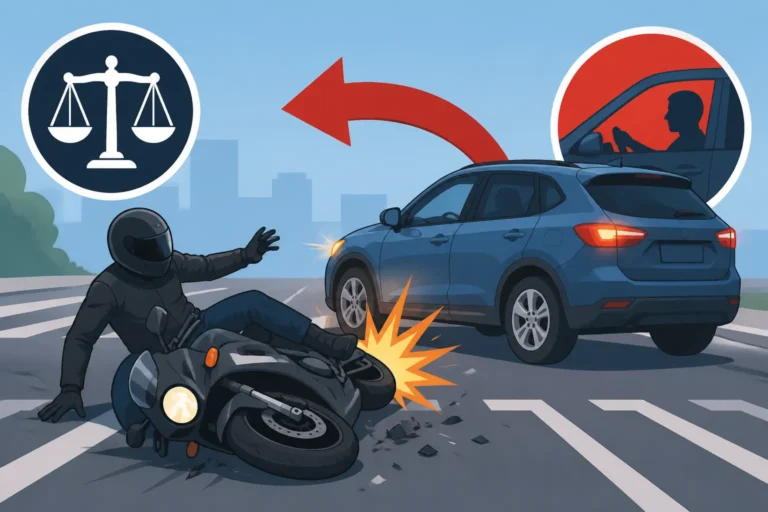
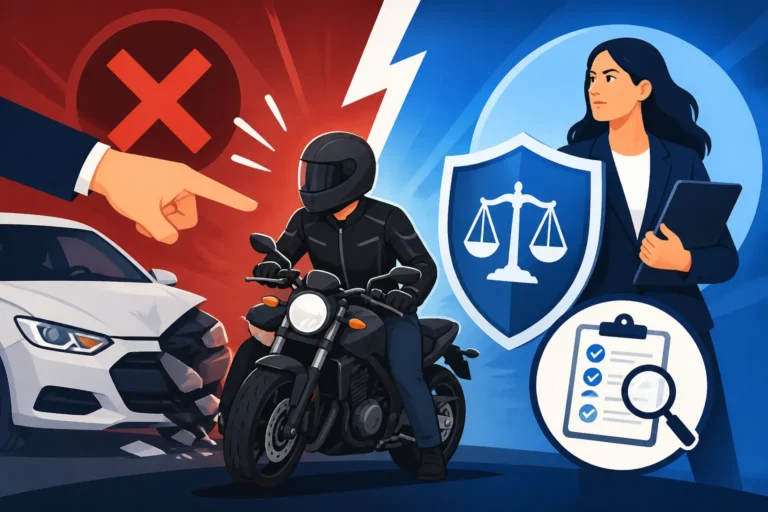
Riding a motorcycle offers unparalleled freedom, but it also comes with unique risks, especially when navigating intersections. One of the most terrifying and sadly common scenarios riders face is the dreaded left-turn accident, where a car turning across traffic suddenly appears in your path, often with devastating consequences. It's a frustrating reality that despite often having the right-of-way, motorcyclists frequently bear the brunt of these collisions. This guide is here to unravel the complexities of left-turn motorcycle accidents, explaining why they happen, how fault is typically determined, and what steps you can take to protect your rights after such a crash.
The Alarming Reality of Left-Turn Motorcycle Accidents
For any rider, the fear of an oncoming vehicle turning left directly into your path is a deeply ingrained one. It’s not just an abstract concern; statistics consistently show that left-turn collisions are a leading cause of motorcycle accidents, often resulting in severe injuries or worse. Drivers often claim they "didn't see" the motorcycle, a phrase that's become all too common and deeply infuriating for those of us who ride.
Why Riders Are So Vulnerable
The fundamental issue in most left-turn crashes isn't typically the rider's lack of skill or attention, but rather a driver's failure to accurately perceive or acknowledge the motorcycle. Our bikes, by their very nature, present a smaller profile than cars or trucks. This can lead to what's known as "inattentional blindness" or a "looked but failed to see" phenomenon. A driver might physically look in our direction, but their brain, accustomed to seeing larger vehicles, simply doesn't register us as a threat or misjudges our speed.
Beyond the visual aspect, the sheer disparity in protection is a cruel reality. A car driver in a left-turn collision is often surrounded by a steel cage, airbags, and seatbelts. A motorcyclist, even with the best protective gear—a DOT-compliant helmet, armored jacket, gloves, and boots—is still largely exposed. The forces involved in a collision with a multi-thousand-pound vehicle can throw a rider from their bike, leading to direct impact with the car, the road, or other obstacles. This immense vulnerability means that even a low-speed left-turn impact can cause catastrophic injuries, ranging from severe road rash and broken bones to traumatic brain injuries and spinal cord damage.
Common Scenarios Leading to Left-Turn Collisions
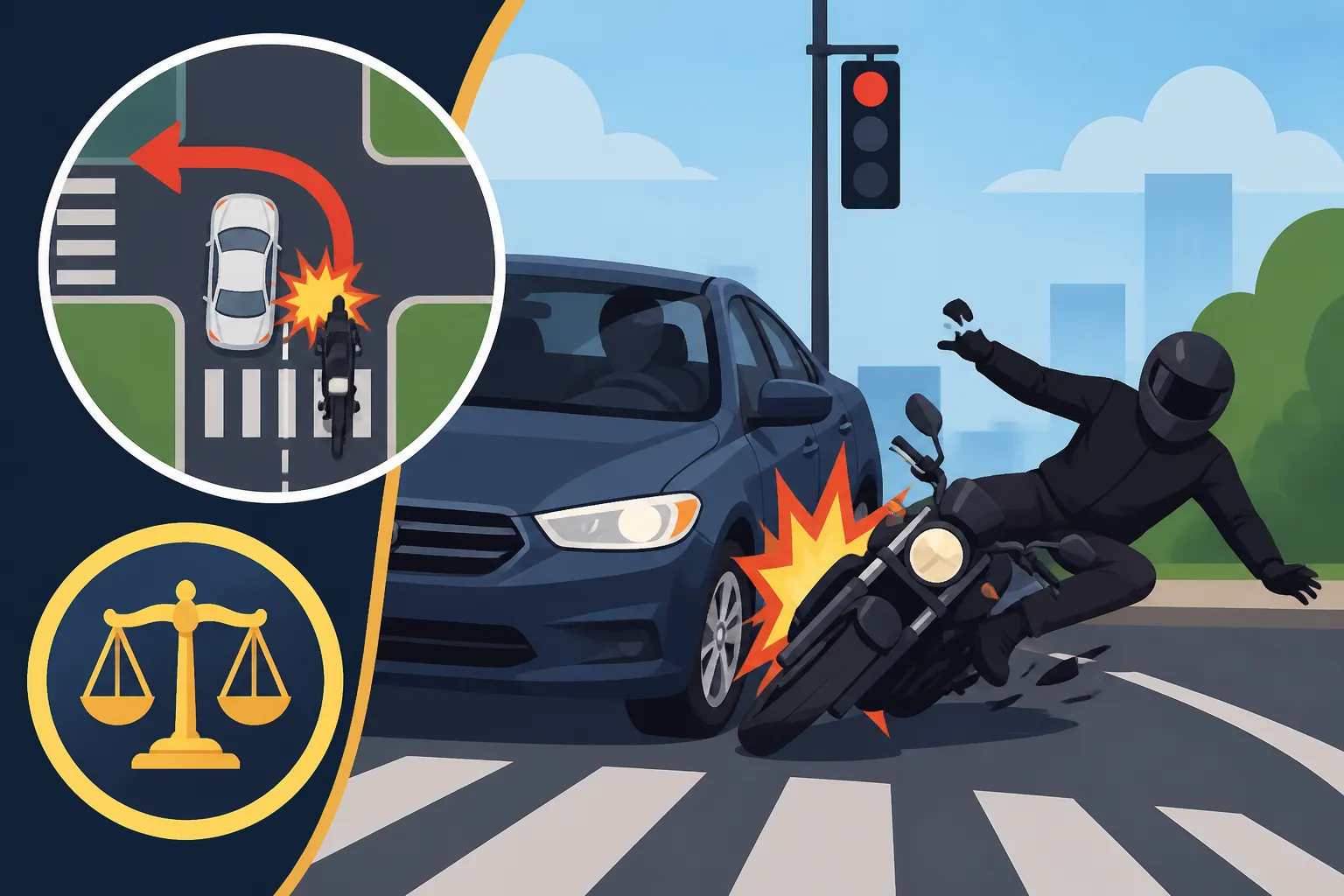
Left-turn accidents don't just happen randomly; they typically arise from a few predictable, yet avoidable, scenarios. Often, it's a driver who is trying to beat traffic, cutting a turn short, or simply not paying enough attention to oncoming lanes. Imagine you're riding through a busy urban intersection in downtown Phoenix, Arizona. You have a green light, cruising through, when suddenly a sedan from the opposite direction, clearly trying to squeeze in a left turn before the light changes or before a gap closes, pulls out directly in front of you. This kind of driver impatience is a huge factor.
Another common scenario involves distracted driving. A driver might be glancing at their phone, adjusting the radio, or talking to a passenger, leading them to miss you entirely as they initiate their turn. This momentary lapse in focus can have permanent consequences for a motorcyclist. Poor judgment of speed and distance also plays a critical role. A driver might see you but miscalculate your approach speed, thinking they have ample time to complete their turn when, in reality, they don't. These factors combine to create a perfect storm, making left-turn maneuvers one of the most perilous situations for motorcyclists.
Understanding Fault in Left-Turn Accidents
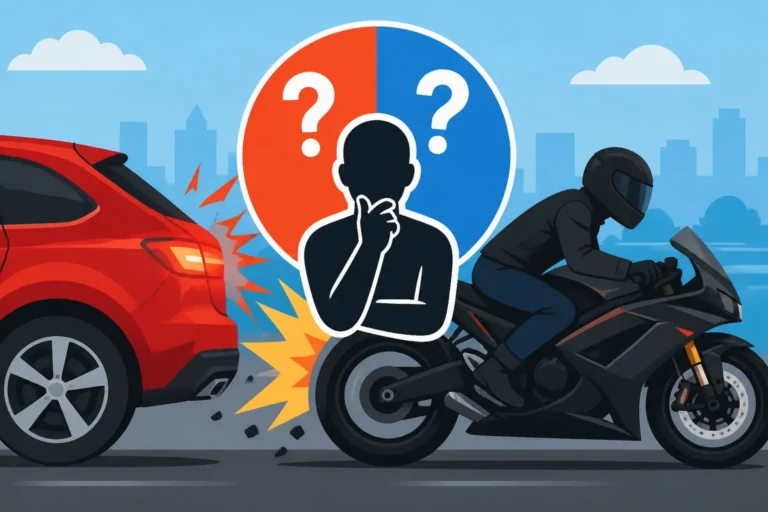
When a motorcycle crash occurs, one of the first and most critical questions is: who is at fault? In left-turn accidents, the answer often leans heavily towards the driver of the turning vehicle, but it’s not always black and white. Understanding the legal principles and common defenses is crucial for any rider seeking to recover damages.
The Legal Presumption Against the Turning Driver
In most jurisdictions across the United States, including states like California and Texas, the law generally dictates that a vehicle making a left turn must yield the right-of-way to oncoming traffic. This is often enshrined in state traffic codes. For instance, California Vehicle Code Section 21801(a) explicitly states that a driver turning left must yield to any vehicle approaching from the opposite direction that is so close as to constitute an immediate hazard. This means that if you're riding straight through an intersection and a car turns left into you, the initial legal presumption is often that the turning driver failed to yield and is therefore at fault.
This legal principle is a powerful tool in a motorcycle accident claim. It essentially puts the burden on the turning driver to prove why they shouldn't be held responsible. For us riders, this is a vital piece of the puzzle, providing a strong starting point for asserting our right to compensation for injuries, property damage, and other losses. It’s important to remember that this presumption doesn't automatically mean the case is won, but it provides a significant advantage against the common "I didn't see you" defense.
Exceptions and Challenges to Driver Fault
While the turning driver is usually presumed to be at fault, there are situations where that fault can be challenged or even shared. Insurance companies are notorious for trying to assign blame to the motorcyclist, even when a car clearly violated the right-of-way. They might argue that the rider was speeding, riding without a headlight, or engaging in unsafe maneuvers like lane splitting (even in states where it's legal). For example, if you were significantly exceeding the speed limit when the car turned, an insurer might argue your excessive speed contributed to the accident, even if the driver failed to yield. This could lead to a scenario where fault is shared under a concept known as comparative negligence.
States like Florida and New York follow different versions of comparative negligence. In pure comparative negligence states, you can still recover damages even if you are mostly at fault, though your compensation will be reduced by your percentage of blame. In modified comparative negligence states (like Texas, with its 51% rule), if you are found to be 51% or more at fault, you might be barred from recovering any damages at all. These nuances highlight why understanding the specific laws in your state and gathering solid evidence are paramount. Insurance companies will scrutinize every detail to minimize their payout, so be prepared for them to try and find any reason to shift blame your way. You can learn more about how Comparative Negligence in Motorcycle Accidents impacts your claim.
Common Causes of Left-Turn Motorcycle Crashes
It's easy to boil down left-turn accidents to "the driver didn't see me," but the reality is often more complex, stemming from a confluence of factors related to driver behavior and perception. Digging into these root causes can help explain why these crashes are so prevalent and how to strengthen your case if you're ever involved in one.
Distracted Driving and Inattention
In our hyper-connected world, distracted driving has become an epidemic, and it's a major culprit in left-turn motorcycle accidents. Picture this: a driver is at an intersection in a busy city like Dallas, Texas. Their phone buzzes with a text, or they're trying to set their GPS, or perhaps they're engrossed in a conversation with a child in the backseat. Their eyes might be on the road, but their mind and focus are somewhere else entirely. In that brief moment of inattention, they glance up, see "clear" space, and initiate a left turn, missing you, the oncoming motorcycle, entirely.
It's not just cell phones; anything that diverts a driver's focus from the primary task of driving can be lethal. Eating, grooming, adjusting vehicle controls, or even daydreaming can lead to a critical lapse in judgment. For a motorcyclist, whose smaller profile already demands heightened attention from other drivers, this inattention is magnified. A driver who isn't actively scanning for motorcycles is highly unlikely to register your presence, even if you're brightly colored and have your headlight on. Proving that a driver was distracted can be challenging, but it's a key part of demonstrating their negligence and establishing Who Is at Fault in a Distracted Driving Motorcycle Accident
Misjudgment of Speed and Distance
Another significant factor, often intertwined with inattention, is a driver's misjudgment of a motorcycle's speed and distance. Many car drivers simply aren't accustomed to the acceleration and compact size of a motorcycle. Our smaller frontal area can make us appear further away than we actually are, leading to what's sometimes called a "looming error." A driver might perceive your motorcycle as moving slower than it actually is, or they might think they have more time to complete their left turn before you reach the intersection.
This misperception is a well-documented phenomenon. Human brains are wired to estimate the speed and distance of objects based on their size and how quickly their visual footprint expands. Since motorcycles are smaller, their visual "loom" is less pronounced, leading to underestimation. This isn't necessarily intentional malice; it's a perceptual bias that puts riders at a severe disadvantage. When a driver misjudges your speed, they might pull out, thinking they have plenty of room, only to realize too late that you are much closer and faster than they initially thought, leading to a sudden and unavoidable collision.
Impatience and Aggressive Driving
Beyond distraction and misjudgment, plain old impatience and aggressive driving behaviors contribute heavily to left-turn accidents. We've all seen it: a driver waiting to turn left, perhaps at a busy intersection in Miami, Florida, grows frustrated as traffic piles up. They might be running late, feeling pressured by cars behind them, or simply have an aggressive driving style. Instead of waiting for a truly safe gap in oncoming traffic, they decide to "go for it," accelerating quickly into the turn, hoping to clear the intersection before any oncoming vehicles arrive.
This "go for it" mentality is incredibly dangerous for motorcyclists. What might be a tight but manageable turn for a car often becomes a direct collision course for a motorcycle. An impatient driver might not take the extra second to thoroughly check for smaller vehicles, or they might consciously make the decision to risk it, assuming a motorcycle will be able to stop or swerve more easily. This aggressive, rushed decision-making often overrides safe driving practices and right-of-way rules, directly leading to a crash. Understanding these aggressive tendencies is crucial for riders, both for defensive riding and for establishing the other driver's clear negligence after an accident.
Critical Evidence for Proving Fault
After a left-turn motorcycle accident, proving who was at fault is paramount for securing fair compensation. The "he-said, she-said" dynamic often favors the driver of the larger vehicle unless you have concrete evidence to back up your claim. Gathering this evidence effectively can make or break your case against insurance companies.
Documenting the Accident Scene
The moments immediately following an accident can be chaotic and stressful, but they are also crucial for gathering evidence. If you are able, and once you’ve ensured your immediate safety and sought any necessary medical attention, documenting the scene is vital. Use your smartphone to take as many photos and videos as possible. Capture the position of both vehicles, the damage sustained by your motorcycle and the other vehicle, skid marks on the pavement, debris in the road, and any relevant road signs or traffic signals. Don't just take wide shots; get close-ups of damage and any unique details. For instance, if the car's turn signal wasn't on, try to get a photo of that.
It's also important to gather information from the other driver: their name, contact details, insurance information, and vehicle license plate number. Do not, under any circumstances, admit fault or apologize, even if you feel shaken or guilty. Stick to the facts. When police arrive, ensure they take an official report, and get the report number so you can obtain a copy later. A police report can be a crucial piece of evidence, detailing the officer's initial assessment of the accident, which often includes their opinion on who violated traffic laws. Learn more about how to Document the Scene to Prove Fault effectively.
Witness Statements and Dashcam Footage
Independent witnesses can be incredibly powerful in proving fault, especially in a left-turn collision where the driver might claim they never saw you. If anyone saw the accident happen, politely ask for their name and contact information. Their unbiased account of events, particularly how the other driver initiated their turn or failed to yield, can directly contradict the other driver's statements and carry significant weight with insurance adjusters or in court.
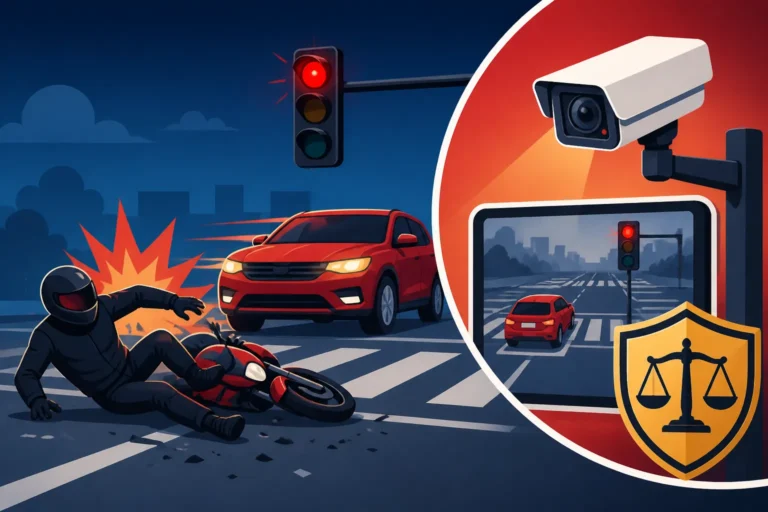
Beyond human witnesses, technology is increasingly providing objective evidence. The proliferation of dashcams in cars and even helmet cams on motorcycles has changed the game. If the other vehicle had a dashcam, or if nearby businesses or traffic cameras captured the incident, that footage can be invaluable. It offers an undeniable, real-time perspective of exactly what happened, eliminating disputes over who had the right-of-way, who was speeding, or whether turn signals were used. Even if you don't have personal dashcam footage, inquire about it at the scene; someone else might have captured it. This kind of objective evidence can be the cornerstone of proving fault in a Left-Turn Motorcycle Accidents Caused by Left-Turn Collisions case.
Traffic Laws and Accident Reconstruction
At its core, proving fault in a left-turn accident often comes down to demonstrating a violation of traffic laws, specifically those pertaining to right-of-way. As discussed earlier, the legal obligation for a driver making a left turn to yield to oncoming traffic is a fundamental principle. Highlighting that the other driver violated this specific rule is a strong argument for fault. Your lawyer will be adept at citing the relevant state statutes and applying them to the facts of your case.
For more complex accidents, or when the details are disputed, an accident reconstruction expert can be an invaluable asset. These professionals use scientific principles, physics, vehicle damage analysis, skid marks, road conditions, and witness statements to recreate the accident scene. They can determine vehicle speeds, points of impact, and the sequence of events leading up to the crash. This expert testimony can definitively establish who caused the accident, especially when the "I didn't see the motorcycle" defense is invoked. Their detailed analysis can provide objective, scientific proof that the turning driver’s actions directly led to the collision, making it much harder for insurance companies to shift blame to you.
The "I Didn't See the Motorcycle" Defense and How to Combat It
Few phrases sting a motorcyclist more after a collision than "I didn't see you." It’s not just an excuse; it’s a pervasive defense tactic used by drivers and insurance companies that attempts to absolve the driver of responsibility by claiming the motorcyclist was somehow invisible. This narrative often plays into pre-existing biases against riders, making it a frustrating hurdle to overcome.
The Pervasive Rider Bias
Let's be real, society often has an unfair perception of motorcyclists. We're sometimes stereotyped as reckless thrill-seekers, even when we ride responsibly. This societal bias can creep into how a jury, an insurance adjuster, or even police officers view an accident. When a driver claims, "I didn't see the motorcycle," it subtly implies that the motorcycle should have been seen, but perhaps the rider did something to make themselves less visible, or that motorcycles are inherently hard to see. This subtly shifts the blame, suggesting that the rider somehow contributed to the crash by virtue of being on a motorcycle. Insurance companies exploit this bias constantly, using it as a convenient way to reduce payouts or deny claims altogether. They are very good at How Insurance Companies Assign Blame to Riders, often unfairly.
This bias is frustrating because, as riders, we often go to great lengths to be visible—bright gear, high-visibility helmets, modulating headlights, and always assuming we are invisible to others. Yet, the "I didn't see you" defense persists, largely due to a combination of human perceptual limitations (like inattentional blindness, where drivers look but fail to process smaller objects) and the societal narrative that sometimes puts motorcyclists in a negative light. Combating this isn't just about proving the driver was negligent; it's also about dismantling this unfair prejudice.
Legal Strategies to Overcome This Defense
Overcoming the "I didn't see the motorcycle" defense requires a strategic approach focused on objective facts and expert testimony. Firstly, it’s crucial to establish what the driver should have seen. This involves documenting visibility at the intersection: was it clear? Were there obstructions? What were the weather conditions? If the driver had an unobstructed view of your approaching motorcycle, their claim of not seeing you becomes less credible.
Secondly, you need strong physical evidence. This includes photos of vehicle damage, impact points, and skid marks, all of which can prove your path of travel and the force of the collision. If your headlight was on, a police report or witness statement confirming this is invaluable. Accident reconstruction experts can also play a pivotal role. They can scientifically demonstrate that, given the conditions, a reasonably attentive driver would have seen your motorcycle. They can use sightline analysis and visibility studies to show that you were clearly visible and that the driver’s failure to see you was a result of their own negligence or inattention, not your "invisibility." Their testimony can effectively counter the "I didn't see you" defense by establishing that the driver had ample opportunity to see you, but failed to do so due to their own negligent actions.
Navigating the Aftermath: Steps to Take
Being involved in a left-turn motorcycle accident is a jarring and potentially life-altering event. The moments, days, and weeks that follow are critical for your physical recovery and for protecting your legal rights. Knowing what steps to take can make a significant difference in the outcome of your claim.
Immediate Actions at the Scene
Your safety is the absolute priority immediately after a crash. First, if you can move safely, get yourself and your motorcycle out of harm's way, perhaps to the side of the road or a nearby parking lot. Check yourself for injuries, even if you feel okay; adrenaline can mask pain. Then, call 911 immediately to report the accident to law enforcement and request paramedics. Even for seemingly minor injuries, it's always best to be checked by medical professionals at the scene, or to go to an urgent care or emergency room promptly afterward. Delaying medical attention can not only jeopardize your health but also allow insurance companies to argue that your injuries weren't serious or weren't caused by the accident.
While waiting for help, if you're able, start gathering information. Exchange contact and insurance details with the other driver. Take photos and videos of the scene as mentioned earlier: vehicle positions, damage, road conditions, traffic signals, and any relevant signs. Look for witnesses and ask for their contact information. Most importantly, do not admit fault or apologize for anything at the scene. Even a simple "I'm sorry" can be twisted by insurance companies later to imply guilt. Stick to the facts when speaking with police, but avoid speculating or making statements about how the accident occurred beyond what you directly observed. Knowing What to Do Immediately After a Motorcycle Accident can significantly help your case.
Dealing with Insurance Companies
After a motorcycle accident, you can almost guarantee a call from the other driver's insurance company, often very quickly. Remember, their primary goal is to minimize their payout, not to help you. Be extremely cautious about what you say. It’s best to provide only basic information—your name, contact info, and the fact that you were involved in an accident—and then politely decline to give a recorded statement or discuss the details of the crash or your injuries. Refer them to your attorney if you have one. If you don't have an attorney yet, simply state that you need time to assess your situation and will be in touch.
Insurance adjusters are skilled at asking leading questions that can trick you into admitting partial fault or downplaying your injuries. They might even try to offer a quick, lowball settlement before you fully understand the extent of your damages. This is a common tactic to settle a claim cheaply before you seek legal counsel. Remember, your physical injuries might not fully manifest for days or even weeks after the accident, and your motorcycle's true repair or replacement value needs a thorough assessment. Do not sign any releases or accept any offers without consulting an experienced motorcycle accident lawyer. Their expertise is invaluable when dealing with these complex negotiations.
Legal Options and Your Rights
The legal landscape surrounding motorcycle accidents can be incredibly complex, especially when fault is disputed or injuries are severe. This is where having a dedicated motorcycle accident lawyer becomes indispensable. They can explain your rights, investigate the crash, gather crucial evidence (like traffic camera footage or accident reconstruction reports), handle all communication with insurance companies, and build a strong case to prove the other driver's fault. They understand the nuances of laws like Motorcycle Accident Fault Laws in California or your specific state's laws, which can significantly impact your claim.
Your attorney will work to identify all responsible parties and pursue compensation for both economic damages (medical bills, lost wages, motorcycle repair/replacement, future medical care) and non-economic damages (pain and suffering, emotional distress, loss of enjoyment of life). They'll also navigate the intricacies of your state's comparative negligence laws, fighting to ensure that any shared fault attributed to you is minimized, thereby maximizing your potential settlement. Don't let the stress of recovery prevent you from exploring your legal options. Protecting your rights after a left-turn motorcycle accident is crucial for your long-term well-being and financial stability.
Key Factors in Left-Turn Motorcycle Accidents
Here's a quick look at the major factors involved in left-turn motorcycle accidents and who typically bears the primary responsibility:
| Factor | Description | Primary Responsible Party |
|---|---|---|
| Failure to Yield | Driver turning left does not give right-of-way to oncoming traffic. | Turning Driver |
| Distracted Driving | Turning driver is using a phone, eating, or otherwise inattentive. | Turning Driver |
| Misjudgment of Speed | Turning driver underestimates the motorcycle's speed/distance. | Turning Driver |
| Impatient/Aggressive Turn | Turning driver rushes a turn to "beat" traffic. | Turning Driver |
| Rider Speeding | Motorcyclist is exceeding the speed limit. | Shared Fault (Rider) |
| Rider Visibility | Motorcycle's smaller profile or poor lighting (though often driver's fault for not looking) | Turning Driver (primary), Rider (secondary) |
Disclaimer
Please remember that this article provides general information and insights into left-turn motorcycle accidents. It is not intended as legal advice. Every accident case is unique, and the laws governing personal injury claims vary significantly by state. If you have been involved in a motorcycle accident, it is highly recommended that you consult with a qualified legal professional to discuss the specific details of your situation and understand your rights and options.