How PTSD Affects a Motorcycle Settlement
Experiencing a motorcycle accident is one of the most terrifying events a rider can face. Beyond the immediate physical injuries—the broken bones, the road rash, the often catastrophic damage—there's an invisible wound that can linger long after the physical scars begin to heal: Post-Traumatic Stress Disorder, or PTSD. This guide will delve deep into how this debilitating condition can affect your motorcycle accident settlement, helping you understand how to document its impact and fight for the compensation you truly deserve.
Understanding Post-Traumatic Stress Disorder After a Motorcycle Accident
A motorcycle accident isn't just a crash; it's a deeply visceral, often life-altering event. The vulnerability of being on two wheels, exposed to the full force of impact, leaves an indelible mark. It's not uncommon for riders to grapple with significant emotional and psychological distress long after their physical injuries have begun to mend. This intense psychological aftermath is precisely where Post-Traumatic Stress Disorder (PTSD) often takes root, making life incredibly challenging even when you might look fine on the outside.
The Invisible Wounds of a Motorcycle Crash
While a broken leg or a concussion is immediately visible and diagnosable, the trauma to your mind is often far more insidious. PTSD isn't merely "stress" or "being shaken up"; it's a serious mental health condition that can dramatically alter a person's life. It develops in some people who have experienced a shocking, scary, or dangerous event. For motorcycle riders, the accident itself, the moments leading up to it, the impact, the pain, and the fear of death can all contribute to this profound psychological injury.
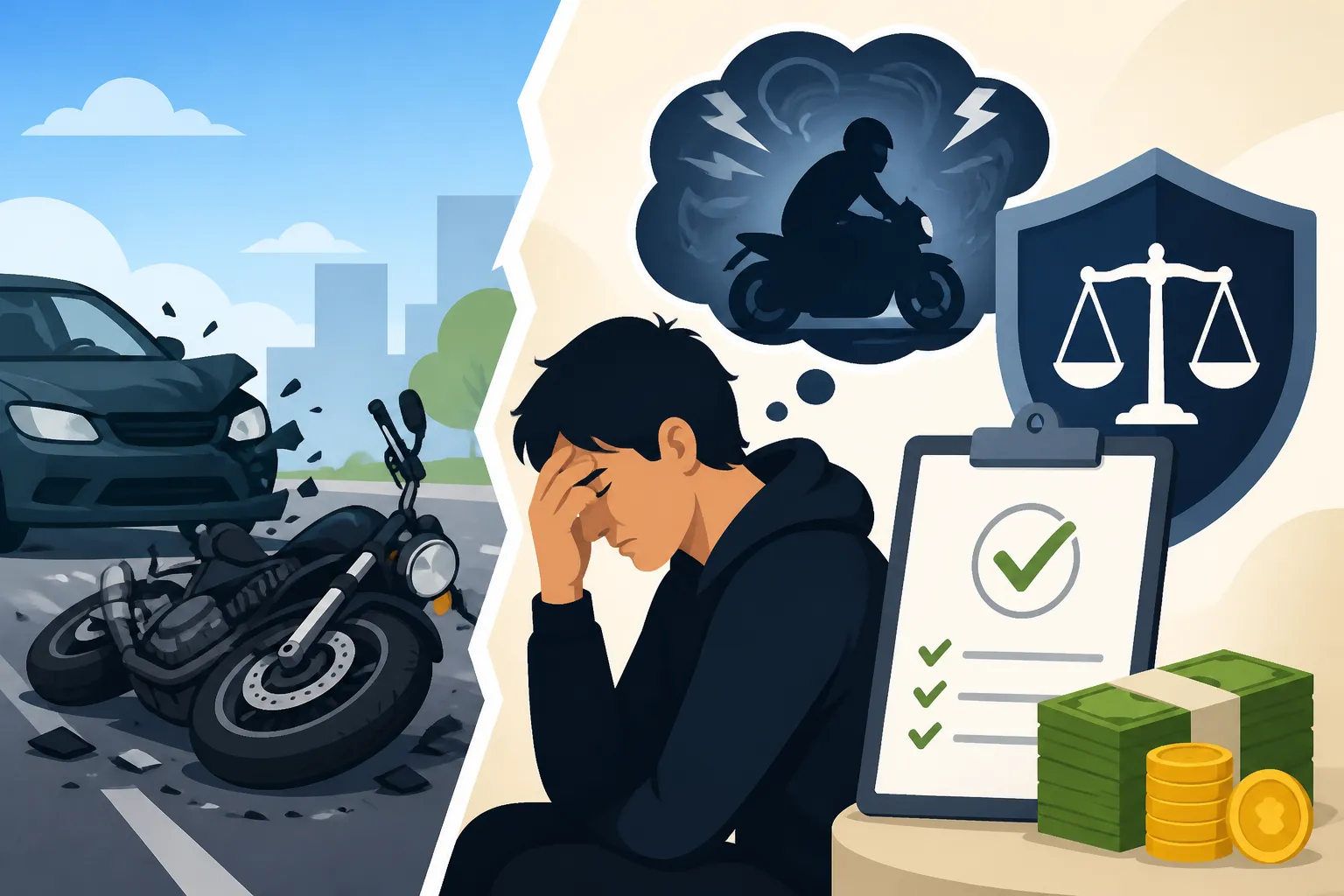
Symptoms of PTSD can manifest in several disruptive ways. You might find yourself reliving the accident through flashbacks, intrusive thoughts, or nightmares that jerk you awake in a cold sweat. There's often an intense effort to avoid anything associated with the trauma – perhaps you can't bear to ride your bike, or even be a passenger in a car, or you steer clear of the route where the accident occurred. Another hallmark is negative changes in thinking and mood, such as feelings of detachment, a loss of interest in activities you once loved, or a persistent negative outlook on life. Finally, hyperarousal symptoms like being easily startled, constantly on edge, having difficulty sleeping, or experiencing angry outbursts are incredibly common. It's crucial to understand that these aren't choices; they are involuntary reactions of a mind trying to cope with an overwhelming event, and they absolutely warrant professional diagnosis and treatment.
Common Triggers and Manifestations for Riders
For a motorcycle rider who has experienced a traumatic accident, the world can suddenly become a minefield of triggers. Everyday occurrences that never bothered you before can now send you spiraling. A sudden loud bang from a backfiring truck might sound like the screech of tires, plunging you back into the moment of impact. Driving past the intersection where your accident happened, or even seeing another motorcycle or a specific make and model of car, can elicit intense anxiety and fear. Even watching news reports about accidents or hearing sirens can be incredibly distressing. These triggers aren't just inconvenient; they can severely impact your ability to live a normal life, making it difficult to function at work, socialize, or simply find peace at home.
The manifestation of PTSD extends far beyond just flashbacks. Many riders develop an intense fear of riding again, abandoning a passion that was once a huge part of their identity. This isn't just about giving up a hobby; it can affect their sense of self, their social circle, and even their mode of transportation, especially if their bike was their primary vehicle. Some might experience severe anxiety when driving any vehicle, avoiding highways or busy roads altogether. The emotional numbness and detachment can strain relationships with family and friends, as it becomes hard to connect or express feelings. Furthermore, PTSD often doesn't travel alone; it can be accompanied by other serious conditions like depression, generalized anxiety disorder, or even lead to substance abuse as individuals try to self-medicate their unbearable emotional pain. Recognizing these complex and interconnected issues is vital when considering the full scope of damages in your claim.
Documenting PTSD for Your Motorcycle Accident Claim
Proving the existence and impact of an invisible injury like PTSD can feel like an uphill battle, especially when you're already struggling with its debilitating effects. Insurance adjusters are notorious for being skeptical of non-economic damages, often trying to dismiss psychological distress as minor or unrelated to the accident. This is precisely why meticulous documentation and consistent professional care are not just good for your recovery, but absolutely critical for the strength of your motorcycle accident claim.
The Critical Role of Medical Diagnosis and Treatment
The cornerstone of any personal injury claim, especially one involving psychological trauma, is clear, consistent medical evidence. If you suspect you're suffering from PTSD after your motorcycle crash, your absolute first step must be to seek professional help. This means consulting with a qualified mental health professional, such as a psychiatrist, psychologist, or licensed therapist. They are trained to diagnose conditions according to established criteria, such as those outlined in the Diagnostic and Statistical Manual of Mental Disorders (DSM-5). A formal diagnosis from a credible professional lends immense weight to your claim, clearly linking your symptoms to the traumatic event.
It's not enough to simply get a diagnosis; you must follow through with a prescribed course of treatment. This might involve cognitive behavioral therapy (CBT), eye movement desensitization and reprocessing (EMDR), exposure therapy, or even medication to manage symptoms like severe anxiety or depression. Each session, every medication prescribed, and all assessments conducted will generate medical records that serve as irrefutable evidence of your condition, its severity, and the ongoing efforts you're making to recover. Gaps in treatment or a lack of follow-through can be used by insurance companies to argue that your condition isn't as severe as you claim or isn't directly related to the accident. Remember, the goal here is twofold: to heal yourself and to build an undeniable paper trail for your claim. If you're wondering, "How to Document Injuries for a Claim", comprehensive medical records are always your starting point.
Gathering Comprehensive Evidence of Emotional Distress
While medical records provide the professional assessment of your PTSD, they don't always capture the full, devastating human impact on your daily life. To truly illustrate the extent of your emotional distress, you need to gather a wide array of supplementary evidence. This includes keeping a detailed personal journal where you regularly document your symptoms, triggers, nightmares, avoidance behaviors, and how your PTSD affects your mood, sleep, relationships, and ability to engage in normal activities. This firsthand account offers a powerful narrative that medical charts often lack.
Beyond your own words, witness statements from those closest to you can be incredibly compelling. Family members, close friends, or even coworkers can provide valuable testimony about the noticeable changes in your personality, behavior, and quality of life since the accident. Perhaps you've become withdrawn, stopped enjoying your favorite hobbies, or struggle with tasks that were once easy. These individuals can attest to the stark difference in your pre- and post-accident self. Furthermore, any financial evidence related to your emotional distress, such as receipts for therapy sessions, medication costs, or documentation of lost wages due to your inability to work or focus, adds another layer of tangible proof. For a deeper dive into the types of financial impact, you might want to review resources on Economic vs Non-Economic Damages Explained.
Challenges in Proving Non-Economic Damages
Proving non-economic damages like pain and suffering, emotional distress, and loss of enjoyment of life is inherently challenging because they don't come with a clear price tag like medical bills or lost wages. Insurance companies understand this subjectivity and often exploit it to minimize payouts. They might argue that your symptoms are exaggerated, that you had pre-existing anxiety or depression that was simply exacerbated, or that your distress isn't severe enough to warrant significant compensation. Their goal is always to reduce the value of your claim, and psychological injuries are often their first target.
This is where the expertise of your mental health professionals and potentially an accident reconstruction expert becomes invaluable. They can not only diagnose your condition but also articulate its impact in a way that resonates with adjusters, mediators, or even a jury. They can explain the specific therapies you've undergone, why certain medications are necessary, and provide an expert opinion on your prognosis and future needs. Without robust, multi-faceted evidence and professional backing, your claim for PTSD-related damages will likely face significant pushback. This is why understanding How to Prove Your Injuries goes beyond just physical wounds.
How PTSD Impacts Your Settlement Value
When it comes to a motorcycle accident settlement, every injury, every disruption to your life, and every dollar spent on recovery contributes to the overall value. PTSD, as a severe and often long-lasting psychological injury, can significantly inflate that value, but only if it's properly documented and skillfully presented. Insurance companies will try to downplay it, but with the right approach, you can ensure your emotional suffering is fully recognized.
Categories of Damages for Psychological Harm
The compensation you can seek for PTSD falls into two main categories: economic and non-economic damages. Economic damages are the quantifiable, out-of-pocket expenses directly attributable to your psychological injury. This includes the substantial costs of ongoing therapy sessions with psychologists or psychiatrists, prescription medications to manage anxiety, depression, or sleep disturbances, and any lost income or loss of future earning capacity if your PTSD prevents you from working or forces you into a lower-paying job. If you had to stop riding and rely on more expensive transportation, or if your condition required home modifications for comfort, those could also fall under economic damages. Understanding how these are calculated can shed light on your potential payout, so check out resources like How Medical Bills Affect Your Settlement or How Lost Wages Are Calculated.
Non-economic damages, on the other hand, are designed to compensate you for the intangible suffering and diminished quality of life caused by your PTSD. This is where "pain and suffering" truly encompasses emotional distress, mental anguish, fear, anxiety, inconvenience, and the loss of enjoyment of life. This could include the inability to pursue hobbies you once loved, the strain on personal relationships, the constant fear of riding again, or the general sense of unhappiness and despair that often accompanies severe PTSD. These damages are often calculated using a multiplier method, where your total economic damages are multiplied by a factor (usually between 1.5 and 5, or even higher for severe, long-term conditions) to arrive at a figure for non-economic damages. The severity and permanence of your PTSD will heavily influence this multiplier. If you're interested in more details, the article on Pain and Suffering in Motorcycle Settlements provides excellent information.
Insurance Company Tactics and How to Counter Them
It's an unfortunate reality that insurance companies are businesses, and their primary goal is to minimize payouts. When it comes to PTSD and other psychological injuries, they often employ specific tactics to achieve this. One common approach is to claim that any emotional distress you're experiencing is due to pre-existing conditions, past trauma, or even general life stress, rather than the motorcycle accident. They might dig into your medical history, looking for any mention of anxiety, depression, or therapy from years ago, trying to create doubt about the direct link to the crash.
Another tactic is to simply minimize the severity of your condition. They might suggest that you're just "stressed" or "overreacting," implying that PTSD isn't a "real" injury compared to a broken bone. They may also use delay tactics, hoping that the emotional toll of the protracted legal process will wear you down, leading you to accept a lowball offer out of sheer exhaustion. To counter these strategies, consistent and detailed medical documentation, personal journals, and witness testimonies are paramount. Furthermore, having an experienced legal team, like those discussed in Do You Need a Motorcycle Accident Lawyer, who can anticipate and effectively rebut these arguments, is crucial. They can present a cohesive case that undeniable proves the causal link between the accident and your PTSD, ensuring that you don't fall victim to these manipulative tactics.
The Role of Expert Testimony and Legal Representation
When battling an insurance company over PTSD, expert testimony from mental health professionals can be a game-changer. A psychiatrist or psychologist who has thoroughly evaluated and treated you can provide a detailed report and, if necessary, testify in court about your diagnosis, the severity of your symptoms, the prognosis for your recovery, and the direct impact your PTSD has had on your life. They can explain complex psychological concepts in understandable terms, validating your suffering and making it real for adjusters, mediators, or a jury. This expert validation is often essential to combat the skepticism insurance companies try to cast on "invisible" injuries.
Moreover, having skilled legal representation is not just beneficial; it's often indispensable. An attorney experienced in handling complex motorcycle accident claims understands the nuances of proving psychological injuries. They know what evidence to collect, which experts to consult, and how to effectively negotiate with insurance companies. They can present your case in a way that maximizes the perceived value of your PTSD, arguing for a higher multiplier for pain and suffering and ensuring that all present and future economic damages related to your mental health care are included. Without an advocate by your side, it's easy for your PTSD to be undervalued, leaving you with insufficient compensation to cover your long-term recovery.
| Damage Type | Description | Examples for PTSD | How it Affects Settlement |
|---|---|---|---|
| Economic Damages | Quantifiable financial losses incurred due to the injury. | – Therapy & counseling bills (CBT, EMDR) – Prescription medication costs (anti-anxiety, antidepressants) – Lost wages or reduced earning capacity – Transportation costs to appointments |
Directly reimbursable; forms the basis for multiplier in non-economic claims. |
| Non-Economic Damages | Subjective, non-monetary losses related to pain, suffering, and quality of life. | – Mental anguish & emotional distress – Loss of enjoyment of life (e.g., cannot ride, socialize) – Fear, anxiety, panic attacks – Insomnia, nightmares, flashbacks – Impact on personal relationships |
Often calculated as a multiplier of economic damages; highly dependent on severity and proof. |
Maximizing Your Settlement with PTSD-Related Damages
Securing a fair settlement after a motorcycle accident, especially when PTSD is a major component, is about looking at the big picture. It's not just about today's medical bills, but about the long shadow this condition can cast over your future. Maximizing your settlement means comprehensively accounting for every way PTSD has—and will—impact your life, then presenting that case with unwavering conviction.
Long-Term Outlook and Future Costs
One of the most critical aspects of valuing a PTSD claim is accurately assessing the long-term outlook and projecting future costs. Unlike a broken bone that typically heals within a predictable timeframe, PTSD can be a chronic condition requiring years, if not a lifetime, of management. This means you need to consider the ongoing expense of future therapy sessions, potential medication refills, and even the possibility of inpatient treatment if your condition worsens. It's not just about current bills; it's about the financial burden stretching far into your future.
Beyond direct medical expenses, PTSD can have a profound impact on your earning potential and overall quality of life. Will you ever be able to return to your previous job, particularly if it involves driving or high-stress situations? Will you be able to enjoy hobbies and social activities that were once central to your happiness? The ripple effect on your career progression, relationships, and general well-being needs to be thoroughly documented and valued. An expert witness, such as a vocational rehabilitation specialist, can help estimate lost future earning capacity, while your mental health professionals can speak to the persistent emotional toll. Without this foresight, you risk settling for an amount that won't adequately cover your needs years down the road. This deep understanding of long-term impacts is crucial for maximizing your claim, a topic further explored in articles like How Future Medical Costs Are Estimated and Long-Term Effects of Motorcycle Injuries.
Settlement Negotiations and Trial Considerations
When you have a strong, well-documented case for PTSD, it significantly boosts your leverage during settlement negotiations. Insurance adjusters are more likely to offer a higher settlement amount when they see clear evidence of a debilitating condition that a jury would find compelling. They want to avoid the uncertainty and expense of a trial, especially when facing a sympathetic plaintiff suffering from profound psychological trauma. The goal during negotiation is to present a demand that fully reflects your economic and non-economic damages, including the lasting impact of your PTSD.
However, sometimes negotiations hit a wall, and a fair offer isn't made. In such cases, the decision to go to trial becomes a real possibility. While trials can be stressful and lengthy, they also offer the potential for a jury to award substantial damages for psychological harm. Jurors often empathize deeply with victims who have suffered invisible injuries like PTSD, especially when presented with compelling expert testimony and personal accounts. Your attorney will weigh the pros and cons, guiding you on whether settlement or trial is the best path to achieve maximum compensation for your unique situation. This strategic approach to securing your Motorcycle Accident Settlement vs Trial is critical.
Disclaimer
Please remember that this article provides general information and is not legal advice. The specifics of your motorcycle accident claim, including how PTSD affects your settlement, will depend on the unique circumstances of your case, the laws of your state, and the evidence you can present. It is always recommended to consult with a qualified personal injury attorney to discuss your individual situation and get personalized legal guidance.