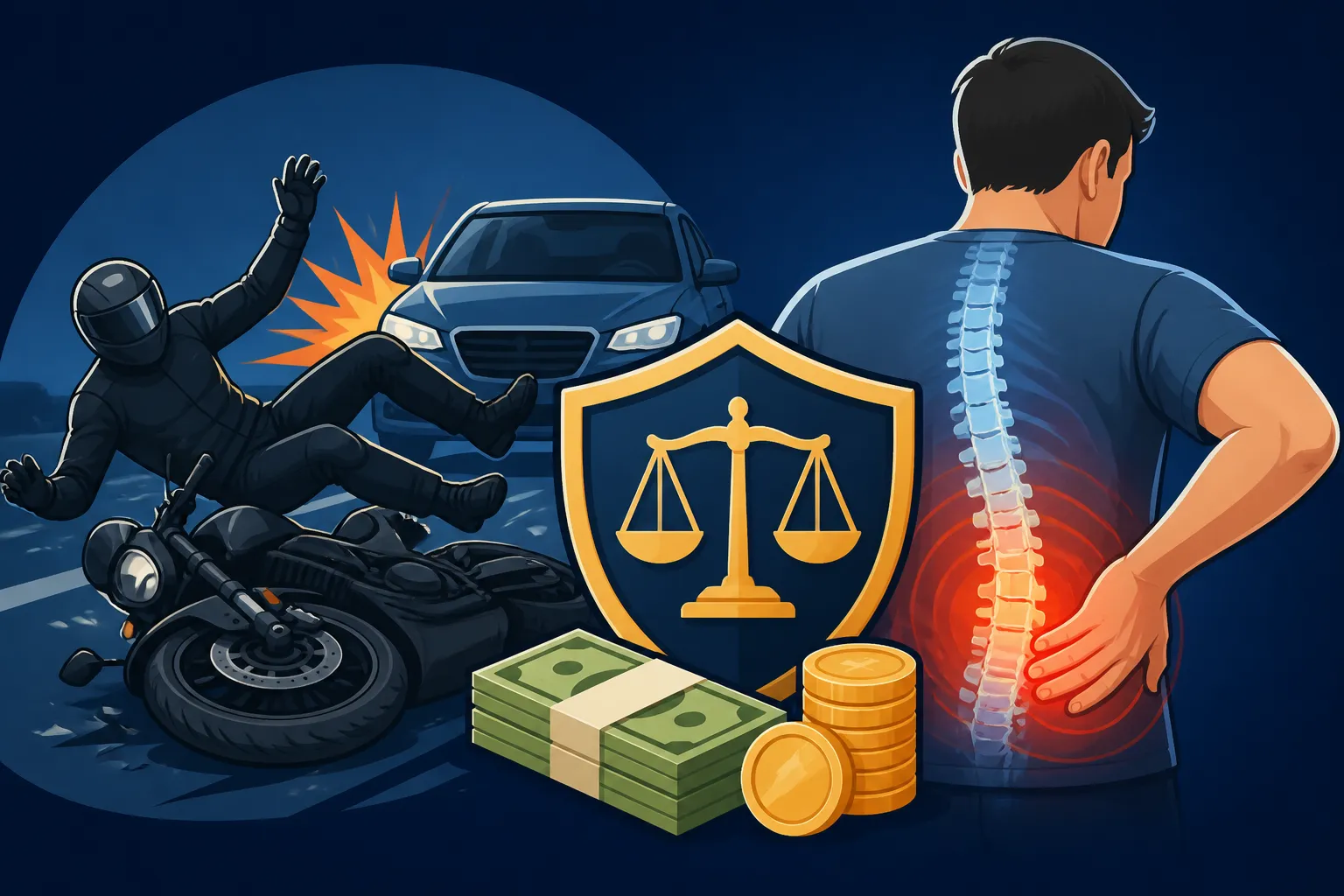
Average Settlement for a Motorcycle Back Injury
Riding a motorcycle offers a unique sense of freedom, but it also comes with inherent risks, and a back injury after a crash can turn your world upside down. The pain is debilitating, the medical bills pile up, and the thought of navigating the complex legal system to seek compensation can feel overwhelming when you're just trying to heal. This guide is here to shed light on what goes into determining the average settlement for a motorcycle back injury, helping you understand your options and what to expect.
Understanding Motorcycle Back Injuries and Their Severity
When you're involved in a motorcycle accident, your back is incredibly vulnerable. Unlike being in a car, there’s no protective cage around you, and the force of impact or the sudden jolt can wreak havoc on your spine and surrounding soft tissues. It's not just about the immediate pain; these injuries can have long-lasting, life-altering consequences, affecting everything from your mobility to your ability to work and enjoy life.
Common Types of Back Injuries in Motorcycle Accidents
The range of back injuries sustained in motorcycle crashes is broad, each carrying its own level of severity and potential for long-term complications. Even what seems like a minor jolt at first can turn into something far more serious over time, which is why immediate medical attention is absolutely critical, even if you feel okay.
One of the most frequent types of injuries, often underestimated, is whiplash. This occurs when your head is suddenly jerked back and forth, straining the muscles, ligaments, and tendons in your neck and upper back. While often associated with car accidents, whiplash in a motorcycle crash can be severe due to the unprotected nature of the rider. Symptoms might not appear for hours or even days, including stiffness, pain, dizziness, and headaches. Left untreated, it can lead to chronic neck and back pain.
Beyond soft tissue injuries like whiplash, herniated or bulging discs are incredibly common and painful. The discs between your vertebrae act as shock absorbers; during a collision, the force can cause them to slip out of place, bulge, or even rupture. When a disc herniates, it can press on nearby nerves, causing radiating pain, numbness, or weakness in your arms or legs. This can be agonizing and often requires extensive physical therapy, injections, or even surgery. Many riders who suffer from a herniated disc find their daily life significantly impacted, struggling with simple tasks that used to be second nature.
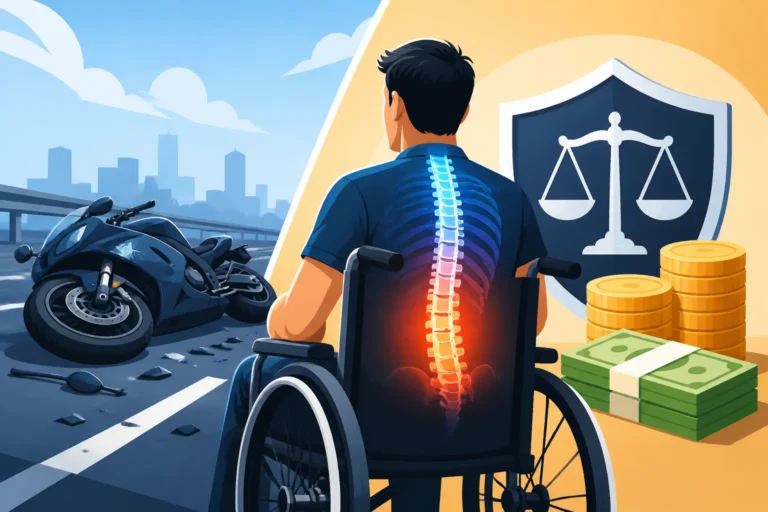
More severe back injuries include compression fractures of the vertebrae, where the bones in your spine literally crack or collapse under extreme force. These fractures are intensely painful and can lead to spinal instability, chronic pain, and even nerve damage if fragments press against the spinal cord. In the most tragic and severe cases, a motorcycle accident can result in a Motorcycle Spinal Cord Injury: Claims and Compensation. These injuries, which can range from incomplete spinal cord damage to complete severing, often lead to paralysis, significantly impacting a person’s ability to walk, feel, or control bodily functions. The implications of such an injury are profound, requiring lifelong care, extensive rehabilitation, and a complete reimagining of one's life.
Factors Influencing Injury Severity and Long-Term Impact
The specific circumstances of your crash play a huge role in the severity of your back injury and its lasting effects. It's not just the impact itself, but how your body reacted, what gear you were wearing, and even your own physical condition prior to the incident. Each of these elements contributes to the unique tapestry of your recovery and, ultimately, your claim.
Consider the speed and type of impact. A high-speed rear-end collision, for instance, can generate immense force that violently compresses or twists the spine. Conversely, a low-speed fall might result in different kinds of injuries, perhaps less catastrophic but still debilitating, like severe road rash across the back or soft tissue strains from landing awkwardly. The exact angle of impact, whether you were thrown from the bike, and how you landed all contribute to the specific trauma your back sustains. For example, a direct impact to the back could cause spinal fractures, while a twisting motion might lead to disc herniations.
Your riding gear, or lack thereof, also significantly influences injury severity. While helmets are crucial for head protection, a sturdy back protector and an armored riding jacket can provide a vital layer of defense against direct impact and abrasion for your spine and torso. Riders who opt for minimal gear, such as just a t-shirt, are far more susceptible to severe road rash on their back, along with fractures and internal injuries. This lack of protection can sometimes be brought up by insurance companies trying to diminish your claim, arguing that your injuries might have been less severe had you worn appropriate gear, even though it doesn't absolve the other driver of fault.
Finally, your pre-existing health conditions can play a complex role. If you had a prior back injury, such as a degenerative disc condition or an old sports injury, a motorcycle crash can significantly aggravate it, leading to a much worse outcome than for someone with a perfectly healthy back. Insurance adjusters often try to argue that your injuries are merely a pre-existing condition, not caused by the accident. However, the legal principle known as the "eggshell skull rule" generally holds that a defendant must take the plaintiff as they find them. This means if the accident worsened a pre-existing condition, the at-fault party is still responsible for that aggravation. Documenting your pre-existing conditions and how the accident exacerbated them is crucial for your claim, highlighting the importance of thorough medical records in demonstrating the full extent of your injuries.
Components of a Motorcycle Back Injury Settlement
When you're dealing with a motorcycle back injury, it’s not just about the immediate pain and suffering. The financial burden can be immense, encompassing everything from doctor visits to lost income and even future care needs. A settlement aims to cover these various aspects, categorizing them into economic (tangible) and non-economic (intangible) damages. Understanding these categories is key to knowing what you're truly entitled to.
Economic Damages: Covering Your Tangible Losses
Economic damages are the calculable, concrete financial losses you've incurred or will incur as a direct result of your motorcycle accident and back injury. These are often easier to quantify because they come with bills, invoices, and clear financial records.
At the top of the list are your medical bills. This isn't just the emergency room visit right after the crash. It includes every doctor's appointment, specialist consultation, physical therapy session, chiropractic care, prescription medication, diagnostic tests like X-rays and MRIs, and potentially even surgeries. For severe back injuries, these costs can easily soar into the tens or hundreds of thousands of dollars. It’s also crucial to consider future medical costs. A back injury, especially one involving discs or the spinal cord, often requires ongoing treatment, rehabilitation, adaptive equipment, and even in-home care for years to come. Your settlement needs to account for these long-term expenses, which requires detailed projections from medical experts. This is a critical element when considering How Medical Bills Affect Your Settlement.
Beyond medical care, lost wages are a significant component of economic damages. If your back injury prevents you from working, even for a short period, you are entitled to compensation for that lost income. This includes not just your base salary, but also any bonuses, commissions, or benefits you would have received. For those with long-term or permanent disabilities, this can extend to loss of earning capacity—the difference between what you could have earned over your lifetime had the accident not occurred, versus what you can now realistically earn with your injury. This calculation can be complex, often requiring forensic economists to project your future income loss.
Finally, property damage covers the cost of repairing or replacing your motorcycle and any damaged gear, like your helmet, riding jacket, or specialized boots. While your back injury is the primary focus of your personal injury claim, the damage to your bike is a separate but related claim that also falls under economic damages. It's important to document all damage with photos and obtain repair estimates or replacement costs. Many experienced riders know the value of their bike, and ensuring it's properly accounted for in the claim is paramount.
Non-Economic Damages: Addressing Intangible Suffering
While economic damages cover your financial losses, non-economic damages address the more personal, subjective impacts of your back injury—the profound ways it affects your quality of life. These are harder to quantify with a direct bill but are no less real or deserving of compensation.
The most recognized non-economic damage is pain and suffering. This encompasses not just the physical pain you endure from your back injury, but also the emotional and mental anguish that often accompanies it. Imagine the chronic, nagging ache in your lower back that makes it impossible to sleep soundly, or the sharp, radiating pain that makes standing for more than a few minutes unbearable. This persistent discomfort can lead to severe stress, anxiety, and even depression, fundamentally altering your daily experience. It also includes the emotional distress of dealing with the aftermath of a traumatic event like a motorcycle crash, the fear of future pain, and the frustration of a limited recovery.
Another significant component is loss of enjoyment of life. This refers to the activities, hobbies, and social interactions that your back injury has taken away from you. If you were an avid motorcyclist who loved long rides through the countryside, or someone who enjoyed hiking, playing sports, or simply picking up your kids, and now those activities are painful or impossible, that loss is compensable. It’s about the diminished quality of life caused by your injuries. For many riders, the inability to get back on their bike is a profound emotional blow, representing a loss of identity and freedom. This is where your personal story and detailed accounts of how your life has changed become crucial.
In some cases, especially with severe, permanent back injuries, victims may also claim loss of consortium. This refers to the negative impact the injury has had on your relationship with your spouse or partner. It accounts for the loss of companionship, intimacy, and the ability to perform household duties or participate in family activities together. While deeply personal, these are legitimate damages recognized by the legal system, reflecting the profound ripple effect a severe back injury can have on an entire family unit. The value of Pain and Suffering in Motorcycle Settlements is often determined using a multiplier method, where your economic damages are multiplied by a factor based on the severity and permanence of your non-economic losses.
How Insurance Companies and the Legal System Value Back Injury Claims
Determining the value of a motorcycle back injury claim is far from an exact science. Insurance companies and the legal system look at a multitude of factors, often trying to minimize payouts, while your goal is to ensure you receive full and fair compensation. The process involves meticulous documentation, expert opinions, and navigating complex legal principles that can significantly impact the final settlement amount.
The Role of Medical Documentation and Expert Testimony
The backbone of any successful back injury claim is comprehensive and consistent medical documentation. Without a clear paper trail of your injuries, treatments, and prognosis, insurance companies will have ample room to dispute the severity and legitimacy of your claim. From the moment you seek immediate medical attention after the accident, every doctor's visit, every diagnostic test (X-rays, MRIs, CT scans), every physical therapy session, and every prescription needs to be recorded.
These records prove the direct link between the accident and your back injury, detail the extent of the damage, and show the course of your recovery. Gaps in treatment or delays in seeking care can be red flags for insurers, leading them to argue that your injuries weren't severe or that you contributed to their worsening. Therefore, sticking to your treatment plan and documenting your progress (or lack thereof) is paramount. Furthermore, the opinions of medical experts, such as orthopedic surgeons, neurologists, or pain management specialists, are crucial. Their testimony, often in the form of detailed reports or even direct testimony, can explain the medical intricacies of your specific back injury, its long-term implications, and the necessity of future care. This expert input helps to establish the full scope of your damages, particularly when it comes to projecting future medical expenses and loss of earning capacity. Without strong medical evidence, even the most debilitating back injury can be undervalued. For a deeper dive, read our guide on How to Document Injuries for a Claim.
Impact of Comparative Negligence and State Laws
One of the most significant hurdles in a motorcycle accident claim, especially one involving a back injury, is the concept of comparative negligence. This legal doctrine allows for the reduction of your settlement if you are found to be partially at fault for the accident. Essentially, if an insurance company or court determines that you contributed to the cause of the crash, your total damages will be reduced by your percentage of fault. This is explained further in our article on Comparative Negligence in Motorcycle Accidents.
State laws on comparative negligence vary, which can drastically impact your potential payout. For example, states like California follow a "pure comparative negligence" rule. This means that even if you are found 99% at fault, you can still recover 1% of your damages. So, if your back injury claim is valued at $200,000 but you are found 25% at fault, your settlement would be reduced by 25% to $150,000. However, most states, including Texas and Florida, operate under "modified comparative negligence" rules, often with a 50% or 51% bar. Under the 51% rule (common in states like Georgia, Pennsylvania, and New York), if you are found 51% or more at fault, you cannot recover any damages. If you are 50% or less at fault, your damages are reduced by your percentage of fault, similar to pure comparative negligence.
This means that even if another driver ran a stop sign, an insurer might try to argue you were speeding, or that you could have avoided the crash, thereby shifting some blame to you. Given the prevailing bias against motorcyclists, who are often unfairly perceived as reckless, proving that you were not at fault, or only minimally at fault, is incredibly important. This is where an experienced motorcycle accident attorney comes into play, as they can skillfully counter these arguments and protect your right to full compensation. Understanding How Comparative Negligence Reduces Your Payout is vital for any rider pursuing a claim.
Average Settlement Ranges and Why They Vary So Much
It’s completely natural to wonder, "What's the average settlement for a motorcycle back injury?" The honest, and sometimes frustrating, answer is that there isn't a single, straightforward "average." Back injury settlements vary wildly, ranging from a few thousand dollars for minor soft tissue strains to multi-million dollar figures for catastrophic spinal cord injuries causing paralysis. The unique circumstances of each case, coupled with the myriad factors discussed, make a definitive average nearly impossible.
The severity of the injury is, without a doubt, the primary driver of settlement value. A minor case of whiplash might settle for anywhere from $10,000 to $50,000, covering a few months of therapy and some pain and suffering. A herniated disc requiring surgery and extensive rehabilitation could easily be in the $100,000 to $500,000 range, especially if it leads to chronic pain or long-term disability. For the most severe injuries, such as permanent nerve damage or paralysis from a spinal cord injury, settlements can easily exceed $1 million, reflecting the lifelong medical care, lost earning capacity, and profound impact on quality of life.
Consider the variables:
- Medical Expenses: Are they $5,000 or $500,000? This is the clearest indicator of direct costs.
- Lost Wages: Did you miss two weeks of work, or are you permanently unable to return to your profession?
- Pain and Suffering: Is your pain manageable, or does it prevent you from enjoying any aspect of your former life?
- Recovery Prognosis: Will you make a full recovery, or do you face a lifetime of chronic pain and limitations?
- Insurance Policy Limits: Is the at-fault driver adequately insured to cover your damages?
- State Laws: How does comparative negligence in your state affect your claim?
To illustrate the broad range, consider the following table which provides estimated settlement factors based on injury type, emphasizing that these are not guarantees but rather general indications.
| Back Injury Type | Severity Level | Estimated Economic Damages (Medical/Lost Wages) | Estimated Non-Economic Damages (Pain/Suffering) | Overall Settlement Factor |
|---|---|---|---|---|
| Mild Whiplash/Muscle Strain | Minor | Low ($5,000 – $20,000) | Moderate (1-2x Economic) | Low to Moderate |
| Moderate Disc Bulge/Strain | Moderate | Medium ($20,000 – $75,000) | Significant (2-3x Economic) | Moderate to High |
| Herniated Disc (No Surgery) | Moderate-Severe | Medium-High ($50,000 – $150,000) | High (3-4x Economic) | High |
| Herniated Disc (Surgery) | Severe | High ($100,000 – $300,000+) | Very High (4-5x+ Economic) | Very High |
| Spinal Compression Fracture | Severe | Very High ($150,000 – $500,000+) | Extremely High (5-7x+ Economic) | Extremely High |
| Spinal Cord Injury (Paralysis) | Catastrophic | Extremely High ($500,000 – Millions) | Maximum (7-10x+ Economic) | Catastrophic |
Note: These are general estimates and actual settlements depend heavily on individual case facts, jurisdiction, and legal representation.
This table demonstrates how a "minor" back injury might only involve a few weeks of physical therapy, leading to a modest settlement, whereas a "catastrophic" injury, such as a permanent spinal cord injury, involves extensive surgeries, lifelong care, and severe limitations, justifying a much larger payout. Understanding What Affects Your Motorcycle Accident Payout is crucial for setting realistic expectations.
Maximizing Your Settlement for a Motorcycle Back Injury
Dealing with a back injury after a motorcycle accident is tough enough without also having to worry about battling insurance companies. However, taking the right steps from the very beginning and understanding the value of expert help can make a monumental difference in the compensation you receive. Your focus should be on your recovery, but a strategic approach to your claim runs in parallel.
Immediate Steps After an Accident
The actions you take immediately following a motorcycle accident are critical, not just for your health, but for the strength of your future claim. While it's easy to feel disoriented and overwhelmed, these initial steps can lay the groundwork for a successful recovery and settlement.
First and foremost, seek medical attention without delay, even if you feel fine. Adrenaline can mask pain, and many back injuries, like whiplash or disc problems, have delayed symptoms. Visiting an emergency room or your doctor immediately creates an official record that connects your injuries directly to the accident. This is crucial because insurance companies love to argue that your injuries weren't caused by the crash if there's a significant gap between the incident and your first medical visit. Be thorough in describing all your symptoms, no matter how minor they seem, to medical professionals. Follow all treatment recommendations, attend all appointments, and keep a detailed record of every medical expense.
Next, document everything at the scene if you are physically able. Use your phone to take photos and videos of the accident scene from multiple angles, including road conditions, vehicle positions, traffic signals, and any damage to your motorcycle and the other vehicle. Also, get contact information from any witnesses. Witness statements can be invaluable in establishing fault, especially in cases where the other driver's account differs from yours. Gather the other driver's insurance information and contact details, but avoid discussing fault or making any statements that could be interpreted as admitting blame. Simply exchange information. Remember, anything you say can potentially be used against you later on. This documentation helps prove the circumstances of the crash, which is vital for Proving Fault in a Motorcycle Accident.
Finally, be cautious about communicating with insurance companies. The at-fault driver's insurance company will likely contact you quickly, often with a seemingly friendly demeanor, but their primary goal is to minimize their payout. Do not give a recorded statement or sign any documents without consulting with a legal professional. You are not obligated to speak with them beyond providing basic contact information. They might offer a quick, lowball settlement, hoping you'll accept before you fully understand the extent of your back injury and its long-term costs. It’s always best to let an experienced attorney handle communications, ensuring your rights are protected.
The Benefit of Expert Legal Representation
Navigating the complexities of a motorcycle accident claim, particularly one involving a significant back injury, is incredibly challenging. This is where the expertise of a specialized motorcycle accident lawyer becomes invaluable. They can dramatically increase your chances of securing a fair and maximum settlement. You might wonder, Do You Need a Motorcycle Accident Lawyer? The answer is almost always yes, especially with back injuries.
A seasoned motorcycle accident attorney understands the nuances of state laws, including comparative negligence rules, and how they apply to your specific situation. They know how to collect and preserve crucial evidence, such as accident reports, witness statements, traffic camera footage, and black box data from vehicles. They can also work with accident reconstruction specialists to establish fault definitively, combating any attempts by insurance companies to shift blame onto you, which is a common tactic when motorcyclists are involved. This expertise in proving Who Is at Fault in a Motorcycle Accident is critical.
Furthermore, an attorney will expertly quantify all your damages—economic and non-economic. They will gather all your medical bills, lost wage statements, and project future medical costs, often consulting with medical and financial experts to ensure every potential loss is accounted for. They are skilled negotiators who can effectively counter lowball offers from insurance adjusters, leveraging their knowledge of similar cases and typical settlement values for specific injuries, like a Motorcycle Neck Injury: Claims and Compensation. If a fair settlement cannot be reached through negotiation, your lawyer will be prepared to take your case to court, advocating fiercely on your behalf. They handle all the legal heavy lifting, allowing you to focus entirely on your physical and emotional recovery. Ultimately, hiring the right legal advocate is a pivotal step in learning How to Maximize Your Motorcycle Accident Settlement.
Disclaimer
Please remember that this article provides general information and insights into motorcycle accident back injury settlements. It is not legal advice and should not be taken as such. Every motorcycle accident claim is unique, and the information presented here may not apply to your specific situation. Laws vary by jurisdiction, and the outcome of any legal action depends on many factors, including the specifics of the case, the applicable laws, and the evidence presented. For personalized legal guidance regarding your motorcycle accident claim, it is essential to consult with a qualified attorney in your state.