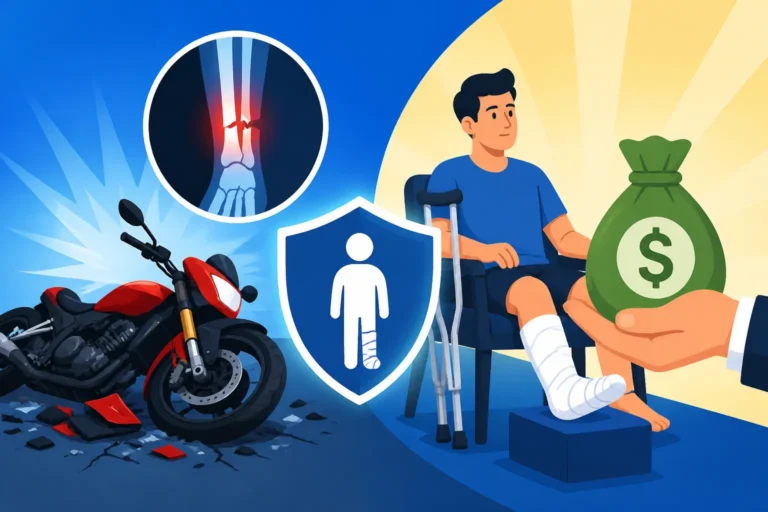
Average Motorcycle Accident Settlement in Massachusetts
When you've been in a motorcycle accident in Massachusetts, one of the most pressing questions on your mind is often, "What is my claim actually worth?" The truth is, there isn't a single, simple average motorcycle accident settlement in Massachusetts that applies to everyone. Instead, your potential payout is a complex puzzle influenced by a myriad of unique factors, from the severity of your injuries to the specific laws of the Commonwealth. This guide aims to shed light on these intricate details, helping you understand the real-world value of a motorcycle accident claim in Massachusetts and what you might realistically expect.
The Nuance of "Average" Settlements in Massachusetts
It’s completely natural to search for an "average" figure when you're trying to gauge what your motorcycle accident claim might be worth. You're likely dealing with mounting medical bills, lost income, and the pain and stress of recovery, and having a ballpark number can offer some peace of mind. However, speaking about an average motorcycle accident settlement in Massachusetts can be incredibly misleading. Every single motorcycle crash is unique, a specific combination of circumstances, injuries, and legal intricacies that makes a one-size-fits-all average almost impossible to apply meaningfully to your situation.
Why a Single Average is Misleading for Your Claim
Imagine two riders, both involved in a fender-bender. One rider might walk away with minor scrapes and a damaged fender, settling their claim quickly for a few thousand dollars to cover property damage and a check-up. The other rider, perhaps due to different riding gear or a slightly different impact angle, could suffer a broken leg, requiring surgery and months of physical therapy. Their settlement would easily be tens, if not hundreds, of thousands of dollars. The "average" of these two vastly different outcomes would tell you nothing useful about either individual case.
Furthermore, factors like the age and income of the injured rider, the clarity of fault, the specific insurance policies involved (both yours and the at-fault driver's), and even the skill of your legal representation can dramatically swing the final settlement amount. Some claims might settle for under $10,000, while catastrophic injury cases can reach well into seven figures. Trying to pinpoint an average motorcycle accident settlement in Massachusetts without considering these variables is like trying to guess the average price of a house without knowing if it's a studio apartment or a sprawling estate in a wealthy suburb. It just doesn't provide the clarity you need.
Key Factors Influencing Payouts in the Commonwealth
When insurance companies and legal teams in Massachusetts evaluate a motorcycle accident claim, they look at several crucial elements. Understanding these can help you better assess your own situation. The most significant factors typically revolve around the impact of the accident on your life and finances.
First and foremost are your medical expenses. This includes everything from the ambulance ride and emergency room treatment to surgeries, physical therapy, prescription medications, and even future medical care like ongoing rehabilitation or long-term assistive devices. The more extensive and costly your medical treatment, the higher this component of your settlement will generally be. A severe traumatic brain injury, for instance, could involve lifetime care, driving the claim value significantly higher.
Next, consider lost wages and earning capacity. If your injuries prevent you from working, even temporarily, that lost income is a recoverable damage. For someone with a steady job, this might be straightforward to calculate. For self-employed riders or those whose injuries permanently impair their ability to work in their chosen field, calculating How Lost Wages Are Calculated or lost earning capacity becomes more complex, often requiring economic experts. The duration you are out of work and your typical income directly influence this part of the settlement.
Lastly, and often most significantly in motorcycle accident cases due to the severe nature of injuries, are non-economic damages like pain and suffering. This encompasses the physical pain, emotional distress, mental anguish, and loss of enjoyment of life you experience as a direct result of the accident. While harder to quantify than medical bills or lost wages, these damages often form a substantial portion of a settlement. Insurers often use a "multiplier method" to calculate Pain and Suffering in Motorcycle Settlements, taking your economic damages and multiplying them by a factor (usually between 1.5 and 5, or even higher for severe cases) based on the severity and permanence of your non-economic losses.
Massachusetts-Specific Legalities Affecting Motorcycle Settlements
Massachusetts, like every state, has its own unique set of laws that significantly impact how motorcycle accident claims are handled and ultimately settled. These legal frameworks can either protect your right to compensation or, in some cases, limit it, making it crucial to understand the rules of the road, both literally and legally, within the Commonwealth. Navigating these complexities is often where the expertise of a seasoned professional becomes invaluable.
The Role of Modified Comparative Negligence in Massachusetts
One of the most critical aspects of Massachusetts law affecting motorcycle accident settlements is its modified comparative negligence rule, often referred to as the "51% bar rule." This means that if you are found to be 51% or more at fault for the accident, you are legally barred from recovering any damages from the other party. If you are found to be 50% or less at fault, you can still recover damages, but your total settlement will be reduced by your percentage of fault.
For example, if you sustained $100,000 in damages but a jury or insurance adjuster determines you were 20% at fault, your recoverable damages would be reduced by 20%, leaving you with $80,000. This is a common hurdle in motorcycle accidents, as there can sometimes be an unfair bias against riders, making it challenging to prove the other driver was clearly at fault. Understanding How Comparative Negligence Reduces Your Payout is vital, as it can significantly impact your net compensation. This system can be quite different from states with pure comparative negligence, where even if you're 99% at fault, you could still recover 1% of your damages.
No-Fault Laws and How They Apply to Motorcyclists
Massachusetts is known as a "no-fault" state for car accidents. Under the no-fault system, your own Personal Injury Protection (PIP) insurance typically covers your initial medical expenses and lost wages, regardless of who caused the accident, up to certain limits (usually $8,000 in Massachusetts). However, here's where it gets tricky for motorcyclists: motorcycles are generally exempt from the standard PIP coverage that applies to passenger vehicles.
This means that as a motorcyclist, you typically cannot rely on PIP benefits from your own policy for your injuries unless you have specifically purchased medical payments (MedPay) coverage or an equivalent on your motorcycle policy. Instead, your primary source of medical expense recovery after a crash will usually come from the at-fault driver's bodily injury liability insurance, or your own health insurance if you have it. This distinction is incredibly important because it means that establishing fault is usually paramount for motorcyclists right from the start, whereas car drivers might have their initial expenses covered without proving fault.
Statute of Limitations: Your Deadline to Act
Every state has a strict deadline for filing a personal injury lawsuit, known as the statute of limitations. In Massachusetts, the general statute of limitations for personal injury claims, including those arising from a motorcycle accident, is three years from the date of the accident. This might seem like a long time, especially when you're focused on healing, but it can pass by remarkably quickly when you're dealing with serious injuries and complex legal processes.
Missing this deadline means you almost certainly lose your right to pursue compensation in court, regardless of how strong your case might be. There are some very limited exceptions, but they are rare and specific. Therefore, it's always advisable to start the process of collecting evidence and seeking legal advice as soon as possible after an accident. If you're wondering, the Statute of Limitations for Motorcycle Claims in Massachusetts is a firm deadline you should never ignore.
Valuing Damages in Massachusetts Motorcycle Claims
When you're dealing with the aftermath of a motorcycle accident, the term "damages" refers to the financial compensation you can seek for your injuries and losses. In Massachusetts, these damages generally fall into two broad categories: economic and non-economic. Understanding the distinction and how each is calculated is crucial for grasping the potential value of your motorcycle accident settlement.
Economic Damages: The Tangible Costs
Economic damages are the quantifiable, dollar-for-dollar losses you incur due to the accident. These are often easier to calculate because they come with invoices, receipts, and wage statements.
- Medical Expenses: This is typically the largest component of economic damages. It includes all past and future costs related to your treatment. Think about the ambulance ride from the scene of the crash on Storrow Drive in Boston, the emergency room visit at Massachusetts General Hospital, subsequent surgeries, prescriptions, physical therapy sessions at Spaulding Rehabilitation, and even the cost of medical devices like crutches or a wheelchair. Detailed documentation of every single medical bill and treatment is paramount. The value of these How Medical Bills Affect Your Settlement can escalate quickly, especially for severe injuries like a spinal cord injury or a traumatic brain injury.
- Lost Wages and Earning Capacity: If your injuries prevent you from working, you can claim compensation for the income you've lost. This isn't just about the paychecks you missed while recovering; it also extends to lost earning capacity if your injuries prevent you from returning to your previous job or earning the same income in the future. For example, if a mechanic in Worcester can no longer perform heavy lifting due to a back injury, their future earnings could be significantly impacted.
- Property Damage: This covers the cost of repairing or replacing your damaged motorcycle, gear, and any other personal property lost or damaged in the crash. This includes your helmet, riding jacket, and boots. Documenting the damage to your bike and personal effects with photos and repair estimates is vital.
Non-Economic Damages: The Intangible Toll
Non-economic damages are far less straightforward to calculate because they represent intangible losses that don't come with a bill. Yet, they are a very real and often substantial part of a motorcycle accident settlement, especially given the severity of common motorcycle accident injuries.
- Pain and Suffering: This category compensates you for the physical pain you've endured, both immediately after the accident and during your recovery. It also includes chronic pain, discomfort, and any long-term limitations on your physical abilities.
- Emotional Distress and Mental Anguish: A motorcycle accident can leave deep psychological scars. Many riders experience anxiety, depression, PTSD, or severe emotional distress after a serious crash. The fear of riding again, nightmares, or general changes in mood are all part of this. For instance, a rider who loved weekend trips along Route 6A on Cape Cod might now be too anxious to even get on a bike.
- Loss of Enjoyment of Life: This refers to the inability to participate in hobbies, recreational activities, or daily pleasures you once enjoyed. If you can no longer play sports, spend time with family in the same way, or even perform simple household tasks, that loss impacts your quality of life and is compensable.
- Disfigurement and Scarring: Unfortunately, road rash and other injuries can leave permanent scars or disfigurement. This physical alteration can lead to emotional distress, self-consciousness, and impact social interactions, which are all considered in damages.
These non-economic damages are usually calculated using various methods, often a multiplier applied to your economic damages, or a per diem method. The key is to thoroughly document your pain, limitations, and emotional struggles through medical records, personal journals, and witness statements.
How Insurance Policies Impact Your Massachusetts Settlement
The amount of available insurance coverage is often the ceiling for your motorcycle accident settlement, regardless of how severe your injuries or how extensive your damages are. It's a harsh reality that many riders face when dealing with the aftermath of a crash in Massachusetts. Both the at-fault driver's policy and your own play a critical role.
At-Fault Driver's Liability Insurance
The most direct source of compensation will typically be the bodily injury liability coverage of the driver who caused your accident. Massachusetts law requires drivers to carry minimum liability insurance, which is currently $20,000 per person and $40,000 per accident for bodily injury, and $5,000 for property damage. While these are minimums, many drivers carry higher limits.
If the at-fault driver only has the minimum $20,000 bodily injury coverage and your damages (medical bills, lost wages, pain and suffering) far exceed that, you might find that you can only recover up to their policy limits, even if your actual losses are $50,000 or $100,000. This is a common and frustrating scenario known as underinsurance. Understanding How Insurance Policy Limits Affect Your Payout is crucial. In such cases, if you don't have additional coverage yourself, you might have to pursue a personal lawsuit against the at-fault driver's assets, which can be a long and difficult road, often yielding little if they don't have significant personal wealth.
Your Own Underinsured Motorist (UIM) Coverage
This is where your own insurance policy becomes a potential lifesaver for an underinsured driver scenario. If your damages exceed the at-fault driver's liability limits, and you carry Underinsured Motorist (UIM) coverage on your own motorcycle policy, you can then make a claim against your own UIM policy for the difference, up to your UIM limits.
For instance, if your damages are $75,000, and the at-fault driver only has $20,000 in liability coverage, your UIM policy could cover the remaining $55,000 (if you have sufficient UIM limits, say $100,000). Many riders in Massachusetts wisely choose to carry robust UIM coverage because it offers a vital safety net against drivers who don't carry enough insurance to cover catastrophic injuries. It's your protection against someone else's insufficient coverage. This also applies if the at-fault driver flees the scene and cannot be identified; your Uninsured Motorist (UM) coverage would step in.
Understanding the Motorcycle Accident Settlement Process in Massachusetts
Getting from the scene of an accident to receiving a settlement check can feel like navigating a labyrinth, especially when you're recovering from injuries. The process can be lengthy and involves several distinct stages, each with its own challenges. Understanding the typical Motorcycle Accident Settlement Process Explained can help demystify what lies ahead.
Initial Steps and Investigation
Right after the accident, the first priority is always safety and medical attention. Once you've received necessary medical care and reported the accident to the police and your insurance company, the investigation phase begins. This involves collecting evidence: police reports, witness statements, photographs of the scene, vehicle damage, and your injuries. Medical records are absolutely essential here, documenting every visit, diagnosis, and treatment plan. This is where you lay the groundwork for proving fault and the extent of your damages.
During this time, the at-fault driver's insurance company will likely reach out to you. Remember, they are looking out for their bottom line. It's generally advised to avoid giving recorded statements or signing anything without consulting an attorney, as anything you say can be used against you.
Negotiation and Demand Letters
Once your medical treatment has reached a point where your doctors can give a clear prognosis (often referred to as Maximum Medical Improvement, or MMI), your legal team (if you have one) will compile all the evidence and draft a comprehensive demand letter. This letter outlines the facts of the accident, details your injuries and medical treatment, quantifies all your economic damages (medical bills, lost wages), and calculates your non-economic damages (pain and suffering). It then makes a formal demand for settlement from the at-fault driver's insurance company.
The insurance company will review this demand and typically respond with a counter-offer, which is often a lowball offer. This initiates the negotiation phase. Your attorney will go back and forth with the insurance adjuster, presenting additional evidence, reiterating the severity of your injuries, and arguing for a fair settlement amount. This can be a protracted process, with multiple offers and counter-offers.
Mediation, Lawsuit, and Potential Trial
If negotiations reach an impasse and the insurance company is unwilling to offer a fair settlement, there are typically two paths: mediation or filing a lawsuit. Mediation involves a neutral third party (the mediator) who helps both sides try to find common ground and reach a settlement. It's often a less formal and quicker process than a trial.
If mediation fails, or if it's clear from the outset that the insurer won't negotiate fairly, a lawsuit may be filed in a Massachusetts court. This formally begins the litigation process, which involves discovery (exchanging information and evidence), depositions (sworn testimonies), and potentially expert witnesses. While most lawsuits still settle before ever reaching a courtroom, preparing for trial means gathering all the necessary proof to present your case to a jury. Going to trial is a serious step, as it's more time-consuming and expensive, and the outcome is never guaranteed. However, sometimes it's the only way to compel an insurer to offer reasonable compensation for your losses.
Maximizing Your Massachusetts Motorcycle Accident Settlement
While there's no magic formula for guaranteeing a specific settlement amount, there are definite steps you can take to strengthen your motorcycle accident claim in Massachusetts and maximize your potential payout. Being proactive and informed can make a significant difference in the long run.
Document Everything Thoroughly
From the moment of the crash, documentation is your best friend. Take photos and videos at the scene of the accident, capturing vehicle positions, damage, road conditions, traffic signs, and any visible injuries. Exchange information with all parties involved, including contact details and insurance information. Collect contact information for any witnesses.
Crucially, meticulously document your injuries and medical treatment. Keep detailed records of every doctor's visit, specialist consultation, prescription, and therapy session. Maintain an injury journal to track your daily pain levels, emotional struggles, and how your injuries impact your life. Photos of your injuries as they heal (or don't heal) can be powerful evidence. The more comprehensive your medical records and personal accounts, the harder it will be for insurance companies to dispute the extent of your suffering. Remember, How to Document Injuries for a Claim is a detailed process that will directly impact your settlement.
Seek Prompt Medical Attention and Follow Through
Even if you feel "okay" after a motorcycle accident, seek medical attention immediately. Adrenaline can mask pain, and some serious injuries, like concussions or internal bleeding, may not manifest symptoms for hours or even days. A delay in seeking medical care can be used by insurance companies to argue that your injuries weren't caused by the accident or weren't as severe as you claim.
Once you're under a doctor's care, follow all their recommendations and treatment plans precisely. Missed appointments or failing to complete physical therapy can also undermine your claim. Consistency in treatment demonstrates the seriousness of your injuries and your commitment to recovery. If your doctor prescribes ongoing care, ensure that is documented, as it will impact How Future Medical Costs Are Estimated.
Avoid Discussing Fault or Signing Anything Prematurely
After a crash, it's natural to want to explain what happened, but be extremely careful about what you say, especially to insurance adjusters. Never admit fault at the scene of the accident or to any insurance company representative, even if you think you might have made a mistake. Statements made in the immediate aftermath can be misconstrued or used against you later to reduce your settlement under Massachusetts' modified comparative negligence rules.
Similarly, avoid signing any documents, especially a medical authorization form or a settlement release, without first consulting with an attorney. A general release, for instance, could permanently waive your right to pursue further compensation, even if you discover more severe injuries later. Insurance companies are businesses, and their goal is to settle claims for the lowest possible amount. Having an experienced advocate on your side who understands How Insurers Lowball Motorcycle Riders can make all the difference.
Table of Typical Damages in Massachusetts Motorcycle Accident Claims
To help you visualize the different components that contribute to an average motorcycle accident settlement in Massachusetts, here's a breakdown of common damage types:
| Damage Category | Description | Examples in Massachusetts |
|---|---|---|
| Economic Damages | Quantifiable, verifiable financial losses. | |
| Medical Bills | All costs related to treatment, past and future. | ER visits at Boston Medical Center, MRI scans, physical therapy, prescriptions, surgery at UMass Memorial. |
| Lost Wages | Income lost due to inability to work. | Missed paychecks from a job in Springfield, lost contract work for a self-employed rider in Lowell. |
| Lost Earning Capacity | Reduction in future income due to permanent injury. | A construction worker in Brockton unable to lift heavy objects, forcing a career change to a lower-paying field. |
| Property Damage | Cost to repair or replace motorcycle, helmet, gear, etc. | Repair costs for a Harley-Davidson after a crash on I-90, replacement of a damaged Arai helmet and riding jacket. |
| Non-Economic Damages | Subjective, intangible losses related to pain, suffering, and quality of life. | |
| Pain & Suffering | Physical pain, discomfort, and agony endured. | Chronic back pain, discomfort during daily activities, soreness from a fractured collarbone. |
| Emotional Distress | Mental anguish, anxiety, depression, PTSD. | Fear of riding again, nightmares, difficulty concentrating due to accident trauma. |
| Loss of Enjoyment | Inability to participate in hobbies or activities. | Unable to hike the Berkshire trails, can't play with children like before, giving up motorcycle rallies. |
| Disfigurement | Permanent scarring, altered appearance. | Severe road rash scars on arms and legs, facial scarring requiring reconstructive surgery. |
Conclusion and Next Steps
Dealing with a motorcycle accident in Massachusetts is incredibly challenging, both physically and emotionally. While pinning down an "average" settlement is tough due to the individualized nature of each claim, understanding the factors that drive compensation – from the severity of your injuries and the financial impact on your life to Massachusetts' specific legal framework regarding comparative negligence and insurance coverage – is absolutely essential. By thoroughly documenting your damages, seeking consistent medical care, and protecting your rights from insurance company tactics, you put yourself in the best position to achieve a fair settlement. Remember, your journey to recovery and justice is unique, and getting informed is the first step.
Disclaimer
The information provided in this guide is intended for general informational purposes only and does not constitute legal advice. Motorcycle accident claims are complex and highly dependent on individual circumstances and the specific laws of Massachusetts. It is strongly recommended to consult with a qualified motorcycle accident attorney in Massachusetts to discuss your specific situation and receive personalized legal guidance.