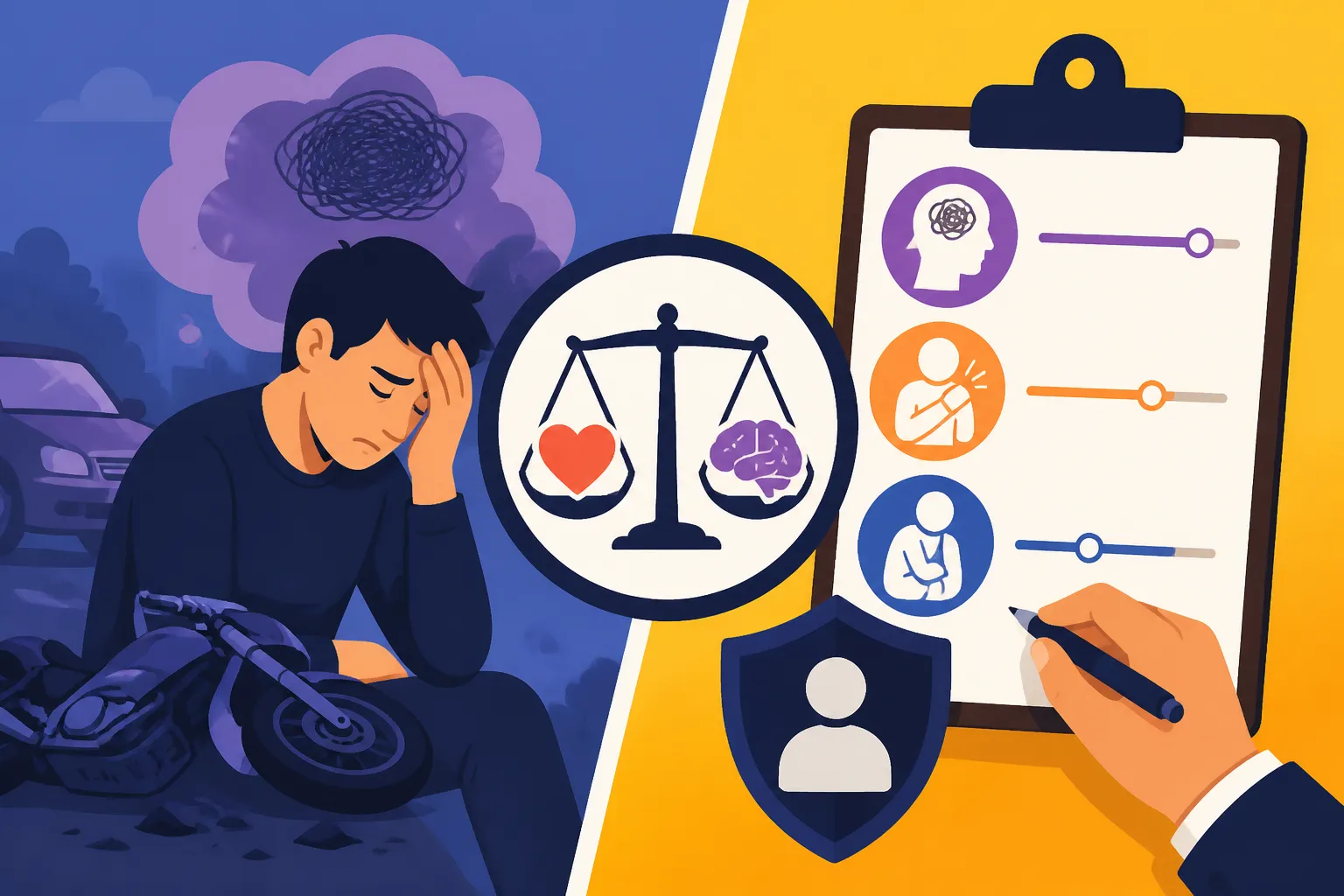
How Emotional Distress Are Calculated in a Motorcycle Claim
After a motorcycle accident, the physical injuries are often glaringly obvious: broken bones, road rash, sometimes even life-altering trauma. But what about the invisible wounds? The fear, the anxiety, the sleepless nights, or the sheer dread of getting back on your bike? These are the real, often debilitating forms of emotional distress that riders experience, and they deserve to be recognized and compensated in a claim. This guide is here to walk you through how emotional distress is calculated in a motorcycle accident claim, helping you understand this critical, yet frequently underestimated, aspect of your recovery.
Understanding Emotional Distress After a Motorcycle Accident
When you're involved in a motorcycle accident, the aftermath isn't just about stitches, casts, or physical therapy. It’s about the lingering fear that tightens your chest when you hear a loud engine, the nightmares that steal your sleep, or the sudden aversion to riding your beloved machine. This profound psychological impact, often referred to as emotional distress or mental anguish, is a very real component of your suffering. It can be just as debilitating, if not more so, than the visible injuries, yet it's often the hardest to explain to those who haven't experienced it.
The Invisible Wounds of a Crash
Emotional distress, in the context of a motorcycle accident claim, encompasses a wide range of psychological and emotional suffering directly caused by the incident. This isn't just about feeling "sad" for a few days; it delves into conditions like Post-Traumatic Stress Disorder (PTSD), severe anxiety, clinical depression, overwhelming fear of riding, and a profound loss of enjoyment in life. It's the kind of suffering that doesn't show up on an X-ray or MRI, making it incredibly challenging to articulate and prove to an insurance adjuster or jury.
Think about it: one moment you're enjoying the open road, feeling the wind, and the next you're in a terrifying collision. Your brain and body react to that trauma in ways that can fundamentally alter your perception of safety and joy. Many riders describe flashbacks to the moment of impact, intrusive thoughts, or even a complete inability to drive past the accident scene without a surge of panic. These aren't signs of weakness; they're genuine, debilitating reactions to a traumatic event. It's a cruel irony that the very thing that brought you so much freedom and exhilaration—your motorcycle—can become a source of profound psychological pain.
Common Forms of Emotional Suffering for Riders
The unique vulnerability of motorcyclists means that accidents can leave particularly deep psychological scars. Riders often face a higher risk of severe injury, and the shock of impact can be exceptionally brutal, leading to distinct forms of emotional distress.
One of the most widely recognized forms is Post-Traumatic Stress Disorder (PTSD). For a rider, PTSD might manifest as a crippling fear of getting back on their bike, or even just riding in a car. They might experience vivid flashbacks of the crash, triggered by specific sounds (like screeching tires), smells (like burning rubber), or even just seeing another motorcycle. Nightmares are common, as is hypervigilance—a constant state of being on edge, scanning for danger, even in safe environments. This can make everyday life exhausting and isolating. You might find yourself avoiding social situations, especially those that involve driving or being near busy roads.
Beyond PTSD, anxiety and depression are incredibly prevalent. Generalized anxiety can make simple tasks feel overwhelming, while panic attacks might strike without warning, leaving you breathless and disoriented. Clinical depression can settle in, characterized by feelings of hopelessness, a lack of interest in activities you once loved, changes in appetite or sleep, and persistent fatigue. It's not uncommon for riders to feel a profound sense of loss – not just for their bike, but for a part of their identity and freedom that riding represented.
Perhaps one of the most heartbreaking impacts for a motorcyclist is the development of vehophobia, or a deep-seated fear of riding. For many, riding isn't just a hobby; it's a passion, a lifestyle, a form of meditation. To have that taken away, not by choice but by trauma, can be devastating. This loss of enjoyment of life extends beyond just riding; it can affect relationships, work, and general well-being. Imagine losing the ability to find joy in something so central to your identity. These are the intricate, painful layers of emotional suffering that need careful consideration in any motorcycle accident claim.
The Challenge of Quantifying Emotional Distress
While your physical injuries, medical bills, and lost wages have clear dollar amounts attached to them, emotional distress is far more elusive. There’s no price tag on fear or sleepless nights. This intangible nature makes quantifying emotional distress one of the most challenging aspects of a personal injury claim, especially for something as profoundly impactful as a motorcycle accident.
Why It's Not as Simple as Medical Bills
When you break a leg, the cost of the emergency room visit, the X-rays, the surgery, the physical therapy, and even the lost wages from time off work are all very straightforward. You have receipts, invoices, and pay stubs. These are known as "economic damages," and they are relatively easy to calculate and prove.
Emotional distress, however, falls under "non-economic damages." This category also includes pain and suffering, loss of enjoyment of life, and disfigurement. These damages are subjective; they vary wildly from person to person and don't come with an easy price tag. How do you put a number on the constant anxiety you feel, the joy you’ve lost, or the persistent nightmares that plague you? Insurance companies, naturally, want to minimize these payouts, arguing that emotional suffering is difficult to verify or is being exaggerated. This is where the art and science of personal injury law come into play, attempting to translate profound human suffering into a monetary value that reflects the true impact on your life.
The Role of Medical and Psychological Professionals
Given the invisible nature of emotional distress, the testimony and documentation from qualified medical and psychological professionals become absolutely invaluable. These experts provide the objective evidence needed to prove your subjective suffering. Without their professional assessment and ongoing treatment, an insurance company can easily dismiss your claims of mental anguish as mere exaggeration.
If you are experiencing significant emotional distress, seeking help from a therapist, psychologist, or psychiatrist is not only crucial for your recovery but also for your claim. Their diagnoses, treatment plans, and notes on your progress, or lack thereof, serve as powerful evidence. For instance, if you are diagnosed with PTSD, the therapist's detailed records documenting your symptoms, triggers, and the impact on your daily life provide concrete proof. These professionals can articulate how your accident directly led to your current psychological state, establishing a clear link between the crash and your emotional suffering. The more consistent and well-documented your treatment, the harder it is for the opposing side to deny the severity of your emotional distress. It's often said that if you want to understand how to document injuries for a claim, you need to think beyond just physical ailments and include psychological care. Similarly, proving something as complex as how PTSD is proven in a claim often relies heavily on expert medical opinions.
Methods Used to Calculate Emotional Distress Damages
Because emotional distress lacks a direct monetary value, attorneys and insurance companies use various methods to arrive at a fair compensation figure. These methods are not rigid formulas but rather frameworks for negotiation, heavily influenced by the specific details of your case.
The Multiplier Method in Practice
The most common approach for calculating non-economic damages, including emotional distress, is the "multiplier method." This method takes your total economic damages (medical bills, lost wages, property damage, etc.) and multiplies them by a certain number, known as the multiplier. This multiplier typically ranges from 1.5x for minor injuries with short recovery times, up to 5x or even higher for severe, debilitating, or permanent injuries.
Here's how it generally works: Let's say your economic damages total $25,000. This could include $15,000 in medical expenses, $5,000 in lost wages, and $5,000 for motorcycle repairs. If your emotional distress is significant due to a severe injury, like a traumatic brain injury (TBI) or spinal cord damage, your attorney might argue for a multiplier of 3x or 4x. Using a 3x multiplier, your non-economic damages would be $75,000 ($25,000 x 3). Added to your economic damages, this would lead to a total claim value of $100,000. The choice of multiplier is highly subjective and depends on factors like the severity and permanency of your physical injuries, the extent of your emotional suffering, the clarity of fault, and the impact on your daily life. Insurance companies, on the other hand, will always push for the lowest possible multiplier, often starting at 1.5x or 2x, trying to minimize their payout.
The Per Diem Method Less Common but Applicable
Another method, less frequently used for severe, long-term emotional distress but sometimes applicable for shorter-term suffering, is the "per diem" method. "Per diem" is Latin for "by the day." Under this approach, a specific dollar amount is assigned to each day you experienced pain and suffering from the date of the injury until you reach maximum medical improvement (MMI). MMI is the point where your condition has stabilized, and further medical treatment is unlikely to improve it significantly.
For example, an attorney might argue that your daily pain and suffering is worth $100. If you suffered for 180 days until you reached MMI, your emotional distress damages would be $18,000 (180 days x $100/day). This method is typically used in cases where injuries are less severe and the recovery period is clearly defined. It becomes problematic for ongoing or permanent emotional distress, as the suffering extends indefinitely beyond MMI. Because motorcycle accidents so often result in serious, long-lasting injuries, this method is less common for calculating the full scope of a rider's emotional damages compared to the multiplier method.
Factors That Significantly Influence Emotional Distress Values
Several critical factors weigh heavily on the value assigned to your emotional distress. Understanding these can help you better anticipate and argue for a fair settlement.
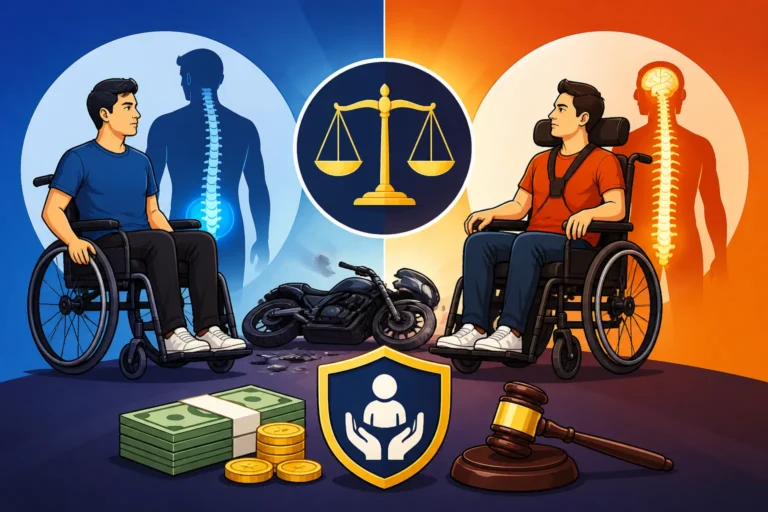
Firstly, the severity and permanency of your physical injuries are paramount. Catastrophic injuries, such as spinal cord damage, traumatic brain injuries, or amputations, almost invariably lead to immense emotional distress. If your physical injuries are permanent, meaning you will live with chronic pain or disability for the rest of your life, the emotional toll is commensurately higher. This directly impacts the multiplier used in calculations; the more severe and long-lasting the physical trauma, the higher the emotional distress value. You can explore this further in our guide on Catastrophic Motorcycle Injuries Explained.
Secondly, the impact on your daily life plays a crucial role. Can you still work? Can you enjoy your hobbies, care for your family, or engage in social activities you once loved? If the accident has severely diminished your quality of life, this suffering holds significant value. For instance, if you were an avid hiker and now cannot walk long distances, the emotional loss is substantial.
The duration of your suffering is another key element. Short-term anxiety that resolves in a few months will be valued differently than chronic depression or PTSD that requires years of therapy and medication. Consistent medical documentation, especially from mental health professionals, is essential here. Notes detailing your therapy sessions, medication prescriptions, and official diagnoses provide objective proof of your ongoing emotional struggle.
Furthermore, witness testimony can be incredibly powerful. Statements from friends, family, and co-workers who can describe the changes in your personality, mood, and daily functioning since the accident add a human element to your claim. They can articulate how the vibrant, outgoing person they knew has become withdrawn or fearful. Your personal account of your suffering, presented authentically and consistently, also carries significant weight.
Finally, the clarity of fault and negligence of the other driver can influence emotional distress values. If the other driver was clearly reckless or grossly negligent – for example, driving under the influence or excessively speeding – this can sometimes lead to higher non-economic damage awards, and in some rare cases, even punitive damages. Understanding How Fault Is Determined in Motorcycle Accidents is crucial, as clear liability strengthens your entire claim. It's also worth noting that state laws and specific jurisdictions can impact how much compensation you can receive, as some states impose caps on non-economic damages. For a broader understanding of compensation, you might want to review what the Average Motorcycle Accident Settlement Amounts look like.
Documenting and Proving Your Emotional Distress
Proving emotional distress isn't about simply stating you feel bad; it's about providing a clear, consistent, and well-documented record of your suffering and its impact on your life. This meticulous approach is what turns an abstract feeling into a tangible component of your claim.
The Importance of a Detailed Injury Journal
One of the most effective tools for documenting emotional distress, and frankly, all your accident-related suffering, is a detailed injury journal. This isn't just a scribble on a notepad; it's a consistent, personal record of your journey since the accident. Start it as soon as possible after the crash and commit to regular entries, even daily ones if you can manage it.
In this journal, you should record not only your physical pain levels but also your emotional state. Describe how you’re feeling each day: Are you anxious? Depressed? Angry? Do you have trouble sleeping? Are you experiencing nightmares or flashbacks? Note down any triggers that cause these feelings. For instance, "Today, I tried to ride my bike but couldn't even start the engine. The fear was overwhelming. I felt a panic attack coming on and had to go back inside." Or, "I had a dream about the crash last night and woke up in a cold sweat. It's affecting my ability to focus at work." Document the impact on your relationships, your ability to perform daily tasks, or your enjoyment of hobbies. If you were a social butterfly before the accident but now find yourself isolating, write that down. This journal provides a chronological, deeply personal narrative that can powerfully illustrate the extent of your emotional distress to an insurance adjuster or jury. For more tips, check out our guide on How to Keep an Injury Journal.
Expert Testimony and Medical Records
While your personal journal provides invaluable insight, it needs to be bolstered by professional medical evidence. This is where the diagnoses, treatment plans, and prognoses from mental health professionals become essential. If you are struggling with anxiety, depression, PTSD, or any other psychological symptoms after your accident, seeking help from a qualified therapist, psychologist, or psychiatrist is paramount.
Their medical records will objectively document your condition, the course of your treatment, and their expert opinion on the link between the accident and your emotional state. These records will include specific diagnoses, details of your symptoms, medication prescribed, and how your condition has progressed (or failed to progress). For instance, a psychiatrist’s report detailing your PTSD diagnosis and the recommended long-term therapy carries significant weight. These professionals can also provide expert testimony if your case goes to trial, explaining the nuances of your condition and its profound impact on your life. The stronger the connection between your physical injuries and emotional distress – for example, chronic pain leading to severe depression – the more compelling your case becomes. Remember, How Medical Records Support Your Claim is a comprehensive resource, and a crucial first step for any injury, physical or emotional, is to Why You Should Seek Immediate Treatment.
Witness Statements and Your Personal Account
Beyond professional documentation, the perspectives of those closest to you can provide compelling evidence of your emotional distress. Friends, family members, and even co-workers can offer witness statements describing the changes they’ve observed in your behavior, personality, and emotional well-being since the motorcycle accident.
For example, a spouse might testify, "Before the accident, John was always outgoing and loved spending weekends riding his Harley. Now, he barely leaves the house, he's constantly irritable, and he hasn't touched his bike since." Or a friend might say, "Sarah used to be the life of the party, but after her crash, she stopped answering calls and became very withdrawn. She tells me she can't stop thinking about what happened." These observations from people who knew you before and after the trauma paint a vivid picture of the impact the accident has had on your emotional health. Your own testimony is equally vital. When describing your emotional distress, it's crucial to be honest, consistent, and articulate. Explain how the emotional suffering affects your daily life, what specific moments or activities trigger your anxiety or fear, and how your life has fundamentally changed. A heartfelt, genuine account, supported by consistent records, can be incredibly persuasive.
Negotiating Emotional Distress with Insurance Companies
Navigating the complexities of emotional distress claims with insurance companies can feel like an uphill battle. Insurers are in the business of minimizing payouts, and they often view non-economic damages, like emotional distress, with skepticism because they are subjective and harder to quantify.
Insurers' Tactics to Downplay Emotional Suffering
Insurance companies have a playbook when it comes to emotional distress, and it's designed to reduce what they pay you. Their primary tactic is to argue that your emotional suffering is either exaggerated, pre-existing, or not directly caused by the accident. They might suggest that your anxiety or depression stems from other life stressors, not the crash itself. If you have any history of mental health treatment, they will try to use that against you, implying your current distress is merely a continuation of an old problem.
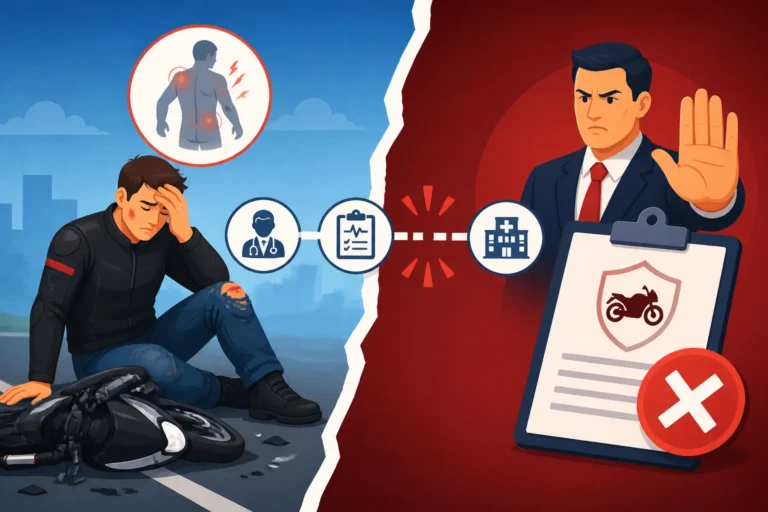
They will meticulously look for gaps in your psychological treatment. If you didn't seek therapy immediately after the accident or if you stopped attending sessions, they'll argue that your suffering couldn't have been that severe or prolonged. They might even try to capitalize on the common stigma surrounding mental health, hoping you'll feel uncomfortable pursuing this aspect of your claim. Often, insurers will present a quick, lowball settlement offer for your entire claim, hoping that your immediate financial needs and desire to resolve the stress of the situation will lead you to accept before you fully understand the long-term impact of your injuries, both physical and emotional. This is a common tactic to settle cases cheaply, and you can learn more about it in our guide on How Insurers Lowball Motorcycle Riders.
How Legal Representation Can Help
Given the insurance company's inherent motivation to minimize your claim, having an experienced motorcycle accident attorney by your side is not just helpful, it's often essential. A skilled lawyer understands these tactics and knows how to counter them effectively, ensuring your emotional distress is taken seriously and properly valued.
Your attorney will work diligently to gather and present all necessary evidence, including your detailed injury journal, comprehensive medical records from mental health professionals, and compelling witness statements. They know how to connect your emotional distress directly to the accident, rebutting arguments about pre-existing conditions or unrelated stressors. Furthermore, an attorney acts as a crucial buffer between you and the insurance company, shielding you from their aggressive tactics and allowing you to focus on your recovery. They will handle all communications, negotiations, and paperwork, freeing you from the stress of dealing with adjusters. If necessary, they can also engage expert witnesses, such as forensic psychologists, to provide testimony that strengthens your case. Ultimately, having legal representation significantly increases your chances of securing a fair settlement that fully accounts for your emotional distress, not just your physical injuries. If you're wondering whether Do You Need a Motorcycle Accident Lawyer, especially when emotional distress is a factor, the answer is almost always yes. A good attorney knows How to Maximize Your Motorcycle Accident Settlement by meticulously addressing all aspects of your damages and understands How Lawyers Deal with Insurance Companies to protect your rights.
| Type of Non-Economic Damage | Description | Key Evidence for Documentation |
|---|---|---|
| Pain and Suffering | Physical pain, discomfort, and agony from injuries and treatment | Medical records, pain diary, doctor's notes, medication logs |
| Mental Anguish / Emotional Distress | Psychological impacts like anxiety, fear, depression, PTSD, grief | Therapist/psychiatrist reports, injury journal, witness statements, medication records |
| Loss of Enjoyment of Life | Inability to participate in hobbies, social activities, or daily pleasures | Personal testimony, witness statements, activity logs, before-and-after photos/videos |
| Disfigurement/Scarring | Physical changes impacting self-esteem and quality of life | Medical reports, photographs, plastic surgeon's prognosis, personal testimony |
| Loss of Consortium | Impact on marital or family relationships, including companionship and intimacy | Spouse/family testimony, counseling records, personal accounts |
Disclaimer
Please remember that this article provides general information and should not be considered legal advice. Motorcycle accident claims are complex, and the information provided here may not apply to your specific situation. Laws regarding personal injury and emotional distress vary significantly by jurisdiction. It is always recommended to consult with a qualified legal professional who can provide advice tailored to your individual circumstances.