Motorcycle Helmet Law in Georgia
Riding a motorcycle in Georgia offers incredible freedom, but navigating the state's specific helmet laws after an accident can feel like hitting a legal pothole. Many riders are left confused about how their helmet use, or lack thereof, impacts their personal injury claim. This comprehensive guide will break down Georgia's motorcycle helmet law, explain its nuances, and shed light on how it affects your ability to recover damages after a crash.
Understanding Georgia's Universal Helmet Law for Motorcyclists
Georgia stands firm when it comes to motorcycle safety, especially concerning head protection. Unlike some states that have more relaxed rules, Georgia maintains a universal helmet law. This means that if you're riding a motorcycle on any public road in the state, you and any passenger you carry must be wearing a helmet. There are no age exemptions, no experience level clauses, and no "grandfathered in" exceptions for older riders. The law applies to everyone on a two-wheeled vehicle.
This universal requirement is deeply rooted in public health and safety initiatives. The state of Georgia, much like California and New York, prioritizes preventing severe head trauma, which is often the most debilitating and life-threatening injury in motorcycle accidents. For many riders, wearing a helmet isn't just about complying with the law; it's a fundamental aspect of their riding gear, providing peace of mind and protection on every journey, whether it's a quick commute through Atlanta traffic or a scenic ride along the Blue Ridge Parkway.
Who Must Wear a Helmet in Georgia?
The language of Georgia's law, specifically O.C.G.A. § 40-6-315(a), is unambiguous: "No person shall operate or ride upon a motorcycle or a motor driven cycle unless he or she is wearing protective headgear which complies with standards established by the Commissioner of Public Safety." This means if your wheels hit Georgia pavement, your head needs to be covered by an approved helmet. There's no wiggle room here for riders over a certain age, or for those who might hold a specific type of license. Every rider, every passenger, every time.
This can sometimes be a surprise for riders visiting from states with different regulations, such as Florida or Illinois, where adults have more discretion regarding helmet use. The key takeaway for anyone riding in Georgia is that the universal rule is strictly enforced. It's not just about what protects you, but what the law demands, and understanding this distinction is crucial, especially if you ever find yourself involved in a crash.
Penalties for Non-Compliance
If you're caught riding a motorcycle in Georgia without a helmet, you're looking at more than just a stern lecture. You'll likely face a traffic citation, which typically involves a fine and could result in points being added to your driving record. While the immediate penalty is usually financial, accumulating too many points can lead to increased insurance premiums or even license suspension, which nobody wants.
Beyond the immediate legal repercussions, not wearing a helmet introduces a significant vulnerability if you're involved in an accident. While a traffic ticket for not wearing a helmet is a separate legal matter from a personal injury claim, the fact of non-compliance can be brought up by insurance companies or defense attorneys to complicate your recovery. It's a clear-cut violation that can be easily proven, making it a formidable tool for the opposing side to use against you.
The "Helmet Defense" and How it Impacts Your Claim in Georgia
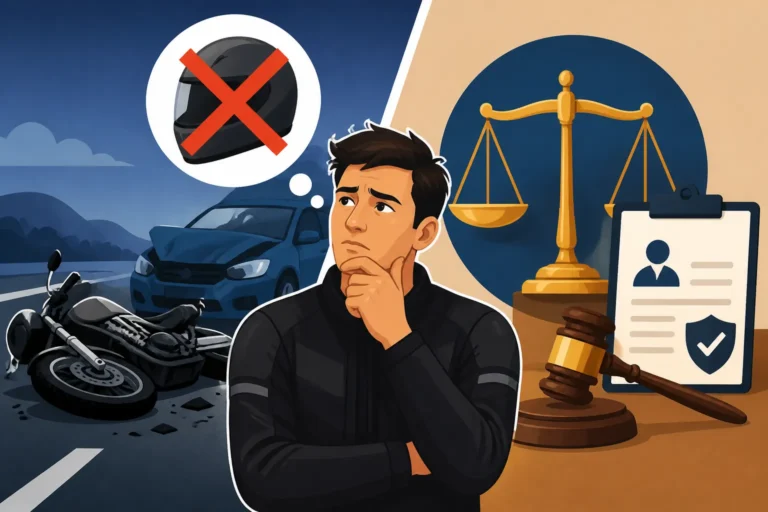
Even if another driver is entirely at fault for your motorcycle accident, your helmet use—or lack thereof—can become a central point of contention in your injury claim in Georgia. This is known as the "helmet defense," and it's a common tactic used by insurance companies to reduce their payout. Understanding this defense is critical for any rider in Georgia.
The core idea behind the helmet defense is that if you weren't wearing a legally compliant helmet, or any helmet at all, your head injuries are either entirely your fault or were made significantly worse by your failure to wear protective gear. This argument doesn't necessarily dispute the other driver's initial negligence, but it seeks to assign a portion of the causation for your injuries back to you. This tactic directly relates to Georgia's modified comparative negligence laws, which can reduce your compensation if you're found partially at fault for your own injuries. For a deeper dive into how shared fault impacts claims, you might want to read our guide on Comparative Negligence in Motorcycle Accidents.
How Insurance Companies Use Non-Helmet Use Against You
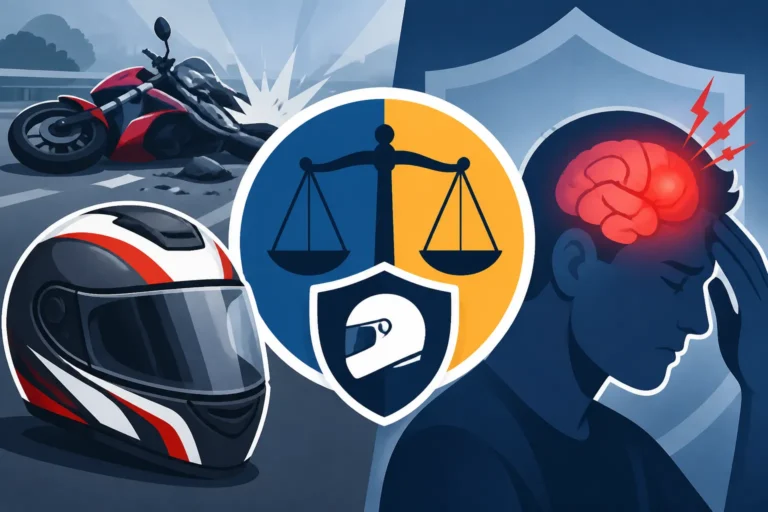
When an insurance company gets wind that you weren't wearing a helmet, or were wearing a novelty helmet that doesn't meet DOT standards, they will almost certainly pounce on it. Their goal is simple: to argue that your head injuries, whether they be concussions, skull fractures, or a traumatic brain injury, could have been avoided or significantly minimized if you had been wearing proper head protection. They might claim that because of your own actions, you failed to mitigate your damages, thus reducing the amount of compensation they owe you.
Imagine you're involved in a collision with a distracted driver who clearly caused the crash. You suffer a serious head injury, but you weren't wearing a helmet. The at-fault driver's insurance company, perhaps one of the big players like GEICO or Progressive, will likely argue that while their insured caused the collision, your head injury would not have been as severe, or even occurred at all, if you had been wearing a DOT-compliant helmet. This isn't just a minor squabble; it can drastically reduce your potential settlement, especially for significant medical expenses, lost wages, and pain and suffering related to head trauma. It's a harsh reality that can feel like you're being blamed twice for an accident that wasn't your fault.
Proving Causation and Mitigating Damages
Despite the insurance company's arguments, the burden of proof is on them to demonstrate that your non-helmet use directly caused or exacerbated your injuries. It’s not an automatic reduction in your claim just because you weren’t wearing one. This is where the intricacies of medical and accident reconstruction come into play. Experts might be brought in to testify whether, given the specifics of the impact, a helmet would have made a difference. They'll analyze impact points, speeds, and the nature of your injuries.
Even if you weren't wearing a helmet, you might still recover for other injuries not related to head trauma. For instance, if you suffered severe road rash, broken bones, or internal injuries, these damages are typically separate from the helmet defense argument. The defense can't claim that a helmet would have prevented a broken leg or a ruptured spleen. For more detailed information on how these arguments play out, especially concerning different types of injuries, our article on How Helmet Laws Affect Your Accident Claim offers crucial insights. It highlights that while head protection is paramount, other aspects of your claim can remain strong, demonstrating the importance of documenting all your injuries thoroughly.
Ensuring DOT Compliance and Choosing the Right Helmet in Georgia
Complying with Georgia's universal helmet law isn't just about putting something on your head; it's about wearing a helmet that meets specific safety standards. The law states that the protective headgear must comply with standards established by the Commissioner of Public Safety, which typically means it must be "DOT compliant." This seemingly small detail can have monumental implications for both your safety and any future accident claim.
Unfortunately, not all helmets are created equal. The market is flooded with various types and styles, some of which offer little more than aesthetic appeal. Choosing a helmet isn't just a fashion statement; it's a critical safety decision that directly impacts your well-being and, potentially, your legal standing after a crash. Understanding what makes a helmet genuinely protective and legally compliant is paramount for every rider in Georgia.
What Makes a Helmet DOT Compliant?
A DOT-compliant helmet meets the minimum safety standards set by the U.S. Department of Transportation (DOT) under Federal Motor Vehicle Safety Standard (FMVSS) 218. These standards ensure a helmet can withstand certain impacts and provide a basic level of protection. You can identify a DOT-compliant helmet by looking for the "DOT" sticker on the back. It's usually a small, distinct label. Beyond the sticker, genuine DOT helmets have specific physical characteristics:
- Thick Inner Liner: They feature a sturdy inner liner of expanded polystyrene (EPS) foam, typically at least one inch thick, designed to absorb impact energy.
- Sturdy Chin Strap: The chin strap should be securely riveted to the helmet and use a D-ring or quick-release buckle system that is robust and reliable.
- Weight and Profile: DOT helmets generally feel substantial, not flimsy or exceptionally light. They also have a rounder, thicker profile to maximize coverage and energy absorption.
- No Flimsy Attachments: They don't typically have any sharp, protruding accessories that could snag or cause injury during an impact.
Be wary of "novelty helmets" — those often thin, lightweight skull-cap style helmets without proper internal padding. While they might look cool, they offer minimal to no actual protection in a crash and are not DOT compliant. Wearing one is legally equivalent to wearing no helmet at all in Georgia and will almost certainly be used against you in an accident claim, especially if you suffer injuries like Motorcycle Traumatic Brain Injuries. Always prioritize safety and compliance when selecting your headgear. Many reputable retailers, like Cycle Gear, specialize in selling only DOT-approved helmets, making your choice easier and safer.
Types of Helmets and Their Protective Qualities
While all DOT-compliant helmets meet minimum safety standards, different types offer varying levels of protection, comfort, and features. Choosing the right one for your riding style and personal preferences is key:
- Full-Face Helmets: These offer the most comprehensive protection, covering your entire head, face, and chin. They are highly recommended for all types of riding, as they significantly reduce the risk of Motorcycle Facial Injuries Claims and Compensation and provide excellent protection against road debris, wind, and weather. Their integrated visor keeps your eyes safe, too.
- Open-Face (3/4) Helmets: These cover the top, back, and sides of your head, but leave your face exposed. While DOT compliant, they require separate eye protection (goggles or a face shield). They offer less protection for the face and chin compared to full-face helmets but are favored by some for their open feel.
- Modular (Flip-Up) Helmets: A hybrid design, modular helmets offer the convenience of an open-face helmet with the option to lower a chin bar for full-face protection. They are DOT compliant when the chin bar is down but check if they maintain DOT compliance in the "up" position, as some do not.
When you're choosing a helmet, consider not just the DOT standard but also additional certifications like Snell or ECE. These certifications often indicate even higher levels of impact protection. Investing in a high-quality helmet from a reputable vendor, such as those found at Cycle Gear, is one of the smartest decisions you can make as a rider. It's not just about meeting the law; it's about giving yourself the best possible chance to walk away from an unforeseen incident with minimal injury. Remember, DOT Helmet Requirements Explained provides a comprehensive look at what to expect from a truly protective helmet.
Beyond Helmets: Other Motorcycle Gear Requirements and Best Practices in Georgia
While Georgia's helmet law is universally applied and strictly enforced, it's just one piece of the safety puzzle for motorcyclists. There are other legal requirements for your bike, and critically, there are best practices for personal protective gear that, while not always legally mandated, can profoundly impact your safety and the outcome of an accident claim. Thinking beyond just the helmet can make a significant difference in your riding experience and security.
Many riders mistakenly believe that once they have a DOT-compliant helmet, they've done all they can. However, the open nature of motorcycles means riders are exposed to the elements and direct impacts in a way car drivers are not. Therefore, a holistic approach to safety, encompassing both legal compliance and smart gear choices, is crucial for staying safe on Georgia’s roads and protecting yourself in unforeseen circumstances.
Georgia's Other Equipment Laws
Beyond the universal helmet law, Georgia has several other statutes governing motorcycle equipment to ensure basic roadworthiness and visibility. These aren't personal protective gear requirements for the rider, but rather essential features for the motorcycle itself:
- Headlights and Taillights: Motorcycles must have at least one headlight and one taillight, both functioning properly. Headlights are generally required to be on even during daylight hours for enhanced visibility.
- Brakes: All motorcycles must have at least two functional braking systems, one for the front wheel and one for the rear, capable of stopping the vehicle effectively.
- Mirrors: At least one rearview mirror is required, mounted to provide the rider with a clear view of traffic to the rear. Two mirrors, while not legally mandated in Georgia, are highly recommended for optimal situational awareness.
- Turn Signals: While turn signals are required on all motorcycles manufactured after a certain date, older bikes might be exempt. Regardless, using hand signals when turn signals are absent or malfunctioning is crucial.
- Mufflers and Exhaust Systems: There are regulations regarding excessive noise and modified exhaust systems, aimed at preventing disturbances and ensuring environmental compliance.
While a police officer might pull you over for a broken taillight or an overly loud exhaust, these equipment violations are typically secondary to personal injury claims, unless the malfunction directly contributed to the accident. However, ensuring your bike is in top legal and mechanical condition is part of being a responsible rider and can help in Proving Fault in a Motorcycle Accident if an external factor, like another driver's negligence, is the primary cause of a crash.
The Benefits of Full Protective Gear for Your Safety and Your Claim
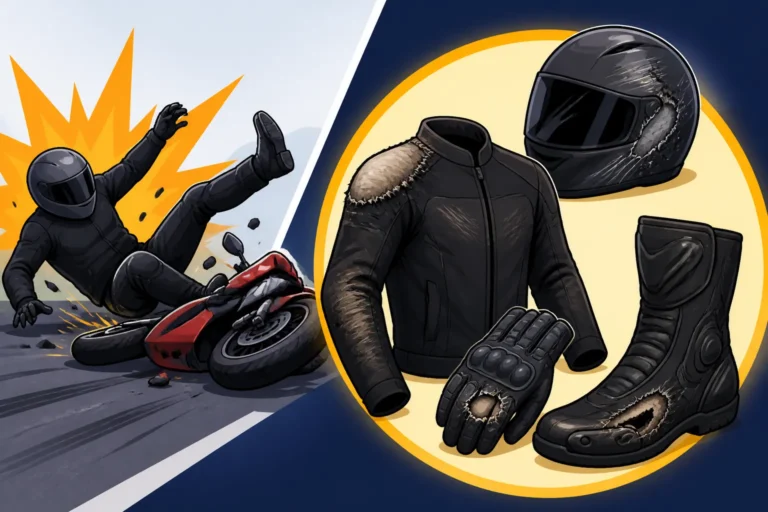
While Georgia doesn't have laws mandating armored jackets, riding pants, or specific boots, choosing to wear full protective gear is arguably the best decision any rider can make. These items don't just add to your comfort; they create a vital layer of defense against common motorcycle accident injuries and can significantly influence the outcome of your accident claim.
Think about it: in a slide or impact, good riding gear literally sacrifices itself to protect your skin, bones, and joints. High-quality armored jackets and riding pants, made from abrasion-resistant materials like leather or reinforced textiles, prevent devastating friction burns known as Road Rash Injuries and Claims. Robust gloves protect your hands and wrists, which are often the first points of impact in a fall, helping to avoid injuries like Motorcycle Broken Bones Claims and Compensation. Sturdy, over-the-ankle boots protect your feet and ankles from crushing injuries and severe abrasion. The overall impact on your body from wearing full gear is profound, leading to less severe injuries and a faster recovery.
Beyond the physical protection, wearing full gear also strengthens your legal position if you're ever in an accident. It demonstrates to insurance companies, juries, and even the police that you are a responsible rider who takes safety seriously. This can help counter any attempts by the opposing side to argue that your injuries were due to your own negligence or lack of precautions, which is a common tactic. The more proactively you protect yourself, the harder it is for others to shift blame for your injuries. Choosing comprehensive gear, perhaps from a trusted source like Cycle Gear, is an investment in both your physical well-being and your future legal standing. It’s well worth understanding How Gear Affects Injury Severity to fully appreciate the profound benefits of dressing for the slide, not just the ride.
Disclaimer
Please remember that this article provides general information and insights into motorcycle helmet laws in Georgia and their potential impact on accident claims. It is not intended as legal advice. Laws can change, and every accident case is unique. For personalized advice regarding your specific situation, it is always recommended to consult with a qualified legal professional experienced in motorcycle accident law in Georgia.