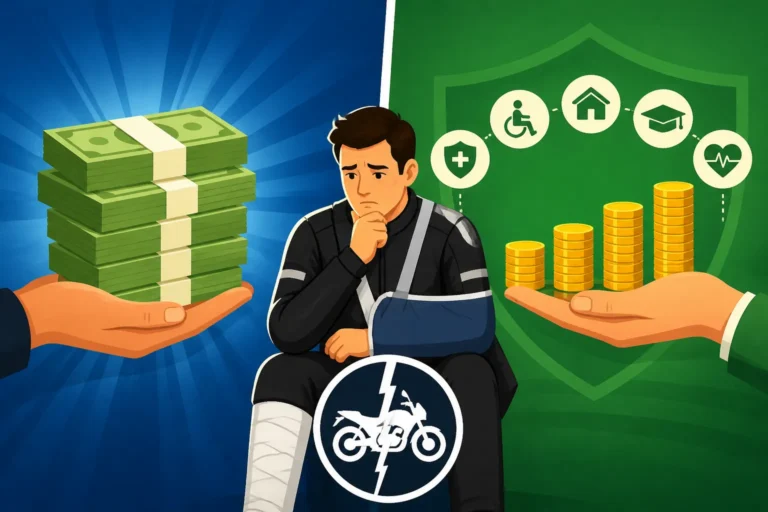
When Settlements Exceed a Million Dollars
Experiencing a motorcycle accident is terrifying, and the aftermath can feel utterly overwhelming. Beyond the immediate pain and shock, you're faced with mounting medical bills, lost wages, and the uncertainty of a long recovery. While many smaller claims settle for modest amounts, there are specific, devastating situations where motorcycle accident settlements can exceed a million dollars, reflecting the profound and life-altering impact these crashes have on victims. This guide will delve into what factors push settlements into the seven-figure range and how these complex claims are handled.
What Makes a Motorcycle Accident Settlement Skyrocket to Over a Million Dollars?
When you hear about a motorcycle accident settlement reaching seven figures, it's rarely a simple fender bender. These substantial payouts are a direct reflection of the catastrophic consequences an accident has on a rider's life, combined with clear liability and meticulous legal strategy. It’s not about winning the lottery; it’s about justly compensating for a life irrevocably altered.
The Catastrophic Nature of Injuries
Motorcyclists, by the very nature of their ride, lack the protective enclosure of a car, making them incredibly vulnerable in a collision. This often results in injuries far more severe than those sustained in car accidents. When settlements exceed a million dollars, it almost always points to injuries that cause permanent disability, require lifelong care, or result in wrongful death.
For instance, a traumatic brain injury (TBI) can completely upend a person's life, affecting cognitive function, memory, speech, and personality. Imagine a rider, once vibrant and independent, now requiring 24/7 care, unable to work or even care for themselves. Similarly, a spinal cord injury can lead to partial or complete paralysis, necessitating extensive home modifications, specialized medical equipment, and personal assistance for decades. Other catastrophic injuries like amputations, severe burns requiring multiple skin grafts, or multiple complex fractures that lead to chronic pain and mobility issues also fall into this category. The sheer cost of medical treatment alone, compounded by the inability to work and the profound emotional toll, quickly pushes the financial need into the millions. These aren't just medical bills; they represent a complete remapping of a human existence.
Clear and Egregious Fault by the Other Party
While the severity of injuries is paramount, a multi-million dollar settlement typically hinges on proving clear and undeniable fault on the part of the other driver. Insurance companies are notorious for trying to shift blame, often leveraging biases against motorcyclists. However, when the other driver's negligence is blatant and egregious, it significantly strengthens the victim's claim.
Think about scenarios like a driver who was severely intoxicated, drove recklessly, or was heavily distracted by their phone, blowing through a stop sign or making a dangerous left turn directly into a motorcycle's path. In such cases, the other driver's actions aren't just negligent; they might be considered gross negligence or willful misconduct. This clarity of fault is crucial because it makes it difficult for the defense to argue shared fault, which could reduce the payout. When the evidence clearly shows the other driver was 100% at fault, such as in cases of a driver running a red light or an egregious instance of distracted driving, it provides a strong foundation for demanding maximum compensation. It's about demonstrating that the accident was entirely preventable if the other party had acted responsibly.
Substantial Economic and Non-Economic Damages
High settlements are a combination of tangible financial losses and intangible suffering. Both components must be thoroughly documented and persuasively presented to achieve a large payout. Understanding the difference between these types of damages is critical when learning about Types of Damages in a Motorcycle Accident Claim and How Motorcycle Accident Settlements Are Calculated.
Economic damages are the calculable financial losses. This includes everything from the ambulance ride, emergency room visits, surgeries, hospital stays, and rehabilitation to prescription medications and ongoing therapies. But it also extends to lost wages – both what the injured rider has already missed and what they will miss in the future due, to permanent disability or reduced earning capacity. Additionally, property damage to the motorcycle itself, modifications needed for a home or vehicle, and adaptive equipment all factor in. Non-economic damages, on the other hand, are much harder to quantify but are often the largest component in catastrophic injury claims. This encompasses the pain and suffering endured, emotional distress, loss of enjoyment of life (e.g., inability to pursue hobbies, spend time with family, or participate in daily activities), disfigurement, and loss of consortium for spouses. When injuries are catastrophic, these non-economic damages can easily reach into the hundreds of thousands or even millions of dollars, as they reflect the profound degradation of the victim's quality of life.
Unpacking the Damages: Economic Costs and Non-Economic Suffering
To truly grasp how a settlement can climb past a million dollars, you have to break down the different categories of damages involved. It's a meticulous process that goes far beyond simply tallying up current medical bills.
Calculating Lifetime Medical Expenses and Lost Income
For victims of catastrophic motorcycle accidents, medical expenses don't just stop when they leave the hospital. They often continue for a lifetime. This is where a detailed projection of future medical costs becomes paramount. This can include future surgeries, ongoing physical and occupational therapy, long-term prescription medications, specialized medical equipment (like wheelchairs, prosthetics, or breathing apparatuses), home healthcare, and even psychological counseling to cope with the trauma. Expert medical economists and life care planners are often brought in to meticulously forecast these expenses over the victim's projected lifespan, presenting a compelling and evidence-backed figure.
Similarly, lost income extends far beyond the paychecks missed immediately after the accident. For someone who can no longer perform their job duties or has significantly reduced earning potential due to a permanent disability, the calculation includes lost future wages and benefits. This is known as Loss of Earning Capacity Explained. For example, a skilled tradesperson earning $70,000 a year who is permanently unable to work due to a spinal cord injury could face millions in lost earnings over their working lifetime, especially if they were relatively young at the time of the accident. These calculations require detailed financial analysis, often involving vocational rehabilitation specialists who assess the victim's pre-accident earning capacity versus their post-accident reality.
Valuing Pain, Suffering, and Loss of Enjoyment of Life
While economic damages are straightforward to calculate, placing a monetary value on subjective experiences like pain, suffering, and the profound loss of enjoyment of life is incredibly challenging but absolutely essential for Pain and Suffering in Motorcycle Settlements. This is where the multiplier method or a per diem approach is often used, multiplying economic damages by a factor (usually 1.5 to 5, sometimes higher for truly catastrophic injuries) to arrive at a non-economic damage figure.
Consider someone who loved riding motorcycles, hiking, and playing with their children, but can no longer do any of these activities due to their injuries. Their life has fundamentally changed, and the emotional and psychological toll can be immense. Damages for emotional distress, anxiety, depression, PTSD, and the inability to participate in hobbies or family activities all fall under this umbrella. Documenting these impacts through detailed medical records, psychological evaluations, personal journals, and testimony from family and friends is crucial. The more severe and long-lasting the impact on the victim's overall quality of life, the higher the non-economic damages will typically be.
| Injury Type | Common Long-Term Impacts | Estimated Lifetime Costs (Medical + Care) | Potential Non-Economic Damages (Pain & Suffering) |
|---|---|---|---|
| Traumatic Brain Injury (TBI) | Cognitive deficits, personality changes, memory loss, seizures, speech problems, paralysis, chronic headaches. | $1 Million – $10 Million+ | $500,000 – $5 Million+ |
| Spinal Cord Injury (SCI) | Paralysis (paraplegia/quadriplegia), chronic pain, loss of sensation, bladder/bowel dysfunction, increased risk of secondary infections. | $1 Million – $5 Million+ (first year can be $1M) | $750,000 – $6 Million+ |
| Amputation | Prosthetic needs, ongoing therapy, phantom limb pain, psychological trauma, vocational challenges. | $500,000 – $3 Million+ | $250,000 – $3 Million+ |
| Severe Burns | Multiple surgeries, skin grafts, scarring, disfigurement, nerve damage, chronic pain, psychological trauma. | $500,000 – $5 Million+ | $200,000 – $4 Million+ |
| Complex Fractures (Multiple) | Chronic pain, limited mobility, arthritis, nerve damage, repeated surgeries, permanent disability. | $200,000 – $1 Million+ | $100,000 – $1.5 Million+ |
Note: These figures are estimates and vary widely based on individual circumstances, age, location, and specific injury severity.
Punitive Damages When Applicable
While less common, punitive damages can significantly increase a settlement into the multi-million dollar range. Unlike economic and non-economic damages, which aim to compensate the victim, punitive damages are designed to punish the at-fault party for egregious conduct and deter similar behavior in the future. They are typically awarded in cases where the defendant's actions were particularly reckless, malicious, or demonstrated a willful disregard for the safety of others.
A classic example would be a drunk driver who caused a catastrophic motorcycle accident. If the driver had a history of DUIs, or their level of intoxication was exceptionally high, a court might award punitive damages to send a strong message. Similarly, if a commercial truck driver was operating a vehicle with known, unaddressed safety issues, or if a manufacturer knowingly sold a defective motorcycle part that led to a crash, punitive damages could be considered. These damages are not always available and are subject to stricter legal standards and sometimes state-imposed caps, but when they apply, they can push a verdict or settlement substantially higher, as explored in Punitive Damages in Motorcycle Cases.
The Role of Insurance Policies and Legal Strategy
Even with catastrophic injuries and clear fault, reaching a multi-million dollar settlement requires careful navigation of insurance complexities and a robust legal strategy.
Navigating High Policy Limits and Multiple Coverage Sources
A major hurdle in securing a large settlement is often the at-fault driver's insurance policy limits. Most personal auto insurance policies, even those with high coverage, might not be sufficient to cover multi-million dollar damages. For example, in many states, the minimum liability coverage is far too low to address catastrophic injuries. This is why understanding How Insurance Policy Limits Affect Your Payout is so critical.
However, experienced legal teams know how to look beyond a single policy. They will investigate if the at-fault driver has an umbrella policy, which provides additional liability coverage beyond their standard auto policy. If the at-fault driver was working at the time of the accident, their employer's commercial insurance policy could come into play. Furthermore, the injured motorcyclist's own uninsured/underinsured motorist (UM/UIM) coverage can be a lifesaver. This coverage kicks in when the at-fault driver has insufficient insurance or no insurance at all, allowing the rider to recover additional damages from their own policy. An attorney will meticulously explore all potential sources of recovery to ensure the victim is fully compensated, potentially combining multiple policies to reach the necessary amount.
The Critical Advantage of Expert Legal Representation
Let's be real: trying to navigate a multi-million dollar motorcycle accident claim on your own is like trying to scale Mount Everest without a guide. Insurance companies have vast resources and a primary goal of minimizing payouts. This is precisely why having a seasoned motorcycle accident lawyer on your side is not just helpful, it's often indispensable for cases involving severe injuries.
A skilled attorney understands the intricate legal frameworks, knows how to collect and present compelling evidence, and can effectively negotiate with aggressive insurance adjusters. They will conduct a thorough investigation, gathering police reports, witness statements, accident reconstruction data, medical records, and expert testimonies. They also know how to quantify both economic and non-economic damages accurately, working with medical and financial experts to build a rock-solid case. Perhaps most importantly, they are prepared to take the case to trial if a fair settlement cannot be reached, a threat that often compels insurance companies to negotiate more seriously. They can help How to Maximize Your Motorcycle Accident Settlement by advocating fiercely for your rights and ensuring you receive the compensation you truly deserve.
Real-World Scenarios and the Path to a Seven-Figure Payout
It’s one thing to talk about generalities, but it’s another to see how these factors play out in real-life, high-stakes scenarios. The path to a multi-million dollar settlement is long, complex, and requires unwavering advocacy.
Case Studies of Catastrophic Injury Claims
Consider the story of a 28-year-old motorcyclist, let's call him Alex, who was on his way home from work in Phoenix. A distracted driver, looking at their phone, swerved into Alex's lane without warning, causing a head-on collision. Alex suffered a severe spinal cord injury, resulting in permanent paralysis from the waist down. He also sustained multiple internal injuries and required several major surgeries. Before the accident, Alex was an active outdoor enthusiast, working as a software engineer with significant future earning potential.
In this tragic scenario, the clear fault of the distracted driver combined with Alex's catastrophic, life-altering injuries immediately points towards a multi-million dollar claim. His medical expenses for the initial hospitalization and surgeries alone ran into hundreds of thousands. His ongoing care, including physical therapy, specialized equipment, home modifications, and personal attendant care for decades, easily pushed his economic damages into the millions. Add to that his lost future earnings, estimated over his 35-year working life, and the profound Motorcycle Spinal Cord Injury: Claims and Compensation for his pain, suffering, and inability to live the life he once enjoyed, and the settlement potential significantly exceeds a million dollars. This kind of case would involve extensive evidence gathering, expert testimony, and determined negotiation or litigation.
The Intricate Settlement Process for High-Value Cases
The process for a multi-million dollar motorcycle accident settlement is rarely quick or simple. It often begins with a thorough investigation and extensive documentation of all damages. Once the victim has reached Maximum Medical Improvement (MMI), meaning their condition is stable and unlikely to improve further, a comprehensive demand package is assembled. This package details all economic and non-economic damages, supported by medical records, wage loss documentation, expert reports, and projections of future needs.
The demand letter is then sent to the at-fault party's insurance company, initiating negotiations. These negotiations can be protracted, with insurers often making lowball offers initially. This is where an experienced lawyer's negotiation skills are invaluable, as they counter these offers with compelling evidence and legal arguments. If negotiations fail to yield a fair settlement, the case may proceed to litigation, where a lawsuit is filed. This opens the door to discovery, depositions, and potentially a trial. While many cases still settle before trial, the readiness to go to court is a powerful leverage point. The entire process, from accident to final settlement, can take several years, especially for complex claims involving catastrophic injuries and high stakes.
Disclaimer
The information provided in this guide is for general informational purposes only and does not constitute legal advice. Motorcycle accident claims are highly complex, and the potential value of a settlement depends heavily on the unique facts and circumstances of each individual case, including applicable state laws, injury severity, and available insurance coverage. You should consult with a qualified legal professional for advice regarding your specific situation.