Average Settlement for Catastrophic Injuries
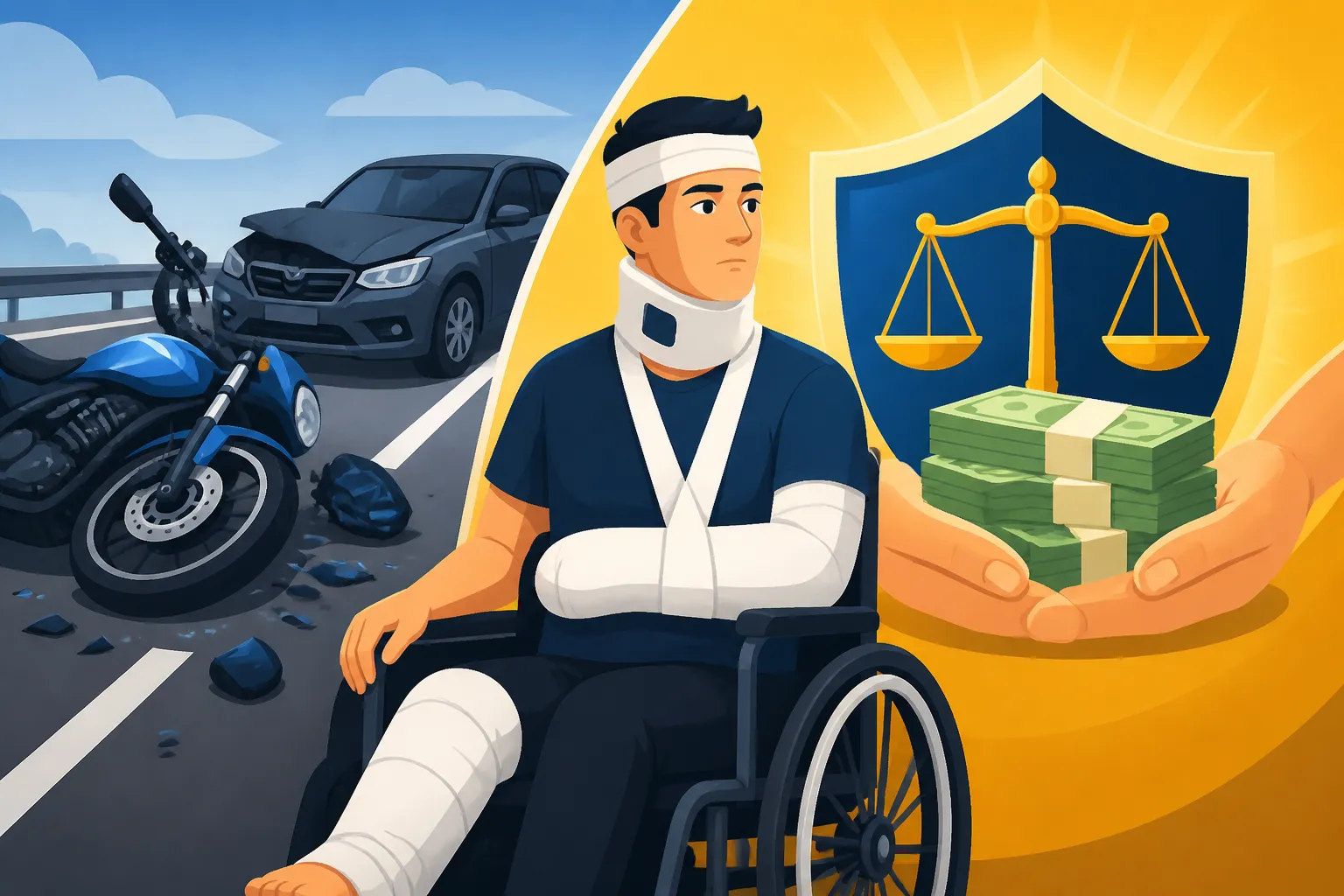
Getting into a motorcycle accident is terrifying, but facing catastrophic injuries afterward brings a whole new level of fear and uncertainty, especially when you start to wonder how you’ll ever cover the monumental costs of recovery and rebuilding your life. This guide is here to walk you through what "catastrophic injuries" really mean in the context of a motorcycle accident claim and shed light on the factors that influence average settlements for these life-altering situations.
Understanding Catastrophic Motorcycle Injuries
When we talk about motorcycle accidents, we often think about broken bones or road rash. But sometimes, the impact is so severe that it leads to injuries that permanently change a person’s life. These are what we call catastrophic injuries, and they carry a profoundly different weight in personal injury claims, not just physically and emotionally, but financially too.
Defining Catastrophic in Motorcycle Accident Claims
In the world of personal injury law, a "catastrophic injury" isn't just a severe injury; it's an injury that results in long-term or permanent disability, significantly impacting a person's ability to live independently, work, or enjoy life as they once did. We're talking about injuries that require extensive, ongoing medical treatment, rehabilitation, and often, lifelong care. This distinction is crucial because the scope of damages in these cases is vastly different from those involving less severe injuries. It's about more than just immediate medical bills; it's about a lifetime of altered existence.
Imagine a rider, let's call him Mark, who loved his weekend rides through the winding roads of the Blue Ridge Mountains. A distracted driver failed to see him, leading to a devastating collision. Mark suffered a spinal cord injury that left him paraplegic. His injury is catastrophic because it didn't just cause immediate pain; it permanently altered his mobility, his ability to work as a carpenter, and his overall quality of life. The legal system recognizes this immense loss, and the definition helps frame the magnitude of compensation needed to address such profound changes.
Common Catastrophic Injuries from Motorcycle Crashes
Unfortunately, due to the exposed nature of riding, motorcycles offer very little protection in a collision. This means riders are incredibly vulnerable to severe, life-altering injuries that are rarely seen in car accidents. It's not uncommon to see multiple catastrophic injuries from a single crash.
One of the most devastating types of injuries is a Motorcycle Accident Traumatic Brain Injuries. Even with a helmet, the force of an impact can cause severe concussions, skull fractures, or diffuse axonal injuries that lead to cognitive impairments, memory loss, personality changes, and even coma. These injuries can turn a vibrant, independent person into someone who struggles with basic daily functions. Another extremely serious injury is a Spinal Cord Injuries from Motorcycle Accidents. Depending on where the spinal cord is damaged, a rider could face paralysis, from paraplegia affecting the lower body to quadriplegia impacting all four limbs. The long-term implications are staggering, including loss of sensation, control over bodily functions, and the need for constant care.
Beyond the head and spine, riders often suffer extensive internal organ damage, severe crush injuries to limbs that may lead to amputation, and extensive full-thickness burns if the motorcycle catches fire. Even seemingly external injuries like Road Rash Injuries and Claims can be catastrophic if they are deep enough to cause permanent nerve damage, disfigurement, or require extensive skin grafting, leading to chronic pain and mobility issues. These aren't just bumps and bruises; they're injuries that demand astronomical medical care and fundamentally alter the course of a person's life.
The Complexities of Valuing Catastrophic Injury Claims
Figuring out the "average settlement" for catastrophic injuries is inherently difficult because each case is unique, much like the individual riders themselves. There's no one-size-fits-all number when you're dealing with injuries that reshape someone's entire existence. However, understanding the different types of damages that comprise a settlement helps shed light on how these often substantial figures are determined. These claims go far beyond typical medical bills, encompassing a lifetime of needs.
Economic Damages: The Tangible Costs
Economic damages are the straightforward, calculable financial losses stemming from a catastrophic motorcycle accident. These are the bills, the pay stubs, and the projections that an expert can tally up with reasonable certainty. They represent the objective, out-of-pocket expenses you've incurred or will incur in the future.
This category includes things like your past and future medical expenses. For catastrophic injuries, this isn't just the initial emergency room visit and surgery. We're talking about years, if not a lifetime, of physical therapy, occupational therapy, specialized equipment like wheelchairs or prosthetics, home modifications to accommodate disabilities, prescription medications, and potentially in-home nursing care. For instance, a rider who suffers paralysis might need an accessible van, a stair lift, and ongoing medical supplies for decades. These costs quickly escalate into the millions. Then there are lost wages, which encompass not only the income you’ve already missed because you couldn’t work but also your Loss of Earning Capacity Explained. If a catastrophic injury prevents you from returning to your pre-accident profession or significantly limits your ability to earn a living, the lost future income can be a huge component of the settlement. For a construction worker or a surgeon, this figure could be enormous. Other economic damages might include property damage to your beloved motorcycle and other personal items, as well as any travel expenses related to medical treatment.
Non-Economic Damages: The Intangible Toll
While economic damages cover the calculable financial losses, non-economic damages address the profound, often invisible, suffering that catastrophic injuries inflict. These are much harder to quantify because they don't come with an invoice or a price tag, but they are undeniably real and deeply impactful. This is where the true human cost of a catastrophic injury is recognized.
The primary component here is Pain and Suffering Damages Explained. This isn't just the physical agony of the injury itself, but also the chronic pain that can linger for years or a lifetime, the discomfort of rehabilitation, and the emotional distress that comes with severe trauma. Beyond physical pain, there's emotional distress, which can manifest as anxiety, depression, PTSD, fear, and frustration over lost independence. Imagine the psychological toll on a rider who once thrived on freedom and now faces permanent limitations. Another significant non-economic damage is the "loss of enjoyment of life." This compensates you for your inability to participate in hobbies, recreational activities, or social events that you once cherished. If a rider can no longer ride their motorcycle, play with their children in the park, or even simply walk unassisted, that loss of enjoyment is a critical aspect of their suffering. Loss of consortium, which compensates a spouse for the loss of companionship, affection, and support from their injured partner, also falls under this category. These damages, while intangible, often represent the bulk of a catastrophic injury settlement, reflecting the immense disruption to a person's quality of life.
Punitive Damages: When They Come into Play
Punitive damages are a different beast entirely. Unlike economic and non-economic damages, which aim to compensate the injured party, punitive damages are designed to punish the at-fault party for egregious behavior and deter others from similar conduct. They are not awarded in every case and are usually reserved for situations where the defendant's actions were particularly reckless, malicious, or grossly negligent.
For a catastrophic motorcycle accident claim, punitive damages might be considered if the other driver was, for example, heavily intoxicated and driving recklessly (Motorcycle Accidents Caused by Drunk Driving), or engaged in extreme distracted driving, like texting while speeding through a school zone. These are the kinds of actions that go beyond simple negligence and demonstrate a shocking disregard for the safety of others. Courts impose punitive damages to send a strong message. It's important to note that state laws vary widely on when and how punitive damages can be awarded, and some states place caps on the amount. While not always a component of a settlement, when they are present, punitive damages can significantly increase the overall payout, serving as a stark reminder that some actions have severe consequences.
Let's look at a quick comparison of these damage types:
| Damage Type | Purpose | Examples (Catastrophic Injury) | Ease of Calculation |
|---|---|---|---|
| Economic | Compensate for quantifiable financial losses | Medical bills (past/future), lost wages, loss of earning capacity, property damage, home modifications | High |
| Non-Economic | Compensate for subjective, non-monetary losses | Pain and suffering, emotional distress, loss of enjoyment of life, loss of consortium, scarring, disfigurement | Low (subjective) |
| Punitive | Punish egregious conduct and deter similar actions | Awarded for gross negligence, malice, or reckless disregard (e.g., severe drunk driving) | N/A (court's discretion) |
Factors Dramatically Impacting Catastrophic Injury Settlements
The journey to an Average Motorcycle Accident Settlement Amounts for a catastrophic injury is paved with many variables. It's not a straightforward calculation, and several crucial elements can either bolster or diminish the final payout. Understanding these factors is key to grasping the significant differences you might see in settlement figures.
The Severity and Permanence of Injuries
This is arguably the most significant factor. The more severe and permanent the injuries, the higher the potential settlement. There's a world of difference between a broken arm that heals completely and a spinal cord injury that leads to lifelong paralysis. The medical prognosis plays a huge role here.
Consider the long-term prognosis for conditions like Motorcycle Spinal Cord Injury: Claims and Compensation or severe Motorcycle Traumatic Brain Injury: Claims and Compensation. These aren't temporary setbacks; they are permanent alterations to a person's physical and cognitive abilities. If an injury results in permanent disability, chronic pain, disfigurement, or requires lifelong assistance, the compensation needed to address these profound changes will naturally be much higher. Factors like the age of the injured rider also come into play; a younger individual with a catastrophic injury will face a longer lifetime of medical care and lost earning capacity, potentially leading to a higher settlement. This also extends to how these injuries impact daily life, such as the need for adaptive equipment, alterations to one's home, and the inability to perform personal care or household tasks.
Medical Care and Long-Term Prognosis
The extent and cost of medical treatment directly influence the economic damages component of your claim. For catastrophic injuries, this often involves an incredibly intricate web of medical professionals, therapies, and equipment.
Think about the detailed estimates required for How Future Medical Costs Are Estimated. This isn't just a guess; it involves expert opinions from life care planners who meticulously outline every anticipated medical need, from future surgeries and ongoing rehabilitation to medication, medical devices, and even transportation to appointments. These plans can project expenses over a person's entire lifetime. For example, a rider with an amputation might require multiple prosthetic limbs over their lifetime, each costing tens of thousands of dollars, along with specialized physical therapy to learn how to use them. The sheer volume and complexity of medical documentation, including diagnoses, treatment records, and physician reports, are crucial for demonstrating the extent of these ongoing needs and justifying the substantial compensation required.
Lost Earning Capacity and Vocational Impact
When a catastrophic injury prevents a rider from returning to their previous job or significantly diminishes their ability to work, the financial ramifications are immense and must be fully accounted for in a settlement. This goes beyond just current lost wages.
We're talking about Loss of Earning Capacity Explained. This isn't simply what you were earning, but what you would have earned over your entire working life had the accident not occurred. For a young professional with a promising career trajectory, this figure can be astronomical. Vocational rehabilitation experts are often brought in to assess the injured person's pre-injury earning potential versus their post-injury capabilities. They look at things like education, work history, skills, and even geographic job markets. If a severe brain injury leaves a skilled craftsman unable to perform complex tasks or a surgeon unable to operate, the lost future income will be substantial, forming a major part of the economic damages calculation.
Liability and Comparative Negligence
Even with devastating injuries, the question of who was at fault is paramount. If the other party is clearly 100% responsible, your claim will be much stronger. However, it's not always that straightforward.
Many states operate under a system of Comparative Negligence in Motorcycle Accidents. This means if you, the rider, were found to be partially at fault for the accident, your total damages could be reduced by your percentage of fault. For example, in a state like California, which uses pure comparative negligence, if your damages are assessed at $2 million but you're found 20% at fault, your recovery would be reduced to $1.6 million. In states with modified comparative negligence, like Texas, if you're found to be 51% or more at fault, you might be barred from recovering any damages. Insurance companies are notorious for trying to shift blame onto motorcyclists, often leveraging stereotypes about riders being reckless. This makes gathering evidence to prove the other driver’s fault crucial, from police reports and witness statements to accident reconstruction expert testimony.
Navigating Insurance Policy Limits and Coverage
One of the most frustrating realities in catastrophic injury claims is hitting the ceiling of available insurance coverage. Even if your damages are in the millions, you can only recover up to the policy limits of the at-fault driver's insurance, unless other avenues are explored.
Understanding Policy Ceilings and Multiple Policies
Every insurance policy has a limit – a maximum amount the insurance company will pay out for a claim. For catastrophic injuries, it’s depressingly common for the damages to far exceed the at-fault driver’s coverage, especially if they only carry state minimum liability insurance, which can be as low as $25,000 in some states. This can be a devastating blow when you're facing multi-million dollar medical bills and lost earnings.
However, a skilled attorney will explore all potential avenues for recovery. This might involve identifying if the at-fault driver has an umbrella policy, which provides additional liability coverage beyond their standard auto policy. It could also mean looking for other parties who might share liability. For instance, if the accident was caused by a defective motorcycle part, the manufacturer could be held liable. If it involved a commercial vehicle, the company's insurance policy might be much higher. Additionally, there might be other vehicles involved in a Multi-Vehicle Motorcycle Crash with separate insurance policies. The key is to thoroughly investigate every potential source of recovery to ensure all available insurance pools are tapped to cover the immense costs associated with catastrophic injuries.
The Role of Uninsured/Underinsured Motorist UM/UIM Coverage
This is where your own insurance policy can become your best friend, especially when the at-fault driver doesn't have enough (or any) insurance to cover your catastrophic injuries. How UM/UIM Coverage Increases Payouts is incredibly important for motorcyclists.
Uninsured Motorist (UM) coverage kicks in if the at-fault driver has no insurance at all, or in the case of a hit-and-run where the driver cannot be identified. Underinsured Motorist (UIM) coverage applies when the at-fault driver has some insurance, but their policy limits aren't enough to cover the full extent of your damages. Your UIM policy can then pay the difference, up to your own policy limits. For riders, purchasing robust UM/UIM coverage is one of the smartest financial decisions you can make. It acts as a safety net, protecting you when another driver fails to carry adequate insurance. If you have catastrophic injuries and the at-fault driver only has a $50,000 policy, but you have $500,000 in UIM coverage, your own policy could potentially provide an additional $450,000 to help with your extensive damages. This type of coverage often proves to be a lifeline in truly catastrophic situations, bridging the gap between what the negligent driver can cover and what you genuinely need.
Why Catastrophic Injury Settlements Often Differ
Comparing one catastrophic injury settlement to another is like comparing apples to oranges – even if they seem similar on the surface, the underlying details can create massive disparities in the final outcomes. There are nuanced legal and practical reasons why two seemingly similar cases can resolve for wildly different amounts.
The Influence of State Laws and Legal Precedent
The state where your accident occurred plays a huge role in how your claim is handled and how much you can ultimately recover. Laws surrounding personal injury, negligence, and damages vary significantly across jurisdictions.
For example, states have different rules regarding comparative negligence, as discussed earlier. Some follow a "pure" comparative negligence rule (like California), allowing recovery even if you are 99% at fault, while others adhere to "modified" rules (like Texas and Florida), which bar recovery if you are 51% or more at fault. Some states, known as "no-fault" states, have specific rules about when you can sue for pain and suffering, often requiring a "serious injury threshold." These rules directly impact the potential value of non-economic damages. Additionally, some states impose caps on certain types of damages, particularly non-economic damages or punitive damages. For instance, in Texas, while there are no caps on economic or non-economic damages in most personal injury cases, punitive damages might have statutory limits. Knowing the specifics of your state's laws, such as Motorcycle Accident Fault Laws in Florida or Motorcycle Accident Fault Laws in California, is critical for understanding the maximum potential recovery and any limitations you might face. Legal precedent from prior court cases in that state can also influence how judges and juries view similar claims, impacting settlement negotiations.
The Importance of Expert Testimony and Legal Representation
Catastrophic injury claims are incredibly complex, requiring a depth of legal and medical expertise that far exceeds simpler injury cases. This is where the right legal team can make an invaluable difference.
A skilled personal injury attorney specializing in motorcycle accidents knows how to build a rock-solid case that stands up to the intense scrutiny of insurance companies and potentially, a jury. This involves gathering extensive evidence, from accident reports and medical records to photographs and witness statements. Crucially, it means lining up a team of expert witnesses. This might include accident reconstructionists to prove fault, medical specialists (neurologists, orthopedists, physical therapists) to detail the extent and permanence of injuries, life care planners to project future medical costs, and vocational experts to calculate lost earning capacity. Each of these experts provides critical, objective testimony that substantiates the massive damages sought. Furthermore, an experienced lawyer understands How to Negotiate a Motorcycle Accident Settlement and How to Maximize Your Motorcycle Accident Settlement, dealing with aggressive insurance adjusters who will inevitably try to downplay injuries and offer lowball settlements. Without professional legal guidance, navigating these complexities and securing fair compensation for a catastrophic injury is an almost insurmountable challenge. This is why when to hire a motorcycle accident lawyer is not a question, it’s a necessity.
What to Expect in the Settlement Process
The process of settling a catastrophic injury claim is rarely quick or simple. It's a marathon, not a sprint, and understanding the general timeline and what each stage entails can help manage expectations during an incredibly challenging time.
The Long Road to Maximum Medical Improvement (MMI)
One of the biggest differences between minor and catastrophic injury claims is the timeline. With catastrophic injuries, settlement often cannot even begin in earnest until the injured party has reached What Reaching MMI Means for Your Settlement. MMI is the point at which your medical condition has stabilized, and further improvement is not expected, even with continued treatment. This doesn't mean you're "cured," but rather that your doctors have a clear understanding of your long-term prognosis, including any permanent disabilities or ongoing care needs.
For catastrophic injuries like a severe TBI or spinal cord injury, reaching MMI can take many months, or even years, of intensive treatment, surgeries, and rehabilitation. It's only once MMI is established that medical experts can accurately project future medical costs, necessary equipment, and the full extent of permanent disability or lost earning capacity. Trying to settle before MMI is reached is a huge mistake, as you would likely underestimate the true cost of your injuries and permanently waive your right to further compensation. This waiting period can be incredibly frustrating for injured riders and their families, who are often facing immense financial strain, but it's a necessary step to ensure a comprehensive and fair assessment of damages.
Negotiation Strategies and Potential for Trial
Once MMI is established and all damages have been thoroughly documented and calculated, the negotiation phase truly begins. Your legal team will present a comprehensive demand package to the at-fault party's insurance company, outlining all economic and non-economic damages and demanding a fair settlement. This package will include all medical records, bills, wage loss documentation, expert reports, and a compelling narrative of how the accident has impacted your life.
Expect the insurance company to come back with a lowball offer initially. This is almost always their strategy, hoping you'll be desperate enough to accept. This is where skilled negotiation comes into play, with your attorney meticulously countering their arguments and justifying every dollar of your claim. The back-and-forth can be extensive, involving multiple rounds of offers and counter-offers, and possibly mediation sessions to try and reach a mutually agreeable resolution. If negotiations fail to produce a fair offer, your attorney will advise on the potential of filing a lawsuit and taking the case to trial. While most personal injury cases settle before trial, with catastrophic injuries, the stakes are so high that going to court might be necessary to secure the full compensation you deserve. This transition from negotiation to litigation adds further time and complexity but can be essential for achieving justice.
Disclaimer
Please remember that this article provides general informational guidance and does not constitute legal advice. Motorcycle accident claims are highly complex, and the specific laws and outcomes vary significantly by jurisdiction and individual circumstances. It is always recommended to consult with a qualified legal professional for advice tailored to your specific situation.