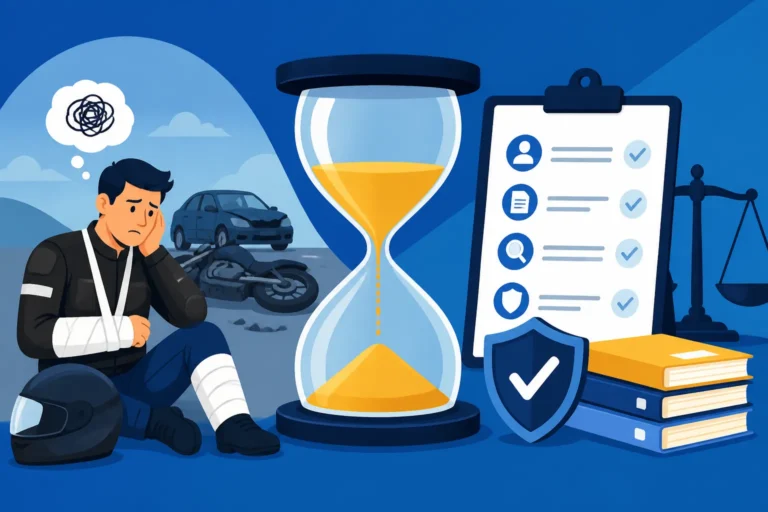
How the Multiplier Method Works
Dealing with the aftermath of a motorcycle accident is incredibly stressful, especially when you’re trying to understand how you’re going to be compensated for your injuries, medical bills, and lost income. But what often feels most confusing is how to put a price tag on something as personal and intangible as your pain and suffering. That’s where the multiplier method comes into play, offering a structured way to estimate these non-economic damages and help you understand potential settlement values.
Understanding Non-Economic Damages
When you've been in a motorcycle accident, it's pretty straightforward to calculate some of your losses – things like the cost of fixing your bike, your hospital bills, or the wages you missed while you were laid up. These are what we call "economic damages." They're tangible, you usually have receipts or pay stubs for them, and they're relatively easy to add up. But life after a crash isn't just about bills. It's about the deep, often invisible, impact the accident has had on your daily existence. These are your non-economic damages, and they're a vital part of any motorcycle accident claim.
What are "Pain and Suffering"?
"Pain and suffering" is probably the most commonly recognized type of non-economic damage, and for good reason. It encompasses a vast spectrum of physical and emotional distress you endure because of your injuries. On the physical side, this isn't just the acute pain you felt immediately after the crash; it's also the chronic aches, the stiffness, the discomfort during physical therapy, and the lingering pain that might affect you for years to come. For instance, if you suffered a spinal cord injury, the constant dull ache, the burning nerve pain, or the daily struggle with mobility all fall under this umbrella.
Beyond the physical, there's the suffering. This includes the emotional toll of dealing with severe injuries, undergoing multiple surgeries, or facing a long, arduous recovery. Imagine the frustration of not being able to ride your motorcycle, work your job, or even perform simple tasks around the house. That mental anguish, the stress, the anxiety about your future – that's all part of your pain and suffering. It's a deeply personal experience, and no two riders will experience it exactly the same way.
Other Types of Non-Economic Damages
While pain and suffering are broad categories, there are other specific types of non-economic damages that can significantly impact your life after a motorcycle crash. One major one is emotional distress. This can manifest as anxiety, depression, fear, anger, or even post-traumatic stress disorder (PTSD), which is unfortunately common after such a traumatic event. You might find yourself having nightmares, flashbacks, or a sudden aversion to riding, even after you’ve physically healed. These emotional wounds can be just as debilitating, if not more so, than the physical ones.
Another crucial category is the loss of enjoyment of life. Before the accident, you might have loved taking long weekend rides through the Pacific Coast Highway, playing with your kids, or working on your motorcycle in the garage. If your injuries prevent you from participating in these activities or diminish your ability to enjoy them, that's a tangible loss. For example, if you sustained a serious knee injury that makes it impossible to hike or get back on your bike, that represents a profound loss of the joy you once found in those pursuits. This kind of loss is about the reduction in your overall quality of life and your ability to engage in hobbies, social activities, and personal relationships that once brought you happiness.
Why These Damages Are So Hard to Quantify
Here's the rub: how do you put a dollar figure on chronic pain, sleepless nights, or the inability to enjoy your favorite pastime? It’s not like there’s a standardized price list for suffering. This subjective nature is precisely what makes non-economic damages so challenging to quantify. Two people with seemingly similar physical injuries might experience vastly different levels of pain, emotional distress, and impact on their lives. One rider might bounce back relatively quickly, while another might struggle with long-term complications and severe psychological effects.
Insurance companies, naturally, want to pay out as little as possible, and they will often try to minimize the impact of these subjective damages. They might argue that your pain isn't as severe as you claim or that your emotional distress is exaggerated. This is why proving these damages requires diligent documentation, consistent medical treatment, and often, compelling testimony about how your life has fundamentally changed. The goal is to make the intangible feel as real and quantifiable as possible to those evaluating your claim. Understanding How Insurers Value Pain and Suffering is a critical piece of this puzzle.
The Basics of the Multiplier Method
The multiplier method is one of the most common ways that insurance companies and legal professionals attempt to put a number on those hard-to-quantify non-economic damages, like pain and suffering. It’s not an exact science, but rather a widely accepted formula used as a starting point in negotiations. Think of it as a tool to help convert the subjective reality of your suffering into a concrete financial figure. It provides a framework for discussion, even if the final settlement often deviates from the initial calculation.
How It Works: Economic Damages + Multiplier
At its core, the multiplier method is quite simple in concept, even if complex in application. The basic formula looks something like this:
Total Economic Damages × Multiplier = Total Non-Economic Damages
Then, you add your economic damages back into the equation:
Total Economic Damages + Total Non-Economic Damages = Total Estimated Settlement Value
So, the first step is always to tally up all your calculable financial losses, which form the base of the calculation. This foundation is crucial because it gives the multiplier something substantial to work with. The multiplier itself is a number, typically ranging from 1.5 to 5 (or sometimes even higher for catastrophic injuries), that is applied to your economic damages to arrive at a figure for your non-economic losses. The higher the multiplier, the more severe the perceived pain and suffering.
Identifying Your Economic Damages
Before you can even think about a multiplier, you need a crystal-clear picture of your economic damages. These are the verifiable financial losses you've incurred due to the motorcycle accident. They are often the easiest to prove because they come with receipts, invoices, and official statements. Let's break down what typically falls into this category:
- Medical Bills: This includes everything from the ambulance ride and emergency room visits to surgeries, hospital stays, follow-up appointments, prescription medications, physical therapy, chiropractic care, and even future medical costs. It's vital to keep every single bill, no matter how small. Learning How Medical Bills Affect Your Settlement is a key step here.
- Lost Wages: If your injuries prevented you from working, you're entitled to compensation for the income you lost. This includes your regular salary or hourly wages, bonuses, commissions, and even missed opportunities for overtime. If your injuries mean you can’t return to your previous job or have to work fewer hours, you may also claim for loss of future earning capacity. Documentation like pay stubs, tax returns, and employer statements are crucial here, as detailed in How Lost Wages Are Calculated.
- Property Damage: This is the cost to repair or replace your motorcycle, helmet, leathers, and any other personal property damaged in the crash. Get detailed repair estimates or proof of your bike's market value if it was totaled.
- Other Out-of-Pocket Expenses: Don't forget other direct costs like transportation to medical appointments, crutches, bandages, home modifications if you have a permanent disability, or even the cost of hiring help for household tasks you can no longer perform.
All these figures add up to your total economic damages, which serve as the anchor for the multiplier method.
What Exactly is the "Multiplier"?
The "multiplier" in the multiplier method is a numerical factor, typically between 1.5 and 5, that is used to estimate the value of your non-economic damages. It's essentially a subjective assessment of the severity and impact of your pain and suffering, emotional distress, and loss of enjoyment of life. A minor injury with a quick recovery might warrant a low multiplier, say 1.5 or 2, while a severe, debilitating injury with long-term consequences could justify a multiplier of 4, 5, or even higher.
The choice of multiplier isn't arbitrary. It's influenced by a range of factors that illustrate the true extent of your suffering. Insurance adjusters and lawyers will evaluate everything about your case to determine what they believe is an appropriate multiplier. For instance, a broken arm that heals cleanly might result in a lower multiplier than a complex fracture that requires multiple surgeries and leaves you with chronic pain and limited mobility. The goal is to select a number that fairly represents the intangible losses you’ve experienced, acknowledging that these losses are often far greater than just your medical bills.
Factors Influencing the Multiplier
Determining the right multiplier for your motorcycle accident claim is a critical step, and it's far from arbitrary. While the basic formula is simple, the actual number chosen for the multiplier can swing wildly depending on the unique circumstances of your case. Insurance companies will always lean towards a lower multiplier, while your legal team will argue for a higher one. Understanding what influences this number is key to advocating for a fair settlement.
Injury Severity and Type
This is perhaps the most significant factor in determining the multiplier. Simply put, the more severe your injuries, the higher the multiplier tends to be.
- Minor Injuries (Multiplier: 1.5-2): If you suffered minor cuts, bruises, or soft tissue injuries (like whiplash) that heal relatively quickly with minimal medical intervention, your multiplier might be on the lower end. While still painful and disruptive, these injuries typically don't have long-lasting effects. An example might be road rash that heals within a few weeks without complications or minor sprains.
- Moderate Injuries (Multiplier: 2.5-3.5): Injuries requiring more extensive medical treatment, such as broken bones (that heal cleanly), concussions, or more significant soft tissue damage, usually warrant a higher multiplier. These injuries often involve rehabilitation, missed work, and a longer recovery period, indicating more pain and disruption to your life. For instance, a rider with a broken clavicle requiring a sling and physical therapy for several months would likely fall into this range.
- Severe and Catastrophic Injuries (Multiplier: 4-5+): This is where multipliers climb significantly. Injuries like traumatic brain injuries (TBIs), spinal cord injuries, permanent disfigurement, amputations, or injuries requiring multiple surgeries and lifelong care will command the highest multipliers. These types of injuries profoundly alter a person's life, causing immense physical pain, emotional distress, and a complete loss of enjoyment of life. A rider facing permanent paralysis or severe cognitive impairment from a TBI would clearly warrant a multiplier at the upper end of the spectrum, or even higher. These are the cases that truly illustrate the long-term impact discussed in Long-Term Effects of Motorcycle Injuries.
The specific nature of the injury matters too. A visible injury like a large scar from road rash might evoke more sympathy (and thus a higher multiplier) than an internal injury that isn't immediately apparent but equally debilitating.
Duration and Prognosis of Recovery
How long it takes you to recover, and whether you're expected to make a full recovery, plays a huge role.
- Short-Term Recovery: If your injuries are expected to heal completely within a few weeks or months, the period of pain and disruption is limited, leading to a lower multiplier.
- Long-Term or Permanent Impairment: Conversely, if your injuries result in prolonged recovery, permanent disability, chronic pain, or require ongoing medical care for years, your multiplier will be significantly higher. The idea here is that continuous pain, medication, therapy, and the psychological burden of a lifelong condition are worth more in terms of non-economic damages. For instance, if you suffered a knee injury that permanently limits your mobility, the sustained impact on your life justifies a higher multiplier. This is also why many attorneys advise waiting until you reach Maximum Medical Improvement (MMI) before settling, as it provides a clearer picture of your long-term prognosis.
The uncertainty of recovery also factors in. If doctors aren't sure you'll ever fully recover, that uncertainty and anxiety contribute to your suffering and warrant a higher multiplier.
Impact on Daily Life and Quality of Life
Beyond the clinical definition of your injuries, how those injuries affect your day-to-day life and your overall quality of life is extremely important.
- Loss of Hobbies and Activities: If your injuries prevent you from participating in hobbies you once loved (riding your motorcycle, playing sports, gardening), this loss diminishes your enjoyment of life. The more central these activities were to your identity and happiness, the greater the impact.
- Changes in Personal Relationships: Severe injuries can strain relationships with family and friends. You might become irritable, withdrawn, or unable to participate in family activities. The loss of consortium, which is the deprivation of the benefits of a family relationship, can be a significant non-economic damage.
- Inability to Perform Daily Tasks: Needing assistance with personal care, household chores, or even getting dressed can be incredibly frustrating and humiliating, contributing to emotional distress. This is often where a detailed injury journal, documenting your daily struggles, becomes invaluable in demonstrating the profound impact of your injuries. This type of documentation can really show how your life has changed.
Clear Evidence of Fault
While not directly related to your suffering, the clarity and strength of the evidence proving the other party's fault can indirectly influence the multiplier.
- Undisputed Liability: If the other driver was clearly and solely at fault (e.g., they ran a red light, were driving while intoxicated, or caused a rear-end collision), your case is stronger, and insurance companies may be more willing to negotiate with a higher multiplier to avoid a lengthy and costly trial. Proving Who Is at Fault in a Motorcycle Accident is paramount.
- Disputed Liability: If fault is shared or heavily disputed, the insurance company will likely try to reduce their payout by arguing for a lower multiplier or by claiming you were partially responsible, which, under comparative negligence laws, could reduce your overall compensation. For example, if you were involved in a lane splitting accident in a state where it's legal but disputed by the other driver, the negotiation could be tougher. The clarity of your evidence, such as dashcam footage or strong witness statements, can bolster your position.
Ultimately, a strong liability case reduces the risk for the insurance company, potentially making them more agreeable to a higher multiplier for your non-economic damages.
Calculating Your Claim with the Multiplier Method
Now that we understand what goes into selecting a multiplier, let’s look at how the entire calculation comes together and the roles different parties play. It’s important to remember that this method provides an estimated value, a starting point for negotiations, rather than a guaranteed final number.
Step-by-Step Example
Let's walk through a hypothetical scenario to illustrate how the multiplier method works in practice.
Imagine a rider, let's call her Sarah, was involved in a motorcycle accident caused by a distracted driver who veered into her lane. Sarah suffered a broken leg, requiring surgery and extensive physical therapy.
Step 1: Calculate Economic Damages
- Medical Bills: $35,000 (hospital, surgery, physical therapy, medication)
- Lost Wages: $10,000 (3 months off work)
- Motorcycle & Gear Damage: $15,000 (bike totaled, helmet, leathers)
- Total Economic Damages: $35,000 + $10,000 + $15,000 = $60,000
Step 2: Determine the Appropriate Multiplier
Sarah's injuries (broken leg, surgery, physical therapy) are significant but not necessarily lifelong. She experienced considerable pain, discomfort, and disruption to her life (can't ride, limited mobility). The driver's fault is clear. Based on these factors, her legal team might argue for a multiplier of 3.5.
Step 3: Calculate Non-Economic Damages
- Non-Economic Damages: Total Economic Damages × Multiplier
- $60,000 × 3.5 = $210,000
Step 4: Calculate Total Estimated Settlement Value
- Total Estimated Settlement Value: Total Economic Damages + Non-Economic Damages
- $60,000 + $210,000 = $270,000
So, using the multiplier method, Sarah's total estimated settlement value for her motorcycle accident claim would be $270,000. This figure would then be used as a basis for negotiation with the at-fault driver's insurance company. Of course, this is a simplified example, and real-world cases often involve more complex calculations and arguments.
The Role of Insurance Adjusters
Insurance adjusters are crucial players in this process, but it’s vital to understand their motivation. Their job is to protect the insurance company’s bottom line, which means paying out as little as possible on claims. When an adjuster uses the multiplier method, they will almost always start with a low multiplier. They might acknowledge your medical bills and lost wages but attempt to downplay the severity of your pain and suffering, emotional distress, or the impact on your daily life.
An adjuster might argue that your injuries aren't as severe as they appear, or that your recovery is progressing better than you claim. They might scrutinize gaps in your medical treatment or pre-existing conditions to try and justify a lower multiplier. For example, if you missed a physical therapy appointment, they might suggest you weren't truly in that much pain. They are looking for any reason to diminish the value of your non-economic damages. This is why immediate action, such as documenting the scene to prove fault and seeking prompt medical attention, is so important after an accident.
Why Insurers Prefer Lower Multipliers
It's simple economics for insurance companies: the lower the multiplier, the less they have to pay out. A multiplier of 1.5 versus 3.5 on a $50,000 economic damage base means a difference of $100,000 in non-economic damages ($75,000 vs. $175,000). That's a huge saving for them.
They operate on a volume basis and are constantly assessing risk. If they can convince you to accept a lower multiplier, they save money, and it sets a precedent for future claims. They also know that many injured riders, especially those without legal representation, might not fully understand how the multiplier method works or how to effectively argue for a higher number. They'll often present their lowball offer as a fair and final assessment, hoping you'll accept it out of financial desperation or a desire to move on. This is where understanding How Insurers Lowball Motorcycle Riders becomes essential.
This inherent conflict of interest highlights why having experienced legal representation is so important. An attorney understands these tactics and knows how to build a strong case for a higher, more appropriate multiplier, ensuring your pain and suffering are adequately valued.
Limitations and Alternatives to the Multiplier Method
While the multiplier method is a widely used and helpful tool for estimating non-economic damages, it’s not the only method, nor is it perfect. It has its limitations, and in some situations, other approaches might be more appropriate or used in conjunction with it. It’s vital to understand that this is an estimation technique, not a rigid law, and its application can vary significantly.
The Per Diem Method
Another common way to calculate pain and suffering is the "per diem" method, which is Latin for "by the day." Instead of using a multiplier, this method assigns a specific dollar amount for each day you experienced pain and suffering from the date of the injury until you reach Maximum Medical Improvement (MMI) or your recovery stabilizes.
For example, if a lawyer argues that your pain and suffering are worth $200 per day, and you've been dealing with your injuries for 180 days (approximately six months), your non-economic damages would be calculated as:
$200 (per day) × 180 (days) = $36,000
This method is often used for injuries with a clear, finite recovery period or in situations where the daily suffering can be easily argued. It can also be very effective when presenting damages to a jury, as it allows them to visualize the daily impact. However, it can be less effective for severe, permanent injuries, where ongoing pain and suffering might last for decades rather than a fixed number of days. It also doesn't account for the varying intensity of pain or suffering from day to day as directly as a multiplier might, which attempts to capture the overall severity.
The Importance of Expert Testimony
In complex motorcycle accident cases, especially those involving severe or catastrophic injuries, relying solely on a simple multiplier calculation might not be sufficient. This is where expert testimony becomes incredibly valuable.
- Medical Experts: Doctors, neurologists, orthopedic specialists, and physical therapists can provide detailed testimony about the nature of your injuries, the intensity of your pain, the necessity of your treatment, and your long-term prognosis. Their professional opinions carry significant weight and can directly support an argument for a higher multiplier or a substantial per diem rate.
- Vocational Experts: If your injuries prevent you from returning to your previous job or working at full capacity, a vocational expert can assess your diminished earning capacity. They can testify about how your injuries have impacted your ability to perform certain tasks, the availability of suitable alternative employment, and the projected loss of income over your lifetime. This goes beyond simple lost wages and considers your future financial stability.
- Economists: For cases with significant future medical costs or long-term lost earning capacity, an economist can provide projections on the financial impact of your injuries, including inflation and the present value of future losses. They can help quantify elements like How Future Medical Costs Are Estimated.
- Life Care Planners: In cases of permanent disability, a life care planner can create a comprehensive plan detailing all the medical care, adaptive equipment, personal assistance, and home modifications you will need for the rest of your life. This provides a clear, evidence-backed figure for long-term care, which significantly impacts the overall settlement value.
These experts don't just add numbers; they provide credibility and context, helping to validate the severity of your non-economic damages and strengthening the argument for a higher multiplier or overall compensation.
It's Just an Estimation Tool
Perhaps the most crucial limitation to understand is that the multiplier method, and indeed the per diem method, are just estimation tools. They provide a framework for negotiation and a way to conceptualize the value of intangible damages, but they do not guarantee a specific settlement amount. The final payout in a motorcycle accident claim is influenced by a myriad of factors, including:
- Insurance Policy Limits: The maximum amount available from the at-fault driver's insurance policy, as explained in How Insurance Policy Limits Affect Your Payout, can cap your settlement regardless of your calculated damages.
- State Laws: Different states have different laws regarding comparative negligence, which can reduce your settlement if you are found partially at fault. Some states also have caps on non-economic damages.
- Strength of Evidence: The more compelling your evidence of fault and damages, the stronger your position in negotiations. This includes police reports, witness statements, accident reconstruction, and thorough medical records.
- Negotiation Skills: Your ability (or your attorney's ability) to negotiate effectively with insurance adjusters.
- Jury Verdicts: If the case goes to trial, a jury could award a higher or lower amount than any estimation method.
Therefore, while the multiplier method is a fantastic starting point for understanding potential settlement values, it should always be viewed as a guide, not a definitive answer. The true value of your case will ultimately be determined through a process of negotiation, and sometimes, litigation.
Maximizing Your Non-Economic Damages
Navigating a motorcycle accident claim can feel like an uphill battle, especially when you’re trying to recover fair compensation for things that don't come with a receipt. The good news is that there are proactive steps you can take to strengthen your claim and maximize the value of your non-economic damages, thereby pushing for a higher multiplier.
Thorough Documentation of Injuries and Impact
This cannot be stressed enough: document, document, document! Every piece of information helps paint a complete picture of your suffering and its impact on your life.
- Medical Records: These are the bedrock of your claim. Ensure all your injuries, symptoms (both physical and emotional), and treatments are meticulously recorded by medical professionals. Don't downplay your pain to doctors; be honest and thorough. Consistently attending all appointments and following prescribed treatment plans creates an undeniable record.
- Injury Journal: Keep a daily journal detailing your pain levels (on a scale of 1-10), what activities you can no longer do, how your injuries affect your sleep, mood, and relationships, and any specific moments of frustration or emotional distress. For example, "Today, I tried to pick up my wrench, and the pain in my wrist made me drop it. I cried out of frustration because I can't even work on my bike anymore." This personal narrative makes your suffering real and relatable.
- Photos and Videos: Capture photos of your injuries as they heal (or don't heal), showing bruising, swelling, road rash, scars, or any visible limitations. Videos of you attempting daily tasks you once found easy but now struggle with can be powerful evidence.
- Witness Statements: If friends, family, or colleagues can attest to changes in your personality, activities, or overall well-being since the accident, their statements can corroborate your claims of emotional distress and loss of enjoyment of life. This helps validate the impact on your life, a crucial factor when valuing Pain and Suffering in Motorcycle Settlements.
Seeking Prompt and Consistent Medical Care
After a motorcycle accident, your health is the top priority, but your actions immediately following the crash also significantly impact your claim.
- Seek Immediate Treatment: Go to the emergency room or see a doctor as soon as possible, even if you feel "fine." Adrenaline can mask pain, and some serious injuries, like internal bleeding or concussions, might not show symptoms immediately. Delayed treatment gives insurance companies an opening to argue that your injuries weren't severe or weren't caused by the accident.
- Follow All Medical Advice: Attend every scheduled doctor's appointment, physical therapy session, and specialist consultation. Take your medications as prescribed. Gaps in treatment provide ammunition for insurance adjusters to claim you weren't seriously injured or that you weren't committed to your recovery, thereby reducing your multiplier.
- Consistency is Key: Showing a consistent, unbroken chain of medical care directly connects your injuries to the accident and demonstrates the extent of your pain and suffering, reinforcing the need for a higher multiplier. This is vital for effectively documenting your injuries for a claim.
How Legal Representation Can Help
While you might be tempted to handle a minor fender bender yourself, a motorcycle accident involving injuries is a completely different ballgame. An experienced motorcycle accident attorney is your strongest ally in maximizing your non-economic damages.
- Expert Negotiation: Attorneys understand the intricacies of the multiplier method and how to effectively negotiate with insurance companies. They know the tactics insurers use to undervalue claims and are skilled at countering them with strong evidence and legal arguments. They can also explain How to Negotiate a Motorcycle Accident Settlement.
- Evidence Gathering: A lawyer can help you gather all necessary documentation, including medical records, witness statements, and expert opinions (accident reconstructionists, vocational experts, economists) to build an irrefutable case for a higher multiplier. They know exactly What Evidence Disproves Rider Fault.
- Valuing Your Claim: Lawyers have access to databases of past settlements and jury verdicts for similar injuries, allowing them to accurately assess the potential value of your non-economic damages and advocate for a fair multiplier. They understand How Motorcycle Accident Settlements Are Calculated.
- Protecting Your Rights: An attorney ensures you don't inadvertently say or do anything that could jeopardize your claim. They handle all communication with the insurance companies, shielding you from their attempts to trip you up or pressure you into a lowball settlement.
- Trial Preparedness: If negotiations fail, a lawyer is prepared to take your case to court. The threat of a lawsuit often compels insurance companies to offer a more reasonable settlement, knowing that a jury might award an even higher amount for pain and suffering.
In essence, an attorney levels the playing field, ensuring that your suffering is not minimized and that you receive the maximum compensation you deserve for your motorcycle accident injuries. Understanding How a Lawyer Increases Your Settlement is often the key to getting fair compensation.
| Multiplier Range | Injury Severity Example | Recovery Prognosis | Impact on Daily Life | Liability & Documentation |
|---|---|---|---|---|
| 1.5 – 2.0 | Minor road rash, sprains, bruises, minor whiplash. | Full recovery expected in weeks to a few months. | Temporary discomfort, minor disruption to hobbies/work. | Clear fault, good documentation. |
| 2.0 – 3.0 | Broken bones (clean break), moderate concussions, significant soft tissue damage. | Full recovery expected, but takes several months, some therapy needed. | Moderate pain, noticeable disruption to work, hobbies, social life. | Clear fault, good documentation. |
| 3.0 – 4.0 | Complex fractures, herniated discs, internal injuries, severe concussions/mild TBI, extensive scarring. | Long recovery (6+ months), potential for some permanent limitations or chronic pain. | Significant disruption, inability to participate in major hobbies, altered work capacity. | Strong evidence of fault, thorough documentation. |
| 4.0 – 5.0+ | Traumatic Brain Injury (moderate to severe), Spinal Cord Injury, Amputation, Paralysis, Severe burns, Permanent disfigurement, Chronic pain syndrome. | Lifelong care, permanent disability, no full recovery expected. | Profound, life-altering impact on all aspects of life, inability to work, severe emotional distress. | Undisputed fault, impeccable documentation, expert testimony. |
Disclaimer
The information provided in this guide is intended for general informational purposes only and does not constitute legal advice. Every motorcycle accident claim is unique, and the outcome depends on specific facts, circumstances, and applicable laws. You should consult with a qualified motorcycle accident attorney to discuss your individual situation and receive personalized legal guidance.