How Much Compensation for Motorcycle Facial Injuries
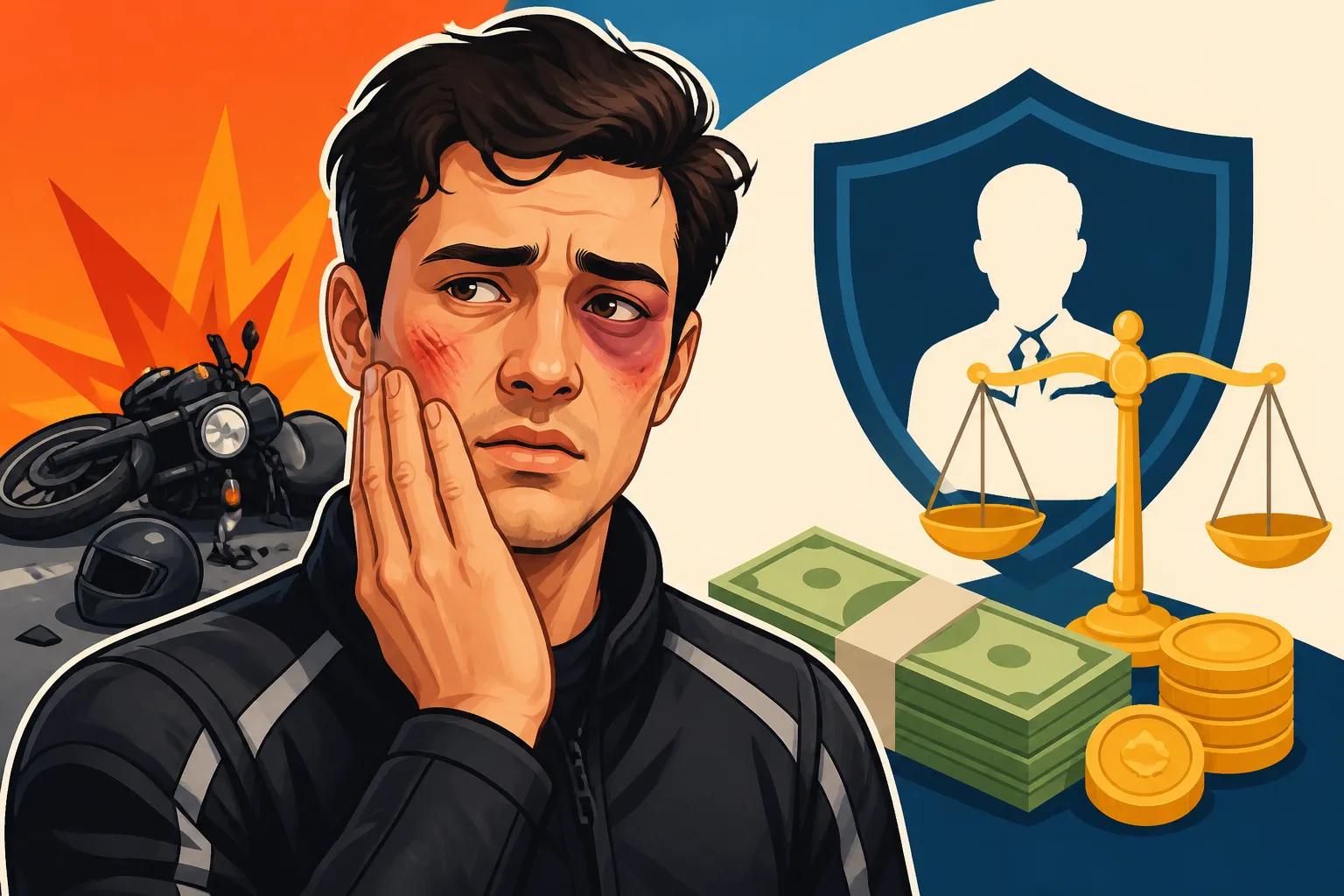
Riding a motorcycle offers unparalleled freedom, but it also comes with unique risks, and unfortunately, facial injuries are among the most devastating consequences of an accident. These injuries can range from severe road rash to broken bones, jaw fractures, and even traumatic eye damage, leaving riders not only with immense pain but also with significant disfigurement and emotional trauma. This guide will walk you through understanding the compensation available for motorcycle facial injuries, what impacts your claim, and how to navigate the complex process of seeking justice.
Understanding Motorcycle Facial Injuries
Facial injuries stemming from motorcycle accidents are often severe, not just because of the direct impact but also due to the exposed nature of a rider's face, even with helmet use. When a rider is thrown from their bike or strikes another vehicle or the ground, the face is highly vulnerable. These injuries can profoundly impact a person's appearance, ability to speak or eat, and overall quality of life.
Types of Common Facial Injuries
The range of facial injuries sustained in a motorcycle crash is extensive and often requires specialized medical intervention. It's not just a scrape; these are often complex trauma cases that need a team of specialists.
- Road Rash (Facial Abrasion): While often associated with other body parts, severe road rash on the face is incredibly painful and can lead to permanent scarring and disfigurement. Even with a helmet, areas not covered, like the chin or jawline, can be scraped raw, sometimes down to the bone in what's known as third-degree road rash. The initial healing is just the beginning; the psychological impact of visible scars can be profound.
- Facial Fractures: Impact can cause fractures to the delicate bones of the face. This includes broken noses, fractured orbital bones (around the eyes), cheekbones (zygomatic fractures), and jawbones (mandible or maxilla fractures). These often require reconstructive surgery, metal plates, and lengthy recovery periods, affecting everything from eating to breathing.
- Dental Injuries: It's incredibly common for teeth to be knocked out, fractured, or severely damaged in a motorcycle accident. This can mean extensive dental work, including implants, crowns, bridges, or even root canals. The cost of comprehensive dental restoration can be astronomical and is a significant component of many claims.
- Eye and Vision Injuries: The force of an impact can cause severe trauma to the eyes, leading to detached retinas, vision loss, or even permanent blindness. Shattered glass from a visor or debris can also cause lacerations to the eye itself. These injuries are particularly debilitating, affecting a person's independence and ability to perform daily tasks.
- Lacerations and Puncture Wounds: Deep cuts and puncture wounds from debris or impact can damage nerves, muscles, and blood vessels in the face. These often require sutures, and even after healing, can leave noticeable scars and lead to a loss of facial sensation or movement.
The Role of Helmet Type in Injury Severity
It's a stark reality that the type of helmet worn can dramatically alter the outcome of a facial injury. While many riders love the open feel of a half-shell helmet, these offer virtually no facial protection. Even three-quarter helmets leave the chin and jaw exposed.
- Full-Face Helmets: These offer the most comprehensive protection, covering the entire head, including the chin and jaw. Studies consistently show that riders wearing full-face helmets experience significantly fewer and less severe facial injuries. If you're involved in a crash, having a DOT-compliant, full-face helmet can be crucial evidence in your claim, demonstrating your commitment to safety and potentially mitigating arguments that your injuries were preventable. Wearing a good quality full-face helmet won't prevent all facial injuries, but it drastically reduces their severity and frequency.
- Open-Face or Half Helmets: While better than no helmet, these types leave the face completely exposed to impact, road rash, and debris. While they might protect the top of your head, the delicate structures of your face remain vulnerable. If you were wearing a half-helmet and suffered severe facial trauma, insurance companies might try to argue that a full-face helmet would have lessened your injuries. This is often part of the "helmet defense," which can impact your claim even if the other driver was clearly at fault. For more on this, you might find our guide on how your helmet laws affect your accident claim illuminating.
Factors Influencing Compensation for Facial Injuries
When you're dealing with the aftermath of a motorcycle accident, especially one that leaves you with facial injuries, the question of "how much compensation can I get?" is naturally top of mind. There isn't a single, straightforward answer because so many variables come into play. Your compensation isn't just about the initial medical bills; it encompasses a much broader spectrum of losses.
Severity and Permanence of Injuries
This is arguably the most significant factor. The more severe and long-lasting your facial injuries are, the higher the potential compensation. Think about the difference between a minor cut and a shattered jaw requiring multiple surgeries.
- Disfigurement and Scarring: Facial scars, especially prominent ones, can cause immense psychological distress, impacting self-esteem, social interactions, and even career prospects. Compensation for disfigurement often considers the visibility, size, and location of scars, and whether they can be improved through plastic surgery. The permanence of disfigurement is a major component of non-economic damages.
- Functional Impairment: Beyond appearance, facial injuries can impair crucial functions. Can you chew food properly? Is your speech affected? Do you have full range of motion in your jaw? Is your vision compromised? Injuries that limit your ability to see, eat, speak, or express emotions can lead to substantial compensation, as they directly impact your daily life.
- Medical Treatment Required: The extensiveness and cost of your medical treatment are direct indicators of injury severity. This includes emergency room visits, consultations with specialists (oral surgeons, plastic surgeons, ophthalmologists), reconstructive surgeries, dental procedures, physical therapy, and ongoing pain management. Documenting these costs precisely is critical. Our article on how medical bills affect your settlement goes into more detail.
Economic vs. Non-Economic Damages
Motorcycle accident claims typically seek two main categories of damages. Both are crucial for facial injury cases. For a broader understanding of compensation types, read our guide on types of damages in a motorcycle accident claim.
- Economic Damages: These are your tangible, calculable financial losses.
- Medical Expenses: This includes everything from the ambulance ride and emergency surgery to prescriptions, follow-up appointments, cosmetic procedures to minimize scarring, and future medical needs like dental implants that might need replacement years down the line. It's crucial to account for both past and future medical costs.
- Lost Wages and Earning Capacity: If your facial injuries prevented you from working, you can claim lost income. If the injuries are so severe they permanently affect your ability to earn a living – for example, a severe disfigurement impacting a client-facing role, or vision loss preventing you from performing your job – you can claim for loss of future earning capacity.
- Property Damage: While not directly related to facial injuries, the damage to your motorcycle, helmet, and other gear is an important economic loss that will be part of your overall claim.
- Non-Economic Damages: These are subjective losses that don't have a direct bill but are no less real. They are often significant in facial injury cases.
- Pain and Suffering: The physical pain from facial trauma and surgeries is often intense and prolonged. Beyond that, the emotional anguish, embarrassment, and self-consciousness associated with disfigurement are profound. These are key components of pain and suffering damages, which can be substantial. Understanding how insurers value pain and suffering is a critical aspect of your claim.
- Emotional Distress: Facial injuries often lead to anxiety, depression, social phobia, and post-traumatic stress disorder (PTSD). The distress of facing the world with an altered appearance, or the fear of judgment, can be crippling. Mental health therapy and psychological support are often necessary and can be included in your claim.
- Loss of Enjoyment of Life: If your facial injuries prevent you from participating in hobbies, social activities, or simply enjoying daily life as you did before, this loss can be compensated. For instance, if you can no longer play a wind instrument due to jaw damage, or if you avoid social gatherings because of self-consciousness, this falls under loss of enjoyment.
| Type of Facial Injury | Typical Treatment | Potential Impact on Daily Life | Key Damages Considerations |
|---|---|---|---|
| Severe Road Rash | Wound care, debridement, skin grafts, plastic surgery | Permanent scarring, pain, psychological distress | Medical bills, future cosmetic surgery, pain & suffering, emotional distress |
| Nasal Fracture | Reduction, rhinoplasty | Difficulty breathing, altered appearance | Medical bills, potential revision surgeries, pain & suffering |
| Jaw Fracture | Wiring jaw shut, plates/screws, oral surgery | Difficulty eating/speaking, diet restrictions, prolonged recovery | Medical bills, dental work, lost wages, pain & suffering, loss of enjoyment |
| Orbital Fracture | Reconstructive surgery, implants | Double vision, sunken eye, nerve damage | Medical bills, vision therapy, pain & suffering, emotional distress |
| Dental Trauma | Root canals, crowns, implants, dentures | Eating difficulties, speech changes, pain | Extensive dental bills, future dental work, pain & suffering |
| Eye Injury | Ophthalmologist care, surgery, vision aids | Partial/total vision loss, chronic pain, light sensitivity | Medical bills, assistive devices, lost earning capacity, pain & suffering |
The At-Fault Party and Insurance Coverage
Who caused the accident and the insurance policies involved play a massive role. If the other driver was clearly at fault, their liability insurance will be the primary source of your compensation. However, if they are underinsured or uninsured, or if you share some fault for the accident, things get more complicated.
- Driver Liability: If the other driver was negligent – for example, they ran a red light, were distracted, or failed to yield – then their insurance should cover your damages. We cover how fault is determined in motorcycle accidents in detail elsewhere.
- Your Own Insurance (UM/UIM): If the at-fault driver has insufficient insurance (underinsured motorist, or UIM) or no insurance (uninsured motorist, or UM), your own policy might kick in, provided you have this coverage. This can be a lifesaver when facing extensive medical bills and other losses.
- Comparative Negligence: Many states operate under some form of comparative negligence. This means if you are found partially at fault for the accident, your compensation can be reduced by your percentage of fault. For instance, if your damages are $100,000 but you are found 20% at fault, you would only recover $80,000. For more on this, check out our guide on how comparative negligence in motorcycle accidents can affect your claim.
Steps to Maximize Your Facial Injury Claim
Securing fair compensation for severe facial injuries after a motorcycle accident is rarely a simple task. Insurance companies are businesses, and they will always look for ways to minimize their payout. Protecting your claim starts immediately after the crash and continues through every step of the recovery and legal process.
Seek Immediate and Consistent Medical Care
This cannot be stressed enough. Your health is paramount, but your medical records are also the backbone of your legal claim.
- Emergency Treatment: Get to an emergency room immediately after an accident, even if you feel okay. Some severe injuries, like internal bleeding or certain fractures, might not be immediately apparent. For facial injuries, ensure proper initial wound care, assessment for fractures, and dental evaluations.
- Specialist Consultations: Facial injuries often require multiple specialists. You might see an oral and maxillofacial surgeon for jaw or dental trauma, an oculoplastic surgeon for eye-related issues, or a plastic surgeon for severe lacerations and disfigurement. Follow all their recommendations for surgeries, therapies, and follow-up care. Gaps in treatment can be used by the defense to argue your injuries weren't as severe as claimed.
- Document Everything: Keep meticulous records of all your appointments, diagnoses, treatments, medications, and any out-of-pocket expenses. Your medical records will serve as irrefutable evidence of your injuries and their progression. Our guide on how to document injuries for a claim offers practical advice.
Gather Comprehensive Evidence
A strong claim is built on solid evidence. The more information you collect, the better position you'll be in to prove the other driver's fault and the extent of your damages.
- Accident Scene Evidence: If you or someone else can safely do so, take photos and videos at the accident scene. This includes damage to all vehicles, skid marks, road conditions, traffic signs, and any visible injuries. These photos are invaluable in establishing what happened and who was at fault.
- Medical Documentation: As mentioned, keep every medical record, bill, and prescription. Detailed notes from your doctors about your prognosis, limitations, and future treatment needs are crucial for calculating future damages.
- Personal Impact Documentation: Facial injuries have a deeply personal impact. Keep a pain journal documenting your daily pain levels, emotional struggles, limitations in daily activities, and how your injuries affect your quality of life. Take regular photos of your facial injuries during the healing process, especially any scarring or disfigurement, to demonstrate their evolution and permanence. This helps humanize your claim beyond just medical codes.
- Witness Statements: If there were witnesses, get their contact information. Their testimony can corroborate your account of the accident and counter any biased claims from the other driver or their insurance company. Our piece on how witnesses affect motorcycle fault provides more details.
Understand Your Damages and Their Value
Knowing what your claim is truly worth is essential before you even think about accepting a settlement. This is especially true for facial injuries, where non-economic damages can be very high.
- Calculate Economic Losses: Tally up all your medical bills, lost wages, and property damage. Don't forget future expenses, like anticipated surgeries, ongoing therapy, and potential loss of future earning capacity.
- Assess Non-Economic Losses: This is where it gets more subjective. How do you put a dollar value on constant pain, the embarrassment of severe scarring, or the psychological toll of an altered appearance? Insurance companies often use formulas (like the multiplier method) to estimate pain and suffering, but for serious facial injuries, these can be inadequate. This is why our article on how motorcycle accident settlements are calculated can be particularly helpful.
- Consult with Experts: For complex cases involving long-term disfigurement or functional impairment, you might need to consult with vocational experts to assess lost earning capacity, or life care planners to project future medical and personal care needs. These professional opinions lend significant weight to your claim.
Consider Legal Representation
Dealing with the aftermath of a severe facial injury is overwhelming, and trying to navigate the legal complexities of a personal injury claim on your own can add immense stress. Insurance companies have vast resources and experienced adjusters whose job it is to pay out as little as possible.
- Level the Playing Field: A motorcycle accident lawyer has the experience and knowledge to deal with aggressive insurance adjusters, gather necessary evidence, and accurately value all your damages, including the often-underestimated non-economic losses associated with facial disfigurement and trauma. They understand how insurers use rider stereotypes against you and can fight these biases.
- Prove Fault and Damages: Lawyers can conduct independent investigations, work with accident reconstructionists, and subpoena records to prove the other driver's fault. They also work closely with medical experts to document the full extent and long-term impact of your facial injuries, ensuring no aspect of your suffering is overlooked.
- Negotiate for Fair Compensation: Your attorney will handle all communications and negotiations with the insurance company, aiming for a fair settlement that covers all your losses. They know the tactics insurers use, like lowball settlement offers, and are prepared to counter them effectively.
- Go to Court if Necessary: If a fair settlement cannot be reached through negotiation, your lawyer will be prepared to take your case to trial. This willingness to litigate often motivates insurance companies to offer more reasonable settlements. If you're wondering if you need a motorcycle accident lawyer, the answer is almost certainly yes, especially with severe facial injuries.
Conclusion
Motorcycle facial injuries are among the most difficult to endure, not only for the excruciating physical pain but also for the profound emotional and psychological impact they carry. The path to recovery is often long and challenging, marked by multiple surgeries, therapies, and the struggle to come to terms with an altered appearance. While no amount of money can truly undo the trauma you've experienced, securing fair compensation is crucial for covering your extensive medical bills, recouping lost income, and acknowledging the immense pain and suffering you've endured. By understanding the types of damages available, meticulously documenting your injuries, and seeking professional legal guidance, you can fight to maximize your claim and secure the financial resources you need to rebuild your life after such a devastating event.
Disclaimer
The information provided in this article is for general informational purposes only and does not constitute legal, medical, or professional advice. Motorcycle accident claims are highly complex and depend on the unique circumstances of each case and the laws of the applicable jurisdiction. It is crucial to consult with a qualified legal professional and medical expert for advice tailored to your specific situation.