Mild vs Severe TBI in Motorcycle Crashes
One of the most terrifying realities for any motorcycle rider is the risk of a head injury. A motorcycle accident can leave you with an array of physical damages, but none are quite as insidious or life-altering as a traumatic brain injury (TBI). Understanding the critical differences between mild and severe TBIs isn't just about medical definitions; it's about grasping the potential impact on your life, your recovery, and any future motorcycle accident claim you might pursue. This guide aims to shed light on these complex injuries, offering clarity and empathy for those facing such a challenging situation.
Understanding Traumatic Brain Injuries in Motorcycle Accidents
The open road offers unparalleled freedom, but it also exposes riders to unique dangers. Unlike occupants in a car, motorcycle riders lack the protective cage of a vehicle, leaving them significantly more vulnerable in a crash. When impact occurs, especially at high speeds, the forces exerted on the human body can be immense, and the brain is often among the most severely affected organs.
The Brutal Reality of Head Trauma for Riders
Let's face it: when you're on a motorcycle, your head is often the first point of serious impact or rapid deceleration in a collision. Even with the best helmet, the brain can still suffer significant trauma. The brain is a delicate organ suspended in cerebrospinal fluid within your skull. When your head experiences a sudden jolt, a direct hit, or rapid movement, the brain can slosh around, hitting the inside of the skull. This internal impact can cause bruising, tearing of blood vessels, and damage to nerve fibers. This is the fundamental mechanism behind what we call a traumatic brain injury.
It's not just the direct force of impact that causes harm. The sudden acceleration and deceleration alone can cause shear injuries, where different parts of the brain move at different speeds, stretching and tearing axons, the long fibers that transmit electrical impulses. This diffuse axonal injury can be particularly devastating and is often hard to detect on standard imaging. When discussing Motorcycle Accident Traumatic Brain Injuries, it’s crucial to remember that these aren't just bumps on the head; they are complex injuries with far-reaching consequences.
Why Motorcycle Accidents Pose a Unique TBI Risk
Motorcycles, by their very design, offer minimal protection against impact. While a helmet is absolutely vital—and we'll discuss its role later—it cannot fully prevent the brain from moving within the skull. Cars have crumple zones, airbags, and seatbelts designed to absorb and distribute crash forces. Riders have none of these beyond their gear.
Consider a common scenario: a car driver fails to see a motorcycle and makes a left turn, leading to a collision. The rider is often ejected from their bike, striking the pavement or another vehicle with considerable force. Even if a rider is wearing a Department of Transportation (DOT) compliant helmet, the sheer kinetic energy involved in such a crash can still transmit enough force to cause significant brain injury. The type of impact—whether it's direct, rotational, or a combination—plays a huge role in the severity of the TBI. This vulnerability is why understanding and preventing Common Causes of Motorcycle Accidents is so important, especially those that frequently result in severe head trauma.
Distinguishing Between Mild and Severe TBIs
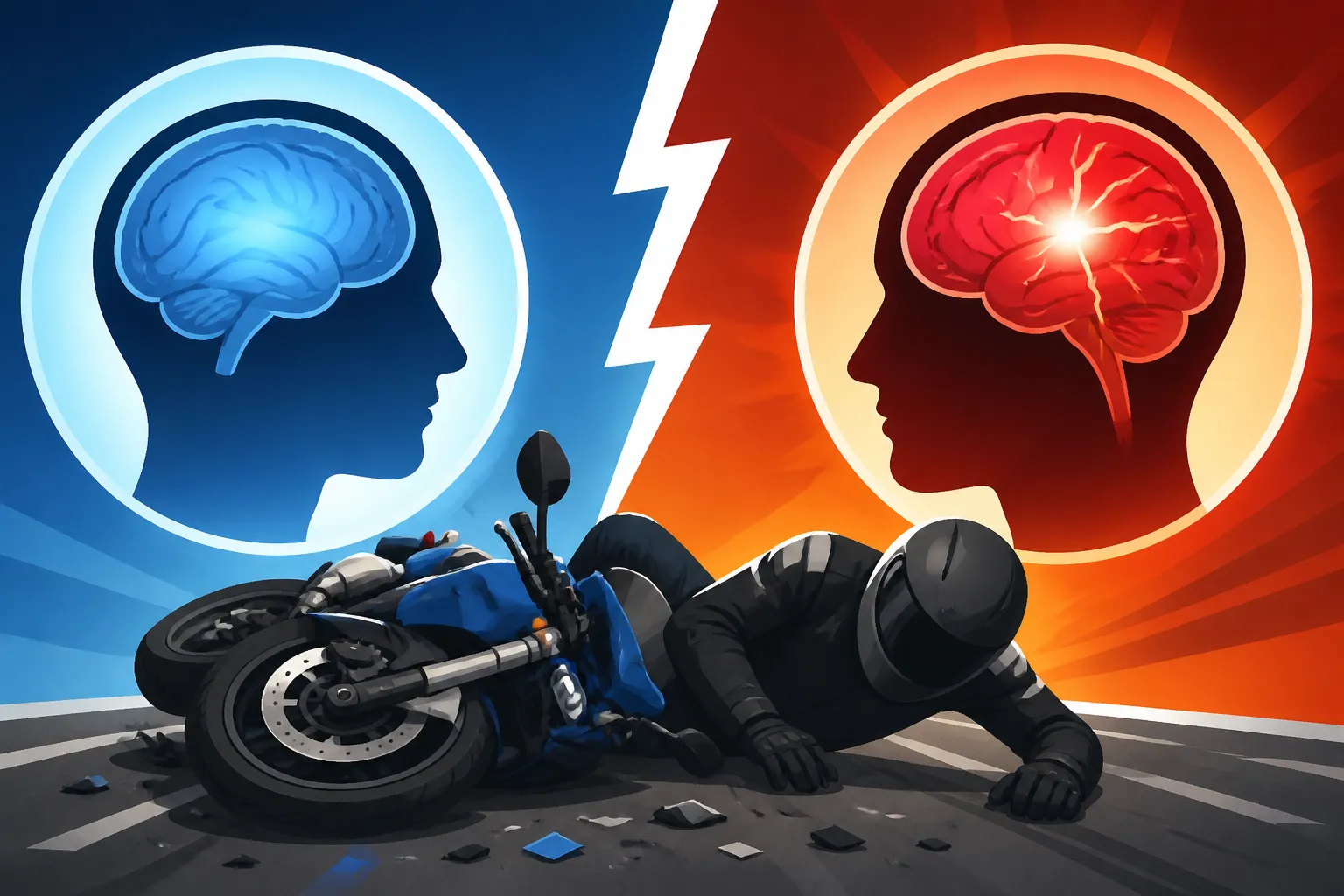
While all traumatic brain injuries are serious, they exist on a spectrum. The medical community typically categorizes them as mild, moderate, or severe, largely based on initial symptoms, Glasgow Coma Scale (GCS) scores, and imaging results. However, it's important to remember that even a "mild" TBI can have profound and lasting effects.
Characteristics of a Mild Traumatic Brain Injury (Concussion)
When we talk about a mild traumatic brain injury, or mTBI, we're often referring to what many people know as a concussion. Don't let the term "mild" mislead you; concussions are still serious brain injuries that require immediate medical attention. A concussion occurs when the brain is shaken or jarred inside the skull, leading to temporary disruption of brain function. This doesn't necessarily mean loss of consciousness, though it can occur briefly.
Symptoms of a mild TBI can include headache, dizziness, nausea, confusion, memory problems, fatigue, sensitivity to light or sound, and changes in mood or sleep patterns. These symptoms might appear immediately after the crash or be Delayed Symptoms After a Motorcycle Crash, sometimes hours or even days later. It's not uncommon for riders involved in what they perceive as a "minor" accident in places like Phoenix or Miami to initially feel fine, only for symptoms to emerge later, making prompt medical evaluation crucial. Many people make the mistake of thinking a concussion is just a temporary inconvenience, but the reality is that the Long-Term Effects of a TBI can be debilitating for some individuals, even with seemingly mild initial symptoms.
Table: Key Differences Between Mild and Severe TBI Indicators
| Feature | Mild Traumatic Brain Injury (mTBI/Concussion) | Severe Traumatic Brain Injury (sTBI) |
|---|---|---|
| Loss of Consciousness | Brief (less than 30 minutes) or none at all | Extended (over 30 minutes, often hours or days) |
| Post-Traumatic Amnesia | Less than 24 hours | More than 24 hours, often extending for weeks or months |
| Glasgow Coma Scale | 13-15 (after 30 minutes of injury) | 3-8 (after 30 minutes of injury) |
| Imaging Results (CT/MRI) | Often normal; may show subtle changes in advanced imaging | Often shows significant abnormalities (hemorrhage, contusions, diffuse axonal injury) |
| Recovery Time | Days to weeks, sometimes months for persistent symptoms (Post-Concussion Syndrome) | Months to years, often with permanent disability and functional impairment |
| Typical Symptoms | Headache, dizziness, nausea, confusion, memory issues, mood changes, fatigue | Prolonged coma, cognitive deficits (memory, attention, problem-solving), motor impairments, personality changes, seizures, vegetative state |
The Grave Nature of Severe Traumatic Brain Injuries
Severe traumatic brain injuries are, as the name suggests, far more devastating. These are the injuries that lead to prolonged unconsciousness, coma, or even a vegetative state. They often involve structural damage to the brain, such as intracranial hemorrhages (bleeding in the brain), contusions (bruises), or extensive diffuse axonal injury. The forces required to cause such severe trauma are immense, making them unfortunately common in high-impact motorcycle crashes.
Victims of severe TBIs often require immediate life-saving medical intervention, including surgery to relieve pressure on the brain or to stop bleeding. Their recovery journey is typically long, arduous, and may never lead to a full return to their pre-accident capabilities. They might face permanent cognitive impairments, such as severe memory loss, difficulty with executive functions (planning, problem-solving), and significant personality changes. Physical challenges, including paralysis, loss of coordination, or speech difficulties, are also common. For families, navigating the aftermath of a severe TBI can be an overwhelming journey, often requiring long-term care, specialized rehabilitation, and significant adjustments to daily life.
Diagnosis and Medical Evaluation After a Motorcycle Crash
The moments and hours following a motorcycle accident are critical, especially when a TBI is suspected. Rapid and accurate diagnosis is essential not only for immediate treatment but also for the long-term prognosis and any subsequent legal claim.
Immediate Steps and Emergency Care
After a motorcycle crash, the absolute first priority is immediate medical attention. Even if you feel "fine," the adrenaline rush can mask serious injuries. This is why it's imperative to Why You Should Seek Immediate Treatment. Emergency responders are trained to assess for signs of head trauma at the scene, which often involves checking responsiveness, pupil dilation, and asking basic questions to gauge cognitive function. If there's any suspicion of a TBI, especially if you were wearing a helmet that sustained damage, paramedics will immobilize your head and neck to prevent further injury during transport to the nearest trauma center, such as Ryder Trauma Center in Miami or Cedars-Sinai in Los Angeles.
At the hospital, a comprehensive medical evaluation will begin. Doctors will perform neurological exams, assessing your reflexes, coordination, memory, and cognitive abilities. They'll also monitor vital signs closely. This initial assessment forms the baseline for understanding the extent of your injury. If you can provide a detailed account of the accident, including how your head might have been impacted, it can be extremely helpful for the medical team.
Diagnostic Tools and Ongoing Assessment
To get a clearer picture of what’s happening inside your skull, doctors rely on various diagnostic imaging tools. The most common initial test is a CT (Computed Tomography) scan. This quick scan can identify major issues like skull fractures, bleeding (hemorrhages), and significant swelling. However, CT scans are not always sensitive enough to detect subtle brain damage, especially in cases of mild TBI or diffuse axonal injury.
For a more detailed view, an MRI (Magnetic Resonance Imaging) scan may be performed, often days or weeks after the initial injury. MRI can reveal smaller contusions, signs of diffuse axonal injury, and other micro-structural changes that a CT might miss. Functional MRI (fMRI) or Diffusion Tensor Imaging (DTI) are advanced techniques that can provide even greater detail about brain activity and white matter integrity, though they are not always standard practice immediately following a crash. Understanding How TBIs Are Diagnosed After a Crash is vital, as these diagnostic records will be critical for your medical care and any future legal proceedings. Ongoing neurological assessments, neurocognitive testing, and regular follow-ups with neurologists or brain injury specialists are also crucial for monitoring recovery and identifying any persistent issues.
Long-Term Consequences and Recovery Pathways
The journey after a TBI, whether mild or severe, is often long and unpredictable. It's a path filled with challenges, adaptations, and often, a new understanding of oneself.
Living with the Aftermath of a Mild TBI
Even a "mild" TBI, or concussion, can leave a person dealing with a cluster of symptoms known as Post-Concussion Syndrome (PCS). These symptoms can persist for weeks, months, or even longer, significantly impacting a person's quality of life. Imagine trying to go back to work or school in Seattle or Portland when you're constantly battling headaches, feel perpetually fatigued, can't concentrate, and are overwhelmed by bright lights or loud noises. These aren't just inconveniences; they are profound disruptions.
Many individuals experience emotional and psychological changes after a mild TBI, including increased irritability, anxiety, depression, and difficulty managing stress. Relationships can suffer, and the ability to enjoy hobbies or participate in social activities might be severely curtailed. While many people with mTBI eventually recover, a significant percentage experience persistent symptoms that require ongoing treatment, including cognitive therapy, physical therapy, and psychological counseling. Documenting these struggles is paramount for building a strong claim.
The Profound Impact of Severe TBI and Rehabilitation
A severe TBI often marks a complete pivot in a person's life trajectory, and that of their family. These injuries can lead to permanent disabilities requiring extensive, long-term care and rehabilitation. The rehabilitation process for severe TBI is typically multi-faceted, involving a team of specialists: physical therapists to regain motor skills, occupational therapists to relearn daily living activities, speech therapists for communication issues, neuropsychologists for cognitive and emotional support, and vocational counselors to explore new career paths or adaptations.
The impact extends beyond the individual to their entire support system. Family members often become full-time caregivers, facing immense emotional, physical, and financial burdens. The financial costs associated with severe TBI can be astronomical, covering everything from hospital stays and surgeries to specialized equipment, home modifications, and lifelong care. When evaluating compensation for Average Settlement for a TBI, these long-term care costs are a huge factor, and they underscore the profound difference in outcomes between mild and severe injuries.
Documenting Your TBI for a Motorcycle Accident Claim
After the immediate medical crisis has passed, the reality of a motorcycle accident claim begins. Properly documenting your TBI and its effects is absolutely non-negotiable if you hope to recover the compensation you deserve.
The Critical Role of Medical Records
Your medical records are the backbone of your motorcycle accident claim. Every doctor's visit, every diagnostic test, every therapy session, and every prescription for your TBI must be meticulously documented. This is why it's crucial to follow all medical advice and attend every appointment. Gaps in treatment or a failure to follow through with recommended care can be used by insurance companies to argue that your injuries weren't as severe as claimed or that you contributed to your own slow recovery.
How Medical Records Support Your Claim cannot be overstated. They provide objective evidence of your injury, the treatments you've received, and your prognosis. Keep a detailed record of all your appointments, medications, and any out-of-pocket expenses related to your care. If you've undergone specific TBI rehabilitation at a facility like Shepherd Center in Atlanta or Craig Hospital in Denver, ensure all reports and progress notes are retained. These documents paint a clear picture of your medical journey and the financial burden it entails.
Proving Non-Economic Damages Related to TBI
While medical bills and lost wages fall under Economic vs Non-Economic Damages Explained, a significant portion of TBI claims also involves non-economic damages. These are the intangible losses that don't come with a direct bill but profoundly impact your life: pain and suffering, emotional distress, loss of enjoyment of life, and loss of consortium. For TBI victims, these damages are often substantial and can be difficult to quantify.
Proving Pain and Suffering Damages Explained related to a TBI requires more than just stating you're in pain. It involves collecting detailed evidence of how the TBI has altered your daily life. This can include:
- Personal journals: Documenting your daily struggles, emotional state, and physical limitations.
- Testimonies: Statements from family, friends, and co-workers who can attest to changes in your personality, abilities, and quality of life.
- Psychological evaluations: Reports from therapists or counselors detailing emotional distress, anxiety, depression, or PTSD resulting from the TBI.
- Neuropsychological testing: These tests provide objective data on cognitive deficits (memory, attention, processing speed) caused by the TBI.
When preparing to How to Document Injuries for a Claim, remember that every detail, however small it may seem, helps to build a comprehensive picture of your suffering. Insurance adjusters will often try to minimize non-economic damages, especially for mild TBIs. Having thorough documentation and a compelling narrative of your experience is key to countering these tactics and proving How Injury Severity Drives Settlement Value. Never hesitate to reach out to a professional who understands the nuances of TBI claims and can help you navigate this complex process.
Disclaimer
Please remember that this information is intended for educational purposes only and does not constitute legal or medical advice. Every motorcycle accident and resulting injury is unique. It is crucial to seek immediate medical attention after any crash and to consult with a qualified legal professional to discuss the specifics of your situation and understand your rights.